The London Drugs Commission. Off Target and Misleading.
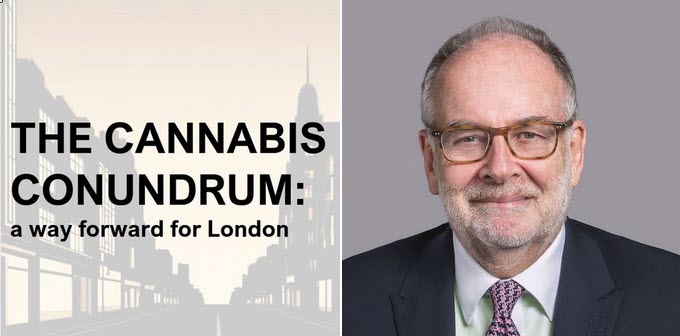
If anyone thinks it will achieve anything to publish a report on cannabis policy that runs to over 300 pages with 42 recommendations, you can spend an hour or so reading it here.
Of course, the recommendation for decriminalisation is correct. Criminalising people for personal possession of any drug, or for growing a few cannabis plants, achieves nothing. We know from multiple studies across the world, including from the Home Office, that the level of enforcement and the severity of penalties makes no difference at all to levels of use or harm, except the harm caused by giving someone a criminal record. Enforcing these laws also takes huge amounts of police time and resource. Their disproportionate enforcement among ethnic minorities also damages community relations. It’s a ridiculous policy. Yet another example of how detached from reality and public opinion are our political leaders.
But the report fails to address the real issue. By far the most harm around cannabis and all drugs is from the markets through which they are produced and sold. Both the Home Office and the National Crime Agency acknowledge that most crime and violence is caused by criminal drugs markets. These markets exist to meet the unstoppable demand for drugs. Our political leaders like to pretend that they can reduce this demand but the evidence over more than 50 years proves them wrong. The cannabis market is by far the biggest and it is organised crime’s single largest source of daily cashflow. It provides the funding for every other sort of criminal activity imaginable. There is no other solution to stopping this catastrophic harm except to offer a legal alternative where consumers can purchase cannabis from licensed retailers that has been produced to quality standards by licensed producers.
All sort of other benefits would flow from this sensible change of policy. Thousands of new jobs would be created. Taxing the products would deliver vast amounts of cash for the health service, housing, social care, other public services and this is after paying for the costs of running the regulatory system. Huge amounts of police time would be freed up to start focusing on real crime that causes people harm. We know that this can work from the experience in other places. In Canada, six years after legalisation, 80% of all cannabis purchases are now made through legal channels. More than $2 billion is collected each year in local and federal taxes after deduction of expenses. This in a country with half the population of UK.
The report makes weak excuses for failing to recommend legal regulation of the cannabis market, excuses which are not supported by evidence and in many instances are directly contradicted. It says that legalisation has not been a “panacea”, “risks remain”, “it by no means abolishes the illicit cannabis market” and there are “too many unknowns, particularly those relating to public health”.
These excuses are disingenuous at best, deceitful at worst. They take no account of the very large body of evidence over more than 10 years from the USA and Canada, of the benefits of the coffeshop system in the Netherlands over 50 years and more recent experience in several European countries. It is wilful ignorance or, I suggest, political cowardice. I attended the Commission on two occasions to give evidence and after several hours in discussions, I am convinced that Lord Falconer and his colleagues fully understand that imperative for legal regulation and the evidence that supports it. The conclusion I draw is that they felt recommending legalisation would be politically unacceptable and would likely lead to the report being rejected. In truth the report was always going to be rejected, as it has been, so there was no benefit in holding back from the obvious recommendations it should have made.
Reading between the lines, my judgement is that this is all down to the near-hysteria about cannabis and its ‘links to mental illness’ which is pretty much unique to UK and Ireland. Nowhere else in the world comes close to the wildly unbalanced narrative that predominates here. It’s based on decades of systematic misinformation from the Home Office and ruthless exploitation by the tabloid media. The ‘one puff and you’re psychotic’ mythology has sold millions of newspapers and in recent years generated billions of clicks. It’s false. The facts are that the risk of a psychotic episode associated with cannabis use is 1 in 20,000, with alcohol use 1 in 2,000, with a life threatening reaction to peanuts 1 in 100 or shellfish 1 in 25. Hysteria perhaps doesn’t put it strongly enough!
Reform will come eventually to the UK but it’s hard to predict when. The legalisation of medical access came suddenly and unexpectedly and only because the government was shamed in the media by its appalling treatment of two epileptic boys who were forced overseas for life saving cannabis medicine. Media embarrassment seems to be the only thing that makes British politicians act and I think the powers that be think the move on medical access has gone quite far enough to keep the plebs in order.
The sheer stupidity, stubborness and inertia of the political establishment on drugs policy is extraordinary. We have no option but to keep fighting the good fight in the knowledge that eventually we will prevail.

 Peter Reynolds
An excellent article Peter, bang on the money.
I remember when it was downgraded from class C to B years ago, I thought then that common sense would obviously prevail.
However some report from.a London college claimed that incidences of psychosis would reduce from 34 to 18, quite the shocker.
What they failed to draw attention to was that that was per 100,000! Making it such a small percentage difference that only a fool would take any notice of it whatsoever.
However they then, as you’re obviously aware, reclassified it to B a couple of years later.
For a few years the Emperor was wearing real clothes, now he’s naked again, it defies belief.
Rob P
June 17, 2025 at 7:49 am
We are living through an age when fact, morality and truth are inverted and our weak, corrupt political leaders are complicit. Whether its drugs policy, international politics or the protection of children, black is white, the perpetrators are victims and the victims are to blame.
Peter Reynolds
June 17, 2025 at 10:51 am