Archive for the ‘Science’ Category
The London Drugs Commission. Off Target and Misleading.
If anyone thinks it will achieve anything to publish a report on cannabis policy that runs to over 300 pages with 42 recommendations, you can spend an hour or so reading it here.
Of course, the recommendation for decriminalisation is correct. Criminalising people for personal possession of any drug, or for growing a few cannabis plants, achieves nothing. We know from multiple studies across the world, including from the Home Office, that the level of enforcement and the severity of penalties makes no difference at all to levels of use or harm, except the harm caused by giving someone a criminal record. Enforcing these laws also takes huge amounts of police time and resource. Their disproportionate enforcement among ethnic minorities also damages community relations. It’s a ridiculous policy. Yet another example of how detached from reality and public opinion are our political leaders.
But the report fails to address the real issue. By far the most harm around cannabis and all drugs is from the markets through which they are produced and sold. Both the Home Office and the National Crime Agency acknowledge that most crime and violence is caused by criminal drugs markets. These markets exist to meet the unstoppable demand for drugs. Our political leaders like to pretend that they can reduce this demand but the evidence over more than 50 years proves them wrong. The cannabis market is by far the biggest and it is organised crime’s single largest source of daily cashflow. It provides the funding for every other sort of criminal activity imaginable. There is no other solution to stopping this catastrophic harm except to offer a legal alternative where consumers can purchase cannabis from licensed retailers that has been produced to quality standards by licensed producers.
All sort of other benefits would flow from this sensible change of policy. Thousands of new jobs would be created. Taxing the products would deliver vast amounts of cash for the health service, housing, social care, other public services and this is after paying for the costs of running the regulatory system. Huge amounts of police time would be freed up to start focusing on real crime that causes people harm. We know that this can work from the experience in other places. In Canada, six years after legalisation, 80% of all cannabis purchases are now made through legal channels. More than $2 billion is collected each year in local and federal taxes after deduction of expenses. This in a country with half the population of UK.
The report makes weak excuses for failing to recommend legal regulation of the cannabis market, excuses which are not supported by evidence and in many instances are directly contradicted. It says that legalisation has not been a “panacea”, “risks remain”, “it by no means abolishes the illicit cannabis market” and there are “too many unknowns, particularly those relating to public health”.
These excuses are disingenuous at best, deceitful at worst. They take no account of the very large body of evidence over more than 10 years from the USA and Canada, of the benefits of the coffeshop system in the Netherlands over 50 years and more recent experience in several European countries. It is wilful ignorance or, I suggest, political cowardice. I attended the Commission on two occasions to give evidence and after several hours in discussions, I am convinced that Lord Falconer and his colleagues fully understand that imperative for legal regulation and the evidence that supports it. The conclusion I draw is that they felt recommending legalisation would be politically unacceptable and would likely lead to the report being rejected. In truth the report was always going to be rejected, as it has been, so there was no benefit in holding back from the obvious recommendations it should have made.
Reading between the lines, my judgement is that this is all down to the near-hysteria about cannabis and its ‘links to mental illness’ which is pretty much unique to UK and Ireland. Nowhere else in the world comes close to the wildly unbalanced narrative that predominates here. It’s based on decades of systematic misinformation from the Home Office and ruthless exploitation by the tabloid media. The ‘one puff and you’re psychotic’ mythology has sold millions of newspapers and in recent years generated billions of clicks. It’s false. The facts are that the risk of a psychotic episode associated with cannabis use is 1 in 20,000, with alcohol use 1 in 2,000, with a life threatening reaction to peanuts 1 in 100 or shellfish 1 in 25. Hysteria perhaps doesn’t put it strongly enough!
Reform will come eventually to the UK but it’s hard to predict when. The legalisation of medical access came suddenly and unexpectedly and only because the government was shamed in the media by its appalling treatment of two epileptic boys who were forced overseas for life saving cannabis medicine. Media embarrassment seems to be the only thing that makes British politicians act and I think the powers that be think the move on medical access has gone quite far enough to keep the plebs in order.
The sheer stupidity, stubborness and inertia of the political establishment on drugs policy is extraordinary. We have no option but to keep fighting the good fight in the knowledge that eventually we will prevail.
There’s No Such Thing as ‘Medical Cannabis’
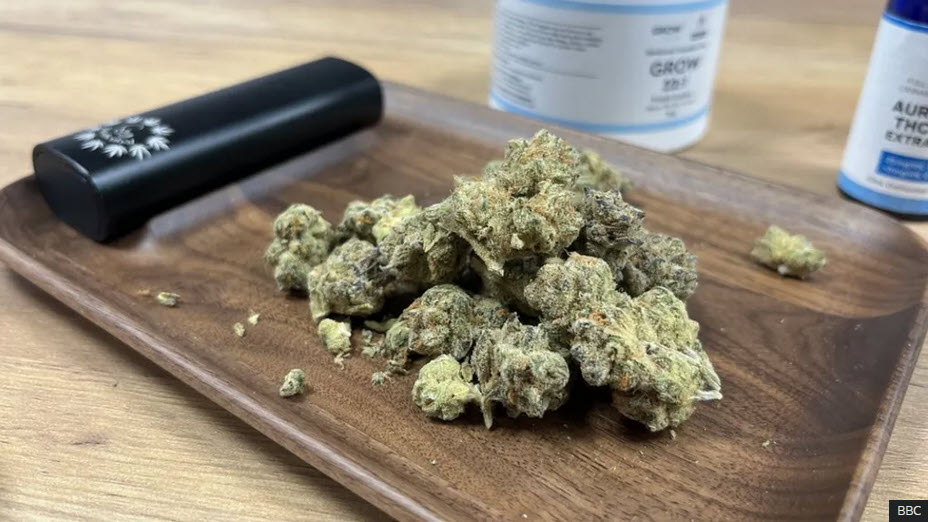
I am increasingly concerned about the ‘medical cannabis industry’ and its resistance to wider reform. These people, some of them at least, have forgotten very quickly who got them the business opportunity in the first place!
Of course, there is no such thing as ‘medical cannabis’. The more accurate language is ‘medicinal cannabis’ but the preferred term has to be ‘prescription cannabis’. It’s exactly the same product as is sold on ‘the streets’, grown in people’s lofts, in illicit ‘factories’ or in hugely expensive licensed facilities. Often, still, the ‘legal’ variety is of inferior quality.
There’s also no truth in the argument that prescription cannabis is safer or lower in THC. The vast majority of what is prescribed in the UK is what the media would call ‘skunk’. Unless you’re underage or smoking it with tobacco, it is safe, much safer than many other things in your kitchen cupboards.
These divisions in the cannabis sector, stoked by newcomers from the protectionist pharmaceutical industry will achieve nothing for anyone. We need a unified message on the benefits of cannabis. Whether it’s prescribed for chronic pain, anxiety, multiple sclerosis or whether it’s smoked in a spliff with the lights down and some psychedelic music on, it’s all about making you feel better.
This is the universal truth about cannabis.
There Will Be No More Misinformation on Cannabis from Conservative Police and Crime Commissioners
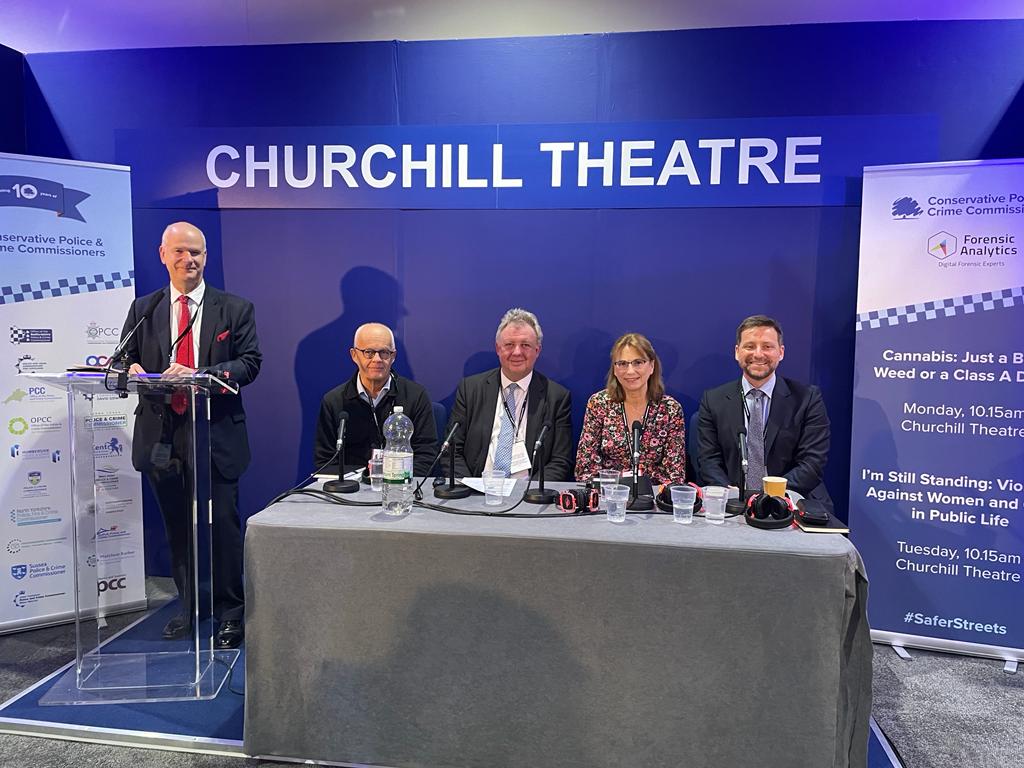
Conservative Party Conference 2022, left to right: PCC Mark Shelford, Professor Neil McKeganey, PCC David Sidwick, Unknown, Unknown
For the past nine months I have been engaged in series of formal complaints against Conservative PCCs concerning their seriously misleading anti-cannabis campaign. I am pleased that they have now stopped their silly scaremongering. If they try to go down this road again, they will be back into a costly and time-consuming process which they can never win because nothing they have claimed can be supported by evidence.
None of my complaints have been upheld despite exhausting all routes of appeal but this is no surprise to me. Such complaints procedures are not designed to hold officials to account as you might hope. Their real purpose is to find excuses for misconduct. However, by any measure, I have defeated every absurd claim they have made by adducing published, peer-reviewed evidence.
This all started with the ridiculous proposal that cannabis should be made a class A drug, announced at the Conservative Party Conference 2022 in Birmingham. Inevitably, all the tabloid newspapers loved this and when home secretary Suella Braverman endorsed the idea, well, it was a wet dream for the Daily Mail and every hack who believes the role of the press is to sensationalise rather than inform.
The leader of the campaign was David Sidwick, PCC for Dorset. He advanced all the old chestnuts of addiction, psychosis and the ‘gateway theory’ but went much, much further:
“the pernicious influence of cannabis on our society”
“nothing soft about this drug. Its impact can be brutal — damaging lives and promoting crime”
“make no mistake, this stuff does the same harm as crack and heroin”
“a factor in numerous random acts of violence”
Such was the content of Sidwick’s article in the Daily Mail, a platform the newspaper gave him to coincide with his event at the Conservative Party Conference which was titled ‘Cannabis: Just a bit of weed or a Class A drug?’
Sidwick also claimed that his experience in the pharmaceutical industry gave him a special understanding of the health harms of cannabis and during the complaints process he implied he had some sort of medical expertise. In reality, he was a pharmaceutical salesmen and this attempt to blag some extra credibility for his claims speaks volumes.
To be fair, Sidwick has been taken in by the work of Professor Stuart Reece, a professor of psychiatry at the University of Western Australia. Reece is ‘reefer madness’ personifed. His claims and theories are as extreme as they come and have made him a laughing stock amongst his professional peers. See here for more details.
Sidwick claimed that Professor Reece’s work amounted to “a wealth of new data on the drug’s effects which merited a re-evaluation”.
The basis of my complaint was that under the Nolan Principles of Public Life, with which all PCCs are obliged to comply, they must
“act with integity and diligence and take decisions impartially, fairly and on merit, using the best evidence and without discrimination or bias” and “act and take decisions in an open and transparent manner”.
It is self-evident that Sidwick’s claims could not pass this test, so I submitted a complaint against him and also Alison Hernandez, PCC for Devon and Cornwall; and Mark Shelford, PCC for Avon and Somerset. These were his principle accomplices. Hernandez has a particularly poor record with a quite ridiculous attitude to all aspects of drugs policy. Matthew Barber, PCC for Thames Valley, was also in my sights but to be fair to him, he readily engaged with me. We debated the issue on a radio programme and had a lengthy discussion on a Zoom call. While we didn’t come to any agreement, he listened and took on board what I had to say.
Sidwick and his office did make an attempt to respond properly to my complaint but what they offered as evidence was almost exclusively just Sidwick’s opinions. Hernandez was, as I might have expected, high handed and arrogant. She made no attempt at all to deal with the substance and just dismissed my complaint, claiming in effect that she was entitled to say whatever she wanted. Shelford also failed to deal with the issues, saying he was entitled to express his opinion and had “drawn from a large number of sources to inform his views” – without saying what those sources were!
Of course, they are perfectly entitled to hold any opinion they want but in their role as PCC they must comply with the Nolan Principles which they have all clearly failed to do. Their campaign did not use “best evidence” and neither were they “open and transparent” about their claims.
So that’s it. A great deal of work was involved on my part but more importantly it required a great deal of work from the PCCs and their staff. I’m confident they won’t want to go down this road again. Of course they’re perfectly entitled to be anti-cannabis and uphold the law as it currently stands but they won’t be spreading misinformation and ridiculous propaganda anymore.
For the record, this is how I responded to Sidwick’s claims.
CLAIM THAT CANNABIS IS A ‘GATEWAY DRUG’
I accept Sidwick’s ‘real-world definition as meaning an increased desire for taking Class A drugs’. I do not accept that cannabis is a ‘gateway drug’ ‘meaning an increased opportunity for taking Class A drugs’. As now widely accepted by experts, the real ‘gateway’ is the illegal status of cannabis meaning that anyone purchasing cannabis will be in contact with an illegal supplier who is likely to offer other drugs including Class As.
In 2008, the government’s expert advisors on drugs, the Advisory Council on the Misuse of Drugs (ACMD), investigated the gateway theory and concluded:
8.14 The “gateway theory” is the term that describes the possibility that use of cannabis leads to use of more dangerous drugs such as opiates and cocaine. It arises from the observation that users of the most harmful (Class A) drugs have generally used cannabis first. The interpretation of these studies is extraordinarily difficult because of the confounding effects of alcohol, tobacco, solvents, stimulants and psychedelic drugs, whose use frequently precedes that of Class A drugs. Moreover, although there is no evidence that there are physiological mechanisms leading to more harmful drugs, the social milieu of drug use may result in some users trying them. The shared market for cannabis and other drugs would increase the potential for escalation.
8.15 In 2002, the Council concluded that it was not possible to state, with certainty, whether or not cannabis use predisposes users to dependency on Class A drugs. Nevertheless, it considered the risks to be small and certainly less that those associated with the use of alcohol and tobacco. No further convincing evidence has been identified by the Council to alter this conclusion.
The ACMD comprises the most senior, highly qualified, experienced drugs experts. I particularly draw your attention to the unequivocal statement “there is no evidence that there are physiological mechanisms leading to more harmful drugs”.
Sidwick’s ‘alcohol argument’ is simply an expression of opinion. It is not evidence.
Sidwick’s reference to ‘tolerance’ is an opinion that developing tolerance in cannabis leads to Class A drugs. This is just more opinion, re-stating his belief in the ‘gateway theory’ and is not evidence.
Sidwick’s ‘business model’ is yet more opinion and is comprehensively dealt with by the ACMD’s conclusions above. Dame Carol Black’s report supports the ACMD’s conclusion that it is the “social milieu of drug use” and “shared market for cannabis and other drugs” that is the gateway, not cannabis.
Sidwick’s ‘neurophysiology argument’ is his opinion and interpretation of evidence. It is not evidence.
Sidwick interprets data on hospitalisations during the ‘Lambeth experiment’ to show that Class A use increased. This is not what the data show, nor is it what the Institute for Fiscal Studies’ paper shows. All they show is an increase in hospital admissions which correlates with the depenalisation of cannabis. No causal relationship is shown. Once again, this is not evidence of cannabis being a ‘gateway drug’, it is simply Sidwick’s opinion.
Sidwick’s ‘multi-drug use argument’ is presented as ‘intuitive’, so is merely opinion, it is not evidence.
None of the arguments advanced by Sidwick amount to evidence that cannabis is a gateway drug. They are all just expressions of his opinion.
By contrast I adduce the following evidence:
1.The ACMD’s report as above, Cannabis Classification and Public Health, 2008 https://assets.publishing.service.gov.uk/government/uploads/system/uploads/attachment_data/file/119174/acmd-cannabis-report-2008.pdf “There is no evidence that there are physiological mechanisms leading to more harmful drugs.”
2. The Gateway Hypothesis, Common Liability to Addictions or the Route of Administration Model. A Modelling Process Linking the Three Theories, 2016 https://pubmed.ncbi.nlm.nih.gov/26431216/ “The ‘gateway’ sequence, tobacco to cannabis to other illicit drugs was not associated with substance use propensity more than alternative sequences.”
3. The health effects of cannabis and cannabinoids: the current state of evidence and recommendations for research, 2017. “Most people who use marijuana do not go on to use other, “harder” drugs.” https://www.ncbi.nlm.nih.gov/books/NBK423845/
4. Is Cannabis a Gateway Drug? Key Findings and Literature Review, 2018 https://www.ojp.gov/pdffiles1/nij/252950.pdf I note that Sidwick himself cited this report. He clearly missed the main conclusion: “No causal link between cannabis use and the use of other illicit drugs can be claimed at this time.”
5. Reductions in alcohol use following medical cannabis initiation: results from a large cross-sectional survey of medical cannabis patients in Canada, 2020 https://www.sciencedirect.com/science/article/abs/pii/S0955395920303017 “44% reported drinking less frequently on a monthly basis. Moreover, results showed that patients also reduced their use of prescription opioids, tobacco and illicit substances when they consumed medical cannabis.”
6. Is marijuana really a gateway drug? A nationally representative test of the marijuana gateway hypothesis using a propensity score matching design, 2021 https://link.springer.com/article/10.1007/s11292-021-09464-z “Results from this study indicate that marijuana use is not a reliable gateway cause of illicit drug use. As such, prohibition policies are unlikely to reduce illicit drug use.”
7. Trends in Alcohol, Cigarette, E-Cigarette, and Nonprescribed Pain Reliever Use Among Young Adults in Washington State After Legalization of Nonmedical Cannabis, 2022 https://www.jahonline.org/article/S1054-139X(22)00374-3/fulltext “Contrary to concerns about spillover effects, implementation of legalized nonmedical cannabis coincided with decreases in alcohol and cigarette use and pain reliever misuse.”
8. Recreational cannabis legalization has had limited effects on a wide range of adult psychiatric and psychosocial outcomes, 2023 https://www.cambridge.org/core/journals/psychological-medicine/article/recreational-cannabis-legalization-has-had-limited-effects-on-a-wide-range-of-adult-psychiatric-and-psychosocial-outcomes/D4AB5EB78D588473A054877E05D45F16 “We assessed a broad range of outcomes, including other substance use, substance dependence…and found no detrimental nor protective effects for the majority of these domains, nor did we identify any increased vulnerability conferred by established risk factors.”
Thus I have shown that Sidwick’s claim is not supported by evidence, let alone ‘the best evidence’, nor has he taken any note of the overwhelming weight of evidence which opposes his position. Clearly his assertion that ‘cannabis is a gateway drug’ is unsupportable opinion and he is in breach of Nolan principle 1.3.
CLAIM THAT CANNABIS CAUSES SERIOUS MENTAL HEALTH DISORDERS
There is no dispute that there is an association between the use of psychoactive substance and mental health disorders. The issue is whether there is evidence that shows a causal effect from cannabis.
1.Assessing evidence for a causal link between cannabis and psychosis: a review of cohort studies, 2009 https://pubmed.ncbi.nlm.nih.gov/19783132/ “Whether cannabis use can cause serious psychotic disorders that would not otherwise have occurred cannot be answered from the existing data.”
2. Cannabis and psychosis: Neurobiology, 2014 https://www.ncbi.nlm.nih.gov/pmc/articles/PMC3927252/ “The ‘transition-to-psychosis’ due to cannabis, despite it being a strong risk factor, remains uncertain based upon neurobiological changes. It appears that multiple other factors might be involved.”
3. Genome-wide association study (GWAS) of lifetime cannabis use reveals a causal effect of schizophrenia liability, 2018 https://www.nature.com/articles/s41593-018-0206-1 “Largest study yet of genes and predisposition to schizophrenia and cannabis use looked at anonymised data from 180,000 people. Cannabis is more likely to be taken by schizophrenics trying to self-medicate than to cause the disorder.”
4. High-potency cannabis and incident psychosis: correcting the causal assumption, 2019 https://www.thelancet.com/journals/lanpsy/article/PIIS2215-0366(19)30174-9/fulltext “We found little evidence for any causal effect of cannabis use on schizophrenia risk.”
5. Adolescent cannabis use and adult psychoticism: A longitudinal co-twin control analysis using data from two cohorts, 2021 https://pubmed.ncbi.nlm.nih.gov/34553951/ “Cannabis exposure during adolescence is not independently associated with either adult-onset psychosis or signs of schizophrenia.”
6.. Cannabis and Psychosis: Recent Epidemiological Findings Continuing the “Causality Debate”, 2022 https://ajp.psychiatryonline.org/doi/10.1176/appi.ajp.2021.21111126 “While cannabis use may increase the risk for psychosis, its exposure is neither necessary nor sufficient for psychosis, suggesting that it is one of multiple causal components.”
7. Influence of cannabis use on incidence of psychosis in people at clinical high risk, 2023 https://pubmed.ncbi.nlm.nih.gov/37070555/ “There was no significant association between any measure of cannabis use at baseline and either transition to psychosis, the persistence of symptoms, or functional outcome.”
8. State Cannabis Legalization and Psychosis-Related Health Care Utilization, 2023 https://jamanetwork.com/journals/jamanetworkopen/fullarticle/2800728 “The findings of this study do not support an association between state policies legalizing cannabis and psychosis-related outcomes.”
Thus I have shown that Sidwick’s claim is not supported by evidence. He has distorted the evidence to claim that cannabis causes psychosis when in fact it shows is that it may or may not be one of multiple causal components. This misleading treatment of evidence based on a strong personal opinion is clearly in breach of Nolan principle 1.3. The consensus of expert opinion is that the risk of cannabis as a possible component cause of psychosis is best managed through a legally regulated system where age limits and potency can be controlled, rather than leaving the market under the control of criminal gangs.
CLAIM THAT CANNABIS CAUSES AUTISM SPECTRUM DISORDER, ASPERGER’S SYNDROME AND ATTENTION DEFICIT HYPERACTIVITY DISORDER (ADHD)
You have already acknowledged that Sidwick misrepresented the single study he adduces to support this claim when he gave oral evidence at the Home Affairs Committee Drugs Inquiry in 2022. You suggest “it is likely that the PCC misspoke”. This does not explain why he has subsequently repeated this claim on multiple occasions in media interviews.
This single study is by Dr. Stuart Reece who is an outlier at the very edge of professional credibility. The study has not been peer-reviewed, cites only other studies by Reece in support of his conclusions and there is no independent evidence supporting his conclusions.
By contrast, there is considerable evidence supporting the therapeutic use of cannabis in the treatment of autism spectrum disorders (ASD) which include Asperger’s Syndrome; and attention deficit hyperactivity disorder (ADHD).
1.Cannabidiol-Rich Cannabis in Children with Autism Spectrum Disorder and Severe Behavioral Problems, 2019 https://pubmed.ncbi.nlm.nih.gov/30382443/ “Following the cannabis treatment, behavioral outbreaks were much improved or very much improved in 61% of patients.”.
2. Real life Experience of Medical Cannabis Treatment in Autism: Analysis of Safety and Efficacy, 2019 https://pubmed.ncbi.nlm.nih.gov/30655581/ “Cannabis in ASD patients appears to be well tolerated, safe and effective option to relieve symptoms associated with ASD.”
3. Cannabis and cannabinoid use in autism spectrum disorder: a systematic review, 2022 https://pubmed.ncbi.nlm.nih.gov/34043900/ “Cannabis and cannabinoids may have promising effects in the treatment of symptoms related to ASD, and can be used as a therapeutic alternative in the relief of those symptoms.”
4. Cannabis for the Treatment of Attention Deficit Hyperactivity Disorder, 2022 https://www.karger.com/Article/FullText/521370 “This report adds to the literature by providing detailed personal accounts from patients and objective evidence of improvement on validated measures for ADHD symptoms.”
Thus I have shown that Sidwick’s claim is not supported by evidence and, in fact, is contradicted by evidence. He seriously misrepresented the only evidence he adduces at the Home Affairs Committee Drugs Inquiry and has continued to misrepresent it in subsequent media interviews. His conduct is clearly in breach of Nolan principle 1.3
OTHER CLAIMS
You have acknowledged that Sidwick’s other claims on issues such as birth defects, cancer, etc are based on single sources of information and the same authors. Clearly this does not meet the test of Nolan principle 1.3 “to act…using the best evidence and without…bias.”
SUMMARY
On all matters relating to cannabis, you have acknowledged that Sidwick relies on a limited amount of research from a limited range of sources. I have shown that the overwhelming weight of evidence does not support his claims and in many instances directly contradicts them.
Clearly, he has allowed his strong personal opinion on cannabis to distort his communications on many occasions to a very large public audience. Since he first took office his conduct on this issue has been consistently in breach of Nolan principle 1.3.
I note that Sidwick states he has a “pharmaceutical understanding of the science” but his past employment in the pharmaceutical industry is in sales and marketing, so any claim of scientific or clinical expertise cannot be sustained.
I submit it is clear that Mr David Sidwick, the PCC, has acted in this matter without integrity, diligence, transparency and objectivity. With respect, your claim that he has not is incredible and unsustainable.
I consider that in view of his personal responsibility for the misinformation that he has repeatedly and widely communicated, he should resign from office. As a minimum, the Police and Crime Panel should issue a public statement of retraction and apology for these false claims. My overriding concern is that Sidwick has used his office to try and increase the criminal penalties for cannabis by campaigning for it to be made a Class A drug on the basis of false evidence. This supports the criminal market in cannabis and all the harm it causes for which he must be held to account.
Don’t Believe a Word the FSA Says About CBD.
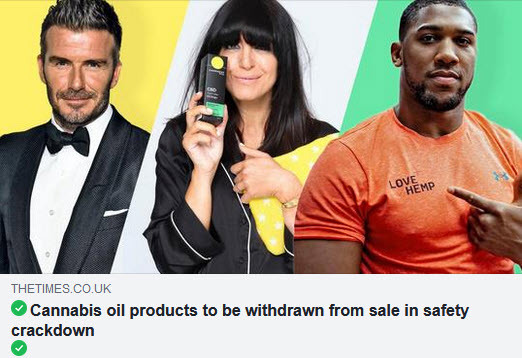
It’s reported in The Times and the Daily Mail today that many CBD products must be withdrawn from sale because of ‘safety concerns’. This follows a week of slavish repetition in the media of the FSA’s line that its publication of a list of 3,500 products that ‘might’ be authorised in the future is a “milestone” for the industry.
To be more accurate, it’s the line it’s devised in conjunction with the Association for the Cannabinoid Industry (ACI), the most recently formed trade association in the sector which, although repesenting only about 20 of the hundreds of CBD companies, now has privileged access and preferential treatment with the FSA. There is no doubt that the relationship between the two is improper and possibly corrupt. Dishonesty, deceit and underhand behaviour have been in play for at least the past year in order to give ACI and its members a commercial advantage and help the FSA create, on the basis of zero credible evidence, a massively expensive system that benefits no one else except its bureaucracy, least of all consumers.

This is nothing to do with safety. There are no reports from anywhere in the world at any time of anyone coming to any harm from CBD products.
The safety scare is entirely invented by the FSA in order to build its massive new, wholly unnecessary bureaucracy. They have been supported and encouraged by the ACI, most of its members dealing primarily in nasty, ineffective isolate products, not the ‘whole plant’ products which millions of people have found great benefit from.
CBD isolate needs to be taken at doses at least 10 times greater than whole plant products, doesn’t work anywhere near as well and because of the huge doses often causes stomach upsets.
This is a classic case of big business using financial muscle and influence to get the regulator to apply misguided, massively expensive over-regulation which squeezes out the smaller suppliers and bloats the bureaucracy.
It’s corrupt and the people who are harmed by it are consumers.
What was a fantastic British success story is being destroyed by vested interests squashing the small businesses that created the market.
The CBD market does need better regulation and the two longstanding trade associations, the Cannabis Trades Association (CTA) and CannaPro, had implemented very effective self-regulation of their members. What that needed to work was for the two regulators concerned, the FSA and the MHRA, to crack down on the unregulated end of the market but they both failed dismally to fulfil their responsibilities. The MHRA simply washed its hands of its duty to enforce the Human Medicines Regulations 2012, which meant widespread, unlawful claims of medical benefit from cowboy traders. The FSA spurned all the work that CTA and CannaPro had done with it over the previous five years and formed its unlawful relationship with the multimillionaire backers of ACI.
There are just two issues which need addressing in regulating CBD products: what the products contain and how they are marketed. This is the effective and inexpensive approach that CTA and CannaPro were taking and is explained in detail in this article published a year ago: The FSA’s Intervention in the CBD Market is a Farce. Here’s the Clear and Simple Solution.
The effect of the FSA’s action has already been to destroy many small businesses and hundreds of jobs. What lies ahead is a two-tier market: the FSA/ACI ‘authorised products’ which will be ineffective, isolate-based and available in high street chains; and ‘real’ whole plant CBD products, which are what work and what consumers want, operating in a black market, either online or through independent retailers.
Don’t buy CBD isolate products. You will be wasting your money.
Still ‘Insufficient Evidence’ for the NHS to Fund Medicinal Cannabis – or What’s it Really About?

The laboratory evidence for medicinal cannabis is through the roof in proof of efficacy and safety. The observational clinical evidence is also conclusive.
The evidence that is ‘lacking’ is that which fits in with the medical establishment’s well-established formula for making senior clinicians rich. The same doctors that write the guidelines are the ones who earn the very fat fees for running clinical trials and decide which evidence is valid and which isn’t. When the Royal Colleges and the professional medical bodies have worked out a way to get cannabis under their control, suddenly all the evidence will be OK. Then the committees and advisory boards that these same doctors sit on will turn on the NHS funding tap.
Until then, doctors are frightened of cannabis. A medicine that works, that is safer than virtually all the pills you can buy over-the-counter and has powerful, beneficial effects for a very wide range of conditions is a real threat to vested interests and doctors’ status. It shakes their world and so they are eager to disparage it, exaggerate its risks and diminish its efficacy.
Only when the medical establishment understands how its pre-eminence is going to be maintained, knows where fees and prestige are coming from, then cannabis will be ‘discovered’ by the NHS and all the benefits to patients and in reduced costs will follow.
Home Affairs Committee Inquiry into Drugs. Evidence Doesn’t Work with Politicians, Will Common Sense?
I am unable to share my detailed response to the inquiry until it has formally accepted and published it. However, this introduction explains the basis of my submission.
********
I am the president of CLEAR Cannabis Law Reform, the longest established and largest membership-based cannabis policy group in the UK, founded in 1999 with more than 600,000 followers. We represent people who support cannabis law reform, not all but most are also cannabis consumers. We are committed to a responsible, science and evidence-based approach.
I have participated in the cannabis law reform campaign for over 40 years. For over 30 years I have worked professionally in healthcare and medicine and for the past 10 years in the legal cannabis and cannabinoid industry.
The committee’s first inquiry into drugs was in 1983. I submitted evidence then at the tender age of 26 and to every inquiry since up to this year’s at the age of 64.
What stands out in all these inquiries is the overwhelming weight of evidence and opinion in favour of radical reform. Yet despite this, apart from the legalisation of access to prescribed medicinal cannabis in 2018, no progress has been made. On the contrary, politicians continue to prefer to posture as ‘tough on drugs’ rather than follow evidence or public opinion.
There is no doubt of the failure of current policy, yet both major parties continue to stick rigidly to prohibition. This despite the highest ever level of drug deaths, the de facto decriminalisation of cannabis by police and widespread contempt for our drug laws demonstrated by colossal consumption, particularly of cannabis, cocaine and ecstasy (MDMA) by people of all ages and social backgrounds.
There is also no doubt of the cost of this failed policy, estimated to be in the region of £20 billion per annum, and that it drives crime, violence, gangsterism and the breakdown of cohesion in society. One of the common misconceptions, which ministers dishonestly promote, is that it is drugs that drive these problems when in fact it is almost always policy that is the cause. Present policy directly supports and encourages organised crime.
What will it take for politicians to grasp this nettle?
Clearly, erudite submissions of evidence and logical argument do not work, however well qualified or experienced the source. Despite many politicians’ admissions of drug use, once in office they choose to continue with policies that, had they been caught with illegal drugs, would probably disqualify them from the jobs they now hold. Frequently, when they leave office they suddenly reverse their position and support reform. This brazen hypocrisy causes great damage to our society and contributes to widespread contempt for our political system.
So, in this submission, I address the issues concerned with common sense. For instance, specifically on cannabis, it is easily possible to find scientific evidence either maximising its dangers or minimising them. In the UK, mainly due to research at the Institute of Psychiatry, we have a particularly extreme point of view on its likelihood to cause mental illness but this is unique in the world. Most other countries take a far more balanced approach and the media is not as hysterical about these potential harms. It is possible to swap studies ad infinitum and nothing is achieved by this. Instead, I propose the common sense that since the 1960s the number of cannabis consumers has risen from about zero to about 3 million, yet there is no correlation at all with the rate of diagnosed mental illness which is steady or declining.
The fantastic statistical projections from the Institute of Psychiatry, using the most esoteric mathematical formulae, drive fear about cannabis but they simply do not match the real word experience of the millions of people who regularly consume the drug. It is this sort of mismatch that paralyses our ability to reach a consensus. This is why I believe that far more weight needs to be given to common sense.
Drug use is a normal part of life for most people. The distinction between drugs which are legally permitted, alcohol and tobacco, and drugs which are banned is, in itself, extremely harmful. Alcohol and tobacco are two of the most harmful drugs, much more harmful than many drugs that are banned. It is common sense that the law should guide people accurately, not mislead them as at present.
The Times Picks up the Reefer Madness Baton from the Daily Mail
Stigmatising cannabis consumers and patients with one-sided and biased reporting is irresponsible misinformation, not journalism
It’s that time of year, King’s College Institute of Psychiatry has started its fundraising round so it’s time for the annual cannabis and psychosis scare story.
Over the past 10 years, in January or February each year, a press release goes out with its lead researchers, Professor Sir Robin Murray and Dr Marta di Forti, pushing another set of extremely scary statistics about how cannabis is driving consumers insane.
This year, two things are different, Firstly, there’s no new study, just repetition of previous claims. Secondly, instead of being led by the Daily Mail, it’s The Times that has taken up the role of terrifying parents and this year there’s also a new story about over-55s who are ‘addicted’ to cannabis.
The Times’ reputation as the newspaper of record and the supreme example of English-language journalism has been faltering for some time. The decline started, inevitably, when Rupert Murdoch bought the newspaper in 1981. It’s now tabloid-sized and, surprisingly often, tabloid in its style and disdain for the truth. In the main it is still a good source of news reporting and has an honourable record in covering the increasing acceptance of and value in the medical use of cannabis.
However, starting in September 2021 with a major feature in the Sunday magazine by Megan Agnew,‘Cannabis psychosis: how super-powered skunk blew our minds’, it has become an uncritical promoter and advocate for everything that comes out of King’s College about cannabis.
Ms Agnew interviewed me at length several months before her piece was published and I dare say she spoke to other people on the reform side of the debate as well. Certainly not one word of what I said made it into print. It might as well be a paid-for advertorial for Marta di Forti and Robin Murray’s work.
I’ve met Robin Murray several times. In fact, I once sat next to him for two days in a conference held in the House of Lords. In person he’s nowhere near the anti-cannabis zealot he’s portrayed as in the press and there are other people in his team who I have worked with on research projects who I think, although they wouldn’t say it, are actually on my side! Nevertheless, the message about their research that is portrayed in the media is clearly deliberate and it is wildly misleading.
This is best demonstrated by going to the Lancet website, where all the Murray/di Forti papers are published and reading the other scientists who debunk both the results and the methodology that Murray/di Forti use. Of course, this never gets mentioned in the press. The Times has completely excluded it from all its coverage. Go to https://www.thelancet.com/ and search for ‘High-potency cannabis and incident psychosis: correcting the causal assumption’. You’ll see a whole new perspective on King’s College and its scientists.
This obsession with demonising cannabis is centred on the UK, precisely because of the endlessly repetitive work carried out at King’s College and the appetite that British press has for sensationalising it. Australia also suffers from it to some degree but nowhere else in the world experiences the same systematic, ludicrous scaremongering. That’s not to say that the potential dangers of cannabis as a psychoactive substance are ignored, they’re simply given proportionate recognition. Clearly anything that affects the mind can, potentially, cause harm and needs consideration, just as we do with alcohol, coffee, energy drinks and many medicines. Sadly there will always be casualties but provided we do all we can to minimise them, they do not justify prohibition. The evidence is clear that always causes more harm than good and it is self-evident that harm is better controlled and casualties more effectively prevented in a legal environment, not in a market run by gangsters and organised crime.
Ireland’s Medical Cannabis Access Programme – One Mistake After Another
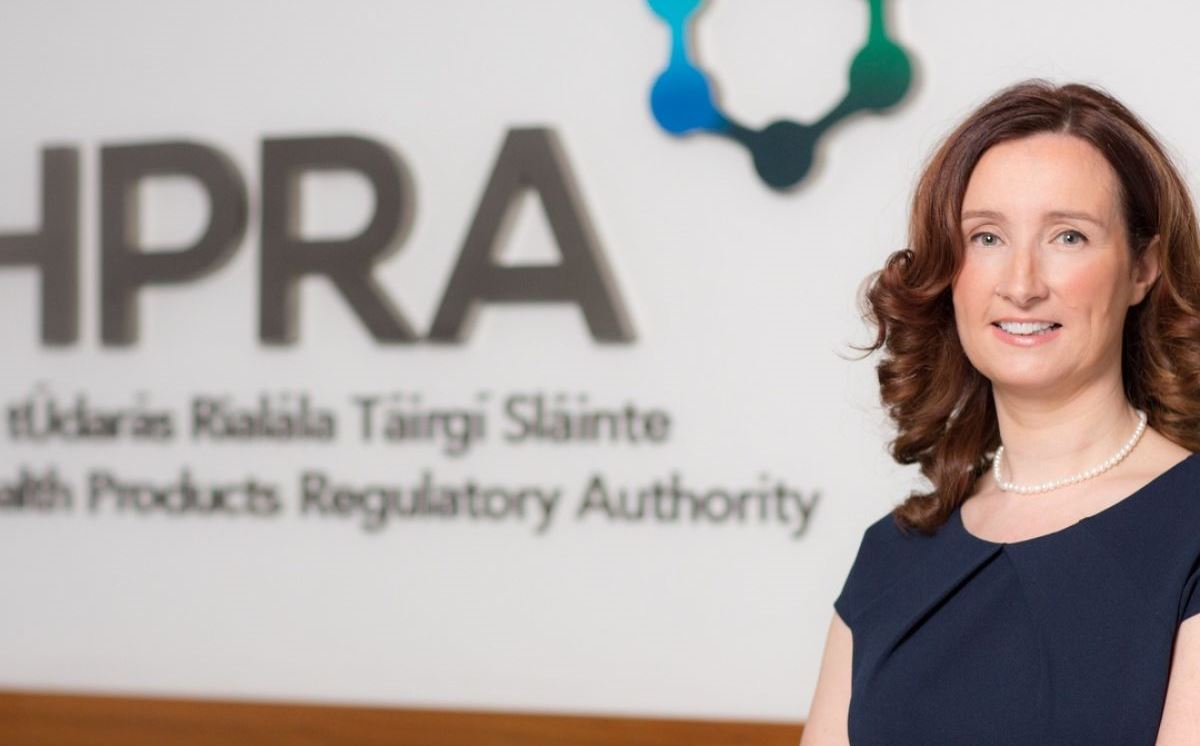
Lorraine Nolan, Chief Executive, HPRA
Short of an outright ban, Ireland has the most restrictive medicinal cannabis programme anywhere in the world and it’s still not operational more than four years after it was announced.
What’s even worse, as demonstrated by the letter nine leading neurologists have sent to Minister for Health Stephen Donnelly (Irish Times, 9th August 2021), the four products that the Health Products Regulatory Authority (HPRA) have selected are unsuitable for the conditions they are supposed to treat.
The story of how this has unfolded is a lesson in how not to regulate medicinal cannabis, or, indeed, any medicine. The programme is the result of public demand based on increasing recognition of the value and safety of cannabis when used responsibly under medical supervision. But it has been sabotaged by an Irish medical establishment that is hostile to cannabis and officials who have refused to take expert advice, preferring the opinions of clinicians who know nothing about it.
The problems started right at the beginning with a report compiled by the HPRA early in 2017 described as from an ‘expert working group’, yet not one person in the group was an expert in cannabis. It’s not clear that any of them had any knowledge at all about the use of cannabis as medicine when they were appointed.
Unsurprisingly the report is full of errors and misunderstanding. It claims there is “an absence of scientific data” on the efficacy of cannabis and not enough information on safety. This is palpable nonsense. History records cannabis being used as medicine for more than 5,000 years and ironically, it was an Irishman, William Brookes Shaughnessy, who published the first scientific paper on it in a medical journal in 1843. Since then it has been one of the most studied medicines on the planet. It has over 26,000 references on Pubmed, the foremost source for medical literature whereas paracetamol has around 12,000. California has had a medicinal cannabis programme since 1989, the Netherlands since 2001 and its use is now widespread throughout the world. Millions of people are using medicinal cannabis safely and effectively. There is a vast amount of information and evidence available.
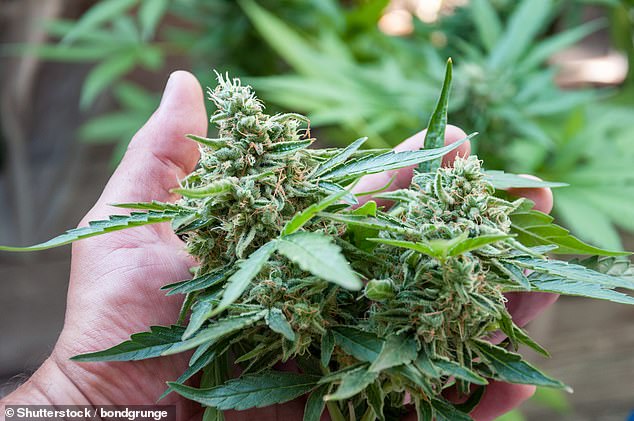 The most glaring error in the report is the omission of pain as a condition for which cannabis should be available. Pain is the condition for which cannabis is most often used and is most effective. In 2020 the global medicinal cannabis market was valued at around $9 billion, this is expected to reach $47 billion by 2027 and over 60% of this is for treating pain. Yet the HPRA’s so-called ‘experts’ thought it best to leave it out.
The HPRA started work on MCAP in March 2017. Officials claim to have sought “solutions to the supply of products from Denmark, UK, Canada and further afield”, which has included at least some officials going on international trips. It has taken four years to select four products, one of which is for epilepsy in adults and the other three are, as anyone with any expertise will confirm, best suited to treating pain!
Responsibility for this situation lies squarely with the HPRA. It is matched by its corresponding failure to facilitate a medicinal cannabis industry in Ireland. At least a dozen serious proposals have been presented offering multimillion euro investments in Ireland, promising the creation of hundreds of new jobs. Professor David Finn at NUI Galway is one of the world’s leading researchers into cannabinoid medicines and even his participation has failed to galvanise the HPRA into action.
Medicinal cannabis is the fastest growing business sector in the world. It is coming to Ireland, irrespective of the negative and luddite attitudes that prevail amongst the establishment. What is clear is that public health, the Irish people and the Irish economy are missing out in a big way and many of the opportunities have now been lost for good.
A Small Victory Against Misleading Reporting on Cannabis in the British Press

The peculiar relationship between drugs policy and evidence in Britain is caused largely by inaccurate, misleading and sensationalist reporting in the press. Our politicians’ inability to deal with this subject, even to engage in serious debate about it, is all about their fear of being dubbed ‘soft on drugs’ by the newspapers.
At last, the Independent Press Standards Organisation (IPSO) has upheld one of my many complaints about inaccurate reporting. This was a particularly egregious example of distortion and twisting of facts to suit a newspaper’s anti-cannabis agenda.
In January 2021, the Daily Telegraph published an article headlined “’Super skunk’ cannabis led to surge in mental health crisis”. This old trope, that cannabis causes mental illness, is now confined almost exclusively to our corner of North-West Europe. The Irish also suffer under this myth and to a lesser extent, so do Australia and New Zealand but everywhere else in the world a far more balanced and realistic view is taken.
There is no evidence to support it as a direct causal effect, only that it may, in some instances, be one of a number of component factors. Science shows that cigarette smoking and traffic pollution may be far more potent factors, not to say general adolescent angst and many other issues of modern life.
Nevertheless, in Britain, the press and therefore our politicians are obsessed with the idea and regard it as fact. It is this wicked prejudice that for decades has held back access to cannabis as medicine and still does so today. Our most senior clinicians have shown themselves incapable of separating fact from fiction and in a wider context, this myth is probably still the most important factor in holding back general drugs policy reform. Because of politicians’ weakness in the face of newspaper sensationalism, they have enabled a massive £6 billion market to develop under the control of organised crime which now causes enormous harm throughout society.
My complaint read as follows:
“This article asserts that “cannabis has contributed to a record 100,000 people admitted for NHS treatment for drug-related mental health problems”
In fact, in deliberately misleading and sensationalist fashion, figures for primary diagnosis and secondary diagnosis have been combined. Total figure for primary diagnosis in relation to all drugs is 7,027, secondary diagnosis accounts for the other 93,000+ and means that for 90% of these admissions, the primary reason may have been nothing to do with drugs.
The 100,000 figure is clearly associated with cannabis yet the actual figures for cannabis show a decline from 1135 in 2018/19 to 1087 in 2019/20.
It is crystal clear that this presentation of the data is deliberately designed to mislead and sensationalise.”
What has always surprised me in running many of these complaints is the vehemence with which the newspapers have tried to defend what are nothing more than lies. The Daily Telegraph did exactly the same this time, trying to adduce a large volume of irrelevant information that had nothing to do with its inaccurate journalism but was just about pushing its anti-cannabis agenda. As I wrote to IPSO at one stage:
“The Telegraph is entitled to publish as much one-sided, cherry picked evidence as it wishes except that if it does not do so accurately or distorts it to the point that it is misleading, it is in breach of clause 1 of the Editors’ Code.
I have no doubt that the newspaper will continue its current policy until the flood of money into the cannabis sector reaches such a level that it will be acting against its own self-interest. That day is now very close and then the Telegraph will face the challenge of explaining to its readers why it has misled and deceived them for so long.”
So, IPSO has upheld my complaint and its full decision can be seen here. On the face of it, the result will just be another small correction that few people will read. But I hope that the time and money it has cost the Telegraph to deal with this might have some impact in future.
I’ve just heard that the Telegraph has appealed against IPSO’s decision which demonstrates just how keen it is to continue misreporting about cannabis!
The FSA’s Intervention in the CBD Market is a Farce. Here’s the Clear and Simple Solution.
I’m not sure whether to laugh or cry about the mess the Food Standards Agency (FSA) has got itself into in the cannabidiol (CBD) market. After imposing costs of millions of pounds on business for no good reason, its deadlines have been missed, it’s got very few products on its ‘approved’ list and the whole situation is chaos. It’s changed the staff involved (again) and there is no sign it is going to achieve anything except fritter away more taxpayers’ money and impose more unnecessary costs on more businesses.
It was always going to be a disaster because deeming CBD products ‘novel foods’ was false from the beginning. It was the European Commission (EC) that first imposed this nonsensical ruling, refusing to consider the comprehensive evidence submitted by the European Industrial Hemp Association (EIHA) that extracts of CBD (and other cannabinoids) have been widely used in foods since as long ago as the 12th Century. Then, in anticipation of Brexit, the FSA, with no good reason, chose to adopt the EC’s novel foods policy and so this sad and futile story began.
The CBD market does need better regulation but ‘novel foods’ doesn’t address any of the issues of concern at all. It is a completely misguided policy.
There is no evidence of anyone, anywhere in the world, ever coming to any harm from consuming CBD as a food supplement, so the whole basis of deeming it as a ‘novel food’, as well as being false, is predicated on nothing. The reason for ‘novel foods’ regulation is safety and there is no evidence that CBD is unsafe.
There are just two issues which need addressing in regulating a CBD product: what the product contains and how it is marketed.
The first can be solved, at a stroke, by requiring all products to have an independent laboratory test certificate. Not a certificate of analysis (COA) from a laboratory commissioned by the supplier but a certificate from an independent laboratory that has itself been certified by the regulator which, yes, should be the FSA. So this independent, ‘official’ COA will specify the cannabinoid content, certify that controlled cannabinoids are within the legal limit and that heavy metals and other contaminants are within prescribed safety limits.
The second can be solved, at a stroke, by properly funding the Medicines and Healthcare products Regulatory Agency (MHRA) to fulfil its function as regulator of the Human Medicines Regulations 2012, the law that prohibits claims of medical benefit being made for commercial gain about products which are not licensed as medicines. The MHRA has dismally failed to fulfil this function, which is ironic as it first brought CBD to regulatory attention in 2016 over the issue of these medical claims. It simply does not have the resources to do this job. Hundreds of reports have been submitted to the MHRA by the two trade associations, the CTA and CannaPro, but not acted upon. As a result the law is now widely ignored both by unethical suppliers and by all the national newspapers which regularly run unlawful advertisements and advertorials despite the fact that in theory, the maximum penalty for these offences is two years in jail.
These two steps, taken together, will completely solve the regulatory requirements for the CBD market.

 Peter Reynolds