Author Archive
The Times Picks up the Reefer Madness Baton from the Daily Mail
Stigmatising cannabis consumers and patients with one-sided and biased reporting is irresponsible misinformation, not journalism
It’s that time of year, King’s College Institute of Psychiatry has started its fundraising round so it’s time for the annual cannabis and psychosis scare story.
Over the past 10 years, in January or February each year, a press release goes out with its lead researchers, Professor Sir Robin Murray and Dr Marta di Forti, pushing another set of extremely scary statistics about how cannabis is driving consumers insane.
This year, two things are different, Firstly, there’s no new study, just repetition of previous claims. Secondly, instead of being led by the Daily Mail, it’s The Times that has taken up the role of terrifying parents and this year there’s also a new story about over-55s who are ‘addicted’ to cannabis.
The Times’ reputation as the newspaper of record and the supreme example of English-language journalism has been faltering for some time. The decline started, inevitably, when Rupert Murdoch bought the newspaper in 1981. It’s now tabloid-sized and, surprisingly often, tabloid in its style and disdain for the truth. In the main it is still a good source of news reporting and has an honourable record in covering the increasing acceptance of and value in the medical use of cannabis.
However, starting in September 2021 with a major feature in the Sunday magazine by Megan Agnew,‘Cannabis psychosis: how super-powered skunk blew our minds’, it has become an uncritical promoter and advocate for everything that comes out of King’s College about cannabis.
Ms Agnew interviewed me at length several months before her piece was published and I dare say she spoke to other people on the reform side of the debate as well. Certainly not one word of what I said made it into print. It might as well be a paid-for advertorial for Marta di Forti and Robin Murray’s work.
I’ve met Robin Murray several times. In fact, I once sat next to him for two days in a conference held in the House of Lords. In person he’s nowhere near the anti-cannabis zealot he’s portrayed as in the press and there are other people in his team who I have worked with on research projects who I think, although they wouldn’t say it, are actually on my side! Nevertheless, the message about their research that is portrayed in the media is clearly deliberate and it is wildly misleading.
This is best demonstrated by going to the Lancet website, where all the Murray/di Forti papers are published and reading the other scientists who debunk both the results and the methodology that Murray/di Forti use. Of course, this never gets mentioned in the press. The Times has completely excluded it from all its coverage. Go to https://www.thelancet.com/ and search for ‘High-potency cannabis and incident psychosis: correcting the causal assumption’. You’ll see a whole new perspective on King’s College and its scientists.
This obsession with demonising cannabis is centred on the UK, precisely because of the endlessly repetitive work carried out at King’s College and the appetite that British press has for sensationalising it. Australia also suffers from it to some degree but nowhere else in the world experiences the same systematic, ludicrous scaremongering. That’s not to say that the potential dangers of cannabis as a psychoactive substance are ignored, they’re simply given proportionate recognition. Clearly anything that affects the mind can, potentially, cause harm and needs consideration, just as we do with alcohol, coffee, energy drinks and many medicines. Sadly there will always be casualties but provided we do all we can to minimise them, they do not justify prohibition. The evidence is clear that always causes more harm than good and it is self-evident that harm is better controlled and casualties more effectively prevented in a legal environment, not in a market run by gangsters and organised crime.
A Very Large Majority of those Entering Cannabis ‘Treatment’ Are Coerced Into It By Authorities.

This is very difficult data to track down but it’s a fact that needs to be clearly understood as the hard right, authoritarian press ramps up its anti-cannabis scaremongering this week.
Coercive medical treatment is unethical and possibly, in some cases, illegal but it is the principal route by which people in the UK are forced into GP and community health ‘treatment’ for cannabis ‘addiction’ or ‘cannabis use disorder’ as it is now termed.
Most people are told to go into treatment by the courts in return for a lighter sentence or no sentence at all. Young people are also ordered into treatment by the courts or by their school or college as an alternative to being expelled.
Public Health England’s own data showed that 89% of under-18s in treatment were coerced into it, only in 11% of cases did the patient themselves or their families believe they needed it.
SOURCE: Unfortunately as with so much drugs related information, the government has ceased to collect the data and the archives have been removed. The organisation Public Health England has now been shut down but for the sake of accuracy this was the source of this information: Table 2.4.1 http://www.nta.nhs.uk/uploads/young-peoples-statistics-from-the-ndtms-1-april-2015-to-31-march-2016.pdf
Keir Starmer: Flaccid, Vaciliating, Confused, as he Directly Contradicts Himself on Cannabis
On 18th February 2020, during the Channel 4 Labour leadership debate, all the candidates were asked whether they would decrimnalise cannabis. Keir Starmer replied “I wouldn’t immediately. I have supported schemes where cannabis possession, you’re not arrested, you’re not prosecuted for it. And I believe in that.”
Since then he’s hardened his stance, probably in order to appeal to the Daily Mail demographic, just as his predecessor Gordon Brown did in 2009 when he raised cannabis from class C to class B on the orders of Paul Dacre, then editor of the depraved rag.
But the denouement for Starmer, when he confirmed himself as a weak, spineless irrelevance was this week when Mayor of London, Sadiq Khan, announced his plans for exactly the sort of depenalisation which in 2018 Starmer said he believed in. “I’ve said a number of times and I will say again: I’m not in favour of us changing the law or decriminalisation. I’m very clear about that.”
Yes, while Starmer’s as clear as mud, it’s very easy to be clear about him!
The tragedy for Britain, on drugs policy and everything else, is that Keir Starmer is the only alternative to the sleaze, corruption and incompetence of Boris Johnson and the Conservatives.
The Crazy Conspiracy Theories that Undermine the Cannabis Campaign
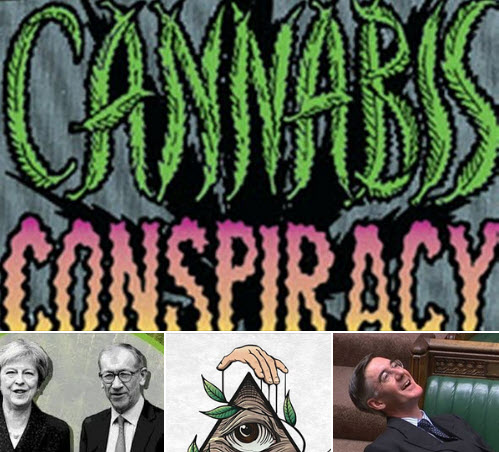
No, Theresa May’s husband does not own the largest cannabis farm in Europe. No, ‘the government’ is not growing cannabis, exporting it all over the world, making millions from it while denying it to British people. No, you do not have to be a Tory donor to get a licence to grow cannabis. No, MPs do not have investments in cannabis companies which is why prices are so high. No, the former drugs minister, Victoria Atkins MP, did not give her husband a licence to grow cannabis.
These and an almost limitless variety of permutations of the same ideas are endlessly repeated on social media and it’s reached the stage where one version or another is regarded as fact by many people.
These ideas do us no favours. They don’t prove some massive conspiracy about cannabis in the government, Parliament or amongst the wealthy elite because they are simply fake. They make fools of us all and play straight into the hands of prohibitionists who paint cannabis consumers as paranoid fantasists with wild obsessions about imaginary conspiracies and plots.
Sadly, on the last point, from what I’ve seen over the past year in particular, they’re right – at least to some degree about some people!
Of course, they arise because it genuinely is impossible to see any rhyme, reason or common sense about the way that cannabis is handled in the UK. With the exceptions of France, Ireland and Sweden, Britain has the most backwards, regressive and irrational position on cannabis and wider drugs policy of any country in Europe.
It’s inevitable that people will try to look for explanations and because there is dishonesty in drugs policy, because the Home Office has been lying to us about the harms of cannabis for at least 50 years, people develop extraordinary theories that are enhanced if you’ve just had a couple of big hits off your bong.
The trick though, which is what anyone who understands anything about psychology will tell you, is that in each of them, at the root is a tiny grain of truth which has been distorted, exaggerated and falsified until it becomes, apparently, a massive scandal. So much so, that even as I have done many times, you explain in great detail why some particular theory is fake, the response is often ‘no smoke without fire, ‘there must be some truth in it’.
But all these conspiracy theories do is dissipate our energy, divert our focus and attention, distract us from the real story and actually obscure what is more about cock-up, cowardice and stupidity than any grand plan. The reason this government, just like the last Labour government, maintains the prohibition of cannabis, is mainly about ignorance and fear. They don’t believe that it is something their core supporters want to see changed and although many senior politicians fully understand the arguments, the idea of explaining why reform is a good idea looks like far too much hard work and for what?
Don’t be fooled that it’s all about the ‘effing Tories’. Labour has a far worse record on drugs policy. It was Margaret Thatcher who first introduced clean needle exchange when HIV/AIDS first struck. She was a scientist by training and understood the value of evidence. Note that that there is a dearth of scientific training amongst current members of both Houses of Parliament. It was Gordon Brown, Labour PM, who reclassified cannabis upwards to class B in 2009, basically on the instructions of Paul Dacre, editor of the Daily Mail. And it was Alan Johnson, Labour Home Secretary, who sacked Professor Nutt for stating the scientific facts that cannabis and MDMA are much less dangerous than alcohol, tobacco – and even horse riding. And finally, most surprising of all, it was Theresa May and Sajid Javid, Conservative PM and Home Secretary respectively, who legalised medicinal cannabis in 2018 Solely, of course, because of public outcry over incredibly emotive stories of small children with epilepsy.
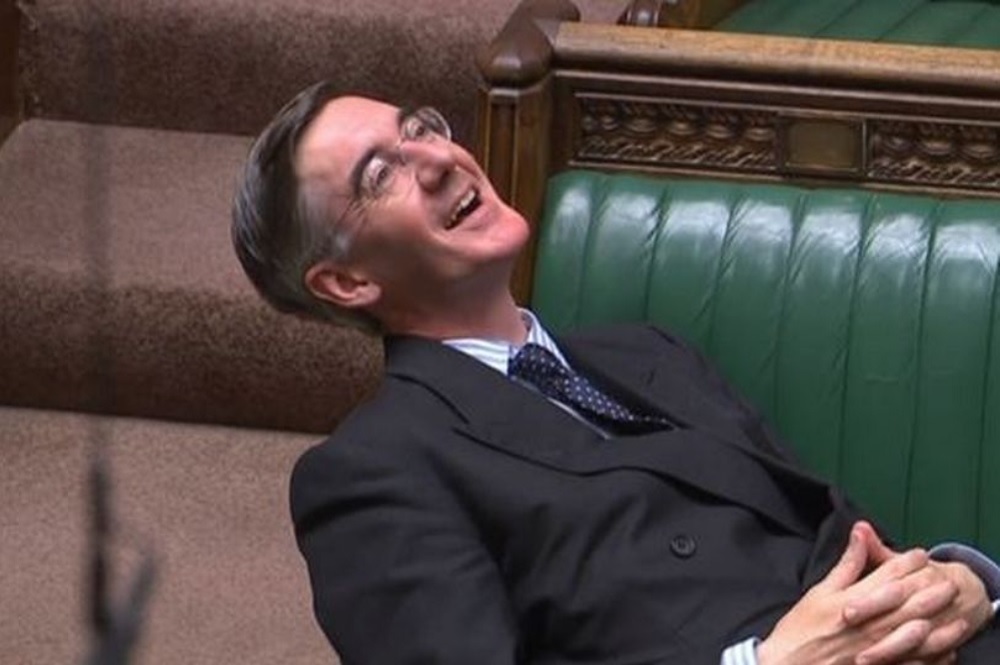
Of course there are MPs, mostly Conservatives, who have investment portfolios and, within the confines of the law, may well have investments in cannabis companies. It’s perfectly legal for anyone to invest in cannabis companies both in the UK and abroad, although not to being any profits back to the UK if they’re from activities that would be illegal here – such as producing and selling recreational cannabis. Great store has been made of Jacob Rees-Mogg’s alleged investments in cannabis but although there are few more odious MPs, there really isn’t any substance worth bothering about in these allegations. In 2007, he was one of the founders of Somerset Capital Management but he now owns less than 15% of it and plays no active role. It has been involved in advising on investments in Canada’s cannabis industry so, by a convoluted route, it is possible that some of the profits from fees earned on this advice have made their way back into his pocket but there’s no evidence at all that he had any involvement.
The Theresa May’s husband’s story has been invented because he, Philip May, is a mid-ranking employee of Capital Group, another investment company which at one point was the largest shareholder in GW Pharmaceuticals, owning about $300 million in its shares. GW’s sub-contractor, British Sugar, does run the largest cannabis farm in Europe at its Wissington glasshouse in Norfolk. But there’s no evidence at all and nothing even to suggest that Philip May had anything to do with it. And you have to put it in context. Capital Group’s investments exceed $2 trillion and it has owned $20 billion of Amazon shares, $2 billion of Starbucks, $5 billion of McDonald’s and $1.5 billion in Ryanair. It’s GW investment was tiny, insignificant and now it doesn’t own any shares in it at all.
And yes, it’s true. British Sugar’s managing director, Paul Kenward, is marrid to Victoria Atkins MP, who was drugs minister for a short time but its licence to grow cannabis was issued before she was even an MP.
The biggest problem that all this nonsense creates is that it destroys the credibility of the cannabis campaign. If we want to see progress the people we have to persuade aren’t cannabis consumers and that is, of course, the majority. They already have various perceptions, mostly negative, of those of us that do enjoy cannabis. Most of these are thanks to the government-originated propaganda, gratefully published and exaggerated by the tabloid press and most of them revolve around the idea that cannabis causes mental health problems. These wild, evidence-free conspiracy theories appear to confirm this idea.
So please, stop it! Put your energy into something worthwhile and effective. Write to your MP. Arrange to meet them and explain in calm, respectful terms why cannabis matters to you and why you want to see the law reformed.
Our Immigration Policy Costs Lives with Exactly the Same Muddled Thinking As Our Drugs Policy

The parallels are exact. It’s all about supply and demand. Just as there is a huge demand for drugs, there is huge demand to come and live in the UK. Unless legitimate access is provided at reasonable cost and convenience then it is inevitable that criminals will move in to meet that demand.
People are dying because of the way our government enforces these brutal, badly-thought out policies. Preventing these deaths has to be our priority. Prejudice about drug consumers and xenophobia about refugees has to be put aside.
We have the same slow-witted, myopic politicians in charge of both policies and they are incapable of addressing these issues rationally. Don’t think it’s just the Conservatives though, the Labour Party is barely any different. In fact, to listen to the shadow home secretary, Nick Thomas-Symonds, it’s easy to see him being even more hardline on drugs and immigration than Priti Patel.
It’s a truism that all politicians are the same but certainly on these dog whistle issues in Britain, both parties seem to compete to see who can appease Daily Mail readers most effectively and win their support.
Politicians hold delusional and arrogant beliefs that the ‘messages they send’ actually make any difference to people and that when they make laws people are going to obey them without question. When people see that laws are irrational, unfair and work against their interests they don’t want to obey. And when we’re referring to issues of vital importance such as coping with addiction or being able to live decently and in peace with your family, politicians’ pathetic, badly-thought out rules are the last thing that anyone will follow.
You only have to watch these fools of ministers and MPs rolled out in front of the cameras to comment on the latest tragedy, be it the 27 people who drowned in the channel last week, the latest drug deaths figures or the number of young people whose prospects have been ruined because they were caught with a bit of weed, a gram of cocaine or a couple of ecstasy tablets.
“We have to crack down on these vile criminal gangs,” they say. Which is correct, of course, the only long-term solution is to remove the trade in drugs and immigration from the gangsters. But that really isn’t the point, is it? While people are still overloading tiny inflatable dinghies to cross the channel or selling sexual services to be able to inject heroin cut with cement dust into their veins, they are where the focus should be. There’s no purpose trying to divert attention to criminals who don’t care anyway. Government’s responsibility is to protect people, first and foremost.
Applying for refugee status is a right, not a privilege and government has to make this accessible, practical and reasonably convenient. It’s our stupid laws that are making people get into these boats because they can’t apply for asylum until they get here. We should permit people to apply for asylum at any British embassy anywhere in the world. If they can demonstrate to a reasonable standard of proof that they are fleeing war or persecution, we must give them asylum there and then. That is our legal and moral obligation.
Our irresponsible politicians are the cause of these criminal gangs, whether they are supplying the entry to Britain or the access to drugs that people want. If these demands were being satisfactorily met, with appropriate controls, the gangsters would be put out of business.
We need emergency solutions to cope with the disaster that our politicians have created. For refugees that means enabling asylum claims from outside our borders. For drugs it means overdose prevention centres and a return to the very succesful ‘British System’ of the 1960s where addicts were prescribed diamorphine (pharmaceutical grade heroin). Under this system we had about 3,000 registered addicts in the UK. Since we scrapped it in favour of hard line prohibition that figure has grown to 350,000.
Perhaps the most difficult aspect of both these problems is that our politicians have got them both wrong, very wrong and they are going to have to admit that in order to implement the solution. Can they? Are they ‘man enough’ to admit their mistakes. Because what is certain, without doubt, is that politicians are the problem.
Review. Tobor Elite Vaporiser
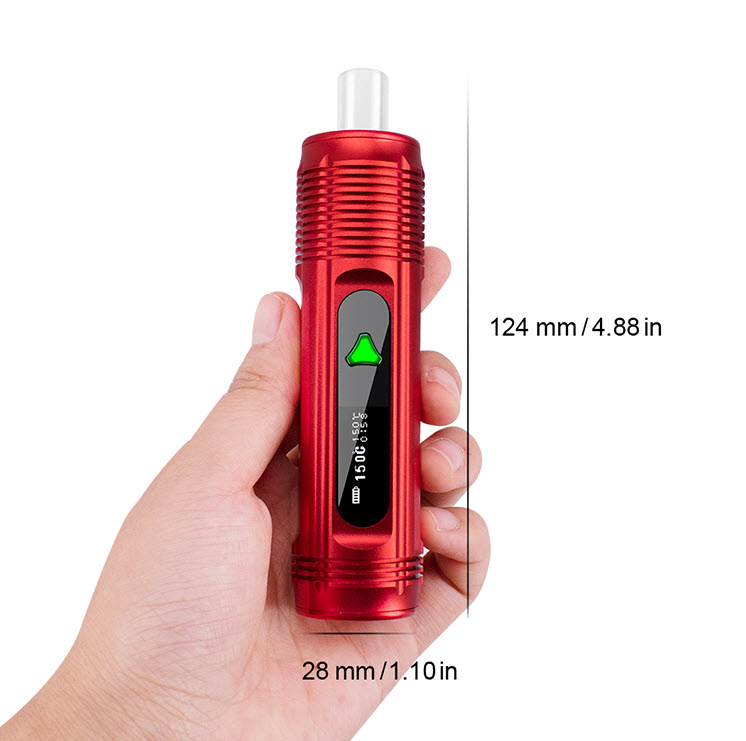
UPDATE. 8th February 2022. I’ve now been using this product for over three months and I’ve become more and more pleased with it. It’s a triumph, overall the best handheld vape I’ve ever used and it’s a bargain at less than £100.
I’ve been using this new device for about a month now and I’m very impressed with it. It produces vapour more quickly than any other handheld vaporiser I’ve tried. It’s very easy to use and doesn’t seem to need the practice that others do before you get the ‘knack’ to using it effectively.
Even better, it costs less than £100, it’s robust and high quality. Like most vaporisers it’s let down by its battery which ideally would hold twice the charge. In practice it will only vape two bowls before it needs a re-charge but that seems to happen pretty quickly.
I think the reason it works so quickly is because the bowl is unusually large. I’ve learned not to fill it more than about one-third full and then the sheer size of the chamber, with hot air being pulled through it from all sides is what gets the evaporation going quickly. Another benefit is that it doesn’t need the temperature increased as you get to the end of the bowl. It just keeps cranking out vapour as the whole device, which nicely fills your hand, warms up and delivers those ‘big clouds’ which with many vapes are largely imaginary!
The poor battery life is a problem and means for those few hours in the evening when I want to use it, I have to have something else as well and at the moment (apart from the occasional neat joint) that’s my Arizer Solo 2 which has a fantastic battery life and I’ve acquired a water bubbler stem which is a definite plus. The Tobor Elite would work also well with a bubbler if one was available.
So this definitely gets a recommendation and the low price makes it a strong contender, particularly if it’s your first vaporiser as it’s so easy to use. The real test will be how the battery perfoms over time. They all deteriorate, hold less charge, take longer to re-charge and eventually give up completely. If it lasts a year I’ll be pleased, any longer would be exceptional. But this is excellent value for money and I don’t think anyone could be disappointed with it at the price.
It’s available here from Canna-Logic.
Ireland’s Medical Cannabis Access Programme – One Mistake After Another
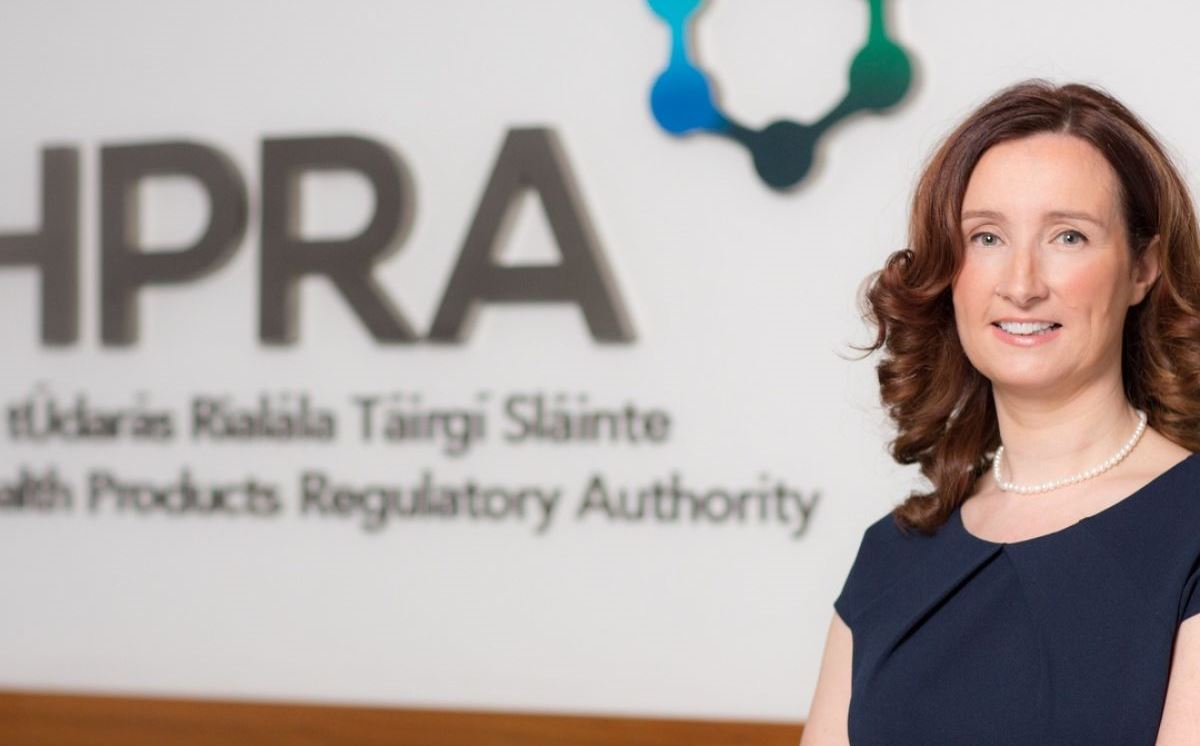
Lorraine Nolan, Chief Executive, HPRA
Short of an outright ban, Ireland has the most restrictive medicinal cannabis programme anywhere in the world and it’s still not operational more than four years after it was announced.
What’s even worse, as demonstrated by the letter nine leading neurologists have sent to Minister for Health Stephen Donnelly (Irish Times, 9th August 2021), the four products that the Health Products Regulatory Authority (HPRA) have selected are unsuitable for the conditions they are supposed to treat.
The story of how this has unfolded is a lesson in how not to regulate medicinal cannabis, or, indeed, any medicine. The programme is the result of public demand based on increasing recognition of the value and safety of cannabis when used responsibly under medical supervision. But it has been sabotaged by an Irish medical establishment that is hostile to cannabis and officials who have refused to take expert advice, preferring the opinions of clinicians who know nothing about it.
The problems started right at the beginning with a report compiled by the HPRA early in 2017 described as from an ‘expert working group’, yet not one person in the group was an expert in cannabis. It’s not clear that any of them had any knowledge at all about the use of cannabis as medicine when they were appointed.
Unsurprisingly the report is full of errors and misunderstanding. It claims there is “an absence of scientific data” on the efficacy of cannabis and not enough information on safety. This is palpable nonsense. History records cannabis being used as medicine for more than 5,000 years and ironically, it was an Irishman, William Brookes Shaughnessy, who published the first scientific paper on it in a medical journal in 1843. Since then it has been one of the most studied medicines on the planet. It has over 26,000 references on Pubmed, the foremost source for medical literature whereas paracetamol has around 12,000. California has had a medicinal cannabis programme since 1989, the Netherlands since 2001 and its use is now widespread throughout the world. Millions of people are using medicinal cannabis safely and effectively. There is a vast amount of information and evidence available.
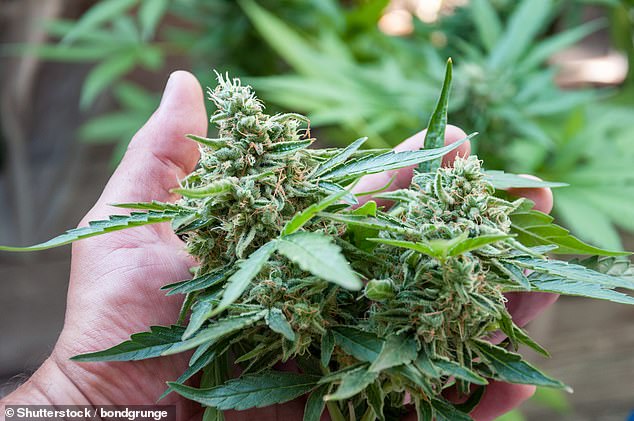 The most glaring error in the report is the omission of pain as a condition for which cannabis should be available. Pain is the condition for which cannabis is most often used and is most effective. In 2020 the global medicinal cannabis market was valued at around $9 billion, this is expected to reach $47 billion by 2027 and over 60% of this is for treating pain. Yet the HPRA’s so-called ‘experts’ thought it best to leave it out.
The HPRA started work on MCAP in March 2017. Officials claim to have sought “solutions to the supply of products from Denmark, UK, Canada and further afield”, which has included at least some officials going on international trips. It has taken four years to select four products, one of which is for epilepsy in adults and the other three are, as anyone with any expertise will confirm, best suited to treating pain!
Responsibility for this situation lies squarely with the HPRA. It is matched by its corresponding failure to facilitate a medicinal cannabis industry in Ireland. At least a dozen serious proposals have been presented offering multimillion euro investments in Ireland, promising the creation of hundreds of new jobs. Professor David Finn at NUI Galway is one of the world’s leading researchers into cannabinoid medicines and even his participation has failed to galvanise the HPRA into action.
Medicinal cannabis is the fastest growing business sector in the world. It is coming to Ireland, irrespective of the negative and luddite attitudes that prevail amongst the establishment. What is clear is that public health, the Irish people and the Irish economy are missing out in a big way and many of the opportunities have now been lost for good.
Why Do They Always Get The Good Ones?
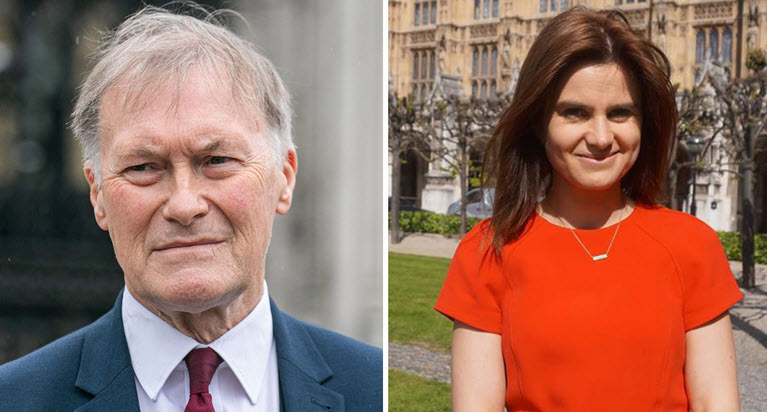
Not all MPs are paragons like Sir Michael Amess and Jo Cox
There’s been a lot of talk over the past few days about how face-to-face meetings between MPs and constituents are the ‘foundation of British democracy’. It’s a nice idea and if only it were true. The reality is that far too many MPs do all they can to avoid meeting constituents, particularly if it’s about a subject that doesn’t interest them or where they are being asked to discuss and then represent a point of view with which they disagree.
I know this from bitter experience over many years, helping medicinal cannabis patients try and gain their MP’s support as they were ignored, refused appointments and disrespected, sometimes with great cruelty. Many of those MPs are still in Parliament and most of them are now eager to be seen as supporters of medicinal cannabis. Some are now claiming credit for reform of the law and holding themselves out as being in the vanguard of the campaign!
Of course there are some excellent MPs who take their job seriously, genuinely provide service to their constituents and the country but these are far from the majority.
No one, whatever their conduct, deserves the fate that befell Sir Michael and Jo Cox but the deification of our politicians, which our ridiculous and fickle media has rushed into in the last few days, overlooks a long history of self-serving corruption, laziness, arrogance and dereliction of duty to constituents, sometimes over many decades.
What we need is a complete reset of the way MPs work and their relationship with constituents. Perhaps that does require better security and I would have no objection to protective screens and even armed police officers. I know that the patients I have represented would have seen that as a small price to actually get some access and the attention they deserved. Yet again though, I think MPs treat themselves better than the rest. Many people face danger in their work. I think traffic wardens are probably assaulted more often than MPs.
The police give far higher priority to online abuse and threats to MPs than they do to you and me. Indeed, when I, as a very minor ‘public figure’ was subject to years of abuse and threats, the police first told me I had to put up with it precisely because I was a public figure. It took weeks of pressure from me and my lawyers before they started issuing harassment warnings.
I’d like to see standards of service for MPs with clear obligations to meet constituents, how long they take to reply to emails, etc. There should be a proper complaints system with real sanctions for MPs who fall short. While ministers spend their lives evading questions and hiding behind bureaucracy and crown immunity, if an elector can’t get a straight answer they should be entitled to a full and proper response from their department.
There’s a fatal flaw in this idea though. To get it through, MPs would have to vote on it, so there’s no chance of it, ever!
IRELAND. Politicians And Gardai Who Want To Keep Cannabis Banned are on the Same Side as the Drugs Gangsters.

In Ireland, 90% of people support the use of cannabis for medical purposes and, remarkably, nearly a third support legalisation for recreational use. So cannabis is very popular indeed. A great deal of money is spent on it, all of which goes into the pockets of criminals. Some are just friends of friends and not really causing any harm but move a step or two up the chain and right to the top it’s gangsters and organised crime. What they earn from cannabis goes into funding far more serious criminal activity with violence never far away. And the largely futile efforts to stop the cannabis trade cost Irish taxpayers hundreds of millions of euros.
So why isn’t the government taking action to enable access for medical use, to regulate an adult use market, save hundreds of millions of euros and pull the rug from underneath organised crime?
Evidence from other jurisdictions proves beyond doubt that a regulated market would remove most of the trade from criminals, cut related crime, protect consumers, control the stength and quality of the product and reduce all harms.
So why do they do nothing? Why do they refuse even to engage with the public on the subject?
You’d think they actually choose to be on the same side as the gangsters. I doubt that’s the case but the end result is the same: Micheál Martin; Leo Varadkar; Frank Feighan, the drugs minister; Eamon Ryan, whose party claims to support drugs reform; every member of the government and their officials, including Commissioner Drew Harris, stand right alongside the Hutch mob, the Kinahans and the other peddlers in misery and violence.
What’s most remarkable is that even the government’s efforts to meet public demand for medical access have been nothing short of pathetic. Four years after the Medical Cannabis Access Programme (MCAP) was announced, it is still not operational. In fact it’s nothing but a joke and, short of an outright ban, is the most restrictive medicinal cannabis programme of any nation anywhere in the world. It raises all sorts of important questions why the Irish medical establishment has such well organised opposition to medicinal cannabis and simply dismisses the vast amount of evidence in favour. Ireland is isolated in this backwards and cruel policy.
Several large multinationals have tried to invest millions of euros in developing a medicinal cannabis industry, which would create hundreds of new, well paid jobs. But regulators at the Department of Health and Health Products Regulatory Authority (HPRA) block and endlessly delay as if those are their instructions.
The Irish goverment’s policy on cannabis is confused, irrational and impossible to understand. The bottom line is that it is opaque and no one will respond or engage on the subject. That usually means they have something to hide. It could just be that they recognise their own incompetence on the issue. Or it could be something more sinister.
The Irish Cannabis Market.
According to the 2019–20 Irish National Drug and Alcohol Survey, 20.7% of 15-64 year olds have consumed cannabis in their lifetime and 7.1% report recent use, that’s nearly 300,000 people. Cannabis valued at €15.2 million was seized by Gardai in 2020 although based on typical valuations by law enforcement this is certainly an over-valuation.
Based on research carried out in the UK, adjusted pro rata for population size, the value of the cannabis market in Ireland is estimated at a minimum of €225 million and possibly as much as €675 million. It is costing the Irish state a great deal of time and money in law enforcement costs. Drug offences account for 11% of all recorded offences and of these nearly 69% are for personal possession most of which are for cannabis. With a €3 billion budget for justice in 2021 drug law enforcement would appear to cost around €330 million, most of which is for cannabis.
If Rory Stewart wants to use his time and energy for the human rights of people in Afghanistan, off he should go.
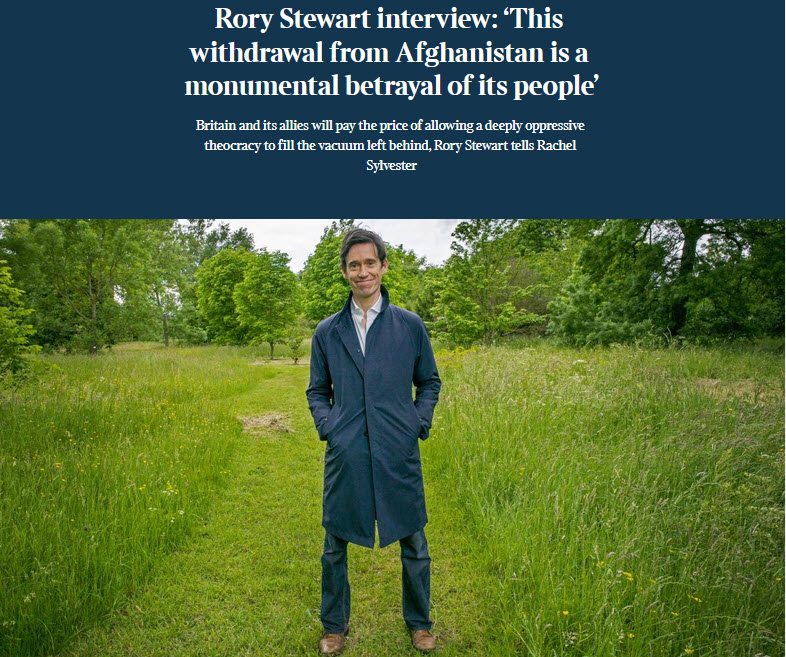
Staying there for 20 years was a monumental betrayal of the British people.
I’m more concerned about the human rights of British people living below the poverty line. People who are having children abused by gangs of Asian men who we won’t touch for fear of being called racist. People who have no access to justice because legal aid has been destroyed. People who are dying from contaminated drugs of unknown strength because we have fools in charge of drugs policy. The human rights of British people whose sons and daughters have been killed or mutilated while pursuing the foreign adventures of our so-called ‘leaders’.
At great cost of lives and money we have trained 300,000 Afghanis to defend themselves. Now they’re all running away.

 Peter Reynolds