Archive for the ‘Health’ Category
The Best Value Handheld Vaporiser Yet.

A vaporiser is now the essential tool for consuming prescribed cannabis. The legislation doesn’t specify you must use a vaporiser but smoking is prohibited and you can only gain the full benefit of cannabis through inhalation. A new vaporiser from Norddampf has just come on the market and it’s the best value yet at just over £100. Don’t bother trying to order through the Facebook ads though. It’s bizarre that they spend money on reaching a UK audience because they won’t deliver to UK but you can get it on Amazon here.
You don’t need to spend a fortune. Most vaporisers are vastly overpriced and you need to be smart, not follow the herd to the established brands.
What has concerned me since the law change in 2018 is that patients and consumers are being massively overcharged for what is very simple technology with low manufacturing costs. All it involves is a battery, a heating element, a bowl and a mouthpiece. The market leader, Storz and Bickel’s Mighty+, is a great machine but at an RRP of nearly £350, it’s completely ridiculous, a rip-off.
About four years ago I discovered what was called the ‘Tobor Elite’ at less than £100. I’m still using it today, the very same one all along, every single day, for about three or four hours every evening. It’s brilliant, the best handheld I’ve ever used and I’ve tried them all. Read my original review here.
I advocated for the Elite across social media but I don’t think I convinced many people. Reaction seemed to be that either I was getting paid for it or what I was claiming was too good to be true. Now, to my delight, comes the Norddampf Relict, almost identical design to the Tobor Elite but with some real improvements.
If the Tobor Elite is a bit rough and ready, it needs cleaning and tuning up like it’s an old, carburettor-driven sports car, the Norddampf Relict is like a Porsche, quality engineered in. A satisfying feel of solidity and reliability. The mouthpiece is much better than the Elite which has tendency to become clogged. The one thing Norddampf hasn’t learned is the benefit of a larger bowl. Filled perhaps only a quarter-full, the Elite’s large bowl enables far better vaporisation than in a smaller space.
It was nearly 20 years ago that I first became aware of the idea of a vaporiser. I experimented with various contraptions, most of which were completely useless but when I first tried a Volcano my eyes were opened. It’s still the best vaporiser on the market but it’s bulky, cumbersome and at least needs its own, dedicated table. In fact, if someone can suggest a trolley at coffee table height that can be wheeled out of sight when necessary, I might even buy my first Volcano.
The handheld vaporiser has now become ubiquitous. Or at least it has for those of us in the know. The media and our dozy political leaders still think that cannabis means smoking. To be fair, I still enjoy the occasional no-tobacco joint but they are incredibly wasteful and nowhere near as effective as a vaporiser that you know how to use properly.
The pharmacology of cannabis is totally different when consumed though the gastrointestinal system. Holding oil under the tongue so that it is absorbed through the mucus membranes is better but nowhere near as effective as inhalation.
Of all the work I’ve done in cannabis reform over the years, probably the most consequential is when I was consulted in 2018 by the Department of Health and MHRA on development of the new regulations for legal access to cannabis as medicine. I argued strongly that one of the greatest benefits was easy and accurate self-titration of dose by inhalation. It was vital to convince them of this so that cannabis flower would be classified as a medicine. See recommendation 5 in this report of the consultation.
The London Drugs Commission. Off Target and Misleading.
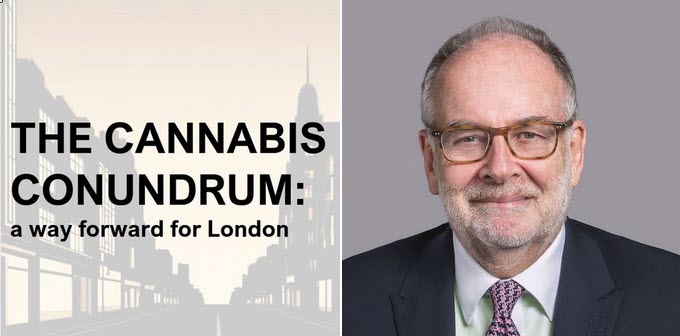
If anyone thinks it will achieve anything to publish a report on cannabis policy that runs to over 300 pages with 42 recommendations, you can spend an hour or so reading it here.
Of course, the recommendation for decriminalisation is correct. Criminalising people for personal possession of any drug, or for growing a few cannabis plants, achieves nothing. We know from multiple studies across the world, including from the Home Office, that the level of enforcement and the severity of penalties makes no difference at all to levels of use or harm, except the harm caused by giving someone a criminal record. Enforcing these laws also takes huge amounts of police time and resource. Their disproportionate enforcement among ethnic minorities also damages community relations. It’s a ridiculous policy. Yet another example of how detached from reality and public opinion are our political leaders.
But the report fails to address the real issue. By far the most harm around cannabis and all drugs is from the markets through which they are produced and sold. Both the Home Office and the National Crime Agency acknowledge that most crime and violence is caused by criminal drugs markets. These markets exist to meet the unstoppable demand for drugs. Our political leaders like to pretend that they can reduce this demand but the evidence over more than 50 years proves them wrong. The cannabis market is by far the biggest and it is organised crime’s single largest source of daily cashflow. It provides the funding for every other sort of criminal activity imaginable. There is no other solution to stopping this catastrophic harm except to offer a legal alternative where consumers can purchase cannabis from licensed retailers that has been produced to quality standards by licensed producers.
All sort of other benefits would flow from this sensible change of policy. Thousands of new jobs would be created. Taxing the products would deliver vast amounts of cash for the health service, housing, social care, other public services and this is after paying for the costs of running the regulatory system. Huge amounts of police time would be freed up to start focusing on real crime that causes people harm. We know that this can work from the experience in other places. In Canada, six years after legalisation, 80% of all cannabis purchases are now made through legal channels. More than $2 billion is collected each year in local and federal taxes after deduction of expenses. This in a country with half the population of UK.
The report makes weak excuses for failing to recommend legal regulation of the cannabis market, excuses which are not supported by evidence and in many instances are directly contradicted. It says that legalisation has not been a “panacea”, “risks remain”, “it by no means abolishes the illicit cannabis market” and there are “too many unknowns, particularly those relating to public health”.
These excuses are disingenuous at best, deceitful at worst. They take no account of the very large body of evidence over more than 10 years from the USA and Canada, of the benefits of the coffeshop system in the Netherlands over 50 years and more recent experience in several European countries. It is wilful ignorance or, I suggest, political cowardice. I attended the Commission on two occasions to give evidence and after several hours in discussions, I am convinced that Lord Falconer and his colleagues fully understand that imperative for legal regulation and the evidence that supports it. The conclusion I draw is that they felt recommending legalisation would be politically unacceptable and would likely lead to the report being rejected. In truth the report was always going to be rejected, as it has been, so there was no benefit in holding back from the obvious recommendations it should have made.
Reading between the lines, my judgement is that this is all down to the near-hysteria about cannabis and its ‘links to mental illness’ which is pretty much unique to UK and Ireland. Nowhere else in the world comes close to the wildly unbalanced narrative that predominates here. It’s based on decades of systematic misinformation from the Home Office and ruthless exploitation by the tabloid media. The ‘one puff and you’re psychotic’ mythology has sold millions of newspapers and in recent years generated billions of clicks. It’s false. The facts are that the risk of a psychotic episode associated with cannabis use is 1 in 20,000, with alcohol use 1 in 2,000, with a life threatening reaction to peanuts 1 in 100 or shellfish 1 in 25. Hysteria perhaps doesn’t put it strongly enough!
Reform will come eventually to the UK but it’s hard to predict when. The legalisation of medical access came suddenly and unexpectedly and only because the government was shamed in the media by its appalling treatment of two epileptic boys who were forced overseas for life saving cannabis medicine. Media embarrassment seems to be the only thing that makes British politicians act and I think the powers that be think the move on medical access has gone quite far enough to keep the plebs in order.
The sheer stupidity, stubborness and inertia of the political establishment on drugs policy is extraordinary. We have no option but to keep fighting the good fight in the knowledge that eventually we will prevail.
Independent London Drugs Commission sets Scene for Robust National Debate on Cannabis

- Commission Chair Lord Charlie Falconer KC publishes comprehensive study on the use of cannabis and the laws which govern it to reduce drug related harm
- Report makes 42 recommendations for London and national government covering education, healthcare and policing of cannabis
- Commission does not call for the legalisation of cannabis but does recommend that natural cannabis is moved from the Misuse of Drugs Act to the Psychoactive Substances Act
- This means it would remain a criminal act to import, manufacture and distribute cannabis but it would not be a criminal act to possess small quantities of cannabis for personal use
- Report is the most wide-ranging and detailed international study of cannabis use in recent history and has examined a vast amount of research and evidence from the UK and around the world
The London Drugs Commission (LDC) has today published its findings1 following the most comprehensive international study to date of the use, impact and policing of cannabis. It sets the scene for a robust national debate on how best to reduce the harms associated with cannabis and the laws which govern it.
Today’s report follows detailed analysis of written and oral evidence from over 200 experts and academics from London, the UK and around the world. Lord Falconer and his Deputies were assisted by leading experts from criminal justice, public health, community relations and drug policy3 and supported by academics from University College London (UCL).
The report reaches five overarching conclusions:
- Cannabis can be addictive and more explicit provision of services focused on problematic use and addiction to the drug is needed, alongside greater join-up across health services.
- Possible gains from legalisation, including tax revenues and reductions in criminalisation, can be realised early. However, the extent of harms, particularly with respect to public health, as well as personal and societal costs, take longer to emerge and are not yet well understood.
- Inclusion of cannabis as a Class B drug in the Misuse of Drugs Act is disproportionate to the harms it can pose relative to other drugs controlled by the Act. The sentencing options currently available, especially for personal possession, cannot be justified when balanced against the longer-term impacts of experience of the justice system, including stop and search, or of serving a criminal sentence can have on a person.
- Cannabis policing continues to focus on particular ethnic communities, creating damaging, long-lasting consequences for individuals, wider society, and police-community relations.
- The content and timing of education about cannabis and its use, for both young people and healthcare professionals, is inadequate. It fails to acknowledge drivers of use and, in school settings, is often led by providers who lack sufficient credibility and insight.
Overall, the report makes 42 recommendations for London and central government to deliver a safer approach to managing cannabis use in London’s communities. These range from better education for young people about the dangers of cannabis, improvements to health and addiction services and changes to ‘stop and search’ protocols and the legislation under which ‘natural’ as opposed to ‘synthetic’ cannabis is governed.
After studying extensive evidence from other countries and jurisdictions which have changed the legal position of cannabis in recent years, and from educators, youth workers, medical practitioners and police who deal with the adverse effects of cannabis every day, the Commission does not call for cannabis legalisation. Instead, its principal recommendation is that the legal regime move natural (i.e. not synthetic) cannabis from the Misuse of Drugs Act to the Psychoactive Substances Act.
This would allow the production and supply of cannabis to be policed and remain criminal, whilst possession of small quantities for personal use would not be penalised. It would also help address ongoing disproportionality in the operation of stop and search, which particularly impacts London’s Black communities.
In addition, the report puts forward workable proposals to help policing in London; bring some order to schemes which aim to divert people out of the criminal justice system; further develop coordination across parts of the health system and improve education on the risks and uses of cannabis.
The Chair of the LDC, Lord Charlie Falconer KC, said: “This is the most extensive consideration of what is the correct public policy response to cannabis in recent times. It is clear that a fundamental reset is required. Legalisation is not the answer. The criminal justice system response needs to focus only on the dealers and not the users. Those who suffer from the adverse effects of cannabis – which may be a small percentage of users but it is a high number of people – need reliable, consistent medical and other support. And there needs to be much more education on the risks of cannabis use. Our Report provides detailed recommendations on how the law needs to change to reflect a new focus for the criminal justice system, and how the response of the public and other sectors can better support those damaged by cannabis use.”
Deputy Chair Janet Hills MBE, who has 30 years’ experience in the Met police, said: “It is time for a shift in our approach to cannabis enforcement to create a more equitable and just system. This report is a driver for change in our community. The 42 recommendations include reforming cannabis enforcement practices and highlight the need for a more balanced and compassionate approach to policing in our city.”
Deputy Chair Professor Virginia Berridge, Professor of History and former Director of the Centre for History in Public Health at the London School of Hygiene & Tropical Medicine, said: “Our report balances a focus on social and racial injustice with public health concerns and will help to resolve the cannabis conundrum.”
Professor Marta Di Forti, Professor of Drugs, Genes and Psychosis at King’s College London, Lead Consultant of the Cannabis Clinic for Psychosis at South London and Maudsley NHS Foundation Trust and member of the LDC’s Expert Reference Group said: “Learning from increasing post legalisation data from Canada and USA, any changes to the law should come along with the resources needed to support the increasing minority that develop psychosis when consuming cannabis, and with adequate and engaging education campaigns about the effects of heavy cannabis use on mental and physical health”
Jason Harwin KPM, retired Deputy Chief Constable, former drugs lead for the National Police Chiefs’ Council and member of the LDC’s Expert Reference Group, said: “Individuals use illicit drugs for many different reasons. Diversion is an evidenced based, proportionate approach that seeks to address the causation of an individual’s actions. Evidence shows effective diversion not only better understands and addresses an individual’s actions but reduces offending and risk for the future. It is critical London has a consistent approach to diversion.”
Professor Adam Winstock, Consultant Psychiatrist & Addiction Medicine Specialist, Honorary Clinical Professor at the Institute of Epidemiology and Health Care, UCL Faculty of Population Health Sciences, and member of the LDC’s Expert Reference Group, said: “It’s good to have been part of an independent expert panel that received submissions from across the political, ideological and cultural spectrum that makes London what it is today. The recommendations challenge the status quo but don’t make any assumptions that alternatives will resolve issues that are embedded in far wider socioeconomic issues. It prompts all of us to ask not only should things change but how, and how we might monitor and mitigate unwanted consequences.”
Glass Pharms’ UK Cannabis Facility – Space, Technological Innovation and Quality.
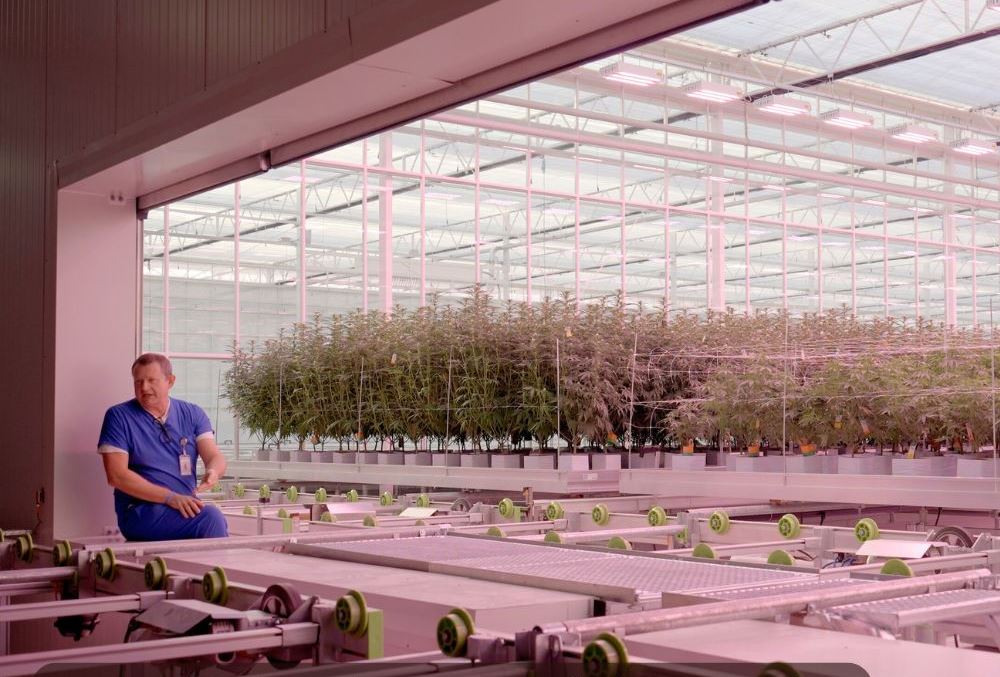
In mid-May 2025 this was my second visit to one of the very few licensed cannabis cultivation facilities in the UK. The first was a month earlier to Dalgety in Staffordshire. It is extraordinary to see two such totally different approaches to growing the same plant.
There is hardly a more beautiful location than where Glass Pharms is based, in deepest Wiltshire, in the middle of glorious English farmland with swooping and squabbling red kites as sentinels. First you pass the anaerobic food waste digestion plant which provides heat for power as well as carbon dioxide to boost plant growth. Then, almost surrounded by a massive solar panel installation, is an unmarked, anonymous but imposing building. From ground level you wouldn’t even know it was a glasshouse.
Security precautions are strict, just like Dalgety. Once through a succession of turnstiles and doors that familar, comforting smell becomes obvious. I was welcomed by managing director Richard Lewis who explained to me that his background and that of most of the staff onsite was in fresh produce. I learned that he regards cucumbers as the vegetable crop most similar to growing cannabis.
The main area of the facility is a large section, perhaps 70 or 80 metres square, where staff attend to plants in different stages of growth, groups of perhaps 30 plants on large trays, just over a metre wide and four metres long. This is where I learned one of the most important principles of this facility – the plants come to the people, the people never go to the plants. Using a robotic conveyor system, which can move in all directions, these trays take batches of plants to where they need to be, either for different lighting and nutrient regimes to simulate the seasons or for human intervention such as de-leafing or harvest.
I also met with James Duckenfield, chief executive and founder, who is a tremendously impressive character. A chemist by training, he very quickly lost me in an explanation of terpenes, other compounds and the reasons that they are currently growing 21 different cultivars to achieve a range of flower products to meet different medical needs. This is a depth of technical, scientific expertise, unlike any I have seen elsewhere, that supports skilled growers and horticulturalists. Glass Pharms did employ a head grower from the Canadian cannabis industry for a while but it didn’t work out. This is not the conventional approach to growing cannabis. It is continuous cultivation where every day new clones are planted and mature plants are harvested.
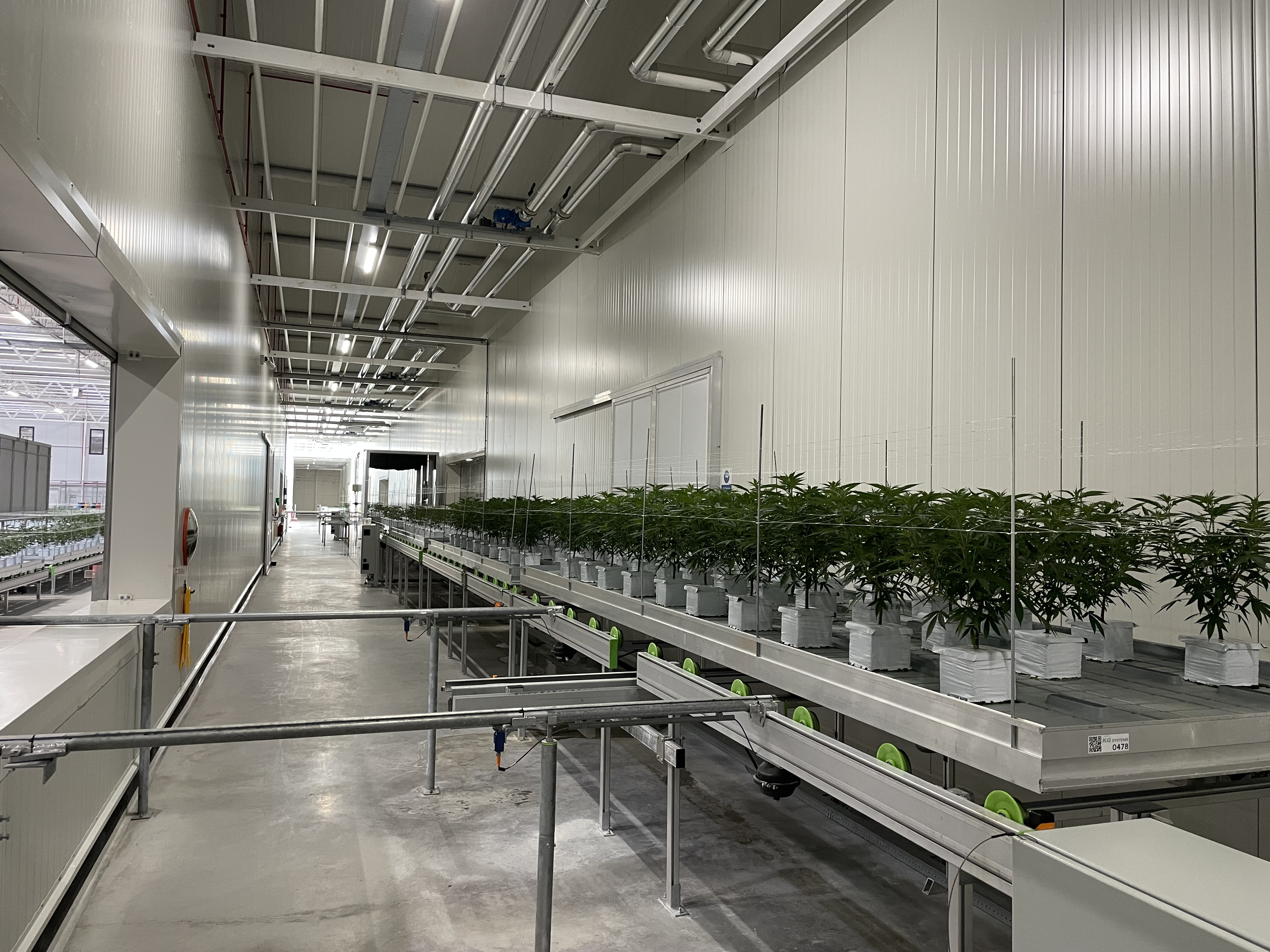
Alongside the main area is a long corridor that runs the entire width of the glasshouse. In fact this is the only place where you realise that you’re in a glasshouse as the roof is visible. There are surprisingly few lighting fixtures and they are of an entirely different type to those more commonly in use elsewhere. None seemed to be operating while I was there. It was a very bright, sunny day but this doesn’t explain why in different areas of the glasshouse there seemed to be different colours and temperatures of lighting, presumably seeking to replicate the different seasons.
Richard explained that 40% of the lighting requirement is provided by the sun. This is a huge saving on what is the most signifiant cost in cannabis cultivation. There are further huge savings on power as it all comes at greatly reduced cost from the anaerobic digestion plant next door. Finally, in what was the most surprising revelation of all, there is not a single HVAC unit in the whole facility. All heating and cooling is provided by an ingenious heat exchanger system working off the waste heat from next door.
Back in the main room, an area to the side is partitioned off. Harvested flowers are packed quite tightly into small trays and this is where they begin the drying and curing process. Again, this is not the conventional approach. I would be concerned straightaway by how tightly packed the buds are. How could they dry properly without going mouldy? Then I learn that this is the start of a secret drying and curing process which they aim to patent – and I was told no more.
As ever, the proof is in the final product and I was given the opportunity to examine four products presented in finished form in Glass Pharms’ unique sealed aluminium tins. These are an innovation in themselves, far better than plastic tubs or mylar bags. I was able to open each container, pick out the buds, feel them, break them apart, examine them in detail. A grinder was provided so I could see how the flower looked and smelled once broken down into vapable form. As I said to James, the only thing missing was a Volcano vaporiser at the end of the table for the ultimate test. I doubt that will ever be possible under UK medical regulations!
I cannot fault what I saw. The perfect consistency of the buds, evenly dried, even density throughout, trichomes visible in the heart of the buds as you break them apart. Just gorgeous. Mouthwatering even!
It’s very, very difficult and challenging to develop a cannabis cultivation facility in Britain. I know this only too well. We are three and a half years into the process in Belfast, where Growth Industries, who I have been advising from the beginning, are still probably two years away from first harvest. But what I have seen at Dalgety and Glass Pharms is tremendously impressive, even with two entirely different approaches. This bodes very well for the future of Britain’s cannabis industry. We can be world leaders in this. If only we had a government and regulators who were focused on helping the industry, rather than looking for ways to restrict it.
Dalgety’s UK Cannabis Facility – Excellence, Professionalism and Leadership.
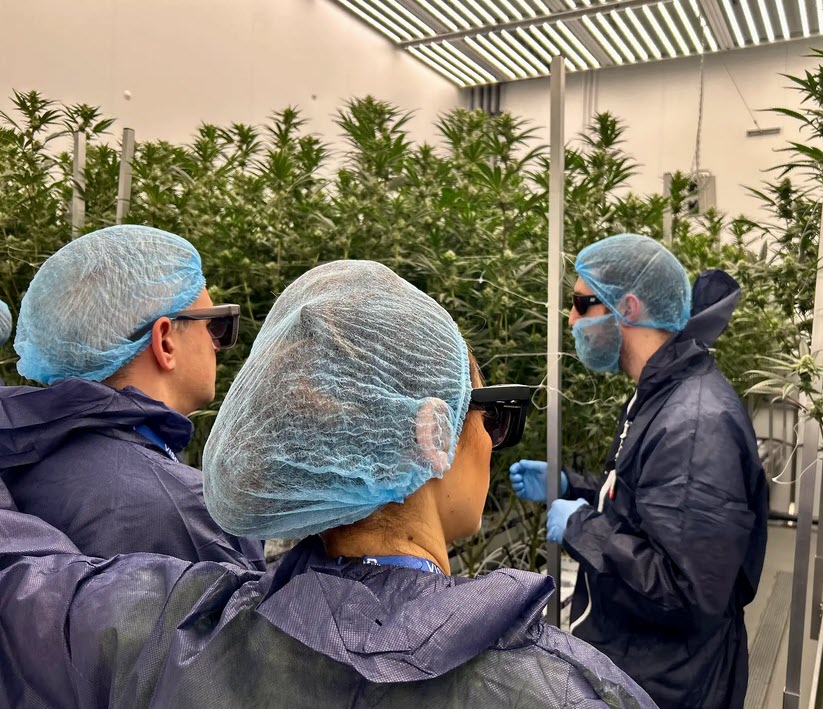
I could not have been more impressed by my recent visit to Dalgety’s cannabis facility, just north of Birmingham. It is the first UK business now permitted to cultivate and prepare a cannabis flower product in its finished form as a medicine that may be prescribed.
The team has shown great professionalism in meeting the conditions required for licensing by the the MHRA and the Home Office. There is also a huge amount of skill, knowledge, determination and financial investment.
It’s my considered opinion that Dalgety now demonstrates leadership in the UK prescription cannabis industry beyond any other business. They have brought into reality what is by far the most difficult objective to achieve. The hurdles put in place by the regulators are quite disproportionate for a plant-based medicine, which is why it has taken so long for any business to reach this stage.
Arriving at the main entrance, the security precautions are extraordinary. You enter through a series of gates, armoured turnstiles and fences. They are tall, strong, impregnable and that’s before you show ID, sign in and then continue through yet more gates. I cannot imagine that even military bases, intelligence services or nuclear installations could require anything more.
While I commend this, I cannot help thinking that 10 minutes down the road at the Dog & Duck, where eighths and quarters of weed are freely available, there are no security measures at all (despite the very dangerous drugs on sale at the bar). This is no criticism of Dalgety but it is condemnation of the absurd policy on cannabis of successive governments. There has been very little logic, rationale or common sense on drugs policy from any British government for at least 100 years – except for this small concession, nearly seven years ago, of allowing cannabis to be prescribed. .
The complex appears huge from the outside but once inside it is just like any other office where we are offered coffee and listen to a short presentation on the long and arduous process involved in development and licensing. Then we head for the grow rooms.
I am very fortunate to have already visited several licensed cannabis facilities both in Colorado and California. I’ve also seen many, shall we say, unlicensed facilities, ranging from one or two to perhaps 50 plants. I’ve never seen any of the huge illegal enterprises growing thousands of plants that supply the illicit UK market with its daily – yes, daily consumption of more than 3,000 kilos. To put that in context, at its present stage, Dalgety will produce 480 kilos per year although it will shortly expand to over 2,000 kilos per year.
The one common factor in all the facilities I have seen is attention to detail but at Dalgety this is taken to exceptional lengths. Each plant is given individual attention to ensure it reaches its maximum potential. All are propagated by cloning from mother plants but even so it is remarkable to see the consistency, almost identical growth heights, branch and flowering structure. This is common to all professional operations but Dalgety achieves a level beyond anything I have seen before.
I have also met many passionate growers. Indeed, I count one of them, Paul Shrive, amongst my closest colleagues and friends but it is impossible not to be very impressed by Brady Green, imported by Dalgety, with family and dogs, from Canada. He has the huge advantage of three years practical experience working to get the facility up and running but his knowledge and expertise is unparalleled. If ever there was a case for ‘key man insurance’, I expect Dalgtey are paying a big premium and keeping him very safe!
I am intimately acquainted with the demands of MHRA licensing, of GMP certification and a compliant pharmaceutical quality system, so I am not surprised by the cleanliness and precision of the grow rooms. They are another stage up from what I have seen in the USA. They are also much less crowded with far fewer plants and much more room around them. I was particularly impressed with the space given between branches hanging to dry. All this adds time and cost. There are no short cuts at all.
I am intrigued by Brady’s decision to dry trim and that all trimming is done by hand. This means that at harvest, fan leaves are removed and branches with flowers are detached from the main stem. These are then hung for a couple of weeks to dry with the smaller leaves still attached. This makes trimming much more difficult, particularly by hand which is completed with a team of about half a dozen people. While hand trimming can achieve a better result, it needs great skill and time. With the quantities involved I expect that eventually they will introduce machine trimming. It also has advantages of greater consistency and hygiene.
The trimming room was the closest we came to seeing the finished product. In California and Colorado such tours always end with a generous box of samples to take away, inspect and consume. No such luck under UK laws and regulations!
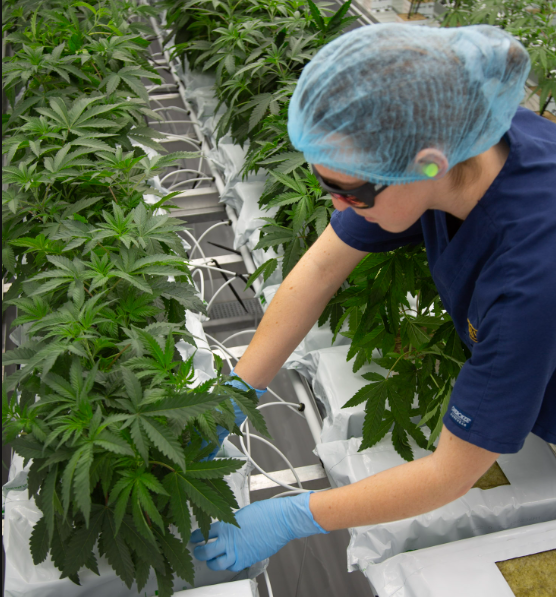
So I cannot judge the final product as I would wish to, at least not until I can get some Dalgety flower prescribed. Even without consuming any, I would have liked to be able to feel, squeeze, pull apart, smell and closely inspect some individual buds but the rules are far too strict for that.
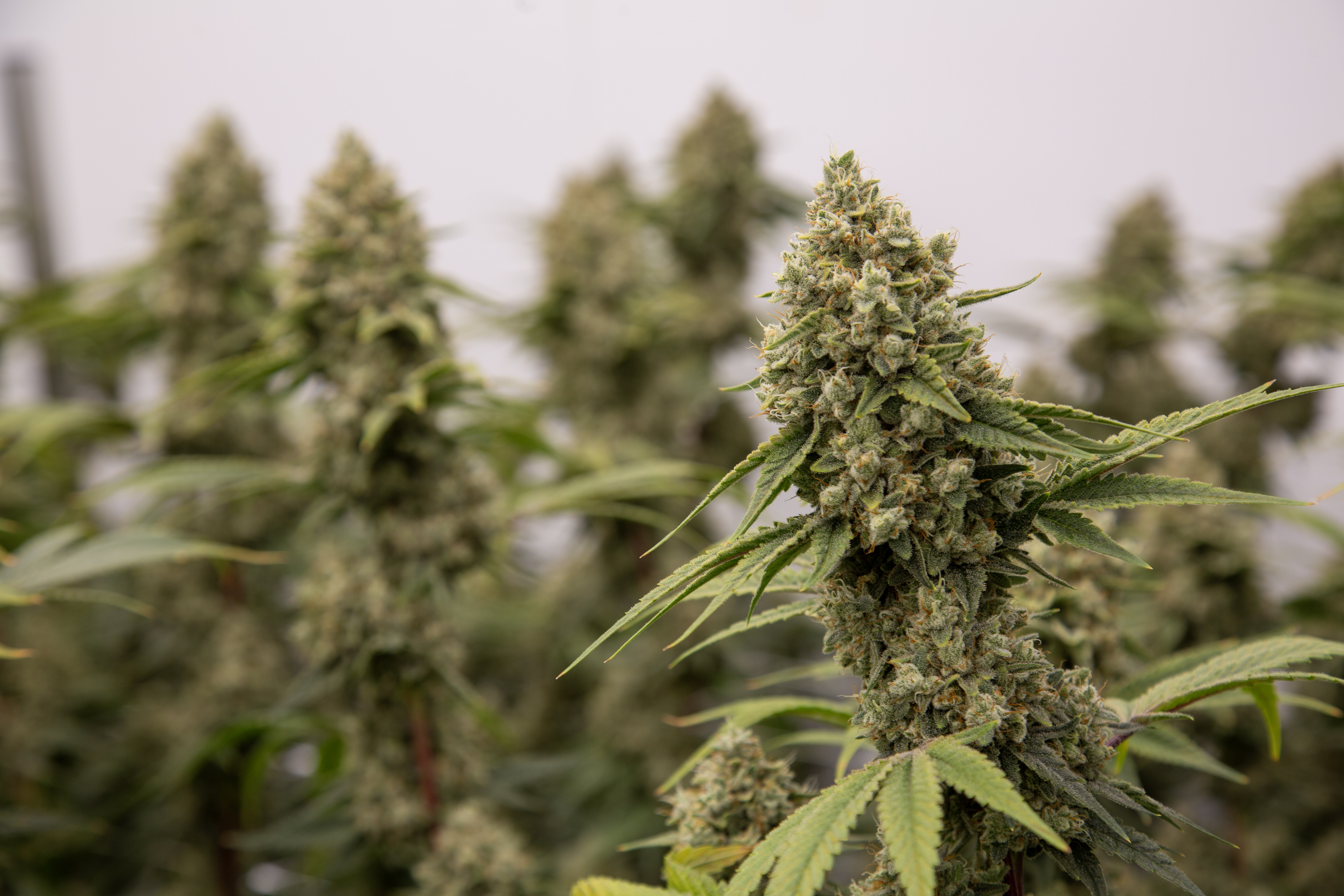
I can say from what I saw in the trimming room that it looks excellent. The one big issue that I have with the regime that we have in the UK is that it places compliance over quality. The best quality flower I have ever seen in my life was in a California adult-use cultivation facility. It was far better than anything I have seen for the medical market in the UK. Without hands-on inspection, the Dalgety flower looked like may well be as good but is the the massive additional cost justified?
This is the fundamental question about growing cannabis legally in Britain. The first answer must be yes because the rules and regulations are in place and complying with them is the only way that we will develop our own cannabis industry. But the rules are manifesty absurd. Cannabis is treated as dangerous drug when in reality it is far safer even than over-the-counter painkillers. The security precautions enforced by the Home Office are about the same as for weapons grade nuclear material, despite the contrast with the free and easy availability of cannabis at the Dog & Duck and virtually any other pub even in the smallest, most remote village. Cannabis is ubiquitous, yet governments keep up this preposterous pretence that it is a ‘controlled drug’ – and in doing so they create, fuel and support organised crime. It is a ridiculous situation continued by ridiculous and weak politicians.
Is the massive cost of producing cannabis under MHRA regulations worth it in comparison to the superb quality available in the USA under much more relaxed conditions? It’s true that there is a very small proportion of potential patients with weak immune systems who may be vulnerable to contaminants but this is no real justification.
I do not resile from my admiration for what Dalgety has achieved. Indeed, I am pursuing the same path with my role in Growth Industries and this is the route that we must take. After decades of campaigning for law reform, after the change of law in 2018 I reached the conclusion that building the legal industry is the best way to achieve progress. In due course this is what will overcome the stigma, the fear and the nonsense we have been fed by governments and the media. I still hope for adult-use legalisation, perhaps in the next five to 10 years but it will probably be another 50 years, long after I am gone, before cannabis will be accurately and proportionately regarded for its immense benefits and minimal dangers.
Once I can get my hands on some Dalgety flower, I will report back with a final verdict. In the meantime, many congratulations for what the team has achieved. The issue is that UK regulators enforce a system in which compliance trumps quality. I choose that term deliberately because it accurately describes how silly it is!
Rapists and Rappers Are Not Suitable Brands for Prescription Cannabis
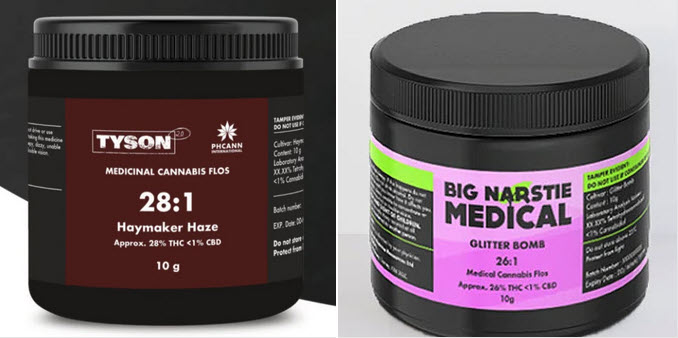
Last year, as chair of the Adult-Use sub group of the Cannabis Industry Council, I was literally screamed at to “shut up” when trying to raise the issue in the executive committee. I fully understood that importers of prescription cannabis felt their monopoly of legal cannabis supply was threatened but today I see those same people using the Tyson and ‘Big Narstie’ brands to promote their medical products.
It’s clear that avarice and greed are now driving the provision of prescription cannabis services in the UK. Apart from the crass misuse of inappropriate brands, I see more and more people who claim to be prescribed 60 or 90 grams per month and invited to ‘pick and choose’ from a range of different flower products. The number of patients in the UK who have a legitimate need for such quantity is very small. But don’t take my word for it. Take note of the ‘Good Practice Guide‘ issued by the Medical Cannabis Clinicians Society in July 2024. Predictably, perhaps, the response to this from importers of cannabis products and others was angry and vituperative.
I don’t need to explain the widespread concern at using the name of a convicted rapist for a medical product. As for ‘Big Narstie’, due respect to him as a patient in his own right but I hardly think that ‘grime comedy’ is appropriate for promoting medicine. When we finally get adult-use legalisation in the UK, I’d encourage him to get involved and he’ll probably do well.
I have some sympathy for anything that circumvents the ridiculous law that prohibits cannabis for adults. While some borderline prescribing was acceptable in my judgement, within reasonable limits, it now threatens the legitimacy of the entire prescription cannabis industry. If these greedy, short-sighted fools don’t get themselves in order, the regulators are going to intervene.
The lessons here are for the importers who dominate supply of prescription cannabis. Understandably, they take a much shorter term view than the few who are now introducing UK-based cultivation. I am certain that the domestic supply chain will be much more responsible as they have the future in mind. Clinics which are involved in excessive and ‘recreational-style’ prescribing also need to think about the long term.
I spent 40 years of my life campaigning for legal access to cannabis as medicine and, by accident rather than design, the 2018 regulations provide the most progressive and flexible system for prescribing cannabis anywhere in the world. It would be a terrible thing to lose this through abuse of the system for short term greed.
Medical use of cannabis is entirely legitimate, life-changing for many, life-saving for some. Adult-use of cannabis is also legitimate in principle, if not yet legal in law.
With common sense it’s easy enough to access cannabis for adult-use without putting oneself in great legal peril. The argument for legalisation is about liberty but most importantly about fighting the massive harms of the gangster-dominated criminal market.
Of course, between medical use and adult-use, there is some blurring at the margins but it’s prudent to separate the two and be disciplined about it.
IRELAND Dithers Aimlessly on Drugs Policy. Politicians Procrastinate. Media Misinforms.
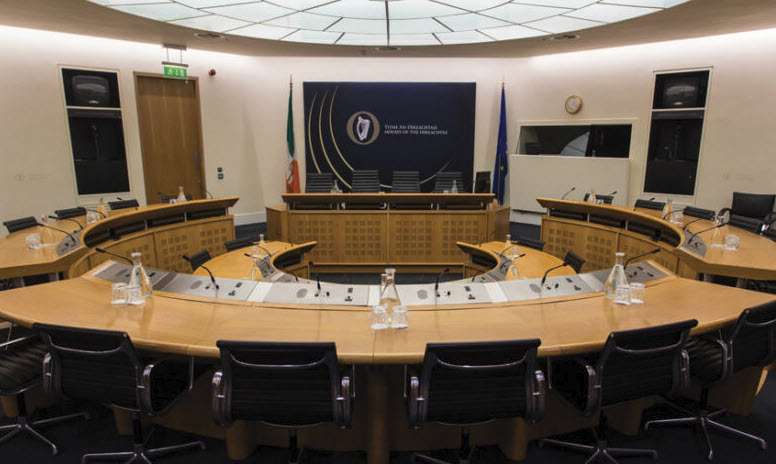
This week the Oireachtas Joint Committee on Drugs Use held its first meeting.
In private. This speaks volumes about the way politics is conducted in Ireland.
It’s presented as “standard practice to attend to housekeeping and procedural matters”. But it’s all done at our expense. There is no good reason that these discussions should be secret. They are our business, not the ‘private’ business of those whose wages we pay.
There is every cause for concern. Everything that this government and the Oireachtas as a whole does on drugs policy warrants the closest scrutiny.
I do not know anyone who has any faith at all that this process will be handled honestly and we see from the beginning that it will not be open and transparent.
The recommendations of the Citizens’ Assembly have already been brushed aside. Varadkar kicked the can as far down the road as possible and now we have a Taoiseach who is authoritarian, regressive and very fond of the mindless ‘tough on drugs’ sloganeering that has failed for 50 years.
And let’s remember, the Citizens’ Assembly was hobbled, rigged and sabotaged from the beginning. The agenda was manipulated so it was never about ‘drugs use’, it was about drugs treatment, so focusing only on the 10% of drugs users who are problematic, ignoring the 90% of users who, as Prof. Jo-Hanna Ivers explained right at the beginning, cause no harm to themselves or others and actually gain benefit from their drug use.
So it was set up to fail from the beginning. The equivalent of planning alcohol policy on the experience and need of alcoholics.
There was just 15 minutes given to one presentation on cannabis regulation while the gardai were given three bites at the cherry, hours each time, to preach falsehood, moralising and an utterly outdated approach which is proven to fail. Ireland now has a reputation for drugs gangsterism that spans the world and it’s deluded to think the gardai have anything of value to offer. Aside from a few academics and Dr Nuno Capaz from Portugal, not a single, working, practical expert on drugs policy was given a platform.
Then the voting system was rigged! Clearly this was organised to defeat what was obvious – that, even in the face of all the manipulation, the assembly intended to recommend decriminalisation of all drugs and a regulated cannabis market. So we had the absurd conclusion that drugs would be “decriminalised but remain illegal”. You really couldn’t make it up!
Of course, before the committee reaches any conclusions we will almost certainly have an election. This process has been twisted, corrupted, manipulated and sabotaged all the way through. I’ve only touched on the most egregious examples. Many other tricks were pulled which should never have been allowed.
Meanwhile the handwringing and alarm from government and media about the consequences of bad drugs policy continues. The HSE is engaged in drug war propaganda while simultaneously ensuring the failure of both the MCAP and ministerial licence schemes for accessing prescription cannabis.
The media systematically misrepresents the issue. In particular, RTE’s coverage is as far from balanced as it possible to conceive, yet its Journalism Guidelines are peppered with words such as ‘balance, fairness, objectivity and impartiality’. Certainly on drugs and drugs policy it falls far short of these standards. It is obsessed with the partial and opinionated views of Bobby Smyth, Ray Walley and other members of the Cannabis Risk Alliance, the extremist anti-cannabis lobby group. The nonsense and misrepresentation they are allowed to get away with about research and data is a scandal.
The press is allowed to be partial and there is no better example than this week’s article in the Independent ‘Almost 5,000 hospitalised with mental disorders after taking cannabis products‘. The awful journalism, confusing cannabis and synthetic cannabinoids is unforgivable, so dreadful you would think it is deliberate. And here again, the only named commentary is from Bobby Smyth and Ray Walley.
Is Irish media so blinkered that it thinks only clinicians or gardai have any role in drugs policy? The subject requires expertise from many disciplines. Why are experts in drugs policy itself never interviewed?
The Irish Times is similarly biased. Occasionally we get more balanced and intelligent coverage from the Examiner and the Journal.
It is difficult to be optimistic about any improvement in drugs policy in Ireland. Fine Gael is a hopeless case. Fianna Fail has a few bright lights, notably Paul McAuliffe and James Lawless. Labour has Aodhán Ó Ríordáin. The Greens have Neasa Hourigan. There is Gino Kenny of People Before Profit, Violet-Anne Wynne, the independent TD and Lynn Ruane, the independent senator . But there are very few more who seem to be properly informed. Most prefer the knuckledragging ‘tough on drugs’ approach of Simon Harris.
There’s No Such Thing as ‘Medical Cannabis’
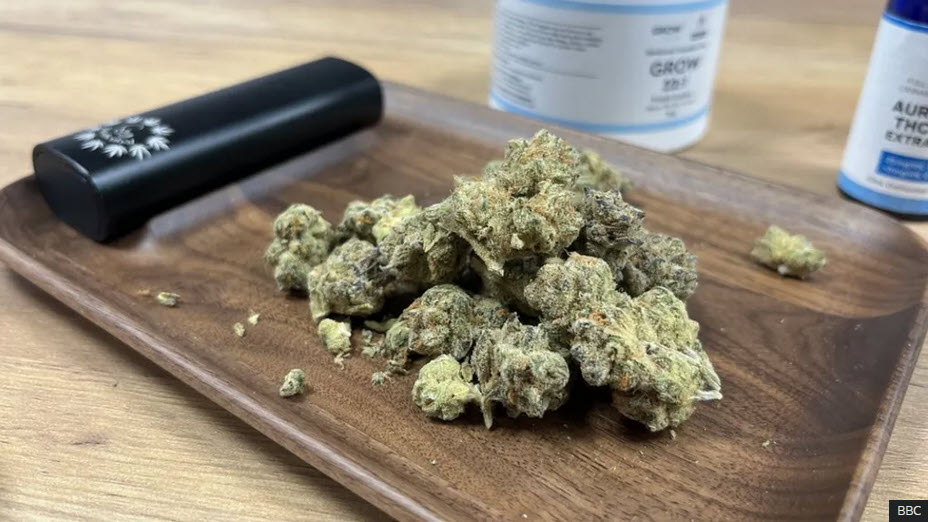
I am increasingly concerned about the ‘medical cannabis industry’ and its resistance to wider reform. These people, some of them at least, have forgotten very quickly who got them the business opportunity in the first place!
Of course, there is no such thing as ‘medical cannabis’. The more accurate language is ‘medicinal cannabis’ but the preferred term has to be ‘prescription cannabis’. It’s exactly the same product as is sold on ‘the streets’, grown in people’s lofts, in illicit ‘factories’ or in hugely expensive licensed facilities. Often, still, the ‘legal’ variety is of inferior quality.
There’s also no truth in the argument that prescription cannabis is safer or lower in THC. The vast majority of what is prescribed in the UK is what the media would call ‘skunk’. Unless you’re underage or smoking it with tobacco, it is safe, much safer than many other things in your kitchen cupboards.
These divisions in the cannabis sector, stoked by newcomers from the protectionist pharmaceutical industry will achieve nothing for anyone. We need a unified message on the benefits of cannabis. Whether it’s prescribed for chronic pain, anxiety, multiple sclerosis or whether it’s smoked in a spliff with the lights down and some psychedelic music on, it’s all about making you feel better.
This is the universal truth about cannabis.
Germany Legalises Cannabis. The Most Important News in Drugs Policy in Our Lifetimes – So Far!

I’ve been waiting for this moment for 53 years. Since I first experienced the joy, insight and delight of cannabis as a 13-year old back in 1971, there has been no more important development. A nation state of 83 million people has at last made the move that will roll back prohibition, undermine organised crime, reduce harm and restore some degree of precious liberty to its people.
Since 1983, when I first gave evidence to the UK Parliament on cannabis, I have fought, campaigned and struggled to enlighten British politicians about the enormous harm cannabis prohibition causes and the immense opportunities that it prevents. Ironically, Germany’s very welcome move comes as politics in Britain reaches its very nadir. Only this week, the House of Commons embarrassed the whole nation by its disgusting, self-serving bickering on a debate about the catastrophe unfolding in Gaza. Of the many politicians I have met over the past 40 years, only a handful have earned my respect. The majority are concerned only with their own and their party’s short-term interest. My work on drugs policy has brought this home to me and the shameful approach of our politicians to the rabid slaughter of innocents confirms this.
My interest in cannabis reform was entirely selfish to begin with. I was outraged at an interference with my personal liberty that had no basis in science, nor in common sense policy. Quickly though I was consumed with the pressing need of so many who could benefit from cannabis as medicine. It was this that lit a fire within me and has driven my work.
There have been important milestones. California legalised medical access in 1996. The US states of Colorado and Washington legalised adult-use in 2012 and the following year Uruguay become the first nation state to see the light. Canada, with a population of 35 million, became the largest nation to legalise in 2018 and out-of-the-blue, in November of that year, the UK legalised medical access. Not through any rational or evidence-based policymaking but solely because the government suffered severe media embarrassment over the plight of two very young, epileptic children, Billy Caldwell and Alfie Dingley. Although very welcome, since then the UK has only gone backward on drugs policy. Currently we have a nasty, vindictive approach to people who use illicit drugs, yet the police operate de facto decriminalisation of personal possession. Meanwhile, powerful drugs gangs have taken over our streets and our negligent approach to drugs policy drives most crime, violence, exploitation of the vulnerable and societal breakdown.
In Germany, from April, it will legal for adults to possess up to 50 grams at home, up to 25 grams in public and each household may cultivate three plants. Cannabis social clubs of up to 500 members will be able to grow cannabis collectively and distribute it amongst their members. There’s a great deal of room for improvement in these arrangements. The clubs are a misguided response to fear of establishing a commercial market but in fact they are an ideal opportunity for cover of criminal gangs. I have no doubt that eventually a sensible, legally regulated, commercial market will be introduced but today is not the day to complain. Today is a cause for great celebration!
It is certain that Germany’s move will influence the rest of the world, particularly Europe, the EU and my adopted homeland, Ireland. I am hopeful for at least decriminalisation in the near future. But in Britain, I am not optimistic. The crass stupidity of both Conservative and Labour politicians knows no bounds. With very few exceptions, their desire to posture as ‘tough on drugs’ trumps any evidence, science or common sense. Reform will come eventually in the UK, probably, just like medical access, it will arrive suddenly and not through any rational process but because of grubby politicking. Such is the reality of living under the small minds and self-interests of British MPs.
Voting at the Citizens’ Assembly on Drugs Use was Rigged

Just a few hands raised to support the voting process
With discontent growing in the room, the chair Paul Reid called for a vote to confirm that the process had been clearly explained. About five hands were raised in agreement. A majority of about 94% were against. Reid did nothing about this. He moved on and continued to force through an increasingly complicated series of votes. Some were by a simple majority. Some were by a single transferable vote. Few people understood what was going on.
To begin with the voting had started with a simple majority vote where over 95% had voted against maintaining the status quo in drugs policy. By the end of the voting, Reid had effectively reversed that vote and the end result is a recommendation barely any different from the health diversion policy that is already supposed to have been in place for five years but which the government has failed to legislate for.
Contrary to widespread misreporting in the media, the recommendations which Reid has manipulated through do not decriminalise anything. Even personal possession of small amounts of drugs would remain a criminal offence.
The confusion started when Reid presented a series of options to vote on which had never been seen before. They were certainly not prepared by or with the support of the Assembly. They were ambiguous, contradictory, confusing and clearly designed to split the vote on measures for decriminalisation or legalisation.
Throughout the Assembly’s meetings, there has been dreadful bias in the selection of presentations and evidence. Apart from government departments and government-funded organisations, not a single expert on drugs policy was allowed to give evidence. Despite the strong interest in regulation from the members, out of 200 hours of evidence, just seven minutes was allowed for a presentation on regulation of cannabis. Nothing was permitted on regulation of any other drug.
Neither have any of the 800 submissions to the Assembly been published. A statistical summary of their content was published, showing well over 90% argued for substantial reform. They were supposed to have been published as part of the Assembly process but they have been kept secret and the meetings are now over.
Discontent and protest continued to grow in the room but Reid would have none of it. There were suspicions from the very beginning as to why an establishment figure, closely associated with the drugs policy failures of the past, had been appointed as chair. These appear to be confirmed. It seems that Reid has done as instructed and manipulated a conclusion that maintains the status quo.

 Peter Reynolds