Vancouver’s Experiment with Decriminalisation of all Drugs
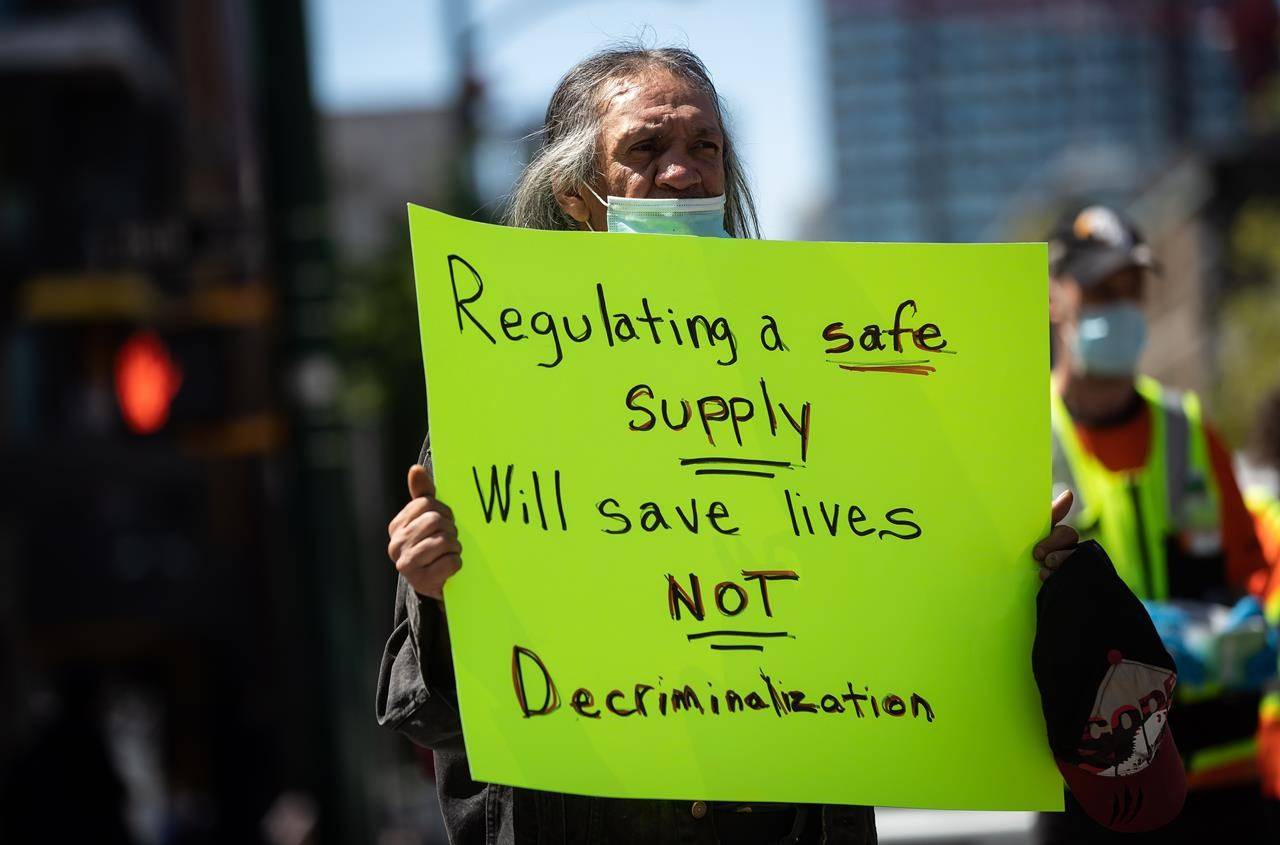
Decriminalisation is an extremely dangerous halfway measure that frees up the market while leaving it under control of gangsters. All the dangers of contaminated product, unknown strength, violence and exploitation continue and will probably get worse.
The only effective drugs policy is legal regulation of all substances where access to clean, known-strength product from regulated sources is available but restricted in accordance with their potential for harm. This would mean that alcohol would be more tightly restricted than cannabis. Heroin or meth would only be available under medical supervision.
This won’t eliminate all harm but it will minimise it, instead of prohibition which maximises all harm.
Prohibition never works because demand comes from the communities that law enforcement is duty-bound to protect. So if the authorities try to try to ‘crack down’, as idiotic British governments have for over 50 years, it makes everything worse
Far more intelligent drugs policy is required and while decriminalisation is part of that because criminalising people for drug use achieves nothing and only causes harm, it is not the solution. Governments need to take responsibility rather than abandoning it to gangsters. That means legal regulation.
Our Streets are Ruled by Violent Drugs Gangsters, Yet Neither Government nor Media will Address our Failed Drugs Policy

Apart from mindless drug war rhetoric, being ‘tough on drugs’, ‘clamping down on dealers’, or. most mindbogglingly-stupid-of-all ‘tackling the scourge of middle-class drug takers’, our so-called ‘leaders’ don’t want to talk about drugs.
Politicians do all they can to avoid the issue. Both BBC and ITV treat the subject of drugs as unacceptable viewing. Reckless use of alcohol is OK but consumers of other drugs are always portrayed as degenerates. Acres of newsprint and hours of TV and radio are devoted to issues such as trans rights, affecting just 0.5% of the population, while 30% of the population consumes prohibited drugs at some time in their lives but we can’t talk about it.
This is the subject that they dare not speak of. Murders, shootings, knife crime, innocent bystanders killed in gang wars, these are almost always driven by criminal drugs markets. It’s not the drugs, it’s the criminal markets through which they are produced and distributed. So while presenters, journalists, MPs and commentators wring their hands in despair, never ever will they discuss why, what can we do about it, how could we do things differently, what would progressive, evidence-based drugs policy look like?
All the Conservatives have been able to come up with is their ‘Swift, Certain, Tough’ idea for harsher punishments including the probably unlawful threat to confiscate passports and driving licences. The word is that the public consultation has delivered almost nothing but withering criticism of the ideas and nobody in the Home Office knows what to do next.
The Labour Party, to its everlasting shame, is just as out-of-touch with the public. Opinion polls show that around half the population supports reform of the law against cannabis and less than a quarter oppose it but baby-faced Wes Streeting is even toying with the idea of prohibiting cigarettes! Keir Starmer, despite his experience as Director of Public Prosecutions, thinks our drug laws are “about right”. He’s way out of step with his learned friends at the bar then, because most of them think our approach to drugs is idiotic, as do most criminal solicitors, court officials and even many judges.
It’s all too difficult for our precious politicians, so they simply ignore it. Our drugs policy continues exactly the same as it has for over 50 years. Drug deaths rise inexorably to record levels. Dealers run rampant throughout our communities, increasingly exploiting children through county lines. Rates of drug consumption are higher than ever.
Cannabis is ubiquitous and the police really can’t be bothered with it unless there’s something else involved or its big time dealing or cultivation. Taking ecstasy on a night out or at a festival is simply normal for most young people and it’s a very good job it’s such a safe drug. Considering it’s completely unregulated, of unknown strength and purity, the death rates are very low, much lower than for over-the-counter painkillers. Millions of tablets are taken every weekend and we get about 50 deaths a year. If the product was properly controlled. with known strength and uncontaminated, probably noone would die at all. It would be as safe as a cup of tea.
 Yet consumption of the most dangerous drug of all, alcohol, is celebrated, promoted and politicians use taxpayers’ money to subsides their own consumption of it in Parliament’s bars. They delight in having their photographs taken in drug consumption rooms, otherwise known as pubs but they refuse to allow overdose prevention centres, claiming there is no evidence they work, despite New York’s facilities halting over 700 overdoses in just one year.
This is one of the biggest issues of our time and politicians should, of course, be addressing it. I’m not letting them off the hook but actually I think our broadcasters bear the heaviest responsibility. The press is a caricature of itself on the subject. We can expect nothing serious or balanced from the Daily Mail or the Telegraph and they do rake in £800 million per year in alcohol advertising so perhaps it’s no surprise. But the BBC is letting us down. It is timid to the point of being irresponsible in its lack of coverage and debate. Until the issue is given the prominence it requires, it is easy for politicians to do nothing except tell us how tough they are.
Of course the problem is that any rational investigation of the subject is bound to conclude that legally regulated markets and accessibility based on scientific assessments of harm have to be the answer. While the people are ready for this, our luddite, regressive establishment isn’t.
IRELAND. Leo Varadkar, the Taoiseach Who Defines the Problem with Western Democracy

Leo Varadkar
Just re-appointed Taoiseach as part of the coalition government of Ireland, Varadkar has immediately shown his true colours in response to a question on drugs policy. The hypocrisy, weakness and self-serving indecision he displays is mirrored in almost every other western ‘leader’ and is the root cause of the decline of western democracy as a system of government.
In 2010, when asked by Hotpress journalist, Olaf Tyaransen, Varadkar would not support either the right to gay marriage or abortion. He also acknowledged that he had smoked cannabis “while in college but never since I have held elected office”.
The point is not about gay marriage, nor about abortion rights, nor drugs policy. It is about the absence of leadership and integrity that is fundamental to the failure of western democracy.
Varadkar’s latest demonstration of failure comes in response to the recent report from the Oireachtas Justice Committee which recommends that “a policy of decriminalisation is pursued, in line with emerging international best-practice on the possession of drugs for personal use, including the cultivation of illicit substances at a modest, non-profit level.” He responds “I haven’t formed a view on it and obviously don’t want to, kind of, prejudice what the Citizens’ Assembly might come up with.”
So, as with the heads of government in the USA, the EU, UK, Australia and New Zealand, he ducks the issue for fear of a short-term backlash. Conveniently he can kick the can down the road referring to the long-delayed and still not arranged Citizens’ Assembly on drugs.
He is content to maintain a policy which sends people to jail for cannabis, even though he has consumed it himself. He will not commit himself to reform which is supported by dozens of peer-reviewed studies and real-world evidence while present policy is supported by none.
This absence of leadership and integrity is the same path that our ‘leaders’ choose on all issues of substance. They will not commit to anything until they are sure it will not disadvantage them politically, even if in their own lives their position is clear. Our political system, which places winning and maintaining power above all else prevents them. They are entirely self-serving, hypocritical and autocratic towards citizens who wish to make their own choices.
This is the failure of western democracy and Varadkar perfectly defines it.
IRELAND. Brutal Five-Year Jail Sentence for Cannabis Caregiver from Limerick
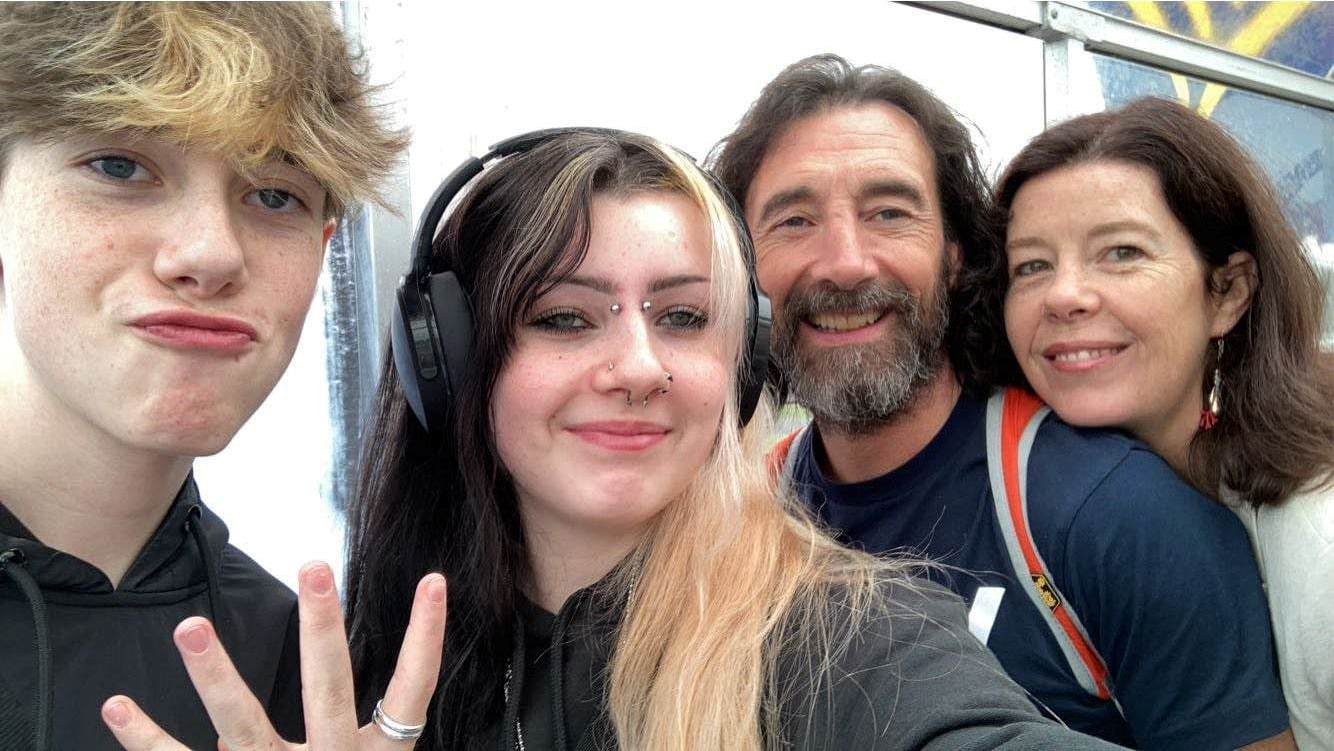
Patrick Moore and family
Patrick Moore lives with his partner and two teenage children in rural County Limerick.
In September 2020, at the height of the pandemic, a huge force of armed gardai raided their home. Patrick was out at the time so Ali, his partner and their two children were faced with 15 armed men brandishing automatic weapons.
Ali called Pat and he returned home immediately. He told the gardai there were cannabis plants growing in the shed at the back of the house and handed them the key so they could investigate. They discovered 19 plants, three small seedlings, the rest in various stages of flowering. They also collected together some bags of trim which had been put aside to make oil, amounting in total to 2.4 kilos.
The gardai also found two notebooks which recorded financial transactions and a calendar that indicated cultivation had been going on for some time.
Last week, at Limerick District Court, having already pleaded guilty to cultivation and supply, Pat attended his sentencing hearing. The whole family was there and I went along to offer moral support. We waited from 11 in the morning until his case was finally called around 4pm. The trim was valued by gardai at €48,000 (€20 per gram) and the plants at €15,200 (€800 each), a total of €63,200. By 5:30 he had been sentenced to five years in jail, the final two years suspended.
As acknowledged in court, the gardai had been acting on information received and clearly believed that Pat was some sort of major drugs baron, potentially armed and dangerous. I fervently hope that karma causes appropriate, severe misfortune to the person responsible.
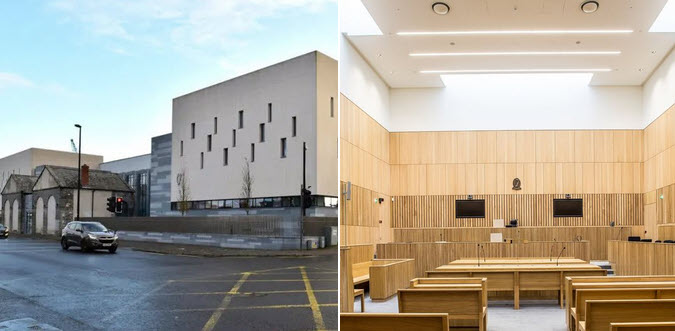
Limerick Court House
Pat was a caregiver, that is someone who produces cannabis for medical use, mostly oil, which is used by people with cancer, other serious conditions and for end-of-life care. Before sentencing him, Judge Catherine Staines read eight or nine testimonials from people he had been supplying.
One was from the daughter of an elderly man who has suffered with Huntington’s Disease for nearly 20 years. When he started using the oil that Pat provided at no cost he regained his power of speech, he was able to swallow again and no longer needed all his food to be pureed. He also experienced far fewer lung infections and pneumonia. His sleep improved and his energy and vitality for life returned.
Another was from the parents of a boy who was diagnosed with leukaemia at age four and given two years to live. That was six years ago and he is still alive today. Pat provided oil free of charge and the family is in no doubt that it saved their son’s life.
There is no pretence here. Pat told me that he was selling high quality flower to a small network of friends and acquaintances. He used this to fund the production of oil for medical use, all of which he gave to sick people without charge. For those that don’t know, the ratio of cannabis flower to oil is about seven to one. You need seven grams of cannabis to make one gram of oil.
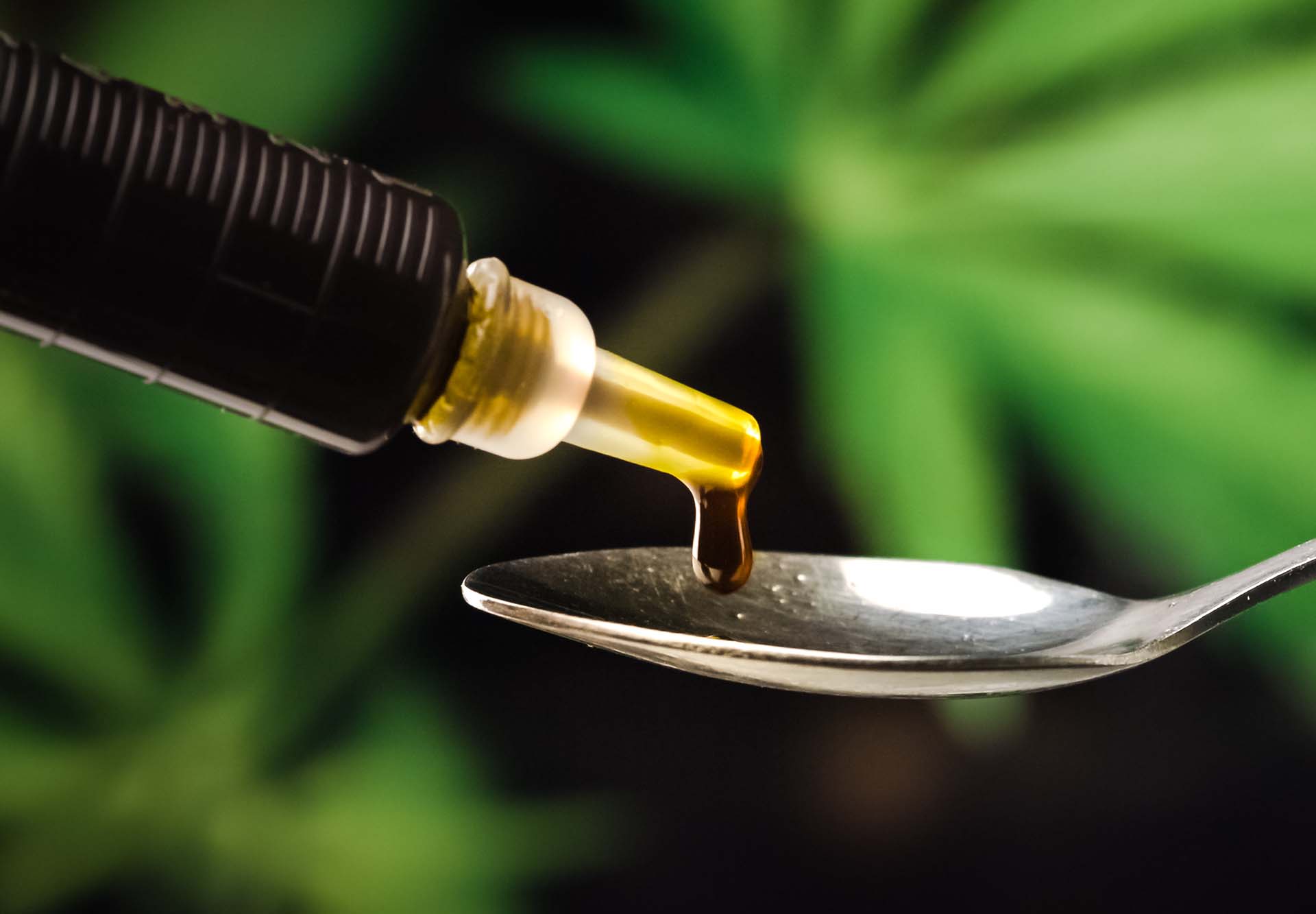
Cannabis oil
I know Pat is not alone. Throughout the UK and Ireland there are dozens of cannabis caregivers providing lifesaving medicine to sick people which, for complex reasons, conventional medicine and healthcare have failed to deliver. I know and have known several of these courageous people, some of whom put themselves in terrible danger for altruistic reasons. More than once I have seen that they simply can’t stop, even if they want to. How can you deny a sick child or someone in terrible pain when you have the ability and knowledge to help?
I have known Pat for about four years and he certainly doesn’t have a lavish lifestyle. He helps Ali run a small café in the local town and he had a business selling hydroponic equipment and supplies online. He drives an old Land Rover and at home he has a large polytunnel where he grows a variety of vegetables and even his own tobacco. He was the first person to show me that it is actually possible to grow tomatoes in South-West Ireland’s hostile climate.
To understand his sentence and why there is no sensible prospect of an appeal, it is necessary to put aside one’s opinion that the law prohibiting cannabis is wrong. All decent, rational people who are properly informed will recognise the injustice, the self-defeating stupidity of this law but it remains in force, for now.
Ireland’s Misuse of Drugs Act 1977 is a cut-down version of the UK’s Misuse of Drugs Act 1971. There are no different classifications of drugs, they’re all just controlled drugs, so heroin and cocaine are treated in the same way as cannabis. There is a particularly iniquitous clause, section 15A, added in 1999, that prescribes a mandatory minimum sentence of 10 years in jail for possession of drugs with a value of over €13,000. The maximum sentence is life.
Although described as mandatory, in practice the trial judge does have some discretion in ‘exceptional and specific circumstances’, namely previous ‘good character’, pleading guilty at an early stage and providing ‘material assistance’ in investigation of the offence. There is no reduction for cannabis compared to more harmful drugs. The relevant factor is the value of the drugs and therefore the inherent ‘criminality’ of the offence.
Opening the hearing, prosecution counsel tried to head off any chance of a lenient or suspended sentence by citing authorities that showed where a light sentence had been imposed, it had been increased on appeal. Prosecution counsel had already told Pat’s barrister that they would appeal if the sentence was suspended.
I was shocked, deeply disturbed, by the poor performance of Pat’s barrister. He was Mark Nicholas SC, one of the highest paid barristers in Ireland but in my judgement he was barely competent. He stuttered and bumbled and repeated himself and went all round the houses in presenting mitigation. It was awful and as I was sitting next to Ali I tried to conceal my horror. Later she told me that it was clear from the expression on my face what I thought.
In my career I have spent some time training people how to make presentations. It’s not that different to presenting a case in court. If Mr Nicholas had been an 18 year-old in a training session, I would have stopped him and sent him home to think about whether he really wanted the job. That’s how bad he was.
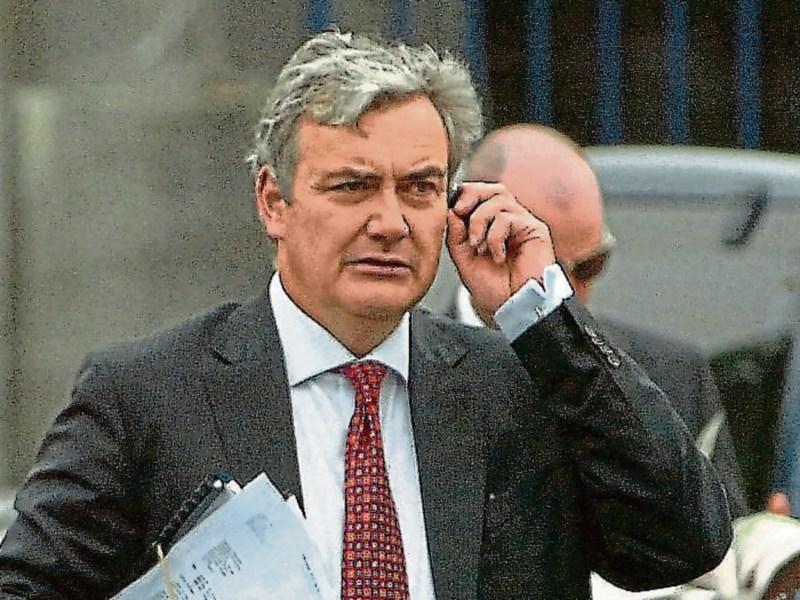
Mark Nicholas SC
He made vague references to Pat being interested in meditation, that growing cannabis was part of a self-sufficiency ‘lifestyle’ and that the people Pat was supplying shared his ‘belief’ that cannabis has some beneficial properties. It was as if it was all some eccentric, hippy-dippy, whacko nonsense. Nicholas failed to mention that the Irish state has recognised cannabis as a legitimate medicine since 2017.
Neither did Mr Nicholas adduce any of the testimonials as evidence in support of mitigation. All he did was make vague references to Pat’s ‘motivation’, the implication being that he may be a bit deluded in thinking he was doing anyone any good.
I am not a lawyer but I have considerable experience in cannabis law, procedure and sentencing and my eldest son is himself a barrister, practising in England and Wales, frequently in drugs cases. So, I do have a good understanding, sufficient, I believe, to form a fair and very low opinion of Mr Nicholas’ performance.
Of all the officials in court probably the most sympathetic was the judge. She said it was quite clear that Pat was not a drug dealer exploiting vulnerable people. She remarked that €3000 cash found in the house was voluntarily returned by the gardai. They did not regard it as the proceeds of crime. I was disappointed she made the point that “cannabis causes a great deal of harm” because firstly the evidence in general doesn’t support that and secondly the evidence was that the cannabis grown by Pat had caused a great deal of good! Inevitably she added “including psychosis”. It’s appalling how media misinformation has fixed this false idea into mainstream thinking.
The judge also called Pat “naïve”, in thinking that disclosing to her he was taking a course in cannabis cultivation would help his case. Eventually she said that she was taking seven years as the starting point for his sentence but that in view of his previous good character, guilty plea and ‘material assistance’ to the investigation she would reduce it to five years with the final two suspended.
I have looked at the case reports and though I hate to say it, under Irish law, it is the correct sentence. I think she was as lenient on him as she could be. If she had gone further, the prosecution would have appealed.
Of course, to any fair-minded, properly informed, decent person, it is brutal, wildly disproportionate to any harm caused and has tragic consequences not only for Pat but for Ali and their two children.
The law is a bad law for which there is no justification. The section 15A sentencing mandate is obscene. The valuation placed on the cannabis by the gardai is absurd, although even a correct valuation would not have been below the €13,000 threshold.
I don’t think the judge is to blame. I don’t even think Pat’s barrister, Mark Nicholas, is to blame because even if he had done his job to a reasonable level of competence, it would have made no difference. But let this be a warning to anyone to reject him if he is proposed as your counsel.
The blame lies squarely with the Oireachtas, with the ministers, senators and TDs who have allowed this dreadful, useless law to remain in force. Specifically, the buck stops at the door of Helen McEntee TD, Fine Gael’s Minister for Justice. She bears responsibility for a sentence that in my opinion is sadistic and which, without doubt, will achieve nothing at all except misery for Pat and his family and massive wasted costs borne by the taxpayer.
There are good grounds to believe that cannabis may be decriminalised in Ireland within the next year or two. Inevitably, thereafter it will be legalised and regulated but even then, unlicensed cultivation and sale would probably remain an offence although unlikely to result in jail at the scale of Pat’s activity.
Hopefully, despite this conviction, Pat will be able to play a part in a future legitimate cannabis industry in Ireland. For now, I think of him in Limerick Prison as the temperatures plummet to a five-year low, of his unwell patients seeking an alternative supply of medicine and of Ali and the children with a cold, bitter hole in their lives.
No, Taoiseach! There is no ‘Glamour’ in Continual Seizures, Chronic Pain, Multiple Sclerosis or in Children being sold Cannabis on the Street.
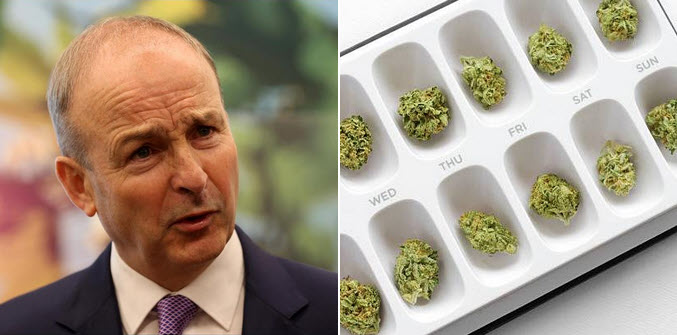
I was astonished to read the Taoiseach’s words as he “warns against cannabis being ‘glamorised’amid new legalising proposals”. There is nothing ‘glamorous’ about the suffering of Irish people who need access to medicinal cannabis, nor about sensible harm reduction policies designed to tackle the illegal market.
I have spent the past seven years trying to work with the Department of Health and the HPRA on medicinal cannabis and the truth is there is systematic, organised opposition to any progress at all levels. The Medical Cannabis Access Programme is a policy designed to fail and current policy on illegal use supports the gangsters’ business model and actually makes cannabis more easily available to children.
In everything related to cannabis, Irish policy is failing extremely badly and ministers, officials, the HSE, all medical institutions refuse to engage with the industry, patient representative groups or scientific experts. Irish doctors are regressive and badly informed on the subject. The term ‘luddite’ applies exactly because the luddites sabotaged progress in the textile industry in the 19th Century and this is exactly what the Irish medical establishment is doing today.
Ministers need to engage and get a grip of these policies because all they are doing at present is causing harm, both to patients who need access and to young people who are exploited by criminals.
Also, Ireland is missing out on very significant business and employment opportunities. In Europe, the market for medicinal cannabis and CBD will be worth over €20 billion within the next five years and Ireland is way behind every other country in the EU. I have represented several businesses ready and willing to invest millions of euros in Ireland and create hundreds of jobs in a strictly regulated system for producing our own medicinal cannabis but every offer is rejected without even any consideration.
There is a secretive cabal of senior Irish clinicians who lobby against cannabis. They use arguments about children smoking illicit, high-strength, street cannabis as a reason that very sick people shouldn’t be able to use it as medicine. In fact they say that cannabis isn’t a medicine when north of the border, across the sea in the Great Britain and throughout the EU, hundreds of thousands of people are prescribed cannabis by their doctors and gain great benefit from it.
It is the influence of this small group of doctors that has hobbled Ireland’s Medical Cannabis Access Programme (MCAP) which has fewer than a couple of dozen patients five years after it was announced. The power that these doctors wield is what has prevented the HSE from implementing any training or education on MCAP. It means that many of the country’s major healthcare institutions have banned clinicians from even discussing the subject – and remember, this is official government policy!
As seen in minutes disclosed under an FOI request, this cabal of clinicians has lobbied drugs minster Frank Feighan that anyone who lobbies him on cannabis must disclose it and yet they have failed to disclose their own activity. Even so, Minister Feighan refuses to meet anyone else who wants to put the other side of the argument.
Cannabis is not harmless. There is no medicine, nor any recreational drug that is. Most are far more harmful than cannabis. including common painkillers, alcohol and tobacco. While Irish psychiatrists can speak of nothing except the tiny risk of mental health problems (a non-existent risk in medical use), in the UK consultant psychiatrists are prescribing it for depression, anxiety, PTSD and other mental health disorders.
The misleading influence of these senior doctors is what makes cannabis a dirty word in the Department of Health, the HPRA and throughout government where ministers and officials just refuse to discuss the issue. The current review of MCAP is being conducted behind closed doors, in secret, without any opportunity for patients, representative groups, the industry or independent, scientific experts to contribute.
No, Taoiseach, there is nothing glamorous about anything to do with cannabis. Instead, in Ireland there is suffering, injustice, ignorance and evasion of an issue that affects thousands of people. Time to step up, firstly to support the very sensible, moderate bill to decriminalise small amounts of personal possession. Secondly, to put our health service to task to deal with medical access fairly, openly and based on the best evidence from around the world, not just the opinions of a small group of out-of-touch doctors who have nothing to say except ‘no’.
The Final Nail in the Conservatives’ Coffin: Suella Braverman
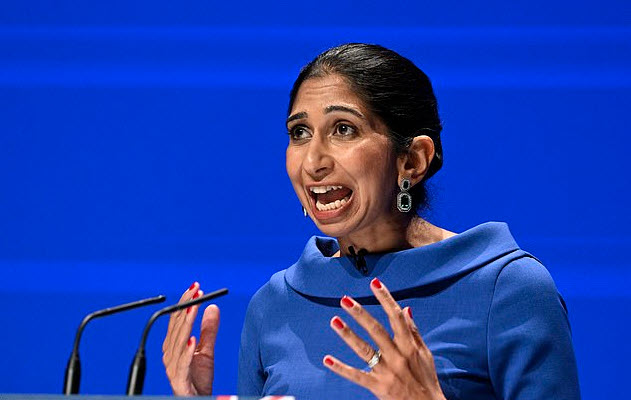
Oh, that Britain is brought so low as this.
Our shame that we have brought generations of overseas people to our shores and that some of them have become the most racist and xenophobic of our citizens.
Succeeding and reprising another Asian woman whose family was rescued by British asylum, Suella Braverman is the nadir of Home Secretaries, a ‘nasty party’ caricature of spite, authoritarianisim and hate.
Anyone who can “dream” of seeing refugees deported to Rwanda is either fundamentally evil or mentally ill. Flying people applying for asylum 4,000 miles to a country that is notorious for human rights abuses is, by any reasonable assessment, a crime.
As for her idiotic pronouncements on drugs policy, I’m not going to waste my time on them. They are so stupid and so opposed to the evidence, they say everything about her that needs to be said.
And she’s a security risk with repeated breaches of the ministerial code. Sunak’s government is doomed and he’s wrecked the slight chance he did have of survival by appointing this awful, despicable woman.
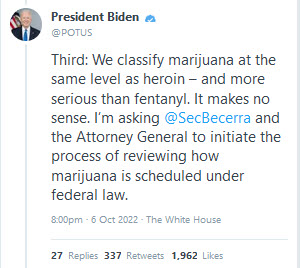
Conservative PCCs. ‘Cannabis: Just a Bit of Weed or a Class A Drug?’ Never has a fearmongering campaign backfired so badly.
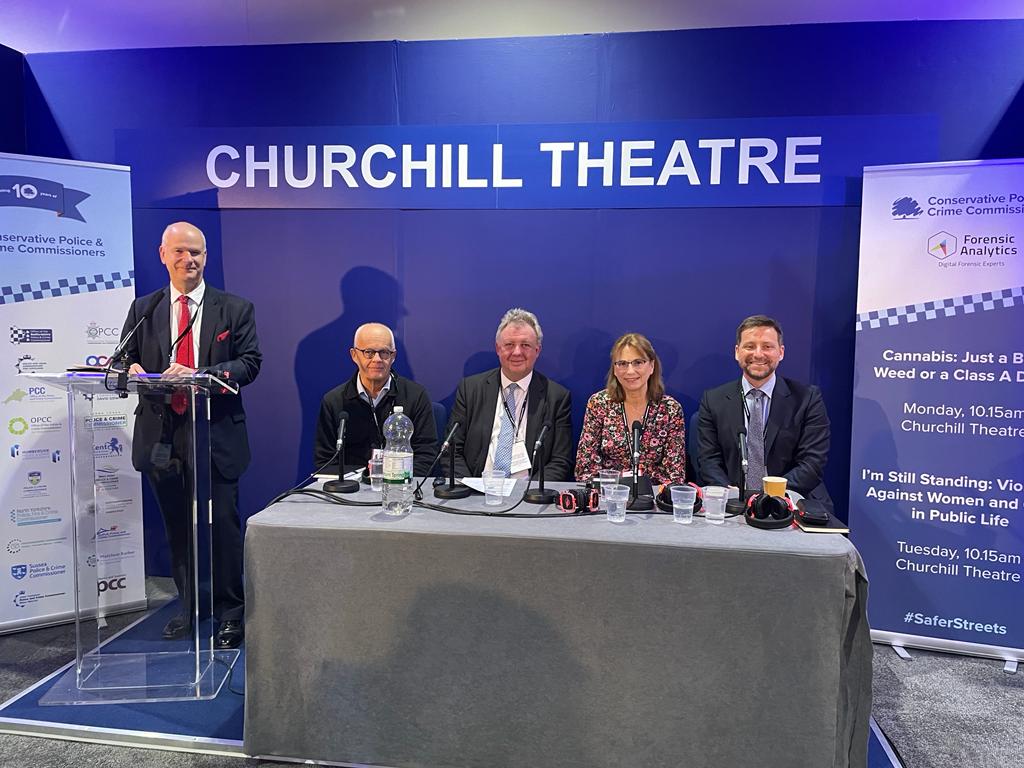
Reportedly ‘laughed off the stage”, the meeting has been met with universal ridicule. It’s quite clear to anybody that trying to clamp down on cannabis wouldn’t work, it would just increase the harms of the criminal market. Also, even the Home Office’s own research shows that increasing penalties has no impact at all on drug use.
Perhaps most worrying of all is the health scares the PCCs were trying to push come from the Australian doctor, Professor Stuart Reece, who is a member of the evangelical, fundamentalist Christian group ‘Drug Free Australia‘. Prof. Reece has a record of 25 heroin addicts dying while under his care in less than two years. He also gave evidence to the Australian parliament that it was the “immoral policies that permitted condoms (which were) the real cause behind AIDS”.
When will these foolish people learn the truth that is repeatedly proven and reinforced by experience?
‘Prohibition never works, it only makes the problem worse’
Future UK Drugs Policy must embrace NHS-funded medicinal cannabis, adult-use legalisation and legal regulation of all drugs
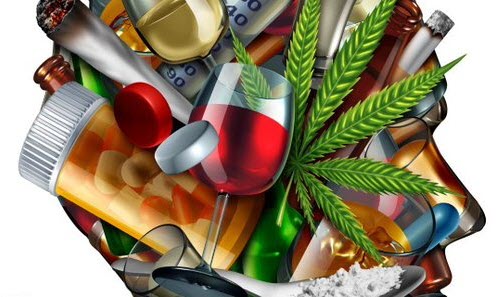
Adult-use legalisation of cannabis is the only solution to the huge problem of the violent, gangster-controlled drugs trade which now dominates our streets. Revenue from the £6 billion per year cannabis market is what funds activity in the smaller but much more profitable heroin and crack market (with meth starting to make inroads in the UK).
Current government policy supports the gangsters’ business model and is directly responsible for violence such as the murder of Olivia Pratt-Korbel, the record number of drug deaths, the proliferation of dangerous products, contaminated drugs, synthetic cannabinoids, street dealing, knife crime, county lines and ease of access by minors. Until the government faces up to the disastrous policy it has pursued for over 50 years, all these problems will continue to get worse.
Prescribed cannabis will never reach everyone who can benefit from it, even when it is available on the NHS. I am confident that the research now being conducted by the Cannabis Industry Council (CIC) will prove that cannabis can be funded by the NHS with a net gain as it will reduce use of other more expensive and harmful medicines.
I envisage a cannabis market which includes:
1. Prescription-only (POM) sophisticated cannabinoid medicines which have been through clinical trials and have a marketing authorisation
2. POM cannabis as flower, oils and extracts, unlicensed medicines
3. Over-the counter (OTC) low-THC cannabis extracts as food supplements
4. Adult use cannabis in all forms available through licensed retailers
5. Grow-your-own (GYO for personal use only
There will be regulations to ensure standards, quality and safety at every level. There will still be criminal offences for supplying to minors and for commercial activity which is unlicensed.
All drugs should be legally available within regulations which are proportionate to their potential for harm. The most difficult part of this is that alcohol will need to be much more tightly restricted. This is why it is the alcohol industry and its massive wealth which drives opposition to drug law reform. Its spending power on advertising in the media and its lobbying of politicians is a corrupt influence which causes massive harm in our society.
The number of stores selling alcohol should be substantially reduced. Limits should be set on the quantity that can be purchased, much the same as current restrictions on OTC medicines.
Heroin should be available on prescription subject to engagement in treatment. ‘Abstinence’ is an unrealistic and damaging objective. The aim of treatment should be to improve health and support a sustainable lifestyle.
Cocaine is the most difficult problem. On its own it is no more harmful than alcohol but taken with alcohol as it usually is, its potential for harm increases exponentially. Crack is a very dangerous drug, not so much addictive as compulsive. Until we find a way of dealing with it, it will contine to drive acquisitive crime with users having no concern about the consequences of their actions. The huge dilemma is that anyone who has powder cocaine can learn very quickly how to ‘wash’ it into crack. However, if we continue to prohibit cocaine we will continue to make the problem worse. We must find a way to regulate access that will minimise harm and for now, I do not know what the solution is.
MDMA should be available in a similar way to adult-use cannabis, manufactured to quality standards, properly labelled and with limits on the quantity that can be purchased.
Taken together these measures will greatly improve public health, reduce pressure on the NHS, massively reduce all crime and free up police to concentrate on real crime which has victims.
The Greatest Leader The World Has Ever Known
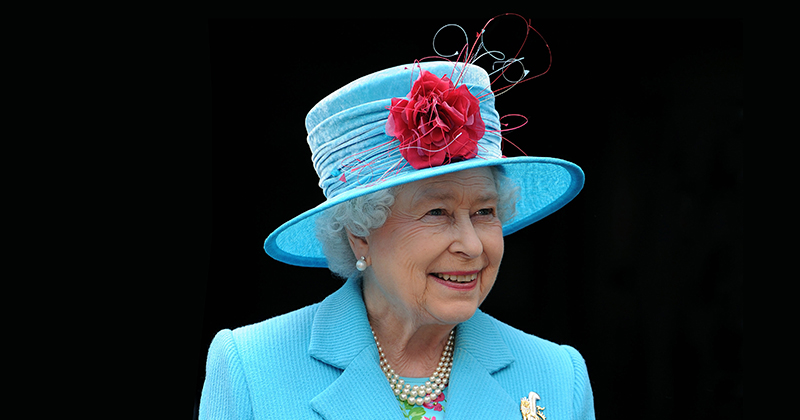
HM King Charles III quoted Robert Burns:
The friend of man, the friend of truth;
The friend of age, and guide of youth:
Few hearts like hers, with virtue warm’d,
Few heads with knowledge so inform’d:
If there’s another world, she lives in bliss;
If there is none, she made the best of this.

 Peter Reynolds