Review. Kanabo VapePod
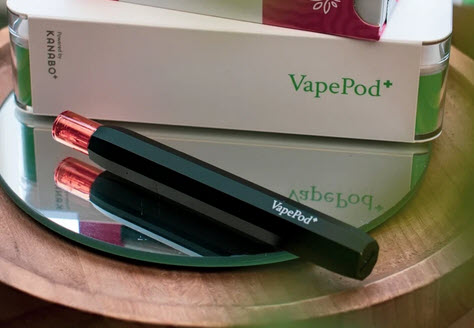
I’ve been intrigued to try this vaporiser ever since I first heard of it. Its stand-out feature, though not a unique claim, is that it accurately dispenses cannabis vapour, clearly an important facility for medical use. Perhaps what’s even more important is that it’s part of a package from Kanabo, newly quoted on the London Stock Exchange, alongside cartridges of different cannabinoid content. It’s the first credible, all-in-one prescription product for vaporised medicinal cannabis.
It doesn’t disappoint. The packaging looks just right to be sitting on a pharmacy shelf. There’s no silly cannabis branding. You couldn’t mistake this for a children’s toy or a stoner’s gizmo. It hits the spot precisely: functional, medical, professional. It’s going to inspire confidence from anyone, including a naive cannabis consumer, when they collect this from their pharmacy. It elevates the sometimes jokey level of medicinal cannabis products to where they need to be. It is perfectly judged.
The device itself is a bit fatter and a bit shorter than the standard vape pens that we all know. It’s a black plastic, octagonal tube with a translucent coloured mouthpiece. I think I prefer its thickness compared to standard vape pens but that may be the size of my hands. A woman might still prefer the thinner design.
I was provided with two cartridges which come in smaller boxes. They’re described as “Pure Distillate Hemp Extract” and I have the “Reload. Feels like a moment of clarity and focus” and the “Relax. Quiet your mind & find tranquility”. The difference between them is the blend of terpenes which are added back into the distillate once it’s been refined. Inside the box is what looks much the same as the small vape cartridges that we’re already used to, with the mouthpiece already attached. It really couldn’t be easier. You just drop the cartridge into the end of the tube and it’s ready to go. Equally you can just pull one cartridge out, it’s held in by a magnet and replace it with another. The only thing I’ve found to criticise so far is that there is no distinguishing mark on the cartridges so it’s impossible to tell them apart.
Of course, I’ve only been provided with the CBD cartridges. Where this product is really going to come into its own is when prescribed with cartridges that contain THC.
So to the crucial issue. How does it accurately dispense vapour, metered dosing as it is called? It’s a patent pending device, designed in Israel, where the only other metered dosing vape, as far as I know, the Syqe, also originates. It seems to work simply by limiting the duration of an inhalation to about two seconds. In the interests of testing it out, I did see if I could cheat it and it’s definitely the case that if you pull harder you inhale more vapour. Each inhalation is supposd to dispense 1.2mg of CBD, so I think you can increase this fairly easily but only within a narrow band. It’s no criticism. I’m impressed with the way this works and I only wish I could try it with a THC cartridge. But this is a new world now, in a good way. I can’t see Kanabo sending me a THC cartridge to try if it’s not prescribed and that is the way it should be really.
As for the contents of the cartridges themselves, they’re clearly quality products and I fervently hope that prescribers will have the option of specifying from a wide range of cartridges with different cannabinoid and terpene content.
With the sole exception that each cartridge needs labelling so you know which one you’re using, I can’t fault this. It’s the right idea, well executed and this is the future of medicinal cannabis as a serious medicine.
A Small Victory Against Misleading Reporting on Cannabis in the British Press

The peculiar relationship between drugs policy and evidence in Britain is caused largely by inaccurate, misleading and sensationalist reporting in the press. Our politicians’ inability to deal with this subject, even to engage in serious debate about it, is all about their fear of being dubbed ‘soft on drugs’ by the newspapers.
At last, the Independent Press Standards Organisation (IPSO) has upheld one of my many complaints about inaccurate reporting. This was a particularly egregious example of distortion and twisting of facts to suit a newspaper’s anti-cannabis agenda.
In January 2021, the Daily Telegraph published an article headlined “’Super skunk’ cannabis led to surge in mental health crisis”. This old trope, that cannabis causes mental illness, is now confined almost exclusively to our corner of North-West Europe. The Irish also suffer under this myth and to a lesser extent, so do Australia and New Zealand but everywhere else in the world a far more balanced and realistic view is taken.
There is no evidence to support it as a direct causal effect, only that it may, in some instances, be one of a number of component factors. Science shows that cigarette smoking and traffic pollution may be far more potent factors, not to say general adolescent angst and many other issues of modern life.
Nevertheless, in Britain, the press and therefore our politicians are obsessed with the idea and regard it as fact. It is this wicked prejudice that for decades has held back access to cannabis as medicine and still does so today. Our most senior clinicians have shown themselves incapable of separating fact from fiction and in a wider context, this myth is probably still the most important factor in holding back general drugs policy reform. Because of politicians’ weakness in the face of newspaper sensationalism, they have enabled a massive £6 billion market to develop under the control of organised crime which now causes enormous harm throughout society.
My complaint read as follows:
“This article asserts that “cannabis has contributed to a record 100,000 people admitted for NHS treatment for drug-related mental health problems”
In fact, in deliberately misleading and sensationalist fashion, figures for primary diagnosis and secondary diagnosis have been combined. Total figure for primary diagnosis in relation to all drugs is 7,027, secondary diagnosis accounts for the other 93,000+ and means that for 90% of these admissions, the primary reason may have been nothing to do with drugs.
The 100,000 figure is clearly associated with cannabis yet the actual figures for cannabis show a decline from 1135 in 2018/19 to 1087 in 2019/20.
It is crystal clear that this presentation of the data is deliberately designed to mislead and sensationalise.”
What has always surprised me in running many of these complaints is the vehemence with which the newspapers have tried to defend what are nothing more than lies. The Daily Telegraph did exactly the same this time, trying to adduce a large volume of irrelevant information that had nothing to do with its inaccurate journalism but was just about pushing its anti-cannabis agenda. As I wrote to IPSO at one stage:
“The Telegraph is entitled to publish as much one-sided, cherry picked evidence as it wishes except that if it does not do so accurately or distorts it to the point that it is misleading, it is in breach of clause 1 of the Editors’ Code.
I have no doubt that the newspaper will continue its current policy until the flood of money into the cannabis sector reaches such a level that it will be acting against its own self-interest. That day is now very close and then the Telegraph will face the challenge of explaining to its readers why it has misled and deceived them for so long.”
So, IPSO has upheld my complaint and its full decision can be seen here. On the face of it, the result will just be another small correction that few people will read. But I hope that the time and money it has cost the Telegraph to deal with this might have some impact in future.
I’ve just heard that the Telegraph has appealed against IPSO’s decision which demonstrates just how keen it is to continue misreporting about cannabis!
Dame Carol Black’s Review of Drugs. A Missed Opportunity To Speak Truth to Power

Dame Carol Black
There is some useful work in Dame Carol’s review but by definition it was only ever about supporting current strategy. She was constrained from the beginning by the terms of reference which stated: “The review will not consider changes to the existing legislative framework or government machinery.”
Given such an absurd restriction, I wonder why any self-respecting expert in policy would take on the role? At best it could only ever advise on tweaks and adjustments rather than the fundamental changes that are urgently needed.
It’s clear that drugs cause harms in our society. They cause health harms to individuals, particularly in the case of the legally regulated drugs alcohol and tobacco but other drugs cause far more harms as a result of the illegal, unregulated markets through which they are produced and distributed. These are called social harms but there is not a clear dividing line. For instance, drugs produced illicitly are of unknown strength, purity and consumers cannot know whether they are contaminated with other, perhaps more harmful substances.
So treatment for addiction and dependency, which is what most of Dame Carol’s review focuses on, is essential and is scandalously under-resourced. This is an entirely false economy as the consequences are devastating for our society. As Dame Carol writes: “The drugs market is driving most of the nation’s crimes: half of all homicides and half of acquisitive crimes are linked to drugs. People with serious drug addiction occupy one in three prison places.”
Politicians don’t put sufficient resources into drug treatment because they are fools and their failure is based on stigma and lack of vision. They don’t think such funding wins votes. Why should people who aren’t consumers of street heroin or cocaine fund healthcare for people who have a problem they have brought on themselves and for which they broken the law in the process?
This indicates the very low opinion that our so-called leaders have of the electorate. Of course there are people who hold such a short-sighted view and believe it’s not their problem and some even take the same view about those who suffer health harms from the legally regulated drugs, alcohol and tobacco. But these people are in the minority and if politicians paid them the respect and took the time to explain how intelligent policy can benefit us all, then this nasty and self-defeating attitude would very quickly all but disappear.
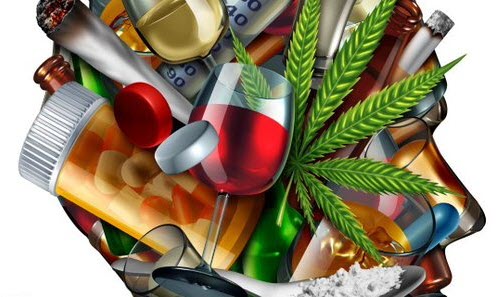
So any rational person with even a modicum of foresight must support Dame Carol’s call for increased funding, better co-ordination and accountability between government departments. She also writes that “A whole-system approach is needed, with demand reduction a key component, to drive down the profitability of the market.” This is where the logic, usefulness and validity of her review begins to fall down, in large part because of those idiotic constraints placed on her that she cannot propose “changes to the existing legislative framework or government machinery”.
Of course, no one in their right mind aspires to a lifestyle of addiction and dependency which dominates their life and inhibits fulfilment and success. Substantial reduction in demand can be achieved through properly funded treatment. We should aspire to turning round the lives of the majority of the 300,000 problematic consumers of opiates and cocaine. To do this we need to understand more effectively how and why their drugs consumption works.
Addiction to opiates shares the same dreadful reality as addiction to alcohol, that stopping or withdrawing from regular use is difficult, can be very dangerous and causes its own health harms. Cocaine is different. It’s not really addiction in the same sense, it’s more about compulsive behaviour. If you stop, after initial recovery from the tiredness and destructive lifestyle you will, quite quickly, begin to feel better.
Where Dame Carol’s review falls over and becomes a little ridiculous is when she writes: “We can no longer, as a society, turn a blind eye to recreational drug use. A million people use powder cocaine each year and the market is worth around £2 billion. The vast majority of users do not see themselves as having a drug problem and they are unlikely to come forward for treatment.”
These people, alongside the vast majority of consumers of MDMA (ecstasy), cannabis and most other currently prohibited drugs are not suffering any health harms. With very few exceptions, the only significant harms around their drug consumption are those caused by the criminal markets which current legislation has created. The drugs themselves are, in most cases, far less harmful to health than the legally regulated drugs, alcohol and tobacco.
The glaring error in Dame Carol’s review, forced on her by the constraints, that show her work to be propaganda in supporting an already failed policy, is when she writes “they are causing considerable harm to others through the supply chain, both here and abroad.”
This is a staggeringly irrational and biased statement, contrived to shift the blame from failed policy and irresponsible ministers onto drugs consumers. You cannot blame consumers for the harms caused by politicians’ failure to regulate drugs markets.
In every other aspect of life we rightly expect government to act to protect us and keep us safe. This is why we have speed limits, safety belts, MOT tests, why other forms of transport such as trains and aeroplanes are strictly regulated. This is why alcohol, tobacco and also food are subject to regulation, why sports have governing bodies that set rules and standards to keep participants safe.
We know from history the consequences of prohibiting alcohol which gave rise to the first gangsters and we have stumbled into the same dystopia by prohibiting drugs. When alcohol was banned in the USA and consumption went underground, people stopped drinking wine and beer, preferring high-strength, much more harmful, often contaminated hooch. The ultimate perversion of government’s responsibility was when it started to poison illicit supplies in an effort to deter consumption. We are on exactly the same path now with drugs. It is a path that will lead to greater criminality, more harm, more death, misery, ruined lives, massive expenditure, crime and the degradation of our society. This is where current drugs policy is taking us and Dame Carol Black’s review supports this stupidity.
I cannot believe that an intelligent, experienced woman like Dame Carol would not recommend changes in current policy had she been allowed. What we desperately need is people in her position to have the courage to defy the stupidity of government minsters and speak the truth, the whole truth. All drugs must be legally regulated in direct relation to their potential for health harms.
Thus, alcohol, tobacco, opiates and cocaine, while legally available to minimise the criminal market, must be under strict control. In my view, with its well established place in our society, the sale of alcohol should be permitted in far fewer outlets. There should be quantity limits. It is crazy that in a supermarket you can only but two packs of painkillers but as many cases of whisky as you want.
Opiates should be on prescription only, with compulsory therapy but much easier to access so that those with a problem get their clean supply of known strength from a pharmacy, not from a gangster-controlled dealer. Necessary funding for treatment must be in place but there will not be a surge of demand. Most people don’t want to use heroin!
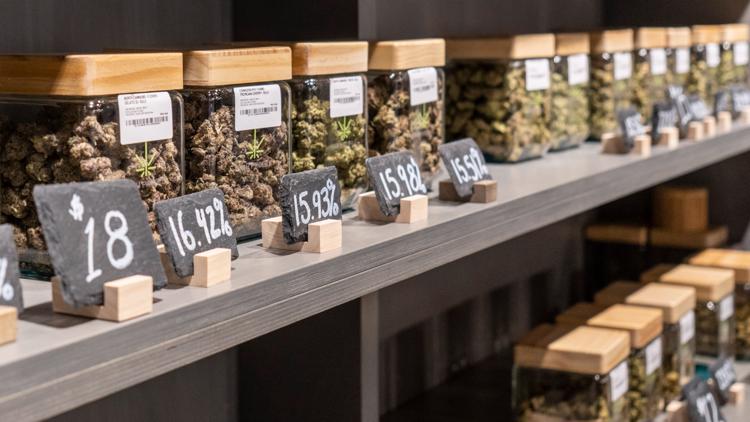 Cocaine, which is not really any more harmful than alcohol, in some ways less, should be available to adults in restricted quantity and frequency for registered consumers from pharmacies.
At the other end of the health harm scale, cannabis and MDMA must be restricted by age and regulated for quality with known strength and absence of contamination. We can virtually eliminate the criminal market in these drugs if we regulate them properly.
If we want to reduce the harms from drugs, this is the inevitable solution. We can either continue to delude ourselves that we can stop drug use, which is a gift to the criminal market, or we must recognise that there is no other effective policy except legal regulation.
Whoever comes next of Dame Carol’s status and influence must speak this truth to power.
100 Days Since Health Minister Stephen Donnelly Promised To #talktovera
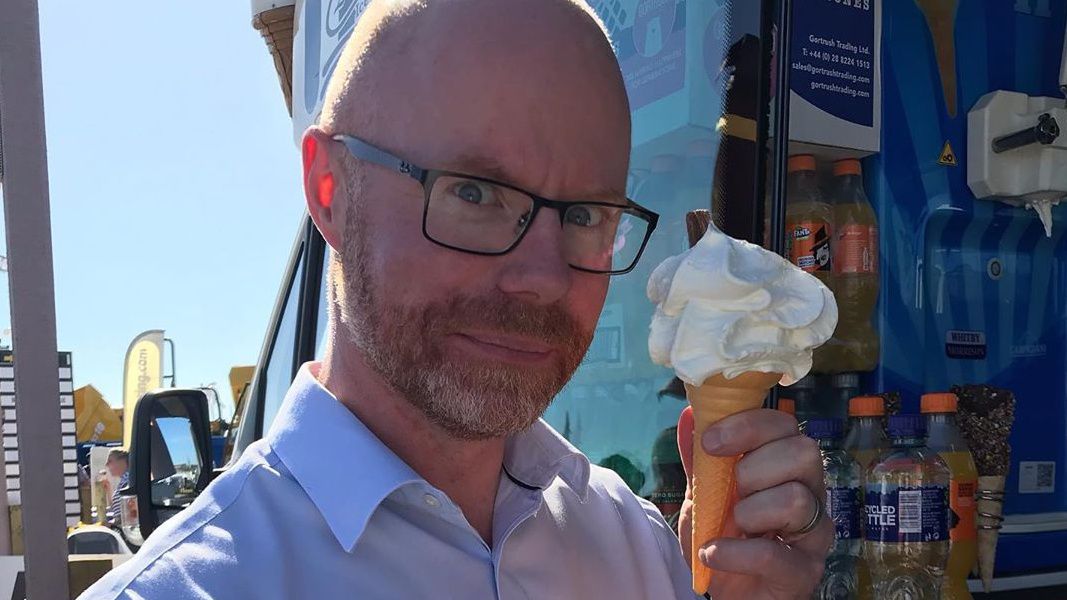
Minister for Health, Stephen Donnelly TD
It was in late March. The #talktovera hashtag had already been trending on Twitter in Ireland for several weeks when Vera Twomey received a text message from Stephen Donnelly promising that he would be in touch shortly. 100 days on and he hasn’t made contact at all. A few days ago an official from the Department of Health (DOH) telephoned with some vaguely encouraging words but Donnelly himself has completely failed to honour his promise.
#talktovera is a campaign that has attracted the support of millions of people but the abuse the Twomey family has endured at the hands of politicians and officials is only the tip of the iceberg of Ireland’s self-destructive problem with cannabis. It is an issue that highlights the division between a youthful, progressive electorate and a political establishment that is 20 years behind, confused between the repression of the Catholic Church and deep seated vested interests in medicine and the civil service.

Vera Twomey honoured at the 2018 People of the Year Awards
Vera’s remarkable personal effort, including walking in protest from Cork to Dublin, led to a special ministerial licence for her daughter Ava, enabling her to access medicinal cannabis that has undoubtedly save her life. Now around 50 people in Ireland also benefit from a similar licence but funding of the medicine is a mess with no consistent or rational policy in place. Ava is far more fortunate than others as the cost of her medicine is met by the state but only after her parents have to find €9500.00 every three months and then wait five weeks for it to be reimbursed. This is an enormous burden for any working family and means they live in peril where illness or work problems could easily result in a serious threat to Ava’s life. #talktovera started as a straightforward and reasonable request to the health minister to discuss the matter and find a resolution.
Four years ago, largely as a result of the attention that Vera had brought to the issue, the Irish government announced its Medical Cannabis Access Programme (MCAP). Not a single patient has yet been prescribed cannabis under its provisions and funding for it has has only just been announced. It enables consultants to prescribe for just three conditions and they are restricted to just four products, all of which will be funded at source by the state. But none of the products used by the 50 people with a ministerial licence are included and on the face of it they were abandoned to continue finding the money themselves, with only a few, including Ava, ever getting it reimbursed.
This ridiculous state of affairs has transfixed Stephen Donnelly. He and his officials have failed to deal with the issue properly and the COVID-19 pandemic cannot be an excuse for something that needed only a few minutes of his time. It does require the courage to grasp the nettle and cut through reluctant, stubborn officialdom and a medical etablishment that is way behind every other country in Europe in embracing the remarkable power that medicinal cannabis offers.
To be fair, Micheál Martin, the Taoiseach, has spoken directly to Vera on a number of occasions. He was always supportive of Vera’s initial campaign for Ava but his contact has been in a personal capacity and for some reason he has felt unable to instruct his health minister to deal with the matter. He could also have instructed DOH officials over Donnelly’s head but he hasn’t been prepared to do this either.
The reality is that in Ireland, on this issue, its political leaders are not in charge. The tail is wagging the dog. Officials at the DOH and the Health Products Regulatory Authority (HPRA) are not in charge either. They submit to a regressive, bigoted medical establishment that ignores best practice and evidence from around the world and is fundamentally hostile to cannabis. They in turn submit to the powerful forces of gangsterism and organised crime that pervades Irish society, still, tragically, with significant paramilitary influence behind it.
I can attest to my own experience of Ireland’s self-destructive problem with cannabis. Although I have now lived in the Republic for four years, before that while living in the UK, then still a member of the European Union, I have been trying to help Ireland develop a medicinal cannabis industry. I have learned that there are powerful forces resisting any progress with a calculated determination to procrastinate and prevaricate. As far back as 2015, I first approached the DOH with a proposal from one of the leading Canadian licensed producers to establish an Irish facility. Since then, three further clients, each substantial international organisations, actively seeking to invest tens of millions of euros in Ireland, have walked away, frustrated by backwards, negative thinking, prejudice and bigotry. Hundreds, perhaps thousands, of jobs have been lost and tens of thousands of Irish people are denied access to the medicinal cannabis that could improve their health.
The UK remains way behind where it should be in access to medicinal cannabis but as I work with clients in both countries, in comparison Ireland makes the UK look like Califiornia. It’s pathetic the way that senior clinicians in the UK continue to resist the inevitable and the huge weight of positive evidence but Ireland is far, far worse. Some of it is to do with it being a very small country, a population of only five million, any one senior doctor who achieves professional and political influence can become immensely powerful.
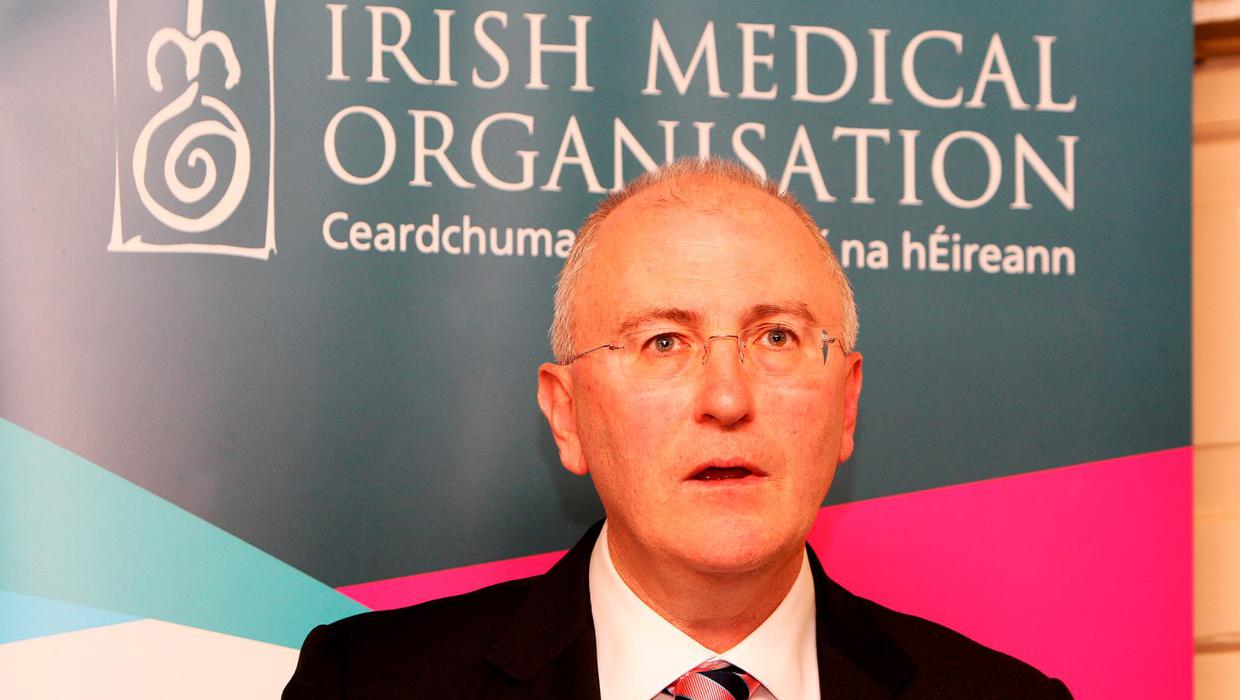
Dr Ray Walley leads Irish doctors against cannabis
Dr Ray Walley, formerly president of the Irish Medical Organisation and prominent in health politics, runs the Cannabis Risk Alliance, a cabal of senior clinicians that promote 1930s ‘reefer madness’ ideas about cannabis. In 2019, to its eternal shame. the Royal College of Surgeons of Ireland invited Alex Berenson, a tabloid journalist and author of spy and conspiracy fiction, to address its members on his theories that cannabis causes violent crime and has no medical benefits. It’s hardly surprisng that when in 2017, the HPRA convened an expert working group to review the medical use of cannabis, its conclusions were about as negative as you would expect from ‘experts’ with zero knowledge of cannabis steeped in prejudice from all their colleagues. It would be funny, were it not so tragic, that the ludicrous conclusion of its work is that pain is now excluded from MCAP. It’s the condition for which millions of people around the world successfully use cannabis but according to these fools it doesn’t work in Ireland.
It’s absolutely clear that it’s these attitudes that control officials in the DOH and HPRA and have led them to frustrate any political will to support medicinal cannabis. It’s the HPRA that has taken an absurd length of time to identify four products for MCAP that are actually a hopeless mismatch for the three conditons that it covers. Ironically, the products selected would be more suited to treatment of pain which is, of course, excluded from the programme. There is a suggestion that officials selected these products based on lobbying from their producers rather than their suitability. I have seen no evidence for this but based on my other experiences, it makes sense.
The HPRA was also charged with setting up a licensing system for the cultivation of cannabis and production of medicines but to my first hand knowledge it has been dilatory to the point of negligence. Senior officials at HPRA have twice made promises to my clients on timings which they have reneged on, costing my clients substantial investments of time and money.
It is clear to me that there is institutional hostility towards cannabis in the DOH and HPRA and that this is fuelled by the prejudice and ignorance that pervades the medical establishment. In the face of this, Taoiseach Micheál Martin, Health Minister Stephen Donnelly are impotent, useless and incapable of making any progress.
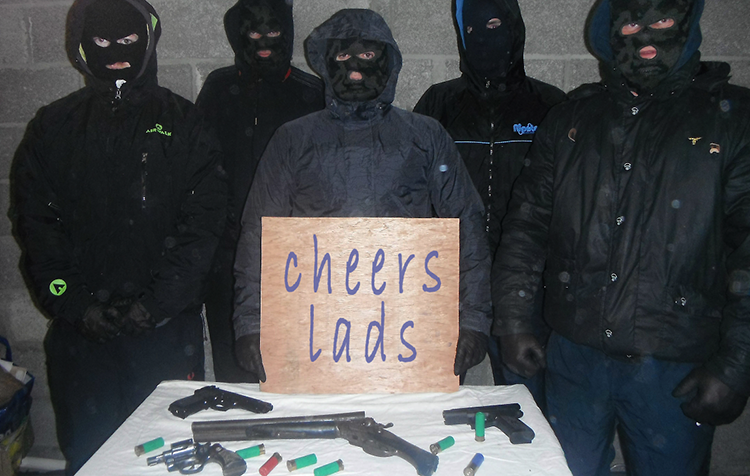
Irish drugs gangsters thank their customers for their continuing support
Then, to far more sinister effect and at the root of all this is the burgeoning criminal market in cannabis, the credible evidence that at least 10,000 Irish people are regularly accessing illicit cannabis to deal with their medical conditions, that probably half a million more are engaging with the gangsters to buy cannabis for pleasure and relaxation. Behind this is violence, misery, human trafficking and the massive cannabis cashflow that funds the even more dangerous trade in hard drugs by the gangsters and paramiltaries.
Cannabis could be a huge opportunity for Ireland in better medical treatment, new businesses, increased employment and a healthier and happier society. Instead it is a massive problem caused by weak politicians, incompetent officials, a corrupt medical establishment and violent orgainsed crime. An Garda Siochana, the Irish police, are trapped in the middle but it’s the Irish people that are the real victims. And the weak, pathetic, hypocritical and cowardly health minister, Stephen Donnelly, still won’t #talktovera.
The FSA’s Intervention in the CBD Market is a Farce. Here’s the Clear and Simple Solution.
I’m not sure whether to laugh or cry about the mess the Food Standards Agency (FSA) has got itself into in the cannabidiol (CBD) market. After imposing costs of millions of pounds on business for no good reason, its deadlines have been missed, it’s got very few products on its ‘approved’ list and the whole situation is chaos. It’s changed the staff involved (again) and there is no sign it is going to achieve anything except fritter away more taxpayers’ money and impose more unnecessary costs on more businesses.
It was always going to be a disaster because deeming CBD products ‘novel foods’ was false from the beginning. It was the European Commission (EC) that first imposed this nonsensical ruling, refusing to consider the comprehensive evidence submitted by the European Industrial Hemp Association (EIHA) that extracts of CBD (and other cannabinoids) have been widely used in foods since as long ago as the 12th Century. Then, in anticipation of Brexit, the FSA, with no good reason, chose to adopt the EC’s novel foods policy and so this sad and futile story began.
The CBD market does need better regulation but ‘novel foods’ doesn’t address any of the issues of concern at all. It is a completely misguided policy.
There is no evidence of anyone, anywhere in the world, ever coming to any harm from consuming CBD as a food supplement, so the whole basis of deeming it as a ‘novel food’, as well as being false, is predicated on nothing. The reason for ‘novel foods’ regulation is safety and there is no evidence that CBD is unsafe.
There are just two issues which need addressing in regulating a CBD product: what the product contains and how it is marketed.
The first can be solved, at a stroke, by requiring all products to have an independent laboratory test certificate. Not a certificate of analysis (COA) from a laboratory commissioned by the supplier but a certificate from an independent laboratory that has itself been certified by the regulator which, yes, should be the FSA. So this independent, ‘official’ COA will specify the cannabinoid content, certify that controlled cannabinoids are within the legal limit and that heavy metals and other contaminants are within prescribed safety limits.
The second can be solved, at a stroke, by properly funding the Medicines and Healthcare products Regulatory Agency (MHRA) to fulfil its function as regulator of the Human Medicines Regulations 2012, the law that prohibits claims of medical benefit being made for commercial gain about products which are not licensed as medicines. The MHRA has dismally failed to fulfil this function, which is ironic as it first brought CBD to regulatory attention in 2016 over the issue of these medical claims. It simply does not have the resources to do this job. Hundreds of reports have been submitted to the MHRA by the two trade associations, the CTA and CannaPro, but not acted upon. As a result the law is now widely ignored both by unethical suppliers and by all the national newspapers which regularly run unlawful advertisements and advertorials despite the fact that in theory, the maximum penalty for these offences is two years in jail.
These two steps, taken together, will completely solve the regulatory requirements for the CBD market.
Complaint to the BBC about its Pro-Israel Bias

Devastation in the Omar Al-Mukhtar neighbourhood in Gaza after another Israeli air strike.
I wish to complain about the appalling pro-Israel bias in current news coverage. Perhaps best illustrated by repeated use of the phrase “Palestinian militants”, which suggest that they ‘favour confrontational or violent methods in support of a political or social cause’ (Oxford Languages). This is dreadfully one-sided.
Palestine is occupied by force by Israel. According to Human Rights Watch, Israel enforces a policy of apartheid, according to international law ‘a crime against humanity in which one racial group dominates another through intentional, systematic and inhumane acts of oppression.’
It is not Palestinians that are militant, it is the Israeli government. Palestine acts in self-defence against a brutal, violent occupying force.
BBC News also constantly refers to Israel ‘defending itself’ against Palestinian rockets. The rockets are launched in self-defence in response to Israeli aggression. They are a pitiful and courageous response to one of the world’s most technologically advanced armies. It is quite literally fireworks and catapults against F16s, tanks and guided missile systems.
I could add many more specifics about the bias in BBC coverage. Our political leaders are engaged in the same disinformation, with James Cleverley MP today referring only to ‘Israel defending itself’ and ‘Hamas must stop launching rockets’. I expect the BBC to report truth, not propaganda and while it must report Cleverley’s deceitful words, it must explain how one-sided they are.
The Irish Tricolour at Half-Mast for Prince Philip

Politicians Who Want To Keep Cannabis Banned are on the Same Side as the Gangsters and Drug Lords.

This article was published in the Daily Express on 8th April 2021 as ‘Legalising cannabis will slash drug crime and levy taxes, it’s nuts not to’
Sadiq Khan has suggested, timidly, a ‘drugs commission’ to look specifically at the legalisation of cannabis. No.10 has hit back saying that a review is waste of time and it has no plans to change the law because “illicit drugs destroy lives and cannabis is a harmful substance”.
I agree. A review would be a waste of time. We already have all the evidence we need from around the world and it is clear that legalisation would reduce all harm, undermine the gangsters, cut street dealing and violence, protect children and families.
I also agree that “illicit drugs destroy lives” but it’s not the drugs that do that, it’s the fact that they’re illicit. The law against cannabis causes far more harm than cannabis itself.
Yes, cannabis can be harmful but we have wealth of evidence showing that it is much less harmful than alcohol, tobacco, energy drinks, traffic pollution and many things we consume regularly. Peanuts and shellfish cause far more health harms than cannabis.
But even if you believe the hysteria and exaggeration about the dangers of cannabis, does it make sense to allow gangsters to control the market? If it’s so dangerous, to protect children and the vulnerable, our government should take responsibility and take control of the market. Look what has happened in many other places, legal regulation of cannabis takes it off the streets and into licensed retailers who have to obey age limits, label their products so adults know what they are buying and pay taxes, which in the USA are raising millions of dollars which are spent on schools, healthcare, drugs education and other community projects.
In Britain we spend £6 billion every year on cannabis and on top of that hundreds of thousands of people grow their own. No one pays any taxes on it and all the profits are used by organised crime to fund other criminal activity.
It’s the criminal cannabis market that provides the funding for county lines. Young people are groomed into delivering hard drugs by being offered “a bit of weed’. The epidemic of knife crime is driven largely by the gangs and they are funded by their trade in cannabis. It funds prostitution, modern slavery, people trafficking, it’s where all the gangsters’ money comes from and the very last thing they want is for it to be legalised.
The alternative can be seen in reality in the USA, Canada, Uruguay and other places. In Canada, after just two years of legalisation, already more than half of all cannabis is bought through licensed retailers. In the USA, where cannabis is legalised, underage use has gone down.
The most important thing is that in these places there is now some real control over cannabis. Crime has been reduced. Gangsters don’t rule the streets anymore. There’s no problem with ‘Spice’ because why would anyone buy that dangerous synthetic when they can get the legal, top quality, much safer real thing?
In the USA there are now 350,000 new jobs in the legal cannabis industry. That’s equivalent to 50,000 new jobs in Britain and those are jobs that have been taken away from criminals. All those workers now pay taxes too. It’s a win-win solution
Today it seems that the main opposition to legalising cannabis comes from the organised crime gangsters and from our politicians. Why? All they ever do is come out with the same non-explanations as Boris Johnson has. They don’t seem to want to discuss the subject at all and most of them, including Boris, have said they have used cannabis themselves!
In fact, in a video that is widely available on social media, in the year 2000 Boris Johnson asks why his “respectable neighbours who roll up a spliff and quietly smoke it together” are “in breach of the law”? And he says “I think there is a danger that the government is becoming out-of-touch with what people are actually doing”.
The truth is that legalisation is inevitable. Every day that our politicians put it off they cause more harm. Another child is sold highly potent, so-called ‘skunk’ on the street. Another young girl is groomed into using hard drugs by being offered some new clothes and a ‘bit of weed’. Another young man is stabbed to death in some stupid dispute over territory, the sort of argument that is dealt with by normal business methods in places where cannabis is legally regulated.
So next time you hear a politician being ‘tough on drugs’, realise that its not drugs he’s being tough on, it’s the people in your community. Banning cannabis hasn’t worked, there is more of it consumed across the world than ever before. There is a choice, let the gangsters keep running it, terrorising our streets and communities or get tough on them!
Take away the cannabis trade from organised crime and take responsibility for it. Control it. Reduce its harms. Benefit from safer streets, increased tax revenue, more jobs, less crime. Ask your MP, whose side are you on? Are you on our side, looking after us properly, or are you on the same side as the gangsters?
Chaos in Clapham is Down to Weak Leadership and Activist Martyrs
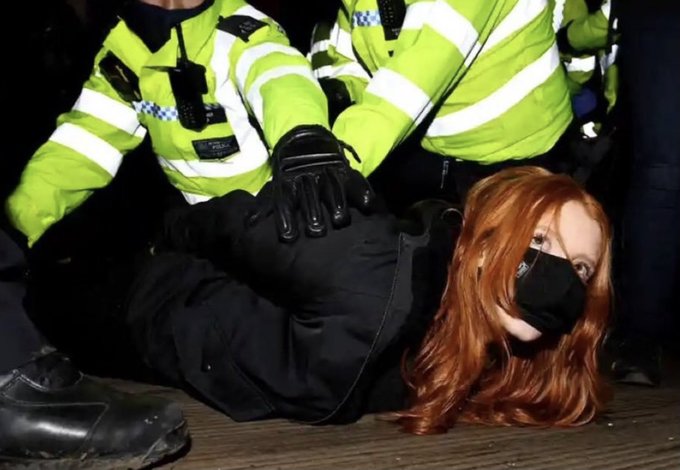
All the weeping and wailing about these lawbreakers who were recklessly endangering the health of the people of Clapham is outrageous. I don’t give a damn what gender or colour they were and it’s clear to me that at least some of those arrested were ‘activists’ who went there with the intention of martyrdom and getting some big newspaper headlines. They’ve succeeded and the pathetic response of our political leaders is just more of the same weakness and incompetence that is becoming the norm.
As for the sycophantic, hypocritical media, the Twitterati and the dozy ‘wokesters’, they are beneath contempt and it’s time people got some backbone. None of this does anything at all to deal with street violence or the pandemic.
Having said that, the inconsistency of policing and allowing some events such as football celebrations to go ahead with minimal policing is a huge problem. The police should have co-operated with the group that wanted to organise a socially-distanced, phased attendance vigil. That is the responsibility of senior officers. As for the ‘poor bloody infantry’, who had to deal with the mob, inflamed by agitators and activists, as usual they get undeserved blame.
Courage and Cannabidiol

The story of how brave British small-businesses created a £1.7 billion market and now face destruction at the hands of the overbearing Food Standards Agency and its big business sponsors.
Hundreds of people who set up small businesses selling CBD products face the looming deadline of 31st March 2021 that the Food Standards Agency (FSA) has imposed for its ‘novel foods’ regulations to come into force.
These people, the essence of the British entrepreneurial spirit, are being crushed by misguided over-regulation that is not based on any evidence and which will gift the market to big business while removing from shelves the products which millions of people have gained great benefit from.
The FSA has not consulted with the industry in any meaningful fashion and is imposing draconian new rules which even at this late stage remain unclear, confusing and require enormous, unnecessary and wasteful expenditure in pointless bureaucracy.
To be clear, if you are one of those millions who discovered that CBD could help with anxiety, pain, insomnia and or a host of other conditions, the products you rely on may not be available much longer. But there is a way through this. Read to the end of this article to find how you will still be able to access the ‘real CBD’ that you need.
The most important thing to understand is that there is no evidence anywhere in the world that anyone has ever come to any real harm from using CBD products. Despite this, the FSA is forcing businesses to put their products through an incredibly complex series of tests which cost a huge amount of money, in some instances hundreds of thousands of pounds.
Even the smallest companies are having to submit a dossiers on individual products which cost around £5000 each to produce. Imagine how many bottles of CBD oil a small shop or website has to sell to pay for just one of these. And they are completely pointless. There is no need for them at all. The FSA has just invented them and it’s nothing to do with public safety because there is no danger from any of the products concerned.
The Association for the Cannabinoid Industry
What this is really about is that big business missed out on the CBD boom. They turned their corporate noses up at it, didn’t want to get involved because of the stigma and prejudice associated with anything to do with cannabis. Then, within the space of a few years, they found that all their big customers, the multiples, were starting to stock CBD and it was selling very well indeed. So much so that the value of CBD sold in Britain is now more than the value of all vitamin C and vitamin D products combined. It’s a huge market with estimates of its size ranging from £300 million to £1.7 billion per year (New Frontier Data).
So big business is now calling the shots. A sinister organisation, the Association for the Cannabinoid Industry (ACI), run by a man, Steve Moore, with connections to the sleaziest end of the Conservative Party, is supporting the FSA in this scheme and his aim is simply to price small businesses out of the market and hijack it for his big business friends. Never has a bigger confidence trick been pulled on consumers. The small businesses that created the CBD market had established trade associations from within their own ranks which charged a few hundred pounds for membership and did an excellent job of representing the industry. The ACI demands membership fees of £25,000 per year, pricing out the small businesses and using its funding to bully and intimidate any business that doesn’t want to sign up.
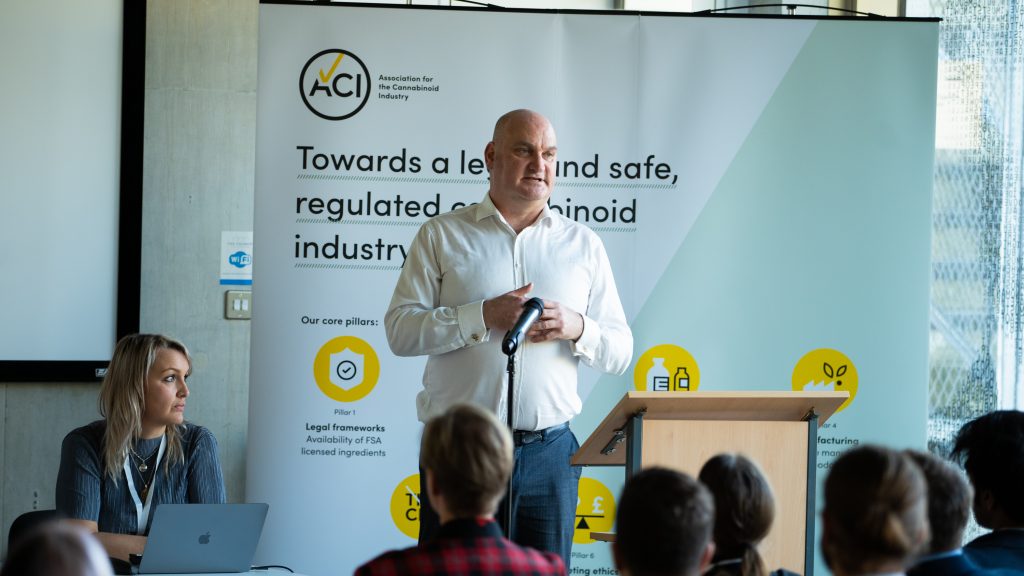
Steve Moore of the Association for the Cannabinoid Industry
There are problems in the CBD market that need addressing. It does need better regulation. There are disreputable businesses selling products that are not what they claim. They don’t have the amount of CBD in them that is advertised and they are certainly not medicines which can treat cancer, diabetes, depression and serious illnesses. But these problems are already covered by existing laws. The problem is they are simply not being enforced. The regulators who should be acting against these rogue companies include the Medicines and Healthcare products Regulatory Agency (MHRA), the Advertising Standards Authority (ASA) and Trading Standards. Despite reputable CBD businesses delivering hundreds of reports about rogue suppliers, virtually nothing has been done. To be fair the MHRA and Trading Standards just don’t have the resources to carry out this work, so the idea of giving them even more work, with incredibly complex regulations to enforce, is just barmy. It makes no sense.
The Human Medicines Regulations 2012
Even our largest newspaper publishers have been allowed to get away with breaching the Human Medicines Regulations 2012 which prevent anyone from making a commercial gain out of claiming medicinal benefit for a product which is not a licensed medicine. This criminal offence can result in a two year prison sentence, yet the Daily Mail runs such ads every day. So do most of the tabloids and those newspapers that like to call themseleves ‘quality’, do something equally illegal. They run advertorials or sponsored reviews of products which if you click and buy pay the publishers commission.
These crimes have been reported to the MHRA and to the ASA but they have done nothing about it and the illegal advertising continues to this day. As for the confidence trickster companies making these illegal medicinal claims, nothing has been done about them either and they continue to scam people with cancer cures and miracle medicines. Now the ACI is using this conduct as part of the justification for their ‘novel foods’ scam. Of course the two issues are completely unrelated.
But all is not lost. Undoubtedly, the ‘real CBD’, the whole plant extract, containing all the goodness and nourishment extracted from low-THC cannabis plants, will be taken off the shelves of the multiples but there will be a flourishing ‘grey’ market, mainly online and there will be nothing that the FSA, ACI or their enforcers will be able to do about it.
The FSA’s understanding of CBD and cannabis is virtually non-existent. The original CBD trade associations spent years trying to educate FSA’s people and urging them to co-operate on appropriate regulation but they didn’t want to know. Now the FSA has chosen to listen to its own and ACI’s ‘experts’ who are trained and indoctrinated in the prohibition mindset. Consequently its statements and rulings on its new regulations are so poorly drafted that they leave a gaping hole for the brave, pioneering businesses that created this market. A genuine, whole plant oil that preserves the natural proportions of the compounds in the hemp plants from which it is extracted is molecularly identical to those plants and hemp is specifically excluded from novel foods regulations.
So ‘whole plant’ is what you must look for if you want ‘real CBD’, the product that so many people benefit from. The ACI and FSA are pushing nasty, ineffective isolates and synthetics that are useless in comparison and require far higher doses to achieve the same results as a few drops of whole plant oil.
One More Problem as the Home Office Steps In on THC Levels
CBD originally took off because more and more people were becoming aware of the medicinal benefits of cannabis. CBD was seen as a way to enjoy some of these benefits legally and without getting ‘high’ from the THC in cannabis. But CBD was always a euphemism to avoid the stigma around cannabis and to reassure people they weren’t buying something illegal. In fact, whole plant CBD products are low-THC cannabis oil. Under a provision of the Misuse of Drugs Regulations, a trace amount of 1mg of THC per bottle of CBD oil has been allowed. It’s far too little to get anyone high. You’d have to drink about three bottles in one go before you felt anything.
But surprise, surprise, now the Home Office has started to get involved too. Again, without a shred of evidence of any harm, it is considering reducing this limit very substantially.
Why?
Undoubtedly this is co-ordinated with the FSA and the ACI. The aim is the same, to destroy the small businesses that created this market, to ramp up the costs of selling CBD so high that only big business can afford it and to prohibit the sale of the whole plant, low-THC cannabis oil that is so valuable for so many people. And there is no credible evidence to support any of it, except what the FSA has cooked up to support its pre-determined conclusion. There is no evidence that the trace amounts of THC in whole plant oil have or could cause anyone any harm and it is all part of the same scam.
So remember, if you want ‘real CBD’, you’re going to have to go online. Look for those courageous businesses that provide whole plant extracts and avoid isolate or synthetic products which are a waste of money.

 Peter Reynolds