Posts Tagged ‘cannabis’
Reasons to be Hopeful on Drugs Policy
You can be forgiven for a sense of despair if you live under the rule of the Conservative and Labour Party in Britain or the Fine Gael/Fianna Fail/Green Party coalition in Ireland. Our politicians are obsessed with pushing a ‘tough on drugs’ narrative. It’s an easy, cheap, go-to headline-grabber rather than addressing the real issues on drugs policy.
There are a few hopeful signs. But not in Britain. The dullard consensus between Conservative and Labour is depressing and another manifestation of the sickness that pervades all our political discourse. In Ireland, politicians are paying lip service to reform but the recent Citizens’ Assembly on Drugs Use has forced the issue along, despite best efforts to rig the outcome.
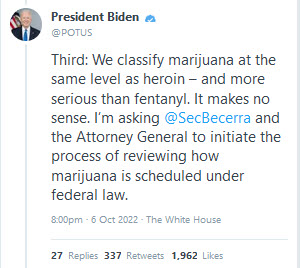
The hope comes from the west, that re-scheduling of cannabis in the USA is about to be confirmed and from the east, that Germany seems to have finally resolved its cannabis reform bill and decriminalisation should take effect within a few months.
So Britain and Ireland are getting squeezed. Both countries face elections later this year. Drugs policy will not be an election issue in either country but crime, violence and anti-social behaviour will be. There’s a complete failure, a refusal, to see the link between bad drugs policy and these problems. In fact, it’s one of the principal causes of societal breakdown but not something that politicians will face up to.
Neither rational argument, nor evidence-based campaigning have any immediate effect on drugs policy. Over many years they do have some impact as understanding across society is improved and eventually wiser politicians come into office. While we’re stuck with those brought up with the ‘War on Drugs’; logic, evidence and common sense make no difference. They continue to ‘Just Say No’.
Nothing seems to move politicians except media embarrassment. It was only the tabloid coverage of Alfie Dingley and Billy Caldwell that shamed Theresa May into legalising prescription cannabis. More recently, the UK Post Office scandal has shown that government and civil service are perfectly capable of acting quickly when it suits them but they prefer a life of indolence and procrastination. There’s an almost endless list of scandals that the Conservatives have preferred to ignore: contaminated blood, sodium valproate birth defects, Grenfell, Windrush, etc, etc. Labour will do exactly the same when they get into power.
In Ireland, despite the recommendations on cannabis by the Oireachtas Justice Committee and the Citizens’ Assembly, unbelievably the government has decided they need another committee but they’re going to put it off for nine months by which time the election will be imminent. It really is farcical. ‘Yes Minister’ and the Office of Circumlocution from ‘Little Dorrit’ aren’t fiction, they are factual narratives.
So while we must keep on with our efforts in campaigning and education for the long-term, politicians aren’t really interested in us or in reasoned argument. We’re wasting our time expecting it. We have to find the lever that will cause them embarrassment, show them an immediate personal gain or rely on broader international pressures before they will do the right thing.
Smoking Weed and Watching the West Wing

It’s my new favourite thing
I’ve watched it before, of course but then it was sporadically, just as I managed to catch it. This time, though, I’m going through religously, episode by episode and there are more than 20 episodes in each season.
It’s hypnotic. The characters are wonderful. It’s production values stand up very well for a show that is 20 years old. It has that great appeal of being about real life, real issues and events that I remember clearly but all woven into a gripping fictional narrative. The TV equivalent of a ‘page turner’.
But the thing that has really hit me, assisted by the insight that cannabis facilitates, is that this is a fantasy. A wild, outrageous fantasy that has very little relationship to real life. It portrays politicians and those who work in politics as noble, with great integrity, high ideals, wonderful ambitions, most of all, principled. And this, of course, is nonsense.
It’s taken me more than 40 years working with politicians, mostly in the UK but the last seven or eight in Ireland as well, to finally accept the truth. With a handful of exceptions from the hundreds that I have met, they are sordid, self-serving and worthless. Our political system in the West is a waste of time and resources. It has created terrible wars, injustice and achieved very little. Any good that mankind has achieved is despite politics, not because of it. I see this more clearly now than I ever have before.
Ireland’s Best Chance Ever for Effective Drugs Policy Reform
As the Citizens’ Assembly on Drugs Use meets for the fourth time (2nd, 3rd September), it is at a crucial point which will determine its usefulness. Either it will move on to examine the broad range of drugs use and wider policy or it will continue to ignore and exclude 90% of its subject from consideration, focusing only on problematic use and treatment services.
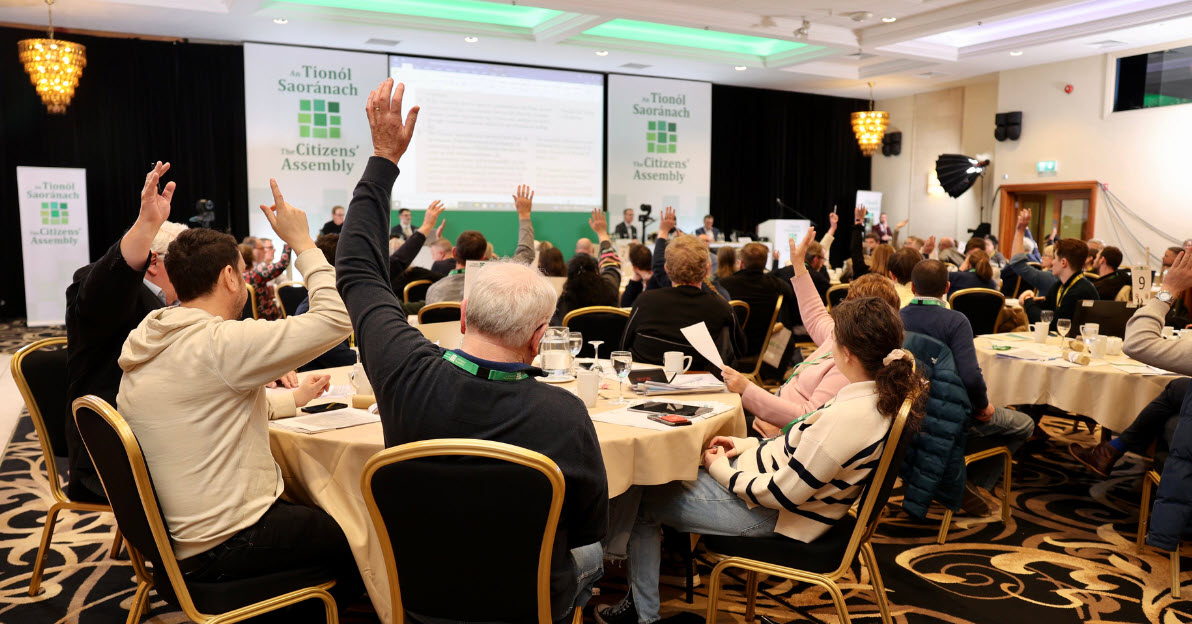
Whatever recommendations the the Citizens’ Assembly on Drugs Use makes, it is up to the government to decide on them. Same-sex marriage and abortion rights achieved legislative reform through this route but response to the recent Citizens’ Assembly on Biodiversity Loss has been very different. The government and our political leaders have failed to implement any its 150 recommendations to protect nature. It was almost certainly a mistake to make so many recommendations and this has given politicians the excuse they need to turn away and fail to act. It could well be the same on the difficult and controversial issue of drugs.
Yet nothing demands more immediate and urgent action. All the violence, disorder and anti social behaviour about which there is so much concern is driven by criminal drugs markets. Demand for drugs comes from within our communities. It is our families, our sons, daughters, brothers, sisters, mothers and fathers that are the customers of these criminal gangs. While in 90% of cases their drug use causes no harm to themselves or others, they enrich and empower the gangsters and government has done nothing to regulate these markets to reduce all the harm they cause.
While politicians refuses to acknowledge and provide sensible and safe legal access for drugs, particularly cannabis, all they do is turn the forces of law enforcement against the communities they are supposed to protect and add to the power and wealth of the drugs gangs.
It is the criminal markets that cause so much harm and only a small proportion of drugs users that suffer health harms. Street dealing, violence, child exploitation, debt intimidation, human trafficking, modern slavery, all these evils stem from the criminal markets which bad drugs policy has allowed to proliferate. And the health harms of drugs are maximised when criminals control their production and distribution, when there is no regulation, quality control, age limits or harm reduction infomation and education provided.
This is Ireland’s best chance ever for effective drugs policy reform and huge responsibility now rests on the shoulders of Paul Reid, chair of the Citizens’ Assembly. In the remaining three meetings, will he encompass the broad agenda which the issue demands or will we continue only to hear about one, narrow aspect?
Clearly, problematic drug use has a terrible impact on those involved and their families but we already know that the answer is properly funded treatment services. Also, problematic drug use drives violent and acquisitive crime as users have no option but to access drugs from criminals at high cost. The answer here is also properly funded treatment services but also regulation of markets, so that legal access is possible but in controlled and safe circumstances.
We need properly funded treatment services, safe consumption rooms, decriminalisation of the user, legally regulated access for adults at least to cannabis, MDMA and possibly cocaine, drug testing services, education and harm reduction services.
Such intelligent, evidence-based and progressive drugs policy will drive the gangsters off our streets. It will stop the violence, the mugging, the anti social behaviour of feral youth, It will reduce health harms, overdoses deaths and all sorts of crime. But it requires courage. It needs politicians to take decisions that will attract the fury of the older, reactionary, authoritarian wing of society but unless we takes these steps then Ireland’s drugs problem is only going to get worse. The demand isn’t going away and unless we find a sensible way of meeting it in safe, regulated fashion then the violent gangsters and everything that flows from their activity will continue.
There Will Be No More Misinformation on Cannabis from Conservative Police and Crime Commissioners
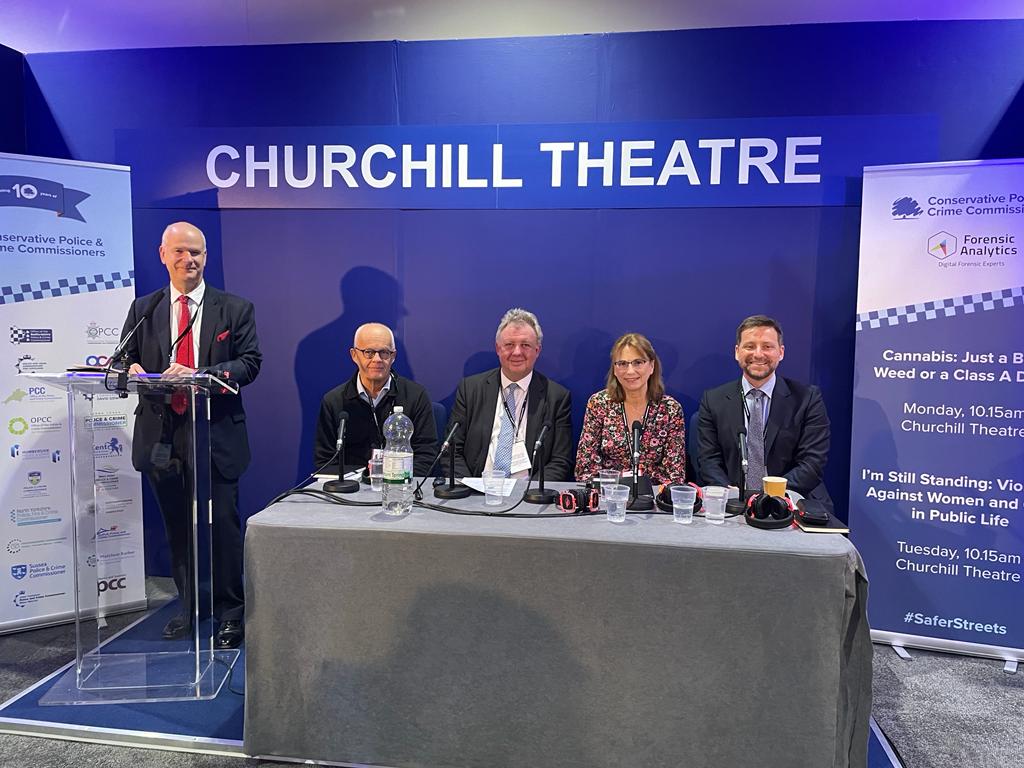
Conservative Party Conference 2022, left to right: PCC Mark Shelford, Professor Neil McKeganey, PCC David Sidwick, Unknown, Unknown
For the past nine months I have been engaged in series of formal complaints against Conservative PCCs concerning their seriously misleading anti-cannabis campaign. I am pleased that they have now stopped their silly scaremongering. If they try to go down this road again, they will be back into a costly and time-consuming process which they can never win because nothing they have claimed can be supported by evidence.
None of my complaints have been upheld despite exhausting all routes of appeal but this is no surprise to me. Such complaints procedures are not designed to hold officials to account as you might hope. Their real purpose is to find excuses for misconduct. However, by any measure, I have defeated every absurd claim they have made by adducing published, peer-reviewed evidence.
This all started with the ridiculous proposal that cannabis should be made a class A drug, announced at the Conservative Party Conference 2022 in Birmingham. Inevitably, all the tabloid newspapers loved this and when home secretary Suella Braverman endorsed the idea, well, it was a wet dream for the Daily Mail and every hack who believes the role of the press is to sensationalise rather than inform.
The leader of the campaign was David Sidwick, PCC for Dorset. He advanced all the old chestnuts of addiction, psychosis and the ‘gateway theory’ but went much, much further:
“the pernicious influence of cannabis on our society”
“nothing soft about this drug. Its impact can be brutal — damaging lives and promoting crime”
“make no mistake, this stuff does the same harm as crack and heroin”
“a factor in numerous random acts of violence”
Such was the content of Sidwick’s article in the Daily Mail, a platform the newspaper gave him to coincide with his event at the Conservative Party Conference which was titled ‘Cannabis: Just a bit of weed or a Class A drug?’
Sidwick also claimed that his experience in the pharmaceutical industry gave him a special understanding of the health harms of cannabis and during the complaints process he implied he had some sort of medical expertise. In reality, he was a pharmaceutical salesmen and this attempt to blag some extra credibility for his claims speaks volumes.
To be fair, Sidwick has been taken in by the work of Professor Stuart Reece, a professor of psychiatry at the University of Western Australia. Reece is ‘reefer madness’ personifed. His claims and theories are as extreme as they come and have made him a laughing stock amongst his professional peers. See here for more details.
Sidwick claimed that Professor Reece’s work amounted to “a wealth of new data on the drug’s effects which merited a re-evaluation”.
The basis of my complaint was that under the Nolan Principles of Public Life, with which all PCCs are obliged to comply, they must
“act with integity and diligence and take decisions impartially, fairly and on merit, using the best evidence and without discrimination or bias” and “act and take decisions in an open and transparent manner”.
It is self-evident that Sidwick’s claims could not pass this test, so I submitted a complaint against him and also Alison Hernandez, PCC for Devon and Cornwall; and Mark Shelford, PCC for Avon and Somerset. These were his principle accomplices. Hernandez has a particularly poor record with a quite ridiculous attitude to all aspects of drugs policy. Matthew Barber, PCC for Thames Valley, was also in my sights but to be fair to him, he readily engaged with me. We debated the issue on a radio programme and had a lengthy discussion on a Zoom call. While we didn’t come to any agreement, he listened and took on board what I had to say.
Sidwick and his office did make an attempt to respond properly to my complaint but what they offered as evidence was almost exclusively just Sidwick’s opinions. Hernandez was, as I might have expected, high handed and arrogant. She made no attempt at all to deal with the substance and just dismissed my complaint, claiming in effect that she was entitled to say whatever she wanted. Shelford also failed to deal with the issues, saying he was entitled to express his opinion and had “drawn from a large number of sources to inform his views” – without saying what those sources were!
Of course, they are perfectly entitled to hold any opinion they want but in their role as PCC they must comply with the Nolan Principles which they have all clearly failed to do. Their campaign did not use “best evidence” and neither were they “open and transparent” about their claims.
So that’s it. A great deal of work was involved on my part but more importantly it required a great deal of work from the PCCs and their staff. I’m confident they won’t want to go down this road again. Of course they’re perfectly entitled to be anti-cannabis and uphold the law as it currently stands but they won’t be spreading misinformation and ridiculous propaganda anymore.
For the record, this is how I responded to Sidwick’s claims.
CLAIM THAT CANNABIS IS A ‘GATEWAY DRUG’
I accept Sidwick’s ‘real-world definition as meaning an increased desire for taking Class A drugs’. I do not accept that cannabis is a ‘gateway drug’ ‘meaning an increased opportunity for taking Class A drugs’. As now widely accepted by experts, the real ‘gateway’ is the illegal status of cannabis meaning that anyone purchasing cannabis will be in contact with an illegal supplier who is likely to offer other drugs including Class As.
In 2008, the government’s expert advisors on drugs, the Advisory Council on the Misuse of Drugs (ACMD), investigated the gateway theory and concluded:
8.14 The “gateway theory” is the term that describes the possibility that use of cannabis leads to use of more dangerous drugs such as opiates and cocaine. It arises from the observation that users of the most harmful (Class A) drugs have generally used cannabis first. The interpretation of these studies is extraordinarily difficult because of the confounding effects of alcohol, tobacco, solvents, stimulants and psychedelic drugs, whose use frequently precedes that of Class A drugs. Moreover, although there is no evidence that there are physiological mechanisms leading to more harmful drugs, the social milieu of drug use may result in some users trying them. The shared market for cannabis and other drugs would increase the potential for escalation.
8.15 In 2002, the Council concluded that it was not possible to state, with certainty, whether or not cannabis use predisposes users to dependency on Class A drugs. Nevertheless, it considered the risks to be small and certainly less that those associated with the use of alcohol and tobacco. No further convincing evidence has been identified by the Council to alter this conclusion.
The ACMD comprises the most senior, highly qualified, experienced drugs experts. I particularly draw your attention to the unequivocal statement “there is no evidence that there are physiological mechanisms leading to more harmful drugs”.
Sidwick’s ‘alcohol argument’ is simply an expression of opinion. It is not evidence.
Sidwick’s reference to ‘tolerance’ is an opinion that developing tolerance in cannabis leads to Class A drugs. This is just more opinion, re-stating his belief in the ‘gateway theory’ and is not evidence.
Sidwick’s ‘business model’ is yet more opinion and is comprehensively dealt with by the ACMD’s conclusions above. Dame Carol Black’s report supports the ACMD’s conclusion that it is the “social milieu of drug use” and “shared market for cannabis and other drugs” that is the gateway, not cannabis.
Sidwick’s ‘neurophysiology argument’ is his opinion and interpretation of evidence. It is not evidence.
Sidwick interprets data on hospitalisations during the ‘Lambeth experiment’ to show that Class A use increased. This is not what the data show, nor is it what the Institute for Fiscal Studies’ paper shows. All they show is an increase in hospital admissions which correlates with the depenalisation of cannabis. No causal relationship is shown. Once again, this is not evidence of cannabis being a ‘gateway drug’, it is simply Sidwick’s opinion.
Sidwick’s ‘multi-drug use argument’ is presented as ‘intuitive’, so is merely opinion, it is not evidence.
None of the arguments advanced by Sidwick amount to evidence that cannabis is a gateway drug. They are all just expressions of his opinion.
By contrast I adduce the following evidence:
1.The ACMD’s report as above, Cannabis Classification and Public Health, 2008 https://assets.publishing.service.gov.uk/government/uploads/system/uploads/attachment_data/file/119174/acmd-cannabis-report-2008.pdf “There is no evidence that there are physiological mechanisms leading to more harmful drugs.”
2. The Gateway Hypothesis, Common Liability to Addictions or the Route of Administration Model. A Modelling Process Linking the Three Theories, 2016 https://pubmed.ncbi.nlm.nih.gov/26431216/ “The ‘gateway’ sequence, tobacco to cannabis to other illicit drugs was not associated with substance use propensity more than alternative sequences.”
3. The health effects of cannabis and cannabinoids: the current state of evidence and recommendations for research, 2017. “Most people who use marijuana do not go on to use other, “harder” drugs.” https://www.ncbi.nlm.nih.gov/books/NBK423845/
4. Is Cannabis a Gateway Drug? Key Findings and Literature Review, 2018 https://www.ojp.gov/pdffiles1/nij/252950.pdf I note that Sidwick himself cited this report. He clearly missed the main conclusion: “No causal link between cannabis use and the use of other illicit drugs can be claimed at this time.”
5. Reductions in alcohol use following medical cannabis initiation: results from a large cross-sectional survey of medical cannabis patients in Canada, 2020 https://www.sciencedirect.com/science/article/abs/pii/S0955395920303017 “44% reported drinking less frequently on a monthly basis. Moreover, results showed that patients also reduced their use of prescription opioids, tobacco and illicit substances when they consumed medical cannabis.”
6. Is marijuana really a gateway drug? A nationally representative test of the marijuana gateway hypothesis using a propensity score matching design, 2021 https://link.springer.com/article/10.1007/s11292-021-09464-z “Results from this study indicate that marijuana use is not a reliable gateway cause of illicit drug use. As such, prohibition policies are unlikely to reduce illicit drug use.”
7. Trends in Alcohol, Cigarette, E-Cigarette, and Nonprescribed Pain Reliever Use Among Young Adults in Washington State After Legalization of Nonmedical Cannabis, 2022 https://www.jahonline.org/article/S1054-139X(22)00374-3/fulltext “Contrary to concerns about spillover effects, implementation of legalized nonmedical cannabis coincided with decreases in alcohol and cigarette use and pain reliever misuse.”
8. Recreational cannabis legalization has had limited effects on a wide range of adult psychiatric and psychosocial outcomes, 2023 https://www.cambridge.org/core/journals/psychological-medicine/article/recreational-cannabis-legalization-has-had-limited-effects-on-a-wide-range-of-adult-psychiatric-and-psychosocial-outcomes/D4AB5EB78D588473A054877E05D45F16 “We assessed a broad range of outcomes, including other substance use, substance dependence…and found no detrimental nor protective effects for the majority of these domains, nor did we identify any increased vulnerability conferred by established risk factors.”
Thus I have shown that Sidwick’s claim is not supported by evidence, let alone ‘the best evidence’, nor has he taken any note of the overwhelming weight of evidence which opposes his position. Clearly his assertion that ‘cannabis is a gateway drug’ is unsupportable opinion and he is in breach of Nolan principle 1.3.
CLAIM THAT CANNABIS CAUSES SERIOUS MENTAL HEALTH DISORDERS
There is no dispute that there is an association between the use of psychoactive substance and mental health disorders. The issue is whether there is evidence that shows a causal effect from cannabis.
1.Assessing evidence for a causal link between cannabis and psychosis: a review of cohort studies, 2009 https://pubmed.ncbi.nlm.nih.gov/19783132/ “Whether cannabis use can cause serious psychotic disorders that would not otherwise have occurred cannot be answered from the existing data.”
2. Cannabis and psychosis: Neurobiology, 2014 https://www.ncbi.nlm.nih.gov/pmc/articles/PMC3927252/ “The ‘transition-to-psychosis’ due to cannabis, despite it being a strong risk factor, remains uncertain based upon neurobiological changes. It appears that multiple other factors might be involved.”
3. Genome-wide association study (GWAS) of lifetime cannabis use reveals a causal effect of schizophrenia liability, 2018 https://www.nature.com/articles/s41593-018-0206-1 “Largest study yet of genes and predisposition to schizophrenia and cannabis use looked at anonymised data from 180,000 people. Cannabis is more likely to be taken by schizophrenics trying to self-medicate than to cause the disorder.”
4. High-potency cannabis and incident psychosis: correcting the causal assumption, 2019 https://www.thelancet.com/journals/lanpsy/article/PIIS2215-0366(19)30174-9/fulltext “We found little evidence for any causal effect of cannabis use on schizophrenia risk.”
5. Adolescent cannabis use and adult psychoticism: A longitudinal co-twin control analysis using data from two cohorts, 2021 https://pubmed.ncbi.nlm.nih.gov/34553951/ “Cannabis exposure during adolescence is not independently associated with either adult-onset psychosis or signs of schizophrenia.”
6.. Cannabis and Psychosis: Recent Epidemiological Findings Continuing the “Causality Debate”, 2022 https://ajp.psychiatryonline.org/doi/10.1176/appi.ajp.2021.21111126 “While cannabis use may increase the risk for psychosis, its exposure is neither necessary nor sufficient for psychosis, suggesting that it is one of multiple causal components.”
7. Influence of cannabis use on incidence of psychosis in people at clinical high risk, 2023 https://pubmed.ncbi.nlm.nih.gov/37070555/ “There was no significant association between any measure of cannabis use at baseline and either transition to psychosis, the persistence of symptoms, or functional outcome.”
8. State Cannabis Legalization and Psychosis-Related Health Care Utilization, 2023 https://jamanetwork.com/journals/jamanetworkopen/fullarticle/2800728 “The findings of this study do not support an association between state policies legalizing cannabis and psychosis-related outcomes.”
Thus I have shown that Sidwick’s claim is not supported by evidence. He has distorted the evidence to claim that cannabis causes psychosis when in fact it shows is that it may or may not be one of multiple causal components. This misleading treatment of evidence based on a strong personal opinion is clearly in breach of Nolan principle 1.3. The consensus of expert opinion is that the risk of cannabis as a possible component cause of psychosis is best managed through a legally regulated system where age limits and potency can be controlled, rather than leaving the market under the control of criminal gangs.
CLAIM THAT CANNABIS CAUSES AUTISM SPECTRUM DISORDER, ASPERGER’S SYNDROME AND ATTENTION DEFICIT HYPERACTIVITY DISORDER (ADHD)
You have already acknowledged that Sidwick misrepresented the single study he adduces to support this claim when he gave oral evidence at the Home Affairs Committee Drugs Inquiry in 2022. You suggest “it is likely that the PCC misspoke”. This does not explain why he has subsequently repeated this claim on multiple occasions in media interviews.
This single study is by Dr. Stuart Reece who is an outlier at the very edge of professional credibility. The study has not been peer-reviewed, cites only other studies by Reece in support of his conclusions and there is no independent evidence supporting his conclusions.
By contrast, there is considerable evidence supporting the therapeutic use of cannabis in the treatment of autism spectrum disorders (ASD) which include Asperger’s Syndrome; and attention deficit hyperactivity disorder (ADHD).
1.Cannabidiol-Rich Cannabis in Children with Autism Spectrum Disorder and Severe Behavioral Problems, 2019 https://pubmed.ncbi.nlm.nih.gov/30382443/ “Following the cannabis treatment, behavioral outbreaks were much improved or very much improved in 61% of patients.”.
2. Real life Experience of Medical Cannabis Treatment in Autism: Analysis of Safety and Efficacy, 2019 https://pubmed.ncbi.nlm.nih.gov/30655581/ “Cannabis in ASD patients appears to be well tolerated, safe and effective option to relieve symptoms associated with ASD.”
3. Cannabis and cannabinoid use in autism spectrum disorder: a systematic review, 2022 https://pubmed.ncbi.nlm.nih.gov/34043900/ “Cannabis and cannabinoids may have promising effects in the treatment of symptoms related to ASD, and can be used as a therapeutic alternative in the relief of those symptoms.”
4. Cannabis for the Treatment of Attention Deficit Hyperactivity Disorder, 2022 https://www.karger.com/Article/FullText/521370 “This report adds to the literature by providing detailed personal accounts from patients and objective evidence of improvement on validated measures for ADHD symptoms.”
Thus I have shown that Sidwick’s claim is not supported by evidence and, in fact, is contradicted by evidence. He seriously misrepresented the only evidence he adduces at the Home Affairs Committee Drugs Inquiry and has continued to misrepresent it in subsequent media interviews. His conduct is clearly in breach of Nolan principle 1.3
OTHER CLAIMS
You have acknowledged that Sidwick’s other claims on issues such as birth defects, cancer, etc are based on single sources of information and the same authors. Clearly this does not meet the test of Nolan principle 1.3 “to act…using the best evidence and without…bias.”
SUMMARY
On all matters relating to cannabis, you have acknowledged that Sidwick relies on a limited amount of research from a limited range of sources. I have shown that the overwhelming weight of evidence does not support his claims and in many instances directly contradicts them.
Clearly, he has allowed his strong personal opinion on cannabis to distort his communications on many occasions to a very large public audience. Since he first took office his conduct on this issue has been consistently in breach of Nolan principle 1.3.
I note that Sidwick states he has a “pharmaceutical understanding of the science” but his past employment in the pharmaceutical industry is in sales and marketing, so any claim of scientific or clinical expertise cannot be sustained.
I submit it is clear that Mr David Sidwick, the PCC, has acted in this matter without integrity, diligence, transparency and objectivity. With respect, your claim that he has not is incredible and unsustainable.
I consider that in view of his personal responsibility for the misinformation that he has repeatedly and widely communicated, he should resign from office. As a minimum, the Police and Crime Panel should issue a public statement of retraction and apology for these false claims. My overriding concern is that Sidwick has used his office to try and increase the criminal penalties for cannabis by campaigning for it to be made a Class A drug on the basis of false evidence. This supports the criminal market in cannabis and all the harm it causes for which he must be held to account.
The Houses of Parliament, the London Drugs Commission and Cannabis

Last week I was invited to give evidence to the London Drugs Commission on the effectiveness of the UK’s drugs laws, focusing on cannabis.
Later that same day I attended the Cannabis Industry Council’s event at the Houses of Parliament where we launched our ‘Protect our Patients’ campaign to enable cannabis prescribing by GPs.
All in all, a good day in London, a city I appreciate much more from afar than when I used to live there!
Dear Lord Falconer,
It was a pleasure to meet you and your colleagues on the London Drugs Commission last week. Thank you for the opportunity to give evidence.
I am writing to summarise the key points that I made.
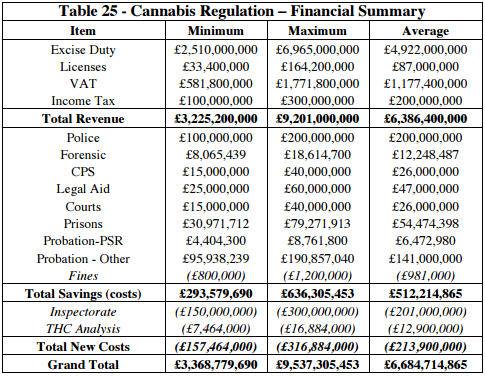
- There have been a number of studies and papers published on the costs/benefits of cannabis legalisation and regulation, including the paper by Chris Snowdon of the IEA who was also in our meeting. The IEA, the Taxpayers’ Alliance, Health Poverty Action, the Adam Smith Institute, the Beckley Foundation with the University of Essex and the LSE have all published well-researched analyses. I endorse them all but none is as comprehensive or uses the variety of sources (many no longer available) as the study that CLEAR Cannabis Law Reform commissioned in 2011 from the Independent Drug Monitoring Unit. Although now 12 years old, it remains as relevant as ever. The price of cannabis has, if anything, reduced while all other costs have increased.
‘Taxing the UK Cannabis Market’, 2011, Atha et al, projects a net annual gain to the UK economy of between £3.4 billion to £9.5 billion based on a £1 per gram cannabis sales tax in addition to VAT. See the attached table which neatly summarises this. I have also attached a full copy of the study.
- Cannabis is not harmless and you won’t find anyone serious who makes this claim. However its health harms are systematically and consistently exaggerated. Peanuts and shellfish cause more health harms. Finished admission episodes to hospital for ‘mental and behavioural problems’ related to cannabinoids are at one-fifth the rate of such admissions for alcohol. What appears to be a massive increase in community-based treatment for young people is confounded because 89% of such treatment is coercive. That is, such ‘treatment’ is imposed by authorities such as educational institutions or the courts as an alternative to suspension/expulsion or harsher sentences. (Sources NHS, DHSC)
The University of York estimates the risk of a diagnosis of psychosis associated with cannabis use for regular users is 1 in 20,000. Comparatively, the National Geographic Society estimates the lifetime risk of being struck by lightning at 1 in 3,000.
However, the more harmful you think cannabis is, the more irrational and irresponsible it is to leave the market unregulated and controlled by criminals.
- Cannabis prohibition creates deep and far reaching fractures in our society which affect everyone. With the value of the market at least three times that of Class A drugs such as heroin and cocaine, it is the principal provider of regular cashflow to organised crime. It drives gangsterism, street dealing, underage use, violence, knife crime, intimidation, exploitation, county lines, human trafficking, contaminated products, societal breakdown and authoritarian policing of people’s private lives.
When government finally takes responsibility for the cannabis market and regulates it, the benefits will transform society, making our streets safer and reducing crime of all sorts. Prohibition of this largely benign and very popular substance has turned the forces of law enforcement against the communities they are supposed to protect. This policy was always destined to fail and persisting with it has caused immense, incalculable harm.
If I can be of further assistance please let me know.
Kind regards,
Peter Reynolds
Staffordshire Company, Dalgety, Licenced to Cultivate Cannabis for Medical Use. On the Board of Directors, Jacqui Smith, Ex-Labour Home Secretary.

It’s excellent news that following on from Celadon Pharmaceuticals last month, the MHRA and Home Office have now issued a second set of licences to produce cannabis-based products for medical use (CBPM). Dalgety says it will be producing bulk dried flower, ground and pelletised flower, pure crystallised extracts, blended oils, solids and active pharmaceutical ingredients (API) as powders and extracts.
Reported on Staffordshire Live
But look who’s on the board. Former Staffordshire Chief Constable, Jane Sawyers, who was executive lead for drugs investigation and enforcement but most extraordinarily, Jacqui Smith the former Labour Home Secretary! It was she who was responsible for upgrading cannabis from a class C to a class B drug in 2007 and then famously in 2012 said it had been a mistake. After defying the ACMD’s advice she later reflected that “some people could use cannabis without harm and that education would have been a better option than criminalisation”. Source: Daily Telegraph
Some will cry hypocrisy and it is remarkable how many politicians completely reverse their position on drugs policy when they leave office. What this really shows is that the stupidity of current policy is well understood in government but our so-called leaders are too cowardly to face up to it.
But I welcome Ms Smith’s now wholehearted conversion to common sense. Perhaps it will influence others. I alss welcome this second set of licences. I firmly believe that domestic production is what will improve qualty and service for UK patients and eventually lead to more far reaching cannabis reform.
AUDIO. LBC Radio, 5th March 2023. Clare Foges interviews Peter Reynolds about Prince Harry’s claim that cannabis has helped with his mental health.
Listen Here
I kept my temper and remained polite and civil but this woman is infuriating. This is a defining example of how a badly informed journalist with an agenda can cause immense harm with falsehood and myth.
I’ve read the rubbish she has published on cannabis previously and she is totally sucked in and convinced by the reefer madness propaganda.
I think I completely demolished her. I was also amused that as a professional journalist she doesn’t understand the difference between ‘infer’ and ‘imply’.
Our Streets are Ruled by Violent Drugs Gangsters, Yet Neither Government nor Media will Address our Failed Drugs Policy

Apart from mindless drug war rhetoric, being ‘tough on drugs’, ‘clamping down on dealers’, or. most mindbogglingly-stupid-of-all ‘tackling the scourge of middle-class drug takers’, our so-called ‘leaders’ don’t want to talk about drugs.
Politicians do all they can to avoid the issue. Both BBC and ITV treat the subject of drugs as unacceptable viewing. Reckless use of alcohol is OK but consumers of other drugs are always portrayed as degenerates. Acres of newsprint and hours of TV and radio are devoted to issues such as trans rights, affecting just 0.5% of the population, while 30% of the population consumes prohibited drugs at some time in their lives but we can’t talk about it.
This is the subject that they dare not speak of. Murders, shootings, knife crime, innocent bystanders killed in gang wars, these are almost always driven by criminal drugs markets. It’s not the drugs, it’s the criminal markets through which they are produced and distributed. So while presenters, journalists, MPs and commentators wring their hands in despair, never ever will they discuss why, what can we do about it, how could we do things differently, what would progressive, evidence-based drugs policy look like?
All the Conservatives have been able to come up with is their ‘Swift, Certain, Tough’ idea for harsher punishments including the probably unlawful threat to confiscate passports and driving licences. The word is that the public consultation has delivered almost nothing but withering criticism of the ideas and nobody in the Home Office knows what to do next.
The Labour Party, to its everlasting shame, is just as out-of-touch with the public. Opinion polls show that around half the population supports reform of the law against cannabis and less than a quarter oppose it but baby-faced Wes Streeting is even toying with the idea of prohibiting cigarettes! Keir Starmer, despite his experience as Director of Public Prosecutions, thinks our drug laws are “about right”. He’s way out of step with his learned friends at the bar then, because most of them think our approach to drugs is idiotic, as do most criminal solicitors, court officials and even many judges.
It’s all too difficult for our precious politicians, so they simply ignore it. Our drugs policy continues exactly the same as it has for over 50 years. Drug deaths rise inexorably to record levels. Dealers run rampant throughout our communities, increasingly exploiting children through county lines. Rates of drug consumption are higher than ever.
Cannabis is ubiquitous and the police really can’t be bothered with it unless there’s something else involved or its big time dealing or cultivation. Taking ecstasy on a night out or at a festival is simply normal for most young people and it’s a very good job it’s such a safe drug. Considering it’s completely unregulated, of unknown strength and purity, the death rates are very low, much lower than for over-the-counter painkillers. Millions of tablets are taken every weekend and we get about 50 deaths a year. If the product was properly controlled. with known strength and uncontaminated, probably noone would die at all. It would be as safe as a cup of tea.
 Yet consumption of the most dangerous drug of all, alcohol, is celebrated, promoted and politicians use taxpayers’ money to subsides their own consumption of it in Parliament’s bars. They delight in having their photographs taken in drug consumption rooms, otherwise known as pubs but they refuse to allow overdose prevention centres, claiming there is no evidence they work, despite New York’s facilities halting over 700 overdoses in just one year.
This is one of the biggest issues of our time and politicians should, of course, be addressing it. I’m not letting them off the hook but actually I think our broadcasters bear the heaviest responsibility. The press is a caricature of itself on the subject. We can expect nothing serious or balanced from the Daily Mail or the Telegraph and they do rake in £800 million per year in alcohol advertising so perhaps it’s no surprise. But the BBC is letting us down. It is timid to the point of being irresponsible in its lack of coverage and debate. Until the issue is given the prominence it requires, it is easy for politicians to do nothing except tell us how tough they are.
Of course the problem is that any rational investigation of the subject is bound to conclude that legally regulated markets and accessibility based on scientific assessments of harm have to be the answer. While the people are ready for this, our luddite, regressive establishment isn’t.
IRELAND. Leo Varadkar, the Taoiseach Who Defines the Problem with Western Democracy

Leo Varadkar
Just re-appointed Taoiseach as part of the coalition government of Ireland, Varadkar has immediately shown his true colours in response to a question on drugs policy. The hypocrisy, weakness and self-serving indecision he displays is mirrored in almost every other western ‘leader’ and is the root cause of the decline of western democracy as a system of government.
In 2010, when asked by Hotpress journalist, Olaf Tyaransen, Varadkar would not support either the right to gay marriage or abortion. He also acknowledged that he had smoked cannabis “while in college but never since I have held elected office”.
The point is not about gay marriage, nor about abortion rights, nor drugs policy. It is about the absence of leadership and integrity that is fundamental to the failure of western democracy.
Varadkar’s latest demonstration of failure comes in response to the recent report from the Oireachtas Justice Committee which recommends that “a policy of decriminalisation is pursued, in line with emerging international best-practice on the possession of drugs for personal use, including the cultivation of illicit substances at a modest, non-profit level.” He responds “I haven’t formed a view on it and obviously don’t want to, kind of, prejudice what the Citizens’ Assembly might come up with.”
So, as with the heads of government in the USA, the EU, UK, Australia and New Zealand, he ducks the issue for fear of a short-term backlash. Conveniently he can kick the can down the road referring to the long-delayed and still not arranged Citizens’ Assembly on drugs.
He is content to maintain a policy which sends people to jail for cannabis, even though he has consumed it himself. He will not commit himself to reform which is supported by dozens of peer-reviewed studies and real-world evidence while present policy is supported by none.
This absence of leadership and integrity is the same path that our ‘leaders’ choose on all issues of substance. They will not commit to anything until they are sure it will not disadvantage them politically, even if in their own lives their position is clear. Our political system, which places winning and maintaining power above all else prevents them. They are entirely self-serving, hypocritical and autocratic towards citizens who wish to make their own choices.
This is the failure of western democracy and Varadkar perfectly defines it.

 Peter Reynolds