Posts Tagged ‘drugs policy’
IRELAND. Leo Varadkar, the Taoiseach Who Defines the Problem with Western Democracy

Leo Varadkar
Just re-appointed Taoiseach as part of the coalition government of Ireland, Varadkar has immediately shown his true colours in response to a question on drugs policy. The hypocrisy, weakness and self-serving indecision he displays is mirrored in almost every other western ‘leader’ and is the root cause of the decline of western democracy as a system of government.
In 2010, when asked by Hotpress journalist, Olaf Tyaransen, Varadkar would not support either the right to gay marriage or abortion. He also acknowledged that he had smoked cannabis “while in college but never since I have held elected office”.
The point is not about gay marriage, nor about abortion rights, nor drugs policy. It is about the absence of leadership and integrity that is fundamental to the failure of western democracy.
Varadkar’s latest demonstration of failure comes in response to the recent report from the Oireachtas Justice Committee which recommends that “a policy of decriminalisation is pursued, in line with emerging international best-practice on the possession of drugs for personal use, including the cultivation of illicit substances at a modest, non-profit level.” He responds “I haven’t formed a view on it and obviously don’t want to, kind of, prejudice what the Citizens’ Assembly might come up with.”
So, as with the heads of government in the USA, the EU, UK, Australia and New Zealand, he ducks the issue for fear of a short-term backlash. Conveniently he can kick the can down the road referring to the long-delayed and still not arranged Citizens’ Assembly on drugs.
He is content to maintain a policy which sends people to jail for cannabis, even though he has consumed it himself. He will not commit himself to reform which is supported by dozens of peer-reviewed studies and real-world evidence while present policy is supported by none.
This absence of leadership and integrity is the same path that our ‘leaders’ choose on all issues of substance. They will not commit to anything until they are sure it will not disadvantage them politically, even if in their own lives their position is clear. Our political system, which places winning and maintaining power above all else prevents them. They are entirely self-serving, hypocritical and autocratic towards citizens who wish to make their own choices.
This is the failure of western democracy and Varadkar perfectly defines it.
The Final Nail in the Conservatives’ Coffin: Suella Braverman
Oh, that Britain is brought so low as this.
Our shame that we have brought generations of overseas people to our shores and that some of them have become the most racist and xenophobic of our citizens.
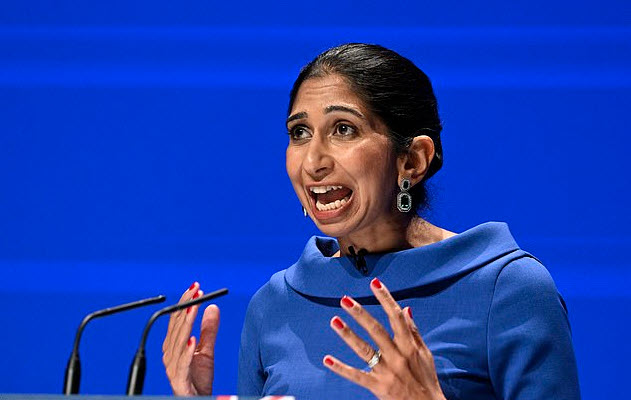
Succeeding and reprising another Asian woman whose family was rescued by British asylum, Suella Braverman is the nadir of Home Secretaries, a ‘nasty party’ caricature of spite, authoritarianisim and hate.
Anyone who can “dream” of seeing refugees deported to Rwanda is either fundamentally evil or mentally ill. Flying people applying for asylum 4,000 miles to a country that is notorious for human rights abuses is, by any reasonable assessment, a crime.
As for her idiotic pronouncements on drugs policy, I’m not going to waste my time on them. They are so stupid and so opposed to the evidence, they say everything about her that needs to be said.
And she’s a security risk with repeated breaches of the ministerial code. Sunak’s government is doomed and he’s wrecked the slight chance he did have of survival by appointing this awful, despicable woman.
Future UK Drugs Policy must embrace NHS-funded medicinal cannabis, adult-use legalisation and legal regulation of all drugs
Adult-use legalisation of cannabis is the only solution to the huge problem of the violent, gangster-controlled drugs trade which now dominates our streets. Revenue from the £6 billion per year cannabis market is what funds activity in the smaller but much more profitable heroin and crack market (with meth starting to make inroads in the UK).
Current government policy supports the gangsters’ business model and is directly responsible for violence such as the murder of Olivia Pratt-Korbel, the record number of drug deaths, the proliferation of dangerous products, contaminated drugs, synthetic cannabinoids, street dealing, knife crime, county lines and ease of access by minors. Until the government faces up to the disastrous policy it has pursued for over 50 years, all these problems will continue to get worse.
Prescribed cannabis will never reach everyone who can benefit from it, even when it is available on the NHS. I am confident that the research now being conducted by the Cannabis Industry Council (CIC) will prove that cannabis can be funded by the NHS with a net gain as it will reduce use of other more expensive and harmful medicines.
I envisage a cannabis market which includes:
1. Prescription-only (POM) sophisticated cannabinoid medicines which have been through clinical trials and have a marketing authorisation
2. POM cannabis as flower, oils and extracts, unlicensed medicines
3. Over-the counter (OTC) low-THC cannabis extracts as food supplements
4. Adult use cannabis in all forms available through licensed retailers
5. Grow-your-own (GYO for personal use only
There will be regulations to ensure standards, quality and safety at every level. There will still be criminal offences for supplying to minors and for commercial activity which is unlicensed.
All drugs should be legally available within regulations which are proportionate to their potential for harm. The most difficult part of this is that alcohol will need to be much more tightly restricted. This is why it is the alcohol industry and its massive wealth which drives opposition to drug law reform. Its spending power on advertising in the media and its lobbying of politicians is a corrupt influence which causes massive harm in our society.
The number of stores selling alcohol should be substantially reduced. Limits should be set on the quantity that can be purchased, much the same as current restrictions on OTC medicines.
Heroin should be available on prescription subject to engagement in treatment. ‘Abstinence’ is an unrealistic and damaging objective. The aim of treatment should be to improve health and support a sustainable lifestyle.
Cocaine is the most difficult problem. On its own it is no more harmful than alcohol but taken with alcohol as it usually is, its potential for harm increases exponentially. Crack is a very dangerous drug, not so much addictive as compulsive. Until we find a way of dealing with it, it will contine to drive acquisitive crime with users having no concern about the consequences of their actions. The huge dilemma is that anyone who has powder cocaine can learn very quickly how to ‘wash’ it into crack. However, if we continue to prohibit cocaine we will continue to make the problem worse. We must find a way to regulate access that will minimise harm and for now, I do not know what the solution is.
MDMA should be available in a similar way to adult-use cannabis, manufactured to quality standards, properly labelled and with limits on the quantity that can be purchased.
Taken together these measures will greatly improve public health, reduce pressure on the NHS, massively reduce all crime and free up police to concentrate on real crime which has victims.
Home Affairs Committee Inquiry into Drugs. Evidence Doesn’t Work with Politicians, Will Common Sense?
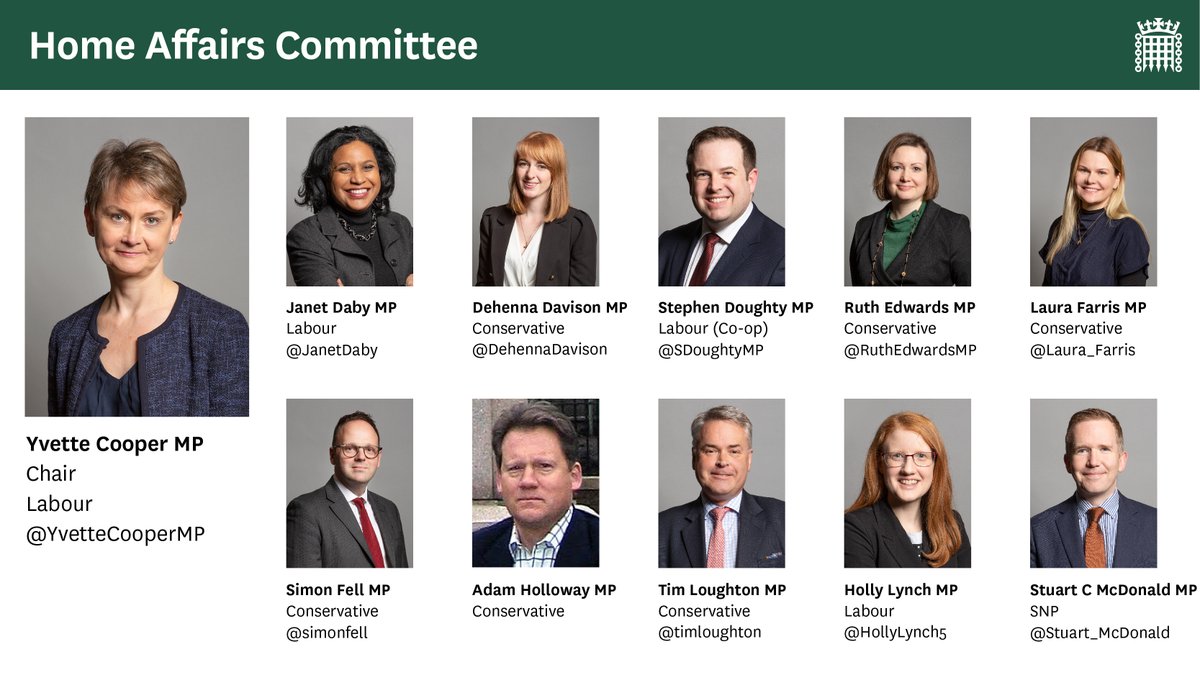
I am unable to share my detailed response to the inquiry until it has formally accepted and published it. However, this introduction explains the basis of my submission.
********
I am the president of CLEAR Cannabis Law Reform, the longest established and largest membership-based cannabis policy group in the UK, founded in 1999 with more than 600,000 followers. We represent people who support cannabis law reform, not all but most are also cannabis consumers. We are committed to a responsible, science and evidence-based approach.
I have participated in the cannabis law reform campaign for over 40 years. For over 30 years I have worked professionally in healthcare and medicine and for the past 10 years in the legal cannabis and cannabinoid industry.
The committee’s first inquiry into drugs was in 1983. I submitted evidence then at the tender age of 26 and to every inquiry since up to this year’s at the age of 64.
What stands out in all these inquiries is the overwhelming weight of evidence and opinion in favour of radical reform. Yet despite this, apart from the legalisation of access to prescribed medicinal cannabis in 2018, no progress has been made. On the contrary, politicians continue to prefer to posture as ‘tough on drugs’ rather than follow evidence or public opinion.
There is no doubt of the failure of current policy, yet both major parties continue to stick rigidly to prohibition. This despite the highest ever level of drug deaths, the de facto decriminalisation of cannabis by police and widespread contempt for our drug laws demonstrated by colossal consumption, particularly of cannabis, cocaine and ecstasy (MDMA) by people of all ages and social backgrounds.
There is also no doubt of the cost of this failed policy, estimated to be in the region of £20 billion per annum, and that it drives crime, violence, gangsterism and the breakdown of cohesion in society. One of the common misconceptions, which ministers dishonestly promote, is that it is drugs that drive these problems when in fact it is almost always policy that is the cause. Present policy directly supports and encourages organised crime.
What will it take for politicians to grasp this nettle?
Clearly, erudite submissions of evidence and logical argument do not work, however well qualified or experienced the source. Despite many politicians’ admissions of drug use, once in office they choose to continue with policies that, had they been caught with illegal drugs, would probably disqualify them from the jobs they now hold. Frequently, when they leave office they suddenly reverse their position and support reform. This brazen hypocrisy causes great damage to our society and contributes to widespread contempt for our political system.
So, in this submission, I address the issues concerned with common sense. For instance, specifically on cannabis, it is easily possible to find scientific evidence either maximising its dangers or minimising them. In the UK, mainly due to research at the Institute of Psychiatry, we have a particularly extreme point of view on its likelihood to cause mental illness but this is unique in the world. Most other countries take a far more balanced approach and the media is not as hysterical about these potential harms. It is possible to swap studies ad infinitum and nothing is achieved by this. Instead, I propose the common sense that since the 1960s the number of cannabis consumers has risen from about zero to about 3 million, yet there is no correlation at all with the rate of diagnosed mental illness which is steady or declining.
The fantastic statistical projections from the Institute of Psychiatry, using the most esoteric mathematical formulae, drive fear about cannabis but they simply do not match the real word experience of the millions of people who regularly consume the drug. It is this sort of mismatch that paralyses our ability to reach a consensus. This is why I believe that far more weight needs to be given to common sense.
Drug use is a normal part of life for most people. The distinction between drugs which are legally permitted, alcohol and tobacco, and drugs which are banned is, in itself, extremely harmful. Alcohol and tobacco are two of the most harmful drugs, much more harmful than many drugs that are banned. It is common sense that the law should guide people accurately, not mislead them as at present.
IRELAND. Politicians And Gardai Who Want To Keep Cannabis Banned are on the Same Side as the Drugs Gangsters.

In Ireland, 90% of people support the use of cannabis for medical purposes and, remarkably, nearly a third support legalisation for recreational use. So cannabis is very popular indeed. A great deal of money is spent on it, all of which goes into the pockets of criminals. Some are just friends of friends and not really causing any harm but move a step or two up the chain and right to the top it’s gangsters and organised crime. What they earn from cannabis goes into funding far more serious criminal activity with violence never far away. And the largely futile efforts to stop the cannabis trade cost Irish taxpayers hundreds of millions of euros.
So why isn’t the government taking action to enable access for medical use, to regulate an adult use market, save hundreds of millions of euros and pull the rug from underneath organised crime?
Evidence from other jurisdictions proves beyond doubt that a regulated market would remove most of the trade from criminals, cut related crime, protect consumers, control the stength and quality of the product and reduce all harms.
So why do they do nothing? Why do they refuse even to engage with the public on the subject?
You’d think they actually choose to be on the same side as the gangsters. I doubt that’s the case but the end result is the same: Micheál Martin; Leo Varadkar; Frank Feighan, the drugs minister; Eamon Ryan, whose party claims to support drugs reform; every member of the government and their officials, including Commissioner Drew Harris, stand right alongside the Hutch mob, the Kinahans and the other peddlers in misery and violence.
What’s most remarkable is that even the government’s efforts to meet public demand for medical access have been nothing short of pathetic. Four years after the Medical Cannabis Access Programme (MCAP) was announced, it is still not operational. In fact it’s nothing but a joke and, short of an outright ban, is the most restrictive medicinal cannabis programme of any nation anywhere in the world. It raises all sorts of important questions why the Irish medical establishment has such well organised opposition to medicinal cannabis and simply dismisses the vast amount of evidence in favour. Ireland is isolated in this backwards and cruel policy.
Several large multinationals have tried to invest millions of euros in developing a medicinal cannabis industry, which would create hundreds of new, well paid jobs. But regulators at the Department of Health and Health Products Regulatory Authority (HPRA) block and endlessly delay as if those are their instructions.
The Irish goverment’s policy on cannabis is confused, irrational and impossible to understand. The bottom line is that it is opaque and no one will respond or engage on the subject. That usually means they have something to hide. It could just be that they recognise their own incompetence on the issue. Or it could be something more sinister.
The Irish Cannabis Market.
According to the 2019–20 Irish National Drug and Alcohol Survey, 20.7% of 15-64 year olds have consumed cannabis in their lifetime and 7.1% report recent use, that’s nearly 300,000 people. Cannabis valued at €15.2 million was seized by Gardai in 2020 although based on typical valuations by law enforcement this is certainly an over-valuation.
Based on research carried out in the UK, adjusted pro rata for population size, the value of the cannabis market in Ireland is estimated at a minimum of €225 million and possibly as much as €675 million. It is costing the Irish state a great deal of time and money in law enforcement costs. Drug offences account for 11% of all recorded offences and of these nearly 69% are for personal possession most of which are for cannabis. With a €3 billion budget for justice in 2021 drug law enforcement would appear to cost around €330 million, most of which is for cannabis.
Dame Carol Black’s Review of Drugs. A Missed Opportunity To Speak Truth to Power

Dame Carol Black
There is some useful work in Dame Carol’s review but by definition it was only ever about supporting current strategy. She was constrained from the beginning by the terms of reference which stated: “The review will not consider changes to the existing legislative framework or government machinery.”
Given such an absurd restriction, I wonder why any self-respecting expert in policy would take on the role? At best it could only ever advise on tweaks and adjustments rather than the fundamental changes that are urgently needed.
It’s clear that drugs cause harms in our society. They cause health harms to individuals, particularly in the case of the legally regulated drugs alcohol and tobacco but other drugs cause far more harms as a result of the illegal, unregulated markets through which they are produced and distributed. These are called social harms but there is not a clear dividing line. For instance, drugs produced illicitly are of unknown strength, purity and consumers cannot know whether they are contaminated with other, perhaps more harmful substances.
So treatment for addiction and dependency, which is what most of Dame Carol’s review focuses on, is essential and is scandalously under-resourced. This is an entirely false economy as the consequences are devastating for our society. As Dame Carol writes: “The drugs market is driving most of the nation’s crimes: half of all homicides and half of acquisitive crimes are linked to drugs. People with serious drug addiction occupy one in three prison places.”
Politicians don’t put sufficient resources into drug treatment because they are fools and their failure is based on stigma and lack of vision. They don’t think such funding wins votes. Why should people who aren’t consumers of street heroin or cocaine fund healthcare for people who have a problem they have brought on themselves and for which they broken the law in the process?
This indicates the very low opinion that our so-called leaders have of the electorate. Of course there are people who hold such a short-sighted view and believe it’s not their problem and some even take the same view about those who suffer health harms from the legally regulated drugs, alcohol and tobacco. But these people are in the minority and if politicians paid them the respect and took the time to explain how intelligent policy can benefit us all, then this nasty and self-defeating attitude would very quickly all but disappear.
So any rational person with even a modicum of foresight must support Dame Carol’s call for increased funding, better co-ordination and accountability between government departments. She also writes that “A whole-system approach is needed, with demand reduction a key component, to drive down the profitability of the market.” This is where the logic, usefulness and validity of her review begins to fall down, in large part because of those idiotic constraints placed on her that she cannot propose “changes to the existing legislative framework or government machinery”.
Of course, no one in their right mind aspires to a lifestyle of addiction and dependency which dominates their life and inhibits fulfilment and success. Substantial reduction in demand can be achieved through properly funded treatment. We should aspire to turning round the lives of the majority of the 300,000 problematic consumers of opiates and cocaine. To do this we need to understand more effectively how and why their drugs consumption works.
Addiction to opiates shares the same dreadful reality as addiction to alcohol, that stopping or withdrawing from regular use is difficult, can be very dangerous and causes its own health harms. Cocaine is different. It’s not really addiction in the same sense, it’s more about compulsive behaviour. If you stop, after initial recovery from the tiredness and destructive lifestyle you will, quite quickly, begin to feel better.
Where Dame Carol’s review falls over and becomes a little ridiculous is when she writes: “We can no longer, as a society, turn a blind eye to recreational drug use. A million people use powder cocaine each year and the market is worth around £2 billion. The vast majority of users do not see themselves as having a drug problem and they are unlikely to come forward for treatment.”
These people, alongside the vast majority of consumers of MDMA (ecstasy), cannabis and most other currently prohibited drugs are not suffering any health harms. With very few exceptions, the only significant harms around their drug consumption are those caused by the criminal markets which current legislation has created. The drugs themselves are, in most cases, far less harmful to health than the legally regulated drugs, alcohol and tobacco.
The glaring error in Dame Carol’s review, forced on her by the constraints, that show her work to be propaganda in supporting an already failed policy, is when she writes “they are causing considerable harm to others through the supply chain, both here and abroad.”
This is a staggeringly irrational and biased statement, contrived to shift the blame from failed policy and irresponsible ministers onto drugs consumers. You cannot blame consumers for the harms caused by politicians’ failure to regulate drugs markets.
In every other aspect of life we rightly expect government to act to protect us and keep us safe. This is why we have speed limits, safety belts, MOT tests, why other forms of transport such as trains and aeroplanes are strictly regulated. This is why alcohol, tobacco and also food are subject to regulation, why sports have governing bodies that set rules and standards to keep participants safe.
We know from history the consequences of prohibiting alcohol which gave rise to the first gangsters and we have stumbled into the same dystopia by prohibiting drugs. When alcohol was banned in the USA and consumption went underground, people stopped drinking wine and beer, preferring high-strength, much more harmful, often contaminated hooch. The ultimate perversion of government’s responsibility was when it started to poison illicit supplies in an effort to deter consumption. We are on exactly the same path now with drugs. It is a path that will lead to greater criminality, more harm, more death, misery, ruined lives, massive expenditure, crime and the degradation of our society. This is where current drugs policy is taking us and Dame Carol Black’s review supports this stupidity.
I cannot believe that an intelligent, experienced woman like Dame Carol would not recommend changes in current policy had she been allowed. What we desperately need is people in her position to have the courage to defy the stupidity of government minsters and speak the truth, the whole truth. All drugs must be legally regulated in direct relation to their potential for health harms.
Thus, alcohol, tobacco, opiates and cocaine, while legally available to minimise the criminal market, must be under strict control. In my view, with its well established place in our society, the sale of alcohol should be permitted in far fewer outlets. There should be quantity limits. It is crazy that in a supermarket you can only but two packs of painkillers but as many cases of whisky as you want.
Opiates should be on prescription only, with compulsory therapy but much easier to access so that those with a problem get their clean supply of known strength from a pharmacy, not from a gangster-controlled dealer. Necessary funding for treatment must be in place but there will not be a surge of demand. Most people don’t want to use heroin!
 Cocaine, which is not really any more harmful than alcohol, in some ways less, should be available to adults in restricted quantity and frequency for registered consumers from pharmacies.
At the other end of the health harm scale, cannabis and MDMA must be restricted by age and regulated for quality with known strength and absence of contamination. We can virtually eliminate the criminal market in these drugs if we regulate them properly.
If we want to reduce the harms from drugs, this is the inevitable solution. We can either continue to delude ourselves that we can stop drug use, which is a gift to the criminal market, or we must recognise that there is no other effective policy except legal regulation.
Whoever comes next of Dame Carol’s status and influence must speak this truth to power.
Politicians Who Want To Keep Cannabis Banned are on the Same Side as the Gangsters and Drug Lords.

This article was published in the Daily Express on 8th April 2021 as ‘Legalising cannabis will slash drug crime and levy taxes, it’s nuts not to’
Sadiq Khan has suggested, timidly, a ‘drugs commission’ to look specifically at the legalisation of cannabis. No.10 has hit back saying that a review is waste of time and it has no plans to change the law because “illicit drugs destroy lives and cannabis is a harmful substance”.
I agree. A review would be a waste of time. We already have all the evidence we need from around the world and it is clear that legalisation would reduce all harm, undermine the gangsters, cut street dealing and violence, protect children and families.
I also agree that “illicit drugs destroy lives” but it’s not the drugs that do that, it’s the fact that they’re illicit. The law against cannabis causes far more harm than cannabis itself.
Yes, cannabis can be harmful but we have wealth of evidence showing that it is much less harmful than alcohol, tobacco, energy drinks, traffic pollution and many things we consume regularly. Peanuts and shellfish cause far more health harms than cannabis.
But even if you believe the hysteria and exaggeration about the dangers of cannabis, does it make sense to allow gangsters to control the market? If it’s so dangerous, to protect children and the vulnerable, our government should take responsibility and take control of the market. Look what has happened in many other places, legal regulation of cannabis takes it off the streets and into licensed retailers who have to obey age limits, label their products so adults know what they are buying and pay taxes, which in the USA are raising millions of dollars which are spent on schools, healthcare, drugs education and other community projects.
In Britain we spend £6 billion every year on cannabis and on top of that hundreds of thousands of people grow their own. No one pays any taxes on it and all the profits are used by organised crime to fund other criminal activity.
It’s the criminal cannabis market that provides the funding for county lines. Young people are groomed into delivering hard drugs by being offered “a bit of weed’. The epidemic of knife crime is driven largely by the gangs and they are funded by their trade in cannabis. It funds prostitution, modern slavery, people trafficking, it’s where all the gangsters’ money comes from and the very last thing they want is for it to be legalised.
The alternative can be seen in reality in the USA, Canada, Uruguay and other places. In Canada, after just two years of legalisation, already more than half of all cannabis is bought through licensed retailers. In the USA, where cannabis is legalised, underage use has gone down.
The most important thing is that in these places there is now some real control over cannabis. Crime has been reduced. Gangsters don’t rule the streets anymore. There’s no problem with ‘Spice’ because why would anyone buy that dangerous synthetic when they can get the legal, top quality, much safer real thing?
In the USA there are now 350,000 new jobs in the legal cannabis industry. That’s equivalent to 50,000 new jobs in Britain and those are jobs that have been taken away from criminals. All those workers now pay taxes too. It’s a win-win solution
Today it seems that the main opposition to legalising cannabis comes from the organised crime gangsters and from our politicians. Why? All they ever do is come out with the same non-explanations as Boris Johnson has. They don’t seem to want to discuss the subject at all and most of them, including Boris, have said they have used cannabis themselves!
In fact, in a video that is widely available on social media, in the year 2000 Boris Johnson asks why his “respectable neighbours who roll up a spliff and quietly smoke it together” are “in breach of the law”? And he says “I think there is a danger that the government is becoming out-of-touch with what people are actually doing”.
The truth is that legalisation is inevitable. Every day that our politicians put it off they cause more harm. Another child is sold highly potent, so-called ‘skunk’ on the street. Another young girl is groomed into using hard drugs by being offered some new clothes and a ‘bit of weed’. Another young man is stabbed to death in some stupid dispute over territory, the sort of argument that is dealt with by normal business methods in places where cannabis is legally regulated.
So next time you hear a politician being ‘tough on drugs’, realise that its not drugs he’s being tough on, it’s the people in your community. Banning cannabis hasn’t worked, there is more of it consumed across the world than ever before. There is a choice, let the gangsters keep running it, terrorising our streets and communities or get tough on them!
Take away the cannabis trade from organised crime and take responsibility for it. Control it. Reduce its harms. Benefit from safer streets, increased tax revenue, more jobs, less crime. Ask your MP, whose side are you on? Are you on our side, looking after us properly, or are you on the same side as the gangsters?
Review. ‘Drug Use for Grown-Ups’ By Dr Carl L. Hart
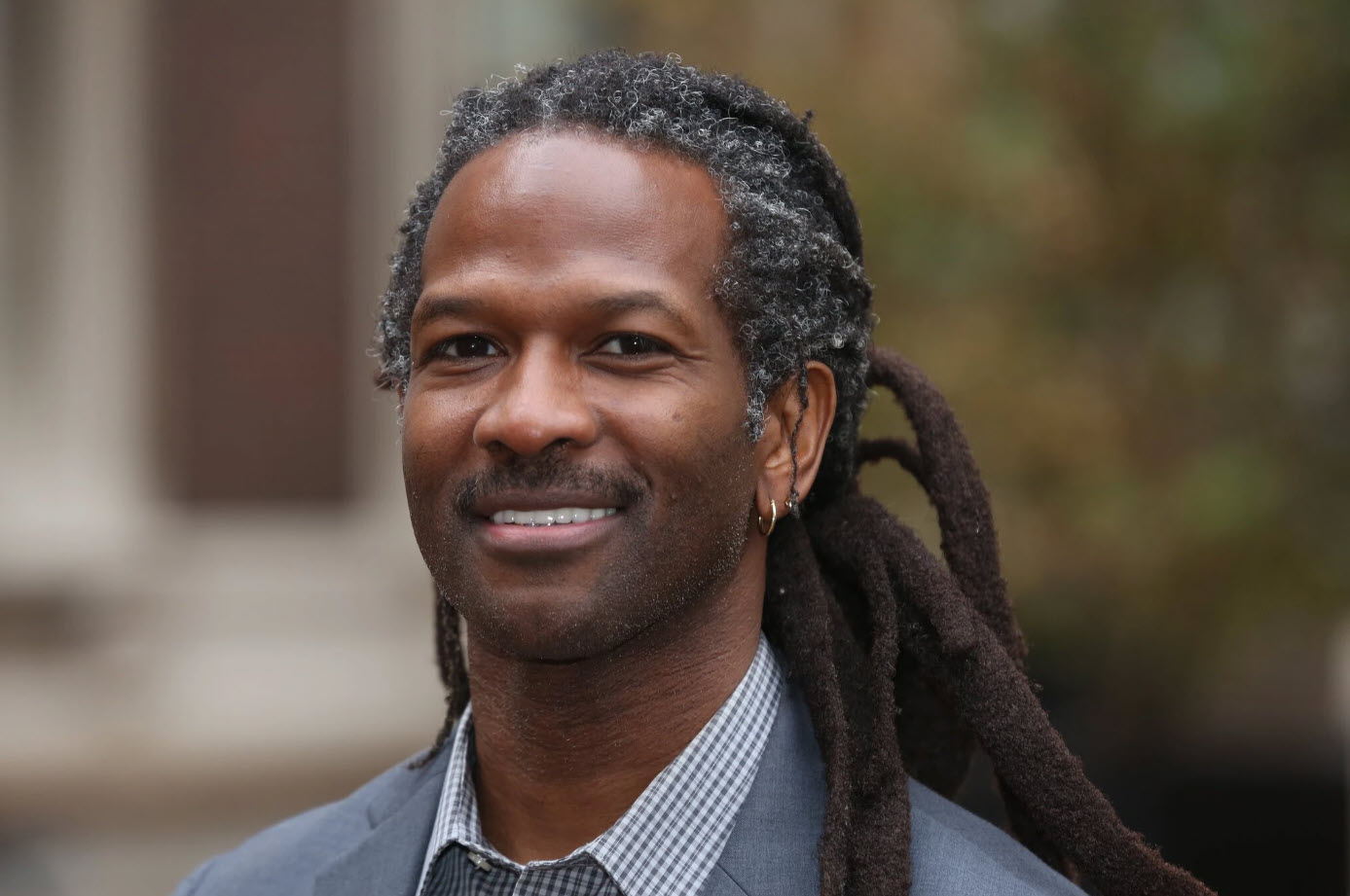
“I discovered that the predominant effects produced by the drugs discussed in this book are positive,” Carl L. Hart writes in his new book. “It didn’t matter whether the drug in question was cannabis, cocaine, heroin, methamphetamine or psilocybin.”
Carl Hart is a tenured professor of psychology at Columbia University, an experienced neuroscientist and a father. He believes that if “grown-ups” like him would talk freely about the role of drugs in their lives, we wouldn’t be in the mess we are in, a mess brought about by our ruinous drug policies, which have had such profound — and profoundly unequal — consequences for those who fall afoul of them.”
My Predictions for Cannabis in the UK in 2021
On medicinal cannabis, the senior clinicians and bureaucrats at NHS, NICE and the professional medical bodies will continue to do all they can to block access. Until key individuals are offered fat fees to run clinical trials they will continue to insist that this is the only form of evidence that is acceptable. They will continue to ignore and reject all evidence from overseas. The clamour from more and more patients will grow. The private clinics will boom but our political ‘leaders’ will continue to be impotent in the face of the vested interests of the medical establishment.
The Cancard will take off and police forces will welcome it as a sensible solution. More and more people will grow their own and cannabis will become completely decriminalised by default. Only if you’re behaving like an idiot or are engaged in large scale commercial grows and/or gangsterism will the police be interested. Again our political ‘leaders’ will be useless and too scared of the tabloid media and their bigoted, poorly-informed backbenchers to do anything. Meanwhile the cannabis trade will continue to drive county lines, knife crime, prostitution, modern slavery, all off the back of profits from cannabis but Boris and his buffoons will refuse to understand this or follow the evidence that legal regulation is the solution.
The Food Standards Agency (FSA), in collaboration with the big business lobbyists, The Association for the Cannabinoid Industry (ACI) , will succeed in getting all the multiples and major retailers to stop selling whole plant CBD extracts, which are what work and what consumers want. Dozens of small CBD companies who actually built this market will be put out of business by the FSA/ACI and hundreds of people will lose their jobs. FSA/ACI will continue to ramp up their false propaganda that CBD can be toxic despite a complete absence of any real world evidence – all this with the intention of pricing small, artisan suppliers out of the market. Nasty, ineffective, isolate-based products will come to dominate the high street. Despite this, whole plant extracts will continue to be available online and the FSA will discover that it can’t enforce its rules because its definition of ‘novel food’ doesn’t actually fit genuine whole plant extracts. They will bring prosecutions against some suppliers but these will fail once expert evidence is adduced.
The legal British cannabis market will continue to develop in faltering steps because of the obstacles inherent in the way the Misuse of Drugs Act 1971 is applied. The government is terrified to undertake the wholesale reform that is urgently needed because of outdated and ignorant attitudes. It’s so transfixed by the drugs issue that it won’t even make the small tweaks to regulations on industrial hemp, exempt products and licensing that would give a massive boost to business prospects. I can see no chance of any progress until the Covid crisis is over and ministers have more bandwidth to look at other issues. Even then it’s going to need some new blood in cabinet. Although Boris Johnson himself probably does have the instinct for reform, he is surrounded by third rate ministers, most of whom could never be considered progressive and are hardly visionary or ambitious thinkers.
The Birch-Moore cartel will continue to try and monopolise the entire British cannabis space. Paul Birch, the multimillionaire stoner who landed a fortune from shares in his brother’s business, provides the cash and Steve Moore, former architect of David Cameron’s damp squib ‘Big Society’ project, runs the show. Volteface, Centre for Medicinal Cannabis, the ACI, Hanway Associates, Familes4Access are all different faces of the same core team, all characterised by generous funding, a young, aggressive team and an arrogant disdain for everyone else in the market. Birch’s money has definitely brought some welcome benefits and was the missing ingredient in achieving the media coverage which led to the legalisation of medicinal cannabis in 2018. They took ideas and policies developed by other groups and added a well-funded PR operation because the reality is that however important your message, without the hard cash you just don’t get coverage on daytime TV and the main news programmes. Aside from causing great division, particularly amongst the families campaigning for their epileptic children, the negative and malevolent aspects of their work is best demonstrated by the ACI’s manipulation of the CBD market and bullying of many small businesses.
I’m hopeful that at least in Scotland, which has the worst drug deaths record in Europe, there will be some progress on dealing with problematic hard drug use and its consequences. The heroic actions of Peter Krykant, who is illegally running a mobile drugs consumption room in Glasgow and saving lives every day, have had a big impact. This man deserves every bit as much praise as Captain Tom, Marcus Rashford or anyone else who has engaged in altruistic campaigning in 2020. He deserves a knighthood. As I write this, the latest reports suggest Nicola Sturgeon might even defy the dinosaurs in Westminster and fund appropriate harm reduction measures which are so desperately needed.
Until our political ‘leaders’ wake up to the fact that the entire criminal drugs market and the tens of billions it costs the UK are driven by the prohibition of cannabis there will be no real progress either on reducing the cost or improving public health. The kids who are being stabbed on London’s streets, the young people who are trafficked and the vulnerable hard drug addicts who are being cuckooed as part of county lines dealing, it all starts with the criminal trade in cannabis. That’s where the money comes from and until the market is taken away from the gangsters and properly regulated, things will only get worse.
Although we’ve all despaired about some aspects of the US political system, the progress on cannabis, even in Republican states, shows what real democracy can achieve. Local ballots have forced reluctant and often hostile politicians to comply with what the people want and make cannabis legally available. The Biden-Harris team have promised federal decriminalisation and expungement of criminal records for all non-violent cannabis offences. I think this will happen. Even if the Republicans retain control of the Senate this issue has built up a head of steam that won’t be stopped. Remarkably, the one issue that transcends the terrible divides in American politics is cannabis. If the Senate goes Democrat we could see much more far-reaching change. And once the federal law on cannabis changes, you watch all the slimeball politicians throughout the rest of the world pretending that’s what they wanted all along.
Overall, I am optimistic. Hopefully, as we head through summer and into autumn next year, Covid will be behind us, we’ll all be back to earning a proper living and a lot closer to enjoying our cannabis in freedom, for pleasure, medicine or both. My very best wishes and the compliments of the season.
Professor Les Iversen, Tightrope Walker and Unsung Hero of Cannabis Law Reform
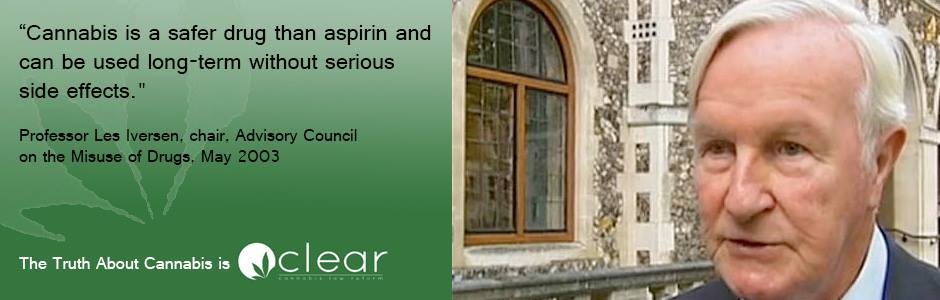
Leslie Iversen, born October 31 1937, died July 30 2020
Daily Telegraph obituary ‘Leslie Iversen, pioneering neuroscientist who studied the effects of drugs on the brain’
I’m sad that the latter years of Les Iversen’s life have been skipped over in this obituary. As with so many scientists who have had some influence in the political field, he had to tread a tightrope between scientific evidence and the ignorance, bigotry, prejudice of those in politics who are far more concerned with tabloid headlines than facts.
His chairmanship of the ACMD was conducted with great skill and enormous patience as politicians took decisions which were diametrically opposed to evidence. If Les had had his way, the medicinal benefits of cannabis would have been acknowledged far sooner and his knowledge would have cut through the vested interests of senior clinicians which are currently stalling progress on uptake of this most valuable medicine.
Les was appointed chair of ACMD following the disgraceful sacking of David Nutt who had the temerity to tell government the facts about relative drug harms. Les was less of an abrasive character than David Nutt although their professional opinions on government drugs policy were closely aligned. He continued to speak truth to power and, as he told me many times, was completely frustrated by politicians’ attitude to cannabis and their preference for the Daily Mail’s guidance on drugs policy rather than science.
From 2010, as the campaign for cannabis law reform became far more professional and began to attract support from more and more backbench MPs, it was immensely valuable to have someone who was strong and certain in advising ministers of the facts, even if they chose not to act on them. He must take a huge amount of credit for the legalisation of medicinal cannabis in 2018. He was immensely skilful at remaining in post in order to provide the best advice while actually telling ministers that their polices were foolish. He has never received the recognition for this that he is due.
Today’s ACMD is supine in comparison, crippled by legislation which has effectively castrated it and turned it into a committee that will confirm whatever the Home Secretary of the day requires. Scientists and clinicians, more than ever, are controlled by the big businesses and fat cats who want to determine drugs policy based on self-interest and prejudice rather than science. Les was one of the last of the noble breed of scientists who told the truth without fear or an overriding concern for their bank balance.

 Peter Reynolds