Peter Reynolds

The life and times of Peter Reynolds

Posts Tagged ‘drugs policy

Incompetence Is Normal At The Home Office

with one comment

Theresa May

Theresa May and James Brokenshire must go.  The absolute disgrace, the shambles over Olympics security should see them both on the dole tomorrow.

Ms May is the most empty-headed minister I have known in my lifetime. Where she came from, why she has reached such high office, what skills or value she has brought to government is a mystery.

James Brokenshire

Brokenshire is the nastiest, most vicious and unpleasant junior minister ever. He’s an ex-banker and has held charge over the government’s delusional, head in the clouds drugs policy with exactly the arrogance and irresponsibility that suggests.  He sank to the nadir of his career when he claimed that the adulteration of street cocaine had reached record levels and this was a huge success.  This in the full knowledge that the Serious Organised Crime Agency records the adulterants used in cocaine are more harmful than cocaine itself.

If there is a war on drugs then Brokenshire is a war criminal.

Both of them are worse than useless.

Written by Peter Reynolds

July 15, 2012 at 11:46 am

A New Brand Of Politician

leave a comment »

I am easily moved.   It is connected with my Welshness.  The 15 brave souls singing before they charge for Wales at Rugby Union and I am in bits.

It is rare though for just a few words in print (OK, on a screen!) to move me so much.
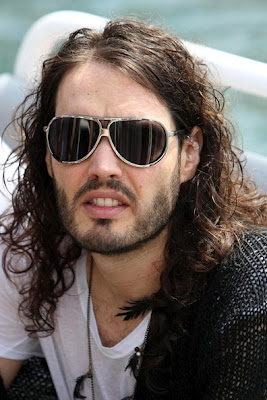
Russell Brand

I am right at the end of the 731 pages of written evidence to the HASC drugs inquiry and I come to Russell Brand.

Not someone I have held in high regard until I saw his contribution to the Versus YouTube debate.  Even there he was hyperbolic and almost abusive but the intellect and truth shone out of him.

In his submission to the inquiry, he quotes an article that he had published in The Guardian on 24th July 2011, and this passage made me cry.

It’s also one of those rare examples where the use of foul language is absolutely perfect.

“I arrived late and as I made my way to the audience through the plastic smiles and plastic cups I heard the rolling, wondrous resonance of a female vocal. Entering the space I saw Amy on stage with Weller and his band; and then the awe. The awe that envelops when witnessing a genius. From her oddly dainty presence that voice, a voice that seemed not to come from her but from somewhere beyond even Billie and Ella, from the font of all greatness. A voice that was filled with such power and pain that it was at once entirely human yet laced with the divine. My ears, my mouth, my heart and mind all instantly opened. Winehouse. Winehouse? Winehouse! That twerp, all eyeliner and lager dithering up Chalk Farm Road under a backcombed barnet, the lips that I’d only seen clenching a fishwife fag and dribbling curses now a portal for this holy sound.

So now I knew. She wasn’t just some hapless wannabe, yet another pissed-up nit who was never gonna make it, nor was she even a ten-a-penny-chanteuse enjoying her fifteen minutes.

She was a fucking genius.”

Amy

Written by Peter Reynolds

April 7, 2012 at 7:54 pm

Change Is In Sight

with 3 comments

I really believe that change in our cannabis laws is imminent. Since the CLEAR campaign began the whole impetus for change has accelerated. Even those who are not supporters of CLEAR and who disagree with our policies have become more focused, more coherent and more active.

The impact we have had in the media with the Comment Warriors campaign and the Press Complaints Commission should not be underestimated. Those with a keen eye for progress should check the letters pages of this weekend’s Sunday newspapers. Our message is being listened to and heard.

It is the written evidence to the drugs policy inquiry that really excites me. So much of it recites CLEAR evidence and support for our policies but even when we are not mentioned, all the submissions that advocate reform deliver a coherent message. They cannot be ignored.

The cannabis e-petition has now been superseded. It was never going to reach the 100,000 signature target anyway. Even if it did, all that was offered was the possibility, maybe the probability, of a debate in parliament and the best we could have expected from that was for an inquiry – which is what we’ve got already.

I think the cannabis e-petition has probably been signed by 80-90% of the “stoners” or user activists but we know there are three million people in Britain who use cannabis regularly, so where were they?

These are people who don’t want to join the campaign but, undoubtedly, they’d like to see a change in the law and I believe that many non-users are now seeing the social and fiscal advantages of regulation instead of prohibition. These are the people that hold the power.

It will probably start with some sort of medicinal use and gradual relaxation of enforcement until it is actually formalised. In fact, that’s what ‘s already happening with Sentencing Council guidelines. It will be fascinating to see the impact of the US elections when drugs policy is bound to come to the top of the agenda.

We are getting there. I congratulate all who are involved in delivering our message with the invincible power of evidence and truth.

Written by Peter Reynolds

March 30, 2012 at 11:56 am

Drugs Inquiry Written Evidence

leave a comment »

While the CLEAR website is down, we will continue to provide a service to members from here, my personal website.

One of the recent posts on the CLEAR site attracting most interest was the 731 pages of written evidence submitted to the Home Affairs select committee drugs policy inquiry

You can download the evidence here.


Written by Peter Reynolds

March 30, 2012 at 11:51 am

Cameron On Cannabis Part 6

with 32 comments

Cameron On Cannabis Part 5 is here.

David Cameron’s mistakes about university places, immigration and cannabis have been on my mind over the Easter holiday.  Given the huge resources he has to ensure that his information is correct, it’s not really acceptable for our prime minister to be so error prone.  If the problem is that his attempts at spin are not working and he’s deliberately telling untruths but being caught out, well perhaps that’s even more worrying.

Whichever may be the case, and I’m ready to give Mr Cameron the benefit of  the doubt about his sincerity, we are entitled to call him to account.  I decided to give him another prod about the errors and mistakes he’s making about cannabis.

Dear Mr Cameron,

I refer to my last letter of 5th April 2011.

The statements you made about cannabis in your Al Jazeera YouTube interview were inaccurate and misleading.  Please will you now correct them?

“Incredibly damaging…very, very toxic…leads to, in many cases, huge mental health problems”

This is simply not true Mr Cameron. Professor Les Iversen, chair of the ACMD, your chief drugs advisor, is on the record, repeatedly, stating that cannabis is very, very low in toxicity and relatively safe.  Furthermore, all the experts agree that the risks to mental health are very, very small, certainly much less than alcohol or tobacco.

On the medicinal use of cannabis you said:

“…the science and medical authorities…are free to make independent determinations about that.”

This is also untrue Mr Cameron.  The Home Office stands obstinately in the way of medicinal use despite overwhelming, peer reviewed scientific evidence.  It denies the relief of a safe and inexpensive medicine to thousands who are trapped in pain, suffering and disability.  This is a cruel policy and a disgraceful shame on our nation.

Please will you now correct these untruths Mr Cameron?  They were your words.  You were not advised by the Home Office.  CLEAR represents the interests of at least six million regular users of cannabis in Britain, thousands of whom use it as medicine.  We are reasonable, responsible, respectable citizens and taxpayers and we are entitled to insist that our prime minister speaks the truth

Recently, you also spoke misleading words about cannabis and mental health on “Jamie’s Dream School” and you said that “…if you legalise drugs you will make them even more prevalent than they are”, yet this too is contradicted by all the evidence in Portugal, Holland and the USA.  Even the No 10 Strategy Unit Drugs Policy Project reported in 2003 that “There is no causal relationship between availability and incidence…problematic drug use is not driven by changes in availability or price.”

This time though you were talking directly to young people, those who your government says it is most important to send the correct message to.  Mr Cameron, the only message that government consistently sends to young people is that it does not tell them the truth about drugs.

Please Mr Cameron, we are entitled to expect that you tell the truth and that you correct errors when they are made.  These statements were not matters of opinion nor of interpretation, They are determined by scientific evidence.  Will you please now correct them?

Yours sincerely,

Peter Reynolds

“War On Drugs Has Failed, Say Former Heads Of MI5, CPS And BBC”, The Daily Telegraph, 21st March 2011

with 16 comments

The “war on drugs” has failed and should be abandoned in favour of evidence-based policies that treat addiction as a health problem, according to prominent public figures including former heads of MI5 and the Crown Prosecution Service.
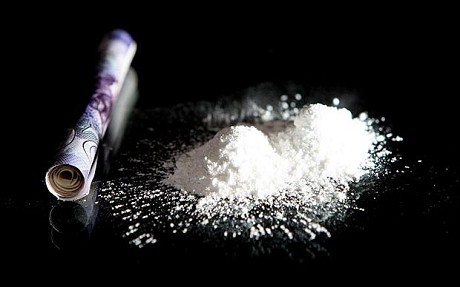
Drug availability and use has increased with up to 250 million people worldwide using narcotics such as cannabis, cocaine and heroin

Leading peers – including prominent Tories – say that despite governments worldwide drawing up tough laws against dealers and users over the past 50 years, illegal drugs have become more accessible.

Vast amounts of money have been wasted on unsuccessful crackdowns, while criminals have made fortunes importing drugs into this country.

The increasing use of the most harmful drugs such as heroin has also led to “enormous health problems”, according to the group.

The MPs and members of the House of Lords, who have formed a new All-Party Parliamentary Group on Drug Policy Reform, are calling for new policies to be drawn up on the basis of scientific evidence.

It could lead to calls for the British government to decriminalise drugs, or at least for the police and Crown Prosecution Service not to jail people for possession of small amounts of banned substances.

Their intervention could receive a sympathetic audience in Whitehall, where ministers and civil servants are trying to cut the numbers and cost of the prison population. The Justice Secretary, Ken Clarke, has already announced plans to help offenders kick drug habits rather than keeping them behind bars.

The former Labour government changed its mind repeatedly on the risks posed by cannabis use and was criticised for sacking its chief drug adviser, Prof David Nutt, when he claimed that ecstasy and LSD were less dangerous than alcohol.

The chairman of the new group, Baroness Meacher – who is also chairman of an NHS trust – told The Daily Telegraph: “Criminalising drug users has been an expensive catastrophe for individuals and communities.

“In the UK the time has come for a review of our 1971 Misuse of Drugs Act. I call on our Government to heed the advice of the UN Office on Drugs and Crime that drug addiction should be recognised as a health problem and not punished.

“We have the example of other countries to follow. The best is Portugal which has decriminalised drug use for 10 years. Portugal still has one of the lowest drug addiction rates in Europe, the trend of young people’s drug addiction is falling in Portugal against an upward trend in the surrounding countries, and the Portuguese prison population has fallen over time.”

Lord Lawson, who was Chancellor of the Exchequer between 1983 and 1989, said: “I have no doubt that the present policy is a disaster.

“This is an important issue, which I have thought about for many years. But I still don’t know what the right answer is – I have joined the APPG in the hope that it may help us to find the right answer.”

Other high-profile figures in the group include Baroness Manningham-Buller, who served as Director General of MI5, the security service, between 2002 and 2007; Lord Birt, the former Director-General of the BBC who went on to become a “blue-sky thinker” for Tony Blair; Lord Macdonald of River Glaven, until recently the Director of Public Prosecutions; and Lord Walton of Detchant, a former president of the British Medical Association and the General Medical Council.

Current MPs on the group include Peter Bottomley, who served as a junior minister under Margaret Thatcher; Mike Weatherley, the newly elected Tory MP for Hove and Portslade; and Julian Huppert, the Liberal Democrat MP for Cambridge.

The group’s formation coincides with the 50th anniversary of the United Nations Single Convention on Narcotic Drugs, which paved the way for a war on drugs by describing addiction as a “serious evil”, attempting to limit production for medicinal and scientific uses only, and coordinating international action against traffickers.

The peers and MPs say that despite governments “pouring vast resources” into the attempt to control drug markets, availability and use has increased, with up to 250 million people worldwide using narcotics such as cannabis, cocaine and heroin in 2008.

By Martin Beckford, Health Correspondent

They believe the trade in illegal drugs makes more than £200 billion a year for criminals and terrorists, as well as destabilising entire nations such as Afghanistan and Mexico.

As a result, the all-party group is working with the Beckley Foundation, a charitable trust, to review current policies and scientific evidence in order to draw up proposed new ways to deal with the problem.

“Ignorant, Misleading And Downright Evil Tabloid Headlines”

with 24 comments

Baroness Joan Walmsley, LibDem peer, during the House of Lords debate on a Royal Commission on drugs policy, 9th March 2011

My Government, who were elected with 60 per cent of the vote, should have the confidence to defy the tabloid newspapers. They should get the facts and act on them. We should not be afraid of ignorant, misleading and downright evil tabloid headlines. It is the right thing to do. Please let us do it!


Watch the debate here from 19:48 onwards. See the full transcript here.

Written by Peter Reynolds

March 10, 2011 at 11:44 am

Brokenshire Resigns. New Drugs Minister Appointed.

with 15 comments

James “Broken Britain” Brokenshire has resigned as drugs minister in order to spend more time with his family.  The new drugs minister is Muammar Muhammad al-Gaddafi, a long time friend of the British government, well known for his intelligent and forward thinking policies and a legend amongst freedom loving people throughout the world.

David Cameron, commenting on Brokenshire’s resignation said:

“James has done a wonderful job spreading government propaganda and misinformation.  Without his tireless and courageous work we would have been unable to restrain the public outcry against our drugs policy.  If it wasn’t for James, thousands of medicinal cannabis users might have found relief from their pain and suffering and strayed away from the poisonous and harmful products that our friends in Big Pharma supply.  It was only through James’ personal guidance that I was able recently to dismiss any idea of legalising cannabis during my YouTube interview.  James told me the right lies to tell. I couldn’t have done it without him.”

David Oliver, Head of the Drug Strategy Unit at the Home Office, welcomed the new minister saying:

“I look forward to working with Muammar Gaddafi.  He has exactly the right experience and personal qualities needed in a British drugs minister.  He is a denier of science.  He has no interest in the will of the people and he can tell bare faced lies without even blinking.  I cannot think of anyone more suitable for the post”

Politics.Co.Uk, Comment: The War On Drugs Is Already Lost

with 9 comments

An excellent article by Ian Dunt here that argues that the prohibitionists are already defeated.

My comment:

There is a deep, deep inertia about drugs policy amongst all politicians. Well that’s the polite way to put it, the political way. The truth is they’re all a bunch of self-serving, hypoctical cowards who don’t give a damn about the misery, suffering and death which their policies cause.

Of course the intellectual argument is won. It was won 20 years ago. Every single life lost, ruined, corrupted and wasted since then is the responsibility of those who have waged the “war on drugs” because it was never a war on drugs, it was a war on people. It pretended to be in those people’s interests but it was exactly the opposite. It was based on lies and propaganda.

It is not over yet. David Cameron and Nick Clegg both have a long record of claiming liberal and enlightened views on drug policy. Now they have their ministerial cars everything has changed. In the front line they have placed the snide and obnoxious James “Broken Britain” Brokenshire. He is playing the repressive, Ronald Regan, hang ’em and flog ’em role with glee. Of course he will be dumped as useless cannon fodder if Proposition 19 passes and sets off a wave of reform but I am not optimistic, even though I want to be.

We have a serious fight on our hands still. Until we can expose and overturn the lies and deceit of people like Brokenshire the people have not yet won.

Home Office Drugs Strategy Consultation – My Response

with 14 comments

The Home Office has called for responses to its Drugs Strategy Consultation document.  See here on the Home Office website.

It is almost universally accepted that “consultation” is a euphemism for “your opinion will be ignored but we want it to look like we listened to you”.  This is a classic example of that sort of thinking.  Judge for yourself  by reading the introduction.  It is clear that ministers and civil servants have already made their mind up on many issues just by the way that the questions are phrased.

Nevertheless, this is what passes for democracy in Britain and it is vital that as many people as possible respond.  You can do so by post, email or online form. It is all set out on the website.  I offer my response here as raw material.  Please feel free to copy and use all or part of it as you wish.  Just make sure that you do make a submission.

I have answered all the questions where I feel I have something useful to say.  It dosn’t matter if you only answer one or two.  Please don’t let the Home Office get away with a whitewash.  With sufficient responses and future Feedom Of Information requests we will be able to advance the cause of rational and progressive drugs policy.

Question A1: Are there other key aspects of reducing drug use that you feel should be addressed?

* Yes

Please outline any suggestions below

The entire basis of this question is flawed. Prohibition of drug use is a failed strategy as now acknowledged by experts and leaders all over the world. So much of the subject is mired in semantics and prejudice rather than being addressed in a logical and responsible manner with fact and evidence-based policies.

Drug use can never be eliminated.  In fact, use of alcohol and tobacco, two of the most dangerous drugs, is legally promoted.  Drug misuse is, by definition, to be deplored but unless there is an acceptance of responsible drug use, then corresponding guidance or regulation to prevent misuse cannot work.

The key question, as established by parliament with the Misuse Of Drugs Act 1971 (MODA), is to how to reduce the harms of drug use.  This is the basis of the Act and of the drug classification system which is supposd to indicate the relative harms of drugs based on the advice of the Advisory Council on the Misuse Of Drugs (ACMD).

Regrettably the classification system is now entirely discredited for two principle reasons:

1. Failure to include the two most widely used drugs, alcohol and tobacco

2. Failure to classify drugs on a scientific basis, instead allowing political considerations and opinion to intrude where only facts and evidence should apply

The result is that government messages on drugs are widely regarded as incredible and as propaganda rather than good sense.  Young people in particular see the evidence of their  own eyes and experience as more useful and credible than government messages, especially in the case of drugs such as cannabis and ecstasy where their relative harmlessness is self-evident.  Government campaigns such as Frank are widely ridiculed and both counterproductive and a complete waste of money.

Question A2: Which areas would you like to see prioritised?

Please select as many as apply

* Greater ambition for individual recovery whilst ensuring the crime reduction impact of treatment.
* Actions to tackle drugs should be part of building the “Big Society”.
* A more holistic approach, with drugs issues being assessed and tackled alongside other issues such as alcohol abuse, child protection, mental health, employment and housing.
* Budgets and responsibility devolved wherever possible, with commissioning of services at a local level.
* Budgets and funding streams simplified and outcome based.
* The financial costs of drug misuse reduced.
* None of them.

This is an astonishingly meaningless question, a little like asking “do you approve of motherhood and apple pie?”

It would be foolish to disagree with any of these ideas.

The main area I would like to see prioritised is that drugs strategy, policy, information and education should be fact and evidence based.  The National Audit Office and the Public Accounts Committee have both criticised government for failing to implement an evidence-based drugs policy and instead giving more weight to opinion.  This is a dreadful indictment of how successive governments have, in fact, contributed to and increased drug harms.  It is now a well established and proven truism that drug laws cause more harm than drugs themselves.

I would propose a five point drugs strategy aimed at reducing harms as follows:

1. An end to oppression of drug users (at least six million citizens)
2. Removal from the criminal law of any offence for possession and/or social supply
3. Fact and evidence-based policy, information and regulation
4. Re-direction of law enforcement resources against real criminals
5. Treat problematic drug use as a health issue

I would also propose that the overwhelming response on drug laws to the Your Freedom website should be included in this consultation. Top priority should be given to the massive outcry from the public for the removal of drugs from the criminal law and the more rational, fact and evidence-based regulation.

The question of cannabis needs urgent attention.  All experts agree that the harms from its illegality are greater than from the drug itself. According to Home Office figures, there are six million regular users in the UK. Recent research shows that more than 70% of the public want to see some form of legalisation.  The laws against cannabis no longer have public support, particularly in the case of medicinal use, yet the cost of unsuccessfully attempting to enforce them amounts to many billions in wasted public expenditure.  This is a national scandal of monstrous proportions which must be ended.

Question A3: What do you think has worked well in previous approaches to tackling drug misuse?

There is almost nothing that the government has done that has worked well in tackling drug misuse.  On the contrary, almost all government policy has increased the harms caused.

There have been some pilot projects in providing clean, safe environments where opiate addicts have access to a regulated supply and clean needles that have reduced harms.

Question A4: What do you think has NOT worked so well in previous approaches to tackling drug misuse?

Government drugs policy has been a disaster in almost every way, consuming more and more resources to less and less good effect.  It has been almost entirely counterproductive and has led to complete distrust of government information, alienation of users from society in general  and brought the law into disrepute.

Prohibition has not worked.

Misinformation and propaganda that distributes lies and untruths about the relative harms of drugs has not worked.  In fact, it has led to more harms and more deaths.

Criminalising huge numbers of citizens has not worked and has created disaffection and seriously damaged democracy.

Question B1: What are the most effective ways of preventing drug or alcohol misuse?

The only effective way of preventing drug or alcohol misuse is education.  This should be accompanied by a system of regulation and controls which is fact and evidence based and has widespread public support.

Question B2: Who (which agencies, organisations and individuals) are best able to prevent drug or alcohol misuse?

The government is entirely discredited when it comes to offering any sort of advice on these subjects because it has a long history of mistakes, misinformation and propaganda.  Everyone knows that you can’t trust what the government says about such matters because it almost always places political expediency above the truth.

Schools, teachers, ex-addicts and parents are best able to prevent drug and alcohol misuse.  They need fact and evidence-based support and information.  The last thing they need is government direction or interference as this is widely seen as unbelieveable and incredible.

Question B3: Which groups (in terms of age, location or vulnerability) should prevention programmes particularly focus on?

There should be no such thing as a “prevention programme”.  The most vulnerable group is clearly young people.  Tell them not to do something and you immediately increase its appeal.  This question demonstrates how utterly out of touch, insensitive and hamstrung is current Home Office thinking.

Education programmes should focus particularly on young people.

Question B4: Which drugs (including alcohol) should prevention programmes focus on?

* Those that cause the most harm
* Those that are most widely used
* All drugs

Please explain your view below

There should be no such thing as a “prevention programme”.  Education programmes should cover all drugs but focus on those that cause most harm.

Question B5: How can parents best be supported to prevent young people from misusing drugs or alcohol?

The best way of supporting parents is by creating an environment in which drugs policy is accepted as being rational, sensible and based on facts and evidence rather than propaganda.  It is vital that fact and evidence-based information is widely available.

Question B6: How can communities play a more effective role in preventing drug or alcohol misuse?

Communities will naturally come together to prevent drug misuse if we create an environment in which drugs policy is accepted as being rational, sensible and based on facts and evidence rather than propaganda.  At present, drug laws and policies create an “us and them” culture where injustice and hypocrisy brings the law into disrepute and alienates people who do not comply.

Question B7: Are there any particular examples of prevention activity that you would like to see used more widely?

There is nothing being done in terms of”prevention activity” that should be continued.  Education, based on fact and evidence-based information is the key.

Question B8: What barriers are there to improving drug and alcohol prevention?

The biggest barrier to improving prevention of drug misuse is government policy which is widely understood not to be based on facts and evidence but on political expediency and propaganda.  The lack of fact and evidence-based information and education is also a major barrier.

Question C1: When does drug use become problematic?

Drug use becomes problematic when it interferes with people conducting their everyday lives and reaching their full potential or the ability of others to do the same.

Question C2: Do you think the Criminal Justice System should do anything differently when dealing with drug-misusing offenders

The Criminal Justice System should not be involved in dealing with drug misuse at all.  This should be a matter for healthcare. Drug misuse in itself should not be a criminal offence.

Where offences are committed while under the influence of drugs, or in order to feed a drug addiction, providing appropriate healthcare has been offered, then drug use should not be a mitigating factor. In such instances, the offender should always be referred for healthcare alongside any sentence.

Question C3: Do you have a view on what factors the Government should take into consideration when deciding to invoke a temporary ban on a new substance?

* Yes

Please explain your views below

The most important factors would be those of scientific fact and evidence to be determined by a strengthened, properly funded and independent Advisory Council On the Misuse Of Drugs or equivalent.

It is most important to consider the “glamourising effect” of banning a substance.

I congratulate the Home Office on its statement that  “Possession of a temporarily banned substance for personal use would not be a criminal offence to prevent the unnecessary criminalisation of young people”.  This demonstrates a new depth of thinking and intelligence that is very encouraging.

Question C4: What forms of community based accommodation do you think should be considered to rehabilitate drug offenders?

Drug use should not be an offence in itself.  Clearly as part of healthcare, community-based accommodation should be available for those suffering from problematic drug use.

Question C5: Where do you think we most need to target enforcement efforts to reduce the supply of drugs?

Enforcement efforts to reduce the supply of drugs are futile unless a legitimate, regulated source of supply is available.

Once a regulated source of supply is available, illicit sources will become less of a problem.  Enforcement efforts could then be targeted in a similar way to current policies against illicit supply of alcohol, tobacco and prescription only medicines.

Question C6: What else do you think we can do to keep one step ahead of the changing drugs markets?

The most important thing do do is to end the failed and demonstrably ludicrous policy of prohibition.  The solution is a system of fact and evidence-based regulation including a a strengthened, properly funded and independent Advisory Council On the Misuse Of Drugs or equivalent.

Question C7: Which partners – in the public, voluntary and community sectors – would you like to see work together to reduce drug related reoffending in your local area?

What does “drug related reoffending” mean?

Drug use in itself should not be an offence.

Offences related to drugs should be dealt with by healthcare intervention as well as the criminal justice system.  If appropriate healthcare has been offered then drugs should not be a mitigating factor in sentencing.

Question C8: What results should be paid for or funded?

No comment

Question C9: What measures do you think should be taken to reduce drug supply in prison?

Those prisoners with a drug addiction should have access to healthcare and regulated supply just as any other citizen.   Just as in society in general a regulated supply would greatly reduce if not eliminate the problem of illicit supply.

Recreational use of drugs in prison should be strictly controlled.  Tobacco is presently allowed but not alcohol.

As an observation, it is tragic to note how existing policies have promoted the use of heroin in prison.  Under the drug testing regimes, cannabis can be detected in urine for up to 28 days and so its use has been largely eliminated.  However, heroin flushes through the system in less than 48 hours so its use has increased.  This is a vivid demonstration of the idiocy of present policies which have led to replacement of a relatively harmless substance with one that has potential to cause great harm.

Question C10 (if applicable): What impact would the measures suggested have on:

* a) offenders?
* b) your local community?

No comment

Question D1: Thinking about the current treatment system, what works well and should be retained?

No comment

Question D2: Thinking about the current treatment system, what is in need of improvement and how might it need to change to promote recovery?

I have no specific expertise in this area but I understand that treatment for problematic cocaine use is extremely limited and in desperate need of investment.  While not physically addictive, cocaine and particularly crack cocaine is overwhelmingly compulsive and can lead to violent behaviour.  Comparatively, treatment for opiate addicton is well established and understood.  More resources need to be put into developing treatments for problematic cocaine use.

Question D3: Are there situations in which drug and alcohol services might be more usefully brought together or are there situations where it is more useful for them to be operated separately?

Services need to be client-centered. Lumping together alcohol, opiate and cocaine services for the convenience of the providers is counterproductive. Someone who drinks too much wine in the evening at home may be deterred from attending a centre where opiate addicts are injecting. Similarly, a high-earning cocaine user may not want to associate with street drinkers.

Question D4: Should there be a greater focus on treating people who use substances other than heroin or crack cocaine, such as powder cocaine and so called legal highs?

* Yes
* No

Please explain your response below

The only rational response to any problematic drug use is to treat it as a health issue, therefore treatment should be available for all substances.  The question betrays a worrying naivety as cocaine use can be problematic as powder, crack or both.  “Legal highs” is a completely meaningless term which may range from something as harmful as heroin to something as benign as cannabis.

Question D5: Should treating addiction to legal substances, such as prescribed and over-the-counter medicines, be a higher priority?

* Yes
* No
* Don’t know

Please explain your response below

No.  The drugs strategy should be about minimising harms not making some moral judgment on people based on one point of view.  This is a dreadful suggestion.

Question D6: What role should the Public Health Service have in preventing people using drugs in the first place and how can this link in to other preventative work?

Fact and evidence-based information and education.

Question D7: We want to ensure that we continue to build the skills of the drug treatment and rehabilitation sector to ensure that they are able to meet the needs of those seeking treatment. What more can we do to support this?

Stop wasting money on futile attempts at enforcement of out of date, counterproductive laws. Prohibition is an entirely failed policy and, according to Baroness Meacher in the House Of Lords on 15th June 2010 is costing Britain £19 billion per annum.

Problematic drug use should be dealt with as a health problem.  With billions saved from wasted law enforcement costs and additional tax revenue from a regulated supply system, there will be a bonanza of funds available for drug treatment and rehabilitation services.

Question D8: Treatment is only one aspect contributing to abstinence and recovery. What actions can be taken to better link treatment services in to wider support such as housing, employment and supporting offenders?

Stop criminalising drug users, imprisoning them and treating them as offenders.  They are not.  They are people who choose to use a drug that has arbitrarily been deemed illegal usually for unscientific reasons.

Question D9: How do you believe that commissioners should be held to account for ensuring that outcomes of community-based treatments, for the promotion of reintegration and recovery, as well as reduced health harms, are delivered?

No comment.

Question E1: What interventions can be provided to better support the recovery and reintegration of drug and alcohol dependent offenders returning to communities from prison?

No comment.

Question E2: What interventions could be provided to address any issues commonly facing people dependent on drugs or alcohol in relation to housing?

No comment.

Question E3: How might drug, alcohol and mental health services be more effective in working together to meet the needs of drug or alcohol dependent service users with mental health conditions?

No comment.

Question E4: Do appropriate opportunities exist for the acquisition of skills and training for this group?

No comment

Question E5 Should we be making more of the potential to use the benefit system to offer claimants a choice between:

a) some form of financial benefit sanction, if they do not take action to address their drug or alcohol dependency; or

b) additional support to take such steps, by tailoring the requirements placed upon them as a condition of benefit receipt to assist their recovery (for example temporarily removing the need to seek employment whilst undergoing treatment).

There needs to be a combination of carrot and stick adjusted to individual requirements based on healthcare needs.  Those with problematic drug use must not be allowed to fall outside society as that leads to even greater harms.  This is why it is crucial that drug use be removed from the criminal law.

Question E6: What if anything could Jobcentre Plus do differently in engaging with this client group to better support recovery?

No comment

Question E7: In your experience, what interventions are most effective in helping this group find employment?

No comment.

Question E8: What particular barriers do this group face when working or looking for employment, and what could be done to address these?

No comment.

Question E9: Based on your experience, how effective are whole family interventions as a way of tackling the harms of substance misuse?

No comment

Question E10: Is enough done to harness the recovery capital of families, partners and friends of people addicted to drugs or alcohol?

Probably not. Once prohibition is ended, with billions saved from wasted law enforcement costs and additional tax revenue from a regulated supply system, there will be a bonanza of funds available for drug treatment and rehabilitation services.

Question E11: Do drug and alcohol services adequately take into account the needs of those clients who have children?

No comment

Question E12: What problems do agencies working with drug or alcohol dependent parents face in trying to protect their children from harm, and what might be done to address any such issues?

No comment

Gender: Male
Age: 45-54
Region: South West
Occupation: Writer