Posts Tagged ‘Partnership for a Drug-Free America’
Who Is Secretly Working To Keep Pot Illegal – Big Pharma?

This is an extract from an article by Steven Kotler, a science writer who lives in New Mexico. The full article can be read here.
In 2009, the global pharmaceutical market was worth $837 billion—and it’s on track to top $1 trillion by 2014. This is a lot of money to spread around, so when it comes to lobbying efforts, very few have this group’s clout. Mostly, Big Pharma gets what Big Pharma wants. And one thing it wants is for marijuana to remain illegal.
It’s not hard to figure out why. You can’t patent a plant—and that’s a big problem for pharmaceutical companies when it comes to medical marijuana.
Why?
Imagine a wonder drug able to provide much-needed relief from dozens and dozens of conditions. Imagine it’s cheap, easy to grow, easy to dispense, easy to ingest and, over millennia of “product testing,” has produced no fatalities and few side effects—except for the fact that it “reportedly” makes you feel really, really good. That would be quite a drug. Knowing all this, it’s easy to see why the pharmaceutical industry worries about competition from marijuana.
And besides its palliative prowess, researchers consistently find that patients prefer smoking marijuana to taking prescription drugs. In another study run by Reiman, 66 percent of her patients used cannabis as a substitute for prescription drugs; 68 percent used it instead of prescription drugs to treat a chronic condition and 85 percent reported that cannabis had fewer side effects than other medicines.
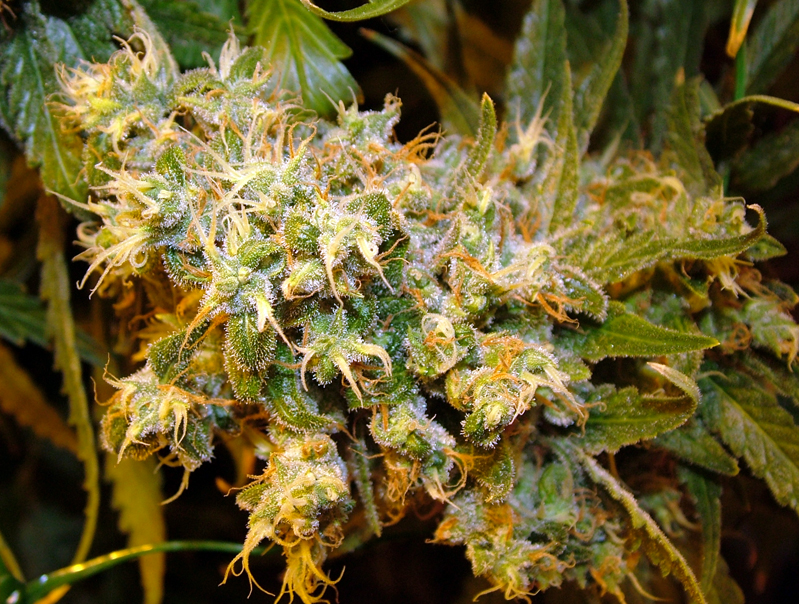
Miracle Medicine
Early on, the pharmaceutical industry fought back by spending money on anti-pot efforts, but the same NORML investigation that fingered the alcohol and tobacco industries as heavy backers of the Partnership for a Drug-Free America found that Big Pharma was doing so as well. “They were so embarrassed by that revelation” says MAPS founder Rick Doblin, “that they mostly stopped spending money on anti-marijuana lobbying efforts.”
Since then, the pharmaceutical industry has shifted its focus to developing alternatives to medical cannabis, often taking the traditional reductionist approach. Specifically, these days, if a pharmaceutical company wants to turn a plant into a medicine they isolate the most active ingredient and make what’s known as a “single-compound drug.” Morphine, for example, is really just the chemical core of the poppy plant. This too has been tried with marijuana. Out of the 400 chemicals in marijuana, 80 of them belong to a class called “cannabinoids.” Out of those 80 cannabinoids, a number of pharmaceutical companies have tried reducing marijuana to only one: THC. But the results have been unsatisfactory.
“There are certain cases,” says Doblin, “where the single-compound formula works wonders. But it’s just not true in every case. The pharmaceutical industry keeps claiming they’re not worried about medical marijuana because they make a better product, but when you reduce cannabis to just THC, you lose efficacy and gain side effects.”

 Peter Reynolds