Archive for the ‘Consumerism’ Category
The UK Government’s Latest Excuse About Medicinal Cannabis Is Yet Another Deception.
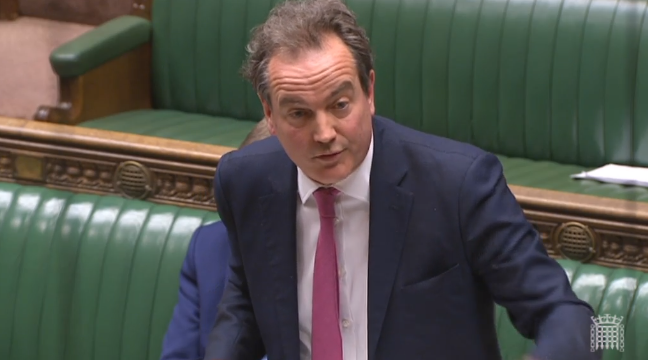
Nick Hurd MP, Home Office Minister
Nick Hurd MP, the Home Office minister, said again this week that as far as any consideration of cannabis for medical use is concerned, the government will “await the outcome” of the report on cannabis due from the WHO in 2019 “before considering the next steps”.
In fact, the results of an FOI request show that the UK government has refused to take part in the WHO committee which will “review cannabis and cannabis-related substances on their potential to cause dependence, abuse and harm to health, and potential therapeutic applications”. This despite the WHO issuing a questionnaire to the Department of Health and Social Care “designed to gather information on the legitimate use, harmful use, status of national control and potential impact of international control”.
 Aside from the obvious concerns this raises, it is quite extraordinary considering that the UK is the world’s largest producer and exporter of legal cannabis.
Fundamentally the government’s postion on cannabis for medical use hasn’t changed since 1971. Those who follow the Home Office’s statements will have noticed gradual changes but they all seek to reinforce the fundamental premise that cannabis is a dangerous drug of abuse with no therapeutic benefit.
Recent ‘adjustments’, shall we call them, of the official position have dealt with the now overwhelming weight of evidence that cannabis does have very real and significant medical value. The response has been to caution that all medicines must go through the etablished system of testing for safety and efficacy.
This is a deception as well. As CLEAR revealed at the beginning of 2018, in every jurisdiction throughout the world where medicinal cannabis has been legally regulated, it is through a special system outside pharmaceutical medicines regulation.
Theresa May is ideologically opposed to the use of cannabis as medicine, it’s as simple as that. She won’t permit it to be properly considered, discussed or investigated and every time something forces a response, such as a parliamentary question or an enquiry even from a fellow Conservative MP, another deceptive excuse is conjured up.
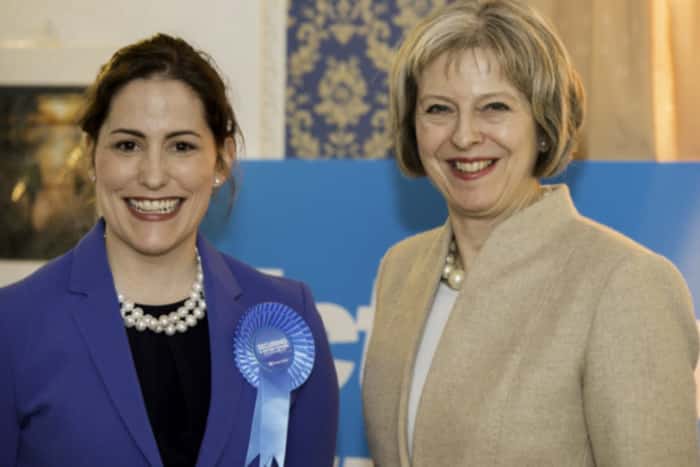
Victoria Atkins MP, Theresa May MP. Both Have Family Interests In Cannabis For Medical Use.
CLEAR can further reveal that the Home Office’s public position on prospects for licensed cannabis medicnes is also a deception. The statement that has been published is “As happened in the case of Sativex, the Home Office will consider issuing a licence to enable trials of any new medicine…” We can’t name names just yet but we now have first hand knowledge that at least one publicly-quoted company with established cannabis production facilities in two other G7 countries has been refused permission by the Home Office even to apply for a licence.
The UK government’s stance on cannabis becomes murkier and murkier the deeper you look. The stench of corruption becomes overpowering when you consider that Theresa May’s husband’s company is the largest single shareholder in GW Pharmaceuticals and the husband of Victoria Atkins MP, the drugs minister, holds a licence to produce 45 acres of cannabis for medical use.
The Facts About CBD In The UK. April 2018.

This article is an update to ‘The Facts About CBD In The UK. December 2016.‘
The past three years have seen a true phenomenon develop around the cannabis law reform movement which has quickly crossed into mainstream society, commerce and general awareness. It’s the explosion of the CBD market, a trade that has grown from zero to £50 million per annum in the UK in this very short period.
There has been a great deal of nonsense published about the market, the products and their legality both under drugs laws, food and medicines regulation. The facts that are set out in this article are established from close involvement with the developing market on a daily basis as well as consultation with a number of lawyers of all types and levels of experience as well as direct contact with the Home Office, the Medicines and Healthcare products Regulatory Agency (MHRA), the Food Standards Agency (FSA) and other authorities.
The market has been driven initially because of growing interest in the medical benefits of cannabis and the recognition that, within certain constraints, products derived from low-THC cannabis, legally grown under licence as industrial hemp, are a legal alternative. An important factor has been that CBD is most often consumed by placing a few drops of oil under the tongue. This has avoided the stigma of smoking a joint and is more in line with the way people perceive a medicine or health food.
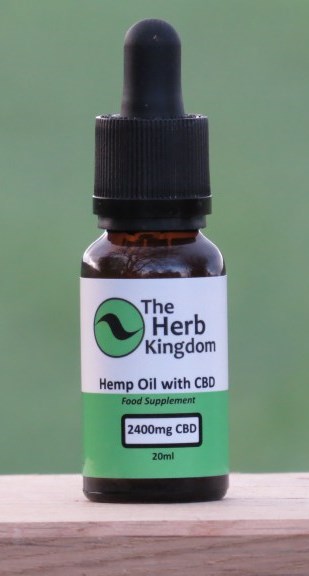 The CBD market has also exposed the contradictions, inconsistencies and errors in the Misuse of Drugs legislation and particularly in the confused and inconsistent way in which the Home Office attempts to administer it. For instance, currently there are CBD products produced legally in other EU countries and the USA which can legally be sold in the UK but which the Home Office will not permit UK companies to produce.
Ironically, the most significant development has been that responsible CBD suppliers have moved away from claiming the sort of medical benefits that are, in fact, the reason for the market’s existence. Although everyone knows this is why people are buying CBD, if you’re in the business of supplying the products you can’t say a thing, not even indirectly, about the medical benefits it offers.
18 months ago, all the leading and responsible suppliers of CBD products in the UK joined together to create their own trade association. The Cannabis Trades Association UK (CTA UK) now represents 80% by turnover of all the CBD suppliers in the UK. It is governed by its members who have established a set of standards on products, labelling and marketing which all abide by. These standards are designed to protect and inform consumers and to ensure that all CTA UK members are compliant with the law.
The formation of CTA UK was prompted by the MHRA issuing warnings to some suppliers about making medical claims for their products. To remain within the law, CBD products must be sold as food supplements and the most that can be said about them is that they help to improve and maintain health and wellbeing. Before any product can be marketed with medicinal claims it must have a marketing authorisation from the MHRA. Food supplements must also comply with certain laws and regulations administered by the FSA.
CTA UK is now engaged in a continuous dialogue with both the MHRA and FSA. Regular meetings are held to consider new suppliers and products entering the market to ensure they comply with the law, regulations and CTA UK standards.
When supplied by a CTA UK member, consumers can be certain that the product they are buying is 100% legal and is accurately labelled and described. CBD is not a ’controlled drug’. It does not appear in any of the classifications or schedules to the Misuse of Drugs Act 1971.
There is widespread misunderstanding about the 0.2% THC limit in industrial hemp. This is the limit in the growing plant and is not relevant to CBD products. Clearly what may be under 0.2% in the growing plant would be far higher in an extract which is, by definition, concentrated. The Misuse of Drugs Regulations 2001 make it clear that any product derived from low-THC cannabis grown legally under licence as industrial hemp is “exempt” provided it contains “not more than one milligram” of THC or CBN. This is the limit that matters. See The Misuse of Drugs Regulations 2001 ‘Interpretation’ 2-(1) (a)(b)(c)
Contrary to suggestions that the market is “in chaos”, “half-legal”, “a bit of a mess” and other spurious claims, in fact, it is a model of self-regulation where the industry itself has put aside its competitive instincts to co-operate for the benefit of consumers and in its own long term self-interest.
No suppliers will be admitted to membership of CTAUK unless they cease making medicinal claims, stop selling illegal products (for instance with high levels of THC, described as ‘indica’ or intended for pets or veterinary purposes). Indeed, any suppliers that continue such conduct are likely to be subject to enforcement action by the MHRA and Trading Standards.
There are further changes or clarifications in the law relating to some CBD products which have emerged in the last few weeks. These arise out of regulations from the FSA. Isolates or pure CBD are now no longer permitted as they have been classified as ‘novel foods’. This could mean a prison sentence of up to two years for anyone selling them.
It’s a myth, although regularly reported in the press, that there has been any change in the law or that CBD has been made legal or classified as a medicine. CBD products can already be prescribed by doctors without any restriction, just as any other food supplement. When the inevitable cannabis law reform takes place it will still be unlawful to make medicinal claims about any CBD or cannabis product without a marketing authorisation from the MHRA.
Within the next few months, the first CBD medicine will receive a marketing authorisation from the MHRA. Epidiolex, a whole plant extract, refined to deliver 98% CBD, is GW Pharmaceuticals’ second cannabis-derived prescription medicine which is intended for severe forms of paediatric epilepsy. It is not derived from industrial hemp but from high CBD strains of cannabis grown specifically for the purpose. It should be noted that this is to be administered in massive doses of up to 20 mg per day per kg of body weight, CBD as a food supplement for adults has a maximum recommended dose of 200mg per day.
The CBD food supplement market will continue to grow. Other medicines may be authorised in the near future, most likely under the MHRA’s Traditional Herbal Registration scheme, which will permit them to be described as medicines for minor ailments not requiring the supervision of a doctor.
Clearly, it remains urgent that our government gets to grips with the reality of the need and benefits of cannabis for medical use in the wider sense. However, even as we begin to make progress the CBD market in its present form will continue to fulfil an important need for many years to come.
Home Office Denies FOI Request In Cover-Up Of All Information On Cannabis Production Licences
 On 6th March 2018 CLEAR submitted a Freedom of Information Request to the Home Office asking for full details of the licences accounting for the legal production of cannabis in the UK. This arose from the story which we broke on 4th March revealing that the UK is the world’s largest producer and exporter of legal cannabis, this according to data provided to the International Narcotics Control Board (INCB) by the government.
The Home Office has refused the request. Its grounds for refusal are that disclosure “would, or would be likely to, prejudice the commercial interests of any person or would be likely to prejudice the prevention or detection of crime“.
Presumably this means that the commercial interest of GW Pharmaceuticals and whoever else has been granted such licences would be prejudiced and that they would risk robbery or other crime at their places of business.
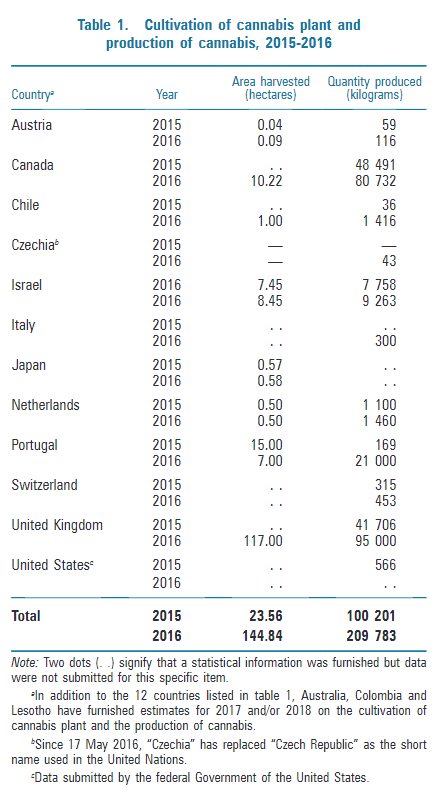
INCB Production of Cannabis 2015-2016
We consider this to be false and without any merit whatsoever. How would it prejudice anyone’s commercial interest? We would not expect any detail that goes behind the licence holder’s normal commercial confidence and it must be right that the identity of those companies or individuals licenced to produce cannabis should be on the public record together with outline information about the terms of the licence – what is it for, for what period, in what quantities. Furthermore, with the security precautions required for such a licence, any attempt at crime would be foolhardy and utterly stupid. It would be much easier either to import or produce your own cannabis. The sort of criminal enterprise that would be required to raid, for instance, one of GW’s grows would be on a grand scale, incredibly risky and with sentences probably higher than for production of cannabis.
Clearly, disclosure of the information around these licences could, in any case, be limited to redact any specific information which should be kept confidential
It’s quite clear that this refusal is simply an excuse, probably to cover-up not only the extent of the licences but also the basis on which they have been issued.
Of course, the Home Office has pre-empted the next step in a FOI request and states that “the public interest falls in favour” of not providing this information. We consider this to be nonsense. It is clear that the public interest (not just the interest of the public) is very much that the issue of such licences should be a matter of public record. It is outrageous that this information is being kept secret.
The answer to the second part of our FOI Request provides further insight into how little trust can be placed in the Home Office and demonstrates that its answers are dishonest. In answer to a written question in Parliament on 1st March 2018, Home Office minster Nick Hurd MP said “No licences for pharmaceutical companies to grow and process medicinal cannabis for exportation to other countries have been issued.” However the INCB report, which information can only have come from the Home Office, shows that in 2015/16 the UK exported 2.1 tons of medical cannabis. We asked for an explanation of how Mr Hurd’s answer is consistent with the facts reported.
Nick Hurd MP, Home Office Minister
The Home Office’s answer is that “these figures could include any plant material exported for pharmaceutical purposes or pharmaceutical products containing cannabinoids that are manufactured in the UK and exported, such as Sativex.” and that it takes ‘medicinal cannabis’ to mean “substances produced to be consumed, be that smoked or ingested in any way.”
It is clear therefore that the Home Office has given two different answers to the same question and that the answer given to the INCB is correct whereas the answer given by Mr Hurd is without doubt intended to mislead Parliament. It also seeks falsely to create a distinction between Sativex and other forms of cannabis which is manifestly and beyond doubt another deception, based on information published by GW Pharmaceuticals which CLEAR revealed in 2016.
In summary therefore, the Home Office has refused to answer the FOI Request in relation to licensing on grounds which are entirely spurious and has demonstrated that it is actively engaged in deceiving both Parliament and the public on the export of medicinal cannabis from the UK.
Following the required procedure, we have now requested an internal review of the Home Office’s handling of the FOI Request. We argue that: “It goes directly to the question of the massive public demand for legal access to cannabis for medical use and the total denial of this by government. This policy is itself irrational and against the public interest and the refusal to disclose the information requested is a political cover-up.”
We anticipate this will be a whitewash and further attempt at a cover-up. Thereafter we have a right to complain to the Infomation Commissioner. At this stage we would also seek to mobilise support from MPs with an interest in this area. Ultimately, we may be able to apply to the High Court for judical review of the Home Office’s decision and we will consider mounting a crowdfunding campaign to enable this.
Talking Cannabis With the MHRA

MHRA Headquarters
In November 2016 I organised a meeting with the Medicines and Healthcare products Regulatory Agency (MHRA) and a number of key players in the CBD market. It was in response to the MHRA seeking to clamp down on sales of CBD oil and related products. That meeting led directly to the formation of the Cannabis Trades Association UK (CTAUK) which now represents more than 80% by turnover of all CBD suppliers in the UK.
Since that first meeting my friend and colleague Mike Harlington has taken on the leadership role at CTAUK and I give him great credit for what has been achieved. We expect formal recognition by the MHRA is only a few weeks away and that is a tremendous coup. For the first time ever, in the face of total intransigence by government, we have established to a significant degree a legally regulated cannabis market. Clearly, it doesn’t yet go anywhere near far enough but this is the most concrete move ever towards long overdue cannabis law reform.
The first 18 months of CTAUK have not been easy. Other than the MHRA, the other branches of government concerned are the Food Standards Agency (FSA) and the Home Office. The FSA has also become a close working partner but, unsurprisingly, the Home Office remains difficult and our efforts to engage constructively with it have been characterised by responses that are inconsistent, irrational, contradictory and a realisation that it’s losing its grip on cannabis policy. It is impossible to deal with. In fact, I almost sympathise with the unfortunate civil servants charged with administering a policy that is itself irrational and contradictory and driven only by outdated prohibitionist values. Maladministration of the Misuse of Drugs Act is now a persistent reality and several legal challenges to the Home Office’s conduct are imminent. Soon the High Court will become involved in UK cannabis policy and then, in theory, facts and evidence should prevail rather than propaganda and government disinformation.
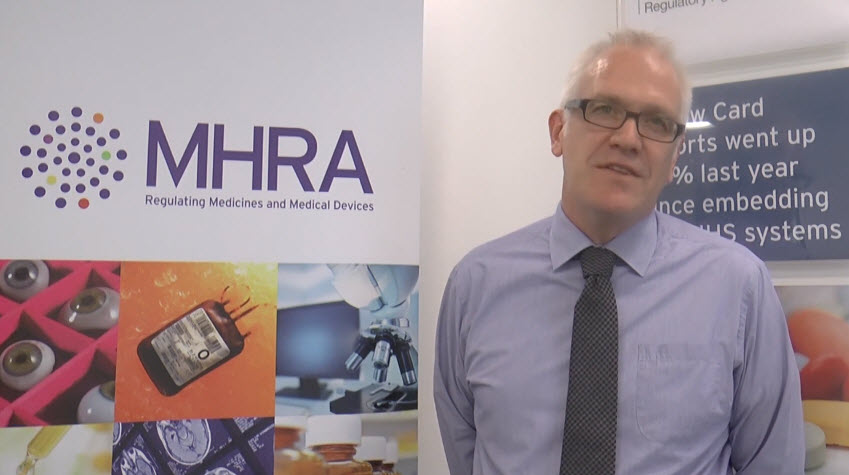
Dr Chris Jones
The CTAUK has been engaged in regular meetings with the MHRA and I was invited along for the most recent occasion. The CTAUK team was Mike Harlington, Tom Whettem of Canabidol and myself. The MHRA team was Dr Chris Jones, head of the Borderline Medicines section and Raj Gor. We discussed many administrative matters and gave a great deal of time again to discussing medicinal claims and how members could avoid mistakes. It seems obvious that no claims of medicinal benefit can be made but there are many instances where it’s not clear cut. A particular case we looked at was the use of ‘night’ and ‘day’ CBD products. Eventually it was agreed that this description is acceptable but only just. This is an excellent example of how CTAUK works to represent its members’ interests and with goodwill on both sides how positive agreement can be reached.
On a continuing, day-to-day basis CTAUK and MHRA are in constant touch, ironing out problems, asking for and taking advice from each other. I am impressed with the way the relationship has evolved and jointly we bring great benefit to the industry and consumers.
This is Paul Kenward, husband of Victoria Atkins MP who is the UK drugs minister. He grows cannabis for a living.
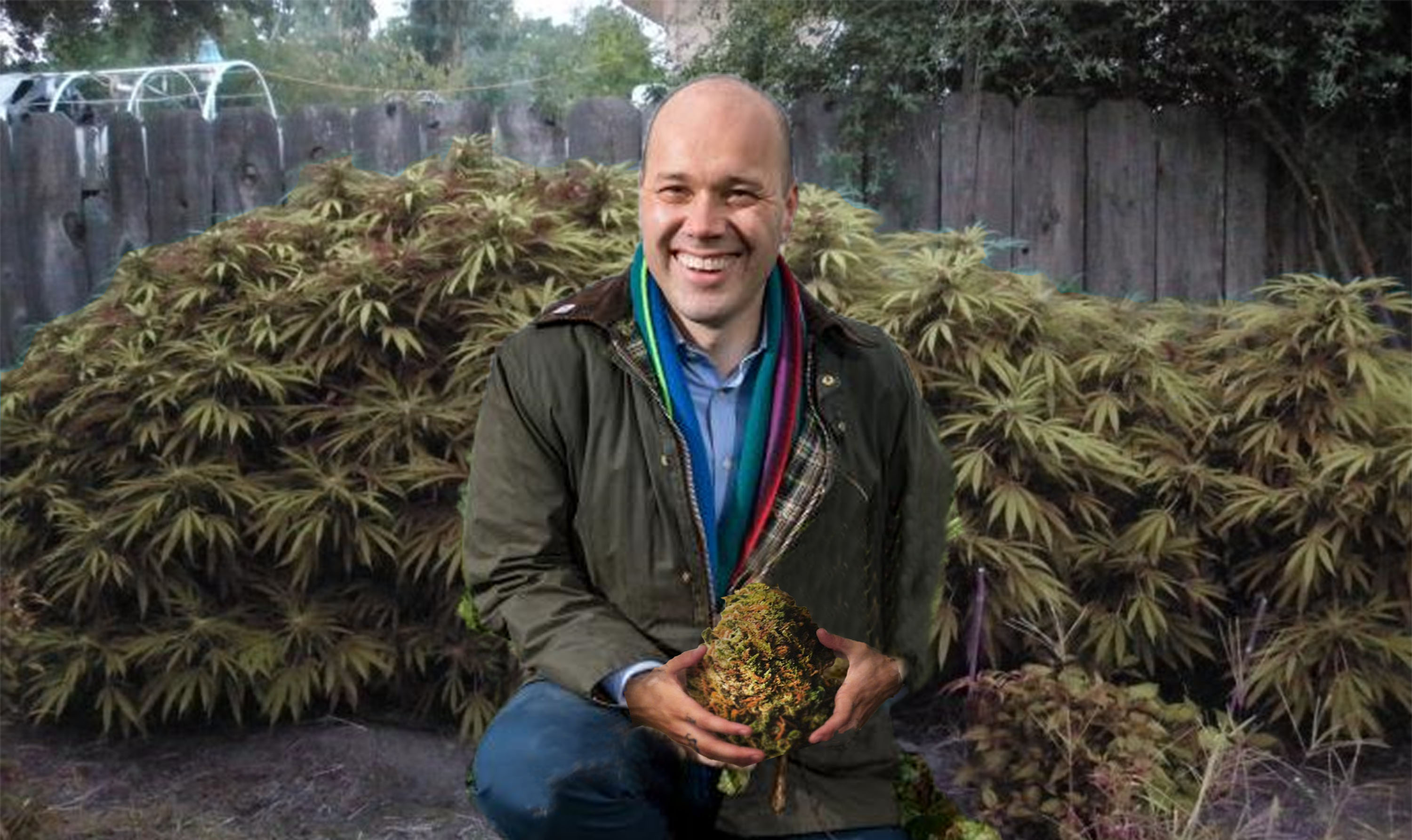
Mr Kenward is managing director of British Sugar which grows cannabis under contract to GW Pharmaceuticals at its 45 acre greenhouse in Wissington, Norfolk. As confirmed by British Sugar, the cannabis is for production of Epidiolex, GW’s epilepsy medicine which is understood to be 98% cannabidiol (CBD).

British Sugar website
Epidiolex is not yet licensed as a medicine although it is currently with the FDA for US approval and the European Medicines Agency for approval within the EU including the UK. It’s unclear how the British Sugar operation can be legal as according to the Home Office it only issues licences for research purposes. Only after the medicine has received a marketing authorisation could it be legally grown for commercial purposes.
This is Mrs Kenward, who prefers to be known by her maiden name of Atkins, in a recorded discussion with Kevin Sabet, America’s most notorious anti-cannabis campaigner who is fighting desperately to see the wave of legalisation in the USA reversed.
Victoria Atkins MP is now a junior Home Office minister with responsibility for drugs policy. She has spoken out forcefully against any form of legalisation or regulation of cannabis in the UK. She also rigidly maintains the government’s line that there is ‘no therapeutic value’ in cannabis. Of course, when it comes to her husband she takes a different view and, of course, she has authority to see licences issued entirely on her own discretion.
Ms Atkins spoke about drugs regulation in Parliament in July 2017:
Isn’t it is her husband who is exactly the person she is talking about? He seems to be doing just fine as a “law-abiding citizen”.
Together with the Home Secretary, Amber Rudd MP, other cabinet minsters, including prime minister Theresa May, who was the previous Home Secretary, Ms Atkins is running a giant cannabis cartel. As shown by the International Narcotics Control Board, the UK is in fact the world’s largest producer, stockist and exporter of ‘legal’ medical cannabis.
UK citizens are denied any access to medical cannabis at all, except in the form of another licensed GW product known as Sativex. However, in practice, Sativex is virtually impossible to obtain. It is believed that about one million UK citizens use cannabis illegally for medical purposes.
No, this is not a spoof article. This story is so incredible and outrageous that you really couldn’t make it up. Yes, the picture of Paul Kenward is photoshopped but all these facts are easily verifiable.
Misleading Parliament Again. Victoria Atkins, The Drugs Minister With A Family Cannabis Farm.
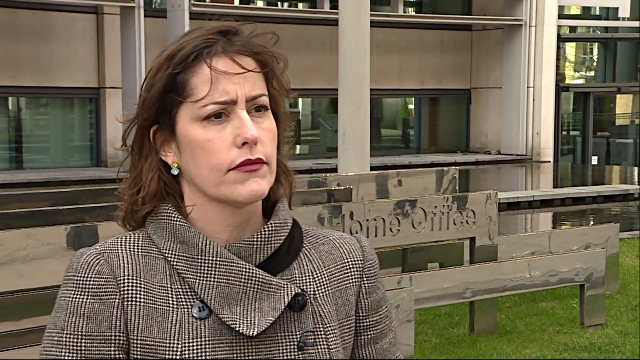
She’s back! Victoria Atkins MP is again engaged in answering parliamentary questions on cannabis for the UK government. Clearly this is wholly improper when she directly benefits from commercial production of cannabis.
Ms Atkins disappeared from public view for a few weeks after CLEAR revealed that her husband is growing 45 acres of cannabis under government licence while she argues against drugs regulation in Parliament. It was particularly notable that she was absent from the House of Commons during the recent urgent question debate on a medical cannabis licence for Alfie Dingley. Instead, her colleague Nick Hurd MP, ostensibly the Police Minister, was required to answer a question on drugs. Similarly, she was nowhere to be seen as Paul Flynn MP’s bill came up for debate, which sadly, as CLEAR had predicted, never took place.
It is simply extraordinary that the so-called Drugs Minister should duck and dive out of view when such issues of massive public interest hit the headlines. She has a massive conflict of interest and it is completely unacceptable for her to continue in her present role.
Yesterday, 7th March 2018, she answered a written question from Roger Godsiff, the Labour MP for Birmingham Hall Green.
“To ask the Secretary of State for the Home Department, if she will assess the health and economic benefits of legalising cannabis for medical use.”
Ms Atkins answered:
“The World Health Organization’s Expert Committee on Drug Dependence has committed to reviewing the scheduling of cannabis under the United Nation’s 1961 Convention. This is due to consider the therapeutic use, as well as dependence and the potential to abuse constituent parts of cannabis. This is due in 2019 and we will await the outcome of this report before considering the next steps.”
This answer is at best disingenuous and misleading. Once the full facts are understood it is clear that it is deceptive and mendacious.

British Sugar’s giant greenhouse in Wissington, Norfolk where Victoria Atkins husband, Paul Kenward, grows cannabis
Ms Atkins husband, Paul Kenward, managing director of British Sugar, grows cannabis under contract to GW Pharmaceuticals for the production of medicine. Ms Atkins deceit is predicated on another deception promoted by the UK government that is some way or another, Sativex, GW’s cannabis medicine is not cannabis. GW is perfectly straightforward about this. Sativex is a whole plant cannabis extract adjusted by simple blending of two different strains to deliver 1:1 ratio of THC:CBD. It contains all the other cannabinoids, terpenes, flavonoids and other compounds present in the plants from which it is made. The government deception is to justify the issue of a marketing authorisation (MA) for Sativex by the Medicines and Healthcare products Regulatory Agency (MHRA) which is itself a deception. The MA was issued on the basis that Sativex is THC and CBD alone. The MHRA conveniently overlooks the hundreds of other ingredients and calls them “unspecified impurities”. The consequence of this is that, ludicrously, Sativex is a schedule 4 drug whilst any other form of cannabis remains schedule 1 and may not be prescribed
But the plot thickens. The deceit goes even deeper. It has been widely reported and British Sugar confirms that its grow is not for Sativex but for production of Epidiolex, the 98% cannabidiol (CBD) medicine that has not yet received an MA. If, as appears certain, this is the case then the British Sugar grow is unlawful under the declared policy of the government. Cannabis production licences (other than low-THC industrial hemp) can only be issued for “research or other special purposes“. They most certainly cannot be issued for the production of a medicine that is not yet authorised. Even if the British Sugar cannabis is low-THC, it is definitely not an approved EU industrial hemp strain and the purpose of its production is presently unlawful.
Ms Atkins through her husband is therefore engaged in the unlawful production of cannabis and is directly engaged in misleading Parliament as to government policy, the law and the medical value of cannabis. The World Health Organization story is a trick, a distraction, an excuse to divert Parliament from understanding the truth.
Ms Atkins conduct cannot be described in any other way except as corrupt. She is a disgrace as a minister of the Crown, to Parliament, to her profession as a barrister, to the Conservative Party, to her constituents in Louth and Horncastle and to the United Kingdom as a whole and all of its citizens. She is manifestly unfit for any public office.
The UK Is The World’s Largest Producer And Exporter Of Cannabis But Its Citizens Are Denied Any Access At All

This is the astonishing fact revealed by the International Narcotics Control Board (INCB) in its 2017 report on narcotic drugs.
In the UK no one has any legal access to any form of cannabis except exempt products derived from industrial hemp, most commonly CBD oil.
Theoretically, the cannabis medicine Sativex is available but in practice, in England it is virtually impossible to obtain it except on a private prescription as the National Institute for Health and Care Excellence (NICE) has recommended that it is not cost effective. In Wales it is available on prescription but doctors are first required to try highly toxic and dangerous drugs such as baclofen, tizanidine, gabapentin, pregabalin, even botulinum toxin or opioids.
The reality is that UK citizens are denied access even though their country is producing and exporting vastly more cannabis even than countries such as the USA, Canada, Israel, the Netherlands and Italy, all of which have legitimate and well regulated medical cannabis provision.
This revelation will further inflame the sense of righteous injustice in the UK. Against this background the UK continues to prohibit even medical use and is stubborn and intransigent in even being prepared to consider or discuss the evidence in favour.
How can the country which sanctions the legitimate production of more medical cannabis than any other in the world deny its own citizens legitimate access?
Victoria Atkins MP, The UK Drugs Minister, Opposes Drugs Regulation While Her Husband Grows 45 Acres of Cannabis Under Government Licence.
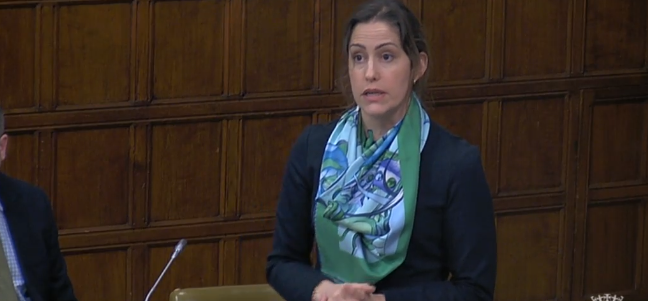
The UK’s New Princess Of Prohibition: Dishonesty, Hypocrisy, Corruption And Cruelty Behind A Pretty Face.
There are many examples of wilful ignorance, blind prejudice and bare faced dishonesty on drugs policy from many former and current MPs. There is no one though who plumbs the depths of deception and hypocrisy as the new drugs minister Victoria Atkins.
Her recent performance in the Westminster Hall debate on drug consumption rooms (DCR) was riddled with inaccuracies, distorted information and downright falsehood about the success of such facilities throughout the world. She simply told brazen untruths in order to support her rejection of the clamour from other MPs to introduce DCRs because they are proven to save lives. I can do no better than Transform in explaining her behaviour. Its press release sets out her lies in detail. Ronnie Cowan MP even raised a point of order and then a Home Office question about her scandalous dishonesty but as usual the government just brushed aside any criticism.
Victoria Atkins: Barrister, MP, Home Office Minister, Dishonest And Corrupt To The Core
Ms Atkins is the daughter of Sir Robert Atkins, a former Conservative MP and MEP. She studied law at Cambridge and was called to the bar at Middle Temple in 1998. She has practised as a barrister and was formerly listed as a member of Red Lion Chambers. She has been appointed to the Attorney General’s Regulators Panel and the Serious Fraud Office’s List of specialist fraud prosecutors. She claims to have been involved in the prosecution of major, international, drugs gangs and that this, somehow or another, qualifies her as an expert in drugs policy.
I relate her background because it is clear that she is a highly intelligent, clever and well informed woman. This makes her dishonesty, hypocrisy and corruption all the more serious and completely inexcusable.
Ms Atkins has replaced Sarah Newton as drugs minister. Ms Newton didn’t last long, perhaps because she couldn’t stand the ridicule that she was subjected to for trying to hold the line on the government’s ridiculous drugs policy. When she tried to claim that alcohol isn’t really that damaging compared to illicit drugs, she had MPs either gasping in amazement or chuckling in amusement. Ms Atkins was clearly spotted for the job because she is one of the few MPs still enthusiastic about prohibition.

Paul Kenward, Victoria Atkins’s husband, grows cannabis under government licence
But of course, it’s specifically on cannabis that I must call Ms Atkins to account. Aside from the usual, hysterical and evidence-free claims that so-called ‘skunk’ cannabis is causing an enormous increase in mental illness, which she trots out repeatedly, she rejects any idea of regulation in drugs policy as a means of reducing harm. In the drugs policy debate on 18th July 2017 (before she was appointed drugs minister) she said:
and “I do not share the optimism of others about tackling the problem through regulation.”

Paul Kenward’s Cannabis Greenhouse
However, in what must be the most blatant hypocrisy ever from a government minister, Ms Atkins benefits directly from regulation of drugs. She is married to Paul Kenward, managing director of British Sugar which is growing 45 acres of cannabis under licence in its mammoth Norfolk greenhouse. Mr Kenward is producing high CBD cannabis for use in Epidiolex, GW Pharma’s cannabis extract epilepsy medicine. Ms Atkins has tried to brush this off calling it “…a very different substance (from the) psychoactive version of cannabis.” Of course, anyone with even the most basic knowledge of plant science will know this is nonsense. The difference between different strains of cannabis is the same as the difference between different varieties of tomatoes. Whether they’re Ailsa Craig or Alicante, they’re all tomatoes.
With this latest scandal the shameful truth about UK drugs policy and the corrupt nature of this Conservative government is highlighted once again. It is difficult to believe this bare faced dishonesty can prevail in a country that was once held up as an example of honour and decency but as with so much that Theresa May has been responsible for since she entered government in 2010, we are disgraced, shamed and the electorate is treated with absolute contempt.
Review: The Saber Vape Pen

I’ve enjoyed trying out the Saber Vape Pen over the last couple of months. It’s a vape pen for concentrates: wax, shatter, oil and all types of cannabis extracts with textures ranging from brittle toffee to gloopy sludge. In use, the main difference is how easy it is to get the gloop into the bowl – and sometimes it’s not easy, it quickly becomes a sticky mess!
Of course the sort of product that this is designed for isn’t easily available in the UK, so I turned to California for a selection of the delights available there. I asked for wax but ended up with two types – the first was called shatter but it wasn’t at all brittle, in fact it’s soft and pliable. The second, which seems to be the latest thing, is known as juice. It’s a very smooth and thick oil that goes stringy when you pick it up with a dab tool and you have to twist it like spaghetti round a fork to try and poke it into the bowl. I had a selection of strains: Banana OG, Blue Sherbet, Pineapple Express, Nug Run, King Louis OG, Juliet, Starfighter – yes I was that kid in a sweet shop!
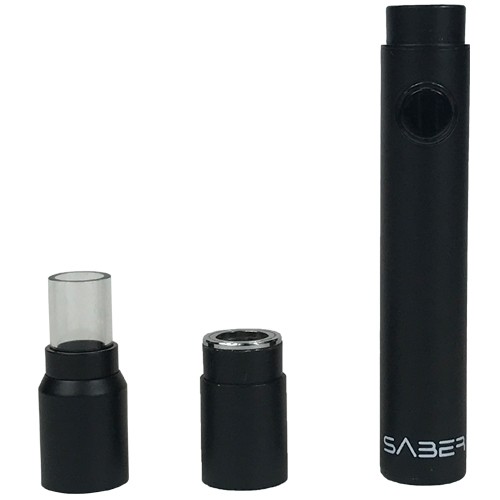 Concentrate pens are essentially very simple devices. They consist of a battery, a bowl and a mouthpiece. The bowl heats up when you press a button and usually it can be set to three different heat levels. The big difference is in the technology that the bowl uses, either dual quartz coils, literally two tiny coils at the bottom of the bowl that heat up or a ceramic bowl that is just a clean, uncluttered reservoir where the bottom of the bowl heats up. The ceramic bowl seems preferable but in practice dual quartz coils generally works a bit better but are more difficult to clean. You really have to try for yourself to see which you prefer.
The Saber comes with both types of bowl and I prefer the dual quartz coils. The unique feature of the Saber is that it holds together magnetically. The battery connects to the bowl with a magnet which in turn connects to the mouthpiece with magnet, there’s no screw thread at all. This is convenient and it works well but where it falls down is in connecting to the charger which is also achieved with a magnet. This means that you always have to use the Saber charger and not one of the standard chargers of which I have many. This is inconvenient and if you lose or break the Saber charger you’re going to have to buy a new one.
All concentrate pens work in a very similar way and it’s difficult to differentiate between them. The type of mouthpiece, its size, the overall size of the pen, all these factors effect how each pen works and, to be honest, I think it’s just a question of getting used to each type and learning its idiosyncracies. I do like the Saber. I have tended to stick with it although I have another three or four in my drawer. I find it a handy size, it’s not too harsh as some pens can be and, with the exception of the magnet connection to the charger I have nothing to criticise about it.
If you haven’t used a concentrate vape pen before and experienced the effect of a good quality concentrate and the wonderful flavour and intense hit, then it’s something you can really look forward to. Take it slow! It’s very easy to rip your throat out if you pull too hard and as most of these concentrates are 80% THC and more, it’s very easy to blow your brains out! Even for an experienced cannabis consumer, be careful, these are very, very powerful and you need to learn how to use them so that the experience is safe and enjoyable. When you get it right though, there’s not really anything to beat it. It’s clean, convenient, wonderful flavour and you’re inhaling far less smoke or vapour than by any other method. In my opinion, this is the best way to consume cannabis.
My Saber Vape Pen came from NY Vape Shop. Thank you to them for giving me the opportunity to try it.
‘Gone To Pot’ Shows How Close We Are To Legalisation. Now We Just Need To Deal With The Scaremongering.

It seems we really are on a roll now. The cannabis campaign has gained momentum over the last five or six six years more than ever before. It’s snowballing, the rate of progress is accelerating.
What’s made this happen? It’s recognition of the benefits that cannabis offers. It certainly isn’t because of some crazy idea that if we exaggerate and overstate its harms, suddenly the government will recognises that legal regulation makes it safer. No, that flawed idea has nothing to do with the fact that we are now getting very close to the change we seek – even here in backwards, bigoted Britain.
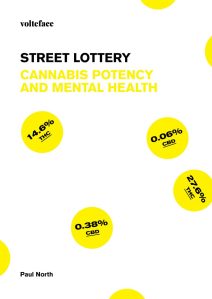 There are more and more reports of real medical benefits and also of less dramatic but very real help with conditions such as insomnia, anxiety and stress. It’s this that is changing minds, not scaremongering and fake data from the charlatans in the ‘cannabis therapy’ business. Sadly this is the path that Volteface, the new drug policy group, has chosen to take with its ‘Street Lottery’ report. It’s not the first of course, Transform has also followed this misguided path but at least, unlike the newcomers, it has real credentials in campaigning for reform.
Of course, legal regulation will make the cannabis market safer for everyone but the real dangers are not of young people developing psychosis after bingeing on so-called ‘skunk’ – the actual numbers are tiny – but of the harms caused by prohibition. It is the criminal market that means cannabis is easily available to children and no age limits can be enforced. It is the criminal market that means nobody knows what they are buying: how strong is it, is it contaminated, has it been properly grown, does it contain any CBD? It is the criminal market that leads to violence, street dealing even involving young children, dangerous hidden grows that are serious fire risks, human trafficking and modern slavery and, of course, profits on the £6 billion per annum market being diverted into ever more dangerous criminal activities.
ITV and the production company Betty have done an enormous amount of good for our campaign and for the whole of Britain in bringing a balanced, rational, honest exposition of cannabis to our TV screens. This series showed quite clearly how beneficial cannabis can be but also how it can bite back if you’re a bit silly with consuming too much. Thankfully it didn’t follow the familiar path of talking up, overstating and exaggerating the very small risk of mental health effects. It’s easy to see why those who support prohibition have used this tactic to try and demonise the plant but how anyone who claims to support reform can see it as an intelligent or positive way to create the right environment for change is inconceivable.
Volteface is the money of Paul Birch, who became a multi millionaire after his brother founded the now defunct social media company Bebo. It was a classic flash in the pan of the dot com boom but left those lucky enough to be involved with bulging bank accounts. Birch first tried to enter the reform movement with his Cannabis Is Safer Than Alcohol (CISTA) political party. It really is a ‘volteface’ to move from that accurate if tired message to now pushing the dangers of so-called ‘skunk’ as if that’s going to encourage reform. However, I have it on reliable authority that recently Mr Birch suffered a major panic attack (or ‘psychotic episode’) after over-consuming some potent weed, so much so that an ‘intervention’ was called for. Many of us will know how disconcerting such an experience can be and usually we can laugh at ourselves in retrospect (just as we laughed at Christopher Biggins and Bobby George when they ate far too much cannabis-infused food on ‘Gone To Pot’). If he’s basing an entire campaign strategy on one personal experience it’s hardly sensible.

Paul North
Birch’s money has enable Volteface to hire full time staff and now its own tame drug therapist, Paul North. He is the very epitome of the angry young man, getting into furious outbursts on Twitter with anyone who dared to challenge his view. The way people like North manipulate and misrepresent data is horrendous and when they’re challenged their answer is they were engaged in the collection of the data – well yes, duh, that’s the point! People who work in mental health or drug therapy are always pronouncing on our mental health wards being ‘packed full’ of people with problems caused by cannabis but the facts don’t support these claims. It’s inevitable that if you spend most of your life surrounded by people who are mentally ill, you get a rather distorted perspective on the world.
In many previous articles, I’ve laid out the facts of the number of people admitted to hospital and in GP community health treatment for cannabis. The truth is that those with an agenda don’t care about facts. They prefer the wild, speculative studies from Professor Sir Robin Murray and the Institute of Psychiatry with their bizarre statistical tricks that would make you think there are cannabis-crazed axe murderers on every street corner. Journalist Martina Lees recently published two articles in the Daily Telegraph where she exaggerated the number of people admitted to hospital for cannabis related problems by 50 times! Of course, we’re used to this sort of thing and it’s a sad fact that when it comes to science or medicine reporting, even in the so-called ‘quality’ press, Fleet Street is not just incompetent, journalists don’t just exaggerate, they’re systematically mendacious whenever it’s possible to be sensationalist about cannabis.
So let’s be grateful for the light that ‘Gone to Pot’ has shone on the reality of cannabis and let’s continue to reject the falsehood, deception and exaggeration that Volteface and others try to bring to our campaign. I have no doubt that when legalisation finally arrives some politicians will use their argument to post-rationalise their ‘volteface’ on policy but it’s not the truth and it never has been. The simple truth is that for 99% of people, not only is cannabis benign but it’s positively beneficial.

 Peter Reynolds