Posts Tagged ‘cannabis’
British Doctors Don’t Understand Cannabinoid Medicine. They’ve Been Denied Education In The Basic Science.

Today’s letter to the Times from a group of pain medicine consultants (reproduced below) is is an astonishing display of evidence-free ignorance from a profession that needs to challenge its own prejudice.
To compare the addiction potential of cannabis with opioids is ridiculous and demonstrates just how detached from the science and evidence are those making this claim.
Doctors will understandably feel challenged by a medicine that upturns many of their conventional habits. They have been prevented from understanding the science of cannabis as medicine by prohibition policy. Most doctors have received no education at all about the endocannabinoid system which we now know is the largest neurotransmitter network in the body and is the mechanism by which cannabis exerts its therapeutic effects.
Understanding cannabis as a medicine requires a new attitude and mindset which looks at the patient’s overall health and physiological stability or homeostasis. Modulating the endocannabinoid system with cannabis can effect many factors which contribute to illness including pain, mood, memory and perception. It’s actually a much more complex model rather than the simplistic, reductionist theories that modern medicine is based on.
‘Holistic’ is a fashionable but much misused word that is truly expressed in cannabinoid medicine. There are a few progressive doctors in the UK, including some pain consultants, who through experience and self-education have learned how this new approach to medicine works.
Outside the UK, in jurisdictions which have taken a more enlightened approach, cannabinoid medicine is much better understood by many more doctors. The profession in UK needs to open its mind and its doors to education and training from overseas. Then they will start to understand this much more rounded and broadly-based approach which can lead to a long-term, preventative approach with fewer side effects and better outcomes for nearly all patients.
Letter to The Times, 26th October 2018
CANNABIS PAIN RELIEF
Sir, We, as a group of pain medicine consultants, are concerned that the Home Office and NHS England propose to allow specialist doctors to prescribe cannabis for chronic pain from next month. We know only too well the unmet burden of chronic pain and that pain is cited by our patients as a frequent reason to take cannabis.
While there are clear limitations in studying the effects of past illicit cannabis use, caution is required, as the evidence suggests that the prescribing of cannabis (containing the psychoactive and addictive tetrahydrocannabinol component) will provide little or no long-term benefit in improving pain and may be associated with significant long-term adverse cognitive and mental-health detriment.
We are also concerned that it will be difficult to deny cannabis prescriptions to patients in pain who might be coerced into diverting cannabis into the community where it will remain illegal and have street value.
We have suffered an opioid crisis and foresee history about to repeat itself. Ironically, the likely cost of medical cannabis will be greater than the saving achieved by the inexplicable decision of NHS England to restrict the use of the clinically effective 5 per cent lidocaine plasters.
We support the change in the law to encourage cannabis research. However, we are concerned that in the interests of political expediency, this mandate to allow prescribing of cannabis for pain relief is premature. That cannabis is an effective treatment for chronic pain is not supported by the evidence and may be associated with significant harm.
Dr Rajesh Munglani, consultant in pain medicine London; Dr Andrew Baranowski, consultant in pain medicine, University College London Hospitals NHS Trust; Dr Stephen Ward, consultant in pain medicine Brighton and Sussex Hospital Trust; Dr Arun Bhaskar, consultant in pain medicine Imperial College NHS Trust; Dr Cathy Price, consultant in pain medicine St Mary’s Portsmouth Solent NHS Trust; Dr Jonathan Bannister, consultant in pain medicine NHS Tayside Scotland; Dr Ilan Lieberman, consultant in pain medicine University Hospital of South Manchester; Dr Dalvina E Hanu-Cernat, consultant in pain medicine Queen Elizabeth Hospital Birmingham; Dr Pravin Dandegaonkar, consultant in anaesthesia and pain medicine; Calderdale and Huddersfield NHS Foundation Trust; Dr Sarang Puranik, consultant in pain management and anaesthesia Kingston Hospital, Surrey; Dr Mike W Platt, consultant in pain medicine Imperial College Healthcare NHS Trust; Dr Jon Valentine, consultant in pain medicine Norwich; Dr Teodor Goroszeniuk, consultant in pain medicine, London W1, UK; Dr Michael Coupe consultant in anaesthesia, pain medicine and intensive care Royal United Hospitals NHS FT; Dr Hadi Bedran, consultant in pain medicine St Georges University Hospitals NHS Trust; Dr Karen H Simpson, consultant in pain medicine Leeds; Dr Aditi Ghei, consultant in pain medicine, West Herts NHS Trust; Dr Kiran Koneti, consultant in pain management City Hospitals Sunderland NHS Trust; Dr Tim McCormick, consultant in pain medicine Oxford pain Management Centre; Dr Sadiq Bhayani, consultant in pain medicine University Hospitals Leicester NHS Trust; Dr Nicholas M Hacking, consultant anaesthetist, Lancashire Teaching Hospitals NHS Trust; Dr Joshua Adedokun, consultant in pain medicine, The Pennine Acute NHS Trust; Dr Neil Collighan, consultant in pain medicine East Kent Hospital NHS Trust; Dr Bela Vadodaria, consultant in anaesthesia and pain management The Hillingdon Hospital; Dr Fraser Duncan, consultant anaesthetist and pain specialist Birmingham; Dr Hoo Kee Tsang, consultant in anaesthesia and pain medicine, Royal Liverpool and Broadgreen University Hospitals NHS Trust; Dr Richard Gordon-Williams, APT, University College London Hospitals NHS Trust; Dr A Tameem, consultant in anaesthesia and pain management Dudley group of hospitals; Dr Marcia Schofield, pain sPecialist West Suffolk NHS Trust Bury St Edmunds; Dr Giancarlo Camilleri, consultant Ashford & St Peter’s Foundation NHS Trust Chertsey; Dr Joseph Azzopardi, consultant in pain medicine London; Dr Dick Atkinson, retired consultant in pain medicine Central Sheffield University Hospitals; Dr Basil Almahdi, consultant in pain medicine London; Dr Katharine Howells, consultant in pain medicine, RUH Bath NHS Foundation Trust; Dr G Baranidharan, consultant in pain medicine, Leeds Teaching Hospitals NHS Trust; Dr Philippa Armstrong, consultant in anaesthesia and pain medicine, York Teaching Hospitals NHS Trust; Dr Lourdes Gaspar, consultant in pain medicine Orthopaedic Hospital Oswestry; Dr Carolyne Timberlake, consultant in pain medicine Kings College Hospital NHS Trust; Dr Intazar Bashir, consultant in pain medicine Worthing; Dr Mark Sanders,consultant in pain medicine at Norfolk and Norwich University Hospital; Dr Andrzej Krol, consultant in pain medicine St George’s Hospital London; Dr Peter Hall, consultant in pain Management York Hospitals NHS Trust; Dr Susmita Oomman, consultant in pain and Anaesthetic Withybush General Hospital Hywel Dda NHS Trust; Dr Sue Jeffs, consultant in anaesthesia and pain Management Abergavenny Wales; Dr Murali-Krishnan, consultant in pain medicine Northampton; Dr Sabina Bachtold, ST7 pain medicine (APT)/anaesthesia London; Dr A Ravenscroft, consultant in pain Management Nottingham University Hospitals; Dr Sanjay Kuravinakop , consultant in pain medicine Dartford and Gravesham NHS Trust; Dr Nicolas Varela, consultant in pain medicine Royal National Orthopaedic Hospital NHS Trust; Dr Michael Atayi, consultant in pain medicine George Eliot Hospital; Dr Carl TJ Broadbridge, consultant in pain medicine and anaesthesia Salisbury District Hospital; Dr Ramy Mottaleb, Kingston NHS Foundation Trust; Dr Richard Sawyer, consultant in anaesthesia and pain management, Oxford University Hospitals NHS foundation Trust; Dr Rajesh Menon, consultant in pain medicine Calderdale and Huddersfield NHS Trust; Dr Jeremy Weinbren, consultant in Anaesthetics and pain medicine Hillingdon Hospital; Dr Paul Rolfe,consultant in pain medicine Cambridge; Dr Brian Culbert, consultant in pain medicine East Yorkshire Hospitals NHS Trust; Dr Rokas Tamosauskas, consultant in pain medicine Addenbrooke’s Hospital, Cambridge University Hospitals NHS Foundation Trust; Dr David Gore ST6 Advanced pain Trainee, Oxford University Hospitals; Dr Manohar Sharma, consultant in pain medicine The Walton Centre NHS Foundation Trust, Liverpool; Dr Jayne Gallagher, consultant in pain medicine Barts Health Trust London; Dr Raju Bhadresha, consultant in pain medicine and anaesthesia East Kent Hospitals University Foundation Trust; Dr Owen Bodycombe, consultant anaesthesia and pain medicine Gloucestershire Hospital’s NHSFT; Dr Ramy Mottaleb,consultant in pain medicine Kingston NHS Foundation Trust; Dr Christian Egeler, consultant in anaesthesia and pain medicine, Swansea ABMU HB; Dr Deepak Malik, consultant in pain Management University Hospitals Birmimgham NHS Foundation Trust; Dr Mohjir Baloch, consultant in pain Management Frimley Park Hospital; Dr Martyna Berwertz, consultant in pain medicine Sheffield Teaching Hospital NHS Foundation Trust; Dr Ron Cooper, consultant pain medicine & anaesthesia Causeway Hospital, Coleraine, N Ireland; Dr Ashish Shetty, consultant in pain medicine, University College London Hospitals; Dr S J Law, consultant in pain medicine West Suffolk Hospital; Dr M Mali, consultant in pain medicine Darent Valley Hospital; Dr S James consultant and Lead Clinician Chronic pain Services NHS Lanarkshire; Dr Sarah Aturia,consultant pain and Anaesthetics Milton Keynes University Hospital NHS Foundation Trust; Dr Henriette van Schalkwyk, consultant in pain medicine North Hampshire hospital Basingstoke; Dr Shamim Haider, consultant in pain medicine East Suffolk & North Essex NHS Foundation Trust Colchester & Ipswich; Dr Simon Thomson, consultant in pain medicine and Neuromodulation, Basildon; Dr Danielle Reddi, Locum consultant in pain medicine University College London Hospitals NHS Trust; Dr Thomas Samuel, consultant in pain medicine East and North Herts NHS Trust; Dr Arindam De, pain Management consultant University Hospitals of Morecambe Bay (UHMB); Dr Evan Weeks, consultant in anaesthesia & pain medicine Addenbrooke’s Hospital, CUHFT; Dr Ravi M Kare, consultant in pain Management and anaesthesia Norfolk & Norwich University Hospitals; Dr Niranjan Chogle, consultant in pain medicine Ulster Hospital, Northern Ireland; Dr William Campbell, consultant Emeritus and Past President British pain Society, Ulster Hospital Dundonald; Dr Subramanian Ramani, consultant in pain medicine Northampton General Hospital; Dr Adrian Searle, consultant in anaesthesia and pain medicine, Derby; Dr Sameer Gupta, consultant in anaesthesia and pain Management DRG Health Clinic Doncaster; Dr Diana Dickson, Retired consultant in pain medicine, Leeds; Dr Attam Singh, consultant in pain medicine West Hertfordshire NHS Trust; Dr James Wilson, consultant in anaesthesia & pain medicine Maidstone & Tunbridge Wells NHS Trust; Dr Sharmila Edekar, pain Specialist Glangwili Hospital Hywel Dda HB; Dr Bernard Nawarski, consultant in pain medicine Frimley Health; Dr Sridevi Ramachandran, consultant in pain medicine, Anglian Community Enterprise; Dr John Wiles, consultant in pain medicine The Walton Centre NHS Foundation Trust; Dr A T Arasu Rayen, consultant in pain Management, Sandwell and West Birmingham NHS Trust; Dr John Titterington, consultant pain Management, Leeds Teaching Hospitals; Dr Deepak Subramani, consultant in anaesthesia and pain Management George Eliot Hospital; Dr Ian D Goodall, consultant in pain medicine, Chelsea and Westminster Hospital NHS Trust; Dr Seshu Babu Tatikola, consultant In pain medicine & Anaesthesia, Hull and East Yorkshire Hospitals NHS trust; Dr Kevin Markham, consultant in pain medicine Surrey Heath Community pain Clinic; Dr Husham Al-Shather ,consultant in pain medicine Royal Berkshire NHS Foundation Trust; Dr K.Dhandapani, York Hospitals NHS foundation Trust York; Dr Chris Naylor, consultant in pain medicine, Southend University Hospital NHS Trust; Dr Sally Ghazaleh, Locum pain consultant Royal Berkshire hospital; Dr Bala Veemarajan ,Sherwood Forest Hosp NHS trust; Dr GR Towlerton, consultant in pain medicine, Chelsea & Westmister Hospital; Dr Mandar Joshi, consultant in anaesthesia and pain medicine, Aneurin Bevan University Health Board; Dr Ashish Wagle,consultant Anaesthetist and pain specialist Cwm Taf University Health Board Wales; Dr A Doger, consultant University Hospitals Birmingham & Associate Medical Director John Taylor Hospice; Dr Salmin Aseri, consultant in pain medicine & Anaesthesia; St Helens & Knowsley Teaching Hospitals NHS Trust; Dr George Harrison, consultant in pain medicine, Birmingham Queen Elizabeth Hospital; Dr Rashmi Poddar, pain consultant Kettering General Hospital; Dr Ashish Gulve; consultant in pain Management The James Cook University Hospital Middlesbrough; Dr Yaser Mehrez,consultant in pain medicine and anaesthesia Milton Keynes University Hospital NHS Trust; Dr Victoria Tidman, consultant in pain medicine University College London Hospitals NHS Trust; Dr Tacson Fernandez,consultant in pain medicine Royal National Orthopaedic Hospital; Dr Kim Carter, consultant Anaesthetist & pain Northampton General Hospital; Dr Anand Natarajan, consultant in pain Management Wirral University Teaching Hospitals; Dr Dominic Aldington consultant in pain medicine Royal Hampshire County Hospital; Dr Emma Chojnowska, consultant in pain medicine and anaesthesia Chichester; Dr Liza Tharakan, consultant in pain medicine and Anaesthesia; Royal Orthopaedic Hospital; Dr Moein Tavakkoli, consultant in pain medicine University College London Hopsital (NHNN); Dr Manojit Sinha ,consultant pain medicine King’s College Hospital NHS Foundation Trust; Dr Sanjay Varma,consultant in pain Management Sunderland Royal Hosptal Sunderland; Dr Shravan Tirunagari, consultant anaesthesia and pain Management, East and North NHS Trust Hospitals; Dr Monica Chogle, consultant in Anaesthetics and pain Northern Health and Social Care Trust Northern Ireland; Dr Subhash Kandikattu, consultant in pain Management, Peterborough City Hospital North West Anglia NHS FT; Dr Jan Rudiger, consultant in Anaesthetics and pain medicine, Redhill; Dr Arun Sehgal, consultant in pain medicine and Anaesthesia,Peterborough and Stamford Hospitals; Dr Matthew LLoyd Hamilton, consultant in anaesthesia and pain medicine, Homerton University Hospital NHS Foundation Trust, London Dr Athmaja Thottungal, consultant and Trust Clinical lead for pain management, East Kent Hospitals NHS Trust; Dr Rubina Ahmad, Title: Locum consultant, work place; Brighton and Sussex University Hospital NHS Trust: Dr Sean White, consultant in pain medicine, London pain Service; Dr Anup Bagade, consultant in pain medicine East and North Herts NHS Trust; Dr Tom Smith, consultant in pain medicine London; Dr Jason Brooks, consultant pain medicine Belfast Health and Social Care Trust; Dr Vinay Anjana Reddy, consultant in pain and anaesthesia University Hospital Lewisham; Dr S Murugesan, consultant in anaesthesia and pain management, Wrightington Wigan and Leigh NHS Foundation Trust; Dr Nancy Cox, APT, University Hospital Coventry and Warwick NHS Trust; Dr Ashwin Mallya, Northern Lincolnshire and Goole Hospital NHS Trust; Dr M Serpell, consultant & Senior Lecturer in pain medicine & anaesthesia Greater Glasgow & Clyde NHS; Dr Srinivas Bathula, consultant in pain Management Heart of England NHS Trust University Hospital, Birmingham; Dr Ann-Katrin Fritz, consultant Alain Management Norfolk & Norwich University Hospital; Dr Ashok Puttappa, consultant in anaesthesia and Chronic pain University Hospital North Midlands Stoke on Trent; Dr Tom Bendinger, consultant in anaesthesia and pain medicine Sheffield Teaching Hospitals; Dr Sumit Gulati,consultant in pain medicine and anaesthesia Walton Centre NHS FT, Liverpool UK;Dr Arun Natarajan, consultant in pain medicine Hillingdon Hospital; Dr Katrina Dick, consultant in anaesthesia and pain medicine Ayrshire and Arran; Dr Shefali Kadambande , consultant in anaesthesia and pain management University Hospital of Wales; Dr Nick Roberts, consultant in pain Management Kettering General Hospital; Dr Somnath Bagchi, consultant in pain medicine University Hospitals Plymouth UK; Dr Lakshman Radhakrishnan, consultant in pain management Royal Lancaster Infirmary; Dr Stephan Weber, consultant in pain Management BMI Goring Hall Hospital; Dr Kiran Sachane consultant in pain medicine NHS Lothian pain Service, Edinburgh Scotland; Dr James Blackburn, consultant in pain medicine, St George’s Healthcare NHS Trust; Dr Srinivas Bathula, consultant in pain medicine, University Hospitals Birmingham NHS FT; Dr Ravi Srinivasagopalan, consultant in pain Management and anaesthesia The Hillingdon Hospitals NHS FT; Dr John Goddard, consultant in Paediatric pain medicine Sheffield Children’s Hospital; Dr Chad Taylor, pain medicine consultant, Jersey (Channel Islands UK); Dr Udaya Kumar Chakka, consultant in pain medicine, Coventry; Dr Pallav Desai, Neuromodulation Fellow, James Cook University Hospital; Dr Azfer Usmani, Dartford and Gravesham NHS Trust; Dr Neal Evans, consultant in pain medicine Bucks Hosps NHS Trust; Dr Kanar Al-Quragooli, Associate Specialist in anaesthesia and pain medicine , Manchester FT; Dr Valentina Jansen, consultant in pain and anaesthetics Glangwili General Hospital Hywel Dda NHS Trust; Professor Emeritus Sam H Ahmedzai, University of Sheffield; Dr Mike Hudspith, consultant in pain medicine Norfolk & Norwich University Hospital;
Will I Be Able To Get Cannabis Prescribed On The NHS?
With the publication of new regulations yesterday, it is now clear how cannabis will be available on the NHS starting on 1st November 2018.
Only consultants will be able to prescribe cannabis and it will be entirely up to each consultant to make a decision about individual patients. The definition of cannabis-derived medicinal products is sufficently wide that both oils and herbal cannabis manufactured to GMP (Good Manufacturing Practice) standards will be available.
There is very little explanation included in the regulations but the intention is that prescribing guidance will be developed over time by NICE (National Institute for Health and Care Excellence). The regulations prohibit smoking cannabis for medical use but if your consultant decides it is appropriate for you, they will be able to prescribe herbal cannabis for vaping. Apart from Sativex, all cannabis products are unlicensed medicines described as ‘specials’, so your consultant is supposed to consider licensed medicines first.
There are no restrictions on which conditions cannabis can be prescribed for. Again, it will be up to your consultant to decide.
So this is marvellous news. It is a fundamental breakthrough and its impact will be enormous but it will take time for it to start working effectively.
The law is no longer an obstacle. The biggest problem now is that very few consultants have any knowledge of cannabis at all and most are probably going to be very reluctant to prescribe. For the best part of a century, doctors, just like the rest of society, have been subject to a relentless flow of propaganda and false information about cannabis. Changing this with medical training, helpful prescribing guidelines and overcoming unjustified prejudice and fear are the new challenges we face.
To begin with, a lot of people will be disappointed because their consultant will be unwilling to prescribe. The first thing you can do about this is ask your GP to refer you to a different consultant but it may be some time before understanding develops and consultants are sufficiently informed. Almost certainly there will be more resistance to prescribing herbal cannabis and it will be easier to get oil.
As ever, the best thing to do is gather evidence on the use of cannabis for your condition(s). If you are well informed and prepared then you can help to educate your consultant. There is now an enormous amount of evidence available online. Just be careful to use proper scientific information and avoid the miracle cures and exaggeration that is still widespread.
Whilst not everyone will immediately be able to get the medicine they need, we are now on the correct path. Instead of politicians imposing their ignorant opinions on you, your doctor will now be making the decisions and that is the way it should be. In time the right to prescribe will be extended to GPs. For now the truly wonderful news is that we are no longer engaged in a battle with the law. What it’s about now is patience and education.
Arrival After A 36 Year Journey.

Today I have arrived at the destination I set out for in April 1983 when I first gave evidence on the use of cannabis as medicine to Parliament at the Home Affairs Select Committee Inquiry into ‘Dangerous Drugs’.
Sajid Javid MP, the Home Secretary, has announced that from 1st November 2018, consultants will be able to prescribe cannabis on the NHS. This will include herbal cannabis produced to GMP standards by organisations such as Bedrocan and Tilray.
I am only one of thousands of people who worked on this campaign and I congratulate all those with whom I have shared this journey. In these 36 years there have been more than 22,000 scientific papers published demonstrating the safety and efficacy of cannabis for a wide range of medical conditions. This is how long it’s taken to get policy changed in the UK in accordance with evidence.
It’s appropriate that it should fall to the son of a Pakistani immigrant finally to sweep aside the prejudice and wilful ignorance that has stood in the way.
CLEAR Advises Department of Health and MHRA on Definition of Cannabis-Derived Medicinal Products.
Last week, CLEAR was invited to participate in a teleconference with representatives of the Department of Health and Social Care (DHSC) and the Medicines and Healthcare products Regulatory Agency (MHRA). This followed our written submissions made over the last few weeks.
The teleconference included two representatives from each party. The DHSC was represented by the Medicines Pharmacy and Industry section. The MHRA was represented by the Licensing Division.
CLEAR has now submitted a summary of all the advice offered which is reproduced below.
1. The definition of cannabis-derived medicinal products (CDMP) is for products that will be re-scheduled in the Misuse of Drugs Regulations out of schedule 1 and ostensibly into schedule 2. These products will be available for prescription by doctors.
2. With the exception of Sativex, a whole plant cannabis extract with a THC:CBD ratio of 1:1, there are no cannabis-derived medicinal products available in the UK which have been licensed by the granting of a marketing authorisation (MA) or a Traditional Herbal Registration (THR). THR licensing is for minor ailments only that do not require the supervision of a doctor. MA licensing would be required for any CDMP aiming to treat most of the conditions for which cannabis is currently being used illicitly unless such CDMPs are prescribed as an unlicensed medicine.
3. In every other jurisdiction in the world where CDMPs are legally available, governments have recognised that licensing regimes designed to regulate single molecule pharmaceutical medicines synthesised in a lab are not suitable for regulating CDMPs. All such governments have either established entirely new cannabis regulators or created a specialist division within the existing medicines regulator. If there is a genuine intent to enable legal access to CDMPs by the estimated one million people currently using illicit cannabis as medicine, this is the only practical route forwards. The cost and length of time involved in obtaining an MA makes them prohibitive for a plant-based medicine. Given the experience of using cannabis as medicine over many millennia, its non-toxic nature and very low risk profile, the rigorous approach of an MA is unnecessary.
Recommendation 1. A CDMP regulator should be established encompassing genuine expertise in the use of cannabis as medicine. The Cannabis Trades Association UK (CTA) is already in the process of developing the Cannabis Products Directive (CPD) in co-operation with the MHRA and FSA.
4. There is no justification or evidence that can support cannabis being in such a restrictive schedule as schedule 2 alongside opioids and cocaine. The potential for causing social harm, which is the criterion used to determine the correct schedule, is several orders of magnitude greater with all existing schedule 2 drugs. They are all demonstrated to produce far higher levels of problematic dependence and long-term health harms than cannabis.
Recommendation 2. CDMPs should be re-scheduled into schedule 4 alongside Sativex.
5. The primary objective of the definition should be to ensure that the products are safe. Cannabis is non-toxic with no practical lethal dose and any harmful health or social effects are only likely with sustained and abusive use. In normal, moderate and especially medical use the potential for any harm is extremely low, certainly no higher than with common over-the-counter medicines. The main safety considerations are therefore the risk of contamination during cultivation and in subsequent processes such as extraction and refinement of oils, arising from the use of pesticides, herbicides, nutrients and solvents.
6. The definition should be wide enough to encompass all cannabis products that are produced to specified quality standards. It should not be so narrow as to prohibit high THC and/or low CBD products that may well be appropriate in individual circumstances. Prescribing guidelines should be issued to enable doctors to make appropriate clinical judgements on appropriate THC:CBD ratios for different conditions. These guidelines must be compiled by experts in the use of cannabis as medicine, not by the ‘non-experts’ who have been appointed to the expert panel on cannabis-derived medicine. FOI Requests have revealed that none of the members of the panel have any knowledge, experience or expertise in the use of cannabis as medicine.
7. The definition should be wide enough to provide for a future in which doctors can vary THC:CBD ratios and terpene content in accordance with evidence for therapeutic effect. For example, in paediatric epilepsy, CBD has been shown to be the most important compound but some children require a small percentage of THC for it to become effective. Doctors should be free to vary dosage in the same way as they do with many licensed medicines in accordance with the way the patient responds.
8. Regulators/authorities will properly require some independent assessment of the safety of products as defined above. The only such assessments currently available are Good Manufacturing Practice (GMP) and certification by the Cannabis Trades Association UK (CTA). By definition, these certifications are only available for products that are legally available and CTA only operates within the UK where only exempt, low-THC products (known as CBD products) are legally available. GMP certification is available on some cannabis products legally available outside the UK.
9. Cannabis consists of around 500 molecules including approx. 110 cannabinoids, 120 terpenes and 20 flavonoids which provide the important therapeutic effects, most effectively, when working together in what is known as ‘the entourage effect’. The most significant cannabinoids are believed to be THC and CBD. THC has long been demonised as the principal psychoactive component but it has very important therapeutic effects, notably as an analgesic, an anti-spasmodic and an appetite stimulant. CBD works as an analgesic, anti-inflammatory, anxiolytic and anti-psychotic. It is beyond doubt that they work best together as they enhance each other’s positive effects and ameliorate any side effects. It is vital that cannabis for medical use contains a balance of both. In some conditions, THC is more important than CBD and in others the reverse will be the case. We recommend that for medical use the ratio of THC:CBD should ideally not be less than 10:1. This will protect against any negative effects of THC which a very small proportion of patients may be vulnerable to. In most instances, for medical use, the ideal THC:CBD ratio will be 1:1. Doctors should however be free to prescribe outside these parameters including high THC and high CBD products, subject to prescribing guidelines.
Recommendation 3. The definition of CDMPs should be primarily concerned with safety in the production process. CDMPs should have either a. GMP certification b. CTA certification c. an existing MA d. an existing THR. The composition and cannabinoid ratios of CDMPs should be a matter for determination by doctors in accordance with prescribing guidelines.
Recommendation 4. Prescribing guidelines for CDMPs should be developed by experts in the use of cannabis as medicine, not by the ‘non-experts’ who have been appointed to the expert panel on cannabis-derived medicine.
10. Cannabis has traditionally been smoked and millions of people have gained great benefit from it over many centuries. The principal benefits of smoking, which are extremely important, without any of the negative effects, can now be achieved through vaporising. The benefits are rapid onset of therapeutic effect and accurate self-titration of dose. When ingested, either through the GI system or absorbed through the mucus membranes, onset is much slower, the effect is prolonged and accurate titration is very difficult to achieve. Vaporisers are already in widespread use and a variety of different types are available. The Storz and Bickel ‘Volcano’ has a CE mark and is a licensed medical device in Canada and Israel. The Teva Pharma ‘Syqe’ has completed three clinical trials with positive outcomes for safety and efficacy.
11. Vaporised, pharmaceutical-quality, standardised herbal cannabis with consistent cannabinoid and terpene levels is the gold standard in the use of cannabis as medicine. Presently the only way to achieve this in Europe is with GMP-certified cannabis produced by Bedrocan BV, the Netherlands government officially contracted producer. Some Canadian producers are also GMP certified.
Recommendation 5. Vaporisers should be made available on loan, for subsidised purchase or free-of-charge in accordance with existing provision for those in receipt of benefits.
12. The DHSC should prevail on GW Pharmaceuticals to reconsider its pricing strategy on Sativex which is presently under a ‘do not prescribe’ edict from NICE on the grounds that it is not cost-effective. The price of Sativex is extraordinarily high and products which, for all practical considerations of safety and efficacy, are identical are available over-the-counter for one-tenth of the price in US cannabis dispensaries. There is no justification for the price of Sativex except for the recovery of the cost of clinical trials which GW Pharma was required to engage in in order to obtain a marketing authorisation. GW Pharmaceuticals should also be encouraged to make herbal cannabis products available as an alternative to Bedrocan, something it should be able to achieve within a few months with little difficulty.
13. Cannabis extracts and oils will be required for some patients, particularly children, and those that cannot or do not wish to use inhalation via a vaporiser. Prescribing guidelines must recognise that the pharmacology of cannabis is totally different when ingested through the GI system or absorbed through the mucus membranes. Absorption of oil through suppositories has also been found to a valuable method of ingestion.
14. While CLEAR fully supports decriminalisation of domestic cultivation of cannabis for personal use, homegrown cannabis should never be considered part of a therapeutic programme under the supervision of medical professionals. The potential for contamination and poor quality is far too high.
Recommendation 6. In the short term, aside from low-THC exempt products known as CBD products, the only CDMPs readily available are from GW Pharmaceuticals, Bedrocan BV or Canadian producers, notably Tilray. Standardised herbal cannabis for vaporising or oils for other methods of ingestion should be available from these producers immediately.
15. Originally Nick Hurd MP, the Home Office minister, wrote in The Times, 29th June 2018, that cannabis would be rescheduled and could be prescribed by GPs whenever a benefit could be identified. Without any explanation that now appears to have morphed into ‘specialist’ or ‘senior’ clinicians and only in cases of ‘exceptional clinical need’. As well as a broken promise which is causing widespread consternation, this is irrational, as are suggestions that cannabis should be regarded as a medicine of last resort. The safety profile of cannabis is such that any rational, evidence-based policy would suggest cannabis as a medicine well before many analgesics, anxiolytics and anti-depressants which are widely, readily and regularly prescribed by doctors without any concern.
16. A workable definition of CDMPs together with well-informed prescribing guidelines that enable prescription by GPs for any condition where a benefit is identified is essential. Unless this is satisfactorily achieved, the one million people in the UK currently using cannabis as medicine will continue to do outside the law, outside any form of medicines regulation and without any medical supervision. The likelihood is that this cohort of patients will continue to expand rapidly as knowledge of the therapeutic benefits of cannabis and its use in other countries becomes more widespread. The implications of failing to establish a proper regime are very significant for health, patient-doctor relationships, the criminal market in cannabis, the police and the criminal justice system. This is a nettle that must be grasped.
Recommendation 7. CDMPs should be available in accordance with the Home Office’s initial commitment, that is on prescription by GPs for any condition where a benefit can be identified
Nick Hurd MP, The Home Office And Their Massive Broken Promise On Medicinal Cannabis.

Nick Hurd MP, Home Office Minister
On 29th June 2018 in The Times newspaper, Nick Hurd MP, minister of state at the Home Office, published the following promise:
“If medicinal and therapeutic benefits are identified, the intention would be to reschedule cannabis-related medicine as a treatment available through GPs. Whilst recent cases in the media have involved epilepsy this would be open to patients suffering from all illnesses where such treatment is identified to benefit them.”
Source: ‘Out-of-date rules must not come before compassion for those who need medicinal cannabis’
Recently, including in response to a written parliamentary question on 7th September 2018, this promise has been dramatically broken and Mr Hurd’s message is now wholly different:
“The Home Secretary has confirmed that cannabis-derived medicinal products will be rescheduled. This means that senior clinicians will be able to prescribe the medicines to patients with an exceptional clinical need.”
Source: ‘Cannabis: Medical Treatments:Written question – 167359’
So ‘GPs’ has now become ‘senior clinicians’ and ‘open to patients suffering from all illnesses where such treatment is identified to benefit them.’ has become ‘exceptional clinical need’. These are dramatic and far reaching changes which wholly change the nature of the promise made by Nick Hurd and will result in a highly restricted and limited regime making it very difficult for anyone to access cannabis as medicine.
This is a betrayal of the estimated one million people in the UK currently using cannabis to treat medical conditions. It demonstrates how when this issue was in the headlines it provoked what was a sensible, measured and appropriate response. Now that the media storm has passed, in typical Home Office style, a totally different, hardline and repressive policy is being pushed through as quietly as possible. No attempt has been made to explain why there has been such a dramatic change and it is quite clear that the Home Office hopes this will go through without attracting media attention.
CLEAR has submitted an FOI Request seeking a full explanation which can be seen here: ‘Provide full details concerning minister’s broken promise on the use of cannabis as medicine’
Review. Hydrology 9 Vaporiser.

The Hydrology 9 has reawakened my enthusiasm for vaporisers. It has its faults but overall this is a great machine and a real advance in vaporiser technology. It also has one nifty little feature that is very simple but makes a huge difference. It’s genius in fact and more of this later.
I’ve assessed it over about four weeks and all that remains is to see how well it lasts. This is an expensive machine at around £200.00 and if it packs up after a few months that isn’t going to be any good. I have high hopes though. Like all vaporisers it does need looking after and regular cleaning. The problem with some is that the dismantling and cleaning is what causes them to deteriorate.
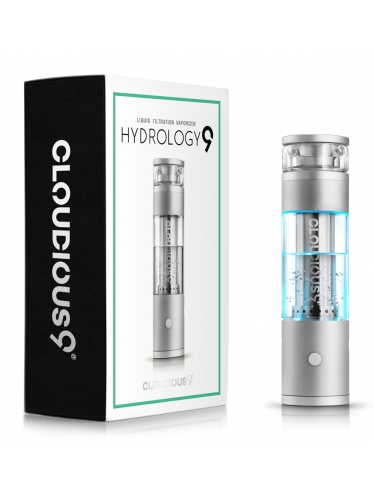 The first and golden rule about vaporisers is that they all take practice before you learn to use them properly. Each one is different and until you get the ‘knack’ they can all seem very frustrating. The Hydrology 9 is no exception and it took me a week before it finally started working for me. As usual, I was at the point of giving up and then suddenly everything clicked. Another three weeks on and it’s become a very special friend, I am loving it!

Click to enlarge
The most dramatic effect of starting to use it regularly is that my consumption of cannabis has plummeted. What I would put in one neat joint fills the Hydrology 9 about six times over, far more than I want to consume in a whole evening. The quality of the high is much better as well, smoother, cleaner, fresher and, well, higher! If you’ve never really appreciated vaping before, the breakthrough comes when you realise that half of the effect from smoking a joint is the carbon monoxide fugging up your brain. I’ll never stop smoking joints because I enjoy them and sometimes nothing else will do but vaporising has to be first choice.
It’s very well made. The water chamber isn’t entirely leak free but not so that it’s a problem as long as you keep it tightly closed at both ends. You load it at the bottom by unscrewing the bottom lid to reveal a small chamber. When you screw the lid back on there’s an outer revolving ring that operates a stirrer inside the chamber. This is the genius feature that I was referring to. It enables you to stir the weed while you’re actually vaping it, ensuring the hot air reaches all the way through and it’s thoroughly consumed. A simple but incredibly effective idea that I’m sure we will soon see on other vaporisers.
My only reservation is that I don’t think the battery is powerful enough. I have settled on using it at its fourth highest out of five heat settings. If it’s freshly charged then it will just about last for three or four fully-loaded chambers – but only just. You have to be careful to give it a rest before each inhalation. Go back on it too quickly and the heat will drop right off. Of course, you do get used to it and learn to adapt the way you operate it but I would definitely prefer a more powerful battery. This raises one other concern about its longevity. How long will the battery last and what will it cost to replace it? My favourite to date handheld vaporiser has been the Puri5 Magnum 2. My best investment with this has been to purchase three spare batteries and a mains charger. It’s very easy to swop an exhausted battery for a new one and I always have one fully charged on standby. This, perhaps with a more powerful battery is the only significant improvement I would like to see in the Hydrology 9.
Overall I rate the Hydrology 9 extremely highly and although I haven’t yet come to a final conclusion, it may well yet take the accolade of being my favourite ever vaporiser.
Sainsbury’s Now Stocking Legal Cannabis Products As UK Policy Looks Increasingly Shambolic.

In another demonstration of how fast attitudes are changing, Love Hemp water containing soluble CBD cannabis extract is now on sale in a number of Sainsbury’s stores.
This is a remarkable achievement by the team at Love Hemp who are remaining tight lipped about the terms of the deal. A store manager told me that the product is on test in about 100 stores.
 Cannabis prohibition is crumbling and the Home Office seems increasingly our of touch with reality with its futile attempts to enforce a policy which nobody is taking any notice of. The real effect of the medical reforms should become clear within the next few weeks. The expert panel process has been revealed as little more than a farce. We still have an outstanding FOI Request on the issue but interim responses seem to confirm that not a single member of the panel, so-called ‘experts’ has any knowledge, experience or expertise in the use of cannabis as medicine.
 We await the definition of a cannabis-based product which will determine which products will be re-scheduled and also a decision on who may prescribe. Initial overtures from the MHRA to both CLEAR and the CTA to consult on these issues have come to nothing. It seems that little if anything has been achieved over the summer break.
Home Office licensing policy is also looking increasingly ridiculous. It is refusing any licence application for low THC cultivation where any mention of CBD is made, while every other EU country is striding ahead and British CBD suppliers are having to import all their oil, which they do without any difficulty uner EU free movement rules.
A twist which reveals the absurdity of Home Office policy is that Love Hemp water, which is entirely THC free, is not the first cannabis product that Sainsbury’s has stocked. For many years it has been stocking Good Hemp hempseed oil. Recent lab tests have revealed that THC levels in Good Hemp oil exceed the 1mg limit in each bottle, meaning that it cannot be regarded as exempt under the Misuse of Drugs Regulations. In reality then Sainsbury’s is selling a product that is legally classified as a class B drug.
The Definition Of A Cannabis-Derived Medicinal Product Must Include Standardised Herbal Cannabis Or Sajid Javid’s Reform Will Fail.
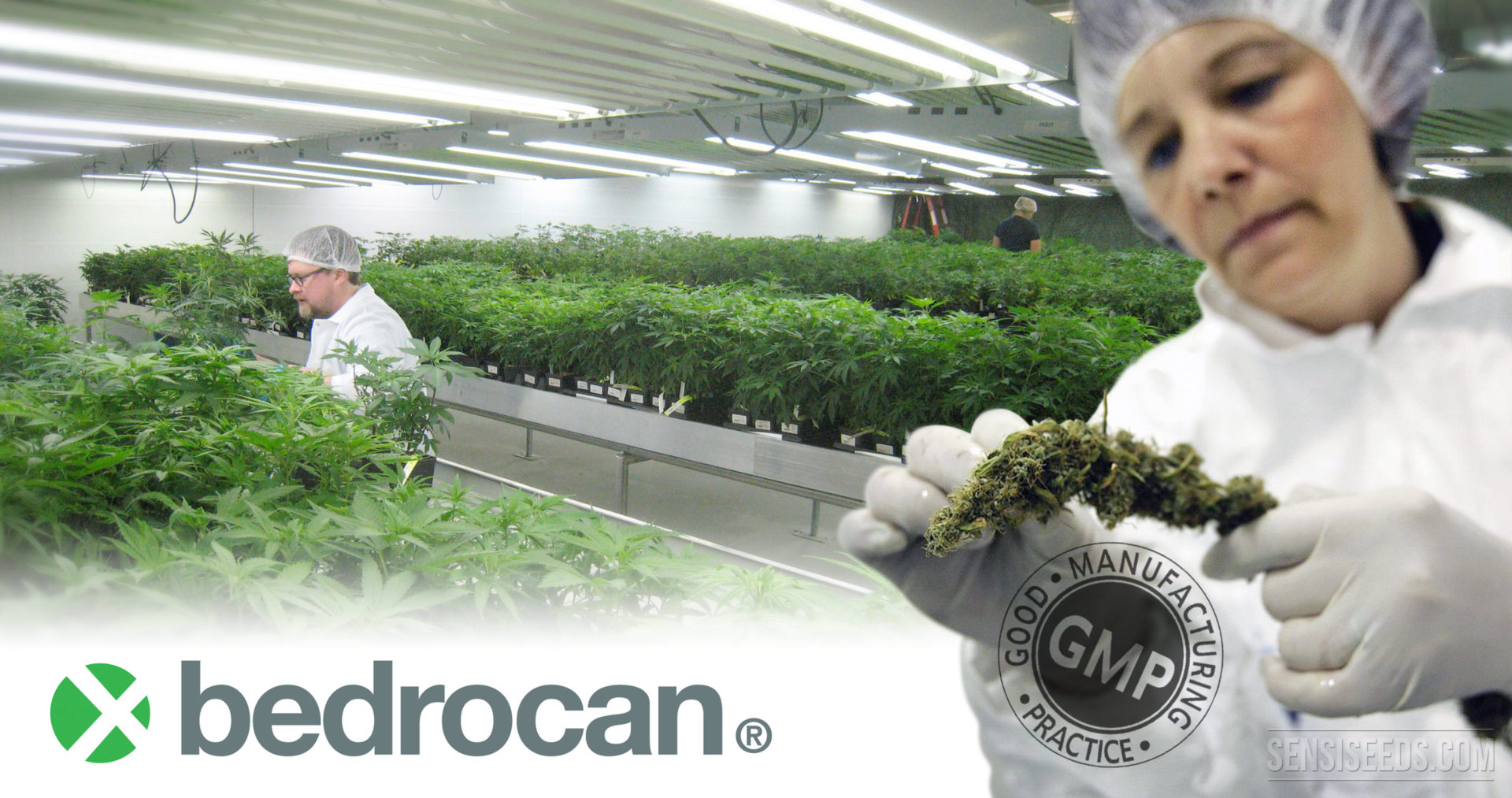
Bedrocan, the Netherlands government’s official producer, grows cannabis in which the cannabinoid and terpene content is standardised and consistent. It does this by very careful cultivation techniques which include clonal propagation, continuous analysis and gamma irradiation to eliminate contamination with potentially harmful microbes. Its production facility is Good Manufacturing Practice (GMP) certified.
With the exception of Sativex, which NICE has declared as not cost effective, the Bedrocan range offers the only medicinal cannabis products which could be readily available in the UK. They are also available as oils extracted directly from the raw herbal flowers.
It’s very simple, unless Bedrocan products come within the definition of a ‘cannabis-derived medicinal product’, the very welcome reform announced today by Sajid Javid will fail and most people will have no option but to continue sourcing their medicine from the illegal market.
There is no doubt that the gold standard in safety, efficacy and self-titration is vaporised herbal cannabis of Bedrocan-standard quality. Cannabis that is ingested as oil, either sub-lingually or through the gastrointestinal system, has a substantially different pharmacology and is very difficult to titrate accurately or to deliver its beneficial effects promptly.
Bedrocan provides an immediate solution. GW Pharmaceuticals could also easily turn to providing a similar range of products. One hopes that it could also be prevailed upon to reconsider its pricing of Sativex. It is essential however that new, domestic production facilities are established quickly. Up to now the Home Office has rejected all efforts to set up such facilities, even applications from extremely reputable international businesses that already have licences elsewhere. This policy must be immediately revised.
Dame Sally Davies advised that “only cannabis or derivatives produced for medical use can be assumed to have the correct concentrations and ratios”. The ACMD agreed with this, stating that “raw cannabis (including cannabis-based preparations) of unknown composition should not be given the status of medication.” Bedrocan products fully comply with these requirements and it is essential that they are re-scheduled and made available on prescription.
Cannabis Trades Association Receives Official Endorsement From the MHRA.
 For nearly two years the Cannabis Trades Association (CTA) has been working with the Medicines and Healthcare products Regulatory Agency (MHRA), the Food Standards Agency (FSA), the Home Office, Trading Standards and other UK authorities to bring order and professional standards to the growing market in legal cannabis and CBD products.
 The MHRA has now officially recognised CTA by inclusion in its Guidance Note 8 ‘A guide to what is a medicinal product’.
This is long overdue recognition for the CTA’s work which includes regular liaison with the authorities, providing guidance to businesses operating within the market on the law, regulations, professional and quality standards. The CTA with the MHRA and FSA is also in the process of developing the Cannabis Products Directive (CPD), a framework for regulation and licensing of all cannabis and cannabinoid products. CPD has been translated and submitted to all 28 member states of the EU by the European Food Safety Agency (EFSA). It is anticipated that CPD will become UK law within the next two years and will relieve the Home Office of the burden of the cannabis regulation and licensing process, placing it in expert hands.
The CTA was initially conceived at a meeting in Manchester Airport in September 2016. In November 2016, with the assistance of Crispin Blunt MP, then a member of the CLEAR Advisory Board, it was invited to an initial meeting with the MHRA to represent the emerging CBD industry. The market for legal, low-THC cannabis products derived from industrial hemp had grown rapidly within just a few months but was becoming out of control with a multitude of new companies making unlawful medical claims for their products, which themselves were totally unregulated and of inconsistent quality and unknown provenance.
Through negotiation and a growing relationship with the authorities, CTA was instrumental in bringing the market back from the brink of a serious clampdown. Now, with over 300 full members and more than 1200 registered sellers, CTA encompasses not just CBD suppliers but also licensed growers and producers of cannabis and businesses involved in the long term development of cannabis products.
CTA is closely involved in the rapidly developing reform of the laws around medical use of cannabis and will be working with the authorities to manage development of the products and systems required for what is expected to be a huge new market.
WARNING. CBD Flowers, Buds, Weed, Hash Are NOT Legal In The UK.
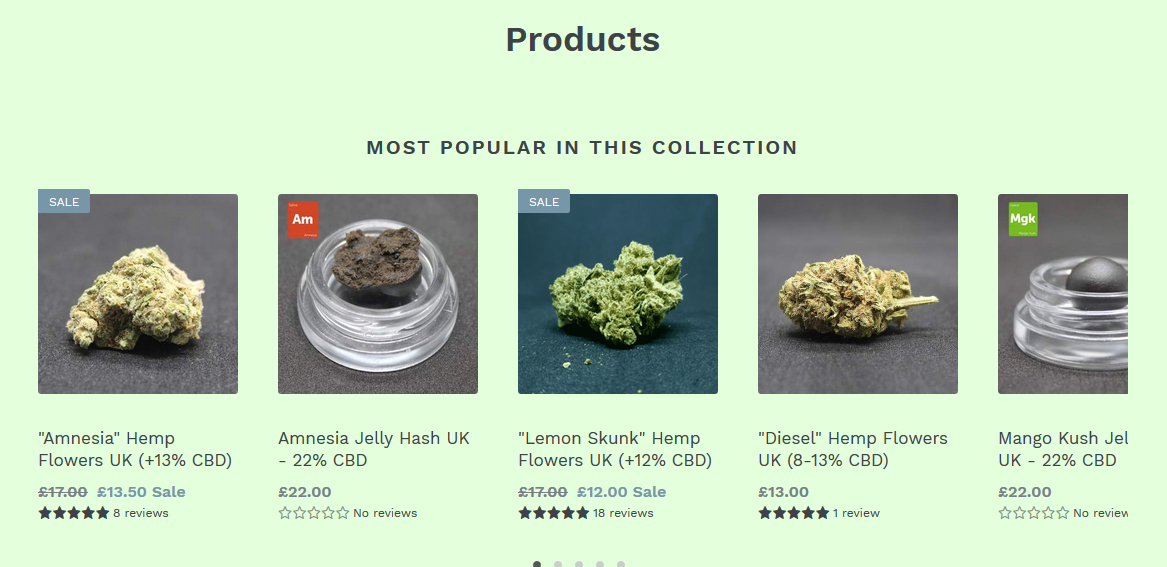
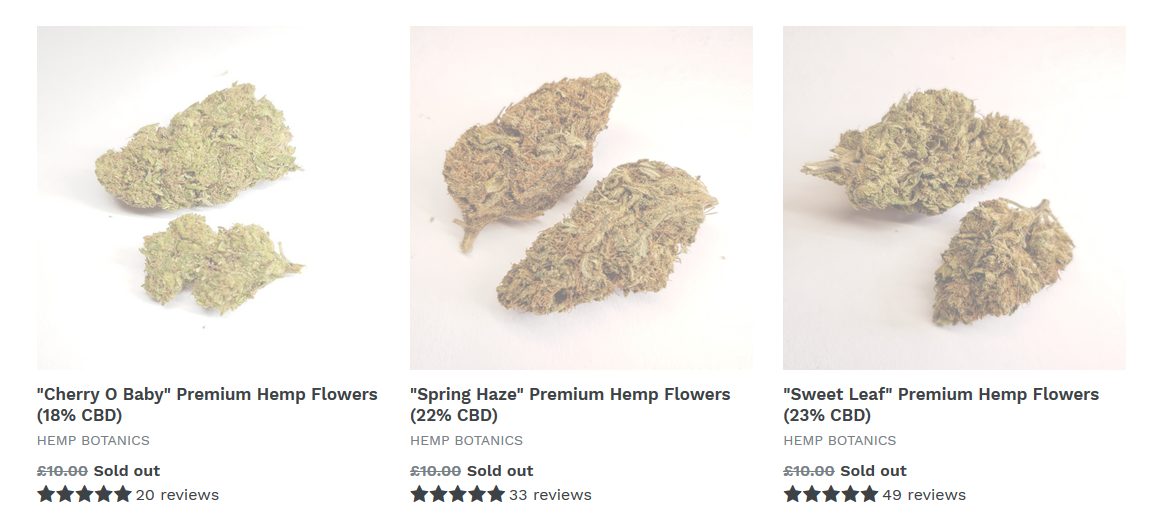
This is an extremely serious warning which people need to take seriously. Both CLEAR and the Cannabis Trades Association have independently dealt with several people who are being prosecuted for possession. The law treats these products exactly the same as any other cannabis. It makes no difference what the THC level is, it is a class B drug and the penalty for possession is up to five years in jail and an unlimited fine.
The confusion arises because of the misunderstood idea that the legal limit for THC is a maximum of 0.2%. This is the limit for a low THC cultivation licence for what is defined as industrial hemp – but you still need a licence! Without the licence the law regards industrial hemp exactly the same as the highest THC cannabis that the tabloids would describe as ‘super strength skunk’.
Products ‘derived from’ industrial hemp such as CBD oil or hemp teas can be ‘exempt products’ but there is yet more confusion here. The THC limit in these products is not 0.2% because, self-evidently, when you extract oil from a low THC cannabis plant you concentrate the THC. The limit in these products is 1mg of THC per container. It doesn’t matter how large or small the container is, the limit is 1mg. That limit also applies to the other ‘controlled drug’ found in such products, cannabinol (CBN). ‘Exempt products’ must not contain more than 1mg of THC and/or 1mg of CBN in any single container. The law that defines this is the Misuse of Drugs Regulations 2001. 2.(1)(c).
There are a number of websites offering these products for sale and, notoriously, one particular shop in Portobello Road. Whilst these sellers may well misunderstand the law, ignorance is no defence. It is almost inevitable that sooner or later one or more of these sellers will be prosecuted and go to jail.
An email seeking confirmation of the position from the Home Office was replied to as follows:
“Thank you for your email.
I can confirm that the leaves and flowers of the genus Cannabis are controlled and defined as cannabis as outlined in Section 37(1) of the Misuse of Drugs Act 1971
“cannabis” (except in the expression “cannabis resin”) means any plant of the genus cannabis or any part of any such plant (by whatever name designated) except that it does not include cannabis resin or any of the following products after separation from the rest of the plant, namely—
(a)mature stalk of any such plant,
(b)fibre produced from mature stalk of any such plant, and
(c)seed of any such plant;”.
Once the separation of the stalk and seeds from the plant has occurred it will not be defined as cannabis. This also extends to the fibre produced from the stalk.
Regards
Jill Frankham
Senior Compliance Officer
Drugs & Firearms Licensing Unit”

 Peter Reynolds