Posts Tagged ‘cannabis’
On The Eve Of The Cannabis Debate, CLEAR Meets Top Government Minister.
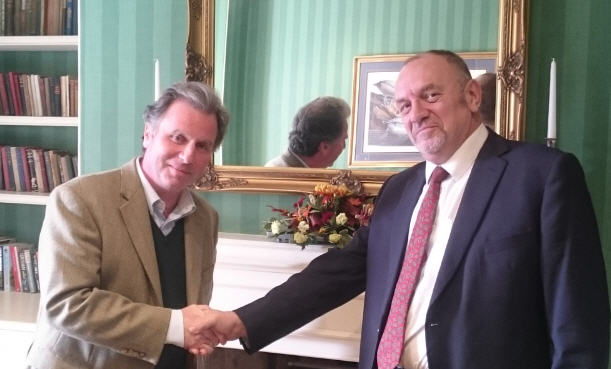
Oliver Letwin MP, Cabinet Office Minister. Peter Reynolds, President of CLEAR
Today, Friday 9th October, in advance of Monday’s cannabis debate in Parliament, I met with Oliver Letwin, the Cabinet Office minister with responsibility for the implementation of government policy.
According to The Independent, Oliver Letwin is “probably the most powerful person in the government after the Prime Minister and Chancellor”. I first met with him back in July and he agreed to investigate the possibility of cannabis being available on prescription. When the cannabis debate was announced, I asked to see him again before the debate took place and he very generously arranged to see me just in time.
Monday’s debate will be the first time in nearly 50 years that MPs have had an opportunity to consider the subject. Throughout the world, more and more governments are waking up to the huge damage that cannabis prohibition causes. Nearly all the harms around cannabis are not caused by cannabis itself but the laws against it. Prohibition of anything for which there is huge demand inevitably creates a criminal market. More than three million people in the UK choose to use cannabis regularly. We consume more than three and a half tons every day and spend more than £6 billion every year, all of which goes into the black economy.
Since the early 20th century, acres of newsprint have been devoted to telling us how harmful cannabis can be. The alcohol industry fiercely guards its monopoly of legal recreational drug use. It has enormous influence in government and its £800 million annual advertising spend give it great power over the media.
But the truth is becoming clear. Scientific evidence and real world experience show that compared to alcohol and even common painkillers and over-the-counter medicines, cannabis is very, very safe. Concerns about mental health impacts are proven to be wildly overblown as cannabis use has escalated by many orders of magnitude but mental health diagnoses have remained stable. Increasingly, those responsible for drugs policy realise that abandoning this huge market to criminals only makes things worse. Criminals don’t care who they sell to or what they sell, so children and the vulnerable become their customers and their product becomes low quality, contaminated, often very high strength ‘moonshine’ varieties.
A Win Win Proposal To The UK Government On Cannabis.
Perhaps the most pernicious effect of cannabis prohibition is the denial of access to it a medicine. On this, Mr Letwin has been consulting with other ministers in the Department of Health and the Home Office. He says he is now convinced that there is a very positive future for cannabinoid medicines. As a result, I hope to be meeting again shortly with George Freeman MP, the Life Sciences Minister. I led a delegation of medicinal cannabis users to meet with him at the beginning of this year. Mr Letwin has indicated to me that it is Mr Freeman’s office that needs to deal with this, so I am hopeful of real progress in the near future.
Mr Letwin warned me that the debate itself will not produce any change in the law and I acknowledge this but it is part of the process that will eventually get us there. I suggested that there is a win win option that could be implemented very easily and quickly. There is huge pressure on the government to act but also great inertia and resistance to change from the old guard. I proposed that if cannabis could be moved out of schedule 1 of the Misuse of Drugs Regulations it would enable doctors to prescribe it and researchers more easily begin the task of developing and testing new products.
The great benefit this would offer to the government is that it would be seen to be responding to the evidence, being progressive and keeping up with the worldwide movement towards reform. However, for the more conservative thinkers, the ‘tough on drugs’ mantra would remain in place. Cannabis would still be a class B drug and all the same penalties would remain in force. Both sides of the debate could see this move as a success for their argument.
So we all look forward to the debate. As is normal practice, no government ministers will participate but I expect a Home office minister will give some sort of response. We are making progress. Revolution is not the British way but I do think we can continue with guarded optimism that our message is getting through and the direction of travel is certain.
Mr Smiley And Me.
Originally published in The Sunday Times, 20th September 2015
Howard Marks, Britain’s most famous drug dealer, has terminal cancer. Yet Lynn Barber, his first girlfriend at Oxford, found her old flame in fine form — and with no regrets about his shady past.
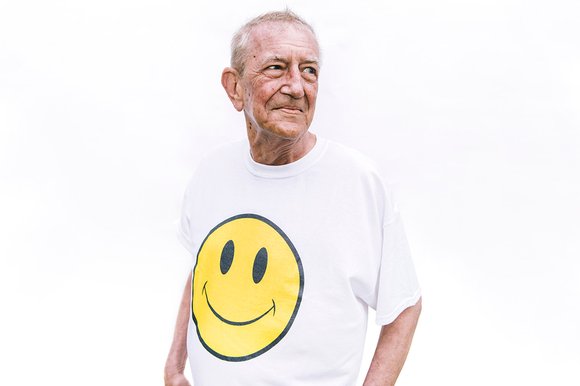
I found Howard Marks surrounded by vast stashes of drugs, but alas not the fun drugs of yesteryear — these are all the anti-cancer drugs he has to take nowadays. He was diagnosed with inoperable bowel cancer a year ago and it had already reached stage four — and I remember Christopher Hitchens telling me “there is no stage five” — and spread to his liver and lungs. So he is on the way out but cheerfully, gracefully, with no regrets. He accepted his death sentence with the same lack of self-pity that he accepted his 25-year prison sentence in 1988. Though it was rather galling that he’d been going to the doctor complaining of intestinal problems for five years and been repeatedly told he had irritable bowel syndrome.
He lives alone in a one-bedroom flat in Leeds, in a converted warehouse near the canal. The living room is more like an office, with a huge desk along one wall with computers, DVD players and a plasma screen above. This is where he works, and he still works when he is well enough — he is currently writing the introduction to a coffee-table book about Pikes Hotel, Ibiza, where all the stars stayed — they’ve still got Freddie Mercury’s toilet as a sort of shrine. Howard, by contrast, has a commode in the corner. On the walls, there are two Cannabis Culture Awards with photos of him surrounded by cannabis leaves, and a black-and-white portrait that will be the cover of his new book, Mr Smiley. The big terrace outside the window is mainly taken up with a huge garden shed, which I assumed he used for growing cannabis, but no, it contains stacks of files marked E for evidence from his various trials.
It’s strange seeing him again after all these years. I was his first undergraduate girlfriend at Oxford — “rivetingly glamorous”, he wrote in Mr Nice, and certainly a change from all the Woolworths shopgirls he’d been shagging up till then. He was in his first year when I was in my second, and it was generally considered infra dig to go out with a fresher, but he was irresistible. People would point him out in the High — “Do you know our Welsh oik, Howard Marks?” — and cross the road to clap him on the back. It is hard to convey how exotic he seemed among the tweedy undergraduates of those days: first, because he came from a Welsh mining village, Kenfig Hill, and spoke Welsh as his first language. Second, because he dressed like a teddy boy, with crepe-soled shoes and slicked-back hair, and would occasionally break into Elvis Presley impressions. And third, because he was at Balliol, which was the most serious-minded, the most mandarin, of all the Oxford colleges. Others, like Brasenose and Teddy Hall, would accept occasional thickos if they were good at athletics or rowing, Christchurch would take them if they had titles, but Balliol never took thickos at all. So just being there meant that he was formidably intelligent, even if it was sometimes hard to understand what he was saying through his thick Welsh accent.
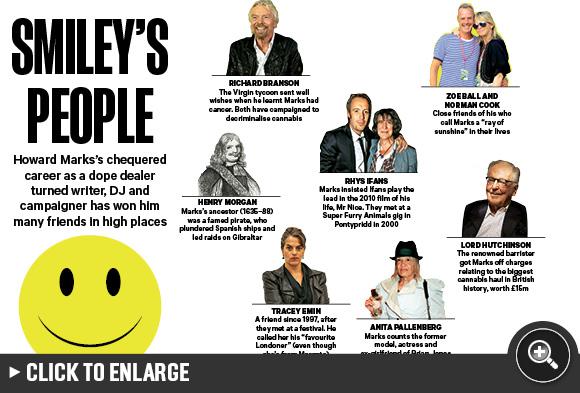
He remains grateful to Balliol, first for accepting him and then for nursing him through his physics degree (he got a 2:1) despite his complete lack of work. He and his best friend, Julian Peto, met on their first day and still go to every Balliol Gaudy [reunion] together, and Howard is proud of the fact that he has never missed one — they are held every seven years or so, and his prison sentence conveniently fitted in between. “I love it — it’s the Oxford old boys’ club and I enjoy the company of those people very much. Balliol were very good to me — they paid my daughters’ school fees while I was in prison, and that was one of the first debts I repaid when I got some money.”
I only went out with Howard for one term because he was soon snowed under with other girlfriends and ended up marrying one of them, the dazzlingly beautiful Ilze Kadegis. They moved to Brighton after Oxford and I lost touch with them, but, of course, I heard rumours of his burgeoning career as an international drugs smuggler and occasionally saw him at parties when he was supposedly on the run. He was eventually caught and tried at the Old Bailey, but to everyone’s amazement he was acquitted — the happiest day of his life, he says — but he was arrested again in Mallorca in 1988, deported to the States and sentenced to 25 years in Terre Haute prison (though he eventually only served seven). I sent him books, but didn’t see him again till he emerged in 1995, when I interviewed him at his home in Mallorca. Subsequently, I saw him doing a couple of shows based on his autobiography, Mr Nice, but I didn’t really like the pothead atmosphere, and I didn’t go to the recent Kentish Town Forum concert, where he appeared with his friends Rhys Ifans and Super Furry Animals. So this is the first time I’ve seen him for ages. He turned 70 last month, and his once-luxuriant black hair is now a few grey wisps. But he is still very recognisably Howard, with the same cheerful grin, and a mind as sharp as ever — or possibly more so, because for once he is not stoned. And he still has the charm — that gilt-edged, rock-solid asset he has always relied on.
His manager, Daniel Gray, has brought three bottles of wine, so we happily pour wine and light cigarettes, though Howard insists on rolling his own. When I ask for a light, he opens a desk drawer containing at least 20 lighters, including a hob lighter that he uses when his hands are shaking from the chemo. He explains that the chemo goes in two-week cycles and gets worse as it goes on. Often his fingers tremble so much he can’t type and at some points he can’t talk either, though his girlfriend can still understand him. He has three “good” days when he can go out, and another three days when he can work at home but not go out because he can’t wear his tooth implants — “which is not something that makes you feel like socialising”. His big regret is that he can’t travel abroad any more because he has to be near the hospital at all times.
He had a weird sort of binge a few weeks ago when he took every known remedy for every known cancer all at once, including three weeks’ supply of cannabis oil, and ended up being sectioned. There were rumours he thought he was a chicken, but he can’t remember that — “There’s an awful lot I can’t remember. Apparently I launched into a group of policemen and started hitting them, which is really uncharacteristic behaviour because, as you know, I’m normally a very peaceful character.” Did the policemen know who he was? “I’ve no idea. They didn’t ask for my autograph! So then I was sectioned and went to a lunatic asylum for about two weeks.” Did he meet anyone interesting there? “I met someone I thought was very interesting, but on reflection he was a bit of a headcase.”
His doctors think he’s doing well — his cancer is now “stable” and his tumours have reduced by about 20%. And they’ve asked him to do a reading at their Christmas concert, which seems to show confidence — he plans to do Dylan Thomas’s A Child’s Christmas in Wales. And he, in turn, is very confident that he is getting the best possible treatment. Leeds is one of the top cancer places anyway, but it helps that he has some formidable backup — his old friend Julian Peto is Cancer Research UK chair of epidemiology at the London School of Hygiene and Tropical Medicine, and Julian’s brother, Sir Richard Peto, is professor of medical statistics and epidemiology at Oxford. Howard’s sister is a fellow of Durham University specialising in health planning, and she comes to his consultations because she knows what questions to ask. “So it’s obviously helpful having those contacts. And being a minor celebrity is also helpful.” Does he think he’s getting better treatment than if he were Joe Bloggs? “Yes — which I’m obviously not happy about.”
Until the diagnosis, he spent most of his time doing shows based on Mr Nice, sometimes two or three a week. He liked to go to all the music festivals — Glastonbury, Bestival, Latitude — because they paid much better than literary festivals, but he didn’t think he was up to camping this year. Couldn’t he demand a hotel? “Well, I could — but I’ve got to be a man of the people, haven’t I?” Anyway, he’s far too ill. The trouble with doing his shows was that members of the audience always wanted to smoke a spliff with him afterwards and tell him their conspiracy theories. “Luckily, because of my postgraduate degree in the history of philosophy of science, I can keep some sort of balance about it.” But why bother? Why was he always so willing to listen to mad stoners rambling on? “Well, they’ve listened to my story, so I felt I had to listen to theirs. And being accessible, you know, is part of my image.” But the problem was they all brought their own home-grown super-strong skunk and he was too polite ever to refuse a spliff, even though “I’d rather have gone home and had a Horlicks, to be honest”. He still enjoys smoking hash, but he says this new skunk is evil.
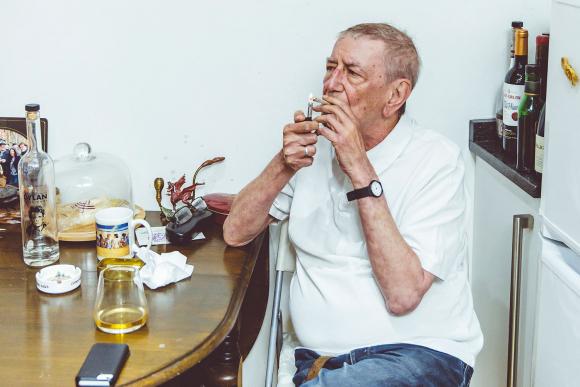
Being forced to stay at home means that he has finally completed the long-awaited follow-up to Mr Nice, which will be published on Thursday. It’s called Mr Smiley and covers the period from l995, when he emerged from prison, to 2000 when (he claims) he finally gave up drugs smuggling for good. But whereas Mr Nice was all high times and jolly japes, Mr Smiley tells a much darker story. He came out of prison to find all his old contacts either dead, retired or turned police informers, and the Mallorca bars he used to frequent were under new ownership. And although he was thrilled to see his wife Judy and their children, Amber, Francesca and Patrick, after all his years inside, he soon realised that he and Judy had grown apart. She had had to accept a plea bargain in order to be released, which meant she could never get a visa to visit him in prison in the States.
He had decided in prison that he was going to stay sober and go straight, but his resolve soon weakened. Writing was all very well, but he missed the excitement of drugs smuggling. So, when he got wind of a possible deal, he threw himself into it again. But the drugs had changed and so had the atmosphere. Nobody wanted the finest Pakistani and Afghani hash that used to be his speciality — they were all growing their own — so he had to move into MDMA or ecstasy, which was controlled, not by old hippies like him, but by big criminal cartels. He believes that much of the Brink’s-Mat gold was laundered through the clubs in Ibiza. So he started importing MDMA, but with very little success and ended up burning his last consignment because it was contaminated. That was 10 days before the new millennium.
It is evident from Mr Smiley that his second go-round as a drugs smuggler was not nearly as much fun as the first. He seems to have spent most of his time alone, holed up in grim flats or rotting chalets waiting for phone calls that never came. He didn’t even make much money because most of his drug deals went wrong. “They all went wrong really, and I ended up disappointing people. It was a sort of trough in my life.” So why did he persist when, by then, he could have made money from writing? “Well, obviously in retrospect, I’d just got hooked on smuggling. I happened to be good at it and I did love it. And the temptation was always just one more deal.”
But he is such a good writer, I wish he had stuck to that. Some of the descriptions in Mr Smiley of the Marbella coast, its seedy bars and empty millionaires’ mansions, are almost worthy of Raymond Chandler. Supposing he’d written a successful novel straight after Oxford, could he have gone straight then or was the lure of criminality too strong? “Well, it turns out that the lure of criminality was too strong.” And as far as he’s concerned, writing is too much hard work for too little money. Mr Nice did very well, sold 1m copies and was made into a film (starring Rhys Ifans), but then he wrote a couple of crime novels, Sympathy for the Devil and The Score, which, despite good reviews, didn’t sell — “So that was an experiment that didn’t work.” He does care about money much more than an old hippy should. When I asked what he missed about his former millionaire lifestyle, he didn’t hesitate: “The millions!”
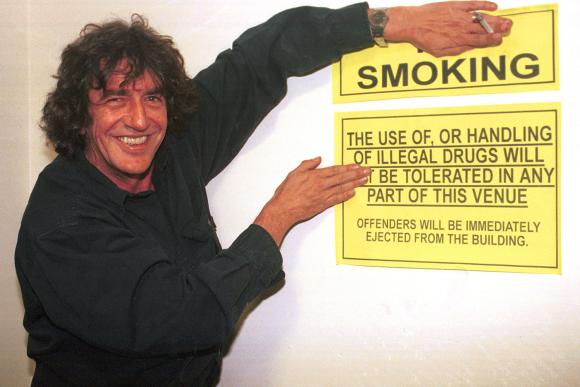
What was the best of the high times? “You mean the over-the-top stuff? Embarrassingly, my engagement party to Judy. We had a £500-a-week flat in Hans Court [in Knightsbridge] and I had a model train that took joints from one room to another and the only food was foie gras and caviar. Just silly stuff like that — I’m embarrassed to remember it. I was just behaving as a bit of a plonker — as most rich people do, I think.” He believes that money doesn’t make you popular, it makes you despised. “Because of course people eventually ask you for money — ‘I only need 10 grand’ — and you say, ‘All right, here’s 10 grand.’ But then they come again. And fortunes fluctuate, you know — sometimes you don’t have 10 grand. And then they feel you’ve let them down.”
The police were sure, when they arrested him, that he’d got millions stashed away in foreign bank accounts and they tracked most of them down. The rest, he says, went on paying lawyers, so that he was broke when he was finally released. He gave the house in Mallorca to Judy when they split up and she still lives there. It was an acrimonious divorce. She wrote a book in 2006 called Mr Nice and Mrs Marks, saying that he had been a bad husband, bad father and totally narcissistic. I thought she made her point. They still have phone conversations about the children and “sometimes the conversations are quite civilised, but generally it doesn’t take long for her to start complaining again — ‘And you were never there,’ and so on”. Whereas he is still friends with Ilze, his first wife, and also with Rosie, the mother of his first child, Myfanwy.
He made a will when he was diagnosed, leaving everything to his four children. “I also took a DNA test because there was another possible child, by the first girl I ever shagged back in Kenfig Hill. I didn’t meet her till she was 50, but her children used to come to my shows and say they were my grandchildren, and there was always some doubt. I would have included her in my will if she was really my child, but she’s not — I got the DNA results about three months ago.” He’s also had other people claiming to be his children turning up at his shows, but “they’ve always got the dates completely wrong, so they’ve all been ruled out”.
Since 1999 he’s been going out with a teacher called Caroline Brown, although they’ve never lived together. She is the reason he moved to Leeds. They were introduced by Ilze, who was teaching at the same school at the time. Caroline is “totally straight, highly bound up with education”, but she didn’t mind going out with a known drugs smuggler. “She had no interest in crime whatsoever and didn’t want to know. She wouldn’t understand the details anyway, even if I explained them to her.”
Whereas Howard is still a bit too interested in crime. Some of his best friends are criminals. “There’s some travelling gypsy drug dealers I like very much. And Freddie Foreman, I really like him.” Really? Wasn’t he a hitman for the Kray twins who admitted murdering two people? “Yes. You’ve seen The Long Good Friday — that was him. It was more to do with imposing order on complete chaos. Someone has to be the mediator, the organiser.” But Howard — he killed people! “I’m not judgmental. I’ve friends in the army who’ve killed people.”
He also liked some of the criminals he met in Terre Haute. “Especially the Mafia ones. I met far more of them than I ever did outside. And I was also impressed by some of the Colombian cartel runners. As usual, you make far better contacts in prison. And there was one Jamaican guy I liked very much. He’d been very high up in the army, but he overstayed his visa in the US and they put him in prison somewhere — and he burnt the f****** prison down! So then they sent him to Terre Haute. When I came out, I used him as my bodyguard at shows — not because I needed one, but because it’s such a cool look!”
He says his time in prison wasn’t too bad, mainly because he was a foreigner, but also because he heeded the advice his father gave him: take care of those less fortunate than yourself, and there were plenty of them. He helped them write letters and tried to teach them to read. A few years after his release, a black girl came up to him at one of his Mr Nice gigs, and said: “My brother was in prison with you and he talks about you often.” And she took the ring off her finger and said: “That’s from him.” He still wears it.
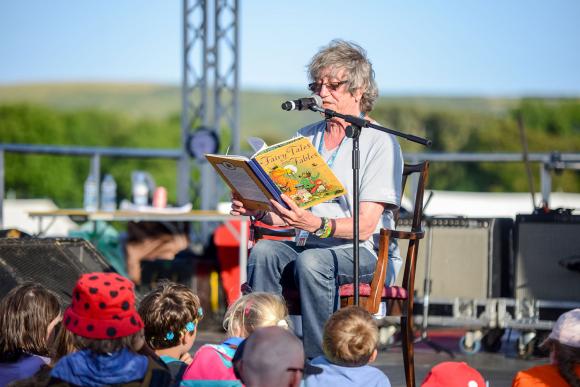
When he goes into a party or a crowded room, can he tell who are the criminals? “Usually, yes. They sit with their backs to the wall and size people up.” And does he do that? “No. I studiously avoid it. Because then people might think I was a criminal.” Ah. This is where I always come unstuck with Howard. I forget that he has never regarded himself as a criminal because he did not believe that importing cannabis should be a crime. “And the lack of violence, of course. That has always been important to me. Not only do you not kill anyone, you don’t endanger anyone’s life. They might end up in prison or something, but they are not physically harmed.” But if he believes this, how can he be friends with Freddie Foreman? His moral code is too complicated for me.
Daniel warned me beforehand that Howard tired easily and I promised that I wouldn’t keep him for more than an hour and a half. But when I was due to sign off, Howard asked if I’d like to come out for lunch. Of course. Will The Sunday Times pay? Yes, I told him, crossing my fingers. In that case, he said, we’ll go to the mafia restaurant — they have some very good wines.
I never found out why he called it the mafia restaurant, beyond that it was Italian, but, my God, it had some very good wines. A bit too good, I realised, when I caught a glimpse of the price list — Château Mouton Rothschild (£750), Château Lafite (£1,100). “Stop it, Howard!” I cried when I saw his finger hovering over the Brunello di Montalcino Biondi Santi, at £175. Oh, all right, he said, we’ll have the cheap version (£66) and the Rapitala Gran Cru (£36) to start. He ordered scallops and sea bass and I got irritated because he ate so slowly, but Daniel said afterwards that it was wonderful to see Howard eating a proper meal for the first time in months. The bill came to an intoxicating £267.
Over lunch, Howard gave me good advice on how to make my smartphone and laptop secure, recommending a messaging service, Telegram, which would auto-destruct any message I sent. But why bother? “Maybe you don’t have to, but I have to, for the sake of other people out there. I want to keep my connections with the criminal world, or some of them.” Why? “Because they’re funny.” And, I suppose, because he still nurtures the hope, the dream, of pulling off the world’s biggest deal. When I asked whether that consignment he burnt in the Mexican desert l0 days before the new millennium was really his last ever deal, he said firmly: “Absolutely, yes.” But then added: “Of course, if I’d come across a deal I thought I could get away with, maybe I would have done it… And maybe I’d do it now.”
I’m glad he’s incorrigible. I’m glad he has no regrets. But I’m also glad that he’s written a follow-up to Mr Nice. I always thought that book was dangerously seductive, and I used to worry about my daughters reading it when they were teenagers and thinking it would be fun to go out with a drugs smuggler. Mr Smiley certainly knocks that idea on the head. It has few laughs, no glamour, no romance — instead, a grimly realistic but beautifully written account of what a life of crime actually entails. I very much hope he makes it to the launch party — and that nobody offers him another deal.
“I Had Been Part Of Her Rampage”
Howard Marks recalls his fling with Lynn Barber, pictured at Oxford, and their first interview

Once upon a time they called me the largest dope smuggler in the world, the man who controlled a fifth of the world’s hashish and marijuana traffic — probably something of an exaggeration. But who was I now? Probably no more, in the cold light of day, than a half-remembered name from the tabloids, a name from the past; and after so much time inside, I had begun to lose sight of the confident, self-assured person I had been.
My immediate problems in those first months were mainly financial. Though there had been reports in the press since my release that I had stashed away millions in eastern European banks, I was in reality stone broke. All my Spanish accounts had been used up on legal fees, and the dozen other accounts I had kept for a rainy day in Switzerland, Sicily, Hong Kong and Thailand had all been tracked down by the DEA and local drug agencies during my incarceration and sequestered.
When an offer came through to me from the publicist Max Clifford to sell my story to the News of the World for £10,000, this helped in the short term; but though I had no objection to doing business with Clifford, whom I had always found pleasant enough in previous encounters, this sort of money was not going to last long. I also had debts to Balliol College, who had lent me money while inside to finance my daughters’ school fees. Selling more stories to other papers for a few hundred pounds helped me scrape by for another few weeks, along with writing some book reviews. When a friend from the old days, Lynn Barber, approached me to do an interview I wanted to charge her, but knew I wouldn’t get away with it.
As Lynn was one of the few people I had known before I went into dealing and smuggling — she had briefly been a girlfriend of mine — I hoped she might be useful in finding employment in the journalistic world, and I spent a lot of time trying to remember our past together as a way of getting back into her good books. But all that was coming back to me were the basic outlines: how we had met at the Kemp cafe, a student hangout, when Lynn had been the girlfriend of a leading student actor, Richard Durden-Smith.
After he left her for another starring student actor, Maria Aitken, Lynn, by her own account, had gone on the rampage, and I had been part of her rampage. To be fair, it had been the Sixties, and we had been stoned all the time, and a lot of girls were on the rampage. Lynn’s theory that you should have sex first to see if you were compatible must have paid off, as she’d met her husband, David Cardiff, while she was doing the rounds of the male campus, and they had been happily married for 30 years. During this time she had built up a reputation for well-observed psychological insights on her interviewees, finding out their less well-defended weak spots and hitting the mark; so I dreaded reading her piece about me, but most of it, thankfully, turned out to be harmless reminiscence and I felt I had been let off lightly.
© Howard Marks. Extracted from Mr Smiley: My Last Pill and Testament, to be published on September 24 (Pan Macmillan £18.99). To buy it for £16.99 (inc p&p), call 0845 271 2135 or visit thesundaytimes.co.uk/bookshop
The Weak And Ineffectual Response Of Most MPs To The Cannabis Debate.
CLEAR has been mobilising its members as never before to lobby their MPs in advance of the cannabis debate on 12th October.
There are honourable exceptions but most responses have been unhelpful, dismissive and have completely failed to deal with the arguments put forward. Most MPs are indoctrinated with the false reporting churned out by the press, scared stiff of the subject and not prepared to look any deeper.
It is a terrible indictment of these people, each of whom costs us about £250,000 per year in salary and expenses. Most simply do not do their job properly, certainly not in the interests of or representing their constituents, mainly they just pursue their own political ambitions and interests. They cannot be bothered to deal with the cannabis issue.
Usually, from both Tory and Labour MPs, the responses parrot the official Home Office line. Most are too lazy to inform themselves about cannabis and the facts and evidence around current policy which costs the UK around £10 billion per annum. This vast sum comprises a futile waste of law enforcement resources and the loss of a huge amount of tax revenue. It provides funding to organised crime, including human trafficking, and does nothing to prevent any health or social harms around cannabis. In fact, if anything it maximises these harms, endangering health, communities and the whole of our society by enforcing a policy which is based not on evidence but on prejudice. Source: http://clear-uk.org/media/uploads/2011/09/TaxUKCan.pdf

Paul Flynn MP
As Paul Flynn MP, said in the House on 14th September:
“There is [a debate] in a fortnight’s time, on a subject that terrifies MPs. We hide our heads under the pillow to avoid talking about it, but the public are very happy to talk about it in great numbers. That subject is the idea of legalising cannabis so that people here can enjoy the benefits enjoyed in many other countries that do not have a neurotic policy that is self-defeating and actually increases cannabis harm.”
Source: http://www.theyworkforyou.com/whall/?id=2015-09-14a.185.0#g194.0
Below I reproduce a reply from one MP. This is the standard MP line on cannabis. The words may vary slightly but essentially this is the response that the Home Office enforces and, irrespective of party, these are the disingenuous statements that MPs hide behind.
“I believe cannabis is a harmful substance and use can lead to a wide range of physical and psychological conditions. I therefore do not support the decriminalisation or legalisation of cannabis at this time.
I welcome that there has been a significant fall in the numbers of young people using cannabis, and the number of drug-related deaths among under-30s has halved in a decade and I would not want to see this progress undermined.”
Stating cannabis is harmful is meaningless and and an evasion of the question. Anything can be harmful. Such an assertion only has any meaning when in comparison to other substances. In fact, cannabis is relatively benign, even when compared to many foods. It is much less harmful than energy drinks, junk food, all over-the-counter and prescription medicines and, of course, tobacco and alcohol. Compared to these two most popular legal drugs, cannabis is hundreds of times less harmful. Source: http://www.ncbi.nlm.nih.gov/pmc/articles/PMC4311234/

If cannabis can lead to a wide range of physical and psychological conditions, what are they and how likely is cannabis to bring them on compared to other substances? In fact, the Royal College of Psychiatrists, whose publications are often presented as evidence of cannabis harms, states unequivocally
“There is no evidence that cannabis causes specific health hazards.”
Source: http://www.rcpsych.ac.uk/healthadvice/problemsdisorders/cannabis.aspx
There is a reported fall in cannabis use from the British Crime Survey. However, the Association of Chief Police Officers reports ever increasing incidents of cannabis cultivation and there has been a massive surge in the use of ‘legal highs’ or novel psychoactive substances. Without exception, these are far more harmful than cannabis and their very existence is the product of government policy. In places such as Holland and the US states that have legalised, there is no problem at all with such substances.
As for “drug-related deaths”, this is classic disinformation. What does it have to do with cannabis? Are our MPs so badly informed that they cannot distinguish between different drugs? Sadly, in many cases the answer is yes. Even so, this is a false claim. The latest figures show an increase in the number of drug poisoning deaths to the highest level since records began in 1993. So much for the claimed “progress”. Source: http://www.ons.gov.uk/ons/dcp171778_414574.pdf
Just recently MPs have started to address the question of medicinal use, almost certainly because of the rising clamour from people in pain, suffering and disability. Also because the UK is now a very long way out of step with the rest of Europe, the USA, Canada, Israel, Australia and most ‘first world’ countries. Source: http://clear-uk.org/static/media/PDFs/medicinal_cannabis_the_evidence2.pdf
“I am aware that one of the issues raised is around enabling the use of cannabis for medicinal purposes. I know that cannabis does not have marketing authorisation for medical use in the UK, and I understand that the Medicines and Healthcare products Regulatory Agency can grant marketing authorisation to drug compositions recognised as having medicinal properties, such as in the case of Sativex.”
A marketing authorisation from the Medicines and Healthcare products Regulatory Agency (MHRA) is a deliberate diversion from the issue. Medicines do not have to have an MHRA marketing authorisation. Doctors can prescribe any medicine, licensed or unlicensed, as they wish. However, since 1971, medical practitioners have been specifically prohibited from prescribing cannabis on the basis of no evidence at all except minsters’ personal opinions. Source: http://www.legislation.gov.uk/uksi/2001/3997/made.
Applying for an MHRA marketing authorisation costs over £100,000 as an initial fee and clinical trials have to be conducted at a cost of at least the same again. Instead, minsters could simply move cannabis from schedule 1 of the Misuse of Drugs Regulations to schedule 2 alongside heroin and or, more logically, to schedule 4, alongside the cannabis oil medicine Sativex. This would place the whole question of the use of cannabis as medicine in the hands of doctors and not in the politically motivated hands of Westminster. Isn’t that where it should be?
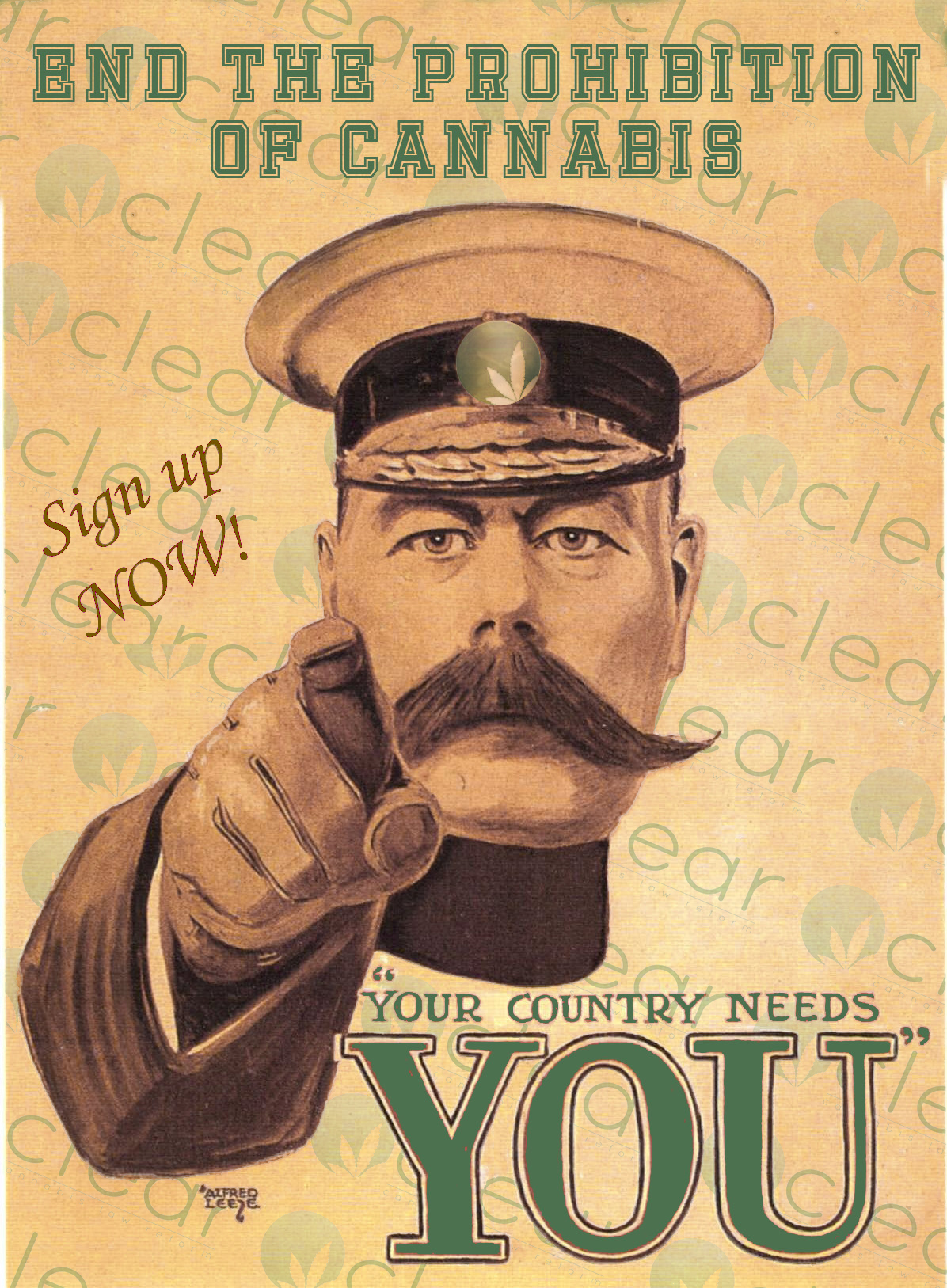 This is the most important short term objective of the cannabis campaign – move cannabis out of schedule 1. Not only would this enable doctors to prescribe Bedrocan medicnal cannabis as regulated by the Dutch government but it would mean research could start in earnest. The restrictions presently in place on cannabis, because it is schedule 1, make research very expensive, complicated and are a real deterrent.
If you haven’t lobbied your MP on the cannabis debate yet, you still have time to. If you can, get along and see them in a constituency surgery. Full guidance is provided here but you must act now: http://clear-uk.org/guidance-on-how-to-lobby-your-mp-for-the-cannabis-debate/
Most MPs run surgeries on Fridays so that means you have just this coming Friday, 2nd October and the following 9th October.
Please at least ensure you write to your MP. This is our moment and we are having an impact. Make sure you do your bit.
It’s Time To Be CLEAR.
The prohibition of cannabis has caused massive harm to our society. It has created a criminal market which has attacked our children, our communities, our health and our liberty. The time to end this failed experiment is now.
Cannabis in West Sussex, England, UK. With acknowledgement and thanks to Joni Mitchell and Eddie Mitchell of Aerial News. (No relation, as far as we know)
I came upon a child of God
He was walking along the road
And I asked him where are you going
And this he told me
I’m going on down to Yasgur’s farm *
I’m going to join in a rock ‘n’ roll band
I’m going to camp out on the land
I’m going to try an’ get my soul freeWe are stardust
We are golden
And we’ve got to get ourselves
Back to the gardenThen can I walk beside you
I have come here to lose the smog
And I feel to be a cog in something turning
Well maybe it is just the time of year
Or maybe it’s the time of man
I don’t know who I am
But you know life is for learningWe are stardust
We are golden
And we’ve got to get ourselves
Back to the gardenBy the time we got to Woodstock
We were half a million strong
And everywhere there was song and celebration
And I dreamed I saw the bombers
Riding shotgun in the sky
And they were turning into butterflies
Above our nationWe are stardust
Billion year old carbon
We are golden
Caught in the devil’s bargain
And we’ve got to get ourselves
back to the garden
© Siquomb Publishing Company
Guidance On How To Lobby Your MP For The Cannabis Debate.
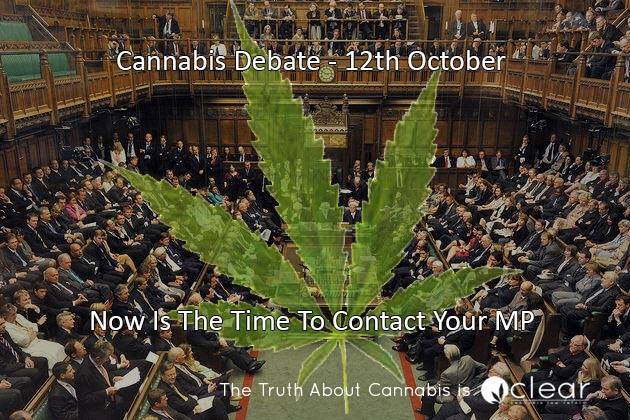 In the UK the only democratic power you have is through your MP.
The arcane nature of our Parliament and the unaccountability of MPs makes that sad and depressing but it is reality.
The only alternative routes to power are to spend millions on advertising and PR or to chance on gaining the fickle and unreliable support of the popular media.
So, it is to your MP you must turn if you want to exercise influence in the cannabis debate. However poorly informed, bigoted or slave to the media your MP is, your role is to do what you can to inform and persuade. It is your responsibility to make your MP do their job and represent your views.
Your Last Chance To Meet Your MP Is Friday, 9th October.
The debate takes place on Monday 12th October in Westminster Hall. That means you must write, telephone and write and telephone again. Your MP works for you. You have a right to ask for their support and get a proper answer, not some standard, doublespeak brush off, drafted by the Home Office. Don’t accept such a response.
You can find out who your MP is by entering your postcode on this website
You can find out your MP’s email address by looking their name up here
You can also Google your MP’s name which will lead you to their personal website and more contact details.
You can write by letter to your MP at: House of Commons, London, SW1A 0AA
Most important is that you must include your full postal address and postcode to show that you are a constituent. Without this your email or letter will be ignored.
Either an email or a letter is fine but you might want to consider doing both!
Write in your own words. MPs are now wise to what they call ‘campaign emails’. The large number of campaigns by groups such as 38 Degrees have really swamped MPs with repetitive correspondence. It doesn’t work to send what is clearly a template or automatically generated email. You will just be ignored. Many MPs actually warn against this now on their website.
So, in your own words, make these points:
1. Legal regulation of cannabis will be much safer for everyone than the present criminal market.
2. £6 billion every year is spent on cannabis and it all goes to criminals.
3. I want to see cannabis available to adults only through licensed outlets with proper labelling and quality control.
4. I want to see cannabis taxed so that, as in Colorado, we can invest millions more in schools and hospitals.
5. Many people need access to medicinal cannabis for which there is now strong scientific evidence.
6. Please will you support and vote for legal regulation of cannabis?
You can link to these four pieces of evidence in your email or letter
Cannabis is 114 times safer than alcohol:
http://www.ncbi.nlm.nih.gov/pmc/articles/PMC4311234/
No link between adolescent cannabis use and later health problems:
http://www.apa.org/pubs/journals/releases/adb-adb0000103.pdf
‘Medicinal Cannabis:The Evidence’:
http://clear-uk.org/static/media/PDFs/medicinal_cannabis_the_evidence2.pdf
Taxation of cannabis market net annual gain to the UK economy up to £9.5 billion:
http://clear-uk.org/media/uploads/2011/09/TaxUKCan.pdf
Cannabis Debate On 12th October 2015. Now Is The Time To Contact Your MP.
Paul Flynn MP
Today the House of Commons Petitions Committee agreed to hold a debate in response to the cannabis petition. It will take place on 12th October 2015 in Westminster Hall and it will be led by Paul Flynn, the veteran MP for Newport West, who has been campaigning for cannabis law reform for more than 25 years.
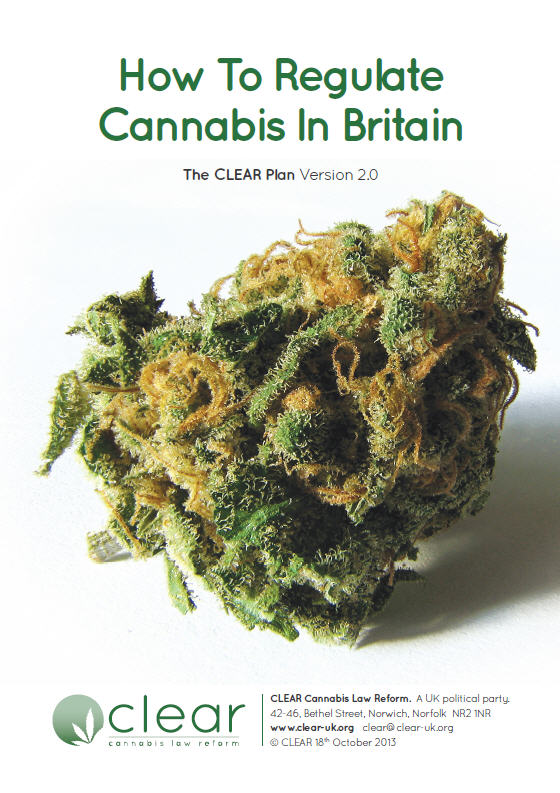
Four years ago this month, Paul was instrumental in the launch of the CLEAR Plan ‘How To Regulate Cannabis in Britain‘. He sponsored our launch in the Jubilee Room of the Houses of Parliament and gave the keynote speech. We have already made contact with him to offer any support we can. What distinguishes CLEAR from other groups is that we support our campaign with independent, expert research, detailed proposals for regulation based on public consultation and analyses of existing scientific evidence and studies. We anticipate that the evidence provided by these three key publications will be crucial to informing the debate.
 Taxing the UK Cannabis Market http://clear-uk.org/media/uploads/2011/09/TaxUKCan.pdf
How To Regulate Cannabis In Britain http://clear-uk.org/static/media/uploads/2013/10/CLEAR-plan-V2.pdf
Medicinal Cannabis: The Evidence http://clear-uk.org/static/media/PDFs/medicinal_cannabis_the_evidence2.pdf
Now, even if you have done so recently, is the time to contact your MP and ensure he or she has copies of these documents. Crucially, make it very clear that you expect them to attend the debate and you want them to represent your views. If you can, arrange to meet your MP at their constituency surgery to explain in person what you want them to say.
You can find out who your MP is by entering your postcode on this website
You can find out your MP’s email address by looking their name up here
You can also Google your MP’s name which will lead you to their personal website and more contact details.
You can write by letter to your MP at: House of Commons, London, SW1A 0AA
 Write To Your MP
Most important is that you must include your full postal address and postcode to show that you are a constituent. Without this your email or letter will be ignored.
Either an email or a letter is fine but you might want to consider doing both!
Write in your own words. MPs are now wise to what they call ‘campaign emails’. The large number of campaigns by groups such as 38 Degrees have really swamped MPs with repetitive correspondence. It doesn’t work to send what is clearly a template or automatically generated email. You will just be ignored. Many MPs actually warn against this now on their website.
So, in your own words, make these points:
1. Legal regulation of cannabis will be much safer for everyone than the present criminal market.
2. £6 billion every year is spent on cannabis and it all goes to criminals.
3. I want to see cannabis available to adults only through licensed outlets with proper labelling and quality control.
4. I want to see cannabis taxed so that, as in Colorado, we can invest millions more in schools and hospitals.
5. Many people need access to medicinal cannabis for which there is now strong scientific evidence.
6. Please will you support and vote for legal regulation of cannabis?
You can link to these four pieces of evidence in your email or letter
Cannabis is 114 times safer than alcohol:
http://www.ncbi.nlm.nih.gov/pmc/articles/PMC4311234/
No link between adolescent cannabis use and later health problems:
http://www.apa.org/pubs/journals/releases/adb-adb0000103.pdf
‘Medicinal Cannabis:The Evidence’:
http://clear-uk.org/static/media/PDFs/medicinal_cannabis_the_evidence2.pdf
Taxation of cannabis market net annual gain to the UK economy up to £9.5 billion:
http://clear-uk.org/media/uploads/2011/09/TaxUKCan.pdf
Cameron, The Warmonger. How Did Saving Refugees Turn Into Dropping More Bombs?

Kobane, Syria, Hometown of Aylan Kurdi, Just One Boy Who Drowned.
It’s amazing and frightening. Two days ago, Cameron wasn’t interested in the plight of the refugees. He and his crony government didn’t even have the decency to recognise them as refugees, they were migrants. They weren’t leaving the sort of desolation and destruction seen above, they were ‘economic migrants’ about to “swarm” onto our shores and “swamp” our hospitals, GPs, social services with nasty, dirty foreigners.
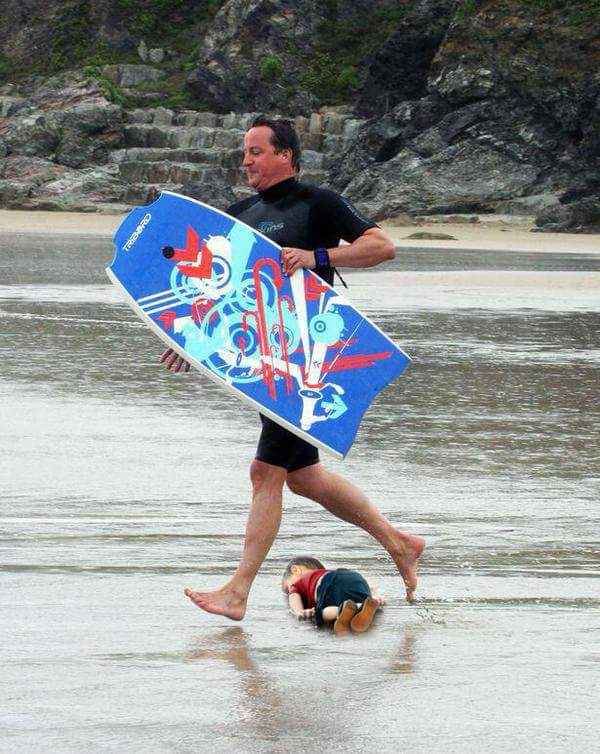
Walk On By Dave. You Know That’s What You Really Want.
Then, with the tragic picture of a little boy dead on a Turkish beach and, unusually, the supine, brainwashed, British public actually getting off their backsides and signing a petition in massive numbers (now over 400,000), he had to do something. Democracy and public opinion is not a force that can be allowed to gain strength in the UK. It is the very opposite of what the increasingly corrupt Tory government wants. Its new petitions website is biting back hard. Its been a major mistake. More than 200,000 want cannabis legalised, nearly 220,000 want a vote of no confidence in the Health Secretary, over 100,000 want the war criminal Netanyahu arrested when he arrives in London.
This all sounds frightfully like democracy and it has to be nipped in the bud!
So now he’s posturing with weasel words about the millions of refugees but simultaneously ramping up for war on Syria and IS, just as the USA confirms that Russian jets are fighting on behalf of Assad.
I think Cameron is a puppet: an anodyne, oleaginous creep with a shiny face for inane grins into the camera and a Goldilocks wifelet (not too gorgeous, just enough) to portray the mythical British family that we’re all supposed to aspire to. Who is pulling his strings?A conspiracy of bankers, arms manufacturers, the alcohol industry and press barons.
Fleet Street Fox makes frightening predicitions about war today. It comes to something when a tabloid like the Daily Mirror presents more challenging, insightful reporting than what used to be called the quality press, now disgraced by the Murdoch and Barclay Brothers comics. The Times and The Daily Telegraph now represent vested interests, mainly supportive of Tory repression but ready to exercise their own muscle when inconvenient subjects like press regulation or BBC charter renewal come along. Fleet Street clears its throat and Cameron succumbs. Big Booze complains about overregulation, Cameron drops his trousers and says ‘How do you want me?’
I am horrified about the reality of Britain. The disgusting cover-ups of wrongdoing in high places that we now know has been going on forever. We have laughed about Nigeria, about tin pot South American regimes but we are every bit as bad, worse in some ways, more secretive, deceptive, corrupt and rotten to the core in police, civil service and throughout the establishment.
It’s a truism that it is the internet that has let all this truth out. That’s how we know that cannabis is pretty much harmless for 99% of people, while Big Booze is responsible for 1.25 million hospital admissions each years. That’s how we know that the Israeli regime is composed entirely of brutal, sadistic war criminals intent on becoming the new Nazi power and igniting nuclear conflagration in the Middle East. That’s why your internet connection is increasingly censored, monitored and everything possible is being done to turn it against you, to become an instrument of oppression rather than a gateway to truth and knowledge.
I have no answers. What I know is that increasingly often, as I chat with my 80-year old mother, we say to each other how glad we are we won’t be around to see it.
‘The Scientist’. An Extraordinary Film About Cannabis And Prof. Raphael Mechoulam, Its Godfather.
This film carries my highest recommendation.
There are a number of excellent documentary films about cannabis which for those of us interested in the subject make enthralling viewing. This is also the great weakness of movies like ‘The Culture High’ and ‘In Pot We Trust’ – they are all preaching to the choir and, certainly for non-consumers of cannabis or people without a special interest, they are far too long.
This excellent documentary on the life and work of Raphael Mechoulam is a breath of fresh air. For an old cannabis hack like me who has seen it all, read it all and discussed it all, ad nauseam, it gave me new information and insights – and it’s only an hour long. It’s well worth sixty minutes of your time.
This Is How The UK Government Lies To Its Citizens About Cannabis.
The preposterous response from the UK government to the massive petition for the legalisation of cannabis is a pack of lies.
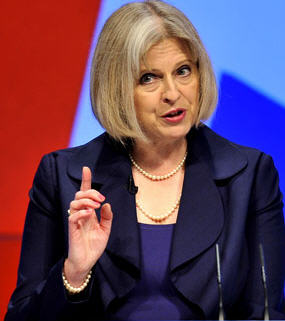
Systematic Misinformation, Deception And Dishonesty
Yes. Lies. Not a word it’s wise to use unless it’s accurate but in this case it is. The Home Office is disgraced on so many aspects of its work but it has been systematically misleading, misinforming and promoting untruths about cannabis since 1971. Individual Home Secretaries are fully complicit in this dishonesty, most notably James Callaghan, Merlyn Rees, William Whitelaw, Leon Brittan, Douglas Hurd, Michael Howard, Jack Straw, Jacqui Smith, Alan Johnson and the incumbent, Theresa May.
Certainly in the last 20 years there can be no excuse at all. The balance of scientific evidence has been quite clear for at least that long that although a very small number of people may be vulnerable, for 99% of people cannabis is almost completely benign and often beneficial.
The dishonesty of these disgraced ministers brings shame on both the Conservative and Labour parties and the civil service officials in the Home Office. They all know full well that they have lied to the public and they continue to do so, undoubtedly because of corrupt influence from vested interests, principally the tabloid editors, press barons and the alcohol industry. Their lies have resulted in the unnecessary criminalisation of over one million people, the frittering away of tens of billions in futile law enforcement costs and lost tax revenue. Most dreadful of all, the denial of access to medicinal cannabis by those in pain, suffering and disability.
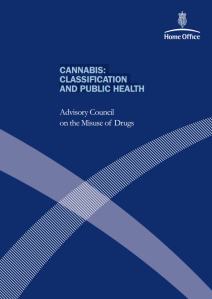 The basis for the government’s dismissal of the petition is given as the Advisory Council on the Misuse of Drugs (ACMD) 2008 report ‘Cannabis: Classification and Public Health’.
In the covering letter to the report, the then chair of the ACMD does say “… the use of cannabis is a significant public health issue. Cannabis can unquestionably cause harm to individuals and society.”
Judge for yourself whether the evidence in the report supports the idea that cannabis is a “significant public health issue”. I don’t think it does and nowhere in the report is such an unequivocal statement made except in the covering letter. Of course it is true that cannabis can cause harm to individuals, just as digestive biscuits, chips and sugary drinks can, so that’s pretty meaningless. There is no evidence in the report at all of cannabis causing harm to society.
But the covering letter then makes the point very strongly that “strategies designed to minimise its use and adverse effects must be predominantly public health ones. Criminal justice measures – irrespective of classification – will have only a limited effect on usage.”
The report recommends that cannabis remain in class C of the Misuse of Drugs Act 1971 but the government of the day, led by Gordon ‘Skunk is Lethal’ Brown, ignored that and increased it to class B.
Read the report yourself. Compare it with the government’s response to the petition. To claim that the report supports present policy is false. It directly contradicts present policy. There is also now a host of high quality evidence on the reality of decriminalised or regulated cannabis markets from the Netherlands, Portugal, Colorado and Washington. This shows beyond any doubt that the government’s suggestions of “drug dependence… misery… increased misuse” have no basis in evidence at all. Furthermore the idea that new tax revenue would be outweighed by new costs is directly contradicted by every study on the subject. I repeat, the government’s response is a pack of lies
Sadly, the United Kingdom is a country where government ministers are prepared to lie, mislead, distort evidence and deceive the British people in order to maintain policies based on prejudice and the corrupt influence of vested interests.
Now The Cannabis Petition Has Passed 200,000, What Can You Do Next?
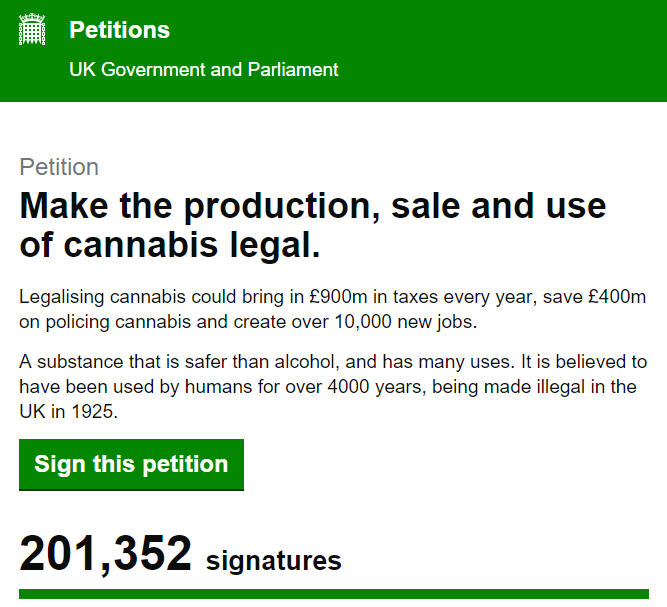
At 15:45, 20th August 2015
It’s a great achievement that together we have doubled the the number of signatures required for a debate on cannabis legalisation to be ‘considered’. But it’s not over yet.
The government and many MPs will fight tooth and nail to stop any debate. You can be sure that the alcohol industry is already lobbying ministers furiously. It is terrified that there could be a much safer, healthier and legal alternative to its poisonous products.
So we can’t even be certain there will be a debate. Many, perhaps most MPs are incapable of dealing with this issue on a rational basis. They are transfixed by fear of what the media will say if they support reform. Most have no understanding about cannabis at all and base their views on the rubbish published in the Daily Telegraph or the Daily Mail. Even worse, they may rely on what the Home Office says. Be in no doubt, in the great history of Britain, never has there been more dishonesty from government than from the Home Office on cannabis. It deceives, misinforms and lies as a matter of course. It is Home Office policy to mislead the public about cannabis.
The next step is to contact your MP and do your bit to educate him or her on the truth. It is vital that you do this. For the first time, enough people have signed a petition to make it mean something. We must build on this effort. Do not let yourself or the rest of the country down. The responsibility rests on your shoulder as much as it does on everyone else’s.
You can find out who your MP is by entering your postcode on this website.
You can find out your MP’s email address by looking their name up here.
You can also Google your MP’s name which will lead you to their personal website and more contact details.
You can write by letter to your MP at: House of Commons, London, SW1A 0AA
Please make the effort to take these steps in contacting your MP. Ideally, make initial contact by email or letter, then a week or so later make an appointment and go and see your MP.
Write To Your MP
Most important is that you must include your full postal address and postcode to show that you are a constituent. Without this your email or letter will be ignored.
Either an email or a letter is fine but you might want to consider doing both!
Write in your own words. MPs are now wise to what they call ‘campaign emails’. The large number of campaigns by groups such as 38 Degrees have really swamped MPs with repetitive correspondence. It doesn’t work to send what is clearly a template or automatically generated email. You will just be ignored. Many MPs actually warn against this now on their website.
So, in your own words, make these points:
1. I support the petition for a debate to be held on legalising cannabis.
2. More than twice as many people as required have signed the petition, so please will you do what you can to ensure that a debate will take place?
3. Legal regulation of cannabis will be much safer for everyone than the present criminal market.
4. £6 billion every year is spent on cannabis and it all goes to criminals.
5. I want to see cannabis available to adults only through licensed outlets with proper labelling and quality control.
6. I want to see cannabis taxed so that, as in Colorado, we can invest millions more in schools and hospitals.
7. Many people need access to medicinal cannabis for which there is now strong scientific evidence.
8. Please will you support and vote for legal regulation of cannabis?
You can link to these four pieces of evidence in your email or letter
Cannabis is 114 times safer than alcohol: http://www.ncbi.nlm.nih.gov/pmc/articles/PMC4311234/
No link between adolescent cannabis use and later health problems: http://www.apa.org/pubs/journals/releases/adb-adb0000103.pdf
‘Medicinal Cannabis:The Evidence’: http://clear-uk.org/static/media/PDFs/medicinal_cannabis_the_evidence2.pdf
Taxation of cannabis market net annual gain to the UK economy up to £9.5 billion: http://clear-uk.org/media/uploads/2011/09/TaxUKCan.pdf
Meet Your MP
The best way to arrange this is to telephone or email your MP’s constituency office. You will find the email address or phone number on your MP’s website.
Don’t get into a discussion with your MP’s staff about cannabis. Of course, explain why you want a meeting but concentrate on making the appointment. Don’t be brushed off. It is your right to meet your MP. Explain that you want an appointment as soon as possible, certainly within the next month or it will be too late.
When you go to the meeting, be on time, dress as if you were going to a job interview and be polite and respectful at all times. Ideally, print out the evidence above and take it with you. Ask your MP to promise to read it. Tell a personal story about how cannabis has helped you or how you or someone you know has suffered because of the law against it. Remember, your MP works for you so don’t allow yourself to be bullied or dismissed without proper attention.
What Will Happen Next?
If even one-tenth of the people who have signed the petition take the steps set out above we could well have a revolution!
Seriously, If every MP is contacted by at least half a dozen constituents who want a meeting on the subject it is going to make a very big impact.
This is our chance. Do not miss it. Do your bit. Don’t give up. Don’t be cynical.
Even if we don’t win this time we can make tremendous progress. We can weaken the evil forces of prohibition and start to drive it out of our lives and our country.
This is a call to action, as never before. Take this chance! Write to your MP! Meet your MP! Play your part in overturning this wicked, monstrous law!


