Posts Tagged ‘decriminalisation’
The London Drugs Commission. Off Target and Misleading.
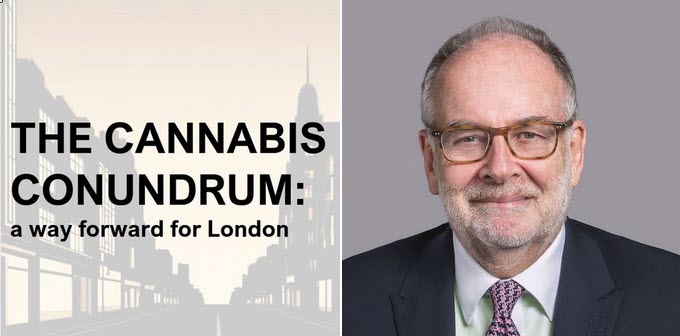
If anyone thinks it will achieve anything to publish a report on cannabis policy that runs to over 300 pages with 42 recommendations, you can spend an hour or so reading it here.
Of course, the recommendation for decriminalisation is correct. Criminalising people for personal possession of any drug, or for growing a few cannabis plants, achieves nothing. We know from multiple studies across the world, including from the Home Office, that the level of enforcement and the severity of penalties makes no difference at all to levels of use or harm, except the harm caused by giving someone a criminal record. Enforcing these laws also takes huge amounts of police time and resource. Their disproportionate enforcement among ethnic minorities also damages community relations. It’s a ridiculous policy. Yet another example of how detached from reality and public opinion are our political leaders.
But the report fails to address the real issue. By far the most harm around cannabis and all drugs is from the markets through which they are produced and sold. Both the Home Office and the National Crime Agency acknowledge that most crime and violence is caused by criminal drugs markets. These markets exist to meet the unstoppable demand for drugs. Our political leaders like to pretend that they can reduce this demand but the evidence over more than 50 years proves them wrong. The cannabis market is by far the biggest and it is organised crime’s single largest source of daily cashflow. It provides the funding for every other sort of criminal activity imaginable. There is no other solution to stopping this catastrophic harm except to offer a legal alternative where consumers can purchase cannabis from licensed retailers that has been produced to quality standards by licensed producers.
All sort of other benefits would flow from this sensible change of policy. Thousands of new jobs would be created. Taxing the products would deliver vast amounts of cash for the health service, housing, social care, other public services and this is after paying for the costs of running the regulatory system. Huge amounts of police time would be freed up to start focusing on real crime that causes people harm. We know that this can work from the experience in other places. In Canada, six years after legalisation, 80% of all cannabis purchases are now made through legal channels. More than $2 billion is collected each year in local and federal taxes after deduction of expenses. This in a country with half the population of UK.
The report makes weak excuses for failing to recommend legal regulation of the cannabis market, excuses which are not supported by evidence and in many instances are directly contradicted. It says that legalisation has not been a “panacea”, “risks remain”, “it by no means abolishes the illicit cannabis market” and there are “too many unknowns, particularly those relating to public health”.
These excuses are disingenuous at best, deceitful at worst. They take no account of the very large body of evidence over more than 10 years from the USA and Canada, of the benefits of the coffeshop system in the Netherlands over 50 years and more recent experience in several European countries. It is wilful ignorance or, I suggest, political cowardice. I attended the Commission on two occasions to give evidence and after several hours in discussions, I am convinced that Lord Falconer and his colleagues fully understand that imperative for legal regulation and the evidence that supports it. The conclusion I draw is that they felt recommending legalisation would be politically unacceptable and would likely lead to the report being rejected. In truth the report was always going to be rejected, as it has been, so there was no benefit in holding back from the obvious recommendations it should have made.
Reading between the lines, my judgement is that this is all down to the near-hysteria about cannabis and its ‘links to mental illness’ which is pretty much unique to UK and Ireland. Nowhere else in the world comes close to the wildly unbalanced narrative that predominates here. It’s based on decades of systematic misinformation from the Home Office and ruthless exploitation by the tabloid media. The ‘one puff and you’re psychotic’ mythology has sold millions of newspapers and in recent years generated billions of clicks. It’s false. The facts are that the risk of a psychotic episode associated with cannabis use is 1 in 20,000, with alcohol use 1 in 2,000, with a life threatening reaction to peanuts 1 in 100 or shellfish 1 in 25. Hysteria perhaps doesn’t put it strongly enough!
Reform will come eventually to the UK but it’s hard to predict when. The legalisation of medical access came suddenly and unexpectedly and only because the government was shamed in the media by its appalling treatment of two epileptic boys who were forced overseas for life saving cannabis medicine. Media embarrassment seems to be the only thing that makes British politicians act and I think the powers that be think the move on medical access has gone quite far enough to keep the plebs in order.
The sheer stupidity, stubborness and inertia of the political establishment on drugs policy is extraordinary. We have no option but to keep fighting the good fight in the knowledge that eventually we will prevail.
Independent London Drugs Commission sets Scene for Robust National Debate on Cannabis

- Commission Chair Lord Charlie Falconer KC publishes comprehensive study on the use of cannabis and the laws which govern it to reduce drug related harm
- Report makes 42 recommendations for London and national government covering education, healthcare and policing of cannabis
- Commission does not call for the legalisation of cannabis but does recommend that natural cannabis is moved from the Misuse of Drugs Act to the Psychoactive Substances Act
- This means it would remain a criminal act to import, manufacture and distribute cannabis but it would not be a criminal act to possess small quantities of cannabis for personal use
- Report is the most wide-ranging and detailed international study of cannabis use in recent history and has examined a vast amount of research and evidence from the UK and around the world
The London Drugs Commission (LDC) has today published its findings1 following the most comprehensive international study to date of the use, impact and policing of cannabis. It sets the scene for a robust national debate on how best to reduce the harms associated with cannabis and the laws which govern it.
Today’s report follows detailed analysis of written and oral evidence from over 200 experts and academics from London, the UK and around the world. Lord Falconer and his Deputies were assisted by leading experts from criminal justice, public health, community relations and drug policy3 and supported by academics from University College London (UCL).
The report reaches five overarching conclusions:
- Cannabis can be addictive and more explicit provision of services focused on problematic use and addiction to the drug is needed, alongside greater join-up across health services.
- Possible gains from legalisation, including tax revenues and reductions in criminalisation, can be realised early. However, the extent of harms, particularly with respect to public health, as well as personal and societal costs, take longer to emerge and are not yet well understood.
- Inclusion of cannabis as a Class B drug in the Misuse of Drugs Act is disproportionate to the harms it can pose relative to other drugs controlled by the Act. The sentencing options currently available, especially for personal possession, cannot be justified when balanced against the longer-term impacts of experience of the justice system, including stop and search, or of serving a criminal sentence can have on a person.
- Cannabis policing continues to focus on particular ethnic communities, creating damaging, long-lasting consequences for individuals, wider society, and police-community relations.
- The content and timing of education about cannabis and its use, for both young people and healthcare professionals, is inadequate. It fails to acknowledge drivers of use and, in school settings, is often led by providers who lack sufficient credibility and insight.
Overall, the report makes 42 recommendations for London and central government to deliver a safer approach to managing cannabis use in London’s communities. These range from better education for young people about the dangers of cannabis, improvements to health and addiction services and changes to ‘stop and search’ protocols and the legislation under which ‘natural’ as opposed to ‘synthetic’ cannabis is governed.
After studying extensive evidence from other countries and jurisdictions which have changed the legal position of cannabis in recent years, and from educators, youth workers, medical practitioners and police who deal with the adverse effects of cannabis every day, the Commission does not call for cannabis legalisation. Instead, its principal recommendation is that the legal regime move natural (i.e. not synthetic) cannabis from the Misuse of Drugs Act to the Psychoactive Substances Act.
This would allow the production and supply of cannabis to be policed and remain criminal, whilst possession of small quantities for personal use would not be penalised. It would also help address ongoing disproportionality in the operation of stop and search, which particularly impacts London’s Black communities.
In addition, the report puts forward workable proposals to help policing in London; bring some order to schemes which aim to divert people out of the criminal justice system; further develop coordination across parts of the health system and improve education on the risks and uses of cannabis.
The Chair of the LDC, Lord Charlie Falconer KC, said: “This is the most extensive consideration of what is the correct public policy response to cannabis in recent times. It is clear that a fundamental reset is required. Legalisation is not the answer. The criminal justice system response needs to focus only on the dealers and not the users. Those who suffer from the adverse effects of cannabis – which may be a small percentage of users but it is a high number of people – need reliable, consistent medical and other support. And there needs to be much more education on the risks of cannabis use. Our Report provides detailed recommendations on how the law needs to change to reflect a new focus for the criminal justice system, and how the response of the public and other sectors can better support those damaged by cannabis use.”
Deputy Chair Janet Hills MBE, who has 30 years’ experience in the Met police, said: “It is time for a shift in our approach to cannabis enforcement to create a more equitable and just system. This report is a driver for change in our community. The 42 recommendations include reforming cannabis enforcement practices and highlight the need for a more balanced and compassionate approach to policing in our city.”
Deputy Chair Professor Virginia Berridge, Professor of History and former Director of the Centre for History in Public Health at the London School of Hygiene & Tropical Medicine, said: “Our report balances a focus on social and racial injustice with public health concerns and will help to resolve the cannabis conundrum.”
Professor Marta Di Forti, Professor of Drugs, Genes and Psychosis at King’s College London, Lead Consultant of the Cannabis Clinic for Psychosis at South London and Maudsley NHS Foundation Trust and member of the LDC’s Expert Reference Group said: “Learning from increasing post legalisation data from Canada and USA, any changes to the law should come along with the resources needed to support the increasing minority that develop psychosis when consuming cannabis, and with adequate and engaging education campaigns about the effects of heavy cannabis use on mental and physical health”
Jason Harwin KPM, retired Deputy Chief Constable, former drugs lead for the National Police Chiefs’ Council and member of the LDC’s Expert Reference Group, said: “Individuals use illicit drugs for many different reasons. Diversion is an evidenced based, proportionate approach that seeks to address the causation of an individual’s actions. Evidence shows effective diversion not only better understands and addresses an individual’s actions but reduces offending and risk for the future. It is critical London has a consistent approach to diversion.”
Professor Adam Winstock, Consultant Psychiatrist & Addiction Medicine Specialist, Honorary Clinical Professor at the Institute of Epidemiology and Health Care, UCL Faculty of Population Health Sciences, and member of the LDC’s Expert Reference Group, said: “It’s good to have been part of an independent expert panel that received submissions from across the political, ideological and cultural spectrum that makes London what it is today. The recommendations challenge the status quo but don’t make any assumptions that alternatives will resolve issues that are embedded in far wider socioeconomic issues. It prompts all of us to ask not only should things change but how, and how we might monitor and mitigate unwanted consequences.”
Voting at the Citizens’ Assembly on Drugs Use was Rigged

Just a few hands raised to support the voting process
With discontent growing in the room, the chair Paul Reid called for a vote to confirm that the process had been clearly explained. About five hands were raised in agreement. A majority of about 94% were against. Reid did nothing about this. He moved on and continued to force through an increasingly complicated series of votes. Some were by a simple majority. Some were by a single transferable vote. Few people understood what was going on.
To begin with the voting had started with a simple majority vote where over 95% had voted against maintaining the status quo in drugs policy. By the end of the voting, Reid had effectively reversed that vote and the end result is a recommendation barely any different from the health diversion policy that is already supposed to have been in place for five years but which the government has failed to legislate for.
Contrary to widespread misreporting in the media, the recommendations which Reid has manipulated through do not decriminalise anything. Even personal possession of small amounts of drugs would remain a criminal offence.
The confusion started when Reid presented a series of options to vote on which had never been seen before. They were certainly not prepared by or with the support of the Assembly. They were ambiguous, contradictory, confusing and clearly designed to split the vote on measures for decriminalisation or legalisation.
Throughout the Assembly’s meetings, there has been dreadful bias in the selection of presentations and evidence. Apart from government departments and government-funded organisations, not a single expert on drugs policy was allowed to give evidence. Despite the strong interest in regulation from the members, out of 200 hours of evidence, just seven minutes was allowed for a presentation on regulation of cannabis. Nothing was permitted on regulation of any other drug.
Neither have any of the 800 submissions to the Assembly been published. A statistical summary of their content was published, showing well over 90% argued for substantial reform. They were supposed to have been published as part of the Assembly process but they have been kept secret and the meetings are now over.
Discontent and protest continued to grow in the room but Reid would have none of it. There were suspicions from the very beginning as to why an establishment figure, closely associated with the drugs policy failures of the past, had been appointed as chair. These appear to be confirmed. It seems that Reid has done as instructed and manipulated a conclusion that maintains the status quo.
New Drug Strategy Promises More Death, Misery And Ill Health For UK.
 The long overdue update to the UK Drug Strategy is published today by the Home Office. A copy may be downloaded here.
Sadly, as expected, it is nothing except more of the same. It offers no new ideas worthy of any note and reinforces the failure of existing policy by further embedding an approach which has already been conclusively proven not to work.
The UK has become increasingly isolated in its approach to drugs policy and now that both Ireland and France are moving towards decriminalisation we are unique amongst modern democracies in maintaining an approach based on nothing but prohibition. We now stand closer to countries such as Russia, China, Indonesia and Singapore. In fact, the only thing that separates us from countries with such medieval policies is that we do not have the death penalty for drug offences. Otherwise our policy is just as repressive, anti-evidence, anti-human rights and based on prejudice rather than what is proven to work.
From Home Secretary Amber Rudd’s introduction, through sections based on repetition of the original strategy, ‘Reducing Demand, Restricting Supply and Building Recovery’, the document is more of the same old platitudes, bureaucratic doublespeak and meaningless civil service and social worker jargon. It offers nothing but despair to those wracked by addiction, desperate for the proven medical benefits of cannabis or suffering from the tremendous social problems caused by prohibition. In every respect it mirrors the government’s approach to housing which has led to mass homelessness, depravation and the Grenfell Tower disaster. It is yet another inadequate response imposed by a government which is out of touch and wedded to policies based on ideology rather than evidence.

UK Government Policy
Current UK drug policy has already led to the highest ever rate of deaths from overdose. Deaths from heroin more than doubled from 2012 to 2015, yet there is absolutely nothing offered in this document that might change this – as if existing policy is quite OK. Similarly, in what would be farcical humour were it not so tragic, the government seeks to portray the Psychoactive Substances Act 2016 as a success. It trumpets the closure of hundreds of retailers and websites and end to open sales but it doesn’t even mention the burgeoning new criminal market which has led to a massive increase in harm and products which are more potent but also more inconsistent and unpredictable. All the experts (except those appointed by the government) agree that this new law has been a disaster. Just like Grenfell Tower, this is government enforcing policies which significantly increase danger and harm without any regard at all to evidence or public opinion.
As before, this strategy doesn’t even consider harm reduction, it offers only a puritanical, moralistic approach based on abstinence. It fails entirely to recognise that 95% of all drug use is non-problematic, without causing harm to anybody. It is entirely focused on mis-use and blind to the great benefits, often therapeutic but also simply of pleasure, enjoyment and recreation that many people gain from safe drug use, just as most people do with that most dangerous drug of all, alcohol. These people, the vast majority, are completely ignored by their government.
By its own title this is a drug strategy, not a drugs strategy. It treats all drugs and all drug users the same, whether they are a prisoner serving a long sentence without access to education or rehabilitation, a ruthless gangster engaged in human trafficking, an affluent clubber, humble festival goer or a multiple sclerosis patient who grows a few cannabis plants for pain relief. It is a travesty of government, failing entirely to meet the needs of the population.
It also contains some of the most extraordinary factual errors and contradictions. “Most cannabis in the UK is imported”, it states in defiance of the evidence that the UK has been virtually self-sufficient in homegrown cannabis since the 1990s, even to the extent where we are ‘exporting’ to other European countries.
Unsurprisingly, the report states “We have no intention of decriminalising drugs” but then makes the dubious assertion that “Drugs are illegal because scientific and medical analysis has shown they are harmful to human health.” This is simply unsustainable in face of the facts about harms caused by legal substances such as alcohol, peanuts and energy drinks. It is also inconsistent with the stated purpose of the Misuse of Drugs Act 1971 which is about misuse “having harmful effects sufficient to constitute a social problem.”, nothing to do with individual health harms.
The report fails at all to consider the negative effects of current policy and how prohibition rather than drugs themselves is actually the cause of most harms connected with drugs. It doesn’t even mention the worldwide revolution in the medical use of cannabis or that one million UK citizens are criminalised and placed in danger of criminal sanctions or contaminated product simply for trying to improve their health. Neither does it mention drug testing, a proven method of reducing the harms of club drugs, now being supported by many police forces at festivals.
This report really is as empty, ineffectual and useless as anything produced by this already tired and discredited government. The parallels between Grenfell Tower and a government which actively maximise the harms of drugs through its policies are extraordinary. Thousands are dying every year because Mrs May and Mrs Rudd won’t listen to evidence. They pick and choose whether to accept the advice of their own Advisory Council based on political convenience rather than facts and while the Council includes eminent scientists it also includes specialists in ‘chocolate addiction’ and evangelical Christian ‘re-education’ of gay people.
Whether it’s determining the inflammability of building materials or the relative potential for harm of different substances, what is clear is that this government is more concerned with dogma, vested interests and old-fashioned prejudices than the safety, health and wellbeing of the population. This Drug Strategy is a recipe for failure, for continuing exactly as before.
UK Drug Strategy 2010 – A Plan To Fail
Mother Knows Best
Gone are the days when central Government tells communities and the public what to do.
Rt. Hon. Theresa May, MP, Home Secretary, December 2010

A slim volume of treacle-like and turgid social worker-speak shot through with a few strands of sharp hypocrisy. See here.
A disappointment? Not really, it’s pretty much what I expected – an authoritarian, moralistic smokescreen behind which the government will do what it wants with no regard whatsoever for the views or the welfare of the people. It stinks.
It claims to be radical in that it turns away from reducing the harms caused by drugs and instead aims to force abstinence. In other words, do as we say or suffer the consequences. It is, in fact, a medieval solution to a 21st century problem. It seems that the British government no longer cares about the harm caused by drugs. All it cares about is that you STOP! This is the ultimate exposition of Nancy Reagan’s discredited “Just Say No” campaign because it really is “just” say “no” – no other option exists. This from a government that advocates giving people methadone to “treat” cannabis use. Can you believe it? That isn’t medieval. It’s prehistoric – or perhaps better described as mid 20th century, a sort of Dr Mengele method.
I give Ms May credit for one thing. She mentions alcohol alongside drugs in the first sentence of her foreword. That is progress but from then on there is little of any value. Nothing that you couldn’t have copied from any out of date A level textbook on social work.
The laughable assertion quoted above that the government doesn’t tell us what to do is just absurd. Never has there been a more hard line approach to the drugs issue. See Edwin Stratton’s article in The Guardian here which reveals just how draconian, anti-civil liberties and severe this government is.
In the penultimate paragraph of her foreword, Ms May acknowledges that there were calls during consultation on the strategy for “liberalisation and decriminalisation”. She dismisses these as not “the answer” but fails entirely to consider the enormous harm caused and crime created by existing policies. I will be making Freedom Of Information requests to determine just how much notice was taken of the consultation.
There is a complete failure to understand or consider the harms of prohibition. Britain now stands as one of the most backward and restrictive countries in the world when it comes to drug policy. We now rub shoulders with those countries that execute people for drug possession. There is no civilised country in the world with a more repressive drugs policy than Britain.

Broken Britain
Emphasis is given to the introduction of elected Police and Crime Commissioners. I support this move. Hopefully, these elected officials, being closer to reality and not ensconsed in Whitehall’s ivory towers, will mitigate some of the damage that this strategy could cause. They will have the impossible job of trying to implement these ideas and will surely give Ms May and her protege James “Broken Britain” Brokenshire some lessons in reality and common sense.
The statistics and figures quoted in the strategy are manifest nonsense. Apparently the economic and social costs of Class A drug use are £15.4 billion per annum while the equivalent figure for alcohol is £18 – 25 billion. Supposedly the total illicit drug market in Britain is worth just £4 – 6 billion per annum while the market for alcohol is £30 billion. There are just 320,000 heroin and/or crack cocaine users but tens of million that use alcohol. These figures just don’t add up. Maybe that’s part of the reason this strategy is so badly conceived and directed.
It’s only part of the reason though. The main problem is that the government’s approach is based on prejudice and an arrogant, moralistic, proselytising stance. See David Nutt’s article here on what the government would do if a completely safe alternative to ecstasy was developed. Prohibition is immoral and evil in itself. When will our politicians wake up to what most of the rest of Europe and the USA already knows?
Powerful Medicine. Gentle Pleasure.
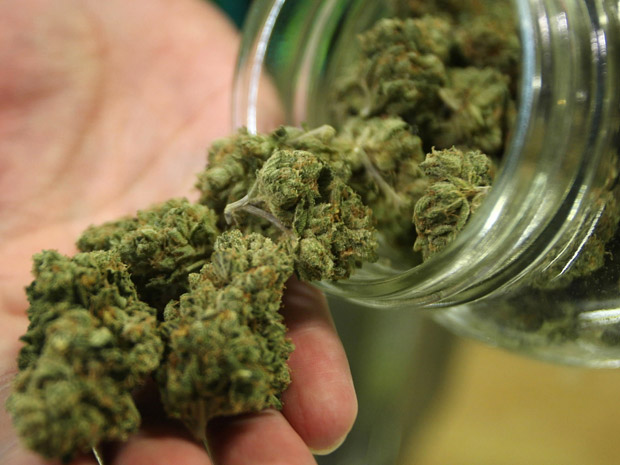
Cannabis, the most widely used illegal drug by a factor of at least 10 barely gets a mention except in passing. This, in itself, exposes the inane content of this strategy. The government apparently intends to deal with cannabis in exactly the same way as it deals with heroin and crack. The medicinal use of cannabis, now a burgeoning industry and source of hope to people all over Europe and America isn’t even mentioned. The crass stupidity of this strategy is almost beyond belief.
So the battle lines are drawn. Every other civilised country in the world is coming to terms with the fact that the war on drugs is unwinnable, even lost. Theresa May, like some mad first world war general, is blowing her whistle and urging on millions more to go over the top into certain death, or at least misery and degradation. Her slightly fey, sweet boy, Colonel Jimmy is hiding behind her, determined to gain credit for something but definitely not doing anything worthwhile, “Crikey! Not me. I’m staying safe.”
This could be a deeply depressing day but at least now we know where we stand. David Cameron and Nick Clegg have completely turned around on the progressive and liberal ideas they have advocated in the past. Nothing is a better indicator of the integrity and intelligence of a government than its drug policy. Britain is shamed by this effort which will inevitably cause more harm, cost more money and ruin more lives.
European Parliament – Public Hearing On Cannabis Regulation
 The European Coalition for Just and Effective Drug Policies (ENCOD) has organised a public hearing on cannabis regulation at the European Parliament on 8th December 2010. See here for full details.
In March 2009, the European Commission published the “Report on Global Illicit Drug Markets 1998 – 2007” . This concludes that current policies of prohibition are failing in their main objective to reduce the demand and supply of illicit drugs. Current policies may also be a crucial factor in generating and increasing harm to individual drug users, their direct surroundings and society at large.
According to the European Monitoring Centre for Drugs and Drug Addiction (EMCDDA) in its 2010 annual report, Europe faces new challenges posed by changes in drug supply and use. The report also highlights the increased usage of cocaine, heroin and of a record number of new synthetic drugs.
ENCOD says that prohibitionist policies have failed to tackle the issues of drugs and drug use effectively and it is time to investigate alternative approaches. European authorities must produce a thorough impact assessment of the costs of the current policy of prohibition and the economic benefits of decriminalisation and, as a start, the regulation of the cannabis market.

Victor Hamilton
It has been calculated that cannabis regulation would save billions in law enforcement costs, foster harm reduction, weaken the illegal cartels, and provide the opportunity to generate considerable income from taxes. The examples of California, Spain, The Netherlands and Portugal lead the way.
Victor Hamilton, the well known cannabis campaigner and former Legalise Cannabis Alliance (LCA) parliamentary candidate, liaises as a UK representative with ENCOD. He has submitted the following letter to ENCOD in advance of the public hearing on the current state of cannabis in Britain.
Dear Joep,
Thank you for the invitation to attend the hearing on 8th December 2010. I am afraid that both my health and the expense involved prevent me from attending.However, as you know, ending the prohibition of cannabis and encouraging more and better use of the plant in all its forms is my main concern. Cannabis offers many benefits medicinally, recreationally, spiritually and, as hemp, in ecologically sound fuel, construction materials, paper and plastics alternatives. Prohibition of cannabis is a far greater crime than any perpetrated by those who use it. It is a scandal and a sad litany of wasted opportunity and resources.
In the UK, based on research I have done and confirmed by the Independent Drug Monitoring Unit (IDMU), a legalise, regulate and tax regime could produce between £4 – 6 billion pa in new tax revenue.
For the benefit of the hearing, please allow me to update you on the present situation in Britain.
Calls For Decriminalisation
There have been calls for a relaxation of cannabis laws from a number of sources: The Bar Council, the British Medical Association, the Royal College of Physicians, The Lancet, Professor Roger Pertwee, Professor David Nutt and the Association of Chief Police Officers. The new coalition government’s “Your Freedom” website was swamped with calls for legalisation.
Reaction To Propositon 19
The cannabis community was eager with anticipation for the Proposition 19 vote in California, despite a dearth of media attention. Even the BBC, obliged under its charter to provide balanced coverage, found very little time for an issue that affects at least six million Britons. Strangely, the best of the lot was The Daily Telegraph, formerly known as the most conservative paper, it told us more about what was happening than any of the others.
The result was a disappointment and reminded us how our own campaigning has suffered from internal divisions and a lack of focus. Nevertheless. legalisation seems inevitable in the US, even if only at state level, within the next few years.
Formation of British Medicinal Cannabis Register
This exciting initiative to create a database of medicinal users in Britain was announced only in November. I was honoured to be invited to sit on the BMCR council as a medicinal user representative. Other members of the council include very eminent individuals such as Baroness Meacher, the MP Paul Flynn, Matthew Atha of IDMU and Dr Malcolm Vandenburg, the pre-eminent expert witness on drugs.
The real coup though was the announcement of Professor Leslie Iversen as a council member. Professor Iversen is the government’s chief scientific advisor on drugs. Yes that’s the British government which continues to state that cannabis has “no medicinal benefits”.
Subversion of Schengen Agreement
Several British medicinal users travelled to Holland for prescriptions from a doctor believing that their medicine was then protected by the Schengen Agreement. At first the Home Office agreed but then changed its position to say that British residents are not covered. The ridiculous situation now is that any non-UK resident can bring prescribed medicinal cannabis into Britain and use it without restriction. A UK resident cannot.
Increasing Evidence Of Medicinal Benefits
There is a never ending flow of information from all around the world on the extraordinary power of cannabis as a medicine. Facebook groups, blogs and organisations such as the LCA and UKCIA keep spreading the news. Particularly strong evidence has been revealed for cannabinoids as a treatment for Alzheimer’s, head, neck, breast and prostate cancer, fibromyalgia, ADHD and migraine. The mainstream media seem only interested in scandal and scare stories. They publish news about vastly expensive new pharmaceutical products but not about cannabis cures.
Confusion At The Home Office
Understandably, the British government’s position looks increasingly absurd. The Home Office veers between describing cannabis as very harmful, harmful, dangerous, extremely dangerous and changes its story every time it is challenged.
Approval of Sativex
Sativex won welcome approval from the medicines regulator as a treatment for spasticity in MS. Despite the fact that Sativex is nothing more than a tincture of herbal cannabis, the government now maintains that “cannabis has no medicinal benefits in herbal form”. Sativex is approximately eight times the cost of herbal medicinal cannabis and many health authorities are refusing to fund it.
New UK Drug Strategy
The government is to announce a new drugs strategy in December. There is expected to be a shift in emphasis towards healthcare interventions rather than criminal sanctions but no move away from prohibition. The more liberal views expressed by both David Cameron and Nick Clegg over the last 10 years seem to have changed now they have come to power.
Joep, I hope this is helpful and informative for the hearing and for you and your colleagues.
Victor Hamilton
Home Office Backtracks On Cannabis
A fortnight ago Sir Ian Gilmore, the outgoing president of the Royal College of Physicians, famously denounced drugs prohibition as a failed policy. He said “”Everyone who has looked at this in a serious and sustained way concludes that the present policy of prohibition is not a success.” He then went on to advocate decriminalisation and regulation.
The Home Office immediately issued a statement saying “‘Drugs such as heroin, cocaine and cannabis are extremely harmful and can cause misery to communities across the country.” This statement was reproduced on the Home Office website and has sat there for the last two weeks in direct contradiction to the governments own scientific advisers. Anyone who has even the smallest knowledge of the subject knows that the idea that cannabis is “extremely harmful” is absurd and a lie.
Within the last day or two the Home Office website has been quietly edited to remove the word cannabis from the statement. See here.

Charades, Fibs And Porkies
This correction is very welcome. However it calls into question the honesty, competence and intelligence of the Home Office and the government’s drugs policy. James Brokenshire, the Minister for Crime Prevention has been looking increasingly ridiculous in the last few weeks, contradicting his advisers, spouting pre-Reagan “war on drugs” propaganda and conflicting terribly with the wise words of both David Cameron and Nick Clegg, both of whom have called for drug policy reform consistently over the last 10 years. Young James has made himself very unpopular with the country’s six million regular cannabis users and embarrassed the government and the Tory party with his antics.
Whoever was responsible for this smart and very discreet editing, let’s hope they get to have a look at James’ Drugs Strategy consultation document too. It needs some intelligent correction and adjustment as well. See here for more information on what’s really a very silly game of charades, fibs and porkies.

 Peter Reynolds