Posts Tagged ‘Home Office’
Let’s Temper Hope For Paul Flynn’s Medical Cannabis Bill With Some Reality.
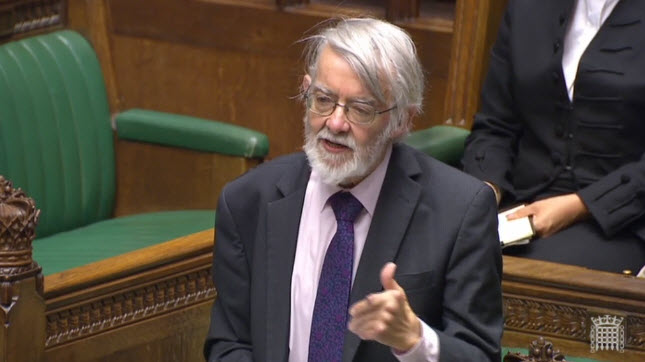
Paul Flynn MP introducing his 10 Minute Rule Bill
No one would like to see Paul Flynn’s ‘Elizabeth Brice’ bill to re-legalise medical cannabis pass through Parliament more than me. Yet it concerns me that expectations are being raised way beyond what is realistic. There is widespread misunderstanding about what the bill is and what are its chances of getting any further.
The Legalisation of Cannabis (Medicinal Purposes) Bill 2017–19 is a Private Member’s Bill. It was introduced to Parliament on Tuesday 10 October 2017 under the Ten Minute Rule. This allows an MP to make his or her case for a new bill in a speech lasting up to ten minutes. An opposing speech may also be made before the House decides whether or not the bill should be introduced. If the MP is successful the bill is taken to have had its first reading.
Private Member’s Bills almost never become law. Those that have the best of a very slim chance are proposed by one of about 20 MPs who win the right to put a bill forward a bill in the ballot that takes place at the beginning of each session. This also decides the order of precedence for the 20 bills to be given parliamentary time.
A 10 Minute Rule Bill is even less likely to become law. It is the only way other than the ballot that an MP can introduce a bill personally and if it passes its first reading, as Paul Flynn’s bill did, it is set down for second reading. All Private Member’s Bills are debated on Fridays and before any 10 Minute Rule can be debated the bills put forward under the ballot will come first and even for those, mostly there will be no time available. Remember also that on Fridays most MPs will not even be in Parliament, they will be back in their constituencies seeing people in their surgeries.
Sadly, the truth is that the second reading of Paul Flynn’s bill is unlikely even to take place. Although it is set down for 23rd February 2018, there is virtually zero chance of any time being found for it. It will simply wither away with no progress or further mention.
Even Parliament’s own website says of 10 Minute Rule Bills “an opportunity for Members to voice an opinion…rather than a serious attempt to get a Bill passed.”
I asked Paul Flynn himself what he thought were the chances of his bill making any progress and his response is illuminating. His exact words were: “I am expecting major changes to political party attitudes in the next 12 months following the developing trends in the United States.”
I think we can all agree on that. In fact, I would say that there already have been major changes in the attitudes of most MPs. The single biggest obstacle to any drug law reform is Theresa May. After all, what other leader anywhere in the world, apart from the murderous thug President Durterte of the Philippines, has recently called for a continuance of the war on drugs?
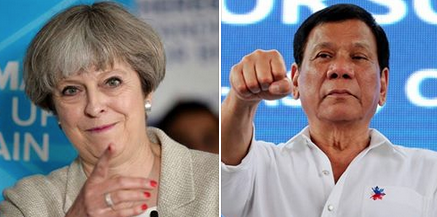
May and Duterte – two of a kind on drugs policy
I am confident that once Theresa May is gone, then whatever party is in power, we will see some progress. There is similar, hopeless optimism about Jeremy Corbyn. Speaking at a Labour leadership debate in Glasgow, in August 2016, he said: “I would decriminalise medicinal uses of cannabis.” I think it was the same day or the day after that both John McDonnell and Diane Abbott contradicted him. Nevertheless, there is a delusional strand of opinion that Corbyn would act on this immediately he was elected. Dream on! The Labour Party has the worst record of any UK political party on drugs policy. For instance it was Margaret Thatcher who introduced needle exchange back in the 80s and yes, even Theresa May sanctioned the provision of foil to heroin users for smoking as an alternative to injecting. The Labour Party has never done anything in support of progressive drugs policies that it hasn’t reversed under pressure from the tabloid press.
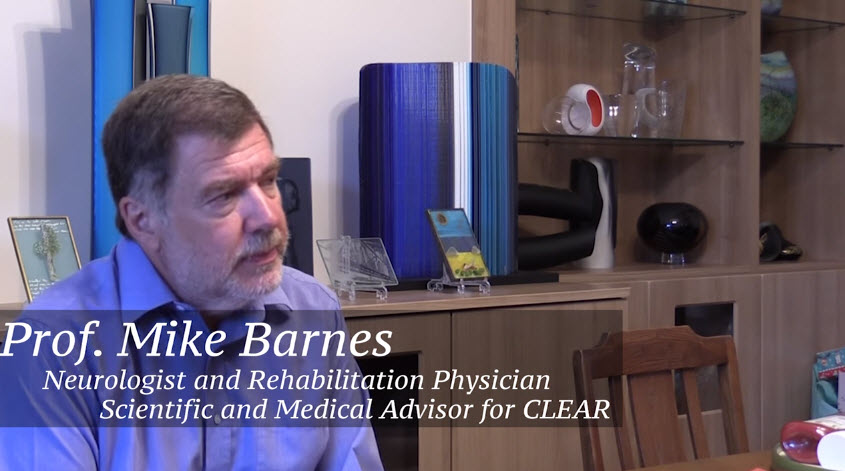 Progress on access to medical cannabis is coming irrespective of which party is in power. In the meantime, the best that any of us can do is keep up pressure on our personal MPs and in our local media and through our doctors. Probably the biggest breakthrough this year on medical cannabis will be the publication of guidelines by the Royal College of General Practitioners (RCGP). Organised by CLEAR and authored by our Scientific and Medical Advisor, Professor Mike Barnes, this shows MPs that however irresponsible and pig-headed government ministers may be, doctors have a responsibility to their patients, an ethical duty that transcends the grubby and corrupt politics that ministers subscribe to.
Sadly then, 23rd February and the second reading of Paul Flynn’s bill will be a non-event. For the rest of 2018 look out for the RCGP guidelines and drop your MP a line when they come out asking for his or her view. Also, in July look out for Canada’s legalisation of cannabis for all adults. Again, another opportunity to bring the subject up with your MP. The latest, standard, Home Office approved reply from MPs reads as follows:
“Cannabis in its raw form is not recognised as having any medicinal purposes. The licensing regime for medicines is administered by the Medicines and Healthcare products Regulatory Agency (MHRA), which issues licences for medicines in the UK which have been tested for their safety, quality and efficacy.
A medicine derived from the cannabis plant, Sativex, has already been licenced for use in the treatment of spasticity due to multiple sclerosis (MS). The MHRA is open to considering other licence applications for medicines containing cannabinoids should such products be developed.
In 2014, the National Institute for Health and Care Excellence (NICE) published its clinical guideline on the management of MS that does not recommend Sativex as a cost effective use of NHS resources. In the absence of positive guidance from NICE, it is for commissioners to make decisions on whether to fund this treatment based on an assessment of the available evidence.
I do appreciate that there are people with chronic pain and debilitating illnesses who seek to alleviate their symptoms by using cannabis. Although such use is illicit, the Sentencing Council’s guidelines on drug offences identify such circumstances as a potential mitigating factor.
The Government has no plans to legalise the recreational use of cannabis. The official advice from the Advisory Council on the Misuse of Drugs cites medical and scientific research showing that cannabis use has a number of adverse acute and chronic health effects, especially for people with mental health problems, and continues to present a significant public health issue.”
If you receive this response, first of all, don’t bother writing back, it will get you nowhere. If you really want to do your bit then make an appointment to see your MP at his/her surgery. Then give him/her this simple fact that totally devastates the Home Office and MHRA position:
In every jurisdiction throughout the world where medicinal cannabis has been legally regulated, it is through a special system outside pharmaceutical medicines regulation.
This is the government’s very last excuse for denying access to medicinal cannabis. The MHRA process is incapable of dealing with a medicine that contains hundreds of molecules. It is designed by the pharmaceutical industry for regulating single molecule medicines, usually synthesised in a lab, which have the potential to be highly toxic. Every other government that has recognised the enormous benefit that medicinal cannabis offers has come to the same conclusion: cannabis is a special case. It is far more complex but much, much safer than pharmaceutical products.
The Shame Of Drugs Minster Sarah Newton MP.
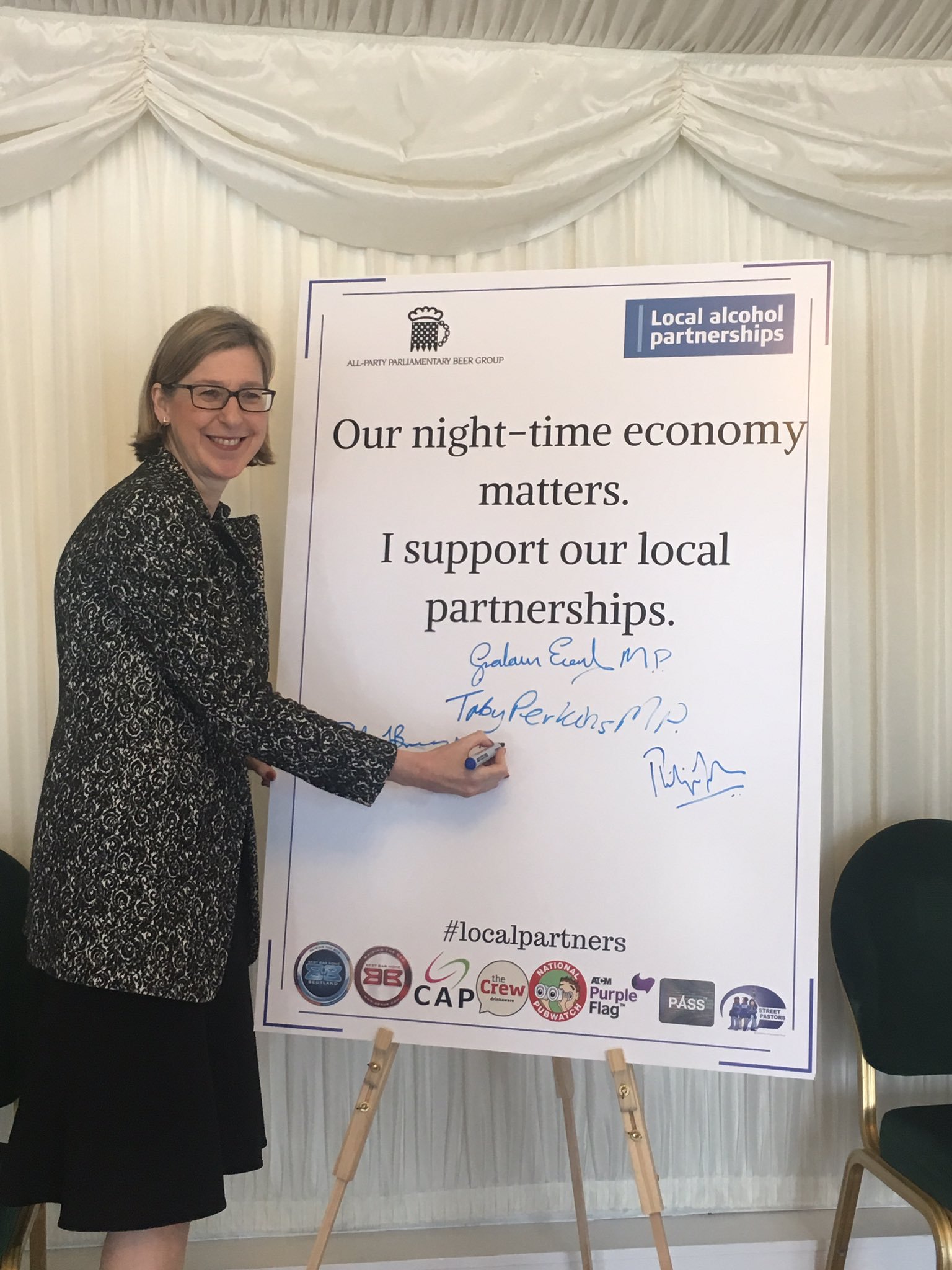
Sarah Newton is MP for Truro and Falmouth. Since July 2016 she has been Parliamentary Under-Secretary of State at the Home Office. Her responsibilities include drugs and alcohol.
During last month’s drugs debate Mrs Newton caused uproar in the House of Commons when she said she “would not agree that alcohol is the most dangerous drug” and that “alcohol taken in moderation is not a harmful drug”.
Both these statements are, of course, directly contradicted by a vast quantity of scientific evidence and many MPs corrected her dreadful mistakes as they spoke in the debate. Mrs Newton demonstrates very clearly the standard of knowledge, evidence and probity that prevails in the Home Office. It is locked into a policy of deliberately misleading both Parliament and the public on drugs and has been so for at last 50 years. Mrs Newton is the just the latest MP prepared to sell their soul and integrity for ministerial office.
Her shame is compounded by the photograph above from March 2017 which shows her endorsing and supporting the work of the Portman Group, the alcohol industry’s shadowy lobbying organisation which works relentlessly to minimise controls on alcohol and public perception of the harms it causes.
There can be no doubt that this is a form of corruption. Mrs Newton, along with the home secretary, Amber Rudd MP and her predecessor, Theresa May MP, is engaged in misleading the public, encouraging use of the most dangerous drug of all while misinforming about the less harmful alternatives such as cannabis.
Has There Ever Been A Worse UK Government Than This?
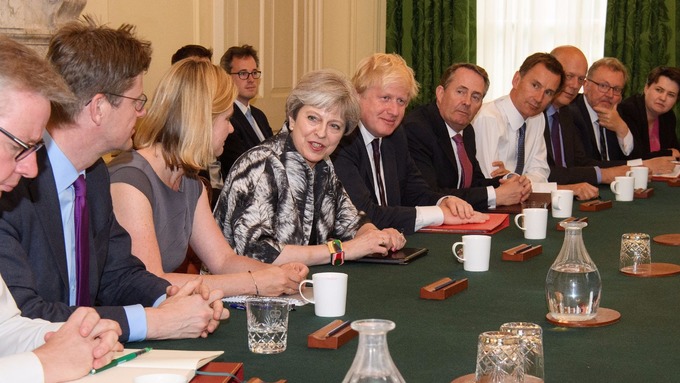
I am a member of the Conservative Party – just. My annual subscription is due and I feel physically sick at the prospect of doing anything that is supportive of the appalling collection of third and fourth rates that presently sit round the cabinet table.
The Conservative Party has Lost Its Way. We Need To Get Back To Being Tories.
We need to re-focus on our fundamental principles: individual liberty, individual responsibility, small government, free markets, evidence-based policy and a benevolent, responsible, one-nation approach.
Let’s face it, we’ve had a privileged toff, little more than a ponce on the nation, who from his position of wealth found it very easy to impose austerity on people with whom he was totally out-of-touch. Throughout his political career he vacillated and dithered on policy because he has no principles except self-advancement. Now we have some fake Tory, an authoritarian bureaucrat with big government, nanny state instincts, daughter of a high Anglican priest stuck in some 195os delusion of what Britain is today.
Meanwhile, a socialist activist but a man with integrity, courage and vision has stolen our place. Jeremy Corbyn provides more leadership in the UK than the entire Conservative cabinet put together. He was magnificent at Glastonbury, seizing the hearts and minds of not just the young but the young at heart – seizing the future! Where is the Tory alternative? There is great excitement, belief and enthusiasm for Brexit, 17.4 million people voted for it! Where is the Conservative spokesperson passionately declaiming this? The party has been hijacked by Remainers, determined to undermine the referendum result, interested only in the ambitions and concerns of the Westminster Elite.
When I try to talk to my MP, Sir Oliver Letwin, formerly number three in Cameron’s cabinet, although I am talking to someone a few months younger than me, I feel I am talking to my father’s generation – and to someone particularly old-fashioned and out-of-touch. My local Conservative Party branch, charming though many of the members are, is like an episode of Last of the Summer Wine, as disconnected from the rest of the UK as Cameron is from anyone on less than £250k per annum. At 59, I’m a youngster.
It’s outrageous really that my party has got itself into such a state with years of weak opposition, popular support for non-socialist policies and, until Corbyn, an absence of effective alternative leadership. It’s nothing less than disastrous and unless we change now we are doomed. The membership is old and dying. If we don’t get a grip within five years we will be gone forever.
A Perfect Storm Of Failure, Corruption And Arrogance.
I’ve been fascinated by and active in politics since the late 1970s. Never in my lifetime have I seen such a combination of mistakes and scandalous cock-ups. Brexit has been sabotaged by dithering and delay – and I’m quite ready to believe this is a calculated deceit. With the BBC, the bankers and the Twitterati renewing Project Fear on a daily basis, is it any wonder that the going is tough? Cameron resigned because he said we needed a Leave supporter to take charge but instead we have a Remainer, one of the worst performing government ministers ever. How, after six years of persistent failure at the Home Office, she became PM is beyond belief but even more incredible is that after her terrible election performance she is still in No. 10. It is ridiculous!
The failures are all too easy to see but let’s list them to be certain that the huge scale of this crisis is understood.
Brexit – Total failure to plan, perhaps deliberately, best illustrated by the absurd spectacle, just last month, of the Home Office commissioning analysis of the economic and social contributions and costs of EU citizens in Britain. Surely something that should have been done years ago? Boris Johnson and Michael Gove have both proved themselves to be lacking in courage and leadership skills. The bumptious fool Dr Liam Fox, who does seem to stick to his principles on Brexit, shames us by his foreign adventures, recently praising the murdering thug President Duterte of the Philippines as having ‘shared values’ with Britain.
NHS – Persistent deceit from ministers, including the utterly in-credible Jeremy Hunt, about how much money in real terms the health service is receiving. Scandalous failure to keep multiple promises about mental health having parity with physical health.
Democracy – The UK’s system of government is now a joke compared to other modern democracies. Our electoral system is primitive. Conservative and Labour parties conspire to keep the system as it is because it keeps them both in power. It is obvious that we should be moving towards some form of proportional representation, online voting and a radical shake-up of the House of Lords. MPs also need to be much more accountable. The terrible murder of Jo Cox has let too many of them off the hook that the expenses scandal put them on. Recently they have been whining about the abuse they get online. In general they deserve it for the terrible job they are doing. Also, they get protection from the police for such abuse. The police are useless when it’s a member of the public under attack. We need a job description for MPs, rights for constituents and a complaints procedure with teeth.
Social policy – I am ashamed at how Conservative ministers in reality are indistinguishable from the populist caricature of the ‘arrogant, uncaring, effing Tories’. The Grenfell Tower tragedy encapsulates everything that is wrong with the high-handed view that they take of the people who pay their wages.
Justice – After food, shelter and health what is more important than justice? The destruction of legal aid is one of the most dreadful developments in my lifetime. All governments delight in making more and more law but what use is it if it cannot be enforced? There is no justice if it is not available to everyone. I am delighted at the Supreme Court’s ruling that makes legal aid available once again for employment tribunals Without it employment law was literally useless and thousands have been deprived of their rights. And for his disastrous, destructive, incompetent and thoroughly nasty attitude the man who defines injustice in modern Britain is Chris Grayling. No other minster has more disgraced our party. He is unfit to be in government and why he remains anywhere near ministerial office is unbelievable. No one individual better epitomises the nasty, arrogant, incompetent Tory.
Prisons – There is no greater truth than that in a free society we are defined by how we treat those we send to jail. This is a terrible condemnation of Britain. Our prison system is a production line for turning petty criminals into alienated, aggressive, violent repeat offenders. There is no one who deserves the additional punishments we impose on top of deprivation of liberty. I would make an exception for Chris Grayling who really should be made to experience a taste of his own medicine. The Netherlands is closing prisons because it doesn’t send enough people to jail. We should swallow our pride and copy their system exactly.
Technology – As the nation that has led the world in virtually all new technologies, we are now falling a long way behind. The government has failed miserably to give enough priority to high speed internet. We will never catch up now and our children and our businesses are forever disadvantaged. Progress is hampered in development of new energy sources, transport and infrastructure by bureaucracy, endless bickering between special interest groups and weak strategic management. The EU has magnified all these problems and prevented progress in GM foods and other technologies that are essential to our future.
Transport – With Chris Grayling at the helm and the farce that is HS2, there is no hope for a sensible transport strategy. I simply don’t buy the argument that a slightly faster journey time between north and south will do anything to create a better future. Train fares are ludicrously high. The conditions commuters are expected to travel under are ridiculous. The Southern Rail scandal is a microcosm of government incompetence and inaction. It should have been re-nationalised at least a year ago and there should be massive fines and penalties on those responsible for the chaos, including individuals. I see no conflict with Conservative principles in re-nationalising the whole network. The mess that has prevailed since privatisation could not be any worse and compare us with railway networks and service on the continent for a true picture of our national shame and decay.
Environment – Technology and transport converge with environmental policy and this is a difficult, challenging area of policy. What we need is strong leadership – no, not the empty claims of Mrs May but the real leadership of Mrs Thatcher. Even the despicable Tony Blair showed more leadership than we have had from any current Conservative politician. We need to take bold decisions and act on them. Ecology and controlling pollution must be a real priority but we must not be distracted by the greeny loons and their endless prevarication and delays. I have no objection to fracking as long as it is strictly regulated and in recent visits to Ireland I have seen how forests of wind turbines do not destroy wonderful countryside and can have their own beauty, just as we now revere Victorian aqueducts and civil engineering. Most of all though we should racing ahead with tidal power. As an island it has to be our future and its potential is unlimited.
Northern Ireland – I hope one of the by-products of Brexit will be a united Ireland. There is no longer a real majority of unionists in the six counties and it only ever existed because of immigrants from Scotland. The UK’s shameful history in Ireland places a heavy obligation on us. We are one and the same people and the damage inflicted by the English Parliament on our neighbours must be put right. We are far closer to the Irish than we are to the French, the Dutch or the Belgians. As independent nations, with Ulster properly restored, we could be closer than ever and if Ireland wishes to remain in the EU, we should respect that.
Drugs Policy – No policy better demonstrates the incompetence, prejudice, cowardice and corruption of government ministers from all parties. Deaths from drug overdose have reached an all time high. There has been an explosion in highly toxic new psychoactive substances and the Psychoactive Substances Act 2016 has increased harms, deaths, associated crime and potency, exactly as was predicted, warnings the government chose to ignore. The government has refused to consider or take any expert advice on introducing legal access to medical cannabis, something that virtually all other modern democracies are moving forward on. Its continuing policy on cannabis defies scientific evidence and real-life experience from places where reform has been implemented. It also supports the criminal market, encourages street dealing, dangerous hidden cannabis farms and the production of poor quality, low-CBD, so-called ‘skunk’ cannabis.
Defence – A catalogue of cock-ups, dullards in charge and weak, indecisive leadership. In my view we should cancel the renewal of Trident and spend more on conventional weapons and defence measures which we may actually have to use. We should retain some battlefield nuclear weapons but invest more in our soldiers and their technology. We should also look after them far better when they leave the service
Foreign Affairs – The UK is the world superpower in ‘soft power’. Our culture, language, history give us more influence than any other nation and we should be proud to exercise it. We should have the courage to stand for our principles, independently of the USA and Europe. The £12 billion we give in international aid is far too much when there is real poverty at home but even if we halved the present budget we would still lead the world. We are responsible for the injustice perpetrated on the Palestinian people when we facilitated the seizure of their land in the 1940s. We should be standing up to Israel which has become an out-of-control monster. We created it and we must take responsibility for bringing it to order and helping it to live alongside its neighbours respectfully. Its conduct is unacceptable and we should be pursuing war crimes prosecutions against Netanyahu and many of his cronies.
Housing – The housing crisis needs a courageous, radical solution, not the pathetic, sticking plaster gimmicks and gestures that is all we have had for 50 years. Massive investment in social housing would create jobs and boost the economy all round. We shouldn’t hesitate. We shouldn’t fear a dramatic fall in house prices caused by massive extra supply. We have to get real and government must stop shirking its responsibility for a strategic role that only it can fill.
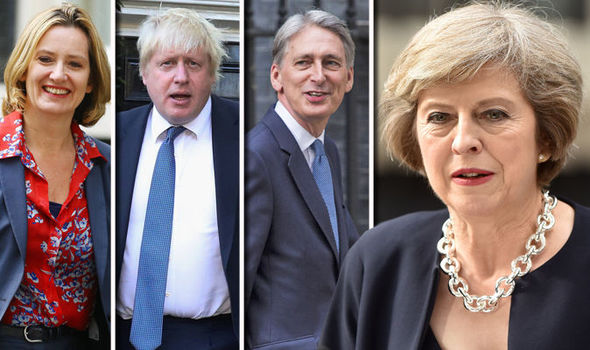
Boris is the only one with a brain
I have not yet decided whether I shall renew my membership. I’m not even sure if there is any future in the UK for me. Brexit was a great opportunity which has been sabotaged, perhaps fatally. Britain may well become a tourist destination, fascinating for the way such a small nation led the world for centuries. We are being led by weak, ineffectual, self-serving, out-of-touch and out-of date politicians. As the Conservative Party is dying, it is dragging Britain down with it.
UK Drugs Policy Equivalent To A Grenfell Tower Tragedy Every Fortnight, Yet Ministers Prescribe More Of the Same.
 The scandal that is UK drugs policy deepened last month as the Home Office published what must be one of the most irresponsible government reports ever.
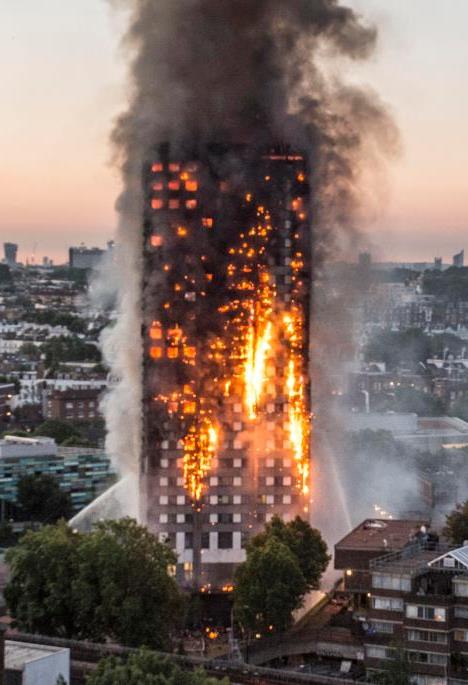
UK Drugs Policy Kills As Many People Every Fortnight
The 2017 Drug Strategy adds nothing of any significance to the same document published in 2010. Since then, deaths from drug overdose have reached an all time high of 2,479 (latest 2015 data). There has been an explosion in highly toxic new psychoactive substances and the Psychoactive Substances Act 2016 has increased harms, deaths, associated crime and potency, exactly as was predicted, warnings the government chose to ignore. The government has refused to consider or take any expert advice on introducing legal access to medical cannabis, something that virtually all other modern democracies are moving forward on. Its continuing policy on cannabis defies scientific evidence and real-life experience from places where reform has been implemented. It also supports and encourages the criminal market, encourages street dealing, dangerous hidden cannabis farms and the production of poor quality, low-CBD, so-called ‘skunk’ cannabis.
Do not doubt that this dreadful toll of death could be drastically reduced, at least halved, by a more responsible, progressive and evidence-based policy. We should treat those with the disease of addiction humanely, not criminalising them for their drug use, prescribing pharmaceutical heroin where necessary, introducing drug consumption rooms and giving far more weight to harm reduction rather than the unrealistic and ideological pursuit of abstinence. That would deal with the problem of drug deaths but millions more could have their lives improved, billions in public expenditure could be saved and many divisions and causes of conflict in our society could be swept away by a new approach to drugs policy in general.
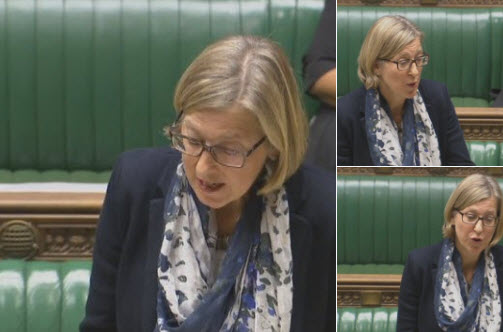
Sarah Newton MP, Minister of State, during the drugs debate
The subsequent drugs debate in Parliament exposed the brazen dishonesty and deceit of Home Office ministers. The home secretary, Amber Rudd, couldn’t be bothered to show up so it was left to Sarah Newton, MP. Her performance consisted only of lies, deceit and trickery, the like of which I have rarely seen before. For many years, the Home Office has been systematically misleading and misinforming the public about drugs but here was a minister, clearly, deliberately and without compunction, misleading Parliament. As with so much of the wickedness enforced by the Home Office, Ms Newton is now beyond redemption. There can be no doubt at all about the depth of her dishonesty and the effect on the lives of millions of people should, surely, amount to a very serious crime. Its consequences are far, far more serious than the failure of national and local government that led to the Grenfell Tower tragedy but they are caused by the same mindset of arrogance, prejudice and refusal to listen to expert evidence.
If there is any reason behind what comes out of the Home Office on drugs then it is most certainly corrupt. It may not be plain brown envelopes changing hands but at best it is negligence, failure to act responsibly and in the interests of the public. This is corruption and there is no doubt it is firmly embedded amongst Home Office civil servants. Their reputation is in the gutter: other government departments, universities and research institutions, drug licence applicants and holders, politicians – they all report stubborn, intransigent, uncooperative conduct. While giving evidence to a Parliamentary Committee a year or so ago, I was nervous about how trenchant was my criticism of the Home Office. I needn’t have been. Every member of the panel nodded and agreed with me that Home Office is impossible to deal with.
Nothing can absolve ministers of their responsibility but after nearly 40 years I have seen many of them come and go while the Home Office remains exactly the same. There is a culture amongst the civil service that resists any move towards any drug reform using whatever methods it deems necessary. This is nothing less than subversion of our democracy and it is senior civil servants engaged in this treachery.
There is blood on the hands of Sarah Newton, Amber Rudd and, of course, the former home secretary, Theresa May. That’s on the top of the misery, deprivation, violence, poverty, crime and ill health that their policies cause.
Change is inevitable but only after many more have died and others have had their lives blighted or ruined by this oppressive, unjust persecution. Although the drugs debate was once again sparsely attended, it was better than the last time the subject was discussed and more MPs from all parties are at last beginning to see the light. The Labour Party remains disgraced. Its record is even worse than the Conservatives and despite some positive words from Corbyn about medicinal cannabis, this is not reflected in policy and flatly contradicted by John McDonnell. Diane Abbott, as shadow home secretary, was truly pathetic in the debate and she offered no real opposition at all to the government.
From the campaign point of view it’s very disheartening but reformers should not despair. We are making steady progress, not just among MPs but also within the media. Even the Murdoch press, the Mail and all the tabloids have changed their position. The darkest time of the night is just before dawn and I do believe that shortly we will see the first glimmers of light. We are on the cusp of change and legal access to medical cannabis will almost certainly come first.
New Drug Strategy Promises More Death, Misery And Ill Health For UK.
 The long overdue update to the UK Drug Strategy is published today by the Home Office. A copy may be downloaded here.
Sadly, as expected, it is nothing except more of the same. It offers no new ideas worthy of any note and reinforces the failure of existing policy by further embedding an approach which has already been conclusively proven not to work.
The UK has become increasingly isolated in its approach to drugs policy and now that both Ireland and France are moving towards decriminalisation we are unique amongst modern democracies in maintaining an approach based on nothing but prohibition. We now stand closer to countries such as Russia, China, Indonesia and Singapore. In fact, the only thing that separates us from countries with such medieval policies is that we do not have the death penalty for drug offences. Otherwise our policy is just as repressive, anti-evidence, anti-human rights and based on prejudice rather than what is proven to work.
From Home Secretary Amber Rudd’s introduction, through sections based on repetition of the original strategy, ‘Reducing Demand, Restricting Supply and Building Recovery’, the document is more of the same old platitudes, bureaucratic doublespeak and meaningless civil service and social worker jargon. It offers nothing but despair to those wracked by addiction, desperate for the proven medical benefits of cannabis or suffering from the tremendous social problems caused by prohibition. In every respect it mirrors the government’s approach to housing which has led to mass homelessness, depravation and the Grenfell Tower disaster. It is yet another inadequate response imposed by a government which is out of touch and wedded to policies based on ideology rather than evidence.
UK Government Policy
Current UK drug policy has already led to the highest ever rate of deaths from overdose. Deaths from heroin more than doubled from 2012 to 2015, yet there is absolutely nothing offered in this document that might change this – as if existing policy is quite OK. Similarly, in what would be farcical humour were it not so tragic, the government seeks to portray the Psychoactive Substances Act 2016 as a success. It trumpets the closure of hundreds of retailers and websites and end to open sales but it doesn’t even mention the burgeoning new criminal market which has led to a massive increase in harm and products which are more potent but also more inconsistent and unpredictable. All the experts (except those appointed by the government) agree that this new law has been a disaster. Just like Grenfell Tower, this is government enforcing policies which significantly increase danger and harm without any regard at all to evidence or public opinion.
As before, this strategy doesn’t even consider harm reduction, it offers only a puritanical, moralistic approach based on abstinence. It fails entirely to recognise that 95% of all drug use is non-problematic, without causing harm to anybody. It is entirely focused on mis-use and blind to the great benefits, often therapeutic but also simply of pleasure, enjoyment and recreation that many people gain from safe drug use, just as most people do with that most dangerous drug of all, alcohol. These people, the vast majority, are completely ignored by their government.
By its own title this is a drug strategy, not a drugs strategy. It treats all drugs and all drug users the same, whether they are a prisoner serving a long sentence without access to education or rehabilitation, a ruthless gangster engaged in human trafficking, an affluent clubber, humble festival goer or a multiple sclerosis patient who grows a few cannabis plants for pain relief. It is a travesty of government, failing entirely to meet the needs of the population.
It also contains some of the most extraordinary factual errors and contradictions. “Most cannabis in the UK is imported”, it states in defiance of the evidence that the UK has been virtually self-sufficient in homegrown cannabis since the 1990s, even to the extent where we are ‘exporting’ to other European countries.
Unsurprisingly, the report states “We have no intention of decriminalising drugs” but then makes the dubious assertion that “Drugs are illegal because scientific and medical analysis has shown they are harmful to human health.” This is simply unsustainable in face of the facts about harms caused by legal substances such as alcohol, peanuts and energy drinks. It is also inconsistent with the stated purpose of the Misuse of Drugs Act 1971 which is about misuse “having harmful effects sufficient to constitute a social problem.”, nothing to do with individual health harms.
The report fails at all to consider the negative effects of current policy and how prohibition rather than drugs themselves is actually the cause of most harms connected with drugs. It doesn’t even mention the worldwide revolution in the medical use of cannabis or that one million UK citizens are criminalised and placed in danger of criminal sanctions or contaminated product simply for trying to improve their health. Neither does it mention drug testing, a proven method of reducing the harms of club drugs, now being supported by many police forces at festivals.
This report really is as empty, ineffectual and useless as anything produced by this already tired and discredited government. The parallels between Grenfell Tower and a government which actively maximise the harms of drugs through its policies are extraordinary. Thousands are dying every year because Mrs May and Mrs Rudd won’t listen to evidence. They pick and choose whether to accept the advice of their own Advisory Council based on political convenience rather than facts and while the Council includes eminent scientists it also includes specialists in ‘chocolate addiction’ and evangelical Christian ‘re-education’ of gay people.
Whether it’s determining the inflammability of building materials or the relative potential for harm of different substances, what is clear is that this government is more concerned with dogma, vested interests and old-fashioned prejudices than the safety, health and wellbeing of the population. This Drug Strategy is a recipe for failure, for continuing exactly as before.
Why Is CLEAR Supporting Lord Monson In His Campaign Against So-Called ‘Skunk’?

Lord Nicholas Monson
CLEAR’s first and overriding objective is to end the prohibition of cannabis. The tragedies that have struck the Monson family demonstrate all too clearly that prohibition of cannabis is futile. Not only does it not protect people from harm, it actually maximises the harms and dangers of the cannabis market.
Nicholas Monson’s eldest son, Alexander, was arrested in Kenya in 2012. allegedly for smoking cannabis. Toxicology reports found no evidence of cannabis in his system. According to both a government and an independent pathologist he died from a fatal blow to the back of his head while in police custody. Clearly, it was the law against cannabis that led directly to Alexander’s death.
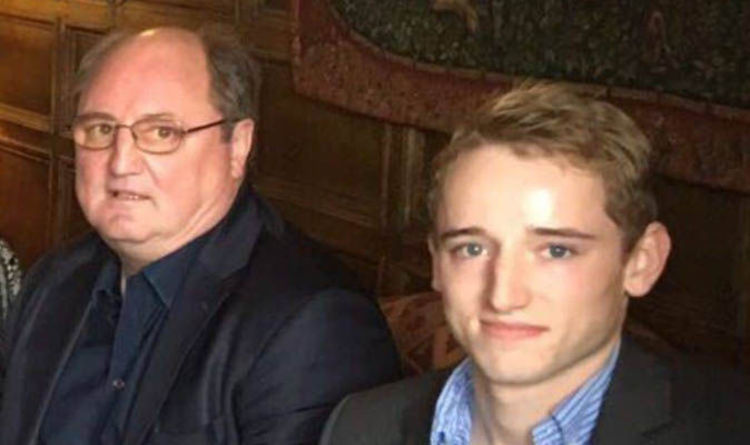
Nicholas Monson with his son Rupert
Just three months ago, Rupert, Nicholas Monson’s younger son, took his own life after a descent into depression and psychosis in which the excessive consumption of so-called ‘skunk’ was clearly a significant factor. Rupert himself said that he was addicted and there is good evidence to show that cannabis without CBD is more addictive. It is well established from research as far back as the early 1990s that approx 9% of regular users develop dependence which produces real physical withdrawal symptoms: insomnia, lack of appetite and irritability, sometimes a headache. For most people these are easily overcome within a week or so but not for everyone. Most importantly though, cannabis in the early 1990s contained, on average, half to a third as much THC as it does now and always a healthy buffer of CBD. The addictiveness of so-called ‘skunk’ with zero or very little CBD, is several times greater than the cannabis available 20 to 30 years ago.
It’s important to add that Rupert was also very badly failed by the dire state of mental health services. Surrey and Borders Partnership NHS Foundation Trust, a specialist provider of mental health and drug treatment services said that he needed to be admitted but a bed was not available. It was just a few days later that he committed suicide.
Nicholas Monson has called for so-called ‘skunk’ to be made a class A drug but also for lower potency cannabis, with a maximum THC:CBD ratio of 3:1 to be made legally available through a regulated system. Theresa May wrote to him after reading coverage of the story in the press. She expressed her sympathy and said how she shared his concerns. Importantly, she suggested that Lord Monson prepare a paper and a presentation to the Home Office on his proposals. This is a tremendous opportunity towards introducing measures that will better protect vulnerable people like Rupert and also for wider reform of the cannabis laws that will reduce all the harms presently caused by prohibition. Cannabis would be purchased from government licensed outlets just like alcohol and the aim would be to collapse the criminal market just like the market in dangerous, ‘moonshine’ whisky.
CLEAR does not agree that raising so-called ‘skunk’ to class A would be an effective measure. It would be virtually impossible to enforce, requiring a massive increase in laboratory testing of cannabis and the supply of high potency varieties would simply be pushed underground. The price will go up and all the harms of a criminal market will be increased. All the evidence is that drug classification or penalties have absolutely no effect whatsoever on consumption. However, Lord Monson suggests that all personal cannabis possession should be decriminalised and police would focus only on dealers in so-called ‘skunk’. There is a very strong argument that with high quality cannabis available legally, people would turn away from the black market.
Of course, we support the idea of legally available cannabis with a maximum THC:CBD ratio of 3:1. This could be the basis of a system that could work very successfully. The product would be available only through a limited number of licensed outlets to adults only. It would be supplied in appropriate packaging with detailed labelling of contents. Possession of any cannabis not in this packaging would be reasonable grounds for it to be seized and tested.
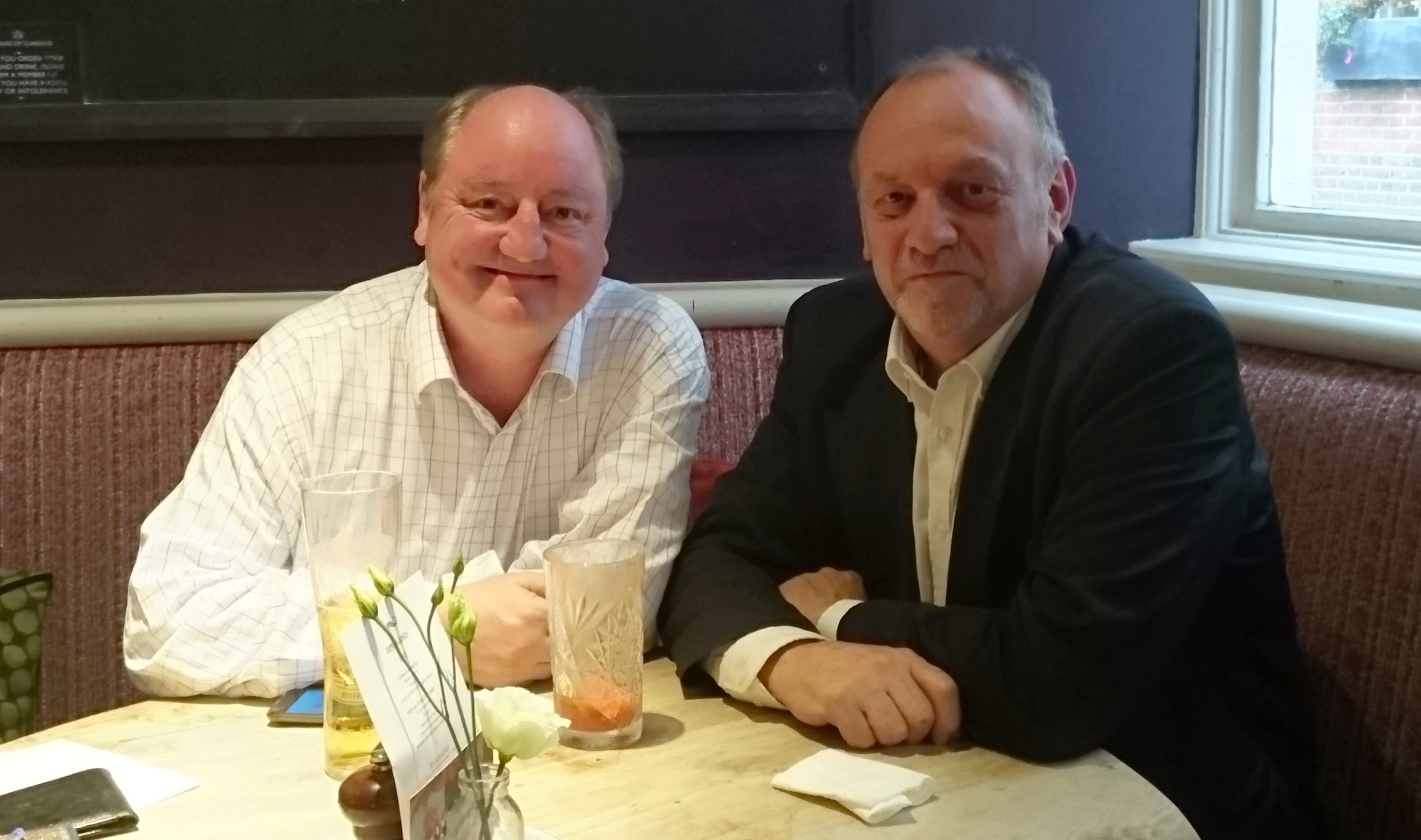
Lord Nicholas Monson, Peter Reynolds
This will, of course, provoke outrage amongst many cannabis consumers, particularly those who grow their own but it would be fantastic progress. It would usher in a far more rational, sensible regime where we could establish real data about harms and risks. If appropriate, this could lead to the regulation of higher potency varieties. Of course, we recognise that for medical use, a completely different approach to cannabinoid content is required and much higher potency may be necessary in some instances.
CLEAR is in the business of reform and this is the most likely path to reform that has ever emerged in the UK. We are not in the business of promoting a cannabis market which enthusiasts and connoisseurs would regard as some sort of utopia. The only purpose of any drugs policy must be to reduce harm and this proposal, if implemented, would massively reduce all the social harms caused by prohibition and reduce the risk of health harms.
Finally, it has to be said that, in typical fashion, a substantial part of the cannabis community has reacted in almost hysterical anger to Lord Monson’s proposals. The only effect of such behaviour is to hold back reform. We have been horrified and disgusted at the abuse directed at the Monson family. It has shown cannabis consumers in the very worst light and demonstrated that some are so stupid that they damage the very cause they seek to advocate. Nicholas Monson is a grieving father who, despite his agony, has seen the rational way forward and lent his energy and commitment towards reform that will benefit everyone. We stand alongside him and we urge all cannabis consumers to consider these ideas carefully – and please, lend us your support!
Lord Nicholas Monson adds:
“The motivation for my campaign is to protect the young and vulnerable in particular from ingesting any substance whose contents can have a deleterious short or long term effect on their minds. To watch one’s son spiral into psychosis from a heavy usage of skunk is distressing to behold. Rupert’s psychiatric team put his psychosis down to skunk. This is unequivocal. Yes there are other psychoactive drugs around but skunk is what did for Rupert. It so happens that the remedy for skunk is a legalised and regulated market in cannabis where clear information is available. This should be applauded by the recreational cannabis community. Separately I have long supported the medical community’s initiatives to prescribe variants of cannabis with high CBD for people suffering from a wide variety of conditions.”
The Best Election Outcome Is A Tory Government With A Weakened Theresa May.
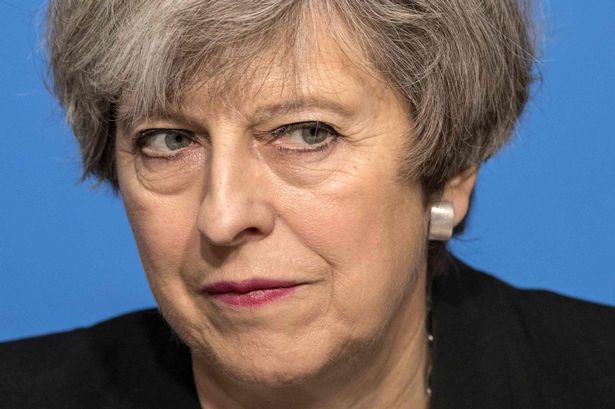
I cannot vote to support Theresa May. I could vote for my local Conservative candidate but Mrs May has made this election all about herself and she is not a true Tory.
Although I shall remain a member of the Conservative Party, I shall not vote for it. If voting tactically was relevant in my constituency I would have no difficulty in voting Labour or Liberal Democrat in order to weaken Mrs May but it would make no difference, so I shall abstain by spoiling my ballot paper.
Theresa May is not a true Tory. the most important, fundamental Conservative principles are individual liberty, individual responsibility and small government. Mrs May is in opposition to these values, she is an Authoritarian Bureaucrat. All her polices are about a bigger state, interfering more and more with our freedoms, micro-managing every aspect of our lives, just as she did at the Home Office. Yet every single one of her policies has been a failure.
Immigration has been a disaster. Since 2010 she has failed entirely to control this most divisive of issues. It is at the root of Brexit and behind a large part of the conflict in our society. Mrs May has simultaneously allowed us to be ‘swamped’ by economic migrants and implemented some of the most horrific human rights violations against genuine refugees. Her failure to provide sanctuary for those fleeing Syria brings everlasting shame on Britain.
Policing is such a disaster that it is impossible to get any attention to a burglary, car theft, online fraud or harassment. Almost any crime short of being stabbed in the street is ignored. Meanwhile the division between police and the community grows ever wider. We never see policemen except speeding by in a car. The police canteen culture and a corrupt complaints system has encouraged terrible negligence, failing to protect children against grooming, failing to create a safe environment where young people do not feel they have to carry knives.
Drugs policy is a scandal with the highest ever rate of deaths by overdoses, stupid legislation like the Psychoactive Substances Act which has massively increased the harm of Spice. The ban on khat promoting crime and racial division for a policy that has nothing to do with evidence. The deeply cruel and anti-science policy of denying access to medicinal cannabis and the idiocy of gifting the wider £6 billion cannabis market to organised crime.
Remember the Passport Office chaos? Remember the racist billboard vans telling migrants to go home? Remember the deal advising Saudi Arabia, a brutal, oppressive, medieval regime, on policing? Remember Mrs May banning the UN Special Rapporteur on Violence Against Women from visiting Yarl’s Wood Detention Centre? The appalling rejection of asylum claims from Afghan heroes who had acted as interpreters for British troops? The proliferation of CCTV, making us the most snooped-on people in a so-called democracy in the world? The repeated, insistent bullying and intolerant imposition of the Snooper’s Charter despite opposition from all sections of our society? The exclusion of controversial speakers from entering the UK on no grounds except that Mrs May disagrees with them? The total, unmitigated, inexcusable disaster that is everything to do with the Border Force?
The triggering of Article 5o is the only successful policy that Theresa May has had anything to do with. It made best use of her talents: we needed someone stubborn, obstinate, pig-headed, intransigent and incapable of listening to get that job done in the face of the anti-democratic Remainers.
If the Liberal Democrats didn’t have this stupid, illiberal, anti-democratic policy on Brexit I’d be voting for them on 8th June. However, there is no party other than the Conservatives with a credible set of policies to govern Britain – but Mrs May is the weakest link. She needs to step aside after the election and make way for a real leader, someone who actually believes in Brexit, in Britain as a world leader in liberty, justice and freedom.
The UK Government’s Very Last Excuse For Denying Access To Medicinal Cannabis.
Essentially, UK government policy on cannabis hasn’t altered since 1971. Despite the vast amount of new evidence published since then and revolutionary change, particularly on medicinal use, all across the world, successive governments have stubbornly and obstinately refused to consider any sort of reform.
It doesn’t matter which party has been in power, Conservative, Labour or the coalition, it’s a subject that ministers and MPs simply refuse to engage with. It’s easier that way for them and be in no doubt: laziness, fear of a media backlash and deeply ingrained prejudice are the key factors in this impasse.
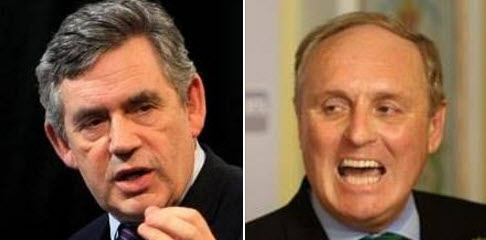
Grubby, Corrupt Deal Between Brown And Dacre
We had the downgrade to class C in 2003 and then back up to B in 2009 but this was a turgid and useless effort. No notice was taken of any evidence arising from this experiment. It was enacted to enable police to concentrate more on class A drugs and reversed based on Gordon Brown’s ‘Presbyterian conscience’ and a grubby, corrupt deal with Paul Dacre to win the Daily Mail’s political support. In fact, use went down while cannabis was class C and back up again when it was upgraded but governments have no interest in facts or evidence on this subject, only in political expediency and spinning advantage with the media.
The clamour for medicinal access has increased enormously, just as the evidence for its safety and efficacy has become overwhelming. The UK is now virtually isolated amongst first world countries with a cruel, inhumane and anti-evidence policy which makes us a laughing stock with all who are properly informed. It’s not a laughing matter for the victims though. For those persecuted by this nasty policy it is tears, pain, suffering, disability – all of which could be alleviated to at least some extent just by a stroke of the Home Secretary’s pen. It is sickening that all those who have held that office over the last 45 years escape without any shame or opprobrium on their character.
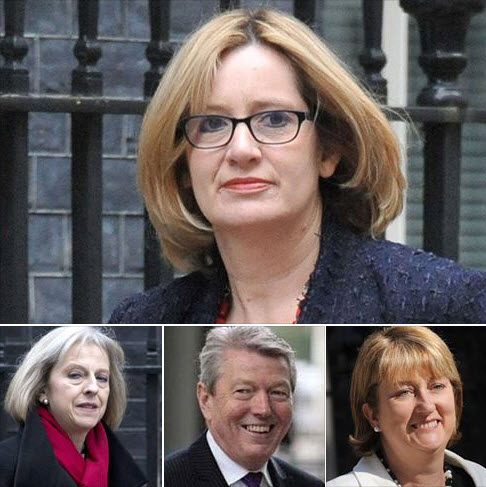
Home Secretaries Have A Lot To Answer For
CLEAR receives hundreds of letters and emails every year from people who have written to their MP about medicinal cannabis and it is astonishing that unlike almost every other policy, exactly the same words are used by all MPs. They slavishly repeat the Home Office line which is ruthlessly enforced across party lines.
There have been some subtle changes. The marketing authorisation issued for Sativex in 2010 has led to a minor change in the tired and inaccurate line ‘there is no medicinal value in cannabis’. It’s now become ‘there is no medicinal value in raw cannabis’. This is scientifically and factually incorrect. Pharmacologically, Sativex and the ‘raw’ plants from which it is made are identical. It is whole plant cannabis oil and its authorisation by the MHRA as an extract of THC and CBD is fundamentally dishonest. GW Pharmaceuticals reveals it contains more than 400 molecules, the MHRA says it only contains two and “unspecified impurities”.
More recently, and in the face of an explosion of supportive evidence, another line has been added. This states that ‘the UK has a well established process for the approval of medicines through the MHRA and that any company wishing to bring a medicinal cannabis product to market should follow this procedure. In fact, inside sources suggest that the government is very keen to see new cannabis-based medicines approved by the MHRA. It would take the wind out of the sails of the medical cannabis campaign
This is the very last excuse for denying access to medicinal cannabis. It is nothing but an excuse and one that is misleading and based on deception. If we can expose how weak, inappropriate and fake it is, the government will have nowhere else to hide.
Firstly, as demonstrated with Sativex, the MHRA process is incapable of dealing with a medicine that contains hundreds of molecules. It is designed by the pharmaceutical industry for regulating single molecule medicines, usually synthesised in a lab, which have the potential to be highly toxic. CLEAR rejects the tired, boring theory that ‘Big Pharma’ is engaged in a massive conspiracy to deny access to cannabis and to ‘keep people ill’ so it can continue to sell its products to the NHS. The MHRA isn’t engaged in such malevolent conduct, it’s simply incapable of 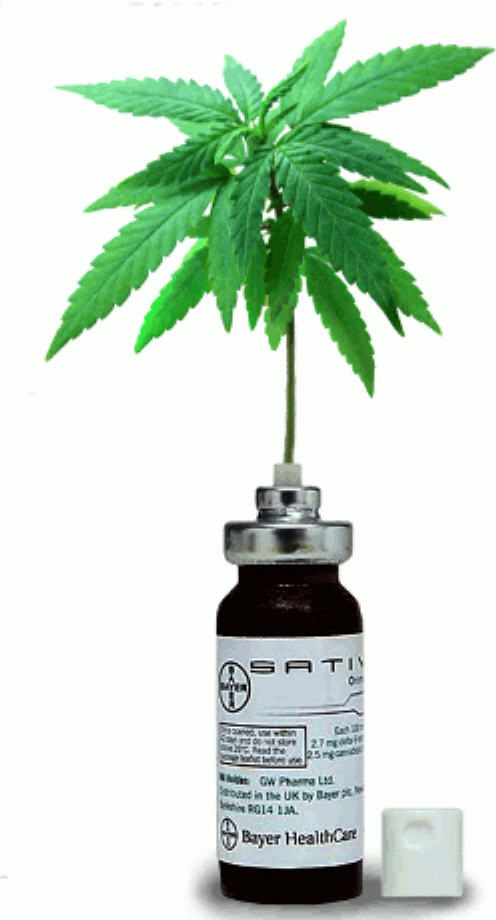 properly evaluating a whole plant extract through its existing methods.
The bright, shining truth of this, that totally demolishes the government’s position, is that in every jusrisdiction throughout the world where medicinal cannabis has been legally regulated, it is through a special system outside pharmaceutical medicines regulation. Every other government that has recognised the enormous benefit that medicinal cannabis offers has come to the same conclusion: cannabis is a special case. It is far more complex but much, much safer than pharmaceutical products.
Of course, there is also the ludicrous status of cannabis as a schedule 1 drug, which prevents doctors from prescribing it. If it was moved to schedule 2, alongside heroin and cocaine, or to schedule 4 alongside Sativex (the logical choice), doctors could be prescribing it tomorrow and high-quality, GMP and EU regulated medicinal cannabis from Bedrocan would be immediately available.
So the MHRA is the final excuse, the last obstacle to a revolution in healthcare in the UK. We need an ‘Office of Medicinal Cannabis’ as there is in the Netherlands, or ‘Access to Cannabis for Medical Purposes Regulations’ as administered by Health Canada. Colorado has its ‘Medical Marijuana Registry Program’ and other US states have similar arrangements. Israel’s Ministry of Health has its ‘Medical Cannabis Unit’. In Australia, its equivalent of the MHRA, the Therapeutic Goods Administration, has established its own set of medical cannabis regulations.
This is now the most important factor in achieving medical cannabis law reform. Next time you contact your MP or in any advocacy or campaign work you do, this is where to focus your energy. Cannabis is a special case, it is not like other medicines. Once we can open the eyes to this truth the path ahead will be clear.
Theresa May Is Not A Tory, She’s An Authoritarian Bureaucrat.
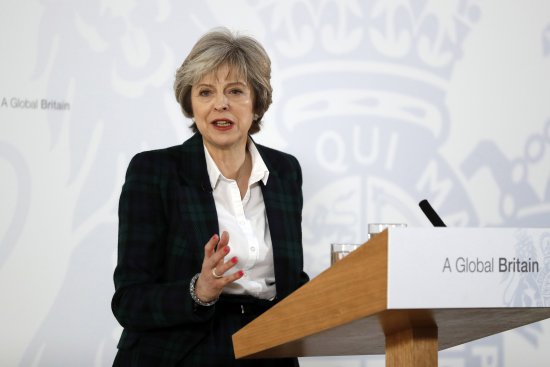
LONDON, ENGLAND – JANUARY 17: British Prime Minister Theresa May delivers her keynote speech on Brexit at Lancaster House on January 17, 2017.
At the beginning of last week, Tuesday, 17th January, Theresa May finally made clear that leaving the EU means leaving the single market. It also means leaving the customs union because without doing so it will be impossible to negotiate independent trade agreements.
This has been obvious all along. Before the referendum, campaigners on both sides were clear. The idea that there was any doubt about it was an invention of the soft-left Blairites at the BBC, eagerly supported by the delusional Tim Farron and his party, now the most illiberal, anti-democratic party in Britain.
I’m unhappy that Ms May didn’t make this clarification a lot sooner but of course she was a Remainer and as David Cameron said, it would be foolish to have a captain to steer the ship in a direction he or she didn’t want to go.
I am generally very unhappy about Ms May’s style of government. It is secretive, authoritarian, dismissive of public opinion and everything is played very close to her chest and as much behind closed doors as she can get away with. Her dictatorial, micro-managerial style at the Home Office is continuing in her role as PM and I believe it is unsustainable for the leader of our country. We need far more openness, interest in the people and a desire to inform rather than to conceal.
But the shocker for me was her repudiation of central Conservative philosophy. She derided the ‘cult of individualism’ as she put it.
 Ms May, the Tory Party is all about the individual. It is about individual liberty and individual responsibility. Individualism is the very essence of why I am a Tory.
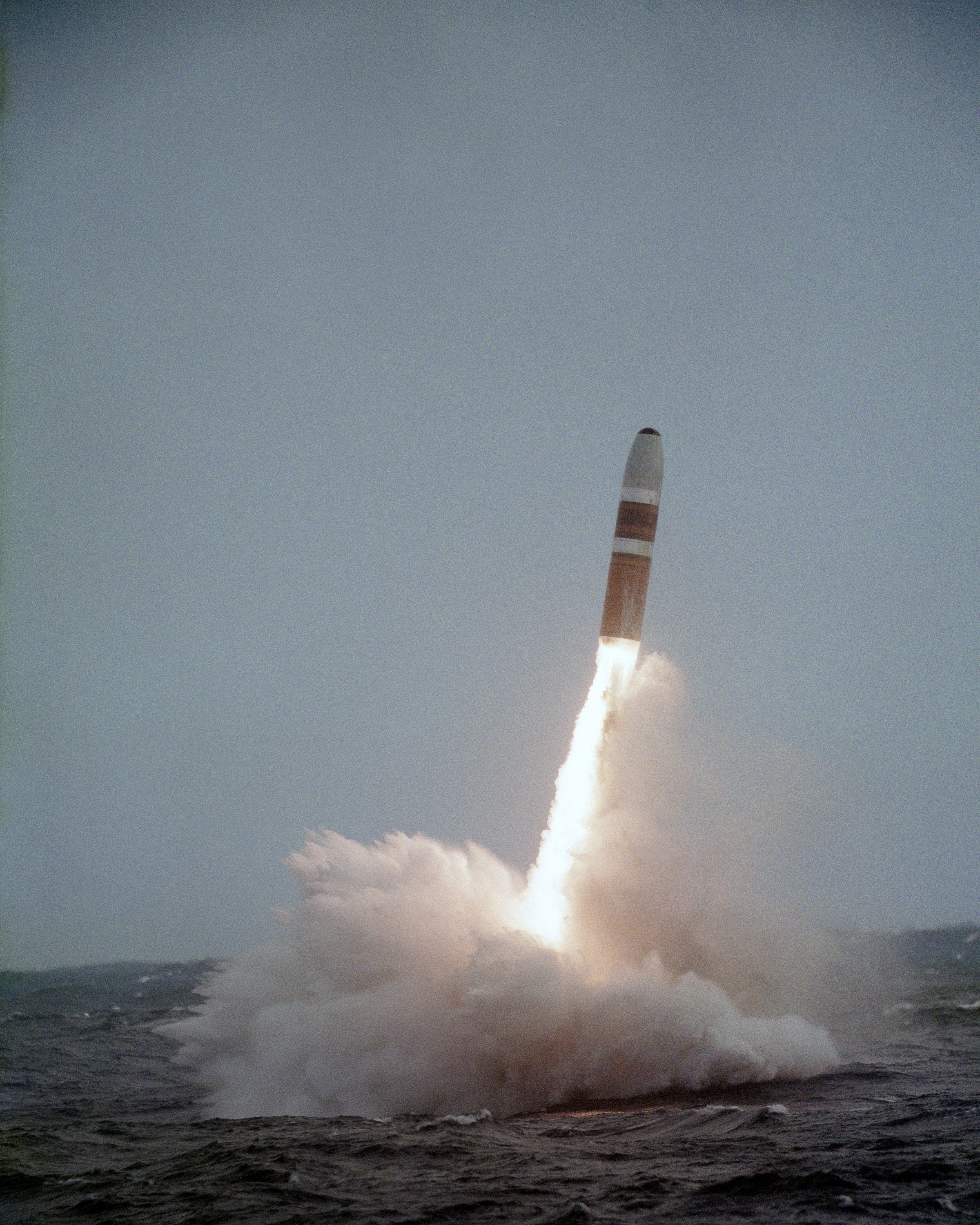
Then today the brazen cover up about the Trident missile launch which was kept secret from Parliament, even as it was debating the renewal of our nuclear deterrent. Her secretive, fundamentally dishonest approach was revealed as she dodged Andrew Marr’s questions again and again. It is obvious that she did know about the incident, chose to keep it secret from both Parliament and the electorate and refused to be honest about it when questioned.
I am , of course, reminded about her attempt to falsify and cover up the International Comparators report on drugs policy which showed clearly that harsher criminal sanctions have no affect at all on drugs use. This didn’t fit with her prohibitionist prejudice and she wanted it changed to deceive Parliament and the electorate.
I have given Theresa May a more than adequate, even generous, chance to prove herself, particularly given my knowledge of her conduct as Home Secretary. She was the right compromise candidate at the time but now the Conservative Party needs to get rid of her and appoint someone with leadership ability. I was impressed with her initial words about inclusiveness and a country that ‘works for everyone’ but I see now that the leopard has not changed its spots. She is authoritarian, illiberal, secretive, anti-democratic and, most importantly, dishonest.
Theresa May is no Tory and she is not fit to be prime minister.
The UK’s First Licensed Cannabis Dispensary.

Mike Dobson
When Mike Dobson first called me a few months ago and told me he had an idea for gaining legal access to cannabis in the UK, I was, of course, sceptical. CLEAR has frequently been approached with hare-brained and convoluted plans for avoiding the law that prohibits cannabis. Without exception they have all been bonkers.
Within a few minutes though, I could see this one was different. In the past, most of these ideas have been around sidestepping the law by claiming ‘freeman’ status, the suggestion being that statutes, laws made by Parliament, are only enforceable if you have consented to them in the first place. Some claim to have succeeded in using this to defeat charges for growing cannabis, even having their harvest returned to them by police. I can’t verify any of these stories but I’m quite sure the courts are littered with the broken dreams and delusions of those who have tried to go down this path.
The big difference with Mike’s plan, his ‘scheme’ as I like to call it, is that instead of evading, avoiding or dodging the law, it actually uses the law itself to provide legal rights to grow and possess cannabis.
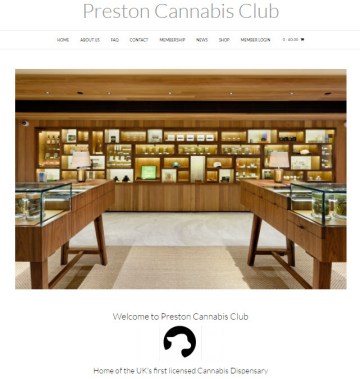
Preston Cannabis Club Website. Click To Enter.
The Misuse of Drugs Act 1971 empowers the Home Secretary to issue licences in respect of cannabis. These could be for cultivation, production, possession, supply or any other activity such as import or export.
This scheme involves setting up a company to cultivate cannabis and produce cannabis products under licence from the Home Office – the ‘Licensed Supplier’. Providing the various licence conditions are complied with, the Home Office cannot unreasonably refuse such a licence. If it does then it will be subject to judicial review. The licence conditions that need to be met are security and the prevention of ‘diversion’ of the cannabis into illicit or unlicensed hands.
The next step is to set up another company where it and its shareholders, guarantors and/or members are licensed to possess cannabis – the ‘Membership Company’. Again, providing the licence conditions are complied with, the Home Office must issue a licence and if it refuses judicial review proceedings can be brought. Sensible and responsible rules must be put in place so that members only consume cannabis in private with necessary security precautions.
The genius of Mike’s scheme, now coming to reality with the first Membership Company, the Preston Cannabis Club, is that it uses the law exactly as it is intended, to ensure that the only people cultivating, producing, supplying or possessing cannabis are licensed to do so.
I have consulted informally with several lawyers and there is no doubt that this scheme holds promise. Whether it works out remains to be seen. CLEAR is putting its weight and support right behind the scheme as a responsible and lawful way to enable legal access to cannabis. I would expect initial resistance from the authorities but if we are right, it would mean Parliament would have to pass a new law to prevent this happening. In my judgement that is unlikely and, in fact, the demonstration of such a legitimate route to cannabis would get the government off the hook of its present, unsustainable policy.
Watch this space. CLEAR is now actively involved in supporting this venture and we will keep you fully informed.

 Peter Reynolds