Posts Tagged ‘Misuse Of Drugs Act’
IRELAND. Brutal Five-Year Jail Sentence for Cannabis Caregiver from Limerick

Patrick Moore and family
Patrick Moore lives with his partner and two teenage children in rural County Limerick.
In September 2020, at the height of the pandemic, a huge force of armed gardai raided their home. Patrick was out at the time so Ali, his partner and their two children were faced with 15 armed men brandishing automatic weapons.
Ali called Pat and he returned home immediately. He told the gardai there were cannabis plants growing in the shed at the back of the house and handed them the key so they could investigate. They discovered 19 plants, three small seedlings, the rest in various stages of flowering. They also collected together some bags of trim which had been put aside to make oil, amounting in total to 2.4 kilos.
The gardai also found two notebooks which recorded financial transactions and a calendar that indicated cultivation had been going on for some time.
Last week, at Limerick District Court, having already pleaded guilty to cultivation and supply, Pat attended his sentencing hearing. The whole family was there and I went along to offer moral support. We waited from 11 in the morning until his case was finally called around 4pm. The trim was valued by gardai at €48,000 (€20 per gram) and the plants at €15,200 (€800 each), a total of €63,200. By 5:30 he had been sentenced to five years in jail, the final two years suspended.
As acknowledged in court, the gardai had been acting on information received and clearly believed that Pat was some sort of major drugs baron, potentially armed and dangerous. I fervently hope that karma causes appropriate, severe misfortune to the person responsible.

Limerick Court House
Pat was a caregiver, that is someone who produces cannabis for medical use, mostly oil, which is used by people with cancer, other serious conditions and for end-of-life care. Before sentencing him, Judge Catherine Staines read eight or nine testimonials from people he had been supplying.
One was from the daughter of an elderly man who has suffered with Huntington’s Disease for nearly 20 years. When he started using the oil that Pat provided at no cost he regained his power of speech, he was able to swallow again and no longer needed all his food to be pureed. He also experienced far fewer lung infections and pneumonia. His sleep improved and his energy and vitality for life returned.
Another was from the parents of a boy who was diagnosed with leukaemia at age four and given two years to live. That was six years ago and he is still alive today. Pat provided oil free of charge and the family is in no doubt that it saved their son’s life.
There is no pretence here. Pat told me that he was selling high quality flower to a small network of friends and acquaintances. He used this to fund the production of oil for medical use, all of which he gave to sick people without charge. For those that don’t know, the ratio of cannabis flower to oil is about seven to one. You need seven grams of cannabis to make one gram of oil.
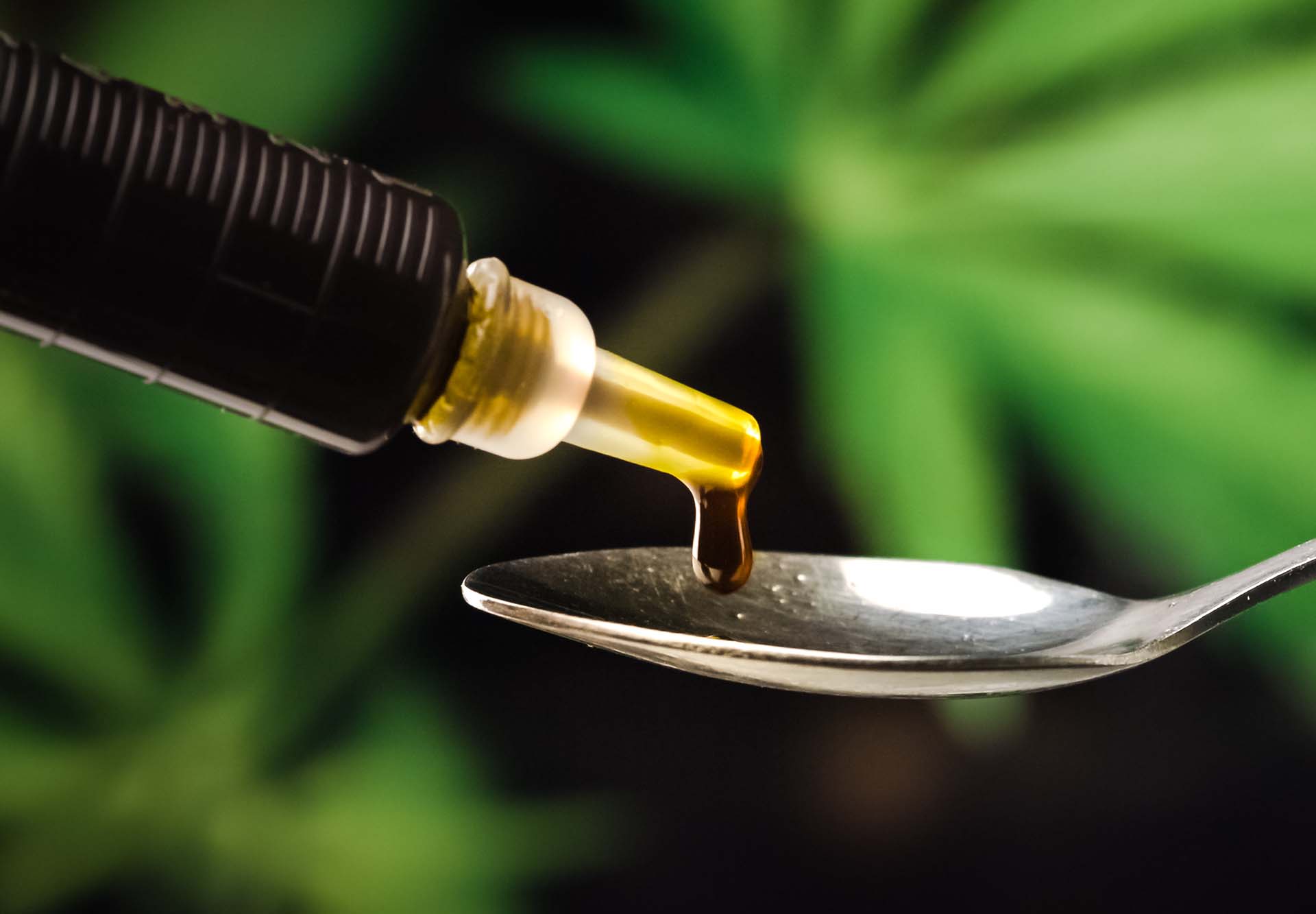
Cannabis oil
I know Pat is not alone. Throughout the UK and Ireland there are dozens of cannabis caregivers providing lifesaving medicine to sick people which, for complex reasons, conventional medicine and healthcare have failed to deliver. I know and have known several of these courageous people, some of whom put themselves in terrible danger for altruistic reasons. More than once I have seen that they simply can’t stop, even if they want to. How can you deny a sick child or someone in terrible pain when you have the ability and knowledge to help?
I have known Pat for about four years and he certainly doesn’t have a lavish lifestyle. He helps Ali run a small café in the local town and he had a business selling hydroponic equipment and supplies online. He drives an old Land Rover and at home he has a large polytunnel where he grows a variety of vegetables and even his own tobacco. He was the first person to show me that it is actually possible to grow tomatoes in South-West Ireland’s hostile climate.
To understand his sentence and why there is no sensible prospect of an appeal, it is necessary to put aside one’s opinion that the law prohibiting cannabis is wrong. All decent, rational people who are properly informed will recognise the injustice, the self-defeating stupidity of this law but it remains in force, for now.
Ireland’s Misuse of Drugs Act 1977 is a cut-down version of the UK’s Misuse of Drugs Act 1971. There are no different classifications of drugs, they’re all just controlled drugs, so heroin and cocaine are treated in the same way as cannabis. There is a particularly iniquitous clause, section 15A, added in 1999, that prescribes a mandatory minimum sentence of 10 years in jail for possession of drugs with a value of over €13,000. The maximum sentence is life.
Although described as mandatory, in practice the trial judge does have some discretion in ‘exceptional and specific circumstances’, namely previous ‘good character’, pleading guilty at an early stage and providing ‘material assistance’ in investigation of the offence. There is no reduction for cannabis compared to more harmful drugs. The relevant factor is the value of the drugs and therefore the inherent ‘criminality’ of the offence.
Opening the hearing, prosecution counsel tried to head off any chance of a lenient or suspended sentence by citing authorities that showed where a light sentence had been imposed, it had been increased on appeal. Prosecution counsel had already told Pat’s barrister that they would appeal if the sentence was suspended.
I was shocked, deeply disturbed, by the poor performance of Pat’s barrister. He was Mark Nicholas SC, one of the highest paid barristers in Ireland but in my judgement he was barely competent. He stuttered and bumbled and repeated himself and went all round the houses in presenting mitigation. It was awful and as I was sitting next to Ali I tried to conceal my horror. Later she told me that it was clear from the expression on my face what I thought.
In my career I have spent some time training people how to make presentations. It’s not that different to presenting a case in court. If Mr Nicholas had been an 18 year-old in a training session, I would have stopped him and sent him home to think about whether he really wanted the job. That’s how bad he was.

Mark Nicholas SC
He made vague references to Pat being interested in meditation, that growing cannabis was part of a self-sufficiency ‘lifestyle’ and that the people Pat was supplying shared his ‘belief’ that cannabis has some beneficial properties. It was as if it was all some eccentric, hippy-dippy, whacko nonsense. Nicholas failed to mention that the Irish state has recognised cannabis as a legitimate medicine since 2017.
Neither did Mr Nicholas adduce any of the testimonials as evidence in support of mitigation. All he did was make vague references to Pat’s ‘motivation’, the implication being that he may be a bit deluded in thinking he was doing anyone any good.
I am not a lawyer but I have considerable experience in cannabis law, procedure and sentencing and my eldest son is himself a barrister, practising in England and Wales, frequently in drugs cases. So, I do have a good understanding, sufficient, I believe, to form a fair and very low opinion of Mr Nicholas’ performance.
Of all the officials in court probably the most sympathetic was the judge. She said it was quite clear that Pat was not a drug dealer exploiting vulnerable people. She remarked that €3000 cash found in the house was voluntarily returned by the gardai. They did not regard it as the proceeds of crime. I was disappointed she made the point that “cannabis causes a great deal of harm” because firstly the evidence in general doesn’t support that and secondly the evidence was that the cannabis grown by Pat had caused a great deal of good! Inevitably she added “including psychosis”. It’s appalling how media misinformation has fixed this false idea into mainstream thinking.
The judge also called Pat “naïve”, in thinking that disclosing to her he was taking a course in cannabis cultivation would help his case. Eventually she said that she was taking seven years as the starting point for his sentence but that in view of his previous good character, guilty plea and ‘material assistance’ to the investigation she would reduce it to five years with the final two suspended.
I have looked at the case reports and though I hate to say it, under Irish law, it is the correct sentence. I think she was as lenient on him as she could be. If she had gone further, the prosecution would have appealed.
Of course, to any fair-minded, properly informed, decent person, it is brutal, wildly disproportionate to any harm caused and has tragic consequences not only for Pat but for Ali and their two children.
The law is a bad law for which there is no justification. The section 15A sentencing mandate is obscene. The valuation placed on the cannabis by the gardai is absurd, although even a correct valuation would not have been below the €13,000 threshold.
I don’t think the judge is to blame. I don’t even think Pat’s barrister, Mark Nicholas, is to blame because even if he had done his job to a reasonable level of competence, it would have made no difference. But let this be a warning to anyone to reject him if he is proposed as your counsel.
The blame lies squarely with the Oireachtas, with the ministers, senators and TDs who have allowed this dreadful, useless law to remain in force. Specifically, the buck stops at the door of Helen McEntee TD, Fine Gael’s Minister for Justice. She bears responsibility for a sentence that in my opinion is sadistic and which, without doubt, will achieve nothing at all except misery for Pat and his family and massive wasted costs borne by the taxpayer.
There are good grounds to believe that cannabis may be decriminalised in Ireland within the next year or two. Inevitably, thereafter it will be legalised and regulated but even then, unlicensed cultivation and sale would probably remain an offence although unlikely to result in jail at the scale of Pat’s activity.
Hopefully, despite this conviction, Pat will be able to play a part in a future legitimate cannabis industry in Ireland. For now, I think of him in Limerick Prison as the temperatures plummet to a five-year low, of his unwell patients seeking an alternative supply of medicine and of Ali and the children with a cold, bitter hole in their lives.
“War On Drugs Has Failed, Say Former Heads Of MI5, CPS And BBC”, The Daily Telegraph, 21st March 2011
The “war on drugs” has failed and should be abandoned in favour of evidence-based policies that treat addiction as a health problem, according to prominent public figures including former heads of MI5 and the Crown Prosecution Service.
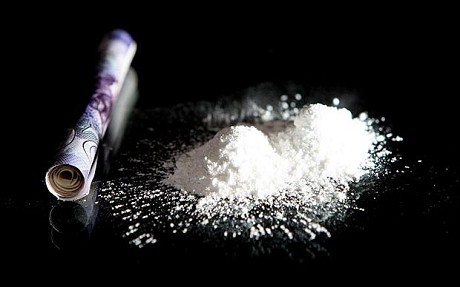
Drug availability and use has increased with up to 250 million people worldwide using narcotics such as cannabis, cocaine and heroin
Leading peers – including prominent Tories – say that despite governments worldwide drawing up tough laws against dealers and users over the past 50 years, illegal drugs have become more accessible.
Vast amounts of money have been wasted on unsuccessful crackdowns, while criminals have made fortunes importing drugs into this country.
The increasing use of the most harmful drugs such as heroin has also led to “enormous health problems”, according to the group.
The MPs and members of the House of Lords, who have formed a new All-Party Parliamentary Group on Drug Policy Reform, are calling for new policies to be drawn up on the basis of scientific evidence.
It could lead to calls for the British government to decriminalise drugs, or at least for the police and Crown Prosecution Service not to jail people for possession of small amounts of banned substances.
Their intervention could receive a sympathetic audience in Whitehall, where ministers and civil servants are trying to cut the numbers and cost of the prison population. The Justice Secretary, Ken Clarke, has already announced plans to help offenders kick drug habits rather than keeping them behind bars.
The former Labour government changed its mind repeatedly on the risks posed by cannabis use and was criticised for sacking its chief drug adviser, Prof David Nutt, when he claimed that ecstasy and LSD were less dangerous than alcohol.
The chairman of the new group, Baroness Meacher – who is also chairman of an NHS trust – told The Daily Telegraph: “Criminalising drug users has been an expensive catastrophe for individuals and communities.
“In the UK the time has come for a review of our 1971 Misuse of Drugs Act. I call on our Government to heed the advice of the UN Office on Drugs and Crime that drug addiction should be recognised as a health problem and not punished.
“We have the example of other countries to follow. The best is Portugal which has decriminalised drug use for 10 years. Portugal still has one of the lowest drug addiction rates in Europe, the trend of young people’s drug addiction is falling in Portugal against an upward trend in the surrounding countries, and the Portuguese prison population has fallen over time.”
Lord Lawson, who was Chancellor of the Exchequer between 1983 and 1989, said: “I have no doubt that the present policy is a disaster.
“This is an important issue, which I have thought about for many years. But I still don’t know what the right answer is – I have joined the APPG in the hope that it may help us to find the right answer.”
Other high-profile figures in the group include Baroness Manningham-Buller, who served as Director General of MI5, the security service, between 2002 and 2007; Lord Birt, the former Director-General of the BBC who went on to become a “blue-sky thinker” for Tony Blair; Lord Macdonald of River Glaven, until recently the Director of Public Prosecutions; and Lord Walton of Detchant, a former president of the British Medical Association and the General Medical Council.
Current MPs on the group include Peter Bottomley, who served as a junior minister under Margaret Thatcher; Mike Weatherley, the newly elected Tory MP for Hove and Portslade; and Julian Huppert, the Liberal Democrat MP for Cambridge.
The group’s formation coincides with the 50th anniversary of the United Nations Single Convention on Narcotic Drugs, which paved the way for a war on drugs by describing addiction as a “serious evil”, attempting to limit production for medicinal and scientific uses only, and coordinating international action against traffickers.
The peers and MPs say that despite governments “pouring vast resources” into the attempt to control drug markets, availability and use has increased, with up to 250 million people worldwide using narcotics such as cannabis, cocaine and heroin in 2008.

By Martin Beckford, Health Correspondent
They believe the trade in illegal drugs makes more than £200 billion a year for criminals and terrorists, as well as destabilising entire nations such as Afghanistan and Mexico.
As a result, the all-party group is working with the Beckley Foundation, a charitable trust, to review current policies and scientific evidence in order to draw up proposed new ways to deal with the problem.
Breakthrough In The Drugs Debate!

Bob Ainsworth
Tomorrow, Bob Ainsworth MP, former Home Office drugs minister and Secretary of State for Defence, will call for the legalisation and regulation of drugs. He is to lead a Parliamentary debate in Westminster Hall, at 2.30pm on Thursday 16th December 2010.
Great credit for this must go to the inestimable Transform Drug Policy Foundation, which has led the fight against prohibition. This is an extraordinary breakthrough. The news literally brought tears to my eyes. We have fought so long for such progress.
Mr Ainsworth said;
“I have just been reading the Coalition Government’s new Drugs Strategy. It is described by the Home Secretary as fundamentally different to what has gone before; it is not. To the extent that it is different, it is potentially harmful because it retreats from the principle of harm reduction, which has been one of the main reasons for the reduction in acquisitive crime in recent years.
However, prohibition has failed to protect us. Leaving the drugs market in the hands of criminals causes huge and unnecessary harms to individuals, communities and entire countries, with the poor the hardest hit. We spend billions of pounds without preventing the wide availability of drugs. It is time to replace our failed war on drugs with a strict system of legal regulation, to make the world a safer, healthier place, especially for our children. We must take the trade away from organised criminals and hand it to the control of doctors and pharmacists.
 As drugs minister in the Home Office I saw how prohibition fails to reduce the harm that drugs cause in the UK, fuelling burglaries, gifting the trade to gangsters and increasing HIV infections. My experience as Defence Secretary, with specific responsibilities in Afghanistan, showed to me that the war on drugs creates the very conditions that perpetuate the illegal trade, while undermining international development and security.
My departure from the front benches gives me the freedom to express my long held view that, whilst it was put in place with the best of intentions, the war on drugs has been nothing short of a disaster.
Politicians and the media need to engage in a genuine and grown up debate about alternatives to prohibition, so that we can build a consensus based on delivering the best outcomes for our children and communities. I call on those on all sides of the debate to support an independent, evidence-based review, exploring all policy options, including: further resourcing the war on drugs, decriminalising the possession of drugs, and legally regulating their production and supply.
One way to do this would be an Impact Assessment of the Misuse of Drugs Act in line with the 2002 Home Affairs Select Committee finding – which included David Cameron – for the government to explore alternatives to prohibition, including legal regulation.
The re-legalisation of alcohol in the US after thirteen years of Prohibition was not surrender. It was a pragmatic move based on the government’s need to retake control of the illegal trade from violent gangsters. After 50 years of global drug prohibition it is time for governments throughout the world to repeat this shift with currently illegal drugs.”
Peter Lilley MP, former Conservative Party Deputy Leader said;
“The current approach to drugs has been an expensive failure, and for the sake of everyone, and the young in particular, it is time for all politicians to stop using the issue as a political football. I have long advocated breaking the link between soft and hard drugs – by legalising cannabis while continuing to prohibit hard drugs. But I support Bob Ainsworth’s sensible call for a proper, evidence based review, comparing the pros and cons of the current prohibitionist approach with all the alternatives, including wider decriminalisation, and legal regulation.”
Tom Brake MP, Co-Chair, Liberal Democrat Backbench Committee on Home Affairs, Justice and Equalities said;
“Liberal Democrats have long called for a science-based approach to our drugs problem. So it is without hesitation that I support Bob Ainsworth’s appeal to end party political point-scoring, and explore sensitively all the options, through an Impact Assessment of the Misuse of Drugs Act.”
Labour’s Paul Flynn MP, Founder Council Member of the British Medicinal Cannabis Register said;
“This could be a turning point in the failing UK ‘war on drugs.’ Bob Ainsworth is the persuasive, respected voice of the many whose views have been silenced by the demands of ministerial office. Every open rational debate concludes that the UK’s harsh drugs prohibition has delivered the worst outcomes in Europe – deaths, drug crime and billions of pounds wasted.”
The Truth About Sativex
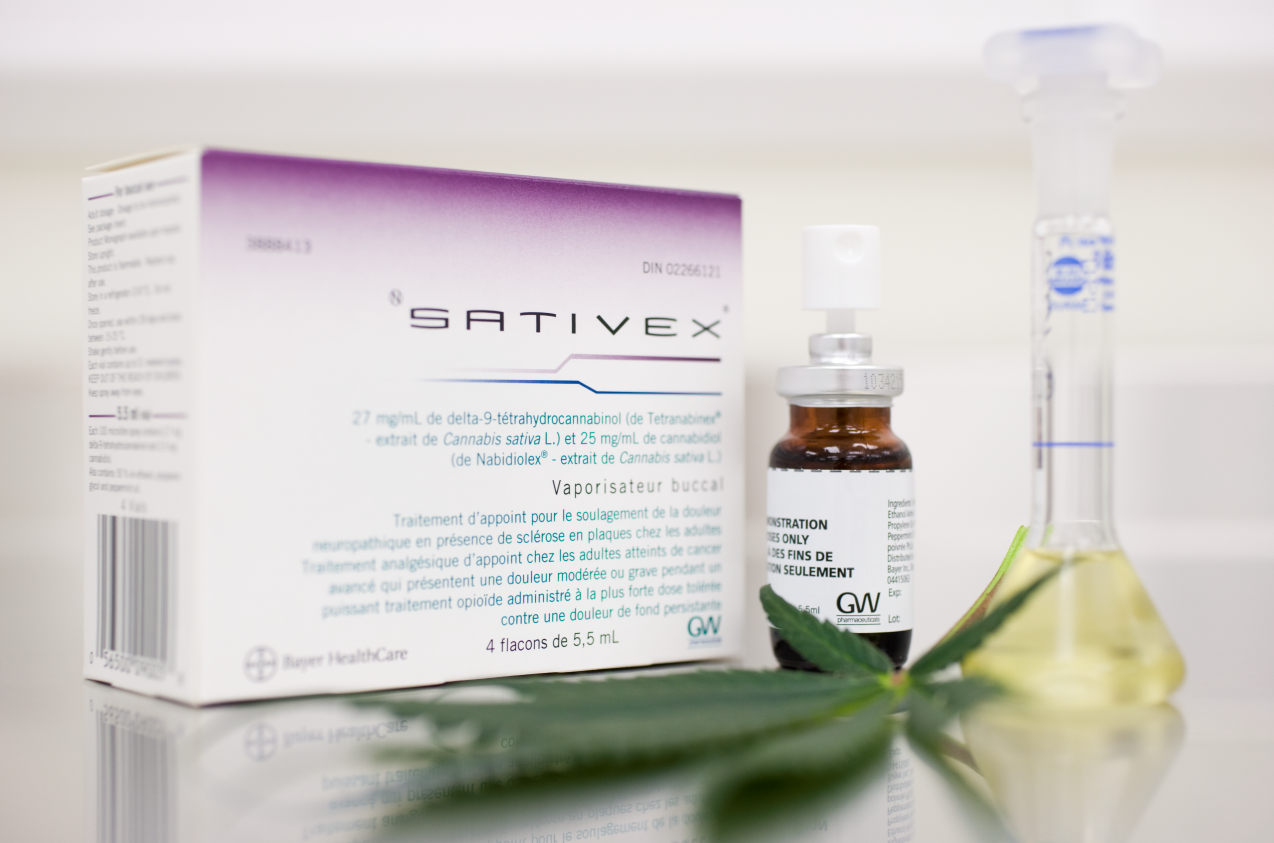 Sativex is super strong, concentrated cannabis. Nothing more, nothing less.
GW Pharmaceuticals would have you believe that it’s a “pharmaceutical” product because according to its research that’s what patients prefer. As the GW spokesman puts it, “It’s a pharmaceutical solution, formulated with the ability to deliver a precise dose and with stringent standards of quality, safety and efficacy”.
 In fact, what GW does is grow high quality cannabis under pretty much the same conditions as most illegal growers. It uses clonal propagation to ensure consistent levels of cannabinoids. Lighting and hydroponic nutrition is computer controlled with automatic ventilation. It really is no different from the most sophisticated and efficent illegal cannabis farms. It’s a recognised and proven technology now also used by Bedrocan in Holland, the Dutch government’s exclusive medicinal cannabis grower and Gropech in California which is building a new 60,000 sq ft facility in Oakland for a crop worth $50 million per year.
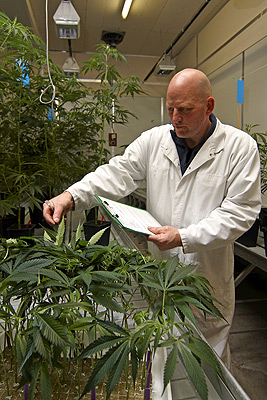
Bedrocan Grow
The difference between these crops from legal and illegal growers is insignificant. It’s similar to buying your tomatoes from the supermarket or the farm shop.

GW Grow
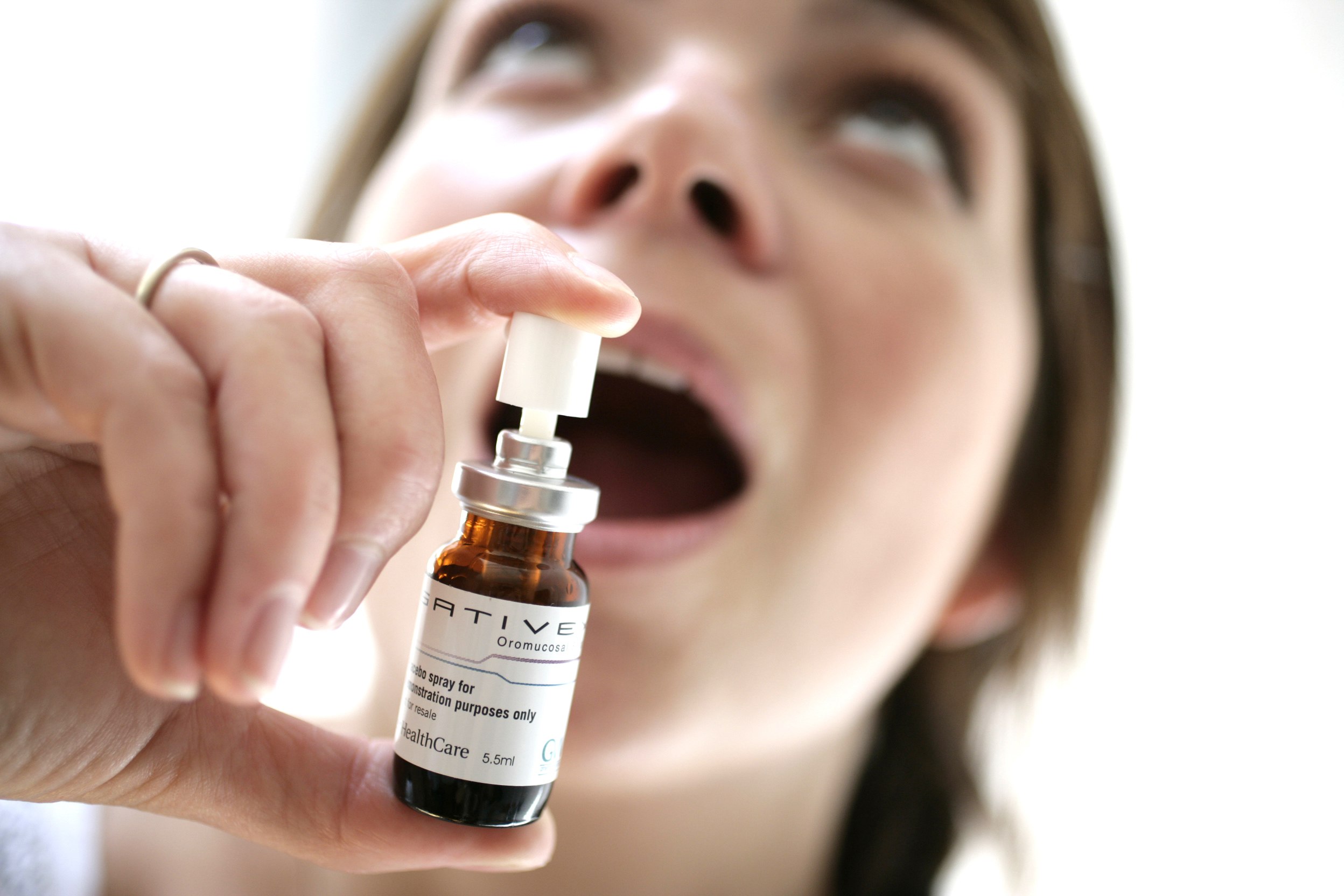
GW takes its high quality cannabis, chops it up and makes a tincture by heating it under pressure with CO2 and then adding ethanol to precipitate an oil. Then, with the addition of a little peppermint oil to mask the taste and some preservative, the filtered liquid is packaged into tiny little aerosol bottles. Each spray delivers 2.7mg of THC and 2.5mg of CBD. What GW doesn’t tell you that it also contains all the other 100+ cannabinoids found in the plant, each of which has its own mechanism of action and effect. It also contains flavonoids, terpines and other compounds. Everything that is found in the plant.
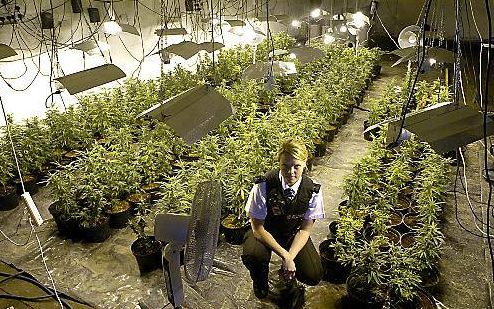
Illegal Grow
I applaud GW Pharmaceuticals for bringing the enormous benefits of cannabinoid therapy into the 21st century. It’s nothing new though. The medicinal value of the plant has been known and widely used for thousands of years. Only in the last century has it been demonised by lies and propaganda. It would be a mistake though to think that Sativex is anything different from the plant itself. It’s just been wrapped up in a marketing and physical package which has enabled stupid and cowardly politicians to accept it.
In fact, Sativex remains just as illegal in Britain as herbal cannabis. Even though it has received MHRA approval for use in the treatment of MS spasticity and may be prescribed by a doctor, it remains a schedule 1 drug under the Misuse Of Drugs Act. The Home Office has indicated that it intends to amend the law but has not yet done so. This means that any pharmacist who dispenses Sativex at present is guilty of exactly the same criminal offence as any street dealer in weed or hash.
The Home Office will, of course, turn a blind eye to this but not to medicinal herbal cannabis even though, in every sense, it is identical to Sativex (except that Sativex also contains alcohol and peppermint oil). The stark idiocy of British law is revealed.
Never before has there been a better example of the how the law is an ass and so are the spineless politicians who support it.

 Peter Reynolds