Archive for the ‘Politics’ Category
The Final Nail in the Conservatives’ Coffin: Suella Braverman
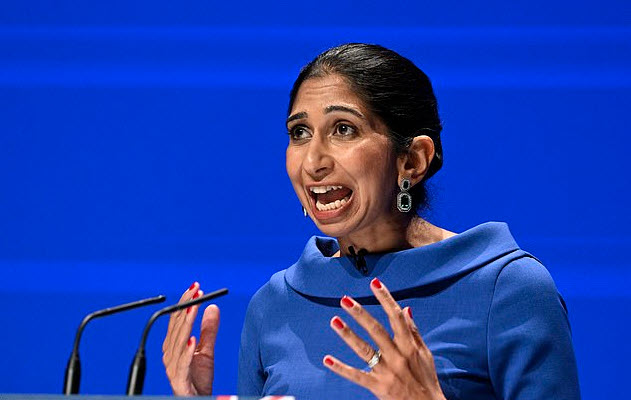
Oh, that Britain is brought so low as this.
Our shame that we have brought generations of overseas people to our shores and that some of them have become the most racist and xenophobic of our citizens.
Succeeding and reprising another Asian woman whose family was rescued by British asylum, Suella Braverman is the nadir of Home Secretaries, a ‘nasty party’ caricature of spite, authoritarianisim and hate.
Anyone who can “dream” of seeing refugees deported to Rwanda is either fundamentally evil or mentally ill. Flying people applying for asylum 4,000 miles to a country that is notorious for human rights abuses is, by any reasonable assessment, a crime.
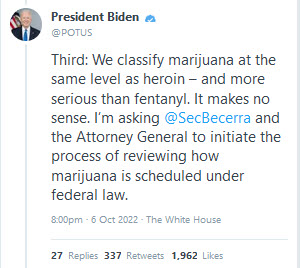
As for her idiotic pronouncements on drugs policy, I’m not going to waste my time on them. They are so stupid and so opposed to the evidence, they say everything about her that needs to be said.
And she’s a security risk with repeated breaches of the ministerial code. Sunak’s government is doomed and he’s wrecked the slight chance he did have of survival by appointing this awful, despicable woman.
Conservative PCCs. ‘Cannabis: Just a Bit of Weed or a Class A Drug?’ Never has a fearmongering campaign backfired so badly.
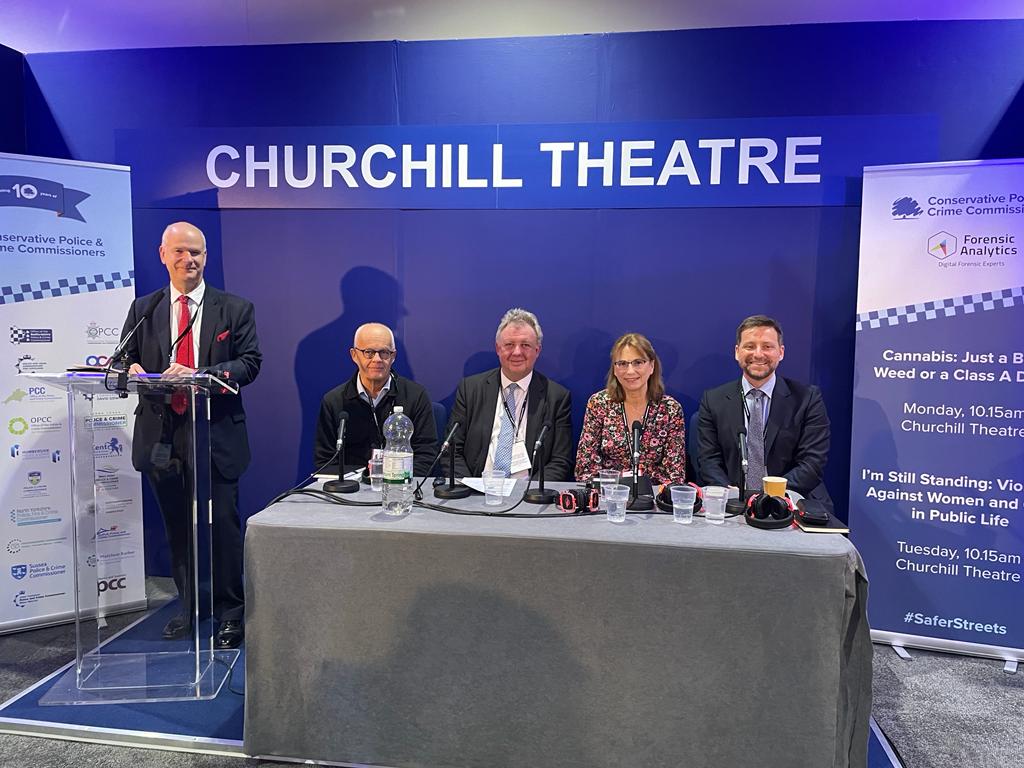
Reportedly ‘laughed off the stage”, the meeting has been met with universal ridicule. It’s quite clear to anybody that trying to clamp down on cannabis wouldn’t work, it would just increase the harms of the criminal market. Also, even the Home Office’s own research shows that increasing penalties has no impact at all on drug use.
Perhaps most worrying of all is the health scares the PCCs were trying to push come from the Australian doctor, Professor Stuart Reece, who is a member of the evangelical, fundamentalist Christian group ‘Drug Free Australia‘. Prof. Reece has a record of 25 heroin addicts dying while under his care in less than two years. He also gave evidence to the Australian parliament that it was the “immoral policies that permitted condoms (which were) the real cause behind AIDS”.
When will these foolish people learn the truth that is repeatedly proven and reinforced by experience?
‘Prohibition never works, it only makes the problem worse’
Future UK Drugs Policy must embrace NHS-funded medicinal cannabis, adult-use legalisation and legal regulation of all drugs
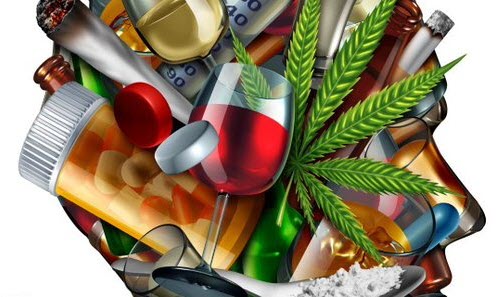
Adult-use legalisation of cannabis is the only solution to the huge problem of the violent, gangster-controlled drugs trade which now dominates our streets. Revenue from the £6 billion per year cannabis market is what funds activity in the smaller but much more profitable heroin and crack market (with meth starting to make inroads in the UK).
Current government policy supports the gangsters’ business model and is directly responsible for violence such as the murder of Olivia Pratt-Korbel, the record number of drug deaths, the proliferation of dangerous products, contaminated drugs, synthetic cannabinoids, street dealing, knife crime, county lines and ease of access by minors. Until the government faces up to the disastrous policy it has pursued for over 50 years, all these problems will continue to get worse.
Prescribed cannabis will never reach everyone who can benefit from it, even when it is available on the NHS. I am confident that the research now being conducted by the Cannabis Industry Council (CIC) will prove that cannabis can be funded by the NHS with a net gain as it will reduce use of other more expensive and harmful medicines.
I envisage a cannabis market which includes:
1. Prescription-only (POM) sophisticated cannabinoid medicines which have been through clinical trials and have a marketing authorisation
2. POM cannabis as flower, oils and extracts, unlicensed medicines
3. Over-the counter (OTC) low-THC cannabis extracts as food supplements
4. Adult use cannabis in all forms available through licensed retailers
5. Grow-your-own (GYO for personal use only
There will be regulations to ensure standards, quality and safety at every level. There will still be criminal offences for supplying to minors and for commercial activity which is unlicensed.
All drugs should be legally available within regulations which are proportionate to their potential for harm. The most difficult part of this is that alcohol will need to be much more tightly restricted. This is why it is the alcohol industry and its massive wealth which drives opposition to drug law reform. Its spending power on advertising in the media and its lobbying of politicians is a corrupt influence which causes massive harm in our society.
The number of stores selling alcohol should be substantially reduced. Limits should be set on the quantity that can be purchased, much the same as current restrictions on OTC medicines.
Heroin should be available on prescription subject to engagement in treatment. ‘Abstinence’ is an unrealistic and damaging objective. The aim of treatment should be to improve health and support a sustainable lifestyle.
Cocaine is the most difficult problem. On its own it is no more harmful than alcohol but taken with alcohol as it usually is, its potential for harm increases exponentially. Crack is a very dangerous drug, not so much addictive as compulsive. Until we find a way of dealing with it, it will contine to drive acquisitive crime with users having no concern about the consequences of their actions. The huge dilemma is that anyone who has powder cocaine can learn very quickly how to ‘wash’ it into crack. However, if we continue to prohibit cocaine we will continue to make the problem worse. We must find a way to regulate access that will minimise harm and for now, I do not know what the solution is.
MDMA should be available in a similar way to adult-use cannabis, manufactured to quality standards, properly labelled and with limits on the quantity that can be purchased.
Taken together these measures will greatly improve public health, reduce pressure on the NHS, massively reduce all crime and free up police to concentrate on real crime which has victims.
Still ‘Insufficient Evidence’ for the NHS to Fund Medicinal Cannabis – or What’s it Really About?
The laboratory evidence for medicinal cannabis is through the roof in proof of efficacy and safety. The observational clinical evidence is also conclusive.
The evidence that is ‘lacking’ is that which fits in with the medical establishment’s well-established formula for making senior clinicians rich. The same doctors that write the guidelines are the ones who earn the very fat fees for running clinical trials and decide which evidence is valid and which isn’t. When the Royal Colleges and the professional medical bodies have worked out a way to get cannabis under their control, suddenly all the evidence will be OK. Then the committees and advisory boards that these same doctors sit on will turn on the NHS funding tap.
Until then, doctors are frightened of cannabis. A medicine that works, that is safer than virtually all the pills you can buy over-the-counter and has powerful, beneficial effects for a very wide range of conditions is a real threat to vested interests and doctors’ status. It shakes their world and so they are eager to disparage it, exaggerate its risks and diminish its efficacy.
Only when the medical establishment understands how its pre-eminence is going to be maintained, knows where fees and prestige are coming from, then cannabis will be ‘discovered’ by the NHS and all the benefits to patients and in reduced costs will follow.
We Trusted Our Leaders Never to Permit Another Holocaust.
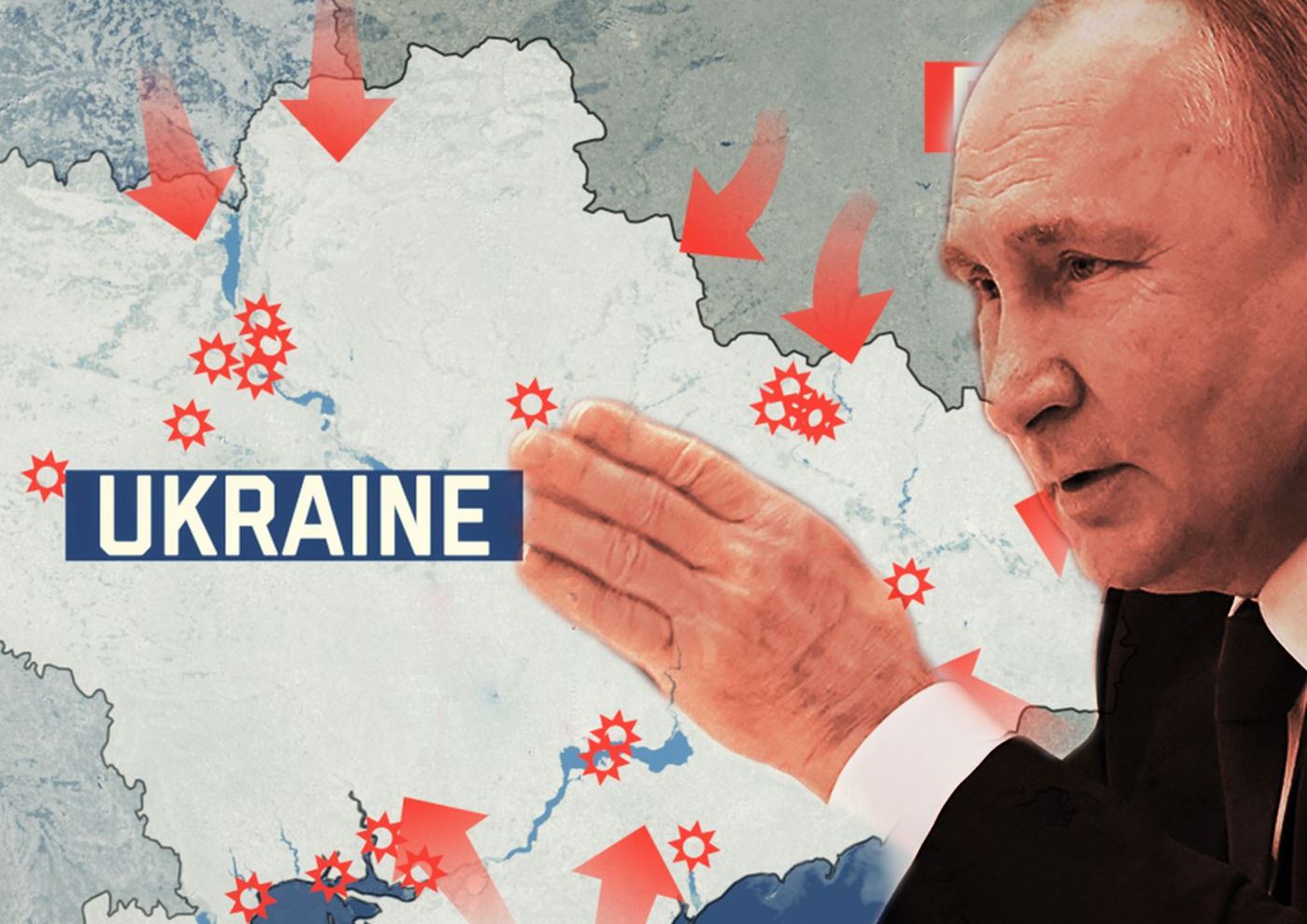
We relaxed really, complacent, appalled at the past but confident that we as civilised people would never allow a tyrant to commit genocide, cause suffering on such a scale. But that is exactly what Putin is doing in Ukraine.
The truth is our leaders are weak, indecisive and cowardly. There is no leadership, merely reaction to opinion polls, focus groups and newspaper headlines. None of them has the mettle that is required. All of them will evade any courageous decision and any action they do take will be because they have been forced into it.
This is the perfect scenario for a bully and despot like Putin but we have already seen that the courage of the people of Ukraine is beating him back. Were it not for the sheer quantity of soldiers and firepower that he has, he would already be defeated and probably disappeared to Siberia.
I believe the people of Europe, Britain and the EU countries are courageous like the Ukrainians, far more courageous than our leaders.
The only way to deal with a bully is to stand up to him, exactly as the Ukrainians are demonstrating. We have submitted to Putin in Syria. We have appeased him over Crimea. We have stood back and watched him flatten Mariupol and now start the forced deportation of refugees – perhaps to slave labour or extermination camps?
We must stop him. Supplying arms and aid to Ukraine is helping to hold him back and he is running out of resources to run his war. He is being backed into a corner, so we are creating the same peril as if we were fully engaged in the war. He could easily unleash chemical, biological or nuclear weapons without any further reason.
I believe we have the capability from US and British warships in the Black Sea to impose a no-fly zone instantly and to launch devastating cruise missiles and air strikes at his key frontline units and supply lines.
My view is we should also have special forces engaged on assassination missions, multiple teams, each trying different routes and methods to locate and kill him. This is the ethical choice, rather than military action that inevitably kills civilians. The US, Britain and France have the military capability for this and now is the time to act.
We must not cower in fear, for if we do continue to permit these crimes against humanity then we become complicit in them. I and I believe the majority of European people have the courage to act now and face him down. If we do not, we may not get another chance.
Home Affairs Committee Inquiry into Drugs. Evidence Doesn’t Work with Politicians, Will Common Sense?
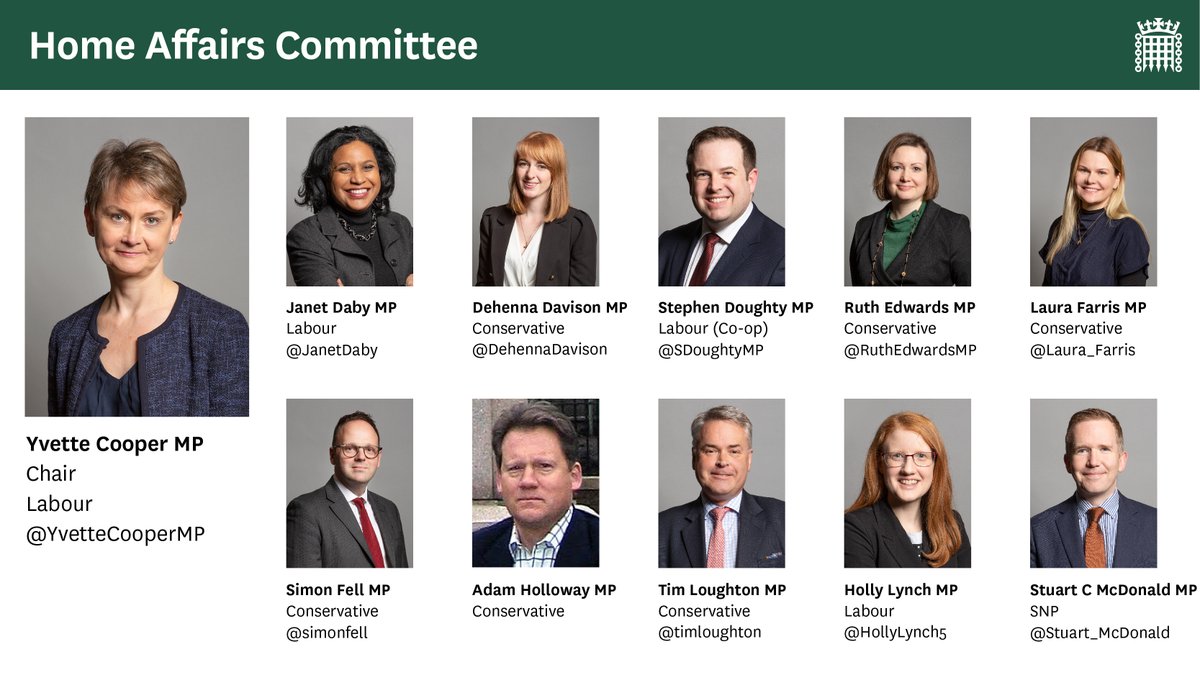
I am unable to share my detailed response to the inquiry until it has formally accepted and published it. However, this introduction explains the basis of my submission.
********
I am the president of CLEAR Cannabis Law Reform, the longest established and largest membership-based cannabis policy group in the UK, founded in 1999 with more than 600,000 followers. We represent people who support cannabis law reform, not all but most are also cannabis consumers. We are committed to a responsible, science and evidence-based approach.
I have participated in the cannabis law reform campaign for over 40 years. For over 30 years I have worked professionally in healthcare and medicine and for the past 10 years in the legal cannabis and cannabinoid industry.
The committee’s first inquiry into drugs was in 1983. I submitted evidence then at the tender age of 26 and to every inquiry since up to this year’s at the age of 64.
What stands out in all these inquiries is the overwhelming weight of evidence and opinion in favour of radical reform. Yet despite this, apart from the legalisation of access to prescribed medicinal cannabis in 2018, no progress has been made. On the contrary, politicians continue to prefer to posture as ‘tough on drugs’ rather than follow evidence or public opinion.
There is no doubt of the failure of current policy, yet both major parties continue to stick rigidly to prohibition. This despite the highest ever level of drug deaths, the de facto decriminalisation of cannabis by police and widespread contempt for our drug laws demonstrated by colossal consumption, particularly of cannabis, cocaine and ecstasy (MDMA) by people of all ages and social backgrounds.
There is also no doubt of the cost of this failed policy, estimated to be in the region of £20 billion per annum, and that it drives crime, violence, gangsterism and the breakdown of cohesion in society. One of the common misconceptions, which ministers dishonestly promote, is that it is drugs that drive these problems when in fact it is almost always policy that is the cause. Present policy directly supports and encourages organised crime.
What will it take for politicians to grasp this nettle?
Clearly, erudite submissions of evidence and logical argument do not work, however well qualified or experienced the source. Despite many politicians’ admissions of drug use, once in office they choose to continue with policies that, had they been caught with illegal drugs, would probably disqualify them from the jobs they now hold. Frequently, when they leave office they suddenly reverse their position and support reform. This brazen hypocrisy causes great damage to our society and contributes to widespread contempt for our political system.
So, in this submission, I address the issues concerned with common sense. For instance, specifically on cannabis, it is easily possible to find scientific evidence either maximising its dangers or minimising them. In the UK, mainly due to research at the Institute of Psychiatry, we have a particularly extreme point of view on its likelihood to cause mental illness but this is unique in the world. Most other countries take a far more balanced approach and the media is not as hysterical about these potential harms. It is possible to swap studies ad infinitum and nothing is achieved by this. Instead, I propose the common sense that since the 1960s the number of cannabis consumers has risen from about zero to about 3 million, yet there is no correlation at all with the rate of diagnosed mental illness which is steady or declining.
The fantastic statistical projections from the Institute of Psychiatry, using the most esoteric mathematical formulae, drive fear about cannabis but they simply do not match the real word experience of the millions of people who regularly consume the drug. It is this sort of mismatch that paralyses our ability to reach a consensus. This is why I believe that far more weight needs to be given to common sense.
Drug use is a normal part of life for most people. The distinction between drugs which are legally permitted, alcohol and tobacco, and drugs which are banned is, in itself, extremely harmful. Alcohol and tobacco are two of the most harmful drugs, much more harmful than many drugs that are banned. It is common sense that the law should guide people accurately, not mislead them as at present.
Putin’s War. He has to be Stopped Now. Delaying Will Make it More Difficult.
M
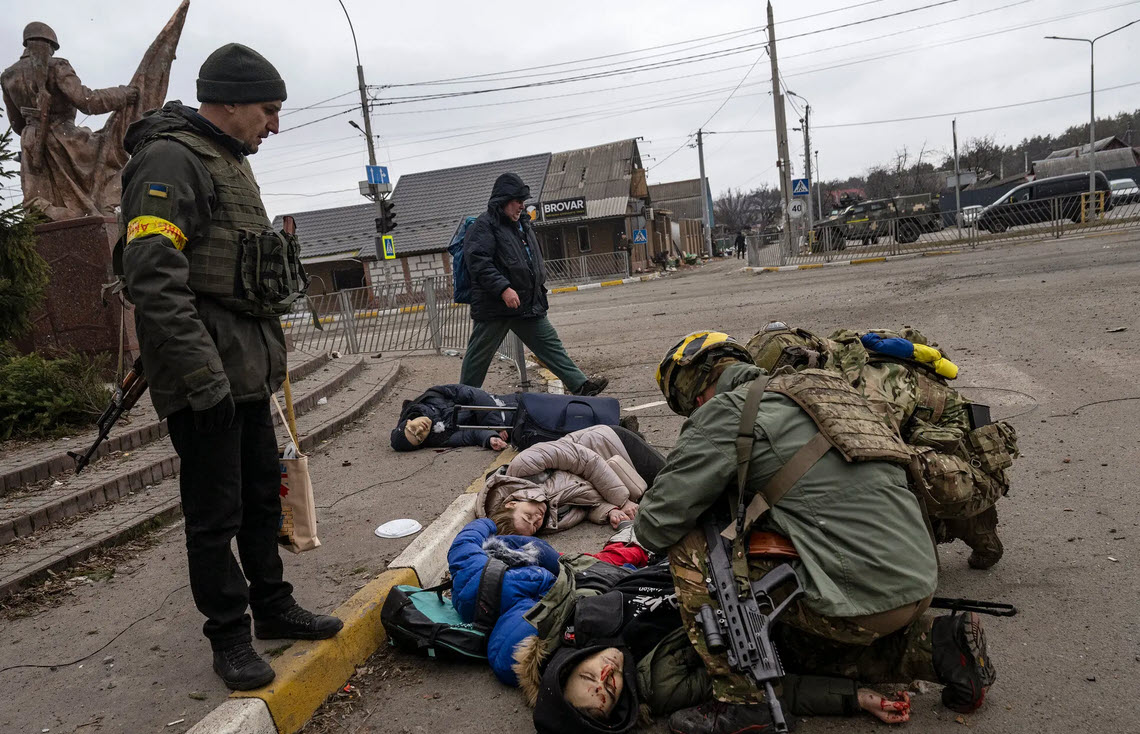
Ukrainian soldiers trying to save the father of a family of four — the only one at that moment who still had a pulse — moments after being hit by a mortar while trying to flee Irpin, near Kyiv, on Sunday. Credit…Lynsey Addario for The New York Times
Assassination Is the Ethical Option.
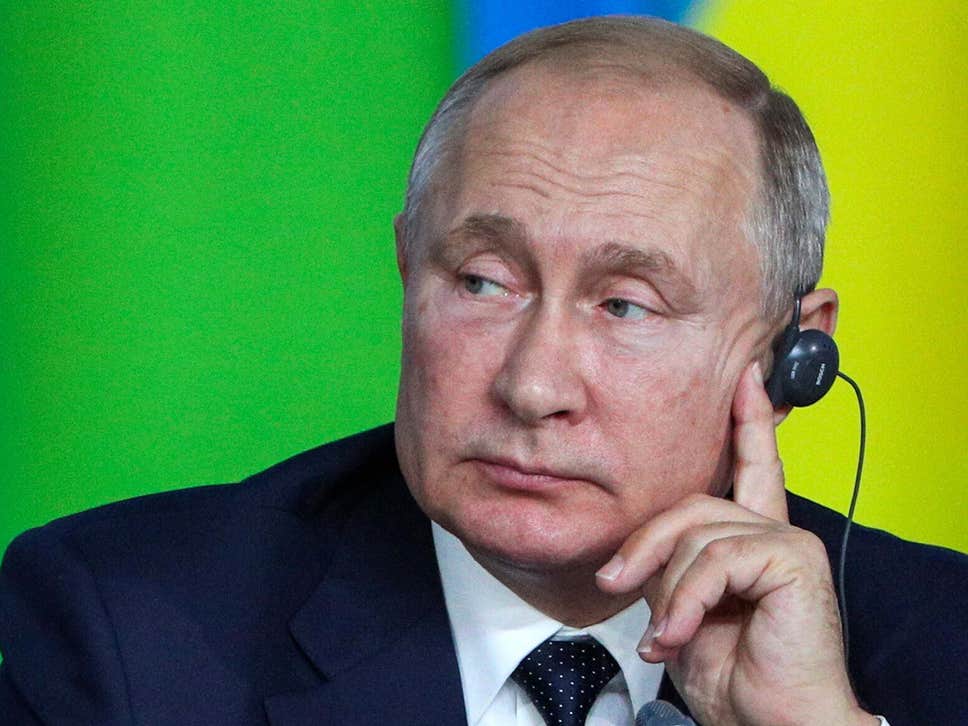
I am for assassination of Putin and key Russian government and military officers.
 This is the option that minimises casualties and puts most risk on professionals who have chosen their role. Special forces would welcome this task. They may bear heavy casualties before they succeed but they are volunteers and it is better than the death of civilians, particularly children. Multiple small teams infiltrating by helicopter, HALO parachute jump and every possible route equipped with our most sophisticated weaponry. Many will die but only one needs to succeed.
It’s what we should have done with Saddam Hussein, Gaddafi, Netanyahu and Assad. In any circumstances, if there is justification for action that may result in civilian casualties, there is better justification for assassination. It’s the ethical option.
Volodymyr Oleksandrovych Zelenskyy
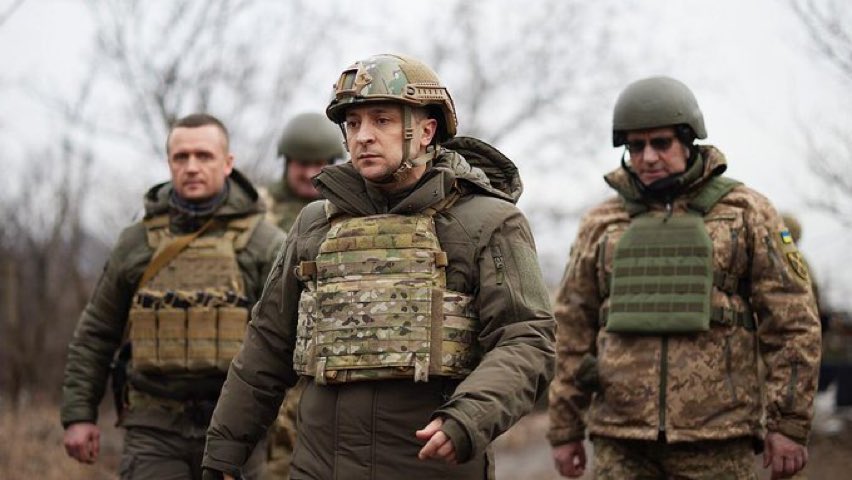
The leader of a proud, free nation. A beacon of hope, strength, and freedom. A President willing to die for his people rather than cower to an autocrat. Centuries from now, statues of this man will stand across Ukraine remembering his leadership.


