Archive for the ‘Science’ Category
Clearing The Smoke: The Science Of Cannabis
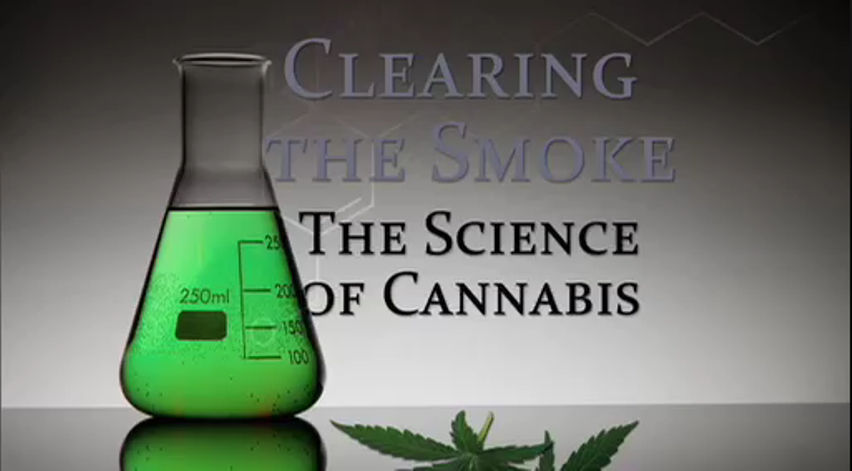
This excellent new documentary from MontanaPBS features Dr Lester Grinspoon, Dr. Igor Grant, Director of the Center for Medicinal Cannabis Research and Dr. Eric Voth, Drug Policy Advisor to Presidents Reagan, Bush Senior, Clinton and Bush Junior.
You can watch the film here.
Legal Opportunities For Medicinal Cannabis Users
Recent developments mean that there are new opportunities to challenge the prohibition of cannabis as medicine. Now I am not a lawyer, so these ideas should be carefully discussed with your legal advisors before you even consider pursuing any of them. I may be wrong about the correct procedure, process or terminology. I am highlighting opportunities that I have identified, based on my personal experience and knowledge. Qualified legal advice is essential.
Disingenuous
The British government’s current position on medicinal cannabis is absurd and irrational. As I understand it, those are exactly the criteria for which the process of judicial review is intended. That is one route. Another, more risky opportunity arises if you are facing prosecution or have been convicted of an offence of possession, cultivation or production. There are ideas here which you may want to consider as a defence or an appeal. However, please be very careful. If things go wrong, advancing such arguments might result in a heavier sentence, such is the cruel, oppressive and iniquitous intent of current government policy.

Dishonest
The Home Office is simply dishonest in its current stance saying that there “are no medicinal benefits” from cannabis. James Brokenshire, the drugs minister, cannot hide behind a lack of knowledge so he looks either more stupid or dishonest every day. David Cameron made the most dreadful, disingenuous comment about medicinal use in his Al Jazeera World View YouTube interview last week. See here. He said “That is a matter for the science and medical authorities to determine and they are free to make independent determinations about that.” That, of course, is absolute rot and Cameron should be ashamed of himself for such misinformation.
Obtain A Doctor’s Prescription For Medicinal Cannabis
There is nothing to prevent your British doctor from prescribing medicinal cannabis for you if he/she believes it is appropriate. Bedrocan BV is the official contractor to the Dutch government for the production of medicinal cannabis. Go to its website here and you will discover it has a range of products offering different proportions of cannabinoids and terpenoids for different conditions. Prescribing information is available for your doctor in exactly the same way as any other drug. All he/she has to do is select the product and write out a prescription in the normal way. Your doctor can’t get in trouble for this. There is nothing improper or unethical about it, but it is, of course, your doctor’s decision whether to do so or not.
 If your doctor isn’t prepared to help, the next best thing is to go to a doctor in Holland, Belgium, Germany, Spain or Italy, all countries where medicinal cannabis is regularly prescribed. In theory, you should be able to see a doctor in another EU country under reciprocal healthcare arrangements but if you can afford it, it may be simpler to go privately.
Another option is to go to one of the 15 US states that permit medical marijuana and obtain a doctor’s recommendation.
Once you have your prescription, you need to apply to the Home Office for a personal import licence to bring your medicine in from Holland. The licensing section on the Home Office website is here. If you obtain a licence you will also need to go through a similar process with the Dutch Bureau voor Medicinale Cannabis to obtain an export licence. The correct section of its website is here.
Of course, the reality is that the Home Office is not going to grant you a licence. You can then pursue the matter through your MP who should make representations to the minister on your behalf. You are then at the point to make an application for judical review of the Home Office’s decision.
Challenge The Government’s Interpretation Of The Schengen Agreement
The Schengen Agreement provides protection for travellers to carry their medicine with them within the EU. The crucial factor is your country of residence. See here for detailed information. Although there is no precise definition of residency, if you are resident in an EU country where medicinal cannabis is permitted, then you may bring your medicine into Britain and, believe it or not, there is no restriction on your use of it. You would be perfectly entitled to sit on the steps of Scotland Yard or even the Home Office’s Marsham Street HQ and smoke a spliff. However, if you are a UK resident, even if you have obtained your medicine on prescription abroad, you are not protected. This is clearly discriminatory under EU law and could be challenged in court. I’m not certain whether you would apply to a British court or to the European court but your solicitor would advise you on this.
Defence Or Appeal On The Grounds Of Medical Necessity
The Appeal Court disallowed a defence of medical necessity back in 2005. A petition to the House Of Lords Judicial Committee and to the European Court Of Human Rights was dismissed without any reasons given. I understand that the Appeal Court’s reasoning was that there were no proven medicinal benefits of cannabis. However, things have changed enormously since then. The MHRA approval of Sativex and the Home Office’s issue of a general licence for it are conclusive proof of medicinal value. Whatever misinformation the Home Office may promote, expert evidence would prove that Sativex is pharmacologically identical to, for instance, one of the Bedrocan products. There is also now a vast resource of peer-reviewed clinical evidence of medicinal benefits.
There is an horrendously improper judgement (R -v- David King, St Albans Crown Court), where a medicinal user was not allowed even to mention medicinal reasons to a jury on pain of imprisonment for contempt. Your lawyers would need to study this carefully. However, it is so clearly unjust that I do not believe it could be sustained.
 Re-Scheduling Of Sativex
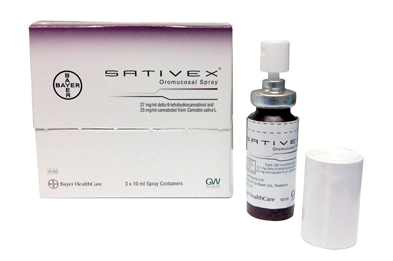
Sativex is currently a schedule 1 controlled drug which means it has no medicinal value. As mentioned earlier, the Home Office has dealt with this temporarily by issuing a general licence for it. However, it needs to be re-scheduled and the Advisory Council On the Misuse of Drugs (ACMD) has recommended that it be placed in schedule 4. See here for the full story.
Sativex cannot be re-scheduled under its brand name and the only pharmacologically accurate way of describing it is cannabis. The ACMD left a possible escape route for the Home Office by saying that its “active” ingredients would have to be specified. GW Pharma, the makers of Sativex would say that this means an extract of THC and CBD. However, this is dishonest. Sativex contains all the 60-odd cannabinoids that occur naturally in the plant. There is no other way of describing it accurately than to call it cannabis. If Brokenshire and his cronies try to prolong this deception then they can be challenged by judicial review. The aim here is to ensure that the re-scheduling is accurate and so cannabis becomes a schedule 4 drug. This would then open up all opportunities for cannabis as medicine.
I have no doubt now that medicinal cannabis will be permitted in some form or another in Britain within the near future. We may need to force the government’s hand through litigation or, perhaps Brokenshire will be moved to another department and then the Home Office can “adjust” its position.
At present, it is a monstrous injustice, an evil and obscene scandal, that those who need cannabis as medicine are denied it. The way of politics is that a few years from now it may well all have changed and Brokenshire will be at the Ministry of Silly Walks or somewhere better suited to his talents. However it works out, what I care about is that those in pain and suffering get the relief they need. One day soon, Brokenshire will have to answer to his constituents and later to an even higher power. How he will justify his cruelty and negilgence I don’t really care but I know I wouldn’t want to be in his shoes on judgement day.
Putting Cannabis “Research” Into Perspective
Just Say No!
The furore around yesterday’s BMJ article on cannabis and psychosis is reverberating around the world. It shouldn’t be any surprise really that a psychoactive substance has psychoactive effects but it provides opportunity for good sensationalist copy.
In the course of dealing with today’s events, two incisive and illuminating facts emerged:
First, the study which is published in the BMJ includes a statement that says:
“Furthermore, we used a rather broad outcome measure, defined as a minimum of one positive rating on a G section item, representing psychotic experiences rather than clinically relevant psychotic disorder.”
The study asked people to say if they used cannabis and if they had experienced one of a series of “subclinical” symptoms of psychosis, like an hallucination. If they had just one yes in 10 years they counted towards the study’s findings.
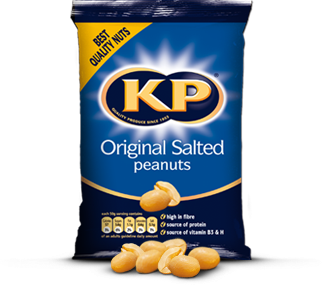
Secondly, I was reviewing the number of cannabis related hospital admissions – approximately 1000 per annum. As a comparison, I checked on the number of emergency peanut allergy cases – approximately 3000 per annum.
Just say no to peanuts?
Mr Cameron, It’s You Who Needs Education About Cannabis!

See the interview here. The relevant part starts at 10:45.
Al Jazeera: This was incidentally, the second most popular question because viewers would submit questions and then members of the public would vote.
Why is marijuana illegal when alcohol and tobacco are more addictive and dangerous to our health, but we manage to control them? Wouldn’t education about drugs from a younger age be better?
Cameron: Well there’s one bit of that question I agree with which I think education about drugs is vital and we should make sure that education programmes are there in our schools and we should make sure that they work. But I don’t really accept the rest of the question. I think if you actually look at the sort of marijuana that is on sale today, it is actually incredibly damaging, very, very toxic and leads to, in many cases, huge mental health problems. But I think the more fundamental reason for not making these drugs legal is that to make them legal would make them even more prevalent and would increase use levels even more than they are now. So I don’t think it is the right answer. I think a combination of education, also treatment programmes for drug addicts, I think those are the two most important planks of a proper anti-drug policy.
Al Jazeera: What about the argument that it could be used as medicinal properties? That was another question we actually had, a person saying it’s got proven medicinal properties. If used properly and regulated properly it could actually be quite helpful.
Cameron: That is a matter for the science and medical authorities to determine and they are free to make independent determinations about that. But the question here about whether illegal drugs should be made legal, my answer is no.
Dear Mr Cameron,
I am writing about your answer to the question about marijuana during the recent Al Jazeera World View YouTube interview.
I am the recently elected leader of the LCA. I represent the interests of at least two million regular users of cannabis and perhaps as many as 10 million occasional users in Britain. This is a huge proportion of the population and on their behalf I am requesting a meeting with you.
We were dismayed, shocked even, at your answer to the question. With respect, clearly it is you who are in great need of education about cannabis. The information you gave was inaccurate and false. While we must all respect different opinions, your answer was factually wrong and you must correct it.
Cannabis is not “incredibly damaging”, nor “very, very toxic”. It is a myth that there is anything significantly different about the cannabis on sale today and the idea that it causes “in many cases, huge mental health problems” has been comprehensively disproved many times over by scientists all over the world.
I can provide you with scientific information which proves that these ideas are false. Recently we have been pursuing various newspapers through the Press Complaints Commission for publishing the same inaccuracies. I am seriously alarmed when I see the prime minster of my country distributing such untruths.
Two key facts:
The Therapeutic Ratio of cannabis (ED50:LD50) is 1:40000 (Alcohol = 1:10, Paracetamol = 1:30). Even potatoes are more toxic than cannabis.
Professor Glyn Lewis of the University of Bristol reviewed all published research on cannabis and psychosis in 2009 and concluded that 96% of people have no risk whatsoever and in the remaining 4% the risk is “statistically tiny”.
Your suggestion that legalising drugs increases use is also not supported by the evidence. In both Holland and Portugal where cannabis use is not prosecuted, consumption is much lower than in Britain.
Finally, on medicinal use it is simply not true that the scientific and medical authorities are free to make independent determinations. The Home Office stamps on any medicinal cannabis use even when prescribed by a doctor. People from other European countries can bring medicinal cannabis to Britain and use it legally under the Schengen agreement but you can’t if you’re British. Here, sick and disabled people are being prosecuted every day for use of a medicine which is scientifically and medically proven. Surely you cannot be unaware of this? It is a cruel and evil policy which shames our nation.
So please, Mr Cameron, will you meet with me in order that I may show you the evidence and the facts about cannabis? Remember, this was the second most popular question you were asked on Friday and I represent the interests of millions of British citizens. Please make time for me in your diary.
I look forward to hearing from you.
Yours sincerely,
Peter Reynolds
Who Is Secretly Working To Keep Pot Illegal – Big Pharma?

This is an extract from an article by Steven Kotler, a science writer who lives in New Mexico. The full article can be read here.
In 2009, the global pharmaceutical market was worth $837 billion—and it’s on track to top $1 trillion by 2014. This is a lot of money to spread around, so when it comes to lobbying efforts, very few have this group’s clout. Mostly, Big Pharma gets what Big Pharma wants. And one thing it wants is for marijuana to remain illegal.
It’s not hard to figure out why. You can’t patent a plant—and that’s a big problem for pharmaceutical companies when it comes to medical marijuana.
Why?
Imagine a wonder drug able to provide much-needed relief from dozens and dozens of conditions. Imagine it’s cheap, easy to grow, easy to dispense, easy to ingest and, over millennia of “product testing,” has produced no fatalities and few side effects—except for the fact that it “reportedly” makes you feel really, really good. That would be quite a drug. Knowing all this, it’s easy to see why the pharmaceutical industry worries about competition from marijuana.
And besides its palliative prowess, researchers consistently find that patients prefer smoking marijuana to taking prescription drugs. In another study run by Reiman, 66 percent of her patients used cannabis as a substitute for prescription drugs; 68 percent used it instead of prescription drugs to treat a chronic condition and 85 percent reported that cannabis had fewer side effects than other medicines.
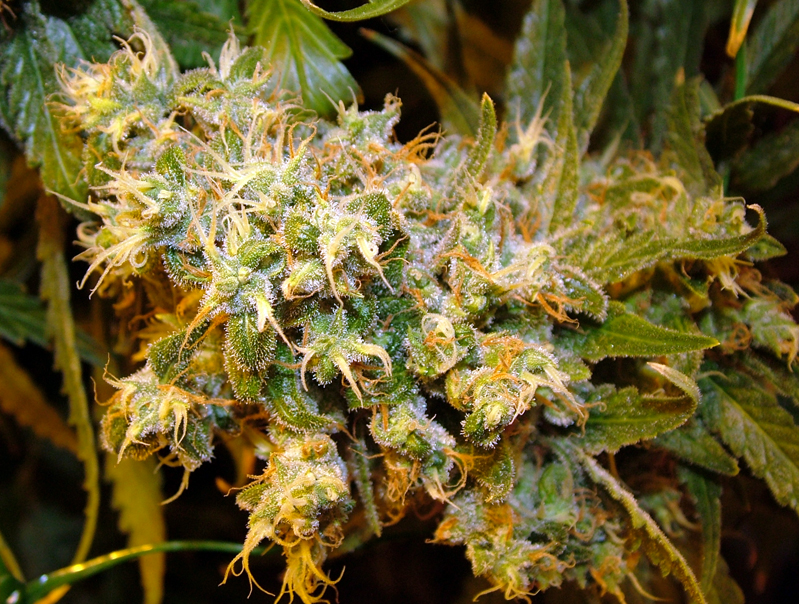
Miracle Medicine
Early on, the pharmaceutical industry fought back by spending money on anti-pot efforts, but the same NORML investigation that fingered the alcohol and tobacco industries as heavy backers of the Partnership for a Drug-Free America found that Big Pharma was doing so as well. “They were so embarrassed by that revelation” says MAPS founder Rick Doblin, “that they mostly stopped spending money on anti-marijuana lobbying efforts.”
Since then, the pharmaceutical industry has shifted its focus to developing alternatives to medical cannabis, often taking the traditional reductionist approach. Specifically, these days, if a pharmaceutical company wants to turn a plant into a medicine they isolate the most active ingredient and make what’s known as a “single-compound drug.” Morphine, for example, is really just the chemical core of the poppy plant. This too has been tried with marijuana. Out of the 400 chemicals in marijuana, 80 of them belong to a class called “cannabinoids.” Out of those 80 cannabinoids, a number of pharmaceutical companies have tried reducing marijuana to only one: THC. But the results have been unsatisfactory.
“There are certain cases,” says Doblin, “where the single-compound formula works wonders. But it’s just not true in every case. The pharmaceutical industry keeps claiming they’re not worried about medical marijuana because they make a better product, but when you reduce cannabis to just THC, you lose efficacy and gain side effects.”

 Peter Reynolds