Posts Tagged ‘cannabis oil’
IRELAND. Brutal Five-Year Jail Sentence for Cannabis Caregiver from Limerick

Patrick Moore and family
Patrick Moore lives with his partner and two teenage children in rural County Limerick.
In September 2020, at the height of the pandemic, a huge force of armed gardai raided their home. Patrick was out at the time so Ali, his partner and their two children were faced with 15 armed men brandishing automatic weapons.
Ali called Pat and he returned home immediately. He told the gardai there were cannabis plants growing in the shed at the back of the house and handed them the key so they could investigate. They discovered 19 plants, three small seedlings, the rest in various stages of flowering. They also collected together some bags of trim which had been put aside to make oil, amounting in total to 2.4 kilos.
The gardai also found two notebooks which recorded financial transactions and a calendar that indicated cultivation had been going on for some time.
Last week, at Limerick District Court, having already pleaded guilty to cultivation and supply, Pat attended his sentencing hearing. The whole family was there and I went along to offer moral support. We waited from 11 in the morning until his case was finally called around 4pm. The trim was valued by gardai at €48,000 (€20 per gram) and the plants at €15,200 (€800 each), a total of €63,200. By 5:30 he had been sentenced to five years in jail, the final two years suspended.
As acknowledged in court, the gardai had been acting on information received and clearly believed that Pat was some sort of major drugs baron, potentially armed and dangerous. I fervently hope that karma causes appropriate, severe misfortune to the person responsible.

Limerick Court House
Pat was a caregiver, that is someone who produces cannabis for medical use, mostly oil, which is used by people with cancer, other serious conditions and for end-of-life care. Before sentencing him, Judge Catherine Staines read eight or nine testimonials from people he had been supplying.
One was from the daughter of an elderly man who has suffered with Huntington’s Disease for nearly 20 years. When he started using the oil that Pat provided at no cost he regained his power of speech, he was able to swallow again and no longer needed all his food to be pureed. He also experienced far fewer lung infections and pneumonia. His sleep improved and his energy and vitality for life returned.
Another was from the parents of a boy who was diagnosed with leukaemia at age four and given two years to live. That was six years ago and he is still alive today. Pat provided oil free of charge and the family is in no doubt that it saved their son’s life.
There is no pretence here. Pat told me that he was selling high quality flower to a small network of friends and acquaintances. He used this to fund the production of oil for medical use, all of which he gave to sick people without charge. For those that don’t know, the ratio of cannabis flower to oil is about seven to one. You need seven grams of cannabis to make one gram of oil.
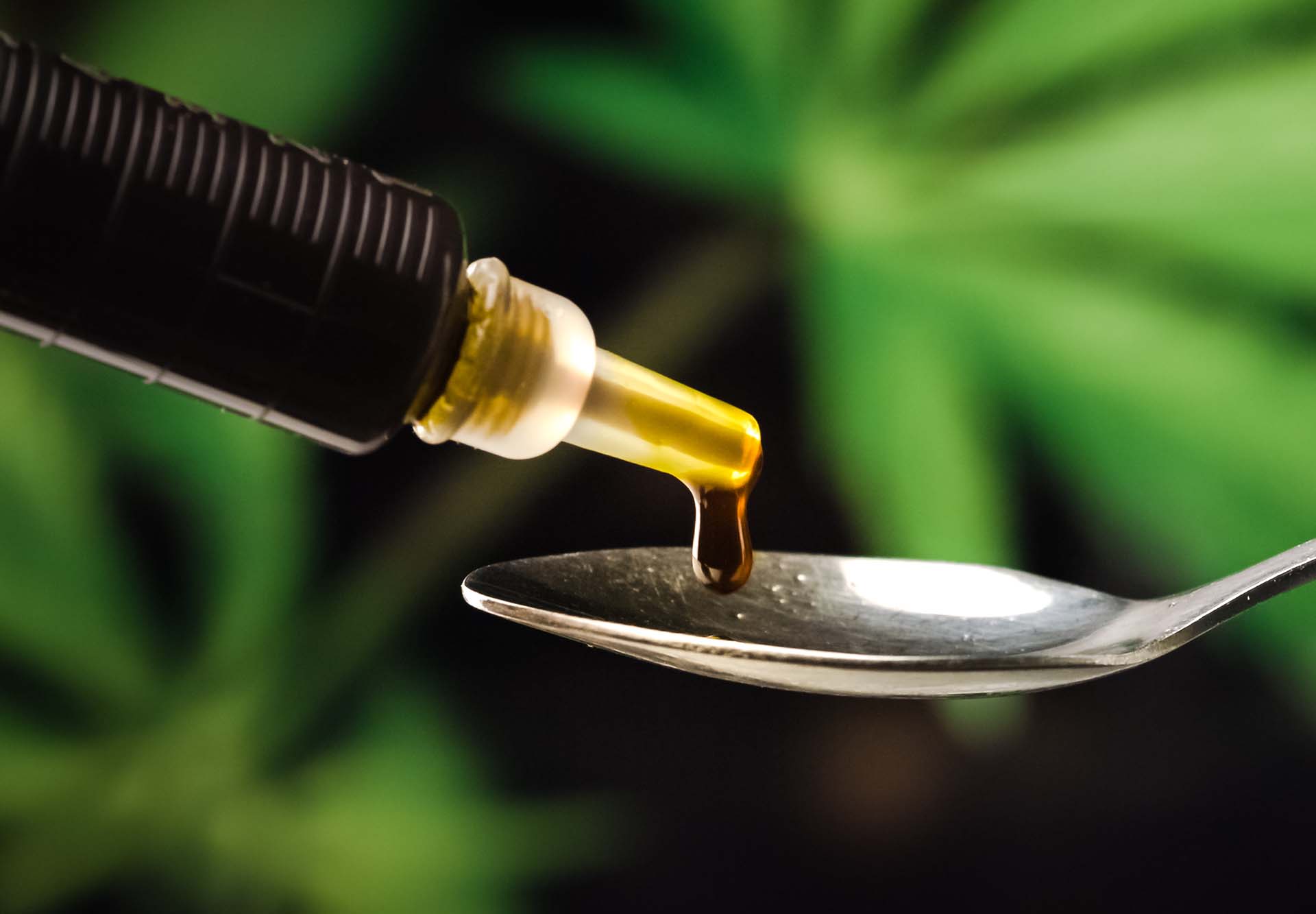
Cannabis oil
I know Pat is not alone. Throughout the UK and Ireland there are dozens of cannabis caregivers providing lifesaving medicine to sick people which, for complex reasons, conventional medicine and healthcare have failed to deliver. I know and have known several of these courageous people, some of whom put themselves in terrible danger for altruistic reasons. More than once I have seen that they simply can’t stop, even if they want to. How can you deny a sick child or someone in terrible pain when you have the ability and knowledge to help?
I have known Pat for about four years and he certainly doesn’t have a lavish lifestyle. He helps Ali run a small café in the local town and he had a business selling hydroponic equipment and supplies online. He drives an old Land Rover and at home he has a large polytunnel where he grows a variety of vegetables and even his own tobacco. He was the first person to show me that it is actually possible to grow tomatoes in South-West Ireland’s hostile climate.
To understand his sentence and why there is no sensible prospect of an appeal, it is necessary to put aside one’s opinion that the law prohibiting cannabis is wrong. All decent, rational people who are properly informed will recognise the injustice, the self-defeating stupidity of this law but it remains in force, for now.
Ireland’s Misuse of Drugs Act 1977 is a cut-down version of the UK’s Misuse of Drugs Act 1971. There are no different classifications of drugs, they’re all just controlled drugs, so heroin and cocaine are treated in the same way as cannabis. There is a particularly iniquitous clause, section 15A, added in 1999, that prescribes a mandatory minimum sentence of 10 years in jail for possession of drugs with a value of over €13,000. The maximum sentence is life.
Although described as mandatory, in practice the trial judge does have some discretion in ‘exceptional and specific circumstances’, namely previous ‘good character’, pleading guilty at an early stage and providing ‘material assistance’ in investigation of the offence. There is no reduction for cannabis compared to more harmful drugs. The relevant factor is the value of the drugs and therefore the inherent ‘criminality’ of the offence.
Opening the hearing, prosecution counsel tried to head off any chance of a lenient or suspended sentence by citing authorities that showed where a light sentence had been imposed, it had been increased on appeal. Prosecution counsel had already told Pat’s barrister that they would appeal if the sentence was suspended.
I was shocked, deeply disturbed, by the poor performance of Pat’s barrister. He was Mark Nicholas SC, one of the highest paid barristers in Ireland but in my judgement he was barely competent. He stuttered and bumbled and repeated himself and went all round the houses in presenting mitigation. It was awful and as I was sitting next to Ali I tried to conceal my horror. Later she told me that it was clear from the expression on my face what I thought.
In my career I have spent some time training people how to make presentations. It’s not that different to presenting a case in court. If Mr Nicholas had been an 18 year-old in a training session, I would have stopped him and sent him home to think about whether he really wanted the job. That’s how bad he was.

Mark Nicholas SC
He made vague references to Pat being interested in meditation, that growing cannabis was part of a self-sufficiency ‘lifestyle’ and that the people Pat was supplying shared his ‘belief’ that cannabis has some beneficial properties. It was as if it was all some eccentric, hippy-dippy, whacko nonsense. Nicholas failed to mention that the Irish state has recognised cannabis as a legitimate medicine since 2017.
Neither did Mr Nicholas adduce any of the testimonials as evidence in support of mitigation. All he did was make vague references to Pat’s ‘motivation’, the implication being that he may be a bit deluded in thinking he was doing anyone any good.
I am not a lawyer but I have considerable experience in cannabis law, procedure and sentencing and my eldest son is himself a barrister, practising in England and Wales, frequently in drugs cases. So, I do have a good understanding, sufficient, I believe, to form a fair and very low opinion of Mr Nicholas’ performance.
Of all the officials in court probably the most sympathetic was the judge. She said it was quite clear that Pat was not a drug dealer exploiting vulnerable people. She remarked that €3000 cash found in the house was voluntarily returned by the gardai. They did not regard it as the proceeds of crime. I was disappointed she made the point that “cannabis causes a great deal of harm” because firstly the evidence in general doesn’t support that and secondly the evidence was that the cannabis grown by Pat had caused a great deal of good! Inevitably she added “including psychosis”. It’s appalling how media misinformation has fixed this false idea into mainstream thinking.
The judge also called Pat “naïve”, in thinking that disclosing to her he was taking a course in cannabis cultivation would help his case. Eventually she said that she was taking seven years as the starting point for his sentence but that in view of his previous good character, guilty plea and ‘material assistance’ to the investigation she would reduce it to five years with the final two suspended.
I have looked at the case reports and though I hate to say it, under Irish law, it is the correct sentence. I think she was as lenient on him as she could be. If she had gone further, the prosecution would have appealed.
Of course, to any fair-minded, properly informed, decent person, it is brutal, wildly disproportionate to any harm caused and has tragic consequences not only for Pat but for Ali and their two children.
The law is a bad law for which there is no justification. The section 15A sentencing mandate is obscene. The valuation placed on the cannabis by the gardai is absurd, although even a correct valuation would not have been below the €13,000 threshold.
I don’t think the judge is to blame. I don’t even think Pat’s barrister, Mark Nicholas, is to blame because even if he had done his job to a reasonable level of competence, it would have made no difference. But let this be a warning to anyone to reject him if he is proposed as your counsel.
The blame lies squarely with the Oireachtas, with the ministers, senators and TDs who have allowed this dreadful, useless law to remain in force. Specifically, the buck stops at the door of Helen McEntee TD, Fine Gael’s Minister for Justice. She bears responsibility for a sentence that in my opinion is sadistic and which, without doubt, will achieve nothing at all except misery for Pat and his family and massive wasted costs borne by the taxpayer.
There are good grounds to believe that cannabis may be decriminalised in Ireland within the next year or two. Inevitably, thereafter it will be legalised and regulated but even then, unlicensed cultivation and sale would probably remain an offence although unlikely to result in jail at the scale of Pat’s activity.
Hopefully, despite this conviction, Pat will be able to play a part in a future legitimate cannabis industry in Ireland. For now, I think of him in Limerick Prison as the temperatures plummet to a five-year low, of his unwell patients seeking an alternative supply of medicine and of Ali and the children with a cold, bitter hole in their lives.
My 11-Year Old Dog, Capone, Is A Miracle Of Medicinal Cannabis.
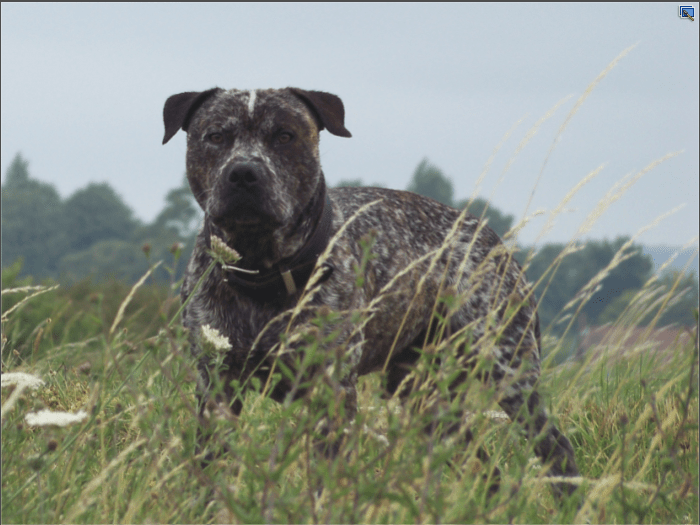
Capone Stanley Reynolds, to give him his full name, has been my faithful, handsome and sweet-natured companion since 2007. He really is a lovely dog, a strong silent type, very self-contained, gentle, calm and, I believe, wise.
Sadly, he developed epilepsy around the age of five and a couple of years later was struck with severe arthritis which means for the last three years or so he hasn’t been able to walk with me as he used to. However, regular use of CBD oil has transformed his life and I think we will have several more years together before he goes to that neverending walk in the sky where he will be able to run and play as he did when he was younger.
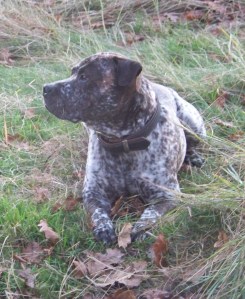 He’s a cross between a Staffordshire Bull Terrier and a German Shorthaired Pointer – which is where he gets his gorgeous coat from, a mottled mixture of grey, black, white and a few touches of orange. I believe that, apart from his siblings, he is unique and he attracts a great deal of attention. People say he looks like a leopard and several times I have been offered large sums of money for him.
We have walked hundreds of miles together. He first came to live with me when I lived in Emsworth, Hampshire. We learned the pleasure of walking together around Chichester Harbour and I had an article about our adventures published in Country Walking magazine.
I had once before, in the late 70s, seen someone fall down on a zebra crossing while having an epileptic fit. Nothing prepares you though for when someone you love first endures a seizure. It is frightening and deeply distressing. I can only despair at what it must be like for a parent whose small child suffers so.
Quickly though, you become used to it. You have to, for your own sake and so that you can look after the one who is fitting. In fact, there’s not a lot you can do, except protect them from hurting themselves while thrashing about. Every seizure is different but for Capone they all start with the most intense rigidity, arched back, teeth clenched and violent shaking. Then, after a minute or so, he will appear to relax and his legs will start a frantic bicycling motion while he froths at the mouth and usually loses control of his bladder, weeing everywhere. Occasionally he will go back into the rigid phase but at some point, usually within three or four minutes, he will jump slightly as if he’s just woken up – and indeed he has. Then he wants to stand up, although he doesn’t have proper control of his legs and he will fall over or walk into the wall or furniture. For up to an hour afterwards he will be wide-eyed, panting crazily and usually ravenously hungry. Gradually he calms down, until at last he sleeps, exhausted.
Capone’s seizures come in clusters over a 36 to 48 hour period. To begin with it was about every three hours, so it’s utterly draining, all through the night, never more than an hour or two’s sleep before the next one starts. When at last it comes to an end, it takes three or four days for him to recover. It’s almost like he’s had a stroke and he seems stupid, off balance and doesn’t really seem to know where he is. Thankfully, he always has recovered, right back to normal again and a week later it’s all forgotten.
I can’t remember the exact sequence of events now but it was around this time that the story of Charlotte Figi became known, the remarkable effect of CBD oil on this small child with Dravet’s Syndrome, a severe form of paediatric epilepsy. It wasn’t long before I decided to try Capone on CBD.

Carla And Capone
His arthritis had also dramatically worsened by now. We went from walking five miles every day to the point where it was taking the same amount of time for him just to walk half a mile or so. Both I and my other dog, Carla, were frustrated and suffering from a lack of exercise. Eventually I had to make the heartbreaking decision to leave him at home and just Carla and I would go for a walk. With a lack of exercise he began to put on weight and it became a vicious circle. About three years ago it had reached the stage where he couldn’t walk more than about 20 yards and I feared I would have to make the toughest decision of all. In this state, when a cluster of seizures came along, he truly was a pathetic sight, my wonderful, beautiful dog and friend in so much distress and pain.
I tried various CBD products. I didn’t really know what I was doing and they didn’t seem to have much impact. But then, nothing did. The best the vet could offer was rectal tubes of diazepam, like a small toothpaste tube with a nozzle that you stick up his bum and squeeze. They had no impact at all. I have given him 30mg of diazepam while he was fitting (enough to lay me flat out for 24 hours) and it’s made absolutely no difference. But then neither did CBD. There was none of this immediate effect like you see on the many YouTube videos of children being dosed with CBD oil.
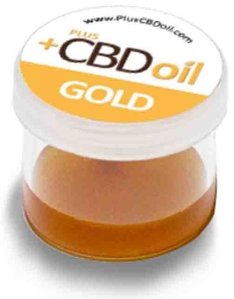 Gradually though the frequency and intensity of his seizures started to diminish. I had settled on using PlusCBD Gold oil. Two grams of this dissolved in olive or hempseed oil contains about 500mg of CBD and that would last for a month or so, giving him a dropper full every morning with his breakfast.
He was walking better. On a good day he could now manage a couple of hundred yards. In the summer he was able to do his very favourite thing and walk up the garden into full, unshaded sunlight and spend most of the day there sleeping on the lawn. The seizures seemed to have stopped.
Then, perhaps a year ago, I quadrupled his dose. I now use LoveHemp 20% oil which provides a full 2000mg of CBD. I dissolve this in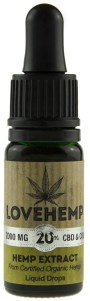 olive or hempseed oil in a 50ml dropper bottle and he continues to get one dropper full every day.
In the past two years, Capone has had just one cluster of seizures. It took place over the same period but there were far fewer fits of much less intensity, perhaps seven or eight over 48 hours. He can walk a few hundred yards now. He’ll never be the vigorous, fast-running dog he once was but occasionally I take him for a slow walk now for half an hour or so. If he sees another dog he gets excited and gets up a rather ungainly and clumsy turn of pace – but it’s almost a run and he’s still Capone and I treasure every minute that we have together. CBD oil, or as it should be more accurately termed, low-THC whole plant cannabis extract, has saved his life.
CLEAR and GroGlo Establish First UK Clinical Trials on Cannabis for Chronic Pain.

CLEAR has formed a partnership with the research arm of GroGlo, a UK-based manufacturer of high power, LED, horticultural grow lighting.
The plan is to grow cannabis under a Home Office licence for the production of cannabis oil, both as a dietary supplement and for the development of medical products. To begin with, a low-THC crop of industrial hemp will be planted. We will be using the finola strain, originally developed in Finland and known for its short stature and early flowering. Unlike hemp grown for fibre, finola is usually grown for seed and only reaches a height of 160 – 180 cm but we will be removing male plants before they produce pollen and cultivating the female plants to produce the maximum yield of oil from their flowering tops.

Finola Industrial Hemp
The low-THC oil will be marketed as a dietary supplement, commonly known as CBD oil. There is already a burgeoning market in the UK for CBD products, all of which is currently imported from Europe or the USA. In the USA, the CBD products market was said to be worth $85 million in 2015 so there is huge potential here at home. Aside from the benefit of being UK grown and processed, we anticipate achieving a CBD concentration of about 40%, which is higher than most products already on the market.
Cultivation will be in glasshouses supplemented with LED lighting. GroGlo already has an established glasshouse facility in the east of England. Initial trials will experiment with adjusting the LED technology to provide a changing blend of light wavelengths at different stages of plant growth. This is GroGlo’s area of expertise -combining LED lighting and plant sciences, including existing relationships with some of Europe’s top universities. Professor Mick Fuller, GroGlo’s director of plant science, will lead this research and development process.

Professor Mick Fuller
During the R&D phase, CO2 extraction of oil will be carried out under laboratory conditions at universities in York and Nottingham which already have extensive experience of the process. Each crop will be measured for yield, cannabinoid and terpene content using high pressure liquid chromatography (HPLC). Safety testing will also look for the presence of heavy metals and other contaminants. The results of testing will be fed back into cultivation and extraction processes to maximise yield and quality.
It is anticipated that the first batches of low-THC oil will be ready for market in six months. We are already in discussions with potential distributors and wholesalers. The CBD market in the UK is ripe for an effective marketing campaign which could build a very substantial business for whoever gets it right.
Once we are successfully achieving our production goals with low-THC cannabis, the same testing and development process will begin with high-THC varieties of cannabis. The aim will be to produce a range of oils extracted from single strains, selectively bred and stabilised for different THC:CBD ratios.
Professor Fuller says that GroGlo lighting products “are in use worldwide to grow a range of crops, but some 60% of sales currently come from overseas users growing cannabis for legitimate medical use.” He explains that there is an emerging market for all sorts of nutritional and medicinal plant products but cannabis shows particular promise. GW Pharmaceuticals is the only UK company to enter this market and it has become a world leader, despite the current restrictive legislation. He says: “Together with CLEAR we believe we can help bring a range of safe, high quality UK-produced cannabis products to market within a matter of two to three years.”
A key issue in the development of a successful medicinal cannabis product is the method of delivery. Smoking is not an acceptable solution as inhaling the products of combustion is an unhealthy practice but one of the great benefits of cannabis smoked as medicine is very accurate self-titration. That is the effects of inhaled cannabis are felt almost instantly and so the patient knows when they have taken enough or when they need more to achieve the required analgesic effect.
The oral mucosal spray developed for Sativex is unpopular with patients, many complain of mouth sores from its use and it was developed at least as much with the objective of deterring ‘recreational’ use of the product as with delivering the medicine effectively. It strangles the therapeutic benefits of the cannabis oil of which Sativex is composed in order to comply with the concerns of the medicines regulators about ‘diversion’ of the product into what they would term ‘misuse’. Absorption of the oil is quicker through the mucous membranes of the inside of the mouth than through the gastrointestinal system but, inevitably, some of the oil is swallowed and the pharmacology of cannabis when processed through the gut and the liver is very different.
We believe the best option is a vapouriser device and our intention is to source a ‘vape pen’ of sufficient quality to operate within clinical standards of consistency and safety. Vapourising cannabis oil avoids inhaling the products of combustion but still enables accurate self-titration of dose. A vape pen would provide a handy, convenient and very effective method of consuming medicinal cannabis. However, aside from the technology itself, initial research shows that vapour is more effectively produced when the oil is blended with either vegetable glycerin (VG) or propylene glycol (PG). Establishing the correct ratio of VG or PG to the oil is another important task.
We anticipate that clinical trials for the use of cannabis oil in treating chronic pain could start within two years. We want to compare different oils, ranging from high-CBD to equal ratios of THC:CBD and high-THC content. Prior to that we have to overcome the challenges of cultivation, oil extraction, vapouriser development and assemble the necessary research team and gain ethical approval for the trials. Recruitment for the trials will start in about 18 months time. If you wish to be considered please email ‘paintrials@clear-uk.org’ with brief details of your condition (no more than 100 words). Do not expect to hear anything for at least 12 months but your details will be passed to the research team as a potential candidate.

Mike Harlington, Managing Director of GroGlo
CLEAR is promoting this venture simply because someone needs to do something to make this happen. For all the campaigning and lobbying of MPs and ministers, at the end of the day, the plants have to be grown and the various legislative hoops have to be jumped through. We cannot wait any longer for a radical change in the law. We have to progress through the government’s regulatory regime if we want to bring real therapeutic benfit to patients.
This opportunity arises because of the vision of GroGlo’s managing director, Mike Harlington and the team of experts he has built around him. There is huge demand for legitimate medicinal cannabis products in the UK which is only going to increase with the inevitable progress towards law reform and increasing awareness of the benefits of cannabis. Together, CLEAR and GroGlo are bringing the great hope that medicinal cannabis offers closer to reality than ever before.
This Is The Future Of Cannabis. For Medicine, Nutrition And Pleasure.
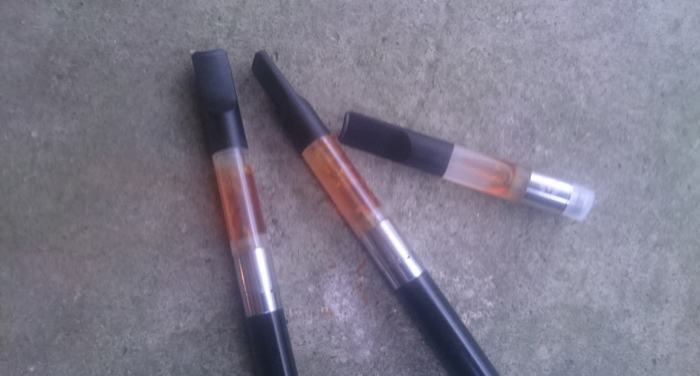
One of these vape pens contains Blue Dream sativa cannabis oil, 91% THC, the other is Hindu Kush indica cannabis oil, 85% THC and the spare cartridge has the dregs of some New York City Diesel sativa, 85% THC. You can’t tell which is which to look at them but each has a distinctive flavour and effect. They’re not completely odour free but almost.
This is the future of cannabis as a consumer product. It is cleaner, neater, handier, healthier and better for you than raw herbal cannabis. Most importantly, for medicinal applications, it homogenises all the compounds into an oil of consistent quality and content meaning that dosage and effect at last becomes predictable and reliable.
High CBD Oil For Medical Use
I have been investigating this theory for some time but my recent trip to Colorado enabled me to conduct some practical experiments and more thoroughly understand how this idea can work. I am now convinced that this is the way forward for the cannabis industry. Once we achieve legalisation in the UK, which is inevitable, probably in about five years, these pens are how cannabis will become available as a consumer product on the high street. They are also how medicinal cannabis will be dispensed. Your doctor’s prescription will be fulfilled by a cartridge with the appropriate blend of cannabinoids which you screw onto your battery and use immediately. Batteries will also be supplied on prescription, in the same way that syringes or blood glucose meters are for diabetics.
In Colorado dispensaries these pens are already available in a choice of strains and blends. Currently, the popular products contain 250 mg of THC in a blend of cannabis oil and propylene glycol (PG), just as e-cigs contain a nicotine oil and PG.
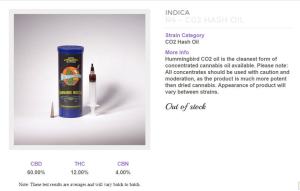
Alternatively, you can buy the oil of your choice and fill the cartridges yourself. This is undoubtedly the way to do it and a wide choice of oils is available, made by CO2 and solvent extraction processes. The Farm, my favourite dispensary in Boulder, is already supplying cannabinoid blends such as a 60% CBD, 12% THC, 4% CBN product which is clearly for medicinal use. I have no doubt that soon we will see a Charlotte’s Web product and Sativex-like blends with equal ratios of THC:CBD. Other, more sophisticated blends of other cannabinoids and probably terpenes will soon follow.
However, I am certain that some propylene glycol is a good thing. The oil vapes much better when diluted and PG is nothing to worry about, it is in many health, cosmetic and food products. It has many uses. It’s a solvent, humectant (keeps things moist), preservative and it helps absorption of some products. It is non-toxic.
There is further development work to be done. I believe there is a ‘sweet spot’ for the correct amount of PG, probably around 20%. I also think the battery and cartridges can be improved, particularly for medical use. Once this is achieved, a product like this with perhaps a 60:40 THC:CBD ratio should form the basis of an application to the Medicines and Health products Regulatory Agency (MHRA) for a marketing authorisation. It will knock Sativex into a cocked hat. In fact, if GW Pharma aren’t investigating this already then they are failing in their duty to shareholders. I shall certainly be doing all I can to research and facilitate the funding to bring such a product to market.
Yes, this is the future of cannabis. Imagine the packaging, marketing and merchandising opportunities for the recreational market. Understand the overwhelming benefits of this as medicine against the raw, herbal product. Yes, I know some will object and the tired old hippy luddites will say it’s a sell out and many more Big Pharma conspiracy theories will emerge but this is the future. Remember you heard it here first.


 Peter Reynolds