Posts Tagged ‘drugs policy’
It Sticks In My Throat But Theresa Is Magnificent.
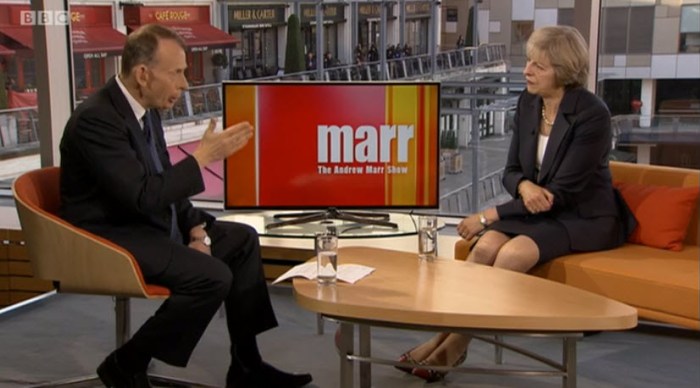
The Andrew Marr Show. 2nd October 2016
Ms May’s performance on the Andrew Marr Show today was a triumph.
She delivered common sense, wit, an inclusive vision and very broad appeal. In a “country that works for everyone” she is undermining the incoherent left. She is showing true leadership in excellent style.
Now all we have to do is get her properly informed about cannabis and drugs policy. I cannot believe that someone who is so rational and considered can fail to understand. I think the truth is that prejudice and years of propaganda is so entrenched, even in sophisticated, intelligent people, that some politicians, including Theresa, have not had the evidence properly presented to them.
We must do better to get our message across and somehow we have to get Theresa May properly to consider our arguments.
May Brings A Fresh Start To The Cannabis Campaign.
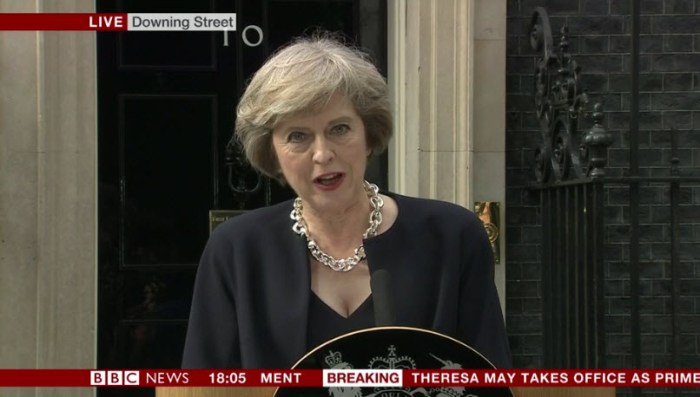
Would that we were in spring looking forward to a splendid summer. Instead, in mid-July we are heading into autumn towards what looks like a stern, drab and ominous future. Theresa May is prime minister, perhaps the worst nightmare for those who seek cannabis law reform.
You have to admire her first few days though. What you see is what you get. She is smart, calculated and very, very certain about the nature of the government she will lead. I have no doubt she has a softer, caring side and there is testimony to that effect from those who support her. She is a strong woman, she will be sympathetic to people and causes that she chooses but ruthless and absolute against those she opposes. Our problem is that, as confirmed by both the National Audit Office and Public Accounts Committee, evidence has nothing to do with it. Theresa May’s drugs policy is based on her personal opinions and even the plight of those in chronic pain and disability is unlikely to change her mind even on the medicinal use of cannabis. I remember Norman Baker told me that she simply does not comprehend that cannabis can be a legitimate medicine. The very idea is anathema to her. It is beyond her comprehension. The daughter of a vicar, who attended a convent then a grammar school, she has a lot about her that suggests piety, reserve, self-discipline and control. Admirable qualities but lacking perhaps in empathy with modern lifestyles and values.

Amber Rudd MP, Home Secretary
But this is a fresh start. Amber Rudd, the new Home Secretary, is cast from the same mould as Ms May. My MP, Oliver Letwin, himself disposed of in the new cabinet, has already written to Ms Rudd and asked her to see me. As of today, CLEAR represents nearly 700,000 registered supporters, equivalent to the electorate in more than eight parliamentary constituencies, so I think she has a good reason to give me a few minutes. I will continue to press for a meeting until she or one of her junior ministers agrees to see me.
It can only help that I am now a fully paid-up member of the Conservative Party. I made this decision shortly after the EU referendum and I have also joined the Conservative Policy Forum which works to influence Conservative Party policy from the grassroots. I will be advancing the cause of medicinal cannabis and wider drugs policy reform as quickly and effectively as I can through the party’s established channels. Whether it is a short or long game, it has to get started now.
I do believe this is the best way forward for the cannabis campaign. I will work from within the party of government to try and influence change. It is more than likely that the Tories will be in power for the next 10 years, if not more. Now is the time to get involved, face our opposition, engage with those who have power. Every other UK political party is in disarray.
When we relaunched the Legalise Cannabis Alliance as CLEAR Cannabis Law Reform in 2011, we brought a totally new, professional approach to the campaign. Others have followed and there is now a significant group that understands how to use professional lobbying techniques. The greatest achievement of this has been to get the Liberal Democrats involved and although there remains great resistance amongst party members in the shires, the leadership is very much onside. Sadly, the party itself is as far away from power as it has ever been and, in my view, has swung widely off course in a futile and misguided effort to reverse the referendum result. Such whimsical strategies have always been the LibDems’ problem. Unless a political revolution suddenly makes Corbyn a serious contender then there will be no other party in power but the Tories. This is where we must invest time, effort and all our resources. We must understand how to turn Tory aims, ambitions and viewpoints to our advantage. Which arguments will work and how do we get them across?
 Although we now have a more professional campaign and several individuals with real ability, now is not the time to revert to talking amongst ourselves. Conferences, meetings, documentary films and events are all very well but they almost exclusively preach to the choir. Just like the demos and protests that have at last ebbed away, they make those involved feel good and they ramp up morale but they do little to create change. This is no way to make progress. I will ensure that CLEAR is on the front line. It is those who oppose us that we need to be talking to, not those who already agree with us.
Professor Mike Barnes
At the same time, specifically on medicinal cannabis, our focus must be on the medical profession. We published ‘Medicinal Cannabis:The Evidence’ just over a year ago and it has added real credibility to the campaign. In a few weeks when the APPG for Drug Policy Reform publishes its report on medicinal cannabis, Professor Mike Barnes will release his own review of current evidence and it will become the definitive work on the subject. CLEAR will be taking this to GPs all over the country, to the Royal Colleges and particularly to those working in pain management. We already know that thousands of doctors endorse their patients’ use of cannabis for chronic pain, it is time to bring this out of the closet. Doctors and nurses have literally been terrorised into keeping quiet about cannabis. We have first hand knowledge of Home Office officials warning off doctors who have tried to assist their patients by prescribing Sativex off label or recommending Bedrocan. This must stop. We must equip the medical profession with the evidence it needs to be able to do the best by its patients.
I know many will be downhearted by this new government but change is always a good thing. It offers us the opportunity to renew our campaign. Most important, we must walk towards the enemy, not hide in our bunkers, fearful of their response. All over the world, mainstream opinion is turning in favour of cannabis as medicine and wider drugs policy reform. Now is the time to step forward, to do all we can to educate and inform those who are still in the dark. I have set out above what CLEAR’s new strategy will be. Please join us. Become a member. Sign up here. Your first duty? Make an appointment to see your MP. This is the most effective thing you can do. We will publish new guidance in the next few days on how to prepare for and conduct these meetings.
Why I Have Joined The Conservative Party.
I would vote against Theresa May. She would be a disaster for Britain and for the Tory Party. Sadly, I will not have been a member long enough to vote in the leadership election.
Now, more than ever, we need to walk towards the enemy, not run away. The entrenched, bigoted, old-fashioned, anti-evidence faction of the Conservative Party, of which Theresa May is part, is the enemy of Britain and the enemy of a progressive, enlightened society. I will work from within the Tory Party to campaign for more rational, reasonable and responsible policies. We need to tackle the future head on and only from within the Conservative Party is there any realistic possibility of having meaningful influence.
I resigned from the Liberal Democrats shortly before the EU referendum because I believe its support for the remain campaign was a betrayal of fundamental values of liberalism and democracy. Support for the unelected, unaccountable oligarchs of the EU is the nemesis of the Liberal Democrats and Tim Farron’s subsequent hate speech, branding all who voted leave as ‘intolerant, closed-hearted, pessimistic and inward looking’ has moved his party’s talent beyond self-harm to political suicide.
Clearly, in my special interest area of drugs policy and particularly medicinal cannabis, the Conservatives, and particularly Ms May, have not been our allies. Yet another reason why I, and others, must now grit our teeth and get involved with the Tories. We will make no progress unless we do. We have to appeal to the libertarians, to those who value personal liberty and who believe in evidence-based policy, not prejudice.
The response of both remainers and the left to the Brexit vote has been appalling. Aside from Tim Farron’s conduct, the chattering classes, particularly the soft left which dominates the drugs policy debate, has been defeatist, bitter and negative. It will spend its time, as it always does, in endless circular discussions talking amongst itself, the same old faces, the same old ideas. Someone needs to take the fight to where the real battle is.
I recognise that my decision to join the Tories will be difficult for many to understand. It will not be an easy path but the drugs policy and cannabis campaign needs someone to lead it into battle, to take on the establishment, to engage with and change minds.
The Labour Party is unelectable and if it survives at all, it will never see power again for many years. All other parties are irrelevant. There is no other route to power in the UK except through the Conservative Party.
‘Poppers Are Not Psychoactive’. The Arrogant Madness Of UK Drugs Policy.
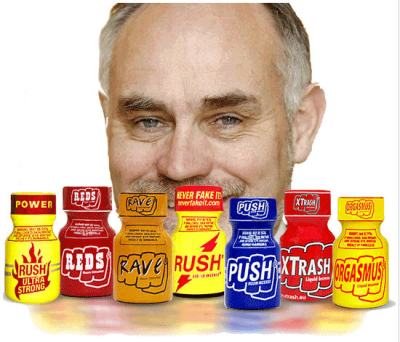
Crispin Blunt MP
If you want something slightly less psychoactive than poppers, I suggest you try a crack pipe.
Seriously, poppers produce an instantaneous high as powerful and intense as anything I have ever known. Cannabis, alcohol, even cocaine are mild and gentle compared to the rush that you get from inhaling the vapour from a bottle of poppers. Maybe crack or crystal meth are stronger. I don’t claim knowledge at that extreme end of drugs experiences.
It’s well established fact that successive UK governments are dishonest and corrupt on drugs policy. You cannot trust anything the Home Office says about drugs. The reality of the policies of both Labour and Tory governments is that they maximise harm and cause enormous damage to our society as well as individuals.
The announcement today that poppers are to be excluded from the Psychoactive Substances Act because they are ‘not psychoactive’ is as ludicrous a statement as ever made by any government anywhere. See minister Karen Bradley’s announcement here.
The Psychoactive Substances Act is universally recognised as the most ridiculous and scientifically-illiterate legislation ever passed by Parliament – universal that is with the exception of the slippery fools that sit in the House of Commons. Most of them have no idea at all of what they are doing on drugs policy and their only concern is to appease the Daily Mail, the Daily Telegraph and the hysteria drummed up by the prohibition lobby. However, when one of their own, Crispin Blunt, MP for Reigate, complains about his drug of choice being banned, in record time the Home Office has obtained fake scientific advice and reversed its decision to ban poppers. Meanwhile, benign, largely beneficial, mild and virtually harmless cannabis remains banned, even for those in desperate need to relieve their pain, suffering and disability.
Don’t misunderstand me, I don’t think poppers should be banned. They are known as a sex aid amongst gay men as they relax the anal sphincter, enabling easier ‘backdoor’ sex. There’s a good argument that this helps to prevent injury and therefore infection but they are also an intense sexual stimulant. I can confirm they are great fun for straight sex too.
I’m very pleased that Crispin Blunt will continue to have access to his drug of choice and I have no argument with him at all. He is an MP who is on the record as supporting cannabis law reform, particularly for medicinal use. It’s the sickening, dishonest and corrupt conduct of Home Office ministers that must be condemned.
I’d like to see the craven fools at the Home Office take a big whack off a bottle of poppers and then say they aren’t psychoactive. Black is white and pigs fly over Marsham Street when it comes to drugs.
A CLEAR Response To the Liberal Democrats’ Proposals For Cannabis Regulation.
CLEAR welcomes the Liberal Democrats’ proposals which can be seen here. We set out below a few comments which we intend to be constructive.
We represent more than 600,000 people who support cannabis law reform. Our own publication, ‘How to Regulate Cannabis in Britain’ is now in its second edition.
It is based on independent, expert research which we commissioned from the Independent Drug Monitoring Unit, published as ‘Taxing the UK Cannabis Market’.
Comments on ‘A framework for a regulated market for cannabis in the UK’
1. We support a cautious approach and agree that it is better to start with stricter regulation that could, based on experience, be relaxed at a later date if appropriate.
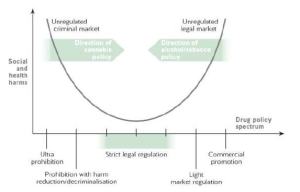
Spectrum of Cannabis Policy
We reject the diagram ‘Exploring a spectrum of options for regulating cannabis’ which paints an inaccurate picture of the effects of a legal market. Evidence from all jurisdictions that have implemented reform does not support the equivalence of ‘social and health harms’ with ‘ultra prohibition’ and ‘commercial production’. It is absolutely clear that legally regulated commercial production is far less harmful than prohibition.
Essentially, instead of a ‘U’ shaped curve, we consider an ‘L’ shaped curve is more accurate.
2. The diagram indicates a fundamental objection to the commercial model implemented in Colorado, Washington and Oregon and the report explicitly rejects the Colorado model in favour of the Uruguay model.
We disagree with this. The Colorado model is a proven success with virtually no downsides. The Uruguay model is still a theory which is yet to be proven in practice. This conclusion in the report is therefore not evidence-based. This suggests that wider political or philosophical considerations have been allowed to trump existing evidence.
3. We are concerned about the undue weight given to restricting commercial enterprise. The UK is not a socialist economy and there is a danger of a ‘nanny-state’ attitude which we cannot support. We repeat the point that it seems wider political or philosophical considerations have been allowed to prevail over actual evidence. There needs to be a balance between a ‘cautious approach’ as in 1. above and over-regulation which will only result in a continuing criminal market. The UK is a market economy and if the legal market is too strict and rigid, the illegal market will flourish.
4. We have very grave concerns about the cannabis social club (CSC) model which provides significant opportunity for the corruption of those involved into major criminal enterprises with exploitation of both workers and customers. The establishment of such ‘clubs’ is entirely unnecessary given the other more controllable methods of supply and will only lead to diversion and perhaps active marketing of excessive production through criminal networks. In other words, CSCs are a golden opportunity for the emergence of ‘drug pushers’ and they undermine the whole purpose of cautious regulation.
5. We regard the recommendation not to permit the production and marketing of ‘edibles’ as an error. If the other recommendations making raw herbal cannabis legally available are implemented then this will inevitably lead to the production and marketing of unregulated ‘edibles’, undermining the whole purpose of regulation. Far better to learn from the mistakes already made in excessively potent ‘edible’ products and introduce appropriate regulations with reduced dosages.
If anything, ‘edibles’ need regulation far more urgently than the raw product because of the potential for very unpleasant overdosing. To abrogate responsibility for this is an extremely unwise proposal and inconsistent with the whole basis for a regulated market.
6. We would encourage a more positive and supportive approach to enable producer countries such as Morocco, the Lebanon, Pakistan and Afghanistan to supply varieties of cannabis resin and hashish. Encouraging such trade under strict regulation will further undermine criminal activity and offers great potential for better relations and positive ‘soft power’ influence on these countries. We recognise the difficulties involved in this with regard to the UN conventions but consider it is a prize worth working towards.
7. For the same reasons set out above we consider that a refusal to regulate concentrates and vapouriser products undermines the whole purpose of a regulated market. Vapouriser products are almost certainly going to be an important component of the medical cannabis market. These nettles must be grasped. To avoid them is irresponsible.
8. We would argue for far more emphasis on harm reduction information, particularly about smoking and avoiding mixing cannabis with tobacco. As in 7. above, we would actively promote the choice of vapouriser products.
9. In principle we agree with the proposal for three levels of THC content and for minimum CBD content. However, there is no evidence to support the necessity for CBD content as high as 4%. The evidence suggests that levels of 1% or 2% adequately meet the desirable ‘entourage’ effects of CBD. Furthermore, at these levels, existing strains are available. Little consideration has been given to the practicalities of developing three new strains to meet the THC:CBD ratios proposed. To develop such strains and ensure they are stable and consistent is the work of several years, requiring significant investment and so undermines the ability to implement these proposals in timely fashion.
10. We consider that the ‘plain packaging’ proposal is unnecessarily restrictive in the UK’s market economy. We agree with child proof containers but would recommend that far more emphasis is given to content and harm reduction labelling. There is nothing to be gained from restricting the marketing and commercial enterprise of companies wishing to develop brands and packaging styles within strict regulations.
11. For reasons already set out we consider that the restrictions on exterior and interior retailer environments are oppressive and will be self-defeating. The UK is not accustomed to such overbearing and anti-business regulation. Existing pharmacies do not operate under such heavy restrictions and they make significant use of point-of-sale and merchandising techniques.
Overall, we welcome this document and the proposals it contains. One final point that is of significance is that clearly there was no ‘consumer’ representation on the panel and this is obvious in some of the tone and detail of the report. We recommend that account should be taken of consumer opinion in any future development of the proposals.
Talking Cannabis In Parliament.
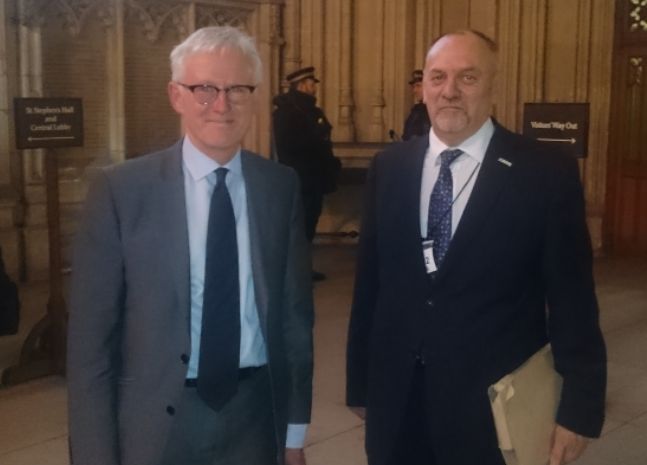
Norman Lamb MP, Peter Reynolds
Today, 8th February 2016, Peter Reynolds, president of CLEAR, met with Norman Lamb MP, Liberal Democrat spokesperson for health, for an update on the cannabis campaign.
Independent Panel of Experts on Cannabis Regulation.
The Liberal Democrats have set up an independent panel of experts to establish how a legalised market for cannabis could work in the United Kingdom. Norman Lamb wants the panel to look at evidence from Colorado, Washington State and Uruguay, where cannabis has been legalised and to make recommendations for the party to consider in the spring.
As a contribution to the panel’s work, CLEAR has provided the independent study it commissioned in 2011, ‘Taxing the UK Cannabis Market’ which establishes the most comprehensive database on the reality of cannabis in the UK. In addition, The CLEAR Plan, ‘How To Regulate Cannabis in Britain’, builds on this data to propose detailed regulations for exactly how the market could work and contribute a £6.7 billion net gain to the UK exchequer.
Imminent Launch of New Medicinal Cannabis Campaign.
Within the next few days, CLEAR, along with other cannabis law reform groups, will co-operate in the launch of probably the largest campaign for access to medicinal cannabis ever seen in the UK. The time has come when people who are suffering must be given the opportunity to stop their pain with a safe, non-toxic, proven alternative to expensive and debilitating pharmaceutical products. The intransigence of successive UK governments must be overcome and this time a strategy is in place which will work.
The CLEAR publication ‘Medicinal Cannabis:The Evidence’ has received international acclaim and is the most comprehensive and up to date review of the scientific evidence supporting the use of cannabis.
Further Development of Liberal Democrat Drugs Policy.
In 1971, when the Misuse of Drugs Act came into force there were approximately 3,000 problematic drug users in the UK. Today, 45 years on, that figure has risen to around 350,000. Norman Lamb describes this as “one of the greatest public policy disasters of all time”. Today, in a speech about the prison service, David Cameron talked of the need to tackle the most difficult social problems facing Britain. Drug crime and drug addiction is probably the single biggest factor in our prison problems and the consequences of 45 years of failed drugs policy pervades our society. As the Liberal Democrats consider this difficult issue, tackling reform of cannabis policy is the first step.
Justice Minister Reveals UK Is Trialling Portuguese Approach To Drugs.

In the secretive way that now seems to be standard practice for the UK government, the justice minister, Andrew Selous MP, revealed yesterday, in an answer to a written Parliamentary Question, that he is “currently trialling ‘Liaison and Diversion’ services”.
“These services place health professionals at police stations and courts to assess suspects for a range of health problems, including drug misuse, and make referrals to treatment and support. Information shared with the criminal justice system can be used to inform decisions, supporting diversion into treatment as part of an alternative to charge or to custody where appropriate.
We are also interested in problem-solving courts, such as drug courts, given evidence of success in other jurisdictions. Officials are now working with members of the judiciary to consider how the problem-solving approach might be developed for England and Wales.”
Source: Hansard
This is good news and is to be welcomed. However, why can’t the UK government engage with the electorate on drug law reform? Instead of dismissing all calls for reform out of hand, how about behaving as if the UK really is a democracy? Portugal has made massive improvements in public health through an enlightened and intelligent approach to drugs policy. Let us hope, one day soon the UK will catch up.
Another Pack Of Lies On Cannabis From The UK Government.

Yet another cannabis petition amongst hundreds of similar pleas was filed earlier this autumn. This one though is more tightly focused on removing cannabis from schedule 1, which defines it as having no medicinal value. The petition is also commendably concise but characterises itself as a ‘demand‘ that cannabis be rescheduled, an unfortunate choice of words.
 Nevertheless, congratulations are due in that it has exceeded the threshold of 10,000 signatures which means the government must respond. That response is now in and it is predictably dishonest, dismissive and authoritarian in its tone. The Home Office has responsibility for drugs policy so it has drafted the response but it surely must have consulted with the Department of Health.
In fact, I was told only this week by a senior minister that “… the search into the medicinal use of cannabis is something that falls within the jurisdiction of the Department of Health.” That may be a subtle shift in policy from which we can draw some hope. But I fear that the response to this petition offers no hope at all. It is stubborn, obstinate, inaccurate and in denial of evidence and experience.
To be clear, the Home Office has been systematically lying and misleading the British people about cannabis for at least 50 years. The Department of Health is timid on the issue, leaves the public statements to the Home Office heavies and seems more interested in generating fee income for the Medicines and Healthcare products Regulatory Agency (MHRA), than in actually treating patients effectively.
I analyse the response paragraph by paragraph.
“Herbal cannabis is listed in Schedule 1 as a drug with no recognised medicinal uses outside research. A substantial body of scientific evidence shows it is harmful and can damage human health.”
By far the majority of scientists and doctors now recognise that cannabis has real and significant medicinal uses. Of course it is possible that cannabis can cause harm, as can any substance. However, there is no scientific evidence that shows cannabis as being any more harmful than over-the-counter medicines or many common foods. Professor Les Iversen, chair of the Advisory Council on the Misuse of Drugs, is on the record saying: “cannabis is a safer drug than aspirin and can be used long term without serious side effects”.
“The Government will not encourage the use of a Schedule 1 controlled drug based on anecdotal evidence. It is important that a medicine is very thoroughly trialled to ensure it meets rigorous standards before being licensed and placed on the market so that doctors and patients are sure of its efficacy and safety. “
It is not the government’s role to encourage the use of any drug as medicine, that is the role of a doctor. Only by removing cannabis from schedule 1 can that decision be placed in doctors’ hands. There is a vast quantity of peer-reviewed, published scientific evidence on the medicinal use of cannabis including human clinical trials. It is false to suggest that only anecdotal evidence is available. See ‘Medicinal Cannabis: The Evidence’. Thousands of doctors and millions of patients are sure of the efficacy and safety of cannabis based on existing research, trials and experience. Many commonly prescribed medicines have nowhere near as much evidence behind them as cannabis.
“Cannabis in its raw form (herbal cannabis) is not recognised as having any medicinal purposes in the UK. There is already a clear regime in place to enable medicines (including those containing controlled drugs) to be developed and subsequently prescribed and supplied to patients via healthcare professionals. This regime is administered by the Medicines and Healthcare products Regulatory Agency (MHRA), which issues Marketing Authorisations for drugs that have been tried and tested for their safety and efficacy as medicines in the UK.”
The lack of recognition for the medicinal purposes of cannabis is a grave error with no evidence that supports it. Cannabis is a traditional medicine which recorded history shows has been used safely and effectively for at least 5,000 years. The only thing that stands in the way of cannabis being prescribed by doctors is its schedule 1 status. The MHRA is a diversion and is irrelevant. It exists to trial and regulate new medicines and requires a £100,000 application fee before very costly clinical trials take place. This is an unnecessary obstacle to a traditional medicine which contains more than 400 compounds. The MHRA process is designed for potentially dangerous, single molecule drugs and is not applicable to cannabis.
“It is up to organisations to apply for Marketing Authorisation for products that they believe have potential medicinal purposes so that these can be subject to the same stringent regime and requirements that all medicines in the UK are subjected to.”
Many substances and drugs which have medicinal purposes are regulated either as Traditional Herbal Products or food supplements. It is the schedule 1 status of cannabis which prevents it being regulated and controlled in this way which is far more appropriate given its very low potential for harm and the very wide range of conditions for which it can be useful.
“Since 2010 UK patients can use the cannabis-based medicine ‘Sativex’ for the treatment of spasticity due to multiple sclerosis. ‘Sativex’ can also be prescribed for other conditions at the prescribing doctor’s risk. ‘Sativex’ was rigorously tested for its safety and efficacy before receiving approval, and is distinguished from cannabis in its raw form. It is a spray which is standardised in composition, formulation and dose and developed to provide medicinal benefits without a psychoactive effect. Due to its low psychoactive profile ‘Sativex’ was rescheduled from Schedule 1 and placed in Schedule 4 Part 1 to enable its availability for use in healthcare in the UK.”
Sativex is a massively expensive form of cannabis oil which is not prescribed because of its cost. It is at least 10 times the price of Bedrocan medicinal cannabis as regulated by the Netherlands government which could be immediately made available in the UK. It is a deliberate falsehood to claim that Sativex does not have a psychoactive effect. The statutory document ‘Summary of Product Characteristics’ describes “euphoric mood” as a “common” side effect. The scheduling of Sativex in schedule 4 is a deception requiring 75 words falsely to distinguish it from other forms of cannabis whereas every other drug in every other schedule requires just one word.
“The MHRA is open to considering marketing approval applications for other medicinal cannabis products should a product be developed. As happened in the case of ‘Sativex’, the Home Office will also consider issuing a licence to enable trials of new medicines to take place under the appropriate ethical approvals. “
Cannabis, which contains 400 + compounds is not suitable for MHRA regulation which is designed for single molecule drugs which are potentially dangerous. There is no significant danger from the use of cannabis when prescribed by a doctor. This is already well established in scientific evidence and the referral to the MHRA is a diversion and an excuse for failing simply to put the decision in doctors’ hands.
“In view of the potential harms associated with the use of cannabis in its raw form and the availability of avenues for medicinal development, the Government does not consider it appropriate to make changes to the control status of raw or herbal cannabis. “
The government has offered no evidence of the potential harms to which it gives such weight. No “development” of cannabis is required. It is a traditional medicine consisting of the dried flowers of the cannabis plant.
“The Government’s view is that the Misuse of Drugs Act 1971 and regulations made under the Act continue to facilitate the development of medicines which are made from Schedule 1 controlled drugs. The legislation is aimed at protecting the public from the potential harms of drugs and is not an impediment to research into these drugs or development of medicines.”
The government’s view is intransigent and as demonstrated by this response is ignorant of the available evidence. This response reinforces the government’s clear intention not to consider the evidence and simply to deny it. The evidence shows that the potential harms of cannabis as medicine are trivial and inconsequential. If its schedule 1 status was not an impediment to research, there would already be a great deal more research into cannabis as medicine.
“In 2013 the Home Office undertook a scoping exercise targeted at a cross-section of the scientific community, including the main research bodies, in response to concerns from a limited number of research professionals that Schedule 1 status was generally impeding research into new drugs.
Our analysis of the responses confirmed a high level of interest, both generally and at institution level, in Schedule 1 research. However, the responses did not support the view that Schedule 1 controlled drug status impedes research in this area. While the responses confirmed Home Office licensing costs and requirements form part of a number of issues which influence decisions to undertake research in this area, ethics approval was identified as the key consideration, while the next most important consideration was the availability of funding.”
The Home Office is entirely untrustworthy and dishonest on anything to do with cannabis. Researchers, scientists, doctors and those already using cannabis as medicine simply do not trust anything it says on the subject based on long experience of its calculated dishonesty and misinformation.
CLEAR Sets The Pace In The Social Media Cannabis Campaign.

CLEAR Facebook Insights And Comparison With Similar Pages, 20th July 2015.
Since the spring of 2011, through Facebook and Twitter, CLEAR has provided a newsfeed on cannabis and drugs policy that informs and energises the campaign.
The CLEAR Daily News, available on email subscription here, summarises all of each day’s posts on social media. It provides a quick way to catch up and a record of events across the world in the campaign for cannabis law reform and a more intelligent, evidence-based approach to drugs policy.
A major overhaul of the CLEAR website has automated much of the process of compiling and distributing the Daily News. However, it still depends on the CLEAR team of five or six admins to find and post the news on a continuous basis 365 days a year between 7.00 am and midnight, UK time.
Drugs Policy Goes To Police Minister.
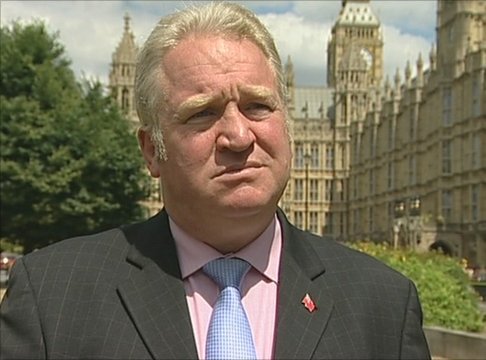
Mike Penning MP
The Home Office has confirmed that responsibility for the UK drugs strategy goes to Mike Penning, MP for Hemel Hempstead, the Minister for Policing, Crime and Criminal Justice.
This must be indicative of the attitude that we can expect from the new Conservative government. It would seem that this is a hardening of drugs policy as being a criminal justice issue rather than something to do with health.
Ironically, Penning is MP for a constituency that takes its name from the long history of cannabis cultivation in the UK. Hemel Hempstead means Hemel’s cannabis farm. Cannabis hemp was, of course, one of the most widely grown agricultural crops prior to the 20th century for its tremendous value as fibre for rope and textiles. Its history as a source of medicine has been largely forgotten but it was widely used and as many as half of all medicines in the British pharmacopoeia once contained cannabis. Without doubt cannabis was used as a recreational drug as well but the experiment of prohibition which began in 1928 has obscured all this history.
Penning is on record as a hardliner on drugs policy. In February 2015, he publicly rebuked Mike Barton, chief constable of Durham, saying:
“I do not agree at all with the chief constable of Durham. I have told him so and I will continue to tell him. Drugs are a scourge in our society and we must do everything we can to crack down on them.”
He has also twice submitted written questions asking how many deaths there have been from cannabis. Of course, on both occasions the answer has been none but it reveals a worrying lack of knowledge and suggests a readiness to listen to or even promote evidence-free scaremongering. He has also been responsible for the dreadful drug driving legislation, widely criticised by all informed parties and a classic example of bad lawmaking driven by the tabloid press rather than by evidence.
So this is very worrying and depressing news for those interested in drugs policy reform. CLEAR will be reaching out to Mr Penning through our network of supportive Tory MPs and we will be seeking a meeting as soon as possible to present our case. Most urgently we will seek his support for allowing the prescription of medicinal cannabis by doctors.
This reinforces my view that CLEAR’s strategy of engagement and persuasion is the correct way forward. Protests and making demands never have worked and never will, particularly with ministers like Penning.
Sometimes it seems that some UK politicians are oblivious to what is happening in the US, Uruguay, Israel and across Europe, not just on access to medicinal cannabis but on wider drugs policy reform. That will be another objective; to educate and inform him of policies that more enlightened jurisdictions are pursuing and the great benefits for public expenditure savings, new tax revenue, health, crime and Tory values of individual liberty and free enterprise.

 Peter Reynolds