Posts Tagged ‘Home Office’
The Article Our Corrupt Home Secretary, Theresa May, Tried To Censor.
This Woman Is A Threat To Britain. She Must Be Stopped At All Costs.
Reproduced in full below is a Daily Telegraph article by Jonathan Foreman which was pulled after pressure from Theresa May’s leadership campaign.
Theresa May Is A Great Self-Promoter, But A Terrible Home Secretary
In the run-up to the 2015 election, one of the handicaps David Cameron had to finesse was the fact that net migration to the UK was three times as high as he had promised it would be. Remarkably, none of the opprobrium this failure provoked brought forth the name of Theresa May, the cabinet minister actually entrusted with bringing migration down. Then, as now, it was as if the icy Home Secretary had a dark magic that warded off all critical scrutiny.
The fact that her lead role in this fiasco went unnoticed and unmentioned likely reflects Mrs May’s brilliant, all-consuming efforts to burnish her image with a view to become prime minister.
After all, Mrs May’s tenure as Home Secretary has been little better than disastrous – a succession of derelictions that has left Britain’s borders and coastline at least as insecure as they were in 2010, and which mean that British governments still rely on guesswork to estimate how many people enter and leave the country.
People find this hard to credit because she exudes determination and strength. Compared to many of her bland, flabby cabinet colleagues, she has real gravitas. And few who follow British politics would deny that she is a deadly political infighter. Indeed Theresa May is to Westminster what Cersei Lannister is to Westeros in Game of Thrones: no one who challenges her survives undamaged, while the welfare of the realm is of secondary concern.
Take the demoralised, underfunded UK Border Force. As the public discovered after a people-smugglers’ vessel ran aground in May, it has has only three cutters protecting 7,700 miles of coastline. Italy by contrast has 600 boats patrolling its 4722 miles.
Considering the impression Mrs May gives of being serious about security, it’s all the more astonishing that she has also allowed the UK’s small airfields to go unpatrolled – despite the vastly increased terrorist threat of the last few years, the onset of the migration crisis, and the emergence of smuggling networks that traffic people, drugs and arms.
Then there is the failure to establish exit checks at all the country’s airports and ports. These were supposed to be in place by March 2015.
Unfortunately the Border Force isn’t the only organisation under Mrs May’s control that is manifestly unfit for purpose. Recent years have seen a cavalcade of Home Office decisions about visas and deportations that suggest a department with a bizarre sense of the national interest.
The most infamous was the refusal of visas to Afghan interpreters who served with the British forces in Afghanistan – as Lord Guthrie said, a national shame.
Mrs May has kept so quiet about this and other scandals – such as the collapse of the eBorders IT system, at cost of almost a billion pounds – that you might imagine someone else was in charge the Home Office.
[It’s not just a matter of the odd error. Yvette Cooper pointed out in 2013 that despite Coalition rhetoric, the number of people refused entry to the UK had dropped by 50 per cent, the backlog of finding failed asylum seekers had gone up and the number of illegal immigrants deported had gone down.]
The reputation for effectiveness that Mrs May nevertheless enjoys derives from a single, endlessly cited event: the occasion in 2014 when she delivered some harsh truths to a conference of the Police Federation.
Unfortunately this was an isolated incident that, given the lack of any subsequent (or previous) effort at police reform, seems to have been intended mainly for public consumption.
In general Mrs May has avoided taking on the most serious institutional problems that afflict British policing. These include a disturbing willingness by some forces to let public relations concerns determine policing priorities, widespread overreliance on CCTV, the widespread propensity to massage crime numbers, the extreme risk aversion manifested during the London riots, and the preference for diverting police resources to patrol social media rather than the country’s streets.
There is also little evidence that Mrs May has paid much attention to the failure of several forces to protect vulnerable girls from the ethnically-motivated sexual predation seen in Rotherham and elsewhere. Nor, despite her supposed feminism, has Mrs May’s done much to ensure that girls from certain ethnic groups are protected from forced marriage and genital mutilation. But again, Mrs May has managed to evade criticism for this.
When considering her suitability for party leadership, it’s also worth remembering Mrs May’s notorious “lack of collegiality”.
David Laws’ memoirs paint a vivid picture of a secretive, rigid, controlling, even vengeful minister, so unpleasant to colleagues that a dread of meetings with her was something that cabinet members from both parties could bond over.
Unsurprisingly, Mrs May’s overwhelming concern with taking credit and deflecting blame made for a difficult working relationship with her department, just as her propensity for briefing the press against cabinet colleagues made her its most disliked member in two successive governments.
It is possible that Mrs May’s intimidating ruthlessness could make her the right person to negotiate with EU leaders. However, there’s little in her record to suggest she possesses either strong negotiation skills or the ability to win allies among other leaders, unlike Michael Gove, of whom David Laws wrote “it was possible to disagree with him but impossible to dislike him,”
It’s surely about time – and not too late – for conservatives to look behind Mrs May’s carefully-wrought image and consider if she really is the right person to lead the party and the country.
There’s a vast gulf between being effective in office, and being effective at promoting yourself; it’s not one that Theresa May has yet crossed.
Reproduced with kind permission of Jonathan Foreman
Even The Guardian Is Now On The ‘Skunk Scaremongering’ Bandwagon.
 Read The Guardian’s Editorial Here
In the last couple of years, even the Daily Mail has shifted its stance on cannabis as it sees opportunities to sensationalise ‘miracle cures’ from medicinal use – the epileptic child now smiling, the cancer patient whose tumour has disappeared. Truth and balance are irrelevant when a dramatic headline is all you’re after.
The Daily Telegraph has become the new home of ‘reefer madness’ with bad science, nasty prejudice and booze-fuelled fear of a safer recreational drug threatening the massive profits of the alcohol industry.
Now, even the Guardian jumps on the ‘skunk scaremongering’ bandwagon with the exaggerated claim that “the risks of heavy teenage cannabis consumption should frighten all of us”. In a backhanded editorial it suggests legalisation because cannabis is dangerous. It claims the consequences of cannabis “abuse are devastating. Psychotic breakdowns smash up lives and can lead to full-blown schizophrenia.” There is little evidence to support such hysteria. In reality, such effects are so rare as to be virtually unheard of and it’s impossible to prove they are caused by cannabis.
Of course we must protect young people, particularly from the high-THC/low-CBD ‘moonshine’ varieties that are a direct result of government policy. However, we cannot compromise facts and evidence for the illusory belief that buying into scare stories will somehow reduce harm. The only way to protect children is by legal regulation with mandatory age limits.
The Guardian makes much of Public Health England’s (PHE) figure that “there are more than 13,000 under-18s in treatment for the consequences of heavy cannabis use in England”. It neglects to mention that PHE also publishes more than 69% are referred by the criminal justice, education and social care systems while only 17% are referred from healthcare and just 11% by themselves or their family. Thus, more than two-thirds are receiving coercive treatment and only 11% actually consider they have a problem.
It is government propaganda that thousands of young people are suffering from mental health problems due to cannabis. Why is The Guardian promoting this myth? Last year, in answer to a Parliamentary question, Jane Ellison MP, minister of state at the Department of Health, revealed there have been average of just over 28 ‘finished admission episodes’ (FAE) for ‘cannabis-induced psychosis’ in young people for each of the past five years.
Of course, each of these 28 cases is a tragedy for the people involved and nothing must distract from that but it clearly shows that in public health terms, ‘cannabis psychosis’ is of negligible significance. To put it into perspective, there are an estimated 3,000 FAEs for peanut allergy each year but we don’t waste £500 million pa on futile law enforcement efforts to ban peanuts!
For 50 years, the Home Office has systematically misled and misinformed the British people about cannabis. Successive generations of young people know they have been lied to. Such dishonest health information is counterproductive. As a result, many children may think that heroin or crack are not as harmful as they have been told.
Cannabis is not harmless but neither is it ‘dangerous’. If you apply that description to it you also have to apply it to energy drinks, over-the-counter painkillers and hay fever remedies. Similarly, whatever scaremongering there is about ‘addiction’, the scientific evidence is that dependency amongst regular cannabis users is slightly less than caffeine dependency amongst regular coffee drinkers – and withdrawal symptoms are similar in nature and intensity.
What we need is evidence-based policy. Government needs to take responsibility for the £6 billion pa cannabis market instead of abandoning our young people and communities to street dealers and criminal gangs. The benefits to be gained from cannabis law reform are reduced health and social harms, massive public expenditure savings, increased tax revenue and proper protection for the vulnerable, including children.
References
Young people’s statistics from the National Drug Treatment Monitoring System (NDTMS), Public Health England, December 2015
Drugs: Young People. Department of Health written question – answered on 20th March 2015.
Relative Addictiveness of Drugs, Dr. Jack E. Henningfield, NIDA and Dr. Neal L. Benowitz, UCLA, 1994
CLEAR and GroGlo Establish First UK Clinical Trials on Cannabis for Chronic Pain.

CLEAR has formed a partnership with the research arm of GroGlo, a UK-based manufacturer of high power, LED, horticultural grow lighting.
The plan is to grow cannabis under a Home Office licence for the production of cannabis oil, both as a dietary supplement and for the development of medical products. To begin with, a low-THC crop of industrial hemp will be planted. We will be using the finola strain, originally developed in Finland and known for its short stature and early flowering. Unlike hemp grown for fibre, finola is usually grown for seed and only reaches a height of 160 – 180 cm but we will be removing male plants before they produce pollen and cultivating the female plants to produce the maximum yield of oil from their flowering tops.

Finola Industrial Hemp
The low-THC oil will be marketed as a dietary supplement, commonly known as CBD oil. There is already a burgeoning market in the UK for CBD products, all of which is currently imported from Europe or the USA. In the USA, the CBD products market was said to be worth $85 million in 2015 so there is huge potential here at home. Aside from the benefit of being UK grown and processed, we anticipate achieving a CBD concentration of about 40%, which is higher than most products already on the market.
Cultivation will be in glasshouses supplemented with LED lighting. GroGlo already has an established glasshouse facility in the east of England. Initial trials will experiment with adjusting the LED technology to provide a changing blend of light wavelengths at different stages of plant growth. This is GroGlo’s area of expertise -combining LED lighting and plant sciences, including existing relationships with some of Europe’s top universities. Professor Mick Fuller, GroGlo’s director of plant science, will lead this research and development process.

Professor Mick Fuller
During the R&D phase, CO2 extraction of oil will be carried out under laboratory conditions at universities in York and Nottingham which already have extensive experience of the process. Each crop will be measured for yield, cannabinoid and terpene content using high pressure liquid chromatography (HPLC). Safety testing will also look for the presence of heavy metals and other contaminants. The results of testing will be fed back into cultivation and extraction processes to maximise yield and quality.
It is anticipated that the first batches of low-THC oil will be ready for market in six months. We are already in discussions with potential distributors and wholesalers. The CBD market in the UK is ripe for an effective marketing campaign which could build a very substantial business for whoever gets it right.
Once we are successfully achieving our production goals with low-THC cannabis, the same testing and development process will begin with high-THC varieties of cannabis. The aim will be to produce a range of oils extracted from single strains, selectively bred and stabilised for different THC:CBD ratios.
Professor Fuller says that GroGlo lighting products “are in use worldwide to grow a range of crops, but some 60% of sales currently come from overseas users growing cannabis for legitimate medical use.” He explains that there is an emerging market for all sorts of nutritional and medicinal plant products but cannabis shows particular promise. GW Pharmaceuticals is the only UK company to enter this market and it has become a world leader, despite the current restrictive legislation. He says: “Together with CLEAR we believe we can help bring a range of safe, high quality UK-produced cannabis products to market within a matter of two to three years.”
A key issue in the development of a successful medicinal cannabis product is the method of delivery. Smoking is not an acceptable solution as inhaling the products of combustion is an unhealthy practice but one of the great benefits of cannabis smoked as medicine is very accurate self-titration. That is the effects of inhaled cannabis are felt almost instantly and so the patient knows when they have taken enough or when they need more to achieve the required analgesic effect.
The oral mucosal spray developed for Sativex is unpopular with patients, many complain of mouth sores from its use and it was developed at least as much with the objective of deterring ‘recreational’ use of the product as with delivering the medicine effectively. It strangles the therapeutic benefits of the cannabis oil of which Sativex is composed in order to comply with the concerns of the medicines regulators about ‘diversion’ of the product into what they would term ‘misuse’. Absorption of the oil is quicker through the mucous membranes of the inside of the mouth than through the gastrointestinal system but, inevitably, some of the oil is swallowed and the pharmacology of cannabis when processed through the gut and the liver is very different.
We believe the best option is a vapouriser device and our intention is to source a ‘vape pen’ of sufficient quality to operate within clinical standards of consistency and safety. Vapourising cannabis oil avoids inhaling the products of combustion but still enables accurate self-titration of dose. A vape pen would provide a handy, convenient and very effective method of consuming medicinal cannabis. However, aside from the technology itself, initial research shows that vapour is more effectively produced when the oil is blended with either vegetable glycerin (VG) or propylene glycol (PG). Establishing the correct ratio of VG or PG to the oil is another important task.
We anticipate that clinical trials for the use of cannabis oil in treating chronic pain could start within two years. We want to compare different oils, ranging from high-CBD to equal ratios of THC:CBD and high-THC content. Prior to that we have to overcome the challenges of cultivation, oil extraction, vapouriser development and assemble the necessary research team and gain ethical approval for the trials. Recruitment for the trials will start in about 18 months time. If you wish to be considered please email ‘paintrials@clear-uk.org’ with brief details of your condition (no more than 100 words). Do not expect to hear anything for at least 12 months but your details will be passed to the research team as a potential candidate.

Mike Harlington, Managing Director of GroGlo
CLEAR is promoting this venture simply because someone needs to do something to make this happen. For all the campaigning and lobbying of MPs and ministers, at the end of the day, the plants have to be grown and the various legislative hoops have to be jumped through. We cannot wait any longer for a radical change in the law. We have to progress through the government’s regulatory regime if we want to bring real therapeutic benfit to patients.
This opportunity arises because of the vision of GroGlo’s managing director, Mike Harlington and the team of experts he has built around him. There is huge demand for legitimate medicinal cannabis products in the UK which is only going to increase with the inevitable progress towards law reform and increasing awareness of the benefits of cannabis. Together, CLEAR and GroGlo are bringing the great hope that medicinal cannabis offers closer to reality than ever before.
LibDems: Correct On Cannabis Policy, Wrong On Scaremongering.
The Liberal Democrats are doing great work on advancing the cause of cannabis law reform. Their policy proposals are sensible and their arguments for change are irrefutable but they are wrong to buy into and sustain the myths and scaremongering that have dominated the cannabis debate for so long.
Cannabis does not cause psychosis. Stronger strains do not present serious health risks. Memory loss is not a significant issue and no issue at all in comparison to the health harms of alcohol or tobacco. Cannabis cannot be described as dangerous unless you also apply that word to hay fever remedies, over-the-counter painkillers and energy drinks. There is not and never has been any scientific evidence to support these myths.
Of course, we must be sensitive to people’s fears and concerns. For more than 50 years the British people have been fed a stream of lies and exaggeration by the tabloid media. The Home Office, right up to today, is engaged in a systematic and deliberate policy to mislead and misinform on cannabis. Shocking though that fact is, this policy transcends successive governments and continues irrespective of ministers’ views. It clearly emanates from dishonest and corrupt officials who are determined to pursue their own agenda, irrespective of truth or concern for the massive harms and cost of cannabis prohibition.
 Norman Lamb, the Liberal Democrat MP and health spokesperson, who is leading the party’s campaign, is a brave, sincere and conscientious politician. One of the few in Westminster that matches up to the high standards of probity and wisdom that we should be able to expect from all MPs. Similarly, Nick Clegg, former leader, and Tim Farron, current leader, have spoken out strongly on the need to reform the law. Now is the time for them also to start telling the truth about cannabis, about how its dangers have been vastly exaggerated, how for adults, in moderation, it can actually be very beneficial and far preferable as a choice of relaxant to alcohol. Indeed, if people substituted cannabis for some of their alcohol consumption, it would be a public health revolution. It would save the NHS billions and transform the health of our society.
The cannabis campaign will not succeed unless we tell the truth. We cannot compromise facts and evidence for the illusory belief that buying into the scare stories will somehow advance the cause. We need to push back at the scaremongering, acknowledge there are risks but that they are extremely small. They really only apply to use by children or to behaviour that is analogous to a ‘white cider drinker’. Consume anything to excess, regularly, without a break, without regard to other aspects of life and it will cause harm but even then, cannabis will cause less harm than any other substance.
As for children, one of the main aims of reform must be to minimise underage use. Even then, the scare story that cannabis is causing significant mental health problems amongst young people is untrue. The Department of Health’s own data shows that in the last five years, there has been an average of just 28 episodes per year of care for ‘cannabis psychosis’ in young people. 28 individual tragedies but an insignificant problem in public health terms.
The misuse of the term ‘skunk’ is also unhelpful. The Channel 4 ‘Drugs Live’ debacle last year was based on reckless, irresponsible overdosing of inexperienced users by a scientist who should know better. All the time calling the cannabis was called ‘skunk’ when it is a matter of fact that it was silver haze as grown by Bedrocan, the Netherlands’ government producer of medicinal cannabis. Skunk is actually the name of one particular cannabis strain and not an especially strong one. Cannabis is available in Britain that is twice, sometimes three times as potent as skunk but the word has been selected and promoted by the tabloid press because of its obvious, sensationalist, negative connotations.
Thank you to the Liberal Democrats for the fantastic work they are doing. All we need now is a little adjustment and focus on truth rather than scare stories.
‘Poppers Are Not Psychoactive’. The Arrogant Madness Of UK Drugs Policy.
Crispin Blunt MP
If you want something slightly less psychoactive than poppers, I suggest you try a crack pipe.
Seriously, poppers produce an instantaneous high as powerful and intense as anything I have ever known. Cannabis, alcohol, even cocaine are mild and gentle compared to the rush that you get from inhaling the vapour from a bottle of poppers. Maybe crack or crystal meth are stronger. I don’t claim knowledge at that extreme end of drugs experiences.
It’s well established fact that successive UK governments are dishonest and corrupt on drugs policy. You cannot trust anything the Home Office says about drugs. The reality of the policies of both Labour and Tory governments is that they maximise harm and cause enormous damage to our society as well as individuals.
The announcement today that poppers are to be excluded from the Psychoactive Substances Act because they are ‘not psychoactive’ is as ludicrous a statement as ever made by any government anywhere. See minister Karen Bradley’s announcement here.
The Psychoactive Substances Act is universally recognised as the most ridiculous and scientifically-illiterate legislation ever passed by Parliament – universal that is with the exception of the slippery fools that sit in the House of Commons. Most of them have no idea at all of what they are doing on drugs policy and their only concern is to appease the Daily Mail, the Daily Telegraph and the hysteria drummed up by the prohibition lobby. However, when one of their own, Crispin Blunt, MP for Reigate, complains about his drug of choice being banned, in record time the Home Office has obtained fake scientific advice and reversed its decision to ban poppers. Meanwhile, benign, largely beneficial, mild and virtually harmless cannabis remains banned, even for those in desperate need to relieve their pain, suffering and disability.
Don’t misunderstand me, I don’t think poppers should be banned. They are known as a sex aid amongst gay men as they relax the anal sphincter, enabling easier ‘backdoor’ sex. There’s a good argument that this helps to prevent injury and therefore infection but they are also an intense sexual stimulant. I can confirm they are great fun for straight sex too.
I’m very pleased that Crispin Blunt will continue to have access to his drug of choice and I have no argument with him at all. He is an MP who is on the record as supporting cannabis law reform, particularly for medicinal use. It’s the sickening, dishonest and corrupt conduct of Home Office ministers that must be condemned.
I’d like to see the craven fools at the Home Office take a big whack off a bottle of poppers and then say they aren’t psychoactive. Black is white and pigs fly over Marsham Street when it comes to drugs.
Top UK Soap ‘Coronation Street’ To Run Medicinal Cannabis Storyline.

Coronation Street Character, Izzy Armstrong
Could This Be A Breakthrough In The UK Campaign For Medicinal Cannabis?
Cannabis used as medicine has appeared before in UK soaps but the news is that this Coronation Street storyline could be less jokey and trivial and actually deal in science and truth. If so it could be a major breakthrough against an intransigent government that flatly refuses even to consider the evidence.
Coronation Street is the world’s longest running soap opera still in production. Each episode reaches an average of between five and eight million viewers. It is deeply enmeshed in the fabric of British working class culture. If it puts a positive spin on medicinal cannabis it could change public opinion quicker than almost anything else.
Most senior politicians know the truth about medicinal cannabis but refuse to act, leaving millions in unnecessary pain and suffering for fear of a media backlash. But the media is changing too. Aside from a few individual dinosaur journalists and the bigots who edit the Daily Mail and Daily Telegraph, the rest of the media is pretty much onside.
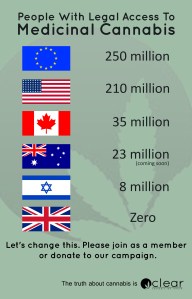 The UK government’s position is nothing short of ridiculous, particularly given developments throughout the rest of the world. Look to Australia for the latest progressive, evidence-based change in policy, where very soon 23 million people will gain legal access to medicinal cannabis.
A positive Coronation Street storyline will give the cowards in the Department of Health and the refuseniks in the Home Office a way out. It is inevitable that reform will come. This could mean it is sooner rather than later.
Another Pack Of Lies On Cannabis From The UK Government.

Yet another cannabis petition amongst hundreds of similar pleas was filed earlier this autumn. This one though is more tightly focused on removing cannabis from schedule 1, which defines it as having no medicinal value. The petition is also commendably concise but characterises itself as a ‘demand‘ that cannabis be rescheduled, an unfortunate choice of words.
 Nevertheless, congratulations are due in that it has exceeded the threshold of 10,000 signatures which means the government must respond. That response is now in and it is predictably dishonest, dismissive and authoritarian in its tone. The Home Office has responsibility for drugs policy so it has drafted the response but it surely must have consulted with the Department of Health.
In fact, I was told only this week by a senior minister that “… the search into the medicinal use of cannabis is something that falls within the jurisdiction of the Department of Health.” That may be a subtle shift in policy from which we can draw some hope. But I fear that the response to this petition offers no hope at all. It is stubborn, obstinate, inaccurate and in denial of evidence and experience.
To be clear, the Home Office has been systematically lying and misleading the British people about cannabis for at least 50 years. The Department of Health is timid on the issue, leaves the public statements to the Home Office heavies and seems more interested in generating fee income for the Medicines and Healthcare products Regulatory Agency (MHRA), than in actually treating patients effectively.
I analyse the response paragraph by paragraph.
“Herbal cannabis is listed in Schedule 1 as a drug with no recognised medicinal uses outside research. A substantial body of scientific evidence shows it is harmful and can damage human health.”
By far the majority of scientists and doctors now recognise that cannabis has real and significant medicinal uses. Of course it is possible that cannabis can cause harm, as can any substance. However, there is no scientific evidence that shows cannabis as being any more harmful than over-the-counter medicines or many common foods. Professor Les Iversen, chair of the Advisory Council on the Misuse of Drugs, is on the record saying: “cannabis is a safer drug than aspirin and can be used long term without serious side effects”.
“The Government will not encourage the use of a Schedule 1 controlled drug based on anecdotal evidence. It is important that a medicine is very thoroughly trialled to ensure it meets rigorous standards before being licensed and placed on the market so that doctors and patients are sure of its efficacy and safety. “
It is not the government’s role to encourage the use of any drug as medicine, that is the role of a doctor. Only by removing cannabis from schedule 1 can that decision be placed in doctors’ hands. There is a vast quantity of peer-reviewed, published scientific evidence on the medicinal use of cannabis including human clinical trials. It is false to suggest that only anecdotal evidence is available. See ‘Medicinal Cannabis: The Evidence’. Thousands of doctors and millions of patients are sure of the efficacy and safety of cannabis based on existing research, trials and experience. Many commonly prescribed medicines have nowhere near as much evidence behind them as cannabis.
“Cannabis in its raw form (herbal cannabis) is not recognised as having any medicinal purposes in the UK. There is already a clear regime in place to enable medicines (including those containing controlled drugs) to be developed and subsequently prescribed and supplied to patients via healthcare professionals. This regime is administered by the Medicines and Healthcare products Regulatory Agency (MHRA), which issues Marketing Authorisations for drugs that have been tried and tested for their safety and efficacy as medicines in the UK.”
The lack of recognition for the medicinal purposes of cannabis is a grave error with no evidence that supports it. Cannabis is a traditional medicine which recorded history shows has been used safely and effectively for at least 5,000 years. The only thing that stands in the way of cannabis being prescribed by doctors is its schedule 1 status. The MHRA is a diversion and is irrelevant. It exists to trial and regulate new medicines and requires a £100,000 application fee before very costly clinical trials take place. This is an unnecessary obstacle to a traditional medicine which contains more than 400 compounds. The MHRA process is designed for potentially dangerous, single molecule drugs and is not applicable to cannabis.
“It is up to organisations to apply for Marketing Authorisation for products that they believe have potential medicinal purposes so that these can be subject to the same stringent regime and requirements that all medicines in the UK are subjected to.”
Many substances and drugs which have medicinal purposes are regulated either as Traditional Herbal Products or food supplements. It is the schedule 1 status of cannabis which prevents it being regulated and controlled in this way which is far more appropriate given its very low potential for harm and the very wide range of conditions for which it can be useful.
“Since 2010 UK patients can use the cannabis-based medicine ‘Sativex’ for the treatment of spasticity due to multiple sclerosis. ‘Sativex’ can also be prescribed for other conditions at the prescribing doctor’s risk. ‘Sativex’ was rigorously tested for its safety and efficacy before receiving approval, and is distinguished from cannabis in its raw form. It is a spray which is standardised in composition, formulation and dose and developed to provide medicinal benefits without a psychoactive effect. Due to its low psychoactive profile ‘Sativex’ was rescheduled from Schedule 1 and placed in Schedule 4 Part 1 to enable its availability for use in healthcare in the UK.”
Sativex is a massively expensive form of cannabis oil which is not prescribed because of its cost. It is at least 10 times the price of Bedrocan medicinal cannabis as regulated by the Netherlands government which could be immediately made available in the UK. It is a deliberate falsehood to claim that Sativex does not have a psychoactive effect. The statutory document ‘Summary of Product Characteristics’ describes “euphoric mood” as a “common” side effect. The scheduling of Sativex in schedule 4 is a deception requiring 75 words falsely to distinguish it from other forms of cannabis whereas every other drug in every other schedule requires just one word.
“The MHRA is open to considering marketing approval applications for other medicinal cannabis products should a product be developed. As happened in the case of ‘Sativex’, the Home Office will also consider issuing a licence to enable trials of new medicines to take place under the appropriate ethical approvals. “
Cannabis, which contains 400 + compounds is not suitable for MHRA regulation which is designed for single molecule drugs which are potentially dangerous. There is no significant danger from the use of cannabis when prescribed by a doctor. This is already well established in scientific evidence and the referral to the MHRA is a diversion and an excuse for failing simply to put the decision in doctors’ hands.
“In view of the potential harms associated with the use of cannabis in its raw form and the availability of avenues for medicinal development, the Government does not consider it appropriate to make changes to the control status of raw or herbal cannabis. “
The government has offered no evidence of the potential harms to which it gives such weight. No “development” of cannabis is required. It is a traditional medicine consisting of the dried flowers of the cannabis plant.
“The Government’s view is that the Misuse of Drugs Act 1971 and regulations made under the Act continue to facilitate the development of medicines which are made from Schedule 1 controlled drugs. The legislation is aimed at protecting the public from the potential harms of drugs and is not an impediment to research into these drugs or development of medicines.”
The government’s view is intransigent and as demonstrated by this response is ignorant of the available evidence. This response reinforces the government’s clear intention not to consider the evidence and simply to deny it. The evidence shows that the potential harms of cannabis as medicine are trivial and inconsequential. If its schedule 1 status was not an impediment to research, there would already be a great deal more research into cannabis as medicine.
“In 2013 the Home Office undertook a scoping exercise targeted at a cross-section of the scientific community, including the main research bodies, in response to concerns from a limited number of research professionals that Schedule 1 status was generally impeding research into new drugs.
Our analysis of the responses confirmed a high level of interest, both generally and at institution level, in Schedule 1 research. However, the responses did not support the view that Schedule 1 controlled drug status impedes research in this area. While the responses confirmed Home Office licensing costs and requirements form part of a number of issues which influence decisions to undertake research in this area, ethics approval was identified as the key consideration, while the next most important consideration was the availability of funding.”
The Home Office is entirely untrustworthy and dishonest on anything to do with cannabis. Researchers, scientists, doctors and those already using cannabis as medicine simply do not trust anything it says on the subject based on long experience of its calculated dishonesty and misinformation.
On The Eve Of The Cannabis Debate, CLEAR Meets Top Government Minister.
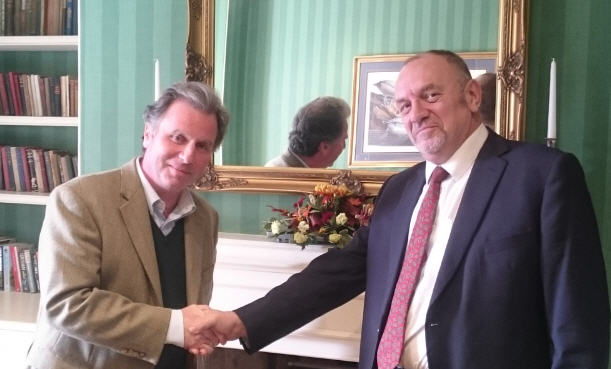
Oliver Letwin MP, Cabinet Office Minister. Peter Reynolds, President of CLEAR
Today, Friday 9th October, in advance of Monday’s cannabis debate in Parliament, I met with Oliver Letwin, the Cabinet Office minister with responsibility for the implementation of government policy.
According to The Independent, Oliver Letwin is “probably the most powerful person in the government after the Prime Minister and Chancellor”. I first met with him back in July and he agreed to investigate the possibility of cannabis being available on prescription. When the cannabis debate was announced, I asked to see him again before the debate took place and he very generously arranged to see me just in time.
Monday’s debate will be the first time in nearly 50 years that MPs have had an opportunity to consider the subject. Throughout the world, more and more governments are waking up to the huge damage that cannabis prohibition causes. Nearly all the harms around cannabis are not caused by cannabis itself but the laws against it. Prohibition of anything for which there is huge demand inevitably creates a criminal market. More than three million people in the UK choose to use cannabis regularly. We consume more than three and a half tons every day and spend more than £6 billion every year, all of which goes into the black economy.
Since the early 20th century, acres of newsprint have been devoted to telling us how harmful cannabis can be. The alcohol industry fiercely guards its monopoly of legal recreational drug use. It has enormous influence in government and its £800 million annual advertising spend give it great power over the media.
But the truth is becoming clear. Scientific evidence and real world experience show that compared to alcohol and even common painkillers and over-the-counter medicines, cannabis is very, very safe. Concerns about mental health impacts are proven to be wildly overblown as cannabis use has escalated by many orders of magnitude but mental health diagnoses have remained stable. Increasingly, those responsible for drugs policy realise that abandoning this huge market to criminals only makes things worse. Criminals don’t care who they sell to or what they sell, so children and the vulnerable become their customers and their product becomes low quality, contaminated, often very high strength ‘moonshine’ varieties.
A Win Win Proposal To The UK Government On Cannabis.
Perhaps the most pernicious effect of cannabis prohibition is the denial of access to it a medicine. On this, Mr Letwin has been consulting with other ministers in the Department of Health and the Home Office. He says he is now convinced that there is a very positive future for cannabinoid medicines. As a result, I hope to be meeting again shortly with George Freeman MP, the Life Sciences Minister. I led a delegation of medicinal cannabis users to meet with him at the beginning of this year. Mr Letwin has indicated to me that it is Mr Freeman’s office that needs to deal with this, so I am hopeful of real progress in the near future.
Mr Letwin warned me that the debate itself will not produce any change in the law and I acknowledge this but it is part of the process that will eventually get us there. I suggested that there is a win win option that could be implemented very easily and quickly. There is huge pressure on the government to act but also great inertia and resistance to change from the old guard. I proposed that if cannabis could be moved out of schedule 1 of the Misuse of Drugs Regulations it would enable doctors to prescribe it and researchers more easily begin the task of developing and testing new products.
The great benefit this would offer to the government is that it would be seen to be responding to the evidence, being progressive and keeping up with the worldwide movement towards reform. However, for the more conservative thinkers, the ‘tough on drugs’ mantra would remain in place. Cannabis would still be a class B drug and all the same penalties would remain in force. Both sides of the debate could see this move as a success for their argument.
So we all look forward to the debate. As is normal practice, no government ministers will participate but I expect a Home office minister will give some sort of response. We are making progress. Revolution is not the British way but I do think we can continue with guarded optimism that our message is getting through and the direction of travel is certain.
The Weak And Ineffectual Response Of Most MPs To The Cannabis Debate.
CLEAR has been mobilising its members as never before to lobby their MPs in advance of the cannabis debate on 12th October.
There are honourable exceptions but most responses have been unhelpful, dismissive and have completely failed to deal with the arguments put forward. Most MPs are indoctrinated with the false reporting churned out by the press, scared stiff of the subject and not prepared to look any deeper.
It is a terrible indictment of these people, each of whom costs us about £250,000 per year in salary and expenses. Most simply do not do their job properly, certainly not in the interests of or representing their constituents, mainly they just pursue their own political ambitions and interests. They cannot be bothered to deal with the cannabis issue.
Usually, from both Tory and Labour MPs, the responses parrot the official Home Office line. Most are too lazy to inform themselves about cannabis and the facts and evidence around current policy which costs the UK around £10 billion per annum. This vast sum comprises a futile waste of law enforcement resources and the loss of a huge amount of tax revenue. It provides funding to organised crime, including human trafficking, and does nothing to prevent any health or social harms around cannabis. In fact, if anything it maximises these harms, endangering health, communities and the whole of our society by enforcing a policy which is based not on evidence but on prejudice. Source: http://clear-uk.org/media/uploads/2011/09/TaxUKCan.pdf

Paul Flynn MP
As Paul Flynn MP, said in the House on 14th September:
“There is [a debate] in a fortnight’s time, on a subject that terrifies MPs. We hide our heads under the pillow to avoid talking about it, but the public are very happy to talk about it in great numbers. That subject is the idea of legalising cannabis so that people here can enjoy the benefits enjoyed in many other countries that do not have a neurotic policy that is self-defeating and actually increases cannabis harm.”
Source: http://www.theyworkforyou.com/whall/?id=2015-09-14a.185.0#g194.0
Below I reproduce a reply from one MP. This is the standard MP line on cannabis. The words may vary slightly but essentially this is the response that the Home Office enforces and, irrespective of party, these are the disingenuous statements that MPs hide behind.
“I believe cannabis is a harmful substance and use can lead to a wide range of physical and psychological conditions. I therefore do not support the decriminalisation or legalisation of cannabis at this time.
I welcome that there has been a significant fall in the numbers of young people using cannabis, and the number of drug-related deaths among under-30s has halved in a decade and I would not want to see this progress undermined.”
Stating cannabis is harmful is meaningless and and an evasion of the question. Anything can be harmful. Such an assertion only has any meaning when in comparison to other substances. In fact, cannabis is relatively benign, even when compared to many foods. It is much less harmful than energy drinks, junk food, all over-the-counter and prescription medicines and, of course, tobacco and alcohol. Compared to these two most popular legal drugs, cannabis is hundreds of times less harmful. Source: http://www.ncbi.nlm.nih.gov/pmc/articles/PMC4311234/

If cannabis can lead to a wide range of physical and psychological conditions, what are they and how likely is cannabis to bring them on compared to other substances? In fact, the Royal College of Psychiatrists, whose publications are often presented as evidence of cannabis harms, states unequivocally
“There is no evidence that cannabis causes specific health hazards.”
Source: http://www.rcpsych.ac.uk/healthadvice/problemsdisorders/cannabis.aspx
There is a reported fall in cannabis use from the British Crime Survey. However, the Association of Chief Police Officers reports ever increasing incidents of cannabis cultivation and there has been a massive surge in the use of ‘legal highs’ or novel psychoactive substances. Without exception, these are far more harmful than cannabis and their very existence is the product of government policy. In places such as Holland and the US states that have legalised, there is no problem at all with such substances.
As for “drug-related deaths”, this is classic disinformation. What does it have to do with cannabis? Are our MPs so badly informed that they cannot distinguish between different drugs? Sadly, in many cases the answer is yes. Even so, this is a false claim. The latest figures show an increase in the number of drug poisoning deaths to the highest level since records began in 1993. So much for the claimed “progress”. Source: http://www.ons.gov.uk/ons/dcp171778_414574.pdf
Just recently MPs have started to address the question of medicinal use, almost certainly because of the rising clamour from people in pain, suffering and disability. Also because the UK is now a very long way out of step with the rest of Europe, the USA, Canada, Israel, Australia and most ‘first world’ countries. Source: http://clear-uk.org/static/media/PDFs/medicinal_cannabis_the_evidence2.pdf
“I am aware that one of the issues raised is around enabling the use of cannabis for medicinal purposes. I know that cannabis does not have marketing authorisation for medical use in the UK, and I understand that the Medicines and Healthcare products Regulatory Agency can grant marketing authorisation to drug compositions recognised as having medicinal properties, such as in the case of Sativex.”
A marketing authorisation from the Medicines and Healthcare products Regulatory Agency (MHRA) is a deliberate diversion from the issue. Medicines do not have to have an MHRA marketing authorisation. Doctors can prescribe any medicine, licensed or unlicensed, as they wish. However, since 1971, medical practitioners have been specifically prohibited from prescribing cannabis on the basis of no evidence at all except minsters’ personal opinions. Source: http://www.legislation.gov.uk/uksi/2001/3997/made.
Applying for an MHRA marketing authorisation costs over £100,000 as an initial fee and clinical trials have to be conducted at a cost of at least the same again. Instead, minsters could simply move cannabis from schedule 1 of the Misuse of Drugs Regulations to schedule 2 alongside heroin and or, more logically, to schedule 4, alongside the cannabis oil medicine Sativex. This would place the whole question of the use of cannabis as medicine in the hands of doctors and not in the politically motivated hands of Westminster. Isn’t that where it should be?
 This is the most important short term objective of the cannabis campaign – move cannabis out of schedule 1. Not only would this enable doctors to prescribe Bedrocan medicnal cannabis as regulated by the Dutch government but it would mean research could start in earnest. The restrictions presently in place on cannabis, because it is schedule 1, make research very expensive, complicated and are a real deterrent.
If you haven’t lobbied your MP on the cannabis debate yet, you still have time to. If you can, get along and see them in a constituency surgery. Full guidance is provided here but you must act now: http://clear-uk.org/guidance-on-how-to-lobby-your-mp-for-the-cannabis-debate/
Most MPs run surgeries on Fridays so that means you have just this coming Friday, 2nd October and the following 9th October.
Please at least ensure you write to your MP. This is our moment and we are having an impact. Make sure you do your bit.
This Is How The UK Government Lies To Its Citizens About Cannabis.
The preposterous response from the UK government to the massive petition for the legalisation of cannabis is a pack of lies.
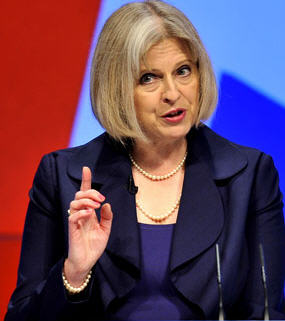
Systematic Misinformation, Deception And Dishonesty
Yes. Lies. Not a word it’s wise to use unless it’s accurate but in this case it is. The Home Office is disgraced on so many aspects of its work but it has been systematically misleading, misinforming and promoting untruths about cannabis since 1971. Individual Home Secretaries are fully complicit in this dishonesty, most notably James Callaghan, Merlyn Rees, William Whitelaw, Leon Brittan, Douglas Hurd, Michael Howard, Jack Straw, Jacqui Smith, Alan Johnson and the incumbent, Theresa May.
Certainly in the last 20 years there can be no excuse at all. The balance of scientific evidence has been quite clear for at least that long that although a very small number of people may be vulnerable, for 99% of people cannabis is almost completely benign and often beneficial.
The dishonesty of these disgraced ministers brings shame on both the Conservative and Labour parties and the civil service officials in the Home Office. They all know full well that they have lied to the public and they continue to do so, undoubtedly because of corrupt influence from vested interests, principally the tabloid editors, press barons and the alcohol industry. Their lies have resulted in the unnecessary criminalisation of over one million people, the frittering away of tens of billions in futile law enforcement costs and lost tax revenue. Most dreadful of all, the denial of access to medicinal cannabis by those in pain, suffering and disability.
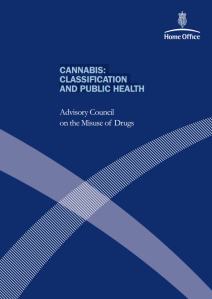 The basis for the government’s dismissal of the petition is given as the Advisory Council on the Misuse of Drugs (ACMD) 2008 report ‘Cannabis: Classification and Public Health’.
In the covering letter to the report, the then chair of the ACMD does say “… the use of cannabis is a significant public health issue. Cannabis can unquestionably cause harm to individuals and society.”
Judge for yourself whether the evidence in the report supports the idea that cannabis is a “significant public health issue”. I don’t think it does and nowhere in the report is such an unequivocal statement made except in the covering letter. Of course it is true that cannabis can cause harm to individuals, just as digestive biscuits, chips and sugary drinks can, so that’s pretty meaningless. There is no evidence in the report at all of cannabis causing harm to society.
But the covering letter then makes the point very strongly that “strategies designed to minimise its use and adverse effects must be predominantly public health ones. Criminal justice measures – irrespective of classification – will have only a limited effect on usage.”
The report recommends that cannabis remain in class C of the Misuse of Drugs Act 1971 but the government of the day, led by Gordon ‘Skunk is Lethal’ Brown, ignored that and increased it to class B.
Read the report yourself. Compare it with the government’s response to the petition. To claim that the report supports present policy is false. It directly contradicts present policy. There is also now a host of high quality evidence on the reality of decriminalised or regulated cannabis markets from the Netherlands, Portugal, Colorado and Washington. This shows beyond any doubt that the government’s suggestions of “drug dependence… misery… increased misuse” have no basis in evidence at all. Furthermore the idea that new tax revenue would be outweighed by new costs is directly contradicted by every study on the subject. I repeat, the government’s response is a pack of lies
Sadly, the United Kingdom is a country where government ministers are prepared to lie, mislead, distort evidence and deceive the British people in order to maintain policies based on prejudice and the corrupt influence of vested interests.

 Peter Reynolds