Posts Tagged ‘Home Office’
British Medicinal Cannabis Register
 In California there are more than 500,000 medical marijuana card holders. How many people use cannabis as medicine in Britain?
The British Medicinal Cannabis Register aims to find out and provide a database of facts and evidence for doctors, scientists, researchers, campaigners, government and anyone with a bona fide interest. Users register via the BMCR website, providing details of their method of use and the conditions treated. While patient confidentiality is guaranteed and records held on the database will have the same legal status as any other medical record, users do not have to provide their full address. They can register with the first part of their postcode and a verifiable email address.
Of course, according to the British government, “cannabis is dangerous and has no medicinal benefits”. However, Sativex, a cannabis tincture, has been approved by the MHRA as a treatment for MS spasticity. Sativex is pharmacologically identical to cannabis. It is cannabis – with the addition of ethanol and a little peppermint oil. (A tincture is an alcoholic extract.)
There is no more common sense in US federal law where cannabis is a schedule 1 drug with “no medicinal uses”, yet the US government has held a patent (no. 6630507) since 2003 for “cannabinoids as antioxidants and neuroprotectants, for example, in limiting neurological damage following ischemic insults, such as stroke and trauma, or in the treatment of neurodegenerative diseases, such as Alzheimer’s disease, Parkinson’s disease and HIV dementia.”
If you can make any sense of either the British or US governments’ position then please educate me? I think they are irrational and cruel. They actively deny people in pain and suffering the relief they need which is comprehensively proven both by science and experience. On both sides of the Atlantic this amounts to nothing less than an evil injustice and oppression of vulnerable people.
Thank God and the US constitution that in America 14 states have introduced a regulated system of medical marijuana. Two-thirds of Europe permits medicinal cannabis and Israel has just introduced a major programme including new growing facilities and dispensaries. In Britain there is no such compassion and the Home Office ducks and dives and manipulates and dissembles to evade EU law that would permit cannabis as medicine. In the UK there is appalling wickedness and cruelty perpetrated on the back of political cowardice.
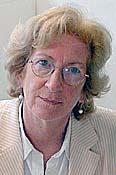
Baroness Meacher
The BMCR was launched this week and received an immediate boost with the announcement of Baroness Molly Meacher, Paul Flynn MP, Matthew Atha and Dr Michael Vandenburg as members of its governing council. Baroness Meacher has a distinguished career in health and social care. Paul Flynn has long campaigned for drug law reform. Matthew Atha is the director of the Independent Drug Monitoring Unit and Dr Michael Vandenburg is the pre-eminent expert witness in the courts on pharmaceuticals and drugs.
Whether the BMCR succeeds in its aims depends entirely on whether those who use cannabis as medicine have the courage to register. Only then will sufficent evidence be available to embarrass the government into essential and overdue reform. The danger is that those who find relief will prefer to keep quiet and say nothing. No one could blame them if they do.
 It is time for all those concerned to grasp this nettle and make a stand. Are we seriously going to continue to imprison sick and disabled people for using a medicine that is proven to be effective and far less costly, dangerous and harmful than pharmaceutical alternatives?
I urge all those concerned to register at the BMCR website: www.bmcr.org.uk.
SECOND UPDATE On Legal Medicinal Cannabis In Britain
 This is the third instalment in this story.
1. Legal Medicinal Cannabis In Britain
2. Update On Legal Medicinal Cannabis In Britain
Eventually The Guardian took some notice. See here.
Despite the pleas of those in pain and suffering, the Home Office was talking to Mary O’Hara of The Guardian but not to them. Dozens if not hundreds of medicinal cannabis users had written to the Home Office asking for confirmation that they could go to Holland for a prescription. Not a word was heard.
Jim Starr, the subject of this story, wrote to his MP, and then he wrote again. He heard nothing. He wrote to the Home Office, chasing up his application for a personal import licence. He heard nothing. He wrote again.

Dilatory
Richard Drax, the first timer, newly elected Tory MP for Dorset South just happens to be my MP too, so I wrote to him on Jim’s behalf.
Jim has heard nothing. Richard Drax asked me not to mention his name in any article about Jim. Jim wrote again. I wrote again. We have heard nothing.
Jim’s medicine has run out. We told the Home Office and Richard Drax that it was an urgent medical emergency. We have heard nothing.
I spent the last week on the telephone and exchanging emails with the Home Office. This is the result:
A Home Office spokesperson said:
The UK’s position is clear – cannabis is dangerous and has no medicinal benefits in herbal form. It remains illegal for UK residents to possess cannabis in any form.
Britons benefit from reciprocal laws which allow EU nationals, in limited circumstances, to travel with controlled medicines. We are working with European authorities to ensure the system is robust and not open to abuse.
The Home Office says you can import cannabis to the UK and use it without restriction provided you “are resident in a country where that drug is legally prescribed”. So it’s OK for the Dutch and the Belgians and the Spanish and the Italians and the Czechs and the Poles (and many others) to smoke weed in Britain but not if you’re British.
We Won't Give Up
This is clearly unequal, discriminatory, unjust and unsustainable in law but the Home Office is not about to give in. The only way to resolve this is that either someone must appeal a conviction all the way to the Supreme Court or there must be an application for judicial review.
Stay tuned for the next exciting instalment.
In the meantime, Jim and thousands like him will manage as best as they can.
He’s still heard nothing from either the Home Office or Richard Drax.
Home Office Plays A Cruel Game Of Media Spin
There is no logic nor common sense nor science nor rationale in UK government drug policy. Everyone knows that. Nearly every commentator, scientist, doctor, even most politicians in private, acknowledge that there is no reasonable basis for our current drug laws. They do more harm than good and in the process they waste billions of pounds in law enforcement costs and create massive harm to society and to public health. The report issued today by Professor Nutt and his colleagues reveals the appalling incompetence of our drug policy. See here.

Monster
Unlike every other country in Europe, the UK places drug policy in the hands of the Home Office rather than the Department of Health. Nothing reveals the idiocy of this more than the current debacle over medicinal cannabis. See BBC Inside Out London tonight at 7.30pm or here on the iPlayer tomorrow.
What is truly disgraceful about the Home Office is the way it plays the media game with complete disrespect for and by ignoring citizens to whom it owes a duty of care. While it issues conflicting messages to the media, it fails to respond at all to dozens of individuals suffering from debilitating diseases who have sought its advice on obtaining their medicine. Hundreds of individuals have written repeatedly to the Home Office but have received no reply. The conduct of the minister responsible for this scandalous episode, James Brokenshire, can only be described as cruel, negligent and irresponsible. While the rest of us may debate the political issues around drug laws, thousands continue in pain and suffering while this monster continues his game of media spin.
There is no justice or truth in government drug policy but in this instance there is blatant evil and disregard for human suffering in James Brokenshire. The man is a disgrace and not fit to hold public office.
BBC Blanks Proposition 19
According to the Home Office there are six million regular users of cannabis in the UK. I have seen just one report on the BBC news about the Proposition 19 vote in California on 2nd November which promises legalisation.
Compare this with the recent wall to wall coverage of the Pope’s visit. How many regular supporters of the Catholic Church are there in Britain? Just 887,000.
This is an appalling failure by the BBC and a dereliction of its duty to provide fair and balanced coverage. Please make a complaint. It will take you less than five minutes and it will make a difference if enough of you take the time.
Here is a direct link to the BBC complaints website. Please do it now!
The Guardian Dances To The Home Office Tune
An astonishing article in The Guardian today on the Home Office’s attempts to prevent UK patients gaining access to medicinal cannabis. See here.
The Home Office’s position is no surprise. What is astonishing is The Guardian’s inaccurate and poodle-like treatment of the story. The article is little more than an obedient reproduction of a Home Office press release. It takes no account of the gross injustice and cruelty perpetrated by Home Office ministers. Neither does it challenge a position that is cleary unsustainable under EU law.
No one can have expected the Home Office to give in on this issue without a fight. I think we would all have expected far more courage and support from The Guardian.
The Guardian’s editor is Alan Rusbridger. His email address is: alan.rusbridger@guardian.co.uk. I would urge everyone to write to him now to protest at this weak and rather pathetic coverage of an important story.
This is my email. Feel free to copy, edit or use it as you will.

The Truth About Sativex
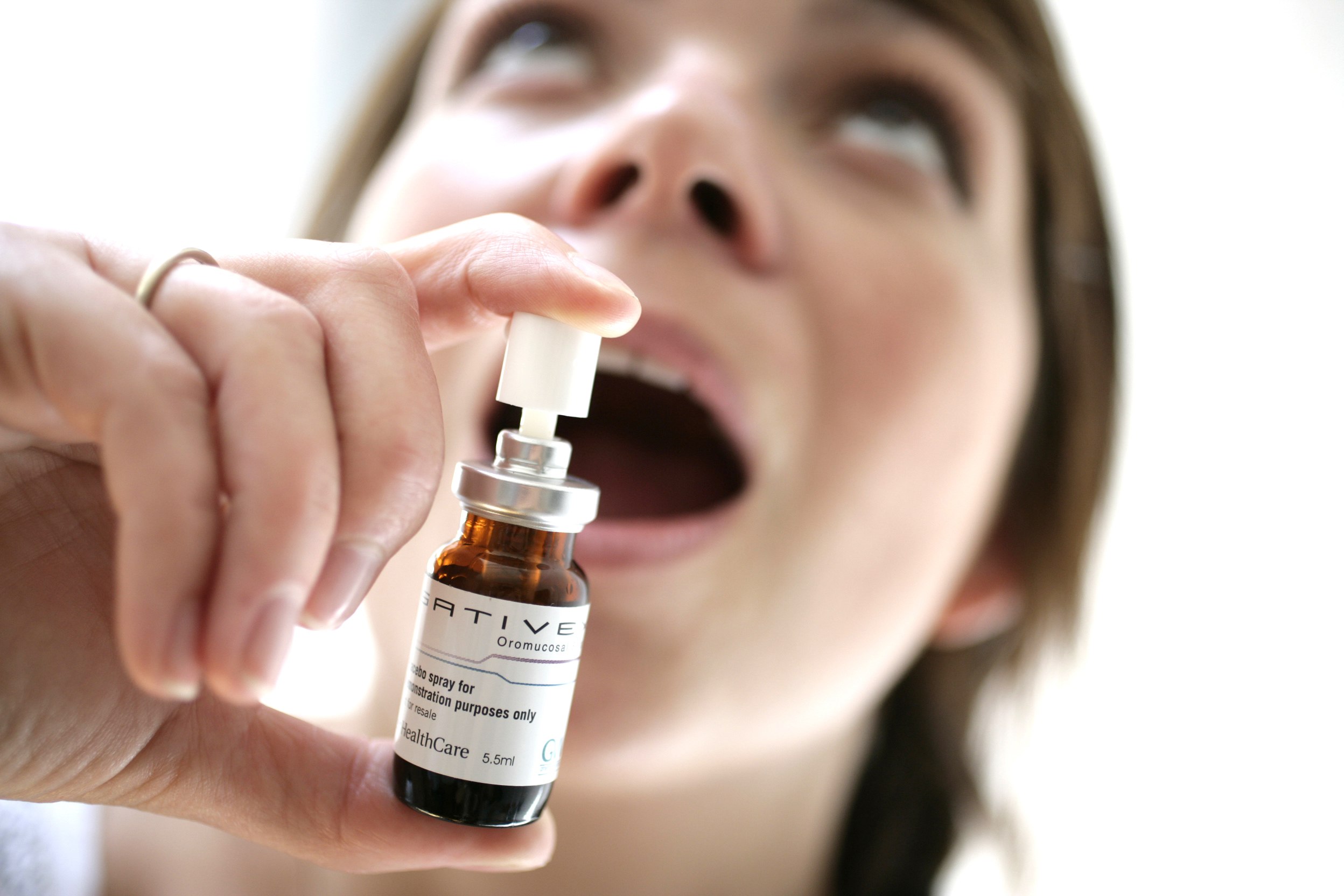
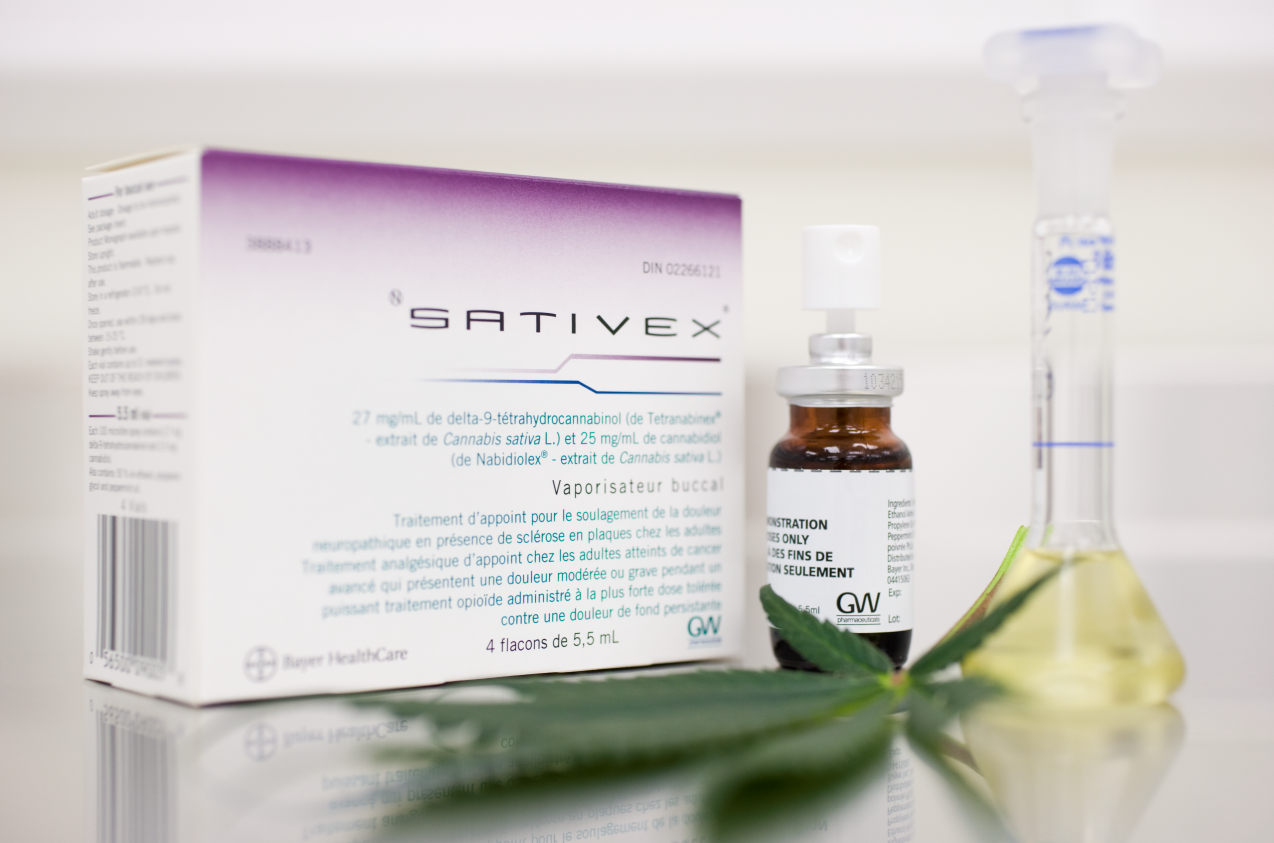 Sativex is super strong, concentrated cannabis. Nothing more, nothing less.
GW Pharmaceuticals would have you believe that it’s a “pharmaceutical” product because according to its research that’s what patients prefer. As the GW spokesman puts it, “It’s a pharmaceutical solution, formulated with the ability to deliver a precise dose and with stringent standards of quality, safety and efficacy”.
 In fact, what GW does is grow high quality cannabis under pretty much the same conditions as most illegal growers. It uses clonal propagation to ensure consistent levels of cannabinoids. Lighting and hydroponic nutrition is computer controlled with automatic ventilation. It really is no different from the most sophisticated and efficent illegal cannabis farms. It’s a recognised and proven technology now also used by Bedrocan in Holland, the Dutch government’s exclusive medicinal cannabis grower and Gropech in California which is building a new 60,000 sq ft facility in Oakland for a crop worth $50 million per year.
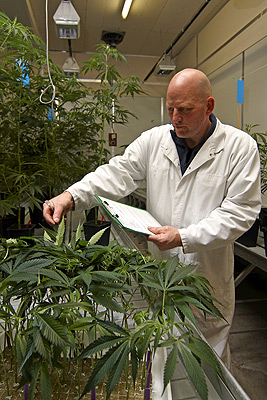
Bedrocan Grow
The difference between these crops from legal and illegal growers is insignificant. It’s similar to buying your tomatoes from the supermarket or the farm shop.
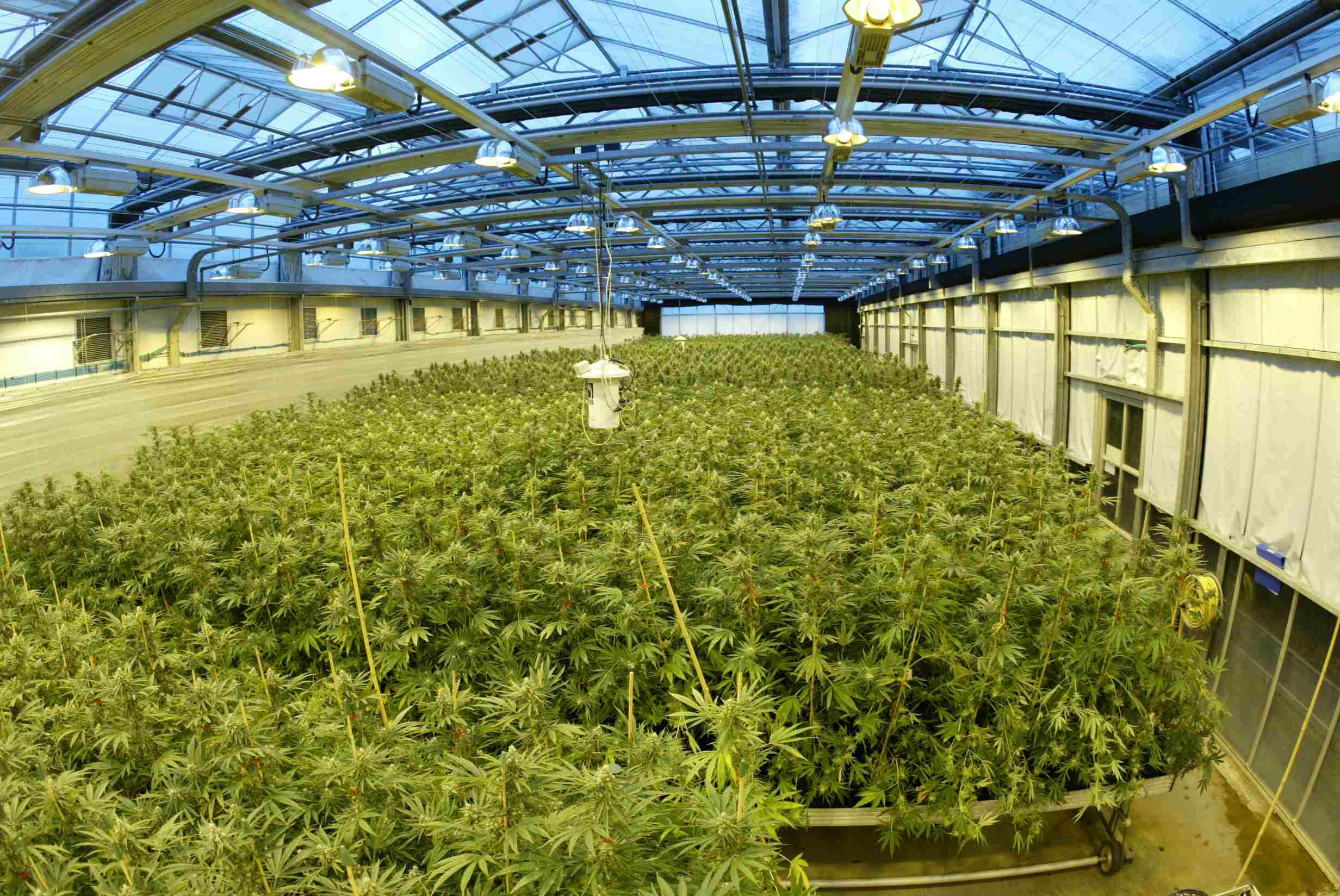
GW Grow
GW takes its high quality cannabis, chops it up and makes a tincture by heating it under pressure with CO2 and then adding ethanol to precipitate an oil. Then, with the addition of a little peppermint oil to mask the taste and some preservative, the filtered liquid is packaged into tiny little aerosol bottles. Each spray delivers 2.7mg of THC and 2.5mg of CBD. What GW doesn’t tell you that it also contains all the other 100+ cannabinoids found in the plant, each of which has its own mechanism of action and effect. It also contains flavonoids, terpines and other compounds. Everything that is found in the plant.
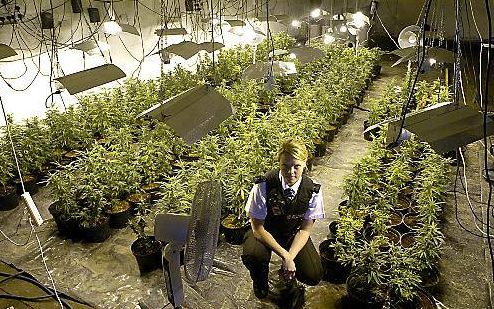
Illegal Grow
I applaud GW Pharmaceuticals for bringing the enormous benefits of cannabinoid therapy into the 21st century. It’s nothing new though. The medicinal value of the plant has been known and widely used for thousands of years. Only in the last century has it been demonised by lies and propaganda. It would be a mistake though to think that Sativex is anything different from the plant itself. It’s just been wrapped up in a marketing and physical package which has enabled stupid and cowardly politicians to accept it.
In fact, Sativex remains just as illegal in Britain as herbal cannabis. Even though it has received MHRA approval for use in the treatment of MS spasticity and may be prescribed by a doctor, it remains a schedule 1 drug under the Misuse Of Drugs Act. The Home Office has indicated that it intends to amend the law but has not yet done so. This means that any pharmacist who dispenses Sativex at present is guilty of exactly the same criminal offence as any street dealer in weed or hash.
The Home Office will, of course, turn a blind eye to this but not to medicinal herbal cannabis even though, in every sense, it is identical to Sativex (except that Sativex also contains alcohol and peppermint oil). The stark idiocy of British law is revealed.
Never before has there been a better example of the how the law is an ass and so are the spineless politicians who support it.
UPDATE On Legal Medicinal Cannabis In Britain
My article on Jim Starr and his medicine has been bouncing around the internet for nearly two weeks now. It was offered to every quality national newspaper and The Daily Mail but none have seen fit even to cover the story. The Daily Telegraph, to its credit, covered the BMJ article about how cannabis prohibition in the US is counterproductive. Other than that all the press can be bothered with is trivia about celebrities and cannabis. The truly important news that tens of thousands of people now have legal access to the medicine they need is of no interest to the erudite editors of Fleet Street. I wonder what their readers would think?
The feedback I have received has been overwhelming. I know of hundreds of people who have written to the Home Office asking for confirmation that they may follow in Jim’s footsteps. Many have telephoned and it seems a different story or excuse has been given to each one. What is certain is that the prohibitionists and legislators who care not one jot for others’ pain and suffering are in disarray.
I can now add further clarification and evidence in support of the rights of those who need medicinal cannabis. Surely now those cruel politicians and civil servants who are depriving so many British citizens of the medicine they need must relent. The truth is out!
1. Under the United Nations Single Convention On Narcotic Drugs, the UN International Narcotics Control Board determines the documentation required for the transport of such medicines across international borders as, simply, “a valid medical prescription”.
2. Under article 23 of the Geneva Convention (which specifically applies to all parties even outside time of war), protection is provided for the transport of medicines across borders.
3. Article 75 of the Schengen Agreement also provides protection for persons to carry their medicine throughout the EU. The UK has been bound by this since 1st January 2005. In support of this, I refer to the proceedings in the European Parliament on 1st December 2009 on the Right To Freedom Of Movement In The EU, in which the European Commission Advocate stated unequivocally that article 75 of Schengen is “binding” on the UK. I also refer to the letter from the Home Office dated 14th December 2009 to Mr Noel McCullagh concerning Bedrocan medicinal herbal cannabis.
UPDATE 9th November 2010
Noel McCullagh has asked me to remove the reproduction of the letter to him from the Home Office. He originally published the letter on this site himself but now for reasons only known to him he wants it removed. Suffice to say that in it the Home Office confirmed he was entitled to import Bedrocan herbal medicinal cannabis under the protection of a Schengen certificate.
Legal Medicinal Cannabis In Britain
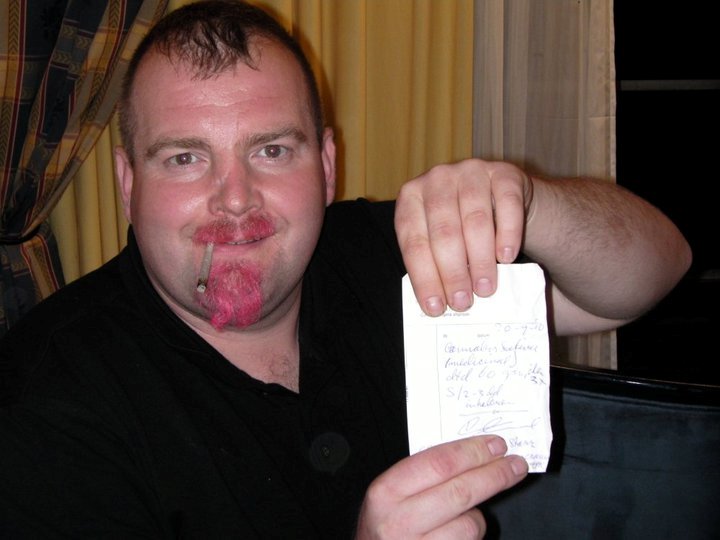
In The Pink
Last week Jim Starr flew into Bristol Airport from Amsterdam carrying 80 grammes of herbal cannabis as prescribed for him by a Dutch doctor. That’s just under three ounces of dried flower heads. He was carrying it in a parcel about the size of a telephone directory.
There was no one at customs, even though Jim went through the red channel and had telephoned ahead to advise the airport that he was bringing the cannabis in. He waited, even looked around for someone, anyone, but there was no one to be seen at all. He wanted to declare what he had with him. He’s never wanted to break the law. He knew that he was risking confiscation of the cannabis, possibly even arrest but the coast wasn’t just clear, it was deserted. The authorities had evidently decided that in their “war on drugs”, this time, discretion was definitely the better part of valour. They were in full scale retreat.
Jim had confirmed to the airport that he had the necessary paperwork to prove it was prescribed medicinal cannabis. His doctor had told him that he was protected under Article 75 of the Schengen Agreement which states “persons may carry the narcotic drugs and psychotropic substances that are necessary for their medical treatment provided that, at any check, they produce a certificate issued or authenticated by a competent authority”
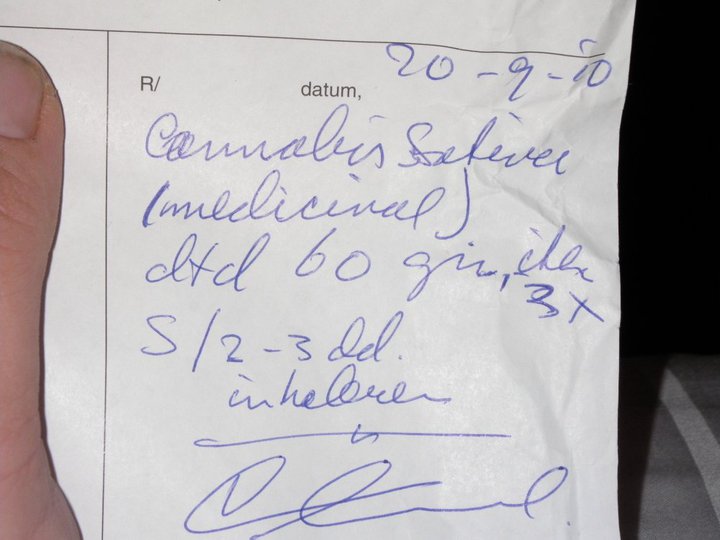
Prescription
Of course, even then, it didn’t stop the journey being a nerve wracking and tense experience. Now, safely at home in Dorchester with his family, Jim understands from the Home Office that he is entitled to bring in the cannabis as prescribed for him by his Dutch doctor. He can bring in up to three month’s supply at a time if he carries it on his person. Otherwise he has to apply for an import licence and have it shipped to a UK pharmacist.
Jim is 36 and is married to Emma, with whom he has two children. Originally from Birmingham, he was a very active man in full time employment until in 1999 he was diagnosed with a degenerative disease of the spine. In 2003 he was involved in a road accident and suffered terrible spinal injuries. His life seemed hopeless. The cocktail of powerful drugs he was prescribed, including morphine, were debilitating in themselves. He couldn’t face a future in which he was turned into a zombie, unable to enjoy any sort of decent life with his wife and children. He admits frankly that he was suicidal.
One day in 2004, Jim was upstairs in bed in so much pain and despair that he could barely move. A friend called round to see him and offered him a joint. Half an hour later Jim made it downstairs for the first time in three weeks. Suddenly he had hope and the possibility of a future with his family.
Life since then has been a constant game of cat and mouse with the police and drug dealers. Apart from risking arrest and even prison, Jim has also been in danger of being robbed or ripped off by dealers. He’s never wanted to break the law. He told his doctor the relief that cannabis provided and as soon as Sativex became available, even before it was officially licensed, his doctor prescribed it for him. Unfortunately, the very next day she rang to say that because of licensing and regulation problems she wouldn’t be able to prescribe it again. In fact, Jim did manage to get another prescription for Sativex but again it was withdrawn, this time because his health authority refused to fund it.
Jim has been an active campaigner for the legalisation of cannabis ever since. He has organised a series of marches, protests and petitions in Dorchester, Weymouth and even Downing Street. Over the last seven years, three MPs, Oliver Letwin, Jim Knight and Richard Drax, have written various letters in support of him. He is a distinctive figure in his wheelchair with his dyed beard which has earned him the nickname “Pinky”. Perhaps he has been a little too high profile for the Dorset police who he accuses of persecuting him. Unable to obtain Sativex or afford the prices and risks of dealers, Jim enlisted the help of a friend to grow his own medicine. Inevitably, in May 2009 the police arrived and Jim was arrested.
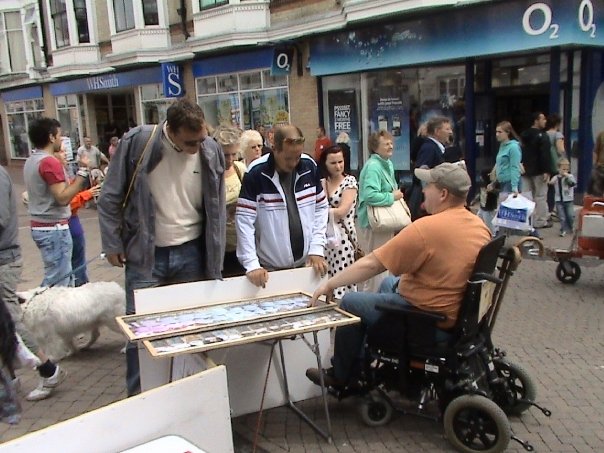
Campaigning
In August this year at Dorchester Crown Court Jim was given a two year conditional discharge for growing cannabis. He is now pursuing a complaint against the police alleging brutal treatment during his arrest. Other complications, allegedly at the police’s behest, have led to the DVLA revoking his driving licence although he has never been arrested, charged, convicted or even stopped on suspicion of driving under the influence.
Jim has become an avid recorder of everything. He uses mobile phones, video cameras and audio recorders to retain evidence of every contact with the authorities. He has a video recording of an officer saying to his wife “Look luvvy, whatever he grows up there from now on is up to him. We promise it don’t bother us”. Foolishly, he took the officer at his word. Three weeks after receiving his conditional discharge the police arrived again.
There was no provision for transporting him to the police station in his wheelchair. The officers were warned not to lift him by his arms because of his spinal condition. They wrenched him out of his chair by gripping his shoulders and underpants causing anal bleeding due to an existing condition. He was refused a doctor at the station. There was no provision for disabled people, even for his special toilet needs. He was refused access to any of his prescribed medication or even his specialist anti pressure sore mattresses.
The following day he attended hospital and was diagnosed with torn shoulder muscles. In fact, his spinal column is so delicate that any movement could potentially paralyse him. This is the basis of all his high profile campaigning and must be well known to the police. Jim now faces another charge of cultivating cannabis and a possible prison sentence.

With Mr Nice
The trip to Holland was a last resort, only made possible by the generosity of a friend. The Dutch doctor was horrified at the range of highly toxic prescription medicines given to Jim and prescribed two grammes per day of medicinal herbal cannabis. He told Jim that he shouldn’t be using Sativex as the alcohol in its solution was like pouring petrol on a fire, given his medical conditions.
So at last, Jim seems to have the medicine he needs. He will have to continue to rely on the generosity of friends to pay for it. He is applying for a Home Office licence for the cannabis to be imported to a local pharmacist who can then dispense it to him. He will continue to campaign for the right to grow his own for free. The costs of cultivation at home are minimal compared to the rigmarole of importing from Holland or the massive “Big Pharma” cost of Sativex.
Jim is not the first person to get the medicine they need in this way but he is the first to go public about it. Many tens of thousands may now wish to follow his example. Most European countries and 15 US states already regulate the provision of medicinal cannabis. Surely it is time for the government to consider reform of what looks increasingly like an absurd and cruel law.
Young Jimmy’s Jolly In Peru
There’s all sorts of perks to being a government minister you know. If you’re young Jimmy Brokenshire then as part of your courageous “war on drugs” you get an all-expenses paid trip to Peru to have a good laff at the poor sods who’ve got themselves jailed chasing the white lady.

Jimmy's Holiday Snaps
Apparently, most cocaine in Britain now comes from Peru rather than Columbia so, of course, it was vital for young Jimmy to get on a plane and do some fact finding. What I’d like to know is did he find anything of decent quality or is it all crap like it is on the mean streets of Britain? Did he rub it on his gums, sniff a few lines and get partying or was it bubbling in a spoon and blazed on a big glass pipe to get him rampant and raving and even more dangerous than he is at home?
The terrible story of Nick Jones from West London can be seen here. He was caught trying to bring back two kilos of Peruvian Flake. Sure, I feel sorry for him but it’s an extremely high stakes game. He knew full well what he was doing and chose to take the risk. Jimmy went along to gloat and use the opportunity for some easy propaganda. I think he must have still been cracked out though because he told the BBC, “The liability that you will be caught is very, very high”. Now that’s some malapropism. Maybe he’s got some other “liability” or likelihood on his mind or maybe he really was “very, very high”.
It makes me sick that this vile, baby faced punk is frittering our money away on his unjustified jollies. The Minister for Crime Prevention is a disgrace, a prohibitionist, a propagandist and a dissembler. Probably the most dangerous man in British politics, I’d rather see Nick Griffin at the Home Office than young Jimmy. He couldn’t be worse. He couldn’t be more poorly informed. He couldn’t be more regressive or oppressive or smug and self-satisfied.
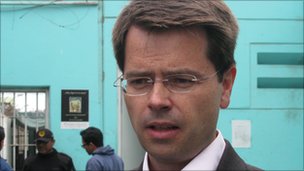
Jimmy Visits A Peruvian Prison
In my wildest fantasies, maybe someone will slip a couple of wraps in Jimmy’s pocket and he’ll get busted at Heathrow. A few weeks in Brixton would do him the world of good before his chums pull strings to get him off. He’d be a better person for it. He might have to face up to some realities rather than the deluded, fantasy world in which he lives.
Alternatively, maybe he could do the decent thing and swop places with Nick Jones? Now that would be truly useful. I’d be the first to recommend him for a medal. Then, in a few years time we could send someone out to gloat over him!
Well I can dream!

 Peter Reynolds