Posts Tagged ‘King’s College London’
The Times Picks up the Reefer Madness Baton from the Daily Mail

Stigmatising cannabis consumers and patients with one-sided and biased reporting is irresponsible misinformation, not journalism
It’s that time of year, King’s College Institute of Psychiatry has started its fundraising round so it’s time for the annual cannabis and psychosis scare story.
Over the past 10 years, in January or February each year, a press release goes out with its lead researchers, Professor Sir Robin Murray and Dr Marta di Forti, pushing another set of extremely scary statistics about how cannabis is driving consumers insane.
This year, two things are different, Firstly, there’s no new study, just repetition of previous claims. Secondly, instead of being led by the Daily Mail, it’s The Times that has taken up the role of terrifying parents and this year there’s also a new story about over-55s who are ‘addicted’ to cannabis.
The Times’ reputation as the newspaper of record and the supreme example of English-language journalism has been faltering for some time. The decline started, inevitably, when Rupert Murdoch bought the newspaper in 1981. It’s now tabloid-sized and, surprisingly often, tabloid in its style and disdain for the truth. In the main it is still a good source of news reporting and has an honourable record in covering the increasing acceptance of and value in the medical use of cannabis.
However, starting in September 2021 with a major feature in the Sunday magazine by Megan Agnew,‘Cannabis psychosis: how super-powered skunk blew our minds’, it has become an uncritical promoter and advocate for everything that comes out of King’s College about cannabis.
Ms Agnew interviewed me at length several months before her piece was published and I dare say she spoke to other people on the reform side of the debate as well. Certainly not one word of what I said made it into print. It might as well be a paid-for advertorial for Marta di Forti and Robin Murray’s work.
I’ve met Robin Murray several times. In fact, I once sat next to him for two days in a conference held in the House of Lords. In person he’s nowhere near the anti-cannabis zealot he’s portrayed as in the press and there are other people in his team who I have worked with on research projects who I think, although they wouldn’t say it, are actually on my side! Nevertheless, the message about their research that is portrayed in the media is clearly deliberate and it is wildly misleading.
This is best demonstrated by going to the Lancet website, where all the Murray/di Forti papers are published and reading the other scientists who debunk both the results and the methodology that Murray/di Forti use. Of course, this never gets mentioned in the press. The Times has completely excluded it from all its coverage. Go to https://www.thelancet.com/ and search for ‘High-potency cannabis and incident psychosis: correcting the causal assumption’. You’ll see a whole new perspective on King’s College and its scientists.
This obsession with demonising cannabis is centred on the UK, precisely because of the endlessly repetitive work carried out at King’s College and the appetite that British press has for sensationalising it. Australia also suffers from it to some degree but nowhere else in the world experiences the same systematic, ludicrous scaremongering. That’s not to say that the potential dangers of cannabis as a psychoactive substance are ignored, they’re simply given proportionate recognition. Clearly anything that affects the mind can, potentially, cause harm and needs consideration, just as we do with alcohol, coffee, energy drinks and many medicines. Sadly there will always be casualties but provided we do all we can to minimise them, they do not justify prohibition. The evidence is clear that always causes more harm than good and it is self-evident that harm is better controlled and casualties more effectively prevented in a legal environment, not in a market run by gangsters and organised crime.
BBC Horizon to Ramp Up Discredited Kings College ‘Skunk Scaremongering’
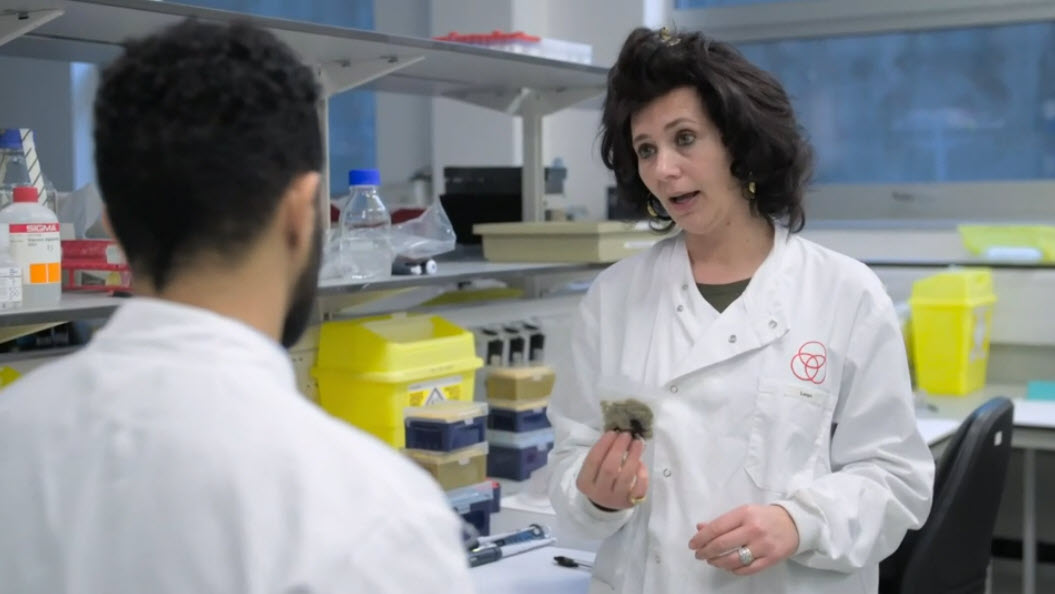
Dr Marta di Forti. Scientist or Skunk Scaremonger?
Tonight’s BBC Horizon is going to follow the long-established BBC policy of overstating and exaggerating the potential harms of cannabis.
From clips already released it is clear the programme is to promote as gospel truth the hysterical scaremongering and fanciful statistical projections coming from Dr Marta di Forti at King’s College London’s Institute of Psychiatry. This so-called scientist and her colleagues base all their conclusions on profoundly unscientific methods, false assumptions, bizarre statistical trickery and the misuse of the tabloid term ‘skunk’ as if it actually means something.
This is the way the BBC has always operated – to support the false narrative of the establishment about cannabis, to demonise it, to minimise if not ridicule its medicinal benefits and to cherry pick evidence and biased opinion to support its case.
Anyone with any real knowledge of cannabis who has spent any time properly reseraching the evidence will know that Dr di Forti’s projections and claims are ridiculous. This is a British phenomenom. It occurs nowhere else in the world. Every other nation’s media, scientific and medical community takes a balanced and realistic view and recognises that cannabis is largely benign and for 99% of people, 99% of the time is harmless. Perhaps most instruictive is that virtually nowhere else in the world will you hear the word ‘skunk’ used by real scientists. Originally the name of a specific strain of cannabis it is now merely a scary word used to frighten people and it has no specific or defined meaning. Its use is, in fact, the very opposite of science.
But don’t take my word for it. In a devastating critique of di Forti’s latest 2019 study, read the words of leading scientists from Australia and the Netherlands as they dismantle di Forti’s wild overclaiming and statistical trickery: High-potency cannabis and incident psychosis: correcting the causal assumption
CLEAR’s Submission To The Parliamentary Inquiry Into Medicinal Cannabis
This was the response that CLEAR submitted to the APPG in February 2016. In March 2016, Roland Gyallay-Pap, then managing director of CLEAR and Peter Reynolds, president, were called to give oral evidence to the Inquiry.
A PDF copy of this document may be downloaded here.
Introduction
In June 2015 the All-Party Parliamentary Group for Drug Policy Reform (APPG) published a short report arguing for a rescheduling of cannabis to make it more widely available for medical use. Following the publication of that report there are a number of key questions remaining that it would like to address by means of a Short Inquiry.
CLEAR Cannabis Law Reform has been asked to submit evidence to the Inquiry in answer to these specific questions:
- Whether switching the medical status of cannabis from schedule 1 to a less restrictive schedule would be beneficial?
- What do you understand to be the range and extent of unofficial use of cannabis for medical purposes?
- What has been the impact of the current schedule 1 status on research into the medicinal uses of cannabis?
- Is there useful evidence emerging from the regulation of cannabis in over 20 US states and elsewhere and what does it tell us about the case for cannabis to be included in the UK pharmacopeia?
- What would be the implications of licencing cannabis for medicinal use following a change in Schedule?
- What role could EU regulations play in developing the potential for the medicinal use of cannabis?
We have also added a further response with additional information.
- Access to prescribed Bedrocan medicinal cannabis is already possible based on careful use of loopholes and errors in existing English law.
Whether switching the medical status of cannabis from schedule 1 to a less restrictive schedule would be beneficial?
Yes, we consider that switching cannabis from schedule 1 to a less restrictive schedule would be beneficial, both so that it could be prescribed by doctors as medicine and so that it could more easily be used in research into its use and effects.
Cannabis has been in schedule 1 of the Misuse of Drugs Regulations1 (MoDR) since the Misuse of Drugs Act 19712 (MoDA) came into force. Drugs in schedule 1 are specified as having no medicinal value. However, an inquiry by the House of Lords Science and Technology Committee published in 19983 recommended that doctors should be permitted to prescribe cannabis and that it should be moved to schedule 2. Strangely the government’s response to this recommendation was further to tighten restrictions by the Misuse of Drugs (Designation) Order 20014, which designates cannabis under section 7(4) of MoDA so that it is unlawful “for a doctor, dentist, veterinary practitioner or veterinary surgeon, acting in his capacity as such, to prescribe, administer, manufacture, compound or supply” it.
In fact, cannabis has already been re-scheduled into schedule 4 under the international non-proprietary name of nabiximols (Sativex)5. Although this is specified as being an extract of THC and CBD, it is clear from statements by the manufacturing company, GW Pharmaceuticals, that nabiximols is whole plant cannabis. Dr Geoffrey Guy, founder and chairman of GW, is on the record:
“Most people in our industry said it was impossible to turn cannabis into a prescription medicine. We had to rewrite the rule book. We have the first approval of a plant extract drug in modern history. It has 420 molecules, whereas every other drug has just one.”6
GW pharmaceuticals has confirmed that this quotation is accurate.7
The MHRA has chosen to issue a marketing authorisation8 for nabiximols (Sativex) by regarding it as only a two molecule medicine. The marketing authorisation is therefore at best inaccurate, at worst dishonest.
What do you understand to be the range and extent of unofficial use of cannabis for medical purposes?
In 2011, CLEAR commissioned independent, expert research from the Independent Drug Monitoring Unit (IDMU). The report, ‘Taxing the UK Cannabis Market’9, reveals there are three million people using cannabis in the UK regularly (at least once per month). Since then CLEAR has regularly polled its members and followers and consistently one in three of respondents claim at least some part of their use is for medicinal reasons. It is reasonable to estimate therefore that there are up to one million people using cannabis for medicinal purposes in the UK. It is certain that there are hundreds of thousands of medicinal users and previous estimates in the region of 30,000 are far too low.
The most common indications for medicinal use declared by our respondents are chronic pain, fibromyalgia, Crohn’s disease, multiple sclerosis and cancer.
Our interpretation of the responses we have received is that generally cannabis is used as a palliative agent. Some people find it so effective that they consider it to be a ‘cure’ as long as they keep using it. Others find it extremely helpful in reducing the amount of toxic and/or dangerous pharmaceutical medicines they are prescribed. Often the side effects of pharmaceutical medicines are severe and debilitating and cannabis offers a way of minimising these.
CLEAR maintains a Medicinal Users Panel10 which members join in order to gain support in lobbying their MPs and/or attempting to obtain prescribed Bedrocan medicinal cannabis. The active membership of the panel varies between 20 to 80 people. Panel members have also been involved in delegations to meet government ministers and other parliamentarians
What has been the impact of the current schedule 1 status on research into the medicinal uses of cannabis?
In the UK there is very little research into the medicinal uses of cannabis, except that undertaken by GW Pharmaceuticals11. There has been some research carried out into single cannabinoids but the evidence is that the therapeutic effects of cannabis depend on the whole plant ‘entourage effect’.
The allopathic, reductionist approach to medicine, which is reflected in the way that the MHRA regulates medicines, is the fundamental, establishment doctrine that impedes research into cannabis.
Sadly, one of the biggest trials of MS patients, the CUPID study at the University of Plymouth12, intended to look at the many anecdotal reports of benefit, used synthetic THC and consequently the results were disappointing and irrelevant to the claims it sought to test.
It is far easier to obtain funding for research into the harms of cannabis which is undertaken with an almost absurd degree of repetition, most notably by the Institute of Psychiatry at King’s College London (IOPPN).13 It is also worth noting that IOPPN regularly and consistently overstates the results of its research, encouraging the media to report causal effects between cannabis use and mental illness which its research does not support.14
There is a huge stigma around cannabis, largely due to inaccurate, misleading and hysterical press coverage. For instance, neither of the pre-eminent MS patient groups, the MS Society and the MS Trust, will take a stand in support of patients, despite the fact that many use cannabis. Similarly, despite extraordinary human clinical trial results on Crohn’s disease, none of the Crohn’s patient groups will engage with the campaign. Mention cannabis and calls are not returned, people are scared by the stigma. The immediate reaction from all such patient groups is to overlook evidence of benefit and refer to risks to mental health which, in fact, are very low compared to pharmaceutical products. The press, unchallenged by politicians in its disproportionate attention to these risks, bears a heavy responsibility for this stigma and the lack of research.
Unlike many within the reform movement, CLEAR recognises and values the expertise and achievements of GW Pharmaceuticals. However, any doctor or scientist that expresses any interest in medicinal cannabis in the UK is immediately retained or contracted by GW. We receive hundreds of reports of doctors, GPs and consultants, who tacitly and sometimes explicitly support their patients’ use of cannabis but it is impossible to find any doctor who is prepared to speak out publicly. In the few instances where doctors have spoken out on behalf of patients, they have been contacted by Home Office officials and warned. One GP reported that he felt “intimidated”. By contrast, there are tens of thousands of doctors across Europe, Israel and North America who advocate for the use of medicinal cannabis and further research into its applications.
The security and record-keeping requirements for cannabis as a schedule 1 drug15 are wildly disproportionate to the real potential for harm, requiring a high security safe for storage and an audit trail fit for Fort Knox.
In addition the fee for a high THC licence is currently £4700.00 per annum and applications can take more than a year to process. These requirements, delays and corresponding costs severely impede research into medicinal cannabis.
Recently, in response to two government e-petitions, the Home Office issued the following statement:
“In 2013 the Home Office undertook a scoping exercise targeted at a cross-section of the scientific community, including the main research bodies, in response to concerns from a limited number of research professionals that Schedule 1 status was generally impeding research into new drugs.
Our analysis of the responses confirmed a high level of interest, both generally and at institution level, in Schedule 1 research. However, the responses did not support the view that Schedule 1 controlled drug status impedes research in this area. While the responses confirmed Home Office licensing costs and requirements form part of a number of issues which influence decisions to undertake research in this area, ethics approval was identified as the key consideration, while the next most important consideration was the availability of funding.”
We consider this response to be disingenuous and misleading. Cannabis is a special case. It is a combination of hundreds of molecules, unlike other schedule 1 drugs, most of which are single molecules. Also, as is well established in written and archaeological evidence, cannabis has been used effectively for at least 5,000 years as medicine without any evidence of harm.
Furthermore. ethical approval and funding are difficult largely due to the evidence-free scaremongering about cannabis and the consequential stigma, in which the Home Office plays a leading role. Ethical approval and funding do not seem to be a problem in researching potential harms of cannabis. Indeed, as noted above, there is a massive amount of such research even though much of it is repetitive and inconclusive.
Until it is recognised that for many years, under successive governments, the Home Office has been systematically misleading and scaremongering about cannabis, it is difficult to see how an evidence-based decision can be reached. The Home Office regularly makes assertions about cannabis that are completely without evidential support. There is an established prejudice and determination to misinform and this must be tackled at root as it amounts to misconduct and corruption.
Is there useful evidence emerging from the regulation of cannabis in over 20 US states and elsewhere and what does it tell us about the case for cannabis to be included in the UK pharmacopeia?
There is a vast amount of peer-reviewed, published evidence of the safety and efficacy of cannabis as medicine. Much of this arises from research carried out in the USA, the Netherlands and Israel, where medicinal cannabis regulation has been in place for many years.
It is a populist myth, promoted by the Home Office, the press, the BBC and the prohibitionist lobby, that there is no evidence supporting the use of cannabis as medicine.
In February 2015, a delegation of medicinal cannabis users from CLEAR met with George Freeman MP, the life sciences minister, at the Department of Health who is largely responsible for medicines regulation. At the conclusion of the meeting, Mr Freeman requested CLEAR to produce a summary of the available evidence.
The result is the paper ‘Medicinal Cannabis:The Evidence’16 (MCTE) which has received international acclaim, so much so that in association with Centro de Investigaciones del Cannabis (CIC), a Colombian non profit association, a Spanish language version has been published.
MCTE was submitted to George Freeman MP in April 2015. Since then he has repeatedly refused to meet CLEAR again or respond to us directly, even after multiple requests from individual MPs representing CLEAR members. His only responses, received through third parties, fail to address the evidence at all. He simply refers to the legal status of cannabis, the theoretical availability of Sativex and the MHRA process for issuing marketing authorisations in respect of medicines.
This refusal to engage, acknowledge or properly consider the very large amount of evidence that is available is indicative of an inexplicable prejudice within government. Although conspiracy theories abound, it is difficult to understand why ministers adopt this position.
Cannabis was one of the most used medicines in the British pharmacopeia until only about 100 years ago. It could be restored immediately by a stroke of the Home Secretary’s pen to remove it from schedule 1. This would immediately make it possible for doctors to prescribe medicinal cannabis from Bedrocan17, the Netherlands government’s exclusive contractor.
Bedrocan cannabis is carefully regulated by the Netherlands government’s Office of Medicinal Cannabis. It is available in five different THC:CBD ratios. It is already exported to many countries in Europe and the company has established itself in Canada as well. It is less than a tenth the cost of Sativex for equivalent cannabinoid content and can be consumed either by a medical vapouriser or as an infusion.
No minister in this or any previous government has ever presented a coherent reason for the refusal to allow cannabis to be used as a medicine. Their only response is to fall back on largely spurious or exaggerated claims about the harms of recreational use.
What would be the implications of licencing cannabis for medicinal use following a change in Schedule?
Cannabis would not need to be ‘licenced’ for medicinal use following a change in schedule. As soon as it removed from schedule 1, doctors would be able to prescribe it and businesses interested to grow, process and develop cannabis medicines would be able to obtain cultivation/possession licences from the Home Office.
Medicines are no longer ‘licenced’ in the UK. The MHRA grants marketing authorisations. The initial fee, simply for filling in the application form is £103,000.00, thus prohibiting any but the very largest, established businesses from even considering such a venture. The very term ‘marketing authorisation’ reveals the mindset of medicines regulators which is now more about commercial interests than the evaluation of the safety and efficacy of medicines.
The MHRA does have a regulatory scheme for ‘Traditional Herbal Registration’ (THR) but it only applies “if the medicine is used for minor health conditions where medical supervision is not required.”. An application for a THR for cannabis could not be made while it remains in schedule 1 but, if granted, would not permit its use for many conditions where there is excellent evidence of its efficacy.
The MHRA is locked in an inflexible, unscientific and restrictive process which can only evaluate medicines which are either one or two molecules. Its process is designed for synthetic, potentially very dangerous molecules and is entirely unsuitable for a plant based medicine such as cannabis. This is why, as explained above, Sativex has been improperly regulated as containing only two molecules: THC and CBD.
When the Sativex (nabiximols) patent expires, independent analysis of the medicine would certainly demonstrate that it is whole plant cannabis oil. Presumably alternative and/or generic versions could then be produced. However, by any standards, for all parties, the regulation and scheduling of Sativex is inaccurate, if not dishonest, and needs revision.
If cannabis is removed from schedule 1, most appropriately to schedule 4 alongside Sativex, in our judgement there will be a large number of businesses applying for cultivation/possession licences for research which will eventually result in applications for marketing authorisations. In the meantime, it can only be described as cruel and evidence-free not to permit doctors to prescribe Bedrocan, a safe, effective medicine already regulated by another European government.
It is likely that enabling the prescription of Bedrocan would result in substantial savings to the NHS medicines budget. However, any idea that this could be quantified based on existing evidence is fanciful. Certainly, compared to existing prescription medicines and Sativex, Bedrocan is very inexpensive, probably less than 10 euros per patient per day. However, the complexity of calculating which medicines it could replace by individual, partly or wholly and for how long makes the exercise so hypothetical as to be meaningless.
It must be true that once local, UK-based cultivation of medicinal cannabis was permitted, prices would reduce even further.
What role could EU regulations play in developing the potential for the medicinal use of cannabis?
Aside from France and Ireland (which is moving rapidly towards drugs policy reform), every other EU country has a more intelligent, compassionate and evidence-based policy towards medicinal cannabis. Based on existing policy and its record, the UK government would simply refuse to comply with any EU regulation of medicinal cannabis.
Under the Schengen Acquis (of which UK is a signatory, though not to the full Schengen Agreement), if a medicine is prescribed to a resident of a member state, that resident may travel to other member states with up to three month’s supply under the protection of a Schengen certificate. The effect of this is that a resident of the Netherlands, Belgium, Finland, Germany, Italy, etc. can bring prescribed cannabis, likely Bedrocan, into the UK and use it without restriction.
The crucial test here is residency, so it is not possible for a UK resident to travel to another country, obtain a prescription and then return to the UK legally with cannabis. Presently, a Schengen certificate for a UK resident has to be issued by the Home Office. Strangely and in contravention of this explicit provision, Norway (Non EU but a signatory to Schengen) does permit its residents to obtain prescriptions, usually in the Netherlands, and return home with cannabis.
It is also likely that given the hostility towards EU regulation, adding cannabis into that debate would be counterproductive. It would be used as another stick with which to beat the EU.
Access to prescribed Bedrocan medicinal cannabis is already possible based on careful use of loopholes and errors in existing English law.
As some members of the APPG are aware, CLEAR has been involved in trying to obtain legal access to prescribed Bedrocan since 2012. We now have approximately a dozen members who regularly receive private prescriptions from their doctors (both consultants and GPs) and travel to the Netherlands to have them dispensed.
In all instances, these individuals have either declared their medicine at customs and/or have made prior arrangements with the Border Force, producing supporting documentation.
This is possible because of errors and inconsistencies in the MoDA and the MoDR. All English drugs legislation, including the recent Psychoactive Substances Act 2016, is badly drafted, contradictory and scientifically illiterate.
The principle active ingredients of cannabis are delta-9-THC and cannabidiol (CBD). Bedrocan products are specified with different ratios of these substances. While cannabis is classified in schedule 1, so is delta-9-THC but it is also in schedule 2 described as dronabinol, which is the international non-proprietary name (INN) for delta-9-THC. CBD is not a controlled drug.
Therefore, if a doctor is prepared to write a prescription e.g. dronabinol (Bedrocan 22%) or dronabinol (Bediol 7.5%), three month’s supply of the medicine may be legitimately imported as a schedule 2 drug.
In the past four years only one CLEAR member has been frustrated in this. He had his medicine seized but he was not prosecuted. An appeal against the seizure failed.
Clearly, the vital factor in this scheme is a doctor who understands the law and the science and is prepared to write the prescription.
References
1. Misuse of Drugs Regulations 2001 http://www.legislation.gov.uk/uksi/2001/3998/contents/made
2. Misuse of Drugs Act 1971 http://www.legislation.gov.uk/ukpga/1971/38/contents
3. House of Lords Science and Technology Committee report 1998 http://www.parliament.the-stationery-office.co.uk/pa/ld199798/ldselect/ldsctech/151/15101.htm
4. Misuse of Drugs (Designation) Order 2001 http://www.legislation.gov.uk/uksi/2001/3997/made
5. Nabiximols (Sativex) https://en.wikipedia.org/wiki/Nabiximols
6. Cambridge News, 24th Jan 2012 http://www.cambridge-news.co.uk/Cannabis-company-enjoys-major-growth/story-22509041-detail/story.html
7. Email corres with Marc Rogerson, GW Pharma, 160312. Attached.
8. Sativex (nabiximols) marketing authorisation, MHRA , 2010 http://www.mhra.gov.uk/home/groups/par/documents/websiteresources/con084961.pdf
9. Taxing the UK Cannabis Market, IDMU, 2011 http://clear-uk.org/media/uploads/2011/09/TaxUKCan.pdf
10. CLEAR Medicinal Users Panel http://clear-uk.org/pages/medicinal-panel/
11. GW Pharmaceuticals website http://www.gwpharm.com/
12. CUPID study, University of Plymouth, 2015 http://www.ncbi.nlm.nih.gov/pubmed/25676540
13. Institute of Psychiatry at King’s College London website http://www.kcl.ac.uk/ioppn/index.aspx
14. King’s College Confirms Institute of Psychiatry Misled Media On Cannabis Brain Study. CLEAR, 2015 http://clear-uk.org/kings-college-confirms-institute-of-psychiatry-misled-media-on-cannabis-brain-study/
15. Controlled Drugs (Supervision of management and use) Regulations 2013, Dept of Health https://www.gov.uk/government/uploads/system/uploads/attachment_data/file/214915/15-02-2013-controlled-drugs-regulation-information.pdf
16. Medicinal Cannabis: the Evidence, CLEAR, 2015 http://clear-uk.org/static/media/PDFs/medicinal_cannabis_the_evidence.pdf Attached
17. Bedrocan BV website http://www.bedrocan.nl/
King’s College Confirms Institute of Psychiatry Misled Media On Cannabis Brain Study.
The Institute of Psychiatry at King’s College London issued a press release on 27th November claiming that its latest study shows cannabis causes damage to the corpus callosum. This was widely reported across the world and many publications extended what was already an inaccurate claim into saying that this “damage” was a cause of psychosis.
As I have already reported and as confirmed by the NHS, the study showed nothing of the sort. Then, last week, by accident really, I discovered that quietly and with just a small footnote the headline had been changed!
Original: “Study shows white matter damage caused by ‘skunk-like’ cannabis”
Edit: “Study shows white matter damage may be caused by ‘skunk-like’ cannabis”
Professor Shitij Kapur, Executive Dean of the Institute of Psychiatry hadn’t responded to two emails from me, so this time I wrote to the Principal of King’s College, Professor Ed Byrne. He has now confirmed that the press release has been changed but makes the extraordinary and false claim that “By and large the press coverage was a true reflection of the science.”
Professor Ed Byrne
Dear Mr. Reynolds
Thank you for your email regarding the recent article from King’s.
I have discussed it with Professor Kapur and the authors and we believe it appropriate to change the headline to ‘may be caused by’, which has already been done.
The body of the press release is a fair representation of the paper so needs no amendment. By and large the press coverage was a true reflection of the science in the paper so we do not believe the press release requires further amendments.
King’s is committed to a balanced reporting of science and its work and hence we have changed the headline and acknowledged the change.
Thank you again for your diligence.
Professor Edward Byrne AC
President & Principal
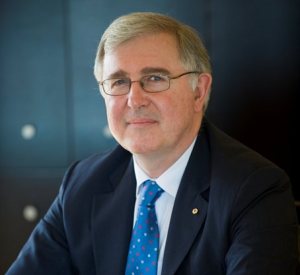
Too late! The sensationalist, scaremongering deceit and exaggeration has already spread like wildfire across the world. Dozens of publications have repeated the falsehood and yet again the Institute of Psychiatry is responsible for misleading millions of people. It has form for such conduct, regularly, repeatedly and deliberately confusing correlation with causation and vastly exaggerating the results of its work. This is deceit and fraud at the highest level and if it took place in another context, financial services for instance, it would merit police investigation.
I have written again to Professor Byrne asking him to do the right and honourable thing.
Dear Professor Byrne,
Thank you for your email. I am grateful that you have had the courtesy and honour to reply, unlike Professor Kapur.
I am disturbed though by how lightly you take this very serious matter. It is absolutely false to say “By and large the press coverage was a true reflection of the science”.
As someone who has observed the Institute’s work for many years, I am now convinced that it is routinely in the business of exaggerating the results of its work, deliberately misleading the media and through it, the public at large. I can only conclude that this dishonesty is connected with raising funding for its work.
This is not a situation that can be allowed to persist. Every year Professor Sir Robin Murray publishes a paper on cannabis and psychosis which is always presented to the media as showing a causal link when the science itself shows nothing of the sort. I have met with Sir Robin on several occasions and spoken alongside him at conferences. In person he is reasonable and accurate but the way his work is presented to the media is dishonest and false, exactly as this latest episode.
This is a matter of huge importance because it is largely the hysteria drummed up by such falsified science that stands in the way of legal access to medicinal cannabis in the UK. Hundreds of thousands of people suffer needlessly in Britain when throughout the rest of Europe, Israel, Canada and the USA, more enlightened policies enable access to the medicine that people need. I hold the conduct of organisations such as the Institute of Psychiatry directly responsble for the pain and suffering caused.
It is disgraceful that Dr Paola Dazzan should enter into the political arena of cannabis policy with blatantly false claims that her study shows a causal link or that the differences observed amount to “damage”. These are nothing less than lies.
This might be the result of a renegade press office which doesn’t understand the science but we have put up with it for decades and I appeal to you to take proportionate steps to stop it. To start with, on this latest incident, you should issue a further press release explaining the errors in the first. You can’t just change the headline surreptitiously, hope no one will notice and expect the dishonesty to be overlooked. The damage has already been done. You must act to make amends.
This is a matter of professional ethics and integrity and I rely on you to take the appropriate steps.
Kind regards,
Peter Reynolds
Blatant Dishonesty From King’s College London. Institute Of Psychiatry Untrustworthy.
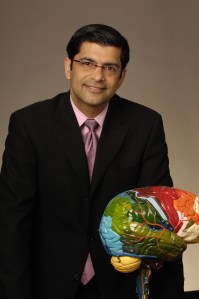
Prof. Shitij Kapur. Explanation Awaited.
On Friday, 27th November 2015, the Institute of Psychiatry, Psychology & Neuroscience (IoPPN) at King’s College London issued a press release titled “Study shows white matter damage caused by ‘skunk-like’ cannabis”. As a result, hundreds of media outlets across the world have published to the effect that cannabis use causes changes in the corpus callosum, the largest white matter structure in the brain, which is responsible for communication between the left and right hemispheres.
In fact, the study showed nothing of the sort. Even one of its authors, Dr Paola Dazzan, is on the record stating “It is possible that these people already have a different brain and they are more likely to use cannabis.”
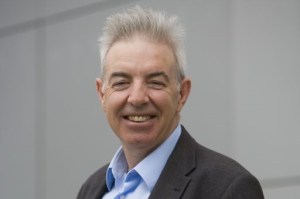
Prof. Sir Robin Murray. Causation Or Just Correlation?
Sadly, this is par for the course by King’s College and I can only assume is a corrupt attempt to sensationalise its work in order to drum up funding. Every time this institution publishes a study on cannabis it confuses causation and correlation.
For instance, Professor Sir Robin Murray’s annual study on cannabis and psychosis only ever shows correlation but when he talks to the press he always puts across the relationship between cannabis use and psychosis as causative.
We simply cannot rely on these so-called eminent scientists to be honest about their work. They are in the gutter and they aren’t looking at the stars, they are looking at their bank balances.
I have now written twice to Professor Shitij Kapur, Executive Dean of the IoPPN asking for an explanation but he hasn’t seen fit even to acknowledge my emails.
For anyone who takes an interest in the science of cannabis and the reasons this immensely valuable plant is banned, this example should give you an insight into the dishonesty, corruption and propaganda that is behind it all.

 Peter Reynolds