Posts Tagged ‘war on drugs’
Politicians’ Negligent Response To The Drugs Debate
Shamefully Slandered
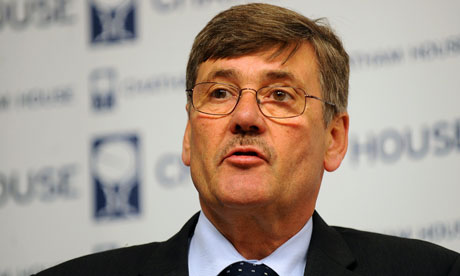
The Independent in its leader today, says “It is depressing how stale and weary have been the responses” to Bob Ainsworth’s initiative on drug policy reform. See here. As with all the media it has failed dismally to point out that he was supported by Peter Lilley, former deputy leader of the Tory party, Tom Brake from the LibDems and Paul Flynn from Labour.
The BBC, with appalling inaccuracy, stated that “all three main parties at Westminster remain opposed to legalisation”. See here. In fact the LibDems’ published policy is “In the longer term, seeking to put the supply of cannabis on a legal, regulated basis”. It matters little though because almost never has any political party been more irrelevant. The LibDems now command less respect than the Monster Raving Loonies.
The Most Dangerous Man In Britain
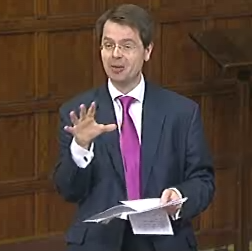
The responses of our political leaders are not just depressing, they are grossly irresponsible and negligent. James “Broken Britain” Brokenshire is the most dangerous man in Britain and will be responsible for far more death, misery and degradation in our country than any terrorist. As The Independent says, “such is the hysteria about drugs in Britain that there is no political space for a reasoned debate by those in authority.” The evidence that the war on drugs is an expensive failure is overwhelming but politicians prefer to waste money and lives rather than grasp this nettle.
The cowardly hypocrites, Cameron and his poodle, sit back while they allow Brokenshire, a preppy-faced apologist for gangsters to oppress, pillage and brutalise our fellow citizens.
Brokenshire is doing all he can to break Britain and British society.
He is a criminal of the first order.
Breakthrough In The Drugs Debate!

Bob Ainsworth
Tomorrow, Bob Ainsworth MP, former Home Office drugs minister and Secretary of State for Defence, will call for the legalisation and regulation of drugs. He is to lead a Parliamentary debate in Westminster Hall, at 2.30pm on Thursday 16th December 2010.
Great credit for this must go to the inestimable Transform Drug Policy Foundation, which has led the fight against prohibition. This is an extraordinary breakthrough. The news literally brought tears to my eyes. We have fought so long for such progress.
Mr Ainsworth said;
“I have just been reading the Coalition Government’s new Drugs Strategy. It is described by the Home Secretary as fundamentally different to what has gone before; it is not. To the extent that it is different, it is potentially harmful because it retreats from the principle of harm reduction, which has been one of the main reasons for the reduction in acquisitive crime in recent years.
However, prohibition has failed to protect us. Leaving the drugs market in the hands of criminals causes huge and unnecessary harms to individuals, communities and entire countries, with the poor the hardest hit. We spend billions of pounds without preventing the wide availability of drugs. It is time to replace our failed war on drugs with a strict system of legal regulation, to make the world a safer, healthier place, especially for our children. We must take the trade away from organised criminals and hand it to the control of doctors and pharmacists.
 As drugs minister in the Home Office I saw how prohibition fails to reduce the harm that drugs cause in the UK, fuelling burglaries, gifting the trade to gangsters and increasing HIV infections. My experience as Defence Secretary, with specific responsibilities in Afghanistan, showed to me that the war on drugs creates the very conditions that perpetuate the illegal trade, while undermining international development and security.
My departure from the front benches gives me the freedom to express my long held view that, whilst it was put in place with the best of intentions, the war on drugs has been nothing short of a disaster.
Politicians and the media need to engage in a genuine and grown up debate about alternatives to prohibition, so that we can build a consensus based on delivering the best outcomes for our children and communities. I call on those on all sides of the debate to support an independent, evidence-based review, exploring all policy options, including: further resourcing the war on drugs, decriminalising the possession of drugs, and legally regulating their production and supply.
One way to do this would be an Impact Assessment of the Misuse of Drugs Act in line with the 2002 Home Affairs Select Committee finding – which included David Cameron – for the government to explore alternatives to prohibition, including legal regulation.
The re-legalisation of alcohol in the US after thirteen years of Prohibition was not surrender. It was a pragmatic move based on the government’s need to retake control of the illegal trade from violent gangsters. After 50 years of global drug prohibition it is time for governments throughout the world to repeat this shift with currently illegal drugs.”
Peter Lilley MP, former Conservative Party Deputy Leader said;
“The current approach to drugs has been an expensive failure, and for the sake of everyone, and the young in particular, it is time for all politicians to stop using the issue as a political football. I have long advocated breaking the link between soft and hard drugs – by legalising cannabis while continuing to prohibit hard drugs. But I support Bob Ainsworth’s sensible call for a proper, evidence based review, comparing the pros and cons of the current prohibitionist approach with all the alternatives, including wider decriminalisation, and legal regulation.”
Tom Brake MP, Co-Chair, Liberal Democrat Backbench Committee on Home Affairs, Justice and Equalities said;
“Liberal Democrats have long called for a science-based approach to our drugs problem. So it is without hesitation that I support Bob Ainsworth’s appeal to end party political point-scoring, and explore sensitively all the options, through an Impact Assessment of the Misuse of Drugs Act.”
Labour’s Paul Flynn MP, Founder Council Member of the British Medicinal Cannabis Register said;
“This could be a turning point in the failing UK ‘war on drugs.’ Bob Ainsworth is the persuasive, respected voice of the many whose views have been silenced by the demands of ministerial office. Every open rational debate concludes that the UK’s harsh drugs prohibition has delivered the worst outcomes in Europe – deaths, drug crime and billions of pounds wasted.”
UK Drug Strategy 2010 – A Plan To Fail
Mother Knows Best
Gone are the days when central Government tells communities and the public what to do.
Rt. Hon. Theresa May, MP, Home Secretary, December 2010

A slim volume of treacle-like and turgid social worker-speak shot through with a few strands of sharp hypocrisy. See here.
A disappointment? Not really, it’s pretty much what I expected – an authoritarian, moralistic smokescreen behind which the government will do what it wants with no regard whatsoever for the views or the welfare of the people. It stinks.
It claims to be radical in that it turns away from reducing the harms caused by drugs and instead aims to force abstinence. In other words, do as we say or suffer the consequences. It is, in fact, a medieval solution to a 21st century problem. It seems that the British government no longer cares about the harm caused by drugs. All it cares about is that you STOP! This is the ultimate exposition of Nancy Reagan’s discredited “Just Say No” campaign because it really is “just” say “no” – no other option exists. This from a government that advocates giving people methadone to “treat” cannabis use. Can you believe it? That isn’t medieval. It’s prehistoric – or perhaps better described as mid 20th century, a sort of Dr Mengele method.
I give Ms May credit for one thing. She mentions alcohol alongside drugs in the first sentence of her foreword. That is progress but from then on there is little of any value. Nothing that you couldn’t have copied from any out of date A level textbook on social work.
The laughable assertion quoted above that the government doesn’t tell us what to do is just absurd. Never has there been a more hard line approach to the drugs issue. See Edwin Stratton’s article in The Guardian here which reveals just how draconian, anti-civil liberties and severe this government is.
In the penultimate paragraph of her foreword, Ms May acknowledges that there were calls during consultation on the strategy for “liberalisation and decriminalisation”. She dismisses these as not “the answer” but fails entirely to consider the enormous harm caused and crime created by existing policies. I will be making Freedom Of Information requests to determine just how much notice was taken of the consultation.
There is a complete failure to understand or consider the harms of prohibition. Britain now stands as one of the most backward and restrictive countries in the world when it comes to drug policy. We now rub shoulders with those countries that execute people for drug possession. There is no civilised country in the world with a more repressive drugs policy than Britain.

Broken Britain
Emphasis is given to the introduction of elected Police and Crime Commissioners. I support this move. Hopefully, these elected officials, being closer to reality and not ensconsed in Whitehall’s ivory towers, will mitigate some of the damage that this strategy could cause. They will have the impossible job of trying to implement these ideas and will surely give Ms May and her protege James “Broken Britain” Brokenshire some lessons in reality and common sense.
The statistics and figures quoted in the strategy are manifest nonsense. Apparently the economic and social costs of Class A drug use are £15.4 billion per annum while the equivalent figure for alcohol is £18 – 25 billion. Supposedly the total illicit drug market in Britain is worth just £4 – 6 billion per annum while the market for alcohol is £30 billion. There are just 320,000 heroin and/or crack cocaine users but tens of million that use alcohol. These figures just don’t add up. Maybe that’s part of the reason this strategy is so badly conceived and directed.
It’s only part of the reason though. The main problem is that the government’s approach is based on prejudice and an arrogant, moralistic, proselytising stance. See David Nutt’s article here on what the government would do if a completely safe alternative to ecstasy was developed. Prohibition is immoral and evil in itself. When will our politicians wake up to what most of the rest of Europe and the USA already knows?
Powerful Medicine. Gentle Pleasure.
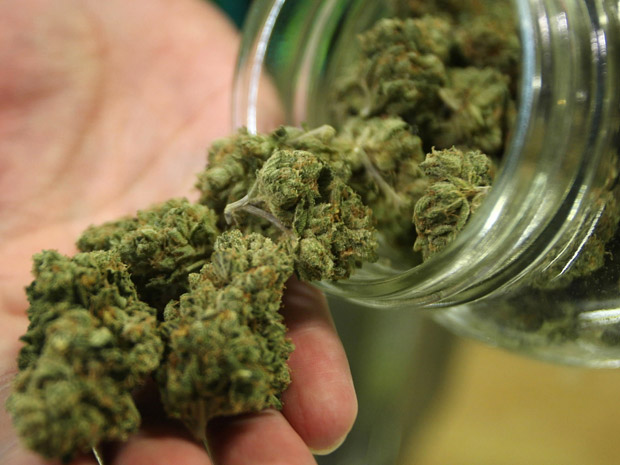
Cannabis, the most widely used illegal drug by a factor of at least 10 barely gets a mention except in passing. This, in itself, exposes the inane content of this strategy. The government apparently intends to deal with cannabis in exactly the same way as it deals with heroin and crack. The medicinal use of cannabis, now a burgeoning industry and source of hope to people all over Europe and America isn’t even mentioned. The crass stupidity of this strategy is almost beyond belief.
So the battle lines are drawn. Every other civilised country in the world is coming to terms with the fact that the war on drugs is unwinnable, even lost. Theresa May, like some mad first world war general, is blowing her whistle and urging on millions more to go over the top into certain death, or at least misery and degradation. Her slightly fey, sweet boy, Colonel Jimmy is hiding behind her, determined to gain credit for something but definitely not doing anything worthwhile, “Crikey! Not me. I’m staying safe.”
This could be a deeply depressing day but at least now we know where we stand. David Cameron and Nick Clegg have completely turned around on the progressive and liberal ideas they have advocated in the past. Nothing is a better indicator of the integrity and intelligence of a government than its drug policy. Britain is shamed by this effort which will inevitably cause more harm, cost more money and ruin more lives.
Politics.Co.Uk, Comment: The War On Drugs Is Already Lost
 An excellent article by Ian Dunt here that argues that the prohibitionists are already defeated.
My comment:
There is a deep, deep inertia about drugs policy amongst all politicians. Well that’s the polite way to put it, the political way. The truth is they’re all a bunch of self-serving, hypoctical cowards who don’t give a damn about the misery, suffering and death which their policies cause.
Of course the intellectual argument is won. It was won 20 years ago. Every single life lost, ruined, corrupted and wasted since then is the responsibility of those who have waged the “war on drugs” because it was never a war on drugs, it was a war on people. It pretended to be in those people’s interests but it was exactly the opposite. It was based on lies and propaganda.
It is not over yet. David Cameron and Nick Clegg both have a long record of claiming liberal and enlightened views on drug policy. Now they have their ministerial cars everything has changed. In the front line they have placed the snide and obnoxious James “Broken Britain” Brokenshire. He is playing the repressive, Ronald Regan, hang ’em and flog ’em role with glee. Of course he will be dumped as useless cannon fodder if Proposition 19 passes and sets off a wave of reform but I am not optimistic, even though I want to be.
We have a serious fight on our hands still. Until we can expose and overturn the lies and deceit of people like Brokenshire the people have not yet won.
“Cannabis Should Be Sold In Shops Alongside Beer And Cigarettes, Doctors’ Journal Says” – The Daily Telegraph, 11th October 2010
Yes, this is The Daily Telegraph here. Yes, this concerns an article published in the BMJ here.
There are distinct signs of sanity on the horizon. Is it money driving this new reality because we waste £19 billion per annum on the “war on drugs”? Or is it that Proposition 19 in California and the clash between UK and European law over medicinal cannabis is revealing the absurdity of prohibition?
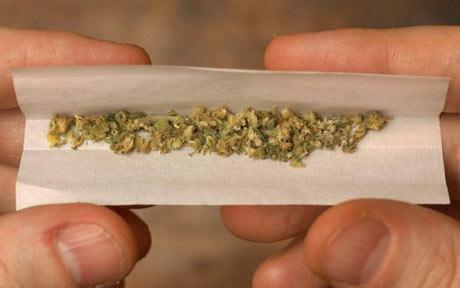
Cannabis should be sold in shops alongside beer and cigarettes, doctors’ journal says
An editorial in the British Medical Journal suggested that the sale of cannabis should be licensed like alcohol because banning it had not worked.
Banning cannabis had increased drug-related violence because enforcement made “the illicit market a richer prize for criminal groups to fight over”.
An 18-fold increase in the anti-drugs budget in the US to $18billion between 1981 and 2002 had failed to stem the market for the drug.
In fact cannabis related drugs arrests in the US increased from 350,000 in 1990 to more than 800,000 a year by 2006, with seizures quintupling to 1.1million kilogrammes.
The editorial, written by Professor Robin Room of Melbourne University, said: “In some places, state controlled instruments – such as licensing regimes, inspectors, and sales outlets run by the Government – are still in place for alcohol and these could be extended to cover cannabis.”
Prof Room suggested that state-run off licences from Canada and some Nordic countries could provide “workable and well controlled retail outlets for cannabis”.
Prof Room suggested the current ban on cannabis could come to alcohol prohibition, which was adopted by 11 countries between 1914 and 1920.
Eventually it was replaced with “restrictive regulatory regimes, which restrained alcohol consumption and problems related to alcohol until these constraints were eroded by the neo-liberal free market ideologies of recent decades”.
The editorial concluded: “The challenge for researchers and policy analysts now is to flesh out the details of effective regulatory regimes, as was done at the brink of repeal of US alcohol prohibition.”
Campaigners criticised the editorial. Mary Brett, a retired biology teacher, said: “The whole truth about the damaging effects of cannabis, especially to our children with their still-developing brains, has never been properly publicised.
“The message received by children were it to be legalised would be, ‘It can’t be too bad or the Government wouldn’t have done this’.
“I know – I taught biology to teenage boys for 30 years. So usage will inevitably go up – it always does when laws are relaxed.
“Why add to the misery caused by our existing two legal drugs, alcohol and tobacco?”
Earlier this year, Fiona Godlee, an editor of the Journal, which is run by the British Medical Association, endorsed an article by Steve Rolles, head of research at Transform, the drugs foundation, which called for an end to the war on drugs and its replacement by a legal system of regulation.
Dr Godlee said: “Rolles calls on us to envisage an alternative to the hopelessly failed war on drugs. He says, and I agree, that we must regulate drug use, not criminalise it.”
Legal Medicinal Cannabis In Britain
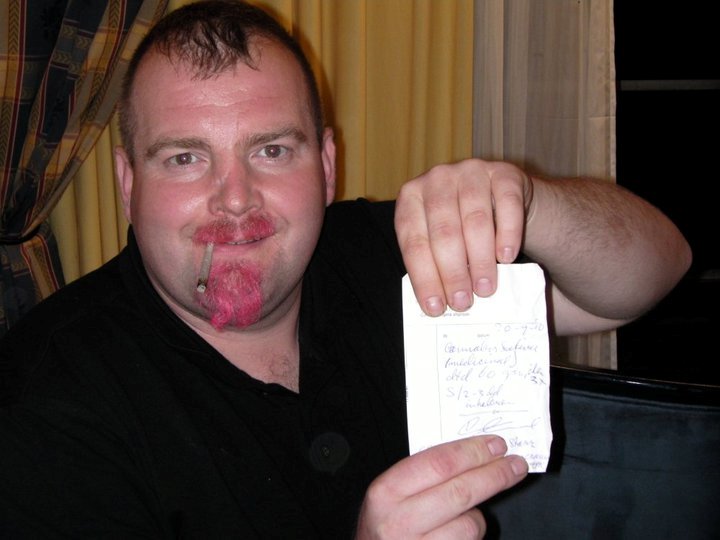
In The Pink
Last week Jim Starr flew into Bristol Airport from Amsterdam carrying 80 grammes of herbal cannabis as prescribed for him by a Dutch doctor. That’s just under three ounces of dried flower heads. He was carrying it in a parcel about the size of a telephone directory.
There was no one at customs, even though Jim went through the red channel and had telephoned ahead to advise the airport that he was bringing the cannabis in. He waited, even looked around for someone, anyone, but there was no one to be seen at all. He wanted to declare what he had with him. He’s never wanted to break the law. He knew that he was risking confiscation of the cannabis, possibly even arrest but the coast wasn’t just clear, it was deserted. The authorities had evidently decided that in their “war on drugs”, this time, discretion was definitely the better part of valour. They were in full scale retreat.
Jim had confirmed to the airport that he had the necessary paperwork to prove it was prescribed medicinal cannabis. His doctor had told him that he was protected under Article 75 of the Schengen Agreement which states “persons may carry the narcotic drugs and psychotropic substances that are necessary for their medical treatment provided that, at any check, they produce a certificate issued or authenticated by a competent authority”
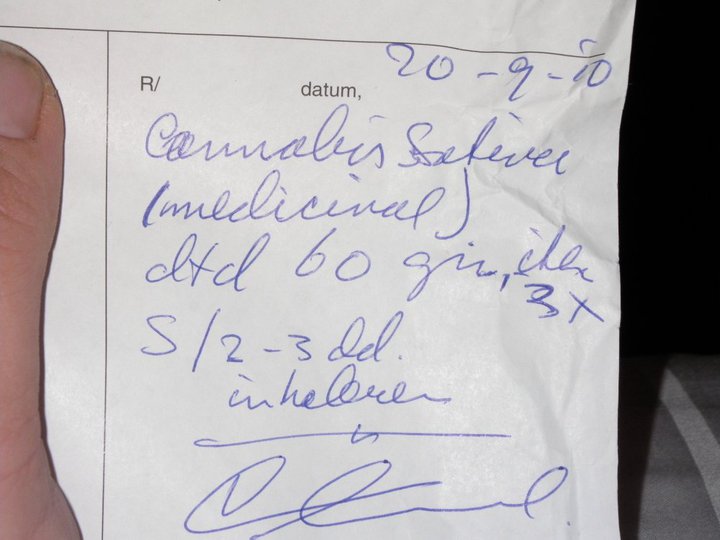
Prescription
Of course, even then, it didn’t stop the journey being a nerve wracking and tense experience. Now, safely at home in Dorchester with his family, Jim understands from the Home Office that he is entitled to bring in the cannabis as prescribed for him by his Dutch doctor. He can bring in up to three month’s supply at a time if he carries it on his person. Otherwise he has to apply for an import licence and have it shipped to a UK pharmacist.
Jim is 36 and is married to Emma, with whom he has two children. Originally from Birmingham, he was a very active man in full time employment until in 1999 he was diagnosed with a degenerative disease of the spine. In 2003 he was involved in a road accident and suffered terrible spinal injuries. His life seemed hopeless. The cocktail of powerful drugs he was prescribed, including morphine, were debilitating in themselves. He couldn’t face a future in which he was turned into a zombie, unable to enjoy any sort of decent life with his wife and children. He admits frankly that he was suicidal.
One day in 2004, Jim was upstairs in bed in so much pain and despair that he could barely move. A friend called round to see him and offered him a joint. Half an hour later Jim made it downstairs for the first time in three weeks. Suddenly he had hope and the possibility of a future with his family.
Life since then has been a constant game of cat and mouse with the police and drug dealers. Apart from risking arrest and even prison, Jim has also been in danger of being robbed or ripped off by dealers. He’s never wanted to break the law. He told his doctor the relief that cannabis provided and as soon as Sativex became available, even before it was officially licensed, his doctor prescribed it for him. Unfortunately, the very next day she rang to say that because of licensing and regulation problems she wouldn’t be able to prescribe it again. In fact, Jim did manage to get another prescription for Sativex but again it was withdrawn, this time because his health authority refused to fund it.
Jim has been an active campaigner for the legalisation of cannabis ever since. He has organised a series of marches, protests and petitions in Dorchester, Weymouth and even Downing Street. Over the last seven years, three MPs, Oliver Letwin, Jim Knight and Richard Drax, have written various letters in support of him. He is a distinctive figure in his wheelchair with his dyed beard which has earned him the nickname “Pinky”. Perhaps he has been a little too high profile for the Dorset police who he accuses of persecuting him. Unable to obtain Sativex or afford the prices and risks of dealers, Jim enlisted the help of a friend to grow his own medicine. Inevitably, in May 2009 the police arrived and Jim was arrested.
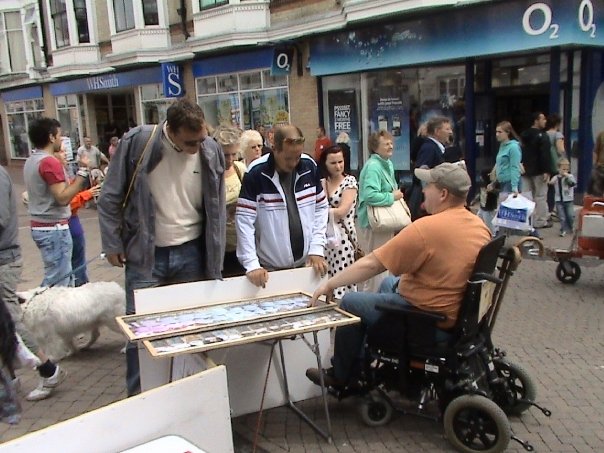
Campaigning
In August this year at Dorchester Crown Court Jim was given a two year conditional discharge for growing cannabis. He is now pursuing a complaint against the police alleging brutal treatment during his arrest. Other complications, allegedly at the police’s behest, have led to the DVLA revoking his driving licence although he has never been arrested, charged, convicted or even stopped on suspicion of driving under the influence.
Jim has become an avid recorder of everything. He uses mobile phones, video cameras and audio recorders to retain evidence of every contact with the authorities. He has a video recording of an officer saying to his wife “Look luvvy, whatever he grows up there from now on is up to him. We promise it don’t bother us”. Foolishly, he took the officer at his word. Three weeks after receiving his conditional discharge the police arrived again.
There was no provision for transporting him to the police station in his wheelchair. The officers were warned not to lift him by his arms because of his spinal condition. They wrenched him out of his chair by gripping his shoulders and underpants causing anal bleeding due to an existing condition. He was refused a doctor at the station. There was no provision for disabled people, even for his special toilet needs. He was refused access to any of his prescribed medication or even his specialist anti pressure sore mattresses.
The following day he attended hospital and was diagnosed with torn shoulder muscles. In fact, his spinal column is so delicate that any movement could potentially paralyse him. This is the basis of all his high profile campaigning and must be well known to the police. Jim now faces another charge of cultivating cannabis and a possible prison sentence.

With Mr Nice
The trip to Holland was a last resort, only made possible by the generosity of a friend. The Dutch doctor was horrified at the range of highly toxic prescription medicines given to Jim and prescribed two grammes per day of medicinal herbal cannabis. He told Jim that he shouldn’t be using Sativex as the alcohol in its solution was like pouring petrol on a fire, given his medical conditions.
So at last, Jim seems to have the medicine he needs. He will have to continue to rely on the generosity of friends to pay for it. He is applying for a Home Office licence for the cannabis to be imported to a local pharmacist who can then dispense it to him. He will continue to campaign for the right to grow his own for free. The costs of cultivation at home are minimal compared to the rigmarole of importing from Holland or the massive “Big Pharma” cost of Sativex.
Jim is not the first person to get the medicine they need in this way but he is the first to go public about it. Many tens of thousands may now wish to follow his example. Most European countries and 15 US states already regulate the provision of medicinal cannabis. Surely it is time for the government to consider reform of what looks increasingly like an absurd and cruel law.
Young Jimmy’s Jolly In Peru
There’s all sorts of perks to being a government minister you know. If you’re young Jimmy Brokenshire then as part of your courageous “war on drugs” you get an all-expenses paid trip to Peru to have a good laff at the poor sods who’ve got themselves jailed chasing the white lady.

Jimmy's Holiday Snaps
Apparently, most cocaine in Britain now comes from Peru rather than Columbia so, of course, it was vital for young Jimmy to get on a plane and do some fact finding. What I’d like to know is did he find anything of decent quality or is it all crap like it is on the mean streets of Britain? Did he rub it on his gums, sniff a few lines and get partying or was it bubbling in a spoon and blazed on a big glass pipe to get him rampant and raving and even more dangerous than he is at home?
The terrible story of Nick Jones from West London can be seen here. He was caught trying to bring back two kilos of Peruvian Flake. Sure, I feel sorry for him but it’s an extremely high stakes game. He knew full well what he was doing and chose to take the risk. Jimmy went along to gloat and use the opportunity for some easy propaganda. I think he must have still been cracked out though because he told the BBC, “The liability that you will be caught is very, very high”. Now that’s some malapropism. Maybe he’s got some other “liability” or likelihood on his mind or maybe he really was “very, very high”.
It makes me sick that this vile, baby faced punk is frittering our money away on his unjustified jollies. The Minister for Crime Prevention is a disgrace, a prohibitionist, a propagandist and a dissembler. Probably the most dangerous man in British politics, I’d rather see Nick Griffin at the Home Office than young Jimmy. He couldn’t be worse. He couldn’t be more poorly informed. He couldn’t be more regressive or oppressive or smug and self-satisfied.
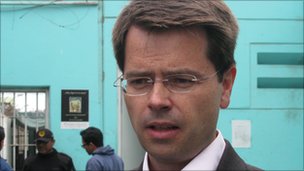
Jimmy Visits A Peruvian Prison
In my wildest fantasies, maybe someone will slip a couple of wraps in Jimmy’s pocket and he’ll get busted at Heathrow. A few weeks in Brixton would do him the world of good before his chums pull strings to get him off. He’d be a better person for it. He might have to face up to some realities rather than the deluded, fantasy world in which he lives.
Alternatively, maybe he could do the decent thing and swop places with Nick Jones? Now that would be truly useful. I’d be the first to recommend him for a medal. Then, in a few years time we could send someone out to gloat over him!
Well I can dream!
My MP, Richard Drax, To Write To David Cameron On Drugs Policy
The Honourable Member For Dorset South
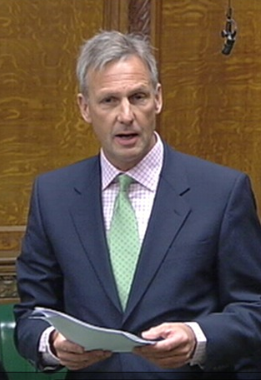
Today I met with my MP, Richard Drax. He was just as sickeningly handsome and charming as I expected him to be! So I showed him no mercy and bombarded him with my opinions for a good half an hour.
I realised afterwards that my favourite maxim “less is more” would have been a better strategy. Nevertheless, he did offer to write to David Cameron on my behalf on drugs policy and seemed genuinely sympathetic to some of the points I made.
I have just sent him a lengthy email in confirmation which I reproduce below. If anyone wishes to use this as a template for a letter or email to their own MP, please feel free to do so.
******
Dear Richard,
Thank you so much for your time today. I very much enjoyed meeting you. As I said, I came with opinions not problems. I am grateful to you for listening to me.
I realise that I made the classic mistake of bombarding you with far too much information and not giving you time to absorb any. I hope I may correct that error by summarising here what we talked about.
1. Gary McKinnon. Thank heavens that progress seems to have been made on this. The idea of an “extradition” treaty that provides for someone to be sent to the USA for trial on an alleged crime committed here is iniquitous. It’s particularly unfair in McKinnon’s case as he suffers from Asperger’s syndrome. You pointed out to me that similar dangers exist with the new European arrest warrant.
I would urge you to do everything possible to ensure that if Gary McKinnon is to be tried, it should take place in the UK.
2. Ian Tomlinson. In my view the failure to prosecute the policeman who assaulted him is an outrage and Keir Starmer’s reasons entirely inadequate. Now that the credibility of the pathologist in the case has been destroyed by a GMC panel, Starmer should at least reconsider and hopefully reverse his decision.
References here:
http://pjroldblog.wordpress.com/2010/08/31/killer-cop-harwood-must-be-charged/
http://pjroldblog.wordpress.com/2010/07/24/keir-starmer-the-next-lord-widgery/
I would urge you to press for a re-consideration of the decision not to bring charges. If no criminal charges are brought, at the very least the disciplinary hearing should be held in public as the rules allow. The Tomlinson family are entitled to justice.
3. Drugs policy. You very kindly agreed to write to David Cameron on my behalf. I am very concerned at the conduct of the Home Office at present and particularly James Brokenshire, the Minister for Crime Prevention who is causing great damage to both the coalition governemnt and the Tory party by promoting ideas and policies that contradict virtually all expert opinion, including the government’s own scientific advisers. He also seems to be completely at odds with the calls for drug law reform which both David Cameron and Nick Clegg have made consistently over the last 10 years.
This is not a peripheral or secondary issue. According to Baroness Meacher in the House of Lords on 15th June 2010, “There is no more obvious waste than the £19 billion annual cost of the UK’s war on drugs”.
There is a huge amount of reference material on this subject on my blog:
http://pjroldblog.wordpress.com/?s=drugs
I would also refer you to the Transform Drug Policy Foundation which has highly detailed and almost universally acclaimed proposals for drug regulation:
Virtually all experts agree that the “war on drugs” has failed. In exactly the same way as alcohol prohibition in the US led to a massive increase in crime and violence, so drug prohibition has created an illegal market said to be worth £350 billion per year. It has also financed civil war in Latin America for 25 years and is the principal source of finance for Al Qaeda and the Taliban in Afghanistan. Our soldiers are dying every day because of the illegal trade in opiates. Why don’t we just buy up the whole crop for the next 10 years? It would be much cheaper in both cash and lives than the Afghan war.
Virtually all experts agree that regulation would be a better solution. I have distilled the following five point plan from everything that I have read and learned over more than 30 years:
1. An end to oppression of drug users (at least 10 million UK citizens)
2. Removal from the criminal law of any offence for possession and/or social supply
3. Fact and evidence-based policy, information and regulation
4. Re-direction of law enforcement resources against real criminals
5. Treat problematic drug use as a health issue
Five years ago, while campaigning for the Tory party leadership, David Cameron called for “fresh thinking and a new approach” towards drugs policy and said that it would be “disappointing if radical options on the law on cannabis were not looked at”. Nick Clegg has promised to repeal “illiberal, intrusive and unnecessary” laws and to stop “making ordinary people criminals”. There can be no better example of this than the laws against personal use and cultivation of cannabis, particularly for medicinal reasons. The coalition government’s new Your Freedom website has been inundated with proposals to legalise cannabis and to end the futile war on drugs. In July a poll carried out for the LibDems showed 70% of people in favour of legalising cannabis.
The Home Office and James Brokenshire are completely out of touch with expert and public opinion as well as the declared views of both the Prime Minister and the Deputy Prime Minister.
In my view, regulation means tighter control on the most dangerous drugs such as heroin, cocaine and alcohol and lighter regulation on relatively harmless substances like cannabis and ecstasy.
There is also the very important question of medicinal cannabis. The discovery of the endocannabinoid system in 1998 has led to an ever-escalating volume of evidence of the medicinal value of cannabis. In June the MHRA approved Sativex as an MS medicine in the UK. It is a whole plant extract yet presently, the Home Office refuses to consider a regulated system of the plant itself for medicinal purposes. This is completely irrational and absurd. The House Of Lords scientific committee recommended such a system should be introduced 12 years ago. Medicinal cannabis is available and regulated throughout almost all of Europe, Israel and 14 states in the USA (with 12 more in the planning stage). The UK stands almost alone in its obstinate refusal even to consider such a system.
Already this is leading to quite obscene injustices where patients have been prescribed Sativex by their doctor but their health authority has refused to fund it and patients are then facing criminal prosecution for cultivating their own plants. There is a case of exactly this going on in the Dorchester Crown Court at present and the CPS insists it is in the public interest to prosecute!
Thank you once again for listening to me Richard. I hope these notes are useful in composing your letter to David Cameron and I look forward to hearing from you in due course.
Kind regards,
Peter Reynolds
Home Office Backtracks On Cannabis
A fortnight ago Sir Ian Gilmore, the outgoing president of the Royal College of Physicians, famously denounced drugs prohibition as a failed policy. He said “”Everyone who has looked at this in a serious and sustained way concludes that the present policy of prohibition is not a success.” He then went on to advocate decriminalisation and regulation.
The Home Office immediately issued a statement saying “‘Drugs such as heroin, cocaine and cannabis are extremely harmful and can cause misery to communities across the country.” This statement was reproduced on the Home Office website and has sat there for the last two weeks in direct contradiction to the governments own scientific advisers. Anyone who has even the smallest knowledge of the subject knows that the idea that cannabis is “extremely harmful” is absurd and a lie.
Within the last day or two the Home Office website has been quietly edited to remove the word cannabis from the statement. See here.

Charades, Fibs And Porkies
This correction is very welcome. However it calls into question the honesty, competence and intelligence of the Home Office and the government’s drugs policy. James Brokenshire, the Minister for Crime Prevention has been looking increasingly ridiculous in the last few weeks, contradicting his advisers, spouting pre-Reagan “war on drugs” propaganda and conflicting terribly with the wise words of both David Cameron and Nick Clegg, both of whom have called for drug policy reform consistently over the last 10 years. Young James has made himself very unpopular with the country’s six million regular cannabis users and embarrassed the government and the Tory party with his antics.
Whoever was responsible for this smart and very discreet editing, let’s hope they get to have a look at James’ Drugs Strategy consultation document too. It needs some intelligent correction and adjustment as well. See here for more information on what’s really a very silly game of charades, fibs and porkies.
Proposition 19. Just Say Now!
It looks as if, on 2nd November 2010, a small but very significant part of the world will at last come to its senses and legalise cannabis.
On that date, California voters look likely to approve Proposition 19 on the state-wide ballot that legalizes various marijuana-related activities, allows local governments to regulate these activities, permits local governments to impose and collect marijuana-related fees and taxes, and authorizes various criminal and civil penalties. Currently the polls show that about two-thirds of voters are in favour.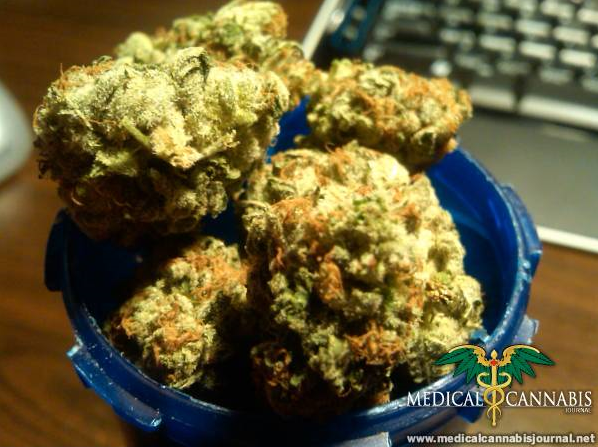
Over the age of 21 it will be legal to possess up to an ounce of marijuana and to cultivate an area of up to 25 sq ft on private property. The state estimates it will collect about £1.4 billion pa in new tax revenue. save $200 million pa in law enforcement costs and generate an additional $12 – $18 billion pa for California’s economy, with 60,000 to 110,000 new jobs. As the Americans say, with one of their most unpleasant expressions, “It’s a no brainer”.
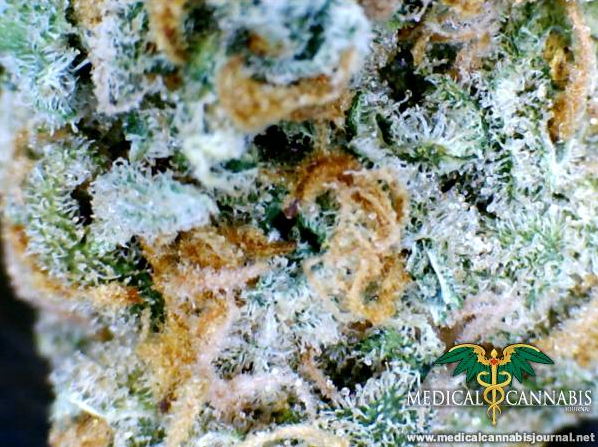
In America they finally seem to have got past listening to the stupid scare stories and propaganda about the cannabis plant. The misinformation has ranged from the idea that marijuana makes white women promiscuous with black men to the suggestion that it causes psychosis in adolescents. Both of these ideas are as impossible to prove as each other. America also recognises the huge medicinal benefits of cannabis with medical marijuana legal in 14 states and planned in 15 more. As a recreational drug, cannabis use is almost never associated with the sort of anti-social behaviour that alcohol causes. It produces an essentially peaceful, happy and soporific effect.
 Instead of insulting and ignoring their scientific experts as we do in the UK, Americans are now more interested in the facts and a pragmatic approach to drugs policy. The “war on drugs” is now universally recognised as having been an abject failure. We should, of course, have learned from the experience of alcohol prohibition in the early 20th century. That created the whole idea of gangsters and organised crime. We managed to repeat the same mistakes all over again with drugs.
In ironic appreciation of Nancy Reagan’s “Just Say Nc” campaign, those in favour of Proposition 19 have adopted the slogan “Just Say Now”. In addition to the direct financial benefits, the state expects to be able to focus police priorities on violent crime, cut off funding to violent drug cartels and better protect children, road users, workers and patients from illegal, unregulated use.
The UK will eventually follow down this inevitable path. The only questions are how many lives will we ruin and how much time and money will we waste before we finally get there?
See here for the latest updates and news on Proposition 19.

 Peter Reynolds