Archive for the ‘Consumerism’ Category
UK Drug Strategy 2010 – A Plan To Fail
Mother Knows Best
Gone are the days when central Government tells communities and the public what to do.
Rt. Hon. Theresa May, MP, Home Secretary, December 2010

A slim volume of treacle-like and turgid social worker-speak shot through with a few strands of sharp hypocrisy. See here.
A disappointment? Not really, it’s pretty much what I expected – an authoritarian, moralistic smokescreen behind which the government will do what it wants with no regard whatsoever for the views or the welfare of the people. It stinks.
It claims to be radical in that it turns away from reducing the harms caused by drugs and instead aims to force abstinence. In other words, do as we say or suffer the consequences. It is, in fact, a medieval solution to a 21st century problem. It seems that the British government no longer cares about the harm caused by drugs. All it cares about is that you STOP! This is the ultimate exposition of Nancy Reagan’s discredited “Just Say No” campaign because it really is “just” say “no” – no other option exists. This from a government that advocates giving people methadone to “treat” cannabis use. Can you believe it? That isn’t medieval. It’s prehistoric – or perhaps better described as mid 20th century, a sort of Dr Mengele method.
I give Ms May credit for one thing. She mentions alcohol alongside drugs in the first sentence of her foreword. That is progress but from then on there is little of any value. Nothing that you couldn’t have copied from any out of date A level textbook on social work.
The laughable assertion quoted above that the government doesn’t tell us what to do is just absurd. Never has there been a more hard line approach to the drugs issue. See Edwin Stratton’s article in The Guardian here which reveals just how draconian, anti-civil liberties and severe this government is.
In the penultimate paragraph of her foreword, Ms May acknowledges that there were calls during consultation on the strategy for “liberalisation and decriminalisation”. She dismisses these as not “the answer” but fails entirely to consider the enormous harm caused and crime created by existing policies. I will be making Freedom Of Information requests to determine just how much notice was taken of the consultation.
There is a complete failure to understand or consider the harms of prohibition. Britain now stands as one of the most backward and restrictive countries in the world when it comes to drug policy. We now rub shoulders with those countries that execute people for drug possession. There is no civilised country in the world with a more repressive drugs policy than Britain.

Broken Britain
Emphasis is given to the introduction of elected Police and Crime Commissioners. I support this move. Hopefully, these elected officials, being closer to reality and not ensconsed in Whitehall’s ivory towers, will mitigate some of the damage that this strategy could cause. They will have the impossible job of trying to implement these ideas and will surely give Ms May and her protege James “Broken Britain” Brokenshire some lessons in reality and common sense.
The statistics and figures quoted in the strategy are manifest nonsense. Apparently the economic and social costs of Class A drug use are £15.4 billion per annum while the equivalent figure for alcohol is £18 – 25 billion. Supposedly the total illicit drug market in Britain is worth just £4 – 6 billion per annum while the market for alcohol is £30 billion. There are just 320,000 heroin and/or crack cocaine users but tens of million that use alcohol. These figures just don’t add up. Maybe that’s part of the reason this strategy is so badly conceived and directed.
It’s only part of the reason though. The main problem is that the government’s approach is based on prejudice and an arrogant, moralistic, proselytising stance. See David Nutt’s article here on what the government would do if a completely safe alternative to ecstasy was developed. Prohibition is immoral and evil in itself. When will our politicians wake up to what most of the rest of Europe and the USA already knows?
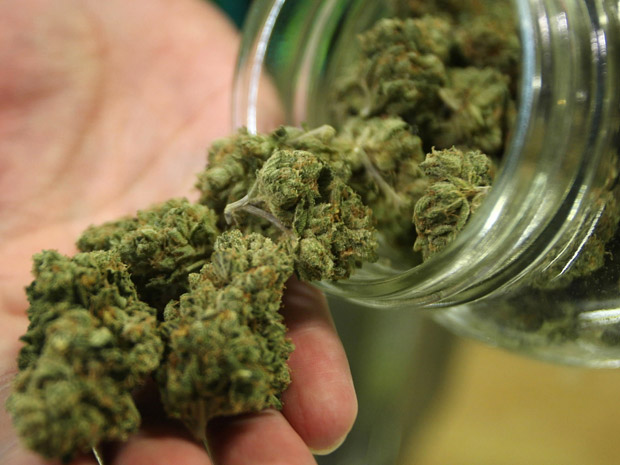
Powerful Medicine. Gentle Pleasure.
Cannabis, the most widely used illegal drug by a factor of at least 10 barely gets a mention except in passing. This, in itself, exposes the inane content of this strategy. The government apparently intends to deal with cannabis in exactly the same way as it deals with heroin and crack. The medicinal use of cannabis, now a burgeoning industry and source of hope to people all over Europe and America isn’t even mentioned. The crass stupidity of this strategy is almost beyond belief.
So the battle lines are drawn. Every other civilised country in the world is coming to terms with the fact that the war on drugs is unwinnable, even lost. Theresa May, like some mad first world war general, is blowing her whistle and urging on millions more to go over the top into certain death, or at least misery and degradation. Her slightly fey, sweet boy, Colonel Jimmy is hiding behind her, determined to gain credit for something but definitely not doing anything worthwhile, “Crikey! Not me. I’m staying safe.”
This could be a deeply depressing day but at least now we know where we stand. David Cameron and Nick Clegg have completely turned around on the progressive and liberal ideas they have advocated in the past. Nothing is a better indicator of the integrity and intelligence of a government than its drug policy. Britain is shamed by this effort which will inevitably cause more harm, cost more money and ruin more lives.
Broken Promises. Broken Britain. Brokenshire.

Mad? Bad? Or both?
The most important principle espoused by David Cameron and Nick Clegg in the election campaign was fairness. They promised us that their government would be fair and by extension that the policies it pursued would be based on facts and evidence, not on prejudice, misinformation or distortion by vested interests.
This promise is broken and in the most crass, blatant and disgraceful fashion by the attempt to remove scientists from the Advisory Council on the Misuse of Drugs (ACMD). Never has a more corrupt intent been revealed by a British government. Never has a minister, James Brokenshire, demonstrated his intent to misinform, deceive and lie more clearly. Dr Evan Harris, the former LibDem shadow science and health minister, explains the intricacies of this attempt to subvert the law here.
The Misuse Of Drugs Act 1971 was progressive legislation in that it created the ACMD and required government to seek its expert scientific advice before criminalising the use of drugs. Because, increasingly, the government does not like the ACMD’s advice, it is now seeking to remove the Act’s requirement that there must be scientists on the council. Is it possible to conceive of a more ridiculous or corrupt idea?
In fact, the government takes no notice of the ACMD anyway. When ministers wanted to ban mephedrone earlier in the year they ordered the council to provide the advice that they wanted and banned it despite there being almost no evidence at all. More members of the ACMD then resigned and the Home Office is now trying to recruit replacements. That may be the truth of what is happening here. The government simply can’t find scientists prepared to sit on the council. I wonder why?
James Brokenshire says: “Scientific advice is absolutely critical to the government’s approach to drugs and any suggestion that we are moving away from it is absolutely not true.
This is simply a bald faced lie and self-evidently so. If scientific advice is critical, why does he wish to remove the obligation to have it available?
James Brokenshire regularly speaks untruths or dissembles on behalf of the government. The facts prove that beyond doubt and his reputation is well established. For instance, the Home Office claims that there are no medicinal benefits in herbal cannabis and that this is based on advice from the ACMD. No such advice has ever been given. Furthermore, Professor Les Iversen, present chair of the ACMD is also a founder council member of the British Medicinal Cannabis Register (BMCR) and next week lectures on the subject “Bringing Cannabis Back into the Medicine Cabinet”
James Brokenshire is in the vanguard of this contemptible and corrupt behaviour. He may be put forward as cannon fodder by more senior ministers because the nonsense he speaks and the positions he takes are so manifestly ridiculous. When the truth is out and his shame is revealed he will easily be dismissed by Theresa May. If, as Minister for Crime Prevention, he had any real interest in preventing crime he would be resisiting this attempt to subvert the law.
European Parliament – Public Hearing On Cannabis Regulation
 The European Coalition for Just and Effective Drug Policies (ENCOD) has organised a public hearing on cannabis regulation at the European Parliament on 8th December 2010. See here for full details.
In March 2009, the European Commission published the “Report on Global Illicit Drug Markets 1998 – 2007” . This concludes that current policies of prohibition are failing in their main objective to reduce the demand and supply of illicit drugs. Current policies may also be a crucial factor in generating and increasing harm to individual drug users, their direct surroundings and society at large.
According to the European Monitoring Centre for Drugs and Drug Addiction (EMCDDA) in its 2010 annual report, Europe faces new challenges posed by changes in drug supply and use. The report also highlights the increased usage of cocaine, heroin and of a record number of new synthetic drugs.
ENCOD says that prohibitionist policies have failed to tackle the issues of drugs and drug use effectively and it is time to investigate alternative approaches. European authorities must produce a thorough impact assessment of the costs of the current policy of prohibition and the economic benefits of decriminalisation and, as a start, the regulation of the cannabis market.
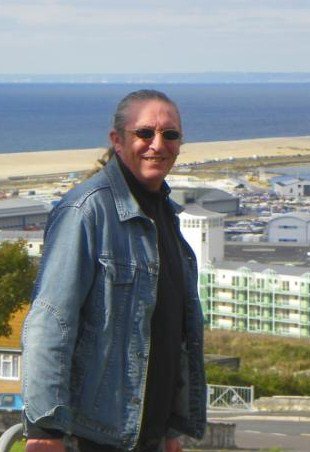
Victor Hamilton
It has been calculated that cannabis regulation would save billions in law enforcement costs, foster harm reduction, weaken the illegal cartels, and provide the opportunity to generate considerable income from taxes. The examples of California, Spain, The Netherlands and Portugal lead the way.
Victor Hamilton, the well known cannabis campaigner and former Legalise Cannabis Alliance (LCA) parliamentary candidate, liaises as a UK representative with ENCOD. He has submitted the following letter to ENCOD in advance of the public hearing on the current state of cannabis in Britain.
Dear Joep,
Thank you for the invitation to attend the hearing on 8th December 2010. I am afraid that both my health and the expense involved prevent me from attending.However, as you know, ending the prohibition of cannabis and encouraging more and better use of the plant in all its forms is my main concern. Cannabis offers many benefits medicinally, recreationally, spiritually and, as hemp, in ecologically sound fuel, construction materials, paper and plastics alternatives. Prohibition of cannabis is a far greater crime than any perpetrated by those who use it. It is a scandal and a sad litany of wasted opportunity and resources.
In the UK, based on research I have done and confirmed by the Independent Drug Monitoring Unit (IDMU), a legalise, regulate and tax regime could produce between £4 – 6 billion pa in new tax revenue.
For the benefit of the hearing, please allow me to update you on the present situation in Britain.
Calls For Decriminalisation
There have been calls for a relaxation of cannabis laws from a number of sources: The Bar Council, the British Medical Association, the Royal College of Physicians, The Lancet, Professor Roger Pertwee, Professor David Nutt and the Association of Chief Police Officers. The new coalition government’s “Your Freedom” website was swamped with calls for legalisation.
Reaction To Propositon 19
The cannabis community was eager with anticipation for the Proposition 19 vote in California, despite a dearth of media attention. Even the BBC, obliged under its charter to provide balanced coverage, found very little time for an issue that affects at least six million Britons. Strangely, the best of the lot was The Daily Telegraph, formerly known as the most conservative paper, it told us more about what was happening than any of the others.
The result was a disappointment and reminded us how our own campaigning has suffered from internal divisions and a lack of focus. Nevertheless. legalisation seems inevitable in the US, even if only at state level, within the next few years.
Formation of British Medicinal Cannabis Register
This exciting initiative to create a database of medicinal users in Britain was announced only in November. I was honoured to be invited to sit on the BMCR council as a medicinal user representative. Other members of the council include very eminent individuals such as Baroness Meacher, the MP Paul Flynn, Matthew Atha of IDMU and Dr Malcolm Vandenburg, the pre-eminent expert witness on drugs.
The real coup though was the announcement of Professor Leslie Iversen as a council member. Professor Iversen is the government’s chief scientific advisor on drugs. Yes that’s the British government which continues to state that cannabis has “no medicinal benefits”.
Subversion of Schengen Agreement
Several British medicinal users travelled to Holland for prescriptions from a doctor believing that their medicine was then protected by the Schengen Agreement. At first the Home Office agreed but then changed its position to say that British residents are not covered. The ridiculous situation now is that any non-UK resident can bring prescribed medicinal cannabis into Britain and use it without restriction. A UK resident cannot.
Increasing Evidence Of Medicinal Benefits
There is a never ending flow of information from all around the world on the extraordinary power of cannabis as a medicine. Facebook groups, blogs and organisations such as the LCA and UKCIA keep spreading the news. Particularly strong evidence has been revealed for cannabinoids as a treatment for Alzheimer’s, head, neck, breast and prostate cancer, fibromyalgia, ADHD and migraine. The mainstream media seem only interested in scandal and scare stories. They publish news about vastly expensive new pharmaceutical products but not about cannabis cures.
Confusion At The Home Office
Understandably, the British government’s position looks increasingly absurd. The Home Office veers between describing cannabis as very harmful, harmful, dangerous, extremely dangerous and changes its story every time it is challenged.
Approval of Sativex
Sativex won welcome approval from the medicines regulator as a treatment for spasticity in MS. Despite the fact that Sativex is nothing more than a tincture of herbal cannabis, the government now maintains that “cannabis has no medicinal benefits in herbal form”. Sativex is approximately eight times the cost of herbal medicinal cannabis and many health authorities are refusing to fund it.
New UK Drug Strategy
The government is to announce a new drugs strategy in December. There is expected to be a shift in emphasis towards healthcare interventions rather than criminal sanctions but no move away from prohibition. The more liberal views expressed by both David Cameron and Nick Clegg over the last 10 years seem to have changed now they have come to power.
Joep, I hope this is helpful and informative for the hearing and for you and your colleagues.
Victor Hamilton
Climate Change Jolly In Cancun

Cancun Conference
My blogger-in-arms, Tory Ardvaark, calls it a “cocaine and hooker-fest” and he’s probably right. Johann Hari, my colleague on The Independent, says that the “next crash will be ecological – and nature doesn’t do bailouts”. See here.
So, who has the more incisive angle on the gathering next week in Mexico’s top holiday resort? It’s a strange choice of venue and does raise questions as to the real reason that so many will be flying there on government expenses. As destinations go it must be a CO2 hotspot. Maybe it’s even got it’s own hole in the ozone layer to match the nasal damage that so many visitors will be suffering? Hopefully, condoms will protect them from any other consequences of their debauchery. As for the conference though, it will probably be a waste of time, just like Copenhagen.
That idiot, Professor Phil Jones, at UEA’s Climate Change unit has got an awful lot to answer for. His absurd and dishonest behaviour has discredited climate change science. I think that while it would be stupid to ignore the idea of man-made climate change, it would be equally unwise to listen unquestioningly to those corrupt scientists who are mainly concerned with securing next year’s research grant. Both extremes of the argument are as unreliable as each other.
Thankfully during my lifetime and my childrens’ we won’t see catastrophic effects from climate change, even if the scientists prove to be right. Hopefully, by the time my grandchildren are around, science will have got its act together a little more – what shall we say – scientifically? Of course, it may be too late by then.
The only thing that is certain is that Tory Ardvaark is right. They’re going to have a hell of a good time down Mehico way and the drug dealers and pimps will be coining it.
The British Medicinal Cannabis Register And Your Security
 Apart from the misinformation and propaganda of government, there are two reasons why cannabis law reformers have met with little success in Britain.
The first is a lack of factual information about who uses cannabis, how and for what reasons. The second is a terrible record of disunity, squabbling and petty power games amongst campaigners.
My fervent hope is that the creation of the British Medicinal Cannabis Register (BMCR) will help to solve the first, at least for medicinal users. The second though may prove more difficult.
The BMCR has attracted the endorsement of a number of eminent individuals. Council members include people whose reputation is beyond reproach as well as medicinal users who, by definition, are described as criminals. There have already been scurrilous attacks on the integrity of some council members and cowardly abuse, anonymous or in disguise, from those who have a different agenda.
Regrettably, a well known campaigner with an honourable and courageous record in assisting medicinal users, has resigned from the council over concerns about data security. While he is a man of great integrity, the web site with which he is associated has hosted a series of paranoid and scaremongering attacks on the BMCR. The site is well known as a forum for cannabis growers who clearly have good reason to be concerned about their security.
The BMCR issued the following guidance:
Your Security
The purpose of the BMCR is to build a database of factual information. For that data to have any value it must be validated. Cannabis remains illegal in Britain so there will always be some danger in contributing to any website or source of information, even if you do so anonymously or under a pseudonym.
After careful consideration the BMCR has concluded that the minimum requirement for data to be validated is a name, a part post code and a verifiable email address. The name and postcode cannot be verified so there is nothing to stop you using an alias.
Clearly, the information about post code, condition(s) and method(s) of use is only of any value if it is truthful. All data will be stored on encrypted servers and/or storage devices and will not be released to anyone voluntarily. However, you must decide for yourself the balance between providing information and your own security.
Ultimately, medicinal users must decide for themselves whether they want to stand up and be counted or not. Personally, I put my name loud and proud alongside the BMCR and I will defend and keep confidential any information entrusted to me to the ultimate. I know the same goes for all those involved.
The BMCR website is at www.bmcr.org.uk.
Advisory Council On The Misuse of Drugs Meeting, 18th November 2010
I attended this meeting last Thursday at Church House, just around the corner from the Houses of Parliament.
There were approximately 35 members of the council in attendance, sitting around a huge U shaped table with perhaps 20 people in the public seats. Inevitably, such a huge meeting could only touch on adminstrative matters and formalities. Clearly, most of the ACMD’s work is done in much smaller working groups. However, there was an interesting Q&A session and I was pleased to experience a council meeting. I wouldn’t recommend it for light entertainment though!
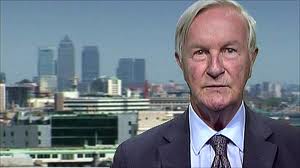
Prof. Leslie Iversen
Professor Leslie Iversen was in the chair for the last time. His post and those of eight other members have been advertised and their replacements will be appointed as from 1st January 2011. These are voluntary positions with members receiving only expenses and subsistence payments for their work. They undertake an onerous and important responsibility and I commend them for their public service.
Full minutes should be available on the Home Office website here within a few weeks. However the main items of interest were:
- the ACMD’s response to the Home Office’s drug strategy consultation
- a report on anabolic steroids
- a report on the issuing of foil by drug clinics as an alternative to injection
- a report on 2-DPMP, marketed as the “Ivory Wave ” legal high
- a request to report on khat, the herbal product from East Africa that contains cathinone, the same active ingredient as mephedrone
- a request to report on cocaine use after a recent report placed Britain at the top of the European league table
Then we came to the Q&A session and, of course, yours truly had a question prepared. First though there was a large contingent of the Somalian community present appealing for the prohibition of khat.
I have to say that nothing I have heard about either mephedrone or khat has interested me or persuaded me to experiment. There were a number of emotional and passionate speeches rather than questions; one from an ex-khat addict, one from a Somalian psychiatrist and others from community members. It’s clear that khat does cause harm but it saddened me that the only solution being suggested was prohibition. I understand this as a knee jerk reaction but it won’t work. All it will do is drive use undergroud and make the problem worse. Professor Iversen himself commented that the price of khat where it has been banned is 20 times that of where it is legal. If prohibition is enacted in Britain all we will be doing is playing straight into the hands of criminal gangs yet again.
I asked the council whether there wasn’t an urgent need for it to update its advice to the government on the medicinal benefits of cannabis. I cited the recent MHRA approval of Sativex which is, of course, nothing more than a tincture of herbal cannabis. I also mentioned that Arizona had just become the 15th state in America to introduce a medical marijuana programme and that Israel has recently announced a massive increase in growing facilities and dispensaries.
I am paraphrasing here, of course, but Professor Iversen threw up his hands in horror at being asked to review cannabis again when he has already done so three times. The general view from the council seemed to be that whatever was said to government on this subject, no notice would be taken. I shall be following up my oral question with a letter to Profesor Iversen. We have to expose this Home Office lie that there are no medicinal benefits from herbal cannabis and that this is based on advice from the ACMD. It isn’t. It’s a government deception.
For me the most important part of the day was the opportunity to introduce myself in person to Professor Iversen. I thanked him for agreeing to become a founder council member of the British Medicinal Cannabis Register. He said how enthusiastic he was about the register and that he has been an advocate of medicinal cannabis since the 1990s.
London Games – The Novel
Now On Sale Here.
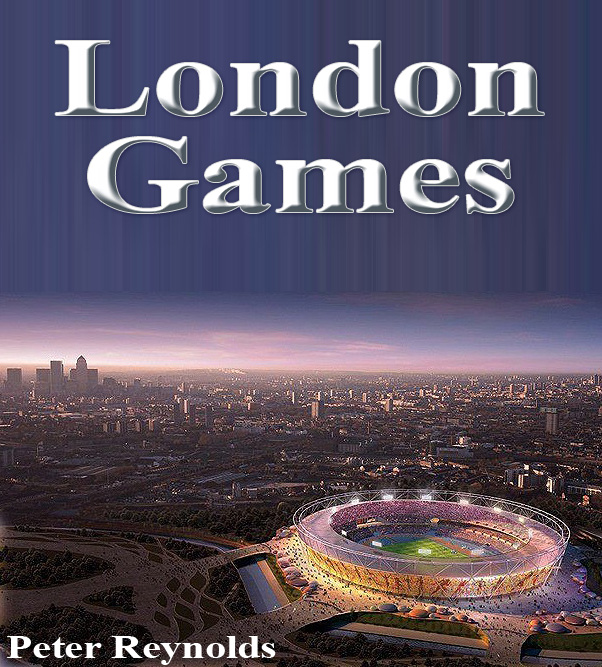 It is 2012. Britain is slowly emerging from the longest and deepest recession for 100 years. It has been a dark and difficult time. The London Olympics are now just a few months away. The whole country is hoping that the games will provide the inspiration and renewal that it needs.
London Games follows five characters through the spring and summer of 2012, culminating as the games open at the Olympic stadium. It is a gripping tale of relationships and dramatic personal experience. It concerns an Afghanistan veteran suffering from combat stress, a disgraced ex-banker sent to jail amidst scandal and public outrage, a cocaine dealer with customers at the very top and the very bottom of society, a property developer on the cusp of making his fortune and a restauranteur starting to make his name as a celebrity chef. At times it plumbs the depths of London’s sordid underworld yet it also catches an uplifting mood and celebrates the city’s unique history and environment. It examines crime and punishment as well as food and drugs, love and ambition. Ultimately it reveals a bond between the most unlikely of friends, thrown together in an extraordinary and thrilling climax with a redemptive message of hope and optimism.
Sir Damian Fremantle experiences the shock of his first night in Brixton prison while Susan is confused between shoplifting in Sainsbury’s and bomb disposal in Helmand province. Clive Dumonde is still mourning the death of his parents as he struggles to understand what’s involved in developing a multi-million pound property in Notting Hill. His business angel Mark is also an investor in the uber-hip and trendy Vermont restaurant just around the corner. Meanwhile, Mo, or Big M as his customers call him, is living the hectic, stressed-out life of a cocaine dealer, supplying crack to streetwalkers one minute and top grade powder to city bankers the next.
John George is on the brink of becoming London’s top chef. It is a constant struggle to devise new dishes while coping with the relentless pressure for perfection. As the guests become ever more famous, so the financial pressures increase, the staff becomes more difficult and the vanilla vodka bottle in his desk becomes his best friend. Then, without warning, the scales fall from his eyes and the sous chef who he has barely noticed for months is transformed into the love of his life.
The pressure on Mo never lets up. His customers call all day and all night. He is always looking over his shoulder, expecting to see a blue light in his mirror or hear a knock on the door. Then, for no good reason, his principal supplier accuses him of passing counterfeit money and Mo is in a race for his life with both the police and violent gangsters.
Susan finds herself locked up and heavily sedated. She thought she was doing her duty but she has committed a dreadful crime that will have consequences for the rest of her life. What future or hope can there be for someone who has been a hero, trained as a killing machine but now behaves like a homicidal maniac?
Five characters, products of their time, all on an inevitable path as their stories intertwine and we glimpse a post-2012 Britain, rejuvenated, reinvigorated, ever more complicated, challenging and exciting – a Great Britain.
British Medicinal Cannabis Register
 In California there are more than 500,000 medical marijuana card holders. How many people use cannabis as medicine in Britain?
The British Medicinal Cannabis Register aims to find out and provide a database of facts and evidence for doctors, scientists, researchers, campaigners, government and anyone with a bona fide interest. Users register via the BMCR website, providing details of their method of use and the conditions treated. While patient confidentiality is guaranteed and records held on the database will have the same legal status as any other medical record, users do not have to provide their full address. They can register with the first part of their postcode and a verifiable email address.
Of course, according to the British government, “cannabis is dangerous and has no medicinal benefits”. However, Sativex, a cannabis tincture, has been approved by the MHRA as a treatment for MS spasticity. Sativex is pharmacologically identical to cannabis. It is cannabis – with the addition of ethanol and a little peppermint oil. (A tincture is an alcoholic extract.)
There is no more common sense in US federal law where cannabis is a schedule 1 drug with “no medicinal uses”, yet the US government has held a patent (no. 6630507) since 2003 for “cannabinoids as antioxidants and neuroprotectants, for example, in limiting neurological damage following ischemic insults, such as stroke and trauma, or in the treatment of neurodegenerative diseases, such as Alzheimer’s disease, Parkinson’s disease and HIV dementia.”
If you can make any sense of either the British or US governments’ position then please educate me? I think they are irrational and cruel. They actively deny people in pain and suffering the relief they need which is comprehensively proven both by science and experience. On both sides of the Atlantic this amounts to nothing less than an evil injustice and oppression of vulnerable people.
Thank God and the US constitution that in America 14 states have introduced a regulated system of medical marijuana. Two-thirds of Europe permits medicinal cannabis and Israel has just introduced a major programme including new growing facilities and dispensaries. In Britain there is no such compassion and the Home Office ducks and dives and manipulates and dissembles to evade EU law that would permit cannabis as medicine. In the UK there is appalling wickedness and cruelty perpetrated on the back of political cowardice.
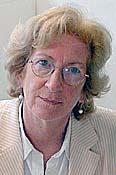
Baroness Meacher
The BMCR was launched this week and received an immediate boost with the announcement of Baroness Molly Meacher, Paul Flynn MP, Matthew Atha and Dr Michael Vandenburg as members of its governing council. Baroness Meacher has a distinguished career in health and social care. Paul Flynn has long campaigned for drug law reform. Matthew Atha is the director of the Independent Drug Monitoring Unit and Dr Michael Vandenburg is the pre-eminent expert witness in the courts on pharmaceuticals and drugs.
Whether the BMCR succeeds in its aims depends entirely on whether those who use cannabis as medicine have the courage to register. Only then will sufficent evidence be available to embarrass the government into essential and overdue reform. The danger is that those who find relief will prefer to keep quiet and say nothing. No one could blame them if they do.
 It is time for all those concerned to grasp this nettle and make a stand. Are we seriously going to continue to imprison sick and disabled people for using a medicine that is proven to be effective and far less costly, dangerous and harmful than pharmaceutical alternatives?
I urge all those concerned to register at the BMCR website: www.bmcr.org.uk.
SECOND UPDATE On Legal Medicinal Cannabis In Britain
 This is the third instalment in this story.
1. Legal Medicinal Cannabis In Britain
2. Update On Legal Medicinal Cannabis In Britain
Eventually The Guardian took some notice. See here.
Despite the pleas of those in pain and suffering, the Home Office was talking to Mary O’Hara of The Guardian but not to them. Dozens if not hundreds of medicinal cannabis users had written to the Home Office asking for confirmation that they could go to Holland for a prescription. Not a word was heard.
Jim Starr, the subject of this story, wrote to his MP, and then he wrote again. He heard nothing. He wrote to the Home Office, chasing up his application for a personal import licence. He heard nothing. He wrote again.

Dilatory
Richard Drax, the first timer, newly elected Tory MP for Dorset South just happens to be my MP too, so I wrote to him on Jim’s behalf.
Jim has heard nothing. Richard Drax asked me not to mention his name in any article about Jim. Jim wrote again. I wrote again. We have heard nothing.
Jim’s medicine has run out. We told the Home Office and Richard Drax that it was an urgent medical emergency. We have heard nothing.
I spent the last week on the telephone and exchanging emails with the Home Office. This is the result:
A Home Office spokesperson said:
The UK’s position is clear – cannabis is dangerous and has no medicinal benefits in herbal form. It remains illegal for UK residents to possess cannabis in any form.
Britons benefit from reciprocal laws which allow EU nationals, in limited circumstances, to travel with controlled medicines. We are working with European authorities to ensure the system is robust and not open to abuse.
The Home Office says you can import cannabis to the UK and use it without restriction provided you “are resident in a country where that drug is legally prescribed”. So it’s OK for the Dutch and the Belgians and the Spanish and the Italians and the Czechs and the Poles (and many others) to smoke weed in Britain but not if you’re British.
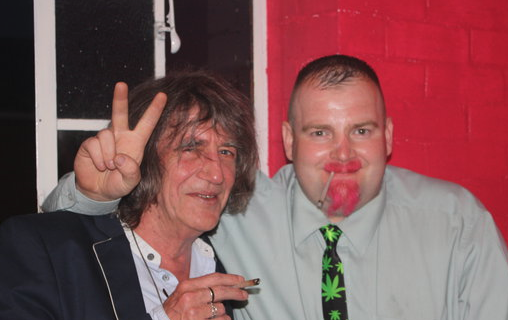
We Won't Give Up
This is clearly unequal, discriminatory, unjust and unsustainable in law but the Home Office is not about to give in. The only way to resolve this is that either someone must appeal a conviction all the way to the Supreme Court or there must be an application for judicial review.
Stay tuned for the next exciting instalment.
In the meantime, Jim and thousands like him will manage as best as they can.
He’s still heard nothing from either the Home Office or Richard Drax.

 Peter Reynolds