Posts Tagged ‘health’
Glass Pharms’ UK Cannabis Facility – Space, Technological Innovation and Quality.
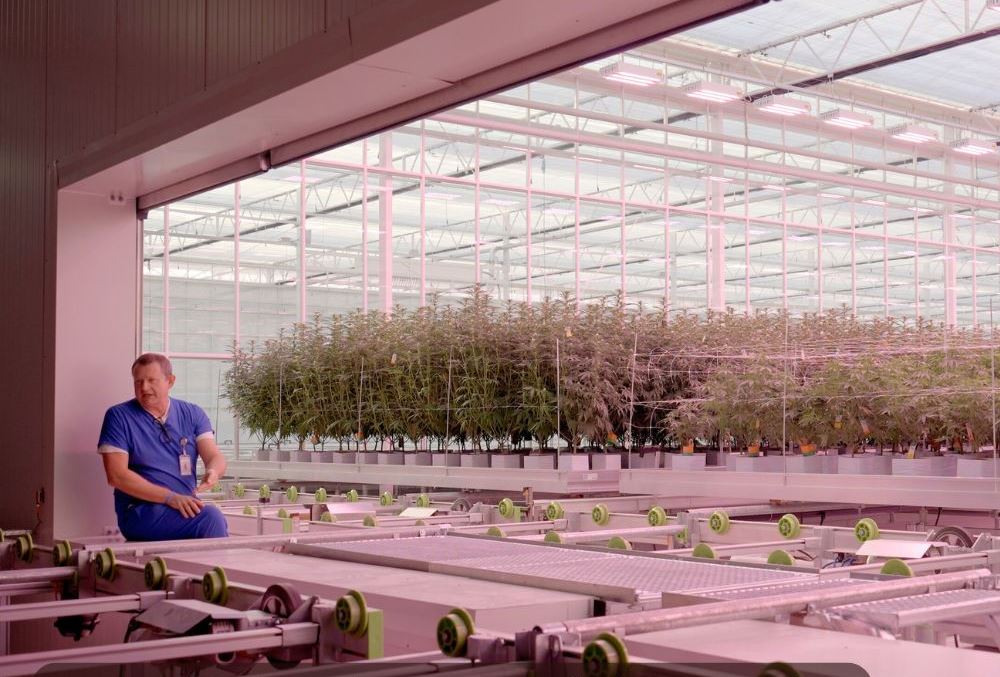
In mid-May 2025 this was my second visit to one of the very few licensed cannabis cultivation facilities in the UK. The first was a month earlier to Dalgety in Staffordshire. It is extraordinary to see two such totally different approaches to growing the same plant.
There is hardly a more beautiful location than where Glass Pharms is based, in deepest Wiltshire, in the middle of glorious English farmland with swooping and squabbling red kites as sentinels. First you pass the anaerobic food waste digestion plant which provides heat for power as well as carbon dioxide to boost plant growth. Then, almost surrounded by a massive solar panel installation, is an unmarked, anonymous but imposing building. From ground level you wouldn’t even know it was a glasshouse.
Security precautions are strict, just like Dalgety. Once through a succession of turnstiles and doors that familar, comforting smell becomes obvious. I was welcomed by managing director Richard Lewis who explained to me that his background and that of most of the staff onsite was in fresh produce. I learned that he regards cucumbers as the vegetable crop most similar to growing cannabis.
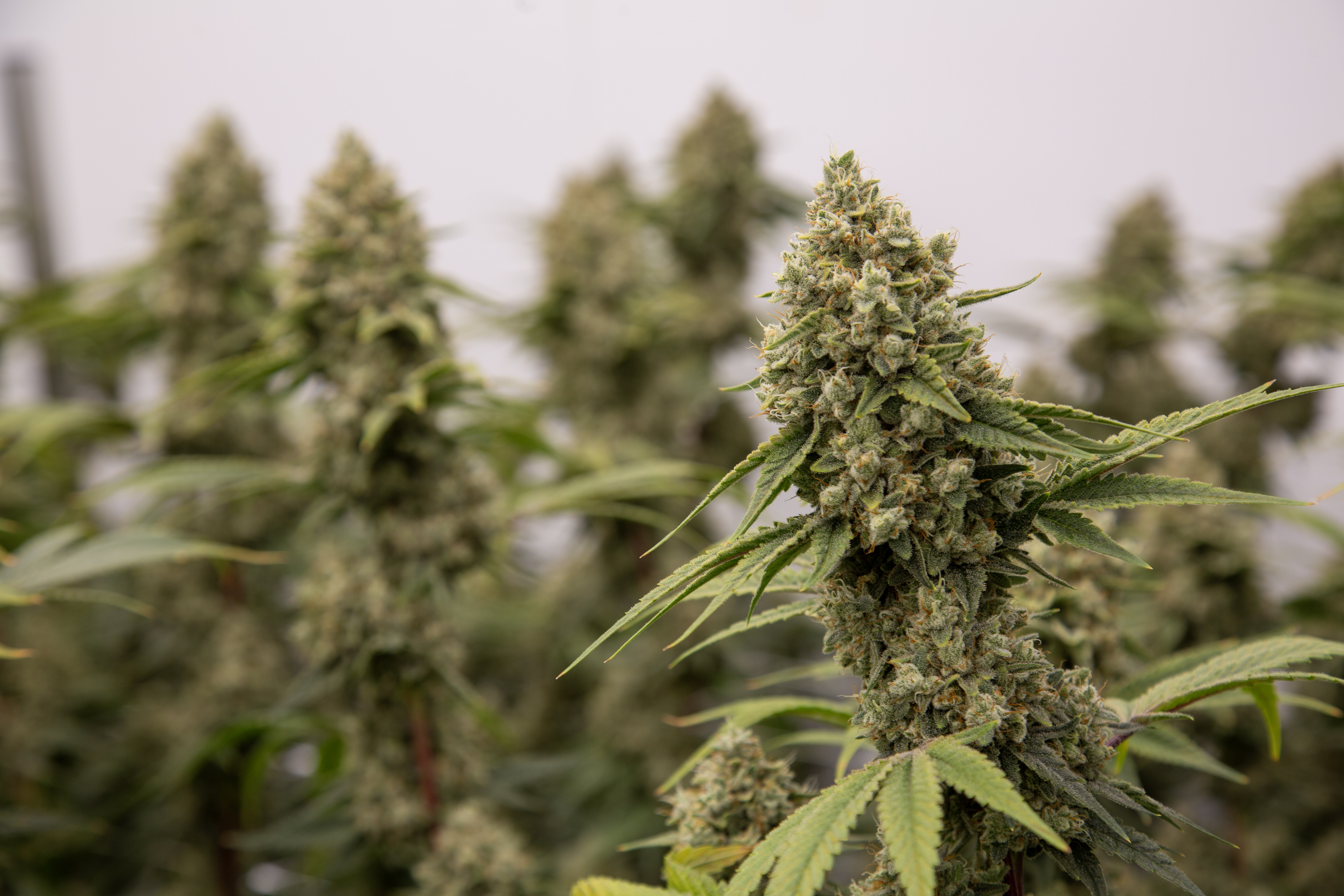
The main area of the facility is a large section, perhaps 70 or 80 metres square, where staff attend to plants in different stages of growth, groups of perhaps 30 plants on large trays, just over a metre wide and four metres long. This is where I learned one of the most important principles of this facility – the plants come to the people, the people never go to the plants. Using a robotic conveyor system, which can move in all directions, these trays take batches of plants to where they need to be, either for different lighting and nutrient regimes to simulate the seasons or for human intervention such as de-leafing or harvest.
I also met with James Duckenfield, chief executive and founder, who is a tremendously impressive character. A chemist by training, he very quickly lost me in an explanation of terpenes, other compounds and the reasons that they are currently growing 21 different cultivars to achieve a range of flower products to meet different medical needs. This is a depth of technical, scientific expertise, unlike any I have seen elsewhere, that supports skilled growers and horticulturalists. Glass Pharms did employ a head grower from the Canadian cannabis industry for a while but it didn’t work out. This is not the conventional approach to growing cannabis. It is continuous cultivation where every day new clones are planted and mature plants are harvested.
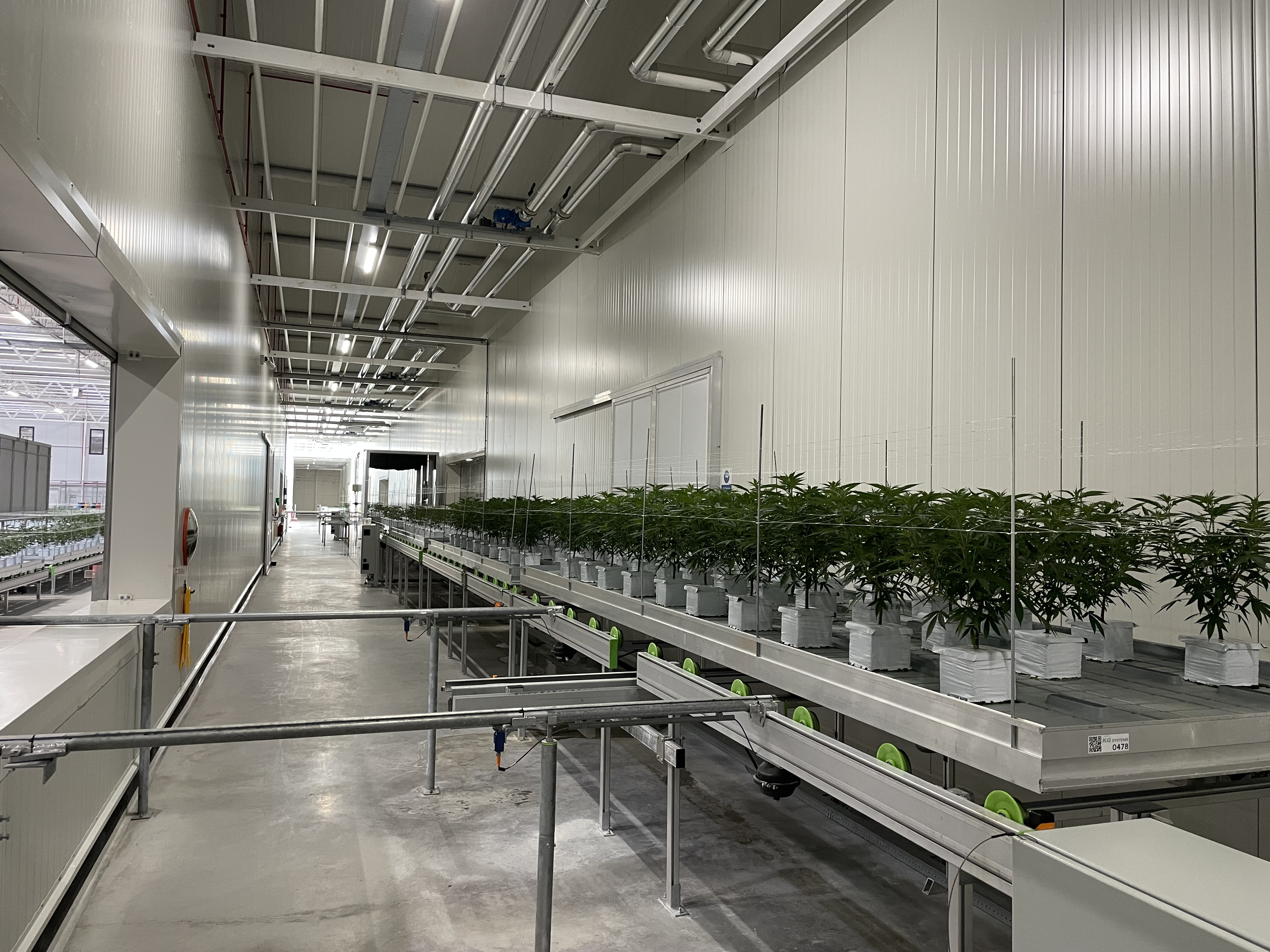
Alongside the main area is a long corridor that runs the entire width of the glasshouse. In fact this is the only place where you realise that you’re in a glasshouse as the roof is visible. There are surprisingly few lighting fixtures and they are of an entirely different type to those more commonly in use elsewhere. None seemed to be operating while I was there. It was a very bright, sunny day but this doesn’t explain why in different areas of the glasshouse there seemed to be different colours and temperatures of lighting, presumably seeking to replicate the different seasons.
Richard explained that 40% of the lighting requirement is provided by the sun. This is a huge saving on what is the most signifiant cost in cannabis cultivation. There are further huge savings on power as it all comes at greatly reduced cost from the anaerobic digestion plant next door. Finally, in what was the most surprising revelation of all, there is not a single HVAC unit in the whole facility. All heating and cooling is provided by an ingenious heat exchanger system working off the waste heat from next door.
Back in the main room, an area to the side is partitioned off. Harvested flowers are packed quite tightly into small trays and this is where they begin the drying and curing process. Again, this is not the conventional approach. I would be concerned straightaway by how tightly packed the buds are. How could they dry properly without going mouldy? Then I learn that this is the start of a secret drying and curing process which they aim to patent – and I was told no more.
As ever, the proof is in the final product and I was given the opportunity to examine four products presented in finished form in Glass Pharms’ unique sealed aluminium tins. These are an innovation in themselves, far better than plastic tubs or mylar bags. I was able to open each container, pick out the buds, feel them, break them apart, examine them in detail. A grinder was provided so I could see how the flower looked and smelled once broken down into vapable form. As I said to James, the only thing missing was a Volcano vaporiser at the end of the table for the ultimate test. I doubt that will ever be possible under UK medical regulations!
I cannot fault what I saw. The perfect consistency of the buds, evenly dried, even density throughout, trichomes visible in the heart of the buds as you break them apart. Just gorgeous. Mouthwatering even!
It’s very, very difficult and challenging to develop a cannabis cultivation facility in Britain. I know this only too well. We are three and a half years into the process in Belfast, where Growth Industries, who I have been advising from the beginning, are still probably two years away from first harvest. But what I have seen at Dalgety and Glass Pharms is tremendously impressive, even with two entirely different approaches. This bodes very well for the future of Britain’s cannabis industry. We can be world leaders in this. If only we had a government and regulators who were focused on helping the industry, rather than looking for ways to restrict it.
Dalgety’s UK Cannabis Facility – Excellence, Professionalism and Leadership.
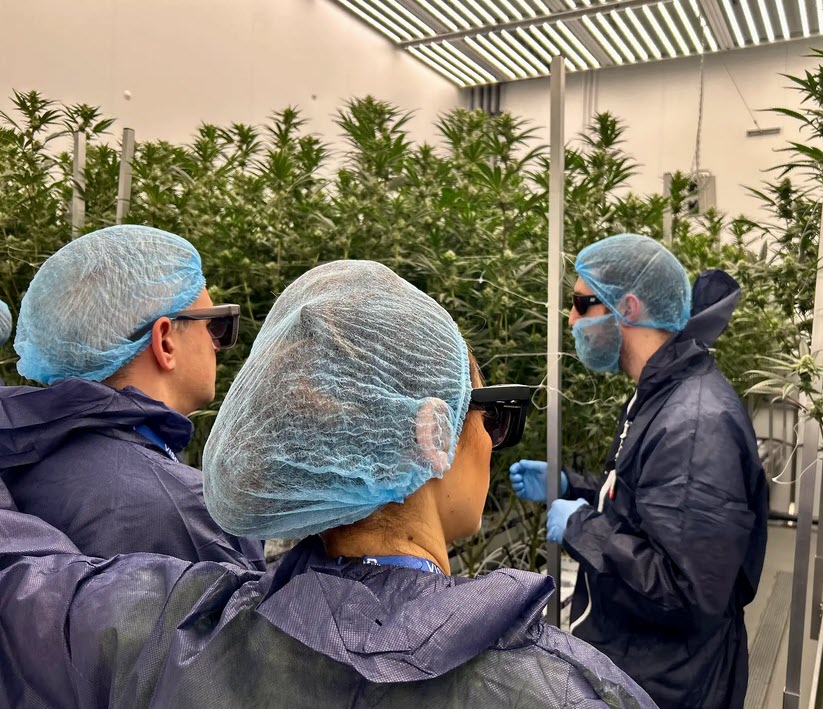
I could not have been more impressed by my recent visit to Dalgety’s cannabis facility, just north of Birmingham. It is the first UK business now permitted to cultivate and prepare a cannabis flower product in its finished form as a medicine that may be prescribed.
The team has shown great professionalism in meeting the conditions required for licensing by the the MHRA and the Home Office. There is also a huge amount of skill, knowledge, determination and financial investment.
It’s my considered opinion that Dalgety now demonstrates leadership in the UK prescription cannabis industry beyond any other business. They have brought into reality what is by far the most difficult objective to achieve. The hurdles put in place by the regulators are quite disproportionate for a plant-based medicine, which is why it has taken so long for any business to reach this stage.
Arriving at the main entrance, the security precautions are extraordinary. You enter through a series of gates, armoured turnstiles and fences. They are tall, strong, impregnable and that’s before you show ID, sign in and then continue through yet more gates. I cannot imagine that even military bases, intelligence services or nuclear installations could require anything more.
While I commend this, I cannot help thinking that 10 minutes down the road at the Dog & Duck, where eighths and quarters of weed are freely available, there are no security measures at all (despite the very dangerous drugs on sale at the bar). This is no criticism of Dalgety but it is condemnation of the absurd policy on cannabis of successive governments. There has been very little logic, rationale or common sense on drugs policy from any British government for at least 100 years – except for this small concession, nearly seven years ago, of allowing cannabis to be prescribed. .
The complex appears huge from the outside but once inside it is just like any other office where we are offered coffee and listen to a short presentation on the long and arduous process involved in development and licensing. Then we head for the grow rooms.
I am very fortunate to have already visited several licensed cannabis facilities both in Colorado and California. I’ve also seen many, shall we say, unlicensed facilities, ranging from one or two to perhaps 50 plants. I’ve never seen any of the huge illegal enterprises growing thousands of plants that supply the illicit UK market with its daily – yes, daily consumption of more than 3,000 kilos. To put that in context, at its present stage, Dalgety will produce 480 kilos per year although it will shortly expand to over 2,000 kilos per year.
The one common factor in all the facilities I have seen is attention to detail but at Dalgety this is taken to exceptional lengths. Each plant is given individual attention to ensure it reaches its maximum potential. All are propagated by cloning from mother plants but even so it is remarkable to see the consistency, almost identical growth heights, branch and flowering structure. This is common to all professional operations but Dalgety achieves a level beyond anything I have seen before.
I have also met many passionate growers. Indeed, I count one of them, Paul Shrive, amongst my closest colleagues and friends but it is impossible not to be very impressed by Brady Green, imported by Dalgety, with family and dogs, from Canada. He has the huge advantage of three years practical experience working to get the facility up and running but his knowledge and expertise is unparalleled. If ever there was a case for ‘key man insurance’, I expect Dalgtey are paying a big premium and keeping him very safe!
I am intimately acquainted with the demands of MHRA licensing, of GMP certification and a compliant pharmaceutical quality system, so I am not surprised by the cleanliness and precision of the grow rooms. They are another stage up from what I have seen in the USA. They are also much less crowded with far fewer plants and much more room around them. I was particularly impressed with the space given between branches hanging to dry. All this adds time and cost. There are no short cuts at all.
I am intrigued by Brady’s decision to dry trim and that all trimming is done by hand. This means that at harvest, fan leaves are removed and branches with flowers are detached from the main stem. These are then hung for a couple of weeks to dry with the smaller leaves still attached. This makes trimming much more difficult, particularly by hand which is completed with a team of about half a dozen people. While hand trimming can achieve a better result, it needs great skill and time. With the quantities involved I expect that eventually they will introduce machine trimming. It also has advantages of greater consistency and hygiene.
The trimming room was the closest we came to seeing the finished product. In California and Colorado such tours always end with a generous box of samples to take away, inspect and consume. No such luck under UK laws and regulations!
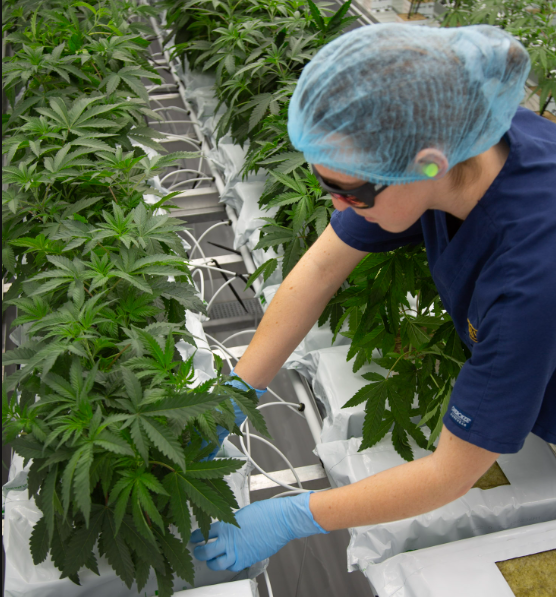
So I cannot judge the final product as I would wish to, at least not until I can get some Dalgety flower prescribed. Even without consuming any, I would have liked to be able to feel, squeeze, pull apart, smell and closely inspect some individual buds but the rules are far too strict for that.
I can say from what I saw in the trimming room that it looks excellent. The one big issue that I have with the regime that we have in the UK is that it places compliance over quality. The best quality flower I have ever seen in my life was in a California adult-use cultivation facility. It was far better than anything I have seen for the medical market in the UK. Without hands-on inspection, the Dalgety flower looked like may well be as good but is the the massive additional cost justified?
This is the fundamental question about growing cannabis legally in Britain. The first answer must be yes because the rules and regulations are in place and complying with them is the only way that we will develop our own cannabis industry. But the rules are manifesty absurd. Cannabis is treated as dangerous drug when in reality it is far safer even than over-the-counter painkillers. The security precautions enforced by the Home Office are about the same as for weapons grade nuclear material, despite the contrast with the free and easy availability of cannabis at the Dog & Duck and virtually any other pub even in the smallest, most remote village. Cannabis is ubiquitous, yet governments keep up this preposterous pretence that it is a ‘controlled drug’ – and in doing so they create, fuel and support organised crime. It is a ridiculous situation continued by ridiculous and weak politicians.
Is the massive cost of producing cannabis under MHRA regulations worth it in comparison to the superb quality available in the USA under much more relaxed conditions? It’s true that there is a very small proportion of potential patients with weak immune systems who may be vulnerable to contaminants but this is no real justification.
I do not resile from my admiration for what Dalgety has achieved. Indeed, I am pursuing the same path with my role in Growth Industries and this is the route that we must take. After decades of campaigning for law reform, after the change of law in 2018 I reached the conclusion that building the legal industry is the best way to achieve progress. In due course this is what will overcome the stigma, the fear and the nonsense we have been fed by governments and the media. I still hope for adult-use legalisation, perhaps in the next five to 10 years but it will probably be another 50 years, long after I am gone, before cannabis will be accurately and proportionately regarded for its immense benefits and minimal dangers.
Once I can get my hands on some Dalgety flower, I will report back with a final verdict. In the meantime, many congratulations for what the team has achieved. The issue is that UK regulators enforce a system in which compliance trumps quality. I choose that term deliberately because it accurately describes how silly it is!
CLEAR Statement Concerning Cannabis Legalisation Measures In US Election.
“This is marvellous news for liberty, health and human rights. The USA, unlike Britain, has a functioning democracy where the will of the people prevails rather than the bigotry and self-interest of politicians. It is wonderful to see that truth, justice and evidence is winning out over the lies and misinformation we have been fed about cannabis for almost 100 years.
In 1971, the British government abdicated all responsibility on cannabis and abandoned our communities and our children to criminal gangs. Since then all the harms have multiplied exponentially. The laws against cannabis fund organised crime, promote dangerous hidden farms which are fire risks, the destruction of rental property, selling to children, contaminated ‘moonshine’ cannabis, gang violence, lives ruined by criminal records and the cruel denial of safe, effective medicine that can relieve pain, suffering and disability.
Donald Trump has supported access to medicinal cannabis all along. Many British politicians who consider him to be an unreasonable person should now look to themselves and ask whether they are being reasonable by supporting prohibition, even for medical use.
It is time for Theresa May, Amber Rudd and the UK government to take responsibility for the £6 billion pa cannabis market. The tide of legalisation is now unstoppable and it would be deeply irresponsible for them to fail to act. They must grasp this nettle now!”
Peter Reynolds, president of CLEAR Cannabis Law Reform
Extraordinary Change Of Tone On Cannabis By The NHS.
 NHS Choices published an article today that represents a sea change in attitudes towards cannabis.
Headlined ‘No proof that high dose cannabis is more addictive’, it pulled apart the Daily Mail article on the study published this week in ‘Addiction’.
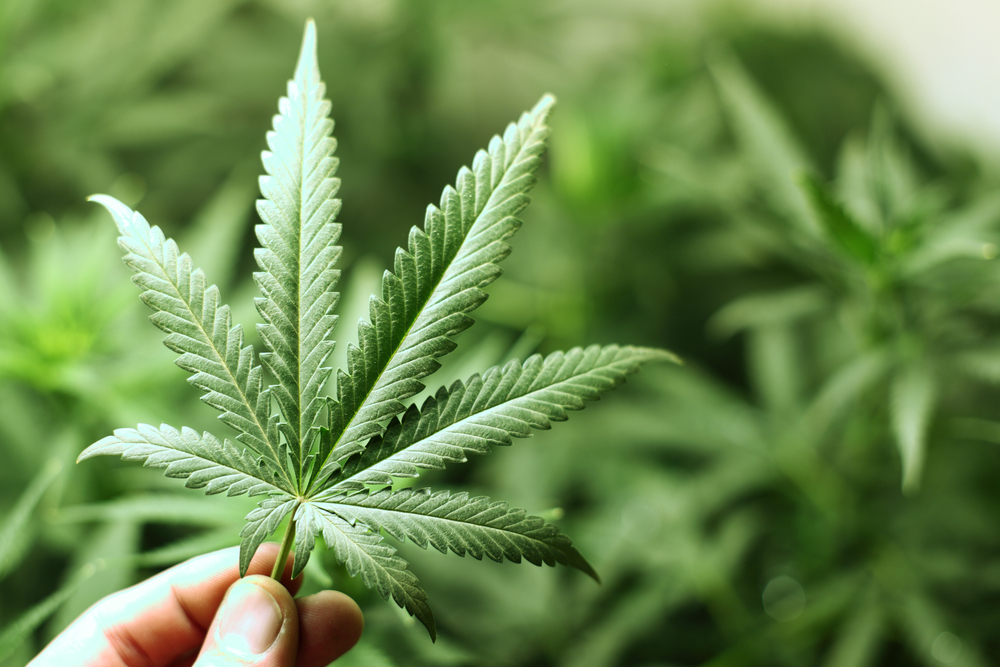 Finally, it seems, the facts and evidence seem to be getting through, even in Britain. Cannabis is close to a miracle plant, closely intertwined with our body’s natural endocannabinoid system, providing nurture, therapy and healing for many illnesses and promoting good health and wellbeing.
Of course, like anything, even water, it is not without the potential for harm. It is habit forming, about as much as coffee. Children shouldn’t be using it, just as they shouldn’t be drinking double espressos. The madness that is current policy causes far more harm than it prevents. We need to get the dealers off the streets, regulate and control the market properly and start allowing the people of Britain to benefit from the plant they have been denied for too long.
An Appeal To Andrew Lansley

Dear Mr Lansley,
Medicinal Cannabis
I am writing to you about the urgent necessity to permit the prescribing of medicinal cannabis by doctors.
Please do not refer me to the Home Office. Its intransigent position on the subject amounts to a scandalous denial of science and cruel mistreatment of hundreds of thousands of British citizens. This is a health issue which requires your attention and care for those in pain and suffering.
There is now an overwhelming body of peer reviewed, published research that proves beyond doubt the efficacy of medicinal cannabis for the treatment of many conditions. Britain is becoming increasingly isolated as a place where patients are denied access to the medicine they need. Utterly absurd is that patients from the EU can bring medicinal cannabis into Britain under the protection of the Schengen Agreement but British residents risk prison for using exactly the same substance.
Every country in Europe except France and Britain now has some form of medicinal cannabis provision. 15 US states now permit medical marijuana on a doctor’s recommendation and Israel has a fast expanding programme. There are huge cost savings and benefits to be gained and enormous reductions in harm from side effects of poisonous pharmaceutical products.
There are already many instances in Britain where MS patients have been refused Sativex on cost grounds and so have been forced into illegal purchase or cultivation and have then been prosecuted as criminals. This is a shame and disgrace on our nation and I appeal to you to take steps to end it.
Perhaps you do not realise the transformational effect that medicinal cannabis can have on some people’s lives? Almost miraculous results are being achieved, particularly with MS, Crohn’s and fibromyalgia. People who would otherwise be trapped by pain and disability are able to lead productive lives with the help of medicinal cannabis.
Please Mr Lansley, will you arrange to meet me and a delegation of people whose lives are literally saved by the use of medicinal cannabis? This cruel and demeaning policy cannot be allowed to continue in the face of overwhelming evidence. Safe, high quality, standardised dose cannabis is now available from Bedrocan in Holland, the Dutch government’s supplier and is exported all over Europe to fill doctors’ prescriptions. How much longer must British citizens wait?
Co-ordinated action is already underway for dozens of patients to take the Home Office to judicial review for its refusal to grant import licenses for Bedrocan. This is at huge cost in public money and people’s lives. You could take steps to end this suffering now. You could enable the NHS to start making huge cost savings immediately. This issue is not going away.
CLEAR is a new team of committed professionals that is determined to bring this issue to the top of the political agenda. Please arrange to meet me and learn at first hand how much good you could do by a change of policy that is, in any case, inevitable. Don’t make those people in pain and suffering wait any longer.
I look forward to hearing from you.
Yours sincerely,
Peter Reynolds
Send a copy of this letter to your MP. Download and print here.

“War On Drugs Has Failed, Say Former Heads Of MI5, CPS And BBC”, The Daily Telegraph, 21st March 2011
The “war on drugs” has failed and should be abandoned in favour of evidence-based policies that treat addiction as a health problem, according to prominent public figures including former heads of MI5 and the Crown Prosecution Service.
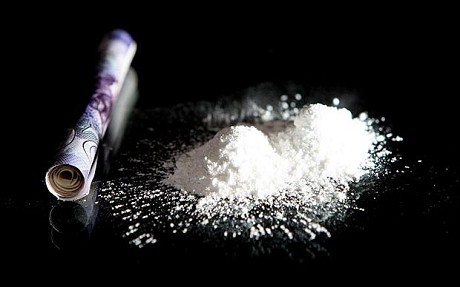
Drug availability and use has increased with up to 250 million people worldwide using narcotics such as cannabis, cocaine and heroin
Leading peers – including prominent Tories – say that despite governments worldwide drawing up tough laws against dealers and users over the past 50 years, illegal drugs have become more accessible.
Vast amounts of money have been wasted on unsuccessful crackdowns, while criminals have made fortunes importing drugs into this country.
The increasing use of the most harmful drugs such as heroin has also led to “enormous health problems”, according to the group.
The MPs and members of the House of Lords, who have formed a new All-Party Parliamentary Group on Drug Policy Reform, are calling for new policies to be drawn up on the basis of scientific evidence.
It could lead to calls for the British government to decriminalise drugs, or at least for the police and Crown Prosecution Service not to jail people for possession of small amounts of banned substances.
Their intervention could receive a sympathetic audience in Whitehall, where ministers and civil servants are trying to cut the numbers and cost of the prison population. The Justice Secretary, Ken Clarke, has already announced plans to help offenders kick drug habits rather than keeping them behind bars.
The former Labour government changed its mind repeatedly on the risks posed by cannabis use and was criticised for sacking its chief drug adviser, Prof David Nutt, when he claimed that ecstasy and LSD were less dangerous than alcohol.
The chairman of the new group, Baroness Meacher – who is also chairman of an NHS trust – told The Daily Telegraph: “Criminalising drug users has been an expensive catastrophe for individuals and communities.
“In the UK the time has come for a review of our 1971 Misuse of Drugs Act. I call on our Government to heed the advice of the UN Office on Drugs and Crime that drug addiction should be recognised as a health problem and not punished.
“We have the example of other countries to follow. The best is Portugal which has decriminalised drug use for 10 years. Portugal still has one of the lowest drug addiction rates in Europe, the trend of young people’s drug addiction is falling in Portugal against an upward trend in the surrounding countries, and the Portuguese prison population has fallen over time.”
Lord Lawson, who was Chancellor of the Exchequer between 1983 and 1989, said: “I have no doubt that the present policy is a disaster.
“This is an important issue, which I have thought about for many years. But I still don’t know what the right answer is – I have joined the APPG in the hope that it may help us to find the right answer.”
Other high-profile figures in the group include Baroness Manningham-Buller, who served as Director General of MI5, the security service, between 2002 and 2007; Lord Birt, the former Director-General of the BBC who went on to become a “blue-sky thinker” for Tony Blair; Lord Macdonald of River Glaven, until recently the Director of Public Prosecutions; and Lord Walton of Detchant, a former president of the British Medical Association and the General Medical Council.
Current MPs on the group include Peter Bottomley, who served as a junior minister under Margaret Thatcher; Mike Weatherley, the newly elected Tory MP for Hove and Portslade; and Julian Huppert, the Liberal Democrat MP for Cambridge.
The group’s formation coincides with the 50th anniversary of the United Nations Single Convention on Narcotic Drugs, which paved the way for a war on drugs by describing addiction as a “serious evil”, attempting to limit production for medicinal and scientific uses only, and coordinating international action against traffickers.
The peers and MPs say that despite governments “pouring vast resources” into the attempt to control drug markets, availability and use has increased, with up to 250 million people worldwide using narcotics such as cannabis, cocaine and heroin in 2008.

By Martin Beckford, Health Correspondent
They believe the trade in illegal drugs makes more than £200 billion a year for criminals and terrorists, as well as destabilising entire nations such as Afghanistan and Mexico.
As a result, the all-party group is working with the Beckley Foundation, a charitable trust, to review current policies and scientific evidence in order to draw up proposed new ways to deal with the problem.
Mr Cameron, It’s You Who Needs Education About Cannabis!

See the interview here. The relevant part starts at 10:45.
Al Jazeera: This was incidentally, the second most popular question because viewers would submit questions and then members of the public would vote.
Why is marijuana illegal when alcohol and tobacco are more addictive and dangerous to our health, but we manage to control them? Wouldn’t education about drugs from a younger age be better?
Cameron: Well there’s one bit of that question I agree with which I think education about drugs is vital and we should make sure that education programmes are there in our schools and we should make sure that they work. But I don’t really accept the rest of the question. I think if you actually look at the sort of marijuana that is on sale today, it is actually incredibly damaging, very, very toxic and leads to, in many cases, huge mental health problems. But I think the more fundamental reason for not making these drugs legal is that to make them legal would make them even more prevalent and would increase use levels even more than they are now. So I don’t think it is the right answer. I think a combination of education, also treatment programmes for drug addicts, I think those are the two most important planks of a proper anti-drug policy.
Al Jazeera: What about the argument that it could be used as medicinal properties? That was another question we actually had, a person saying it’s got proven medicinal properties. If used properly and regulated properly it could actually be quite helpful.
Cameron: That is a matter for the science and medical authorities to determine and they are free to make independent determinations about that. But the question here about whether illegal drugs should be made legal, my answer is no.
Dear Mr Cameron,
I am writing about your answer to the question about marijuana during the recent Al Jazeera World View YouTube interview.
I am the recently elected leader of the LCA. I represent the interests of at least two million regular users of cannabis and perhaps as many as 10 million occasional users in Britain. This is a huge proportion of the population and on their behalf I am requesting a meeting with you.
We were dismayed, shocked even, at your answer to the question. With respect, clearly it is you who are in great need of education about cannabis. The information you gave was inaccurate and false. While we must all respect different opinions, your answer was factually wrong and you must correct it.
Cannabis is not “incredibly damaging”, nor “very, very toxic”. It is a myth that there is anything significantly different about the cannabis on sale today and the idea that it causes “in many cases, huge mental health problems” has been comprehensively disproved many times over by scientists all over the world.
I can provide you with scientific information which proves that these ideas are false. Recently we have been pursuing various newspapers through the Press Complaints Commission for publishing the same inaccuracies. I am seriously alarmed when I see the prime minster of my country distributing such untruths.
Two key facts:
The Therapeutic Ratio of cannabis (ED50:LD50) is 1:40000 (Alcohol = 1:10, Paracetamol = 1:30). Even potatoes are more toxic than cannabis.
Professor Glyn Lewis of the University of Bristol reviewed all published research on cannabis and psychosis in 2009 and concluded that 96% of people have no risk whatsoever and in the remaining 4% the risk is “statistically tiny”.
Your suggestion that legalising drugs increases use is also not supported by the evidence. In both Holland and Portugal where cannabis use is not prosecuted, consumption is much lower than in Britain.
Finally, on medicinal use it is simply not true that the scientific and medical authorities are free to make independent determinations. The Home Office stamps on any medicinal cannabis use even when prescribed by a doctor. People from other European countries can bring medicinal cannabis to Britain and use it legally under the Schengen agreement but you can’t if you’re British. Here, sick and disabled people are being prosecuted every day for use of a medicine which is scientifically and medically proven. Surely you cannot be unaware of this? It is a cruel and evil policy which shames our nation.
So please, Mr Cameron, will you meet with me in order that I may show you the evidence and the facts about cannabis? Remember, this was the second most popular question you were asked on Friday and I represent the interests of millions of British citizens. Please make time for me in your diary.
I look forward to hearing from you.
Yours sincerely,
Peter Reynolds
PM MP

Originally Published In Homegrown Outlaw's Blog
By Jason Reed
To all that support change in current policy, I invite you to take part in: PM MP.
What is PM MP? Well, I am hosting a letter that I am encouraging as many people as possible to post one copy to the Prime Minister, and one copy to your MP. It is through weight and numbers that points are grasped and policy changed.
It is also worth sending to the Home Secretary – Theresa May, and James Brokenshire – Minister for Crime Prevention at the Home Office.
If you would like to add your name and address so as to receive a reply, all the better. If you wish to remain anonymous, then that’s also fine, but please do take the time to send just two letters to the Prime Minister and your MP at this address:
Prime Minister,
10 Downing Street,
London, SW1A 2AA
Your MP can be found here:
And your MP’s address will be:
MP’s NAME, or James Brokenshire, or The Home Secretary Theresa May
House of Commons,
London SW1A OAA
Below you can find the template letter that has been created to address the current law & policy that surrounds cannabis in Britain. It is with a great deal of thanks to the Drug Equality Alliance for directing the wording to address this issue correctly.
Please do support this; please send the letters. Fellow bloggers, please also host the letter and send forth.
Either copy & paste the below text into a letter, or I have provided downloadable links at the end of this blog post. Thank you all. Jason.
Dear
I am writing to state my view that continuing prohibition of all private interests in cannabis is not in the best interest of society or the individual. Current policy is in many regards counter-productive and a drain on the country’s resources. The administration of Misuse of Drugs Act 1971 is mandated to be under constant review & evidence based; it’s concern is solely to reduce social harm caused by drug misuse. I submit that there can be no justification in law for the blanket ban on accessing a substance that many persons use responsibly, and many use to experience the amelioration of symptoms caused by various medical disorders.
The Misuse of Drugs Act 1971 seeks to regulate human action re any harmful drug, it does not provide a mandate for prohibition, indeed when one examines the obligations of the ACMD one can see that the law seeks to make arrangements for the supply of controlled drugs. The legislative aim is to control responsible human action and property interests through the regulation of the production, distribution and possession of any harmful drug; this being proportionate and targeted to address the mischief of social harm occasioned by misuse. I note that the law does not prohibit the use of cannabis at all, and this often ignored fact was Parliament’s way of opening the door to facilitate a suitable and rational regulatory structure. I place it on record that I wish the Misuse of Drugs Act 1971 to be used properly, and neutrally; specifically; (under Section 1) – “(2) (a) for restricting the availability of such drugs or supervising the arrangements for their supply.”
The prohibition of all private interests in cannabis & the denial of the possibility of responsible use has failed:
- The estimated expenditure of £19 billion on the judicial ‘controls’ over UK drug policy is a large sum that cannot be justified in the current fiscal climate. I do not believe it can be proven to be a valid policy even if the nation could easily afford it; it has a high price on liberty, and a paradoxical effect upon the health of all drug users – it has proved futile in almost every way, save for the government’s blind adherence to the international treaties it chooses to fetter it’s discretion to.
- There is an estimated street value of £5 billion profit going directly to gangs and cartels, and this in turn funds organised crime, human trafficking, and all manner of hard-line criminality.
- Children have easy & ready access to cannabis. Children are dealing cannabis and using cannabis with relative ease.
- There is an estimated 165 million responsible and non-problematic cannabis users worldwide. There is anything from 2 – 10 million adult users in the UK. There is no societal benefit to criminalising such a large portion of society, these are generally law-abiding persons who wish to use a substance that is comparatively safer than many drugs that government choose to exclude users of from the operation of the MoDA 1971 (despite the Act being neutral as to what drug misusers are controlled, the most harmful drugs such as alcohol and tobacco are excluded by policy, but this is not reflected in the Act itself).
- Under prohibition, as in 1920’s America, quality control has suffered giving way to hastily harvested cannabis which acts as the modern day equivalent of the infamous Moonshine & Hooch. The UK media terms this bad product simply as “Skunk”. Cannabis is now being cut with harmful drugs, glass, metal fillings, and chemicals to give false potency, and to add weight for profit motivations.
- To criminalise personal actions that do not harm others within the confines of privately owned property is at best draconian, and at worst futile & irresponsible.
I wish to encourage the adoption of a regulatory system that provides:
- An age-check system to prevent the young and vulnerable from obtaining cannabis with the ease they currently have.
- The partial saving from the £19 billion drug enforcement budget, alongside the estimated street worth of £5 billion potentially collected from cannabis. This would be a considerable sum in aiding the country in fiscal crisis.
- Quality control that can be accorded to cannabis production and sale, thus ensuring that there are no dangerous impurities and that the correct balance of cannabinoids are present (according to the needs of the user) to minimise potential harms.
- Potency & harm reduction information can be provided to adults, ensuring education is the forefront of the regulatory model.
- A restriction on marketing and the creation of designated discreet outlets. As seen in many countries, given a place of legitimacy, the cache of cannabis is lessened in favour of responsibility.
- The freedoms and rights for non-problematic users to be respected.
I do hope that you will give this matter the urgent attention it warrants.
Yours
The LCA Leadership Election
The ballot papers have been mailed to members today. The candidates are Stuart Warwick and myself. Voting closes a week today. The result will be announced shortly afterwards.
Peter Reynolds
 Dear LCA member,
I am seeking election as leader of the Legalise Cannabis Alliance.
I have been campaigning for an end to the prohibition of cannabis for more than 30 years.
If elected, I can promise you radical change in the way that LCA goes about its business. We will launch a new campaign based around the theme: REFORM, REGULATE and REALISE.
That is REFORM the law to end prohibition, REGULATE production and supply based on facts and evidence and REALISE the huge benefits of the plant both as medicine and as a £10 billion net contribution to the economy.
This will be a tightly focused campaign aiming for the urgent availability of cannabis for those who need it as medicine and a properly regulated supply chain for the millions of British citizens who use it recreationally. That means we will take the business out of the hands of criminals, allow commercial growers to produce the plant under properly regulated conditions and permit small scale personal cultivation of up to six plants.
We will advocate sales of cannabis through licensed outlets such as tobacconists and/or coffee shops to adults only. It would remain a criminal offence to supply cannabis to under 18s. We accept that cannabis should be taxed, partly to cover the costs of the regulatory system and a health advisory service but also so that the entire country will benefit from bringing this huge market out of the black economy. Based on research by the Independent Drug Monitoring Unit and the Transform Drug Policy Foundation we estimate that with reductions in law enforcement costs and new tax revenue, there will be a net contribution of approx £10 billion to the UK exchequer.
We will not be diverted by peripheral issues such as the many uses for industrial hemp, although we will be glad to see progress in that area. We will run a campaign focused on achieving practical change, not promoting a philosophy. That means that our main concern will be to educate and influence MPs and get our message across in the media. MPs are the only people who can change the law and it is through the media that we can influence voter opinion so we will deal with them on their terms, in Westminster, in newspapers and television studios. We will bring a new professionalism to this issue and demand the attention and respect that our proposals deserve.
The prohibition of cannabis is unjust, undemocratic and immoral. Most cannabis users are reasonable, responsible and respectable people and I will demand our right to be heard and treated fairly.
I shall stand for parliament in every by-election and in the next general election on this single issue. Being realistic, we do not expect to win a seat but we will put cannabis back on the political agenda and we will be taken seriously. No longer will we allow the Daily Mail or other media to publish lies and propaganda uinchallenged. No longer will we allow prohibitionists like Debra Bell and Peter Hitchens to misinform and promote scare stories without any balance.
I want to transform the LCA into a professional, effective campaign that will achieve results. I believe that I am the right man for this job. Please vote for me. Vote to REFORM, REGULATE and REALISE.
My website at http://www.peter-reynolds.co.uk contains a wealth of information about cannabis and many articles that I have written on the subject. If you want more detailed information about me and what I stand for, that is the place to look.
Thank you for taking the time to read this.
Peter Reynolds
Stuart Warwick
 Dear Member,
As one of the candidates seeking election for leadership of the LCA, I’ve been asked to write a short letter outlining my plans for the direction and actions I’d like to see the LCA take.
As Leader I would not seek to limit our campaign to the medical and recreational issues only (although I believe this should be our focus) but use the plethora of other applications that cannabis has in industry to gain support from as wide a demographic as possible.
I intend to campaign for legalisation, regulation & taxation.
Legalisation, done properly would remove the cannabis market from the hands of criminals and terrorists and open it up to legitimate businesses & entrepreneurs, giving the substantial profit back to society.
Regulation will help prevent dangerous contamination, ensure good quality and be more effective at keeping it out of the hands of children.
Taxation to put some of the profit back into the country – everyone benefits.
I think licensed outlets and growers is what we should be aiming to achieve. Licensing should cover not only the supply of cannabis but should also cover growing set-ups to ensure electrical and fire safety as this is a known hazard with some badly fitted installations. This would allow local growers to provide more variety in outlets, allowing users to clearly identify the strain that suits their needs the best.
Licenses should be available to cover a wide range of grow sizes to encourage both local and national business opportunities.
I think fact-based policy is a must, with genuinely unbiased research. To base policy purely on knee jerk emotional and moral arguments while ignoring scientific research is unjust and unproductive.
We know there are people in power who understand this but are forced to repeat the same prohibition mantra.
We need to let people know that if they decide to make a stand against prohibition we will be there to back them up. They will not want to make a move unless they know that when they do, they are not left hanging, We just have to give them the nod and be ready when they do.
By standing for elections, I hope to challenge not only my local MP’s and the other candidates but also policy on a national level. As leader of the LCA I hope to unite all of the voices in our community to achieve just that.
I have 2 sites that I have used to promote my ideas so far. Feel free to visit them, although there are some very early attempts on there, so quality isn’t always great, sorry.
http://www.youtube.com/user/NovictimNocrime08
http://www.facebook.com/pages/Hunar-for-Prime-Minister/238421977309
Thanks for your time – , this wasn’t as easy to write as I thought it would be!
Regards
Stuart Warwick.
The Real Prison Drugs Scandal
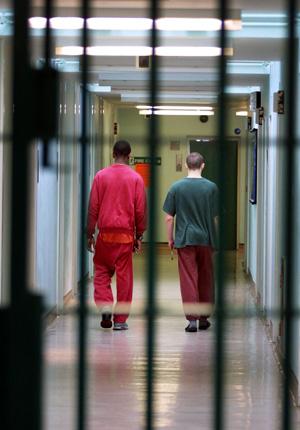
Banged Up
The real scandal about drugs in prison is that they’re even there in the first place. How do they get in? It’s prison staff of course.
That’s the uncomfortable truth which Ken Clarke and the government won’t talk about. Compared to the extraordinary security and penalties that prison visitors face, the screws have it easy. There’s an organised network at each prison, run by screws, for screws, supplying drugs to prisoners. Of course there is!
The even bigger scandal is that what used to be a cannabis culture, with prisoners alleviating their boredom with a relatively harmless joint, has become a health nightmare, with prison regulations forcing them into heroin.
You see Ken Clarke’s bright new ideas of drug free wings, testing and incentive regimes have been going on for more than 10 years already. I support Ken’s new ideas. I think he’s a breath of fresh air but this is just unhelpful propaganda. You see, prisoners stopped smoking cannabis when they started getting tested regularly. Evidence of cannabis remains in urine for up to 28 days, whereas heroin or cocaine washes through in 48 hours. Once the testing started and the prison officer-run cartels cottoned on, heroin began to flood our jails. A nightmare but true.
Of course, the fact that the drugs problem exists at all in prison is because it’s just a microcosm of society. If proper treatment was provided to those entering prison with a habit then it’s the perfect opportunity for them to clean up. If prohibition wasn’t creating a fantastically profitable black market then the drugs problem would gradually recede just as it would in society in general if we introduced fact and evidence-based regulation.
Prohibition doesn’t work. It just makes the problem worse.

 Peter Reynolds