Posts Tagged ‘Home Office’
Home Office Drug Strategy Blog – Brokenshire The Buffoon
 James Brokenshire introduces the new Home Office drug strategy blog here.
It is difficult to contain the contempt in which I hold this odious and dishonest little man. His brazen cheek in believing that he has anything of honour or relevance to publish on the internet is astounding. Is he really so isolated in his ivory tower that he doen’t realise how much he and his polices are despised and reviled? Does he not know that he is subject to intense ridicule and disrespect at his absurd ideas and propaganda? Doesn’t he know that he is universally regarded as a complete prat – by all his colleagues, doctors, scientists, members of the ACMD, everyone who comes into contact with him?
This is my comment. I did my best to restrain myself and stay polite. I wonder whether it will be published?
There are many, many things wrong with Britain’s drug strategy. We now have one of the most regressive, authoritarian and oppressive drug policies anywhere in the world. Only in places where they execute people for drug possession such as Malaysia or China are there more backwards, unjust and outdated ideas being implemented.
No omission or error is more heinous though than the failure even to mention the medicinal use of cannabis. With the new understanding of the endocannabinoid system and its vital importance to all aspects of human physiology, the power of cannabis as medicine is self-evident. Throughout Europe, doctors are able to prescribe medicinal cannabis to patients. Extraordinary results are achieved in multiple sclerosis, neuropathic pain, Crohn’s, cancer, ADHD and many other conditions. Meanwhile the British government continues with what can only be described as its inane response that “there are no medicinal benefits in cannabis”. It is not just a stupid policy. It is cruel. Hundreds of thousands of British citizens are denied access to the medicine that could relieve their pain and suffering. Meanwhile, in virtually every other country in Europe except France, in Israel and in 15 US states, cannabis is being used as medicine and achieving wonderful results.
Those denied their medicine in Britain are humiliated that European patients can bring medicinal cannabis into Britain and use it under the protection of the Schengen Agreement. This is a cruel and unusual punishment for the crime of being resident in Britain.
The British drug strategy is a joke throughout the world except amongst those agencies and drug workers that depend upon it for their living. It is a shame on our great nation and an extreme indictment of our political system which allows such discredited, cruel and self-defeating policies to persist.
The prohibition of medicinal cannabis is perhaps the best example of how utterly useless, out of date and hopeless is current government drugs policy.
Legal Opportunities For Medicinal Cannabis Users
Recent developments mean that there are new opportunities to challenge the prohibition of cannabis as medicine. Now I am not a lawyer, so these ideas should be carefully discussed with your legal advisors before you even consider pursuing any of them. I may be wrong about the correct procedure, process or terminology. I am highlighting opportunities that I have identified, based on my personal experience and knowledge. Qualified legal advice is essential.
Disingenuous
The British government’s current position on medicinal cannabis is absurd and irrational. As I understand it, those are exactly the criteria for which the process of judicial review is intended. That is one route. Another, more risky opportunity arises if you are facing prosecution or have been convicted of an offence of possession, cultivation or production. There are ideas here which you may want to consider as a defence or an appeal. However, please be very careful. If things go wrong, advancing such arguments might result in a heavier sentence, such is the cruel, oppressive and iniquitous intent of current government policy.

Dishonest
The Home Office is simply dishonest in its current stance saying that there “are no medicinal benefits” from cannabis. James Brokenshire, the drugs minister, cannot hide behind a lack of knowledge so he looks either more stupid or dishonest every day. David Cameron made the most dreadful, disingenuous comment about medicinal use in his Al Jazeera World View YouTube interview last week. See here. He said “That is a matter for the science and medical authorities to determine and they are free to make independent determinations about that.” That, of course, is absolute rot and Cameron should be ashamed of himself for such misinformation.
Obtain A Doctor’s Prescription For Medicinal Cannabis
There is nothing to prevent your British doctor from prescribing medicinal cannabis for you if he/she believes it is appropriate. Bedrocan BV is the official contractor to the Dutch government for the production of medicinal cannabis. Go to its website here and you will discover it has a range of products offering different proportions of cannabinoids and terpenoids for different conditions. Prescribing information is available for your doctor in exactly the same way as any other drug. All he/she has to do is select the product and write out a prescription in the normal way. Your doctor can’t get in trouble for this. There is nothing improper or unethical about it, but it is, of course, your doctor’s decision whether to do so or not.
 If your doctor isn’t prepared to help, the next best thing is to go to a doctor in Holland, Belgium, Germany, Spain or Italy, all countries where medicinal cannabis is regularly prescribed. In theory, you should be able to see a doctor in another EU country under reciprocal healthcare arrangements but if you can afford it, it may be simpler to go privately.
Another option is to go to one of the 15 US states that permit medical marijuana and obtain a doctor’s recommendation.
Once you have your prescription, you need to apply to the Home Office for a personal import licence to bring your medicine in from Holland. The licensing section on the Home Office website is here. If you obtain a licence you will also need to go through a similar process with the Dutch Bureau voor Medicinale Cannabis to obtain an export licence. The correct section of its website is here.
Of course, the reality is that the Home Office is not going to grant you a licence. You can then pursue the matter through your MP who should make representations to the minister on your behalf. You are then at the point to make an application for judical review of the Home Office’s decision.
Challenge The Government’s Interpretation Of The Schengen Agreement
The Schengen Agreement provides protection for travellers to carry their medicine with them within the EU. The crucial factor is your country of residence. See here for detailed information. Although there is no precise definition of residency, if you are resident in an EU country where medicinal cannabis is permitted, then you may bring your medicine into Britain and, believe it or not, there is no restriction on your use of it. You would be perfectly entitled to sit on the steps of Scotland Yard or even the Home Office’s Marsham Street HQ and smoke a spliff. However, if you are a UK resident, even if you have obtained your medicine on prescription abroad, you are not protected. This is clearly discriminatory under EU law and could be challenged in court. I’m not certain whether you would apply to a British court or to the European court but your solicitor would advise you on this.
Defence Or Appeal On The Grounds Of Medical Necessity
The Appeal Court disallowed a defence of medical necessity back in 2005. A petition to the House Of Lords Judicial Committee and to the European Court Of Human Rights was dismissed without any reasons given. I understand that the Appeal Court’s reasoning was that there were no proven medicinal benefits of cannabis. However, things have changed enormously since then. The MHRA approval of Sativex and the Home Office’s issue of a general licence for it are conclusive proof of medicinal value. Whatever misinformation the Home Office may promote, expert evidence would prove that Sativex is pharmacologically identical to, for instance, one of the Bedrocan products. There is also now a vast resource of peer-reviewed clinical evidence of medicinal benefits.
There is an horrendously improper judgement (R -v- David King, St Albans Crown Court), where a medicinal user was not allowed even to mention medicinal reasons to a jury on pain of imprisonment for contempt. Your lawyers would need to study this carefully. However, it is so clearly unjust that I do not believe it could be sustained.
 Re-Scheduling Of Sativex
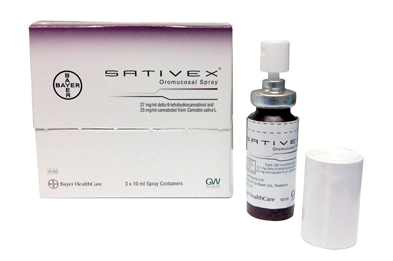
Sativex is currently a schedule 1 controlled drug which means it has no medicinal value. As mentioned earlier, the Home Office has dealt with this temporarily by issuing a general licence for it. However, it needs to be re-scheduled and the Advisory Council On the Misuse of Drugs (ACMD) has recommended that it be placed in schedule 4. See here for the full story.
Sativex cannot be re-scheduled under its brand name and the only pharmacologically accurate way of describing it is cannabis. The ACMD left a possible escape route for the Home Office by saying that its “active” ingredients would have to be specified. GW Pharma, the makers of Sativex would say that this means an extract of THC and CBD. However, this is dishonest. Sativex contains all the 60-odd cannabinoids that occur naturally in the plant. There is no other way of describing it accurately than to call it cannabis. If Brokenshire and his cronies try to prolong this deception then they can be challenged by judicial review. The aim here is to ensure that the re-scheduling is accurate and so cannabis becomes a schedule 4 drug. This would then open up all opportunities for cannabis as medicine.
I have no doubt now that medicinal cannabis will be permitted in some form or another in Britain within the near future. We may need to force the government’s hand through litigation or, perhaps Brokenshire will be moved to another department and then the Home Office can “adjust” its position.
At present, it is a monstrous injustice, an evil and obscene scandal, that those who need cannabis as medicine are denied it. The way of politics is that a few years from now it may well all have changed and Brokenshire will be at the Ministry of Silly Walks or somewhere better suited to his talents. However it works out, what I care about is that those in pain and suffering get the relief they need. One day soon, Brokenshire will have to answer to his constituents and later to an even higher power. How he will justify his cruelty and negilgence I don’t really care but I know I wouldn’t want to be in his shoes on judgement day.
Mr Cameron, It’s You Who Needs Education About Cannabis!

See the interview here. The relevant part starts at 10:45.
Al Jazeera: This was incidentally, the second most popular question because viewers would submit questions and then members of the public would vote.
Why is marijuana illegal when alcohol and tobacco are more addictive and dangerous to our health, but we manage to control them? Wouldn’t education about drugs from a younger age be better?
Cameron: Well there’s one bit of that question I agree with which I think education about drugs is vital and we should make sure that education programmes are there in our schools and we should make sure that they work. But I don’t really accept the rest of the question. I think if you actually look at the sort of marijuana that is on sale today, it is actually incredibly damaging, very, very toxic and leads to, in many cases, huge mental health problems. But I think the more fundamental reason for not making these drugs legal is that to make them legal would make them even more prevalent and would increase use levels even more than they are now. So I don’t think it is the right answer. I think a combination of education, also treatment programmes for drug addicts, I think those are the two most important planks of a proper anti-drug policy.
Al Jazeera: What about the argument that it could be used as medicinal properties? That was another question we actually had, a person saying it’s got proven medicinal properties. If used properly and regulated properly it could actually be quite helpful.
Cameron: That is a matter for the science and medical authorities to determine and they are free to make independent determinations about that. But the question here about whether illegal drugs should be made legal, my answer is no.
Dear Mr Cameron,
I am writing about your answer to the question about marijuana during the recent Al Jazeera World View YouTube interview.
I am the recently elected leader of the LCA. I represent the interests of at least two million regular users of cannabis and perhaps as many as 10 million occasional users in Britain. This is a huge proportion of the population and on their behalf I am requesting a meeting with you.
We were dismayed, shocked even, at your answer to the question. With respect, clearly it is you who are in great need of education about cannabis. The information you gave was inaccurate and false. While we must all respect different opinions, your answer was factually wrong and you must correct it.
Cannabis is not “incredibly damaging”, nor “very, very toxic”. It is a myth that there is anything significantly different about the cannabis on sale today and the idea that it causes “in many cases, huge mental health problems” has been comprehensively disproved many times over by scientists all over the world.
I can provide you with scientific information which proves that these ideas are false. Recently we have been pursuing various newspapers through the Press Complaints Commission for publishing the same inaccuracies. I am seriously alarmed when I see the prime minster of my country distributing such untruths.
Two key facts:
The Therapeutic Ratio of cannabis (ED50:LD50) is 1:40000 (Alcohol = 1:10, Paracetamol = 1:30). Even potatoes are more toxic than cannabis.
Professor Glyn Lewis of the University of Bristol reviewed all published research on cannabis and psychosis in 2009 and concluded that 96% of people have no risk whatsoever and in the remaining 4% the risk is “statistically tiny”.
Your suggestion that legalising drugs increases use is also not supported by the evidence. In both Holland and Portugal where cannabis use is not prosecuted, consumption is much lower than in Britain.
Finally, on medicinal use it is simply not true that the scientific and medical authorities are free to make independent determinations. The Home Office stamps on any medicinal cannabis use even when prescribed by a doctor. People from other European countries can bring medicinal cannabis to Britain and use it legally under the Schengen agreement but you can’t if you’re British. Here, sick and disabled people are being prosecuted every day for use of a medicine which is scientifically and medically proven. Surely you cannot be unaware of this? It is a cruel and evil policy which shames our nation.
So please, Mr Cameron, will you meet with me in order that I may show you the evidence and the facts about cannabis? Remember, this was the second most popular question you were asked on Friday and I represent the interests of millions of British citizens. Please make time for me in your diary.
I look forward to hearing from you.
Yours sincerely,
Peter Reynolds
PM MP

Originally Published In Homegrown Outlaw's Blog
By Jason Reed
To all that support change in current policy, I invite you to take part in: PM MP.
What is PM MP? Well, I am hosting a letter that I am encouraging as many people as possible to post one copy to the Prime Minister, and one copy to your MP. It is through weight and numbers that points are grasped and policy changed.
It is also worth sending to the Home Secretary – Theresa May, and James Brokenshire – Minister for Crime Prevention at the Home Office.
If you would like to add your name and address so as to receive a reply, all the better. If you wish to remain anonymous, then that’s also fine, but please do take the time to send just two letters to the Prime Minister and your MP at this address:
Prime Minister,
10 Downing Street,
London, SW1A 2AA
Your MP can be found here:
And your MP’s address will be:
MP’s NAME, or James Brokenshire, or The Home Secretary Theresa May
House of Commons,
London SW1A OAA
Below you can find the template letter that has been created to address the current law & policy that surrounds cannabis in Britain. It is with a great deal of thanks to the Drug Equality Alliance for directing the wording to address this issue correctly.
Please do support this; please send the letters. Fellow bloggers, please also host the letter and send forth.
Either copy & paste the below text into a letter, or I have provided downloadable links at the end of this blog post. Thank you all. Jason.
Dear
I am writing to state my view that continuing prohibition of all private interests in cannabis is not in the best interest of society or the individual. Current policy is in many regards counter-productive and a drain on the country’s resources. The administration of Misuse of Drugs Act 1971 is mandated to be under constant review & evidence based; it’s concern is solely to reduce social harm caused by drug misuse. I submit that there can be no justification in law for the blanket ban on accessing a substance that many persons use responsibly, and many use to experience the amelioration of symptoms caused by various medical disorders.
The Misuse of Drugs Act 1971 seeks to regulate human action re any harmful drug, it does not provide a mandate for prohibition, indeed when one examines the obligations of the ACMD one can see that the law seeks to make arrangements for the supply of controlled drugs. The legislative aim is to control responsible human action and property interests through the regulation of the production, distribution and possession of any harmful drug; this being proportionate and targeted to address the mischief of social harm occasioned by misuse. I note that the law does not prohibit the use of cannabis at all, and this often ignored fact was Parliament’s way of opening the door to facilitate a suitable and rational regulatory structure. I place it on record that I wish the Misuse of Drugs Act 1971 to be used properly, and neutrally; specifically; (under Section 1) – “(2) (a) for restricting the availability of such drugs or supervising the arrangements for their supply.”
The prohibition of all private interests in cannabis & the denial of the possibility of responsible use has failed:
- The estimated expenditure of £19 billion on the judicial ‘controls’ over UK drug policy is a large sum that cannot be justified in the current fiscal climate. I do not believe it can be proven to be a valid policy even if the nation could easily afford it; it has a high price on liberty, and a paradoxical effect upon the health of all drug users – it has proved futile in almost every way, save for the government’s blind adherence to the international treaties it chooses to fetter it’s discretion to.
- There is an estimated street value of £5 billion profit going directly to gangs and cartels, and this in turn funds organised crime, human trafficking, and all manner of hard-line criminality.
- Children have easy & ready access to cannabis. Children are dealing cannabis and using cannabis with relative ease.
- There is an estimated 165 million responsible and non-problematic cannabis users worldwide. There is anything from 2 – 10 million adult users in the UK. There is no societal benefit to criminalising such a large portion of society, these are generally law-abiding persons who wish to use a substance that is comparatively safer than many drugs that government choose to exclude users of from the operation of the MoDA 1971 (despite the Act being neutral as to what drug misusers are controlled, the most harmful drugs such as alcohol and tobacco are excluded by policy, but this is not reflected in the Act itself).
- Under prohibition, as in 1920’s America, quality control has suffered giving way to hastily harvested cannabis which acts as the modern day equivalent of the infamous Moonshine & Hooch. The UK media terms this bad product simply as “Skunk”. Cannabis is now being cut with harmful drugs, glass, metal fillings, and chemicals to give false potency, and to add weight for profit motivations.
- To criminalise personal actions that do not harm others within the confines of privately owned property is at best draconian, and at worst futile & irresponsible.
I wish to encourage the adoption of a regulatory system that provides:
- An age-check system to prevent the young and vulnerable from obtaining cannabis with the ease they currently have.
- The partial saving from the £19 billion drug enforcement budget, alongside the estimated street worth of £5 billion potentially collected from cannabis. This would be a considerable sum in aiding the country in fiscal crisis.
- Quality control that can be accorded to cannabis production and sale, thus ensuring that there are no dangerous impurities and that the correct balance of cannabinoids are present (according to the needs of the user) to minimise potential harms.
- Potency & harm reduction information can be provided to adults, ensuring education is the forefront of the regulatory model.
- A restriction on marketing and the creation of designated discreet outlets. As seen in many countries, given a place of legitimacy, the cache of cannabis is lessened in favour of responsibility.
- The freedoms and rights for non-problematic users to be respected.
I do hope that you will give this matter the urgent attention it warrants.
Yours
Cannabis Embarrassment At The Home Office
 The re-scheduling of Sativex, the cannabis tincture marketed by GW Pharmaceuticals is causing huge embarrassment at the Home Office.
Everybody’s been able to go along with the white lie up to now that Sativex is some sort of highly complex, super scientific, super medicine containing cannabinoids. True enough, GW Pharma has put millions into development and testing in order to jump through the hoops the government has demanded. At the end of the day though, all Sativex consists of is a tincture, an alcohol extract of herbal cannabis. It’s made simply by gently heating a blend of herbal cannabis in ethanol and then adding a little peppermint oil to taste.

An Honourable Man?
The Medicines and Healthcare Products Regulatory Agency (MHRA) has approved Sativex for the treatment of muscle spasticity in MS. I understand that an approval for the treatment of cancer pain is expected shortly. The problem for the Home Office is that Sativex now has to be re-scheduled under the Misuse of Drugs Act 1971. Cannabis is presently in schedule one as having no medicinal value. The Advisory Council on the Misuse of Drugs (ACMD) has recommended this week that Sativex be in schedule four, alongside a variety of minor tranquilisers. However, as the ACMD says, “it will not be appropriate to refer to “Sativex”, which is a proprietary name, in any amendment to the misuse of drugs regulations, and that a suitable description of the relevant component(s) of “Sativex” will have to be scheduled.”
This is going to be tough for James Brokenshire to face up to. GW specifies that Sativex contains approximately equal proportions of THC and CBD but that’s not the whole truth. It also contains as many as 400 other chemical compounds which occur naturally in the plant including at least 85 cannabinoids (nobody is exactly sure how many cannabinoids there are or their effects). You see there’s not really any other accurate way of describing Sativex except to call it cannabis. So how can Mr Brokenshire possibly move it to schedule four? He endlessly repeats the propaganda that “there are no medicinal benefits in cannabis”.
Either Mr Brokenshire has to come clean and accept that his past position was incorrect or he has to promote some further deception.
I trust he will prove to be an honourable man.
The Cannabis Campaign In 2011
 I believe that we can make real progress this year towards ending the prohibition of cannabis.
What we have to do, each and every one of us, individually, is take responsibility.
We have to stop complaining and start campaigning.
However just our cause, however unjust our opposition, no one is going to give us the right to cannabis. We are going to have to take it. Take it back from those who took it away from us.
Many of us can point to years and years of fighting for the cause but it is never enough! We have to keep on. We have to welcome new campaigners and encourage them, not take the view that we’ve seen it all before, done it ourselves and why aren’t we getting the credit? We have to welcome our fellow citizens to the war against prohibition, support them, bolster their confidence, build them up, not knock them down.
If the millions of people in Britain who use cannabis were to join together and be counted, we could make change happen! I don’t know whether there are two million of us or ten million. That’s how widely the estimates vary. The Home Office used to say six millon use cannabis regularly. I don’t know. What I do know is that it is an outrage to democracy and justice that we are denied legal and properly regulated access to cannabis, whether we use it for medicine, relaxation or spiritual fulfilment.
We don’t all have to be campaigners but we do all have to be counted. If we want change, we have to be prepared, at least, to sign petitions, to write the occasional letter, to put our heads above the parapet. It’s so easy nowadays. It can all be done online in the blink of an eye but more of us need to do it and keep doing it until politicians understand that they can bully us into silence no longer.
One of the problems of the online world, of Facebook, the forums and blogs, is that we’re just preaching to the converted all the time. We may feel that we’re getting our message across but it’s to the same people over and over again. When you see the disgusting response that Bob Ainsworth had to his brave initiative just before Christmas, when you see James Brokenshire smugly trotting out his prohibitionist agenda, when you see Cameron and his poodle backtracking on all their enlightened and liberal ideas, then you realise that the forces of darkness are set against us. The war on drugs, which Brokenshire fights so enthusiastically, is another Vietnam. It can never be won because it is, in fact, a war on democracy but there will be many casualties along the way. Brokenshire counts the high level of adulteration of drugs on the street as a measure of success. This is the sort of thinking that we are up against. It is perverted. It is evil. It denies truth and science and justice.
It denies people in constant pain and suffering access to the medicine that they need. Even if a doctor has prescribed cannabis, ignorant, professional political oiks who have never done a day’s real work in in their lives, think they know best. Instead they force people towards expensive pharmaceutical products with horrendous side effects but huge profits for their co-conspirators in the corrupt world of Big Pharma and its self-important regulators. As was seen so clearly in America in the last century, prohibition is fundamentally immoral and self-defeating yet our cowardly politicians hide behind it, preferring inaction, oppression and lies to the truth.
So I have asked myself, what can we do to break this stranglehold that politicians have on the truth? How can we counter the crass and appalling propaganda that the Daily Mail puts out? Why does the media love the story of Debra Bell, the mother who blames cannabis for her delinquent and dishonest son? Why is the truth about cannabis so rarely told? Where is the voice of the millions who know the truth?
I return to the divisions there are within our cause. Just as in California, where the growers sabotaged Proposition 19, so we have our own subversive and destructive elements. We have a breakaway group here, an independent campaigner there. We have medicinal users who are eloquent and persuasive on their own account but will not work with others. We have hugely courageous individuals who have campaigned and put their freedom on the line but will not reconcile themselves to co-operation. We have to cut through this. We have to unite, to generate a momentum that means we cannot be ignored.
That is why, just before Christmas, I decided to join the Legalise Cannabis Alliance. I was a member of the original Legalise Cannabis Campaign and I saw how the LCA made strenuous efforts, particularly around the 2005 general election. I believe it was right and effective to put forward our views on the political stage. This is what we must do again.
The LCA is to re-register as a political party and, in due course, I hope to stand as a parliamentary candidate. Realistically, I don’t expect to be elected but I do expect to make our voice heard. I expect our opinions and our views to be respected and given proper consideration. When the Daily Mail or the BBC turns to Debra Bell for comment, I expect them to turn to us as well. When Mrs Bell is on the TV sofa, I want to be alongside her. I want the opportunity to speak the truth in the face of propaganda. If they want to put up eminent professors and doctors as well then I encourage it. Science and independent reason is on our side. The intellectual and scientific debate has been won many times over. Now we must win the political battle and the truth is our strongest weapon. All we have to do is shine the light on it so that the scare stories, the hysteria and the propaganda shrink back into the shadows.
We will be a single issue party with a commitment to de-register once we have achieved our aims. I urge you all to join the LCA. I’m going to do everything I can to make it easier to join. Possibly we need to make it cheaper. Certainly we need to do everything we can to encourage as many people as possible to stand up and be counted. We need to be able to accept card payments, operate direct debits. We need as many as possible to join whether or not they use cannabis. We need to reform the law, regulate supply and distribution and realise the huge benefits as a medicine, as a gentle pleasure and as a new source of billions in tax revenue. That’s the way forward. Reform, regulate and realise.
One of the most repulsive images I saw last year was the fat, conceited Simon Heffer chortling into his glass of wine and saying that we need to “get nasty” in the war on drugs. Well I’ve got news for the pompous, hypocritical boozer and for James Brokenshire and his cronies, nobody’s going to be getting nasty from this side. We’re just going to tell the truth. And we’re going to keep on telling the truth until it drowns out their lies. We’re going to tell the truth again and again and again until we get the right to our drug of choice, to the plant that creates peace not violence, to the plant that heals that doesn’t kill, to the plant that we have a right to use and enjoy as we please.
Breakthrough In The Drugs Debate!

Bob Ainsworth
Tomorrow, Bob Ainsworth MP, former Home Office drugs minister and Secretary of State for Defence, will call for the legalisation and regulation of drugs. He is to lead a Parliamentary debate in Westminster Hall, at 2.30pm on Thursday 16th December 2010.
Great credit for this must go to the inestimable Transform Drug Policy Foundation, which has led the fight against prohibition. This is an extraordinary breakthrough. The news literally brought tears to my eyes. We have fought so long for such progress.
Mr Ainsworth said;
“I have just been reading the Coalition Government’s new Drugs Strategy. It is described by the Home Secretary as fundamentally different to what has gone before; it is not. To the extent that it is different, it is potentially harmful because it retreats from the principle of harm reduction, which has been one of the main reasons for the reduction in acquisitive crime in recent years.
However, prohibition has failed to protect us. Leaving the drugs market in the hands of criminals causes huge and unnecessary harms to individuals, communities and entire countries, with the poor the hardest hit. We spend billions of pounds without preventing the wide availability of drugs. It is time to replace our failed war on drugs with a strict system of legal regulation, to make the world a safer, healthier place, especially for our children. We must take the trade away from organised criminals and hand it to the control of doctors and pharmacists.
 As drugs minister in the Home Office I saw how prohibition fails to reduce the harm that drugs cause in the UK, fuelling burglaries, gifting the trade to gangsters and increasing HIV infections. My experience as Defence Secretary, with specific responsibilities in Afghanistan, showed to me that the war on drugs creates the very conditions that perpetuate the illegal trade, while undermining international development and security.
My departure from the front benches gives me the freedom to express my long held view that, whilst it was put in place with the best of intentions, the war on drugs has been nothing short of a disaster.
Politicians and the media need to engage in a genuine and grown up debate about alternatives to prohibition, so that we can build a consensus based on delivering the best outcomes for our children and communities. I call on those on all sides of the debate to support an independent, evidence-based review, exploring all policy options, including: further resourcing the war on drugs, decriminalising the possession of drugs, and legally regulating their production and supply.
One way to do this would be an Impact Assessment of the Misuse of Drugs Act in line with the 2002 Home Affairs Select Committee finding – which included David Cameron – for the government to explore alternatives to prohibition, including legal regulation.
The re-legalisation of alcohol in the US after thirteen years of Prohibition was not surrender. It was a pragmatic move based on the government’s need to retake control of the illegal trade from violent gangsters. After 50 years of global drug prohibition it is time for governments throughout the world to repeat this shift with currently illegal drugs.”
Peter Lilley MP, former Conservative Party Deputy Leader said;
“The current approach to drugs has been an expensive failure, and for the sake of everyone, and the young in particular, it is time for all politicians to stop using the issue as a political football. I have long advocated breaking the link between soft and hard drugs – by legalising cannabis while continuing to prohibit hard drugs. But I support Bob Ainsworth’s sensible call for a proper, evidence based review, comparing the pros and cons of the current prohibitionist approach with all the alternatives, including wider decriminalisation, and legal regulation.”
Tom Brake MP, Co-Chair, Liberal Democrat Backbench Committee on Home Affairs, Justice and Equalities said;
“Liberal Democrats have long called for a science-based approach to our drugs problem. So it is without hesitation that I support Bob Ainsworth’s appeal to end party political point-scoring, and explore sensitively all the options, through an Impact Assessment of the Misuse of Drugs Act.”
Labour’s Paul Flynn MP, Founder Council Member of the British Medicinal Cannabis Register said;
“This could be a turning point in the failing UK ‘war on drugs.’ Bob Ainsworth is the persuasive, respected voice of the many whose views have been silenced by the demands of ministerial office. Every open rational debate concludes that the UK’s harsh drugs prohibition has delivered the worst outcomes in Europe – deaths, drug crime and billions of pounds wasted.”
Broken Promises. Broken Britain. Brokenshire.

Mad? Bad? Or both?
The most important principle espoused by David Cameron and Nick Clegg in the election campaign was fairness. They promised us that their government would be fair and by extension that the policies it pursued would be based on facts and evidence, not on prejudice, misinformation or distortion by vested interests.
This promise is broken and in the most crass, blatant and disgraceful fashion by the attempt to remove scientists from the Advisory Council on the Misuse of Drugs (ACMD). Never has a more corrupt intent been revealed by a British government. Never has a minister, James Brokenshire, demonstrated his intent to misinform, deceive and lie more clearly. Dr Evan Harris, the former LibDem shadow science and health minister, explains the intricacies of this attempt to subvert the law here.
The Misuse Of Drugs Act 1971 was progressive legislation in that it created the ACMD and required government to seek its expert scientific advice before criminalising the use of drugs. Because, increasingly, the government does not like the ACMD’s advice, it is now seeking to remove the Act’s requirement that there must be scientists on the council. Is it possible to conceive of a more ridiculous or corrupt idea?
In fact, the government takes no notice of the ACMD anyway. When ministers wanted to ban mephedrone earlier in the year they ordered the council to provide the advice that they wanted and banned it despite there being almost no evidence at all. More members of the ACMD then resigned and the Home Office is now trying to recruit replacements. That may be the truth of what is happening here. The government simply can’t find scientists prepared to sit on the council. I wonder why?
James Brokenshire says: “Scientific advice is absolutely critical to the government’s approach to drugs and any suggestion that we are moving away from it is absolutely not true.
This is simply a bald faced lie and self-evidently so. If scientific advice is critical, why does he wish to remove the obligation to have it available?
James Brokenshire regularly speaks untruths or dissembles on behalf of the government. The facts prove that beyond doubt and his reputation is well established. For instance, the Home Office claims that there are no medicinal benefits in herbal cannabis and that this is based on advice from the ACMD. No such advice has ever been given. Furthermore, Professor Les Iversen, present chair of the ACMD is also a founder council member of the British Medicinal Cannabis Register (BMCR) and next week lectures on the subject “Bringing Cannabis Back into the Medicine Cabinet”
James Brokenshire is in the vanguard of this contemptible and corrupt behaviour. He may be put forward as cannon fodder by more senior ministers because the nonsense he speaks and the positions he takes are so manifestly ridiculous. When the truth is out and his shame is revealed he will easily be dismissed by Theresa May. If, as Minister for Crime Prevention, he had any real interest in preventing crime he would be resisiting this attempt to subvert the law.
European Parliament – Public Hearing On Cannabis Regulation
 The European Coalition for Just and Effective Drug Policies (ENCOD) has organised a public hearing on cannabis regulation at the European Parliament on 8th December 2010. See here for full details.
In March 2009, the European Commission published the “Report on Global Illicit Drug Markets 1998 – 2007” . This concludes that current policies of prohibition are failing in their main objective to reduce the demand and supply of illicit drugs. Current policies may also be a crucial factor in generating and increasing harm to individual drug users, their direct surroundings and society at large.
According to the European Monitoring Centre for Drugs and Drug Addiction (EMCDDA) in its 2010 annual report, Europe faces new challenges posed by changes in drug supply and use. The report also highlights the increased usage of cocaine, heroin and of a record number of new synthetic drugs.
ENCOD says that prohibitionist policies have failed to tackle the issues of drugs and drug use effectively and it is time to investigate alternative approaches. European authorities must produce a thorough impact assessment of the costs of the current policy of prohibition and the economic benefits of decriminalisation and, as a start, the regulation of the cannabis market.
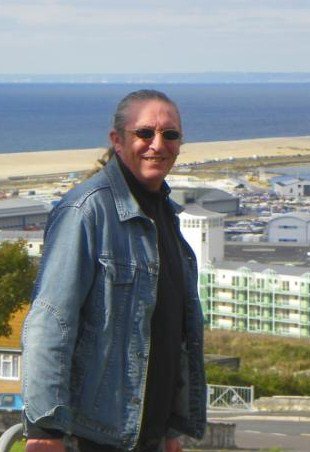
Victor Hamilton
It has been calculated that cannabis regulation would save billions in law enforcement costs, foster harm reduction, weaken the illegal cartels, and provide the opportunity to generate considerable income from taxes. The examples of California, Spain, The Netherlands and Portugal lead the way.
Victor Hamilton, the well known cannabis campaigner and former Legalise Cannabis Alliance (LCA) parliamentary candidate, liaises as a UK representative with ENCOD. He has submitted the following letter to ENCOD in advance of the public hearing on the current state of cannabis in Britain.
Dear Joep,
Thank you for the invitation to attend the hearing on 8th December 2010. I am afraid that both my health and the expense involved prevent me from attending.However, as you know, ending the prohibition of cannabis and encouraging more and better use of the plant in all its forms is my main concern. Cannabis offers many benefits medicinally, recreationally, spiritually and, as hemp, in ecologically sound fuel, construction materials, paper and plastics alternatives. Prohibition of cannabis is a far greater crime than any perpetrated by those who use it. It is a scandal and a sad litany of wasted opportunity and resources.
In the UK, based on research I have done and confirmed by the Independent Drug Monitoring Unit (IDMU), a legalise, regulate and tax regime could produce between £4 – 6 billion pa in new tax revenue.
For the benefit of the hearing, please allow me to update you on the present situation in Britain.
Calls For Decriminalisation
There have been calls for a relaxation of cannabis laws from a number of sources: The Bar Council, the British Medical Association, the Royal College of Physicians, The Lancet, Professor Roger Pertwee, Professor David Nutt and the Association of Chief Police Officers. The new coalition government’s “Your Freedom” website was swamped with calls for legalisation.
Reaction To Propositon 19
The cannabis community was eager with anticipation for the Proposition 19 vote in California, despite a dearth of media attention. Even the BBC, obliged under its charter to provide balanced coverage, found very little time for an issue that affects at least six million Britons. Strangely, the best of the lot was The Daily Telegraph, formerly known as the most conservative paper, it told us more about what was happening than any of the others.
The result was a disappointment and reminded us how our own campaigning has suffered from internal divisions and a lack of focus. Nevertheless. legalisation seems inevitable in the US, even if only at state level, within the next few years.
Formation of British Medicinal Cannabis Register
This exciting initiative to create a database of medicinal users in Britain was announced only in November. I was honoured to be invited to sit on the BMCR council as a medicinal user representative. Other members of the council include very eminent individuals such as Baroness Meacher, the MP Paul Flynn, Matthew Atha of IDMU and Dr Malcolm Vandenburg, the pre-eminent expert witness on drugs.
The real coup though was the announcement of Professor Leslie Iversen as a council member. Professor Iversen is the government’s chief scientific advisor on drugs. Yes that’s the British government which continues to state that cannabis has “no medicinal benefits”.
Subversion of Schengen Agreement
Several British medicinal users travelled to Holland for prescriptions from a doctor believing that their medicine was then protected by the Schengen Agreement. At first the Home Office agreed but then changed its position to say that British residents are not covered. The ridiculous situation now is that any non-UK resident can bring prescribed medicinal cannabis into Britain and use it without restriction. A UK resident cannot.
Increasing Evidence Of Medicinal Benefits
There is a never ending flow of information from all around the world on the extraordinary power of cannabis as a medicine. Facebook groups, blogs and organisations such as the LCA and UKCIA keep spreading the news. Particularly strong evidence has been revealed for cannabinoids as a treatment for Alzheimer’s, head, neck, breast and prostate cancer, fibromyalgia, ADHD and migraine. The mainstream media seem only interested in scandal and scare stories. They publish news about vastly expensive new pharmaceutical products but not about cannabis cures.
Confusion At The Home Office
Understandably, the British government’s position looks increasingly absurd. The Home Office veers between describing cannabis as very harmful, harmful, dangerous, extremely dangerous and changes its story every time it is challenged.
Approval of Sativex
Sativex won welcome approval from the medicines regulator as a treatment for spasticity in MS. Despite the fact that Sativex is nothing more than a tincture of herbal cannabis, the government now maintains that “cannabis has no medicinal benefits in herbal form”. Sativex is approximately eight times the cost of herbal medicinal cannabis and many health authorities are refusing to fund it.
New UK Drug Strategy
The government is to announce a new drugs strategy in December. There is expected to be a shift in emphasis towards healthcare interventions rather than criminal sanctions but no move away from prohibition. The more liberal views expressed by both David Cameron and Nick Clegg over the last 10 years seem to have changed now they have come to power.
Joep, I hope this is helpful and informative for the hearing and for you and your colleagues.
Victor Hamilton
Advisory Council On The Misuse of Drugs Meeting, 18th November 2010
I attended this meeting last Thursday at Church House, just around the corner from the Houses of Parliament.
There were approximately 35 members of the council in attendance, sitting around a huge U shaped table with perhaps 20 people in the public seats. Inevitably, such a huge meeting could only touch on adminstrative matters and formalities. Clearly, most of the ACMD’s work is done in much smaller working groups. However, there was an interesting Q&A session and I was pleased to experience a council meeting. I wouldn’t recommend it for light entertainment though!
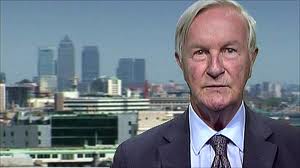
Prof. Leslie Iversen
Professor Leslie Iversen was in the chair for the last time. His post and those of eight other members have been advertised and their replacements will be appointed as from 1st January 2011. These are voluntary positions with members receiving only expenses and subsistence payments for their work. They undertake an onerous and important responsibility and I commend them for their public service.
Full minutes should be available on the Home Office website here within a few weeks. However the main items of interest were:
- the ACMD’s response to the Home Office’s drug strategy consultation
- a report on anabolic steroids
- a report on the issuing of foil by drug clinics as an alternative to injection
- a report on 2-DPMP, marketed as the “Ivory Wave ” legal high
- a request to report on khat, the herbal product from East Africa that contains cathinone, the same active ingredient as mephedrone
- a request to report on cocaine use after a recent report placed Britain at the top of the European league table
Then we came to the Q&A session and, of course, yours truly had a question prepared. First though there was a large contingent of the Somalian community present appealing for the prohibition of khat.
I have to say that nothing I have heard about either mephedrone or khat has interested me or persuaded me to experiment. There were a number of emotional and passionate speeches rather than questions; one from an ex-khat addict, one from a Somalian psychiatrist and others from community members. It’s clear that khat does cause harm but it saddened me that the only solution being suggested was prohibition. I understand this as a knee jerk reaction but it won’t work. All it will do is drive use undergroud and make the problem worse. Professor Iversen himself commented that the price of khat where it has been banned is 20 times that of where it is legal. If prohibition is enacted in Britain all we will be doing is playing straight into the hands of criminal gangs yet again.
I asked the council whether there wasn’t an urgent need for it to update its advice to the government on the medicinal benefits of cannabis. I cited the recent MHRA approval of Sativex which is, of course, nothing more than a tincture of herbal cannabis. I also mentioned that Arizona had just become the 15th state in America to introduce a medical marijuana programme and that Israel has recently announced a massive increase in growing facilities and dispensaries.
I am paraphrasing here, of course, but Professor Iversen threw up his hands in horror at being asked to review cannabis again when he has already done so three times. The general view from the council seemed to be that whatever was said to government on this subject, no notice would be taken. I shall be following up my oral question with a letter to Profesor Iversen. We have to expose this Home Office lie that there are no medicinal benefits from herbal cannabis and that this is based on advice from the ACMD. It isn’t. It’s a government deception.
For me the most important part of the day was the opportunity to introduce myself in person to Professor Iversen. I thanked him for agreeing to become a founder council member of the British Medicinal Cannabis Register. He said how enthusiastic he was about the register and that he has been an advocate of medicinal cannabis since the 1990s.

 Peter Reynolds