Posts Tagged ‘legalisation’
Now The Cannabis Petition Has Passed 200,000, What Can You Do Next?
At 15:45, 20th August 2015
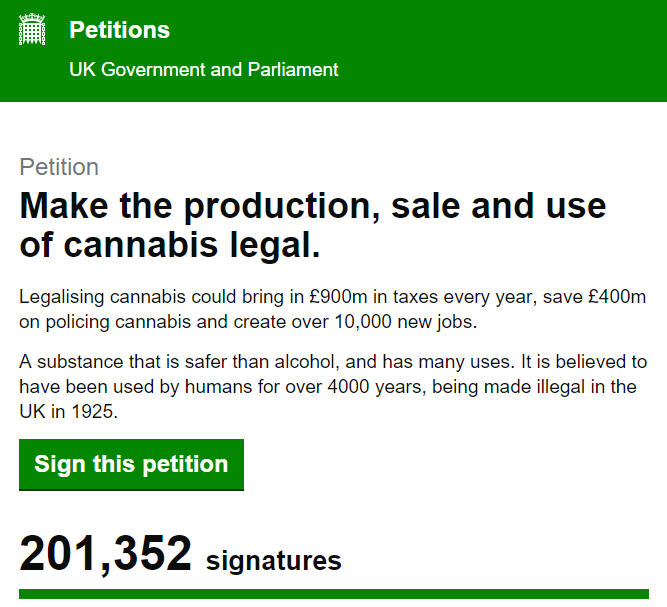
It’s a great achievement that together we have doubled the the number of signatures required for a debate on cannabis legalisation to be ‘considered’. But it’s not over yet.
The government and many MPs will fight tooth and nail to stop any debate. You can be sure that the alcohol industry is already lobbying ministers furiously. It is terrified that there could be a much safer, healthier and legal alternative to its poisonous products.
So we can’t even be certain there will be a debate. Many, perhaps most MPs are incapable of dealing with this issue on a rational basis. They are transfixed by fear of what the media will say if they support reform. Most have no understanding about cannabis at all and base their views on the rubbish published in the Daily Telegraph or the Daily Mail. Even worse, they may rely on what the Home Office says. Be in no doubt, in the great history of Britain, never has there been more dishonesty from government than from the Home Office on cannabis. It deceives, misinforms and lies as a matter of course. It is Home Office policy to mislead the public about cannabis.
The next step is to contact your MP and do your bit to educate him or her on the truth. It is vital that you do this. For the first time, enough people have signed a petition to make it mean something. We must build on this effort. Do not let yourself or the rest of the country down. The responsibility rests on your shoulder as much as it does on everyone else’s.
You can find out who your MP is by entering your postcode on this website.
You can find out your MP’s email address by looking their name up here.
You can also Google your MP’s name which will lead you to their personal website and more contact details.
You can write by letter to your MP at: House of Commons, London, SW1A 0AA
Please make the effort to take these steps in contacting your MP. Ideally, make initial contact by email or letter, then a week or so later make an appointment and go and see your MP.
Write To Your MP
Most important is that you must include your full postal address and postcode to show that you are a constituent. Without this your email or letter will be ignored.
Either an email or a letter is fine but you might want to consider doing both!
Write in your own words. MPs are now wise to what they call ‘campaign emails’. The large number of campaigns by groups such as 38 Degrees have really swamped MPs with repetitive correspondence. It doesn’t work to send what is clearly a template or automatically generated email. You will just be ignored. Many MPs actually warn against this now on their website.
So, in your own words, make these points:
1. I support the petition for a debate to be held on legalising cannabis.
2. More than twice as many people as required have signed the petition, so please will you do what you can to ensure that a debate will take place?
3. Legal regulation of cannabis will be much safer for everyone than the present criminal market.
4. £6 billion every year is spent on cannabis and it all goes to criminals.
5. I want to see cannabis available to adults only through licensed outlets with proper labelling and quality control.
6. I want to see cannabis taxed so that, as in Colorado, we can invest millions more in schools and hospitals.
7. Many people need access to medicinal cannabis for which there is now strong scientific evidence.
8. Please will you support and vote for legal regulation of cannabis?
You can link to these four pieces of evidence in your email or letter
Cannabis is 114 times safer than alcohol: http://www.ncbi.nlm.nih.gov/pmc/articles/PMC4311234/
No link between adolescent cannabis use and later health problems: http://www.apa.org/pubs/journals/releases/adb-adb0000103.pdf
‘Medicinal Cannabis:The Evidence’: http://clear-uk.org/static/media/PDFs/medicinal_cannabis_the_evidence2.pdf
Taxation of cannabis market net annual gain to the UK economy up to £9.5 billion: http://clear-uk.org/media/uploads/2011/09/TaxUKCan.pdf
Meet Your MP
The best way to arrange this is to telephone or email your MP’s constituency office. You will find the email address or phone number on your MP’s website.
Don’t get into a discussion with your MP’s staff about cannabis. Of course, explain why you want a meeting but concentrate on making the appointment. Don’t be brushed off. It is your right to meet your MP. Explain that you want an appointment as soon as possible, certainly within the next month or it will be too late.
When you go to the meeting, be on time, dress as if you were going to a job interview and be polite and respectful at all times. Ideally, print out the evidence above and take it with you. Ask your MP to promise to read it. Tell a personal story about how cannabis has helped you or how you or someone you know has suffered because of the law against it. Remember, your MP works for you so don’t allow yourself to be bullied or dismissed without proper attention.
What Will Happen Next?
If even one-tenth of the people who have signed the petition take the steps set out above we could well have a revolution!
Seriously, If every MP is contacted by at least half a dozen constituents who want a meeting on the subject it is going to make a very big impact.
This is our chance. Do not miss it. Do your bit. Don’t give up. Don’t be cynical.
Even if we don’t win this time we can make tremendous progress. We can weaken the evil forces of prohibition and start to drive it out of our lives and our country.
This is a call to action, as never before. Take this chance! Write to your MP! Meet your MP! Play your part in overturning this wicked, monstrous law!
Let’s Get The Dealers Off The Streets!
Cannabis Is Not A Controlled Drug
Present policy abandons control to organised crime and street dealers.
If cannabis were properly controlled, it would be taken out of the hands of criminals. Growing, importing, distributing and retailing would become legitimate businesses, subject to proper control and regulation.
What Proper Control Would Mean
- Regulated sales: licensed retailers, labelling of THC/CBD ratio, other ingredients, weight
- Quality control: elimination of pesticide and fertiliser residues, bulking agents, impurities
- Regulated commercial production, reasonable limits on domestic cultivation
- Protecting the vulnerable: age limit, ID check, harm reduction information
We Need CLEAR Common Sense About Cannabis.

A Safer Britain
- Less crime of all types
- Police can focus on violent and harmful crime
- Lower alcohol consumption
- Fewer road accidents and injuries/fatalities
- Fewer children using cannabis
- Quality controlled cannabis with no harmful adulterants
- Fewer fires from hidden cannabis farms
A Healthier Britain
- Lower alcohol consumption
- Less use of dangerous/harmful drugs
- Medicinal use: Alzheimer’s, arthritis, cancer, chronic. pain, dementia, diabetes, epilepsy, glaucoma, MS,. Parkinson’s, stroke therapy.
- Preventative therapy against auto immune and neurodegenerative diseases
- More funding for healthcare
Taxing The UK Cannabis Market
CLEAR’s policies are based on independent, expert research carried out by the Independent Drug Monitoring Unit in 2011.
Download Here (PDF)
How To Regulate Cannabis In Britain
CLEAR’s detailed proposals for cannabis regulation so as to minimise all health and social harms of cannabis, protect the vulnerable and allow access to medicinal cannabis
Download Here (PDF)
References:
– The Effect of Medical Marijuana Laws on Crime, March 2014
Read here
– How Smoking Marijuana Might Be The Best Way To Prevent Alzheimer’s Disease, January 2014
Read Here
– Few Problems With Cannabis for California, October 2013
Read Here
– The Impact of Marijuana Use on Glucose, Insulin, and Insulin Resistance, July 2013
Read Here
– Medical Marijuana Laws, Traffic Fatalities, and Alcohol Consumption, May 2013
Read Here
– Why Medical Marijuana Laws Reduce Traffic Deaths, December 2011
Read Here
– What can we learn from the Dutch cannabis coffeeshop system? September 2011
Read Here
– Study: Legal Medical Marijuana Doesn’t Encourage Kids to Smoke More Pot, November 2011
Read Here
.
– ‘Taxing the UK Cannabis Market’, 2011
Read Here
– A summary of the health harms of drugs. NHS, 2011.
Read Here
– Emerging Clinical Applications For Cannabis & Cannabinoids. A Review of the Recent Scientific Literature 2000 – 2011, NORML, 2011.
Read Here
– Bringing cannabis back into the medicine cabinet, Prof. Les Iversen, 2010.
Video here
– Dutch among lowest cannabis users in Europe, November 2009
Read More
– Adulterants & Cutting Agents Found in Cannabis Resin, 2009
Read Here
– Key Marijuana Compound Beats Current Alzheimer’s Drugs, August 2006
Read Here
– US Patent 6630507, Cannabinoids as Antioxidants and Neuroprotectants, 2001
Read Here
Cameron On Cannabis Part 5
You can see the previous instalment here: Cameron On Cannabis Part 4.
I am still waiting for a further reply from Mr Cameron.
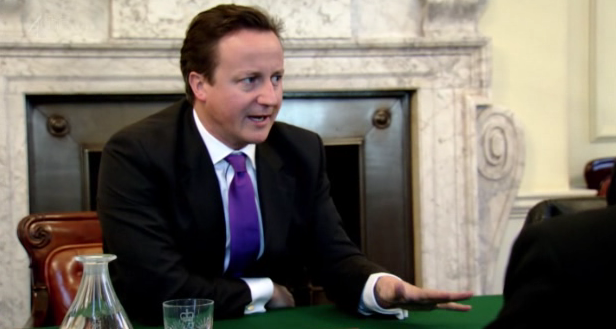
In the meantime, the subject of cannabis cropped up again on “Jamie’s Dream School” a Channel 4 programme in which a group of young people are given a second chance at education. Mr Cameron was challenged by the inspirational, 17 year old Henry Gatehouse, who proposed legalisation and a £1 per gram cannabis tax.
Oh Yes?
Mr Cameron responded:
“We concluded it would be wrong to make cannabis legal for two, I think, quite good reasons. One is, there is a link between that and mental health issues so it’s not harmless. And I think the second thing is that if you legalise drugs you will make them even more prevalent than they are. So I don’t think legalising is a good idea.”
Another inaccurate and misleading statement from Mr Cameron. This time though I think we should be even more concerned. Successive governments have stated that their main concern about drugs policy is children and young people and that they must be careful to “send the right messages”.
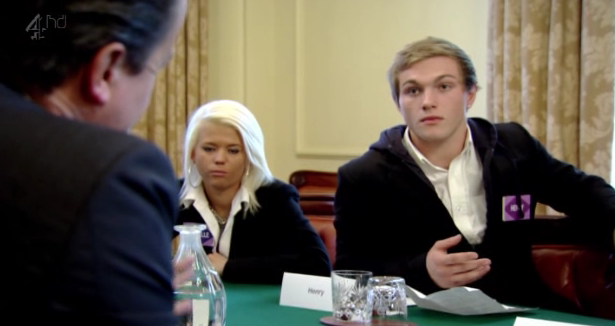
Nobody's Fool
In fact, the only message that governments have successfully delivered to young people again and again is that they never tell the truth about drugs. While the Home Office throws millions every year at the Talk To Frank campaign, the only thing it achieves is for ministers to pat themselves on the back and for the self-serving drug support industry to soak up more public money. Frank is held in complete contempt by young people. The misinformation and untruths told about, in particular, cannabis, ecstasy and mephedrone are a scandal and a grave disservice to young people.
Of course, for children and young people, the use of any psychoactive substance in a still-developing brain has the potential for harm. Cannabis should only be used by adults. Cameron is distorting the truth though. The links between cannabis and mental health are trivial compared to those with alcohol, cigarettes or even energy drinks. It is dishonest and irresponsible to give such a misleading answer to a young man who has clearly done his research and knows the truth.
Cameron’s second reason though has no basis in fact at all. All the evidence is that where a system of regulation of drugs is introduced, use goes down. This is clearly proven in Holland, Portugal and the USA. Cameron’s assertion is entirely false and, I regret to say, he must know that it is. In Britain, which now has one of the most repressive drug policies in the world, young people’s consumption of drugs is one of the highest anywhere.
Once again, Cameron reveals the dishonesty at the heart of his government’s drugs policy. This time though he is misleading and misinforming our young people. What greater mistake can he make?
Simon Heffer’s Disgusting Prohibitionist Rant
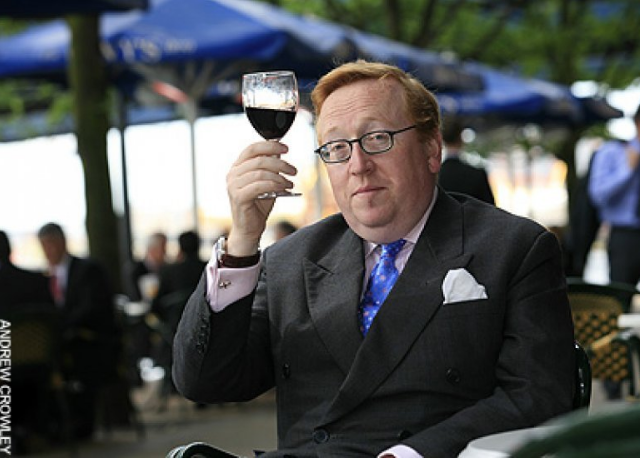
Fat Cat And His Drug Of Choice
Journalists in the old media and politicans are panicking. They are trying to crack down hard on us and our rights to opinions and self-expression. In the age of WikiLeaks and the internet, their self-serving oligarchy is undermined by real freedom.
Cameron’s and Miliband’s arrogant and dismissive rejection of Bob Ainsworth’s proposals for an end to prohibition, shows they have no proper response to his arguments. Today, another member of the ruling elite penned a truly ignorant and repressive opinion in The Daily Telegraph. See here for the full article.
As well as trying it on with the discredited idea that cannabis causes psychosis, Heffer says, with astounding spitefulness and stupidity:
“We have a serious problem with drugs in this country because we do not punish drugs crime severely enough. Legalisation is not the answer, but getting nasty might just be.”
It is an utterly disgraceful article. Heffer should be ashamed of himself for spreading lies and misinformation, I suspect deliberately.
The facts are that the harms caused by prohibition are well documented and proven.
The facts are that the allegation cannabis causes psychosis is just the latest scare story. In the 1930s the prohibitionists used to say that cannabis makes white women promiscuous with black men. This is just the latest smear of equivalent value.
Public opinion is hugely in favour of an end to prohibition. You only have to look at the polls and the huge volume of comment and opinion on the web.
The oligarchy of politicians and the media is on the point of collapse. Those who value truth and freedom can console themselves that the darkest hour is just before dawn. Journalists like Heffer and Andrew Marr, for example, are desperate to hang on to their corrupt position where they control the news agenda and contrive media coverage in cahoots with their friends in parliament.
A peaceful revolution is coming where fat cat journalists with no more talent than the lowliest blogger will be turfed out of their comfortable sinecures as the irrelevant dinosaurs that they are.
Heffer and his chums on both sides of the House have had their nasty little stitch-up going on for too long. Dawn is approaching and his sort has no future
Politicians’ Negligent Response To The Drugs Debate

Shamefully Slandered
The Independent in its leader today, says “It is depressing how stale and weary have been the responses” to Bob Ainsworth’s initiative on drug policy reform. See here. As with all the media it has failed dismally to point out that he was supported by Peter Lilley, former deputy leader of the Tory party, Tom Brake from the LibDems and Paul Flynn from Labour.
The BBC, with appalling inaccuracy, stated that “all three main parties at Westminster remain opposed to legalisation”. See here. In fact the LibDems’ published policy is “In the longer term, seeking to put the supply of cannabis on a legal, regulated basis”. It matters little though because almost never has any political party been more irrelevant. The LibDems now command less respect than the Monster Raving Loonies.
The Most Dangerous Man In Britain
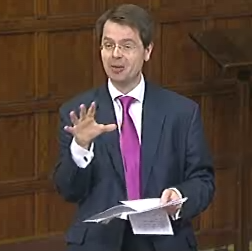
The responses of our political leaders are not just depressing, they are grossly irresponsible and negligent. James “Broken Britain” Brokenshire is the most dangerous man in Britain and will be responsible for far more death, misery and degradation in our country than any terrorist. As The Independent says, “such is the hysteria about drugs in Britain that there is no political space for a reasoned debate by those in authority.” The evidence that the war on drugs is an expensive failure is overwhelming but politicians prefer to waste money and lives rather than grasp this nettle.
The cowardly hypocrites, Cameron and his poodle, sit back while they allow Brokenshire, a preppy-faced apologist for gangsters to oppress, pillage and brutalise our fellow citizens.
Brokenshire is doing all he can to break Britain and British society.
He is a criminal of the first order.
Breakthrough In The Drugs Debate!

Bob Ainsworth
Tomorrow, Bob Ainsworth MP, former Home Office drugs minister and Secretary of State for Defence, will call for the legalisation and regulation of drugs. He is to lead a Parliamentary debate in Westminster Hall, at 2.30pm on Thursday 16th December 2010.
Great credit for this must go to the inestimable Transform Drug Policy Foundation, which has led the fight against prohibition. This is an extraordinary breakthrough. The news literally brought tears to my eyes. We have fought so long for such progress.
Mr Ainsworth said;
“I have just been reading the Coalition Government’s new Drugs Strategy. It is described by the Home Secretary as fundamentally different to what has gone before; it is not. To the extent that it is different, it is potentially harmful because it retreats from the principle of harm reduction, which has been one of the main reasons for the reduction in acquisitive crime in recent years.
However, prohibition has failed to protect us. Leaving the drugs market in the hands of criminals causes huge and unnecessary harms to individuals, communities and entire countries, with the poor the hardest hit. We spend billions of pounds without preventing the wide availability of drugs. It is time to replace our failed war on drugs with a strict system of legal regulation, to make the world a safer, healthier place, especially for our children. We must take the trade away from organised criminals and hand it to the control of doctors and pharmacists.
 As drugs minister in the Home Office I saw how prohibition fails to reduce the harm that drugs cause in the UK, fuelling burglaries, gifting the trade to gangsters and increasing HIV infections. My experience as Defence Secretary, with specific responsibilities in Afghanistan, showed to me that the war on drugs creates the very conditions that perpetuate the illegal trade, while undermining international development and security.
My departure from the front benches gives me the freedom to express my long held view that, whilst it was put in place with the best of intentions, the war on drugs has been nothing short of a disaster.
Politicians and the media need to engage in a genuine and grown up debate about alternatives to prohibition, so that we can build a consensus based on delivering the best outcomes for our children and communities. I call on those on all sides of the debate to support an independent, evidence-based review, exploring all policy options, including: further resourcing the war on drugs, decriminalising the possession of drugs, and legally regulating their production and supply.
One way to do this would be an Impact Assessment of the Misuse of Drugs Act in line with the 2002 Home Affairs Select Committee finding – which included David Cameron – for the government to explore alternatives to prohibition, including legal regulation.
The re-legalisation of alcohol in the US after thirteen years of Prohibition was not surrender. It was a pragmatic move based on the government’s need to retake control of the illegal trade from violent gangsters. After 50 years of global drug prohibition it is time for governments throughout the world to repeat this shift with currently illegal drugs.”
Peter Lilley MP, former Conservative Party Deputy Leader said;
“The current approach to drugs has been an expensive failure, and for the sake of everyone, and the young in particular, it is time for all politicians to stop using the issue as a political football. I have long advocated breaking the link between soft and hard drugs – by legalising cannabis while continuing to prohibit hard drugs. But I support Bob Ainsworth’s sensible call for a proper, evidence based review, comparing the pros and cons of the current prohibitionist approach with all the alternatives, including wider decriminalisation, and legal regulation.”
Tom Brake MP, Co-Chair, Liberal Democrat Backbench Committee on Home Affairs, Justice and Equalities said;
“Liberal Democrats have long called for a science-based approach to our drugs problem. So it is without hesitation that I support Bob Ainsworth’s appeal to end party political point-scoring, and explore sensitively all the options, through an Impact Assessment of the Misuse of Drugs Act.”
Labour’s Paul Flynn MP, Founder Council Member of the British Medicinal Cannabis Register said;
“This could be a turning point in the failing UK ‘war on drugs.’ Bob Ainsworth is the persuasive, respected voice of the many whose views have been silenced by the demands of ministerial office. Every open rational debate concludes that the UK’s harsh drugs prohibition has delivered the worst outcomes in Europe – deaths, drug crime and billions of pounds wasted.”
European Parliament – Public Hearing On Cannabis Regulation
 The European Coalition for Just and Effective Drug Policies (ENCOD) has organised a public hearing on cannabis regulation at the European Parliament on 8th December 2010. See here for full details.
In March 2009, the European Commission published the “Report on Global Illicit Drug Markets 1998 – 2007” . This concludes that current policies of prohibition are failing in their main objective to reduce the demand and supply of illicit drugs. Current policies may also be a crucial factor in generating and increasing harm to individual drug users, their direct surroundings and society at large.
According to the European Monitoring Centre for Drugs and Drug Addiction (EMCDDA) in its 2010 annual report, Europe faces new challenges posed by changes in drug supply and use. The report also highlights the increased usage of cocaine, heroin and of a record number of new synthetic drugs.
ENCOD says that prohibitionist policies have failed to tackle the issues of drugs and drug use effectively and it is time to investigate alternative approaches. European authorities must produce a thorough impact assessment of the costs of the current policy of prohibition and the economic benefits of decriminalisation and, as a start, the regulation of the cannabis market.
Victor Hamilton
It has been calculated that cannabis regulation would save billions in law enforcement costs, foster harm reduction, weaken the illegal cartels, and provide the opportunity to generate considerable income from taxes. The examples of California, Spain, The Netherlands and Portugal lead the way.
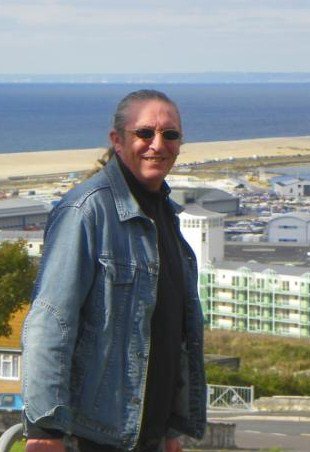
Victor Hamilton, the well known cannabis campaigner and former Legalise Cannabis Alliance (LCA) parliamentary candidate, liaises as a UK representative with ENCOD. He has submitted the following letter to ENCOD in advance of the public hearing on the current state of cannabis in Britain.
Dear Joep,
Thank you for the invitation to attend the hearing on 8th December 2010. I am afraid that both my health and the expense involved prevent me from attending.However, as you know, ending the prohibition of cannabis and encouraging more and better use of the plant in all its forms is my main concern. Cannabis offers many benefits medicinally, recreationally, spiritually and, as hemp, in ecologically sound fuel, construction materials, paper and plastics alternatives. Prohibition of cannabis is a far greater crime than any perpetrated by those who use it. It is a scandal and a sad litany of wasted opportunity and resources.
In the UK, based on research I have done and confirmed by the Independent Drug Monitoring Unit (IDMU), a legalise, regulate and tax regime could produce between £4 – 6 billion pa in new tax revenue.
For the benefit of the hearing, please allow me to update you on the present situation in Britain.
Calls For Decriminalisation
There have been calls for a relaxation of cannabis laws from a number of sources: The Bar Council, the British Medical Association, the Royal College of Physicians, The Lancet, Professor Roger Pertwee, Professor David Nutt and the Association of Chief Police Officers. The new coalition government’s “Your Freedom” website was swamped with calls for legalisation.
Reaction To Propositon 19
The cannabis community was eager with anticipation for the Proposition 19 vote in California, despite a dearth of media attention. Even the BBC, obliged under its charter to provide balanced coverage, found very little time for an issue that affects at least six million Britons. Strangely, the best of the lot was The Daily Telegraph, formerly known as the most conservative paper, it told us more about what was happening than any of the others.
The result was a disappointment and reminded us how our own campaigning has suffered from internal divisions and a lack of focus. Nevertheless. legalisation seems inevitable in the US, even if only at state level, within the next few years.
Formation of British Medicinal Cannabis Register
This exciting initiative to create a database of medicinal users in Britain was announced only in November. I was honoured to be invited to sit on the BMCR council as a medicinal user representative. Other members of the council include very eminent individuals such as Baroness Meacher, the MP Paul Flynn, Matthew Atha of IDMU and Dr Malcolm Vandenburg, the pre-eminent expert witness on drugs.
The real coup though was the announcement of Professor Leslie Iversen as a council member. Professor Iversen is the government’s chief scientific advisor on drugs. Yes that’s the British government which continues to state that cannabis has “no medicinal benefits”.
Subversion of Schengen Agreement
Several British medicinal users travelled to Holland for prescriptions from a doctor believing that their medicine was then protected by the Schengen Agreement. At first the Home Office agreed but then changed its position to say that British residents are not covered. The ridiculous situation now is that any non-UK resident can bring prescribed medicinal cannabis into Britain and use it without restriction. A UK resident cannot.
Increasing Evidence Of Medicinal Benefits
There is a never ending flow of information from all around the world on the extraordinary power of cannabis as a medicine. Facebook groups, blogs and organisations such as the LCA and UKCIA keep spreading the news. Particularly strong evidence has been revealed for cannabinoids as a treatment for Alzheimer’s, head, neck, breast and prostate cancer, fibromyalgia, ADHD and migraine. The mainstream media seem only interested in scandal and scare stories. They publish news about vastly expensive new pharmaceutical products but not about cannabis cures.
Confusion At The Home Office
Understandably, the British government’s position looks increasingly absurd. The Home Office veers between describing cannabis as very harmful, harmful, dangerous, extremely dangerous and changes its story every time it is challenged.
Approval of Sativex
Sativex won welcome approval from the medicines regulator as a treatment for spasticity in MS. Despite the fact that Sativex is nothing more than a tincture of herbal cannabis, the government now maintains that “cannabis has no medicinal benefits in herbal form”. Sativex is approximately eight times the cost of herbal medicinal cannabis and many health authorities are refusing to fund it.
New UK Drug Strategy
The government is to announce a new drugs strategy in December. There is expected to be a shift in emphasis towards healthcare interventions rather than criminal sanctions but no move away from prohibition. The more liberal views expressed by both David Cameron and Nick Clegg over the last 10 years seem to have changed now they have come to power.
Joep, I hope this is helpful and informative for the hearing and for you and your colleagues.
Victor Hamilton
BBC Blanks Proposition 19
According to the Home Office there are six million regular users of cannabis in the UK. I have seen just one report on the BBC news about the Proposition 19 vote in California on 2nd November which promises legalisation.
Compare this with the recent wall to wall coverage of the Pope’s visit. How many regular supporters of the Catholic Church are there in Britain? Just 887,000.
This is an appalling failure by the BBC and a dereliction of its duty to provide fair and balanced coverage. Please make a complaint. It will take you less than five minutes and it will make a difference if enough of you take the time.
Here is a direct link to the BBC complaints website. Please do it now!
Legal Medicinal Cannabis In Britain
In The Pink
Last week Jim Starr flew into Bristol Airport from Amsterdam carrying 80 grammes of herbal cannabis as prescribed for him by a Dutch doctor. That’s just under three ounces of dried flower heads. He was carrying it in a parcel about the size of a telephone directory.
There was no one at customs, even though Jim went through the red channel and had telephoned ahead to advise the airport that he was bringing the cannabis in. He waited, even looked around for someone, anyone, but there was no one to be seen at all. He wanted to declare what he had with him. He’s never wanted to break the law. He knew that he was risking confiscation of the cannabis, possibly even arrest but the coast wasn’t just clear, it was deserted. The authorities had evidently decided that in their “war on drugs”, this time, discretion was definitely the better part of valour. They were in full scale retreat.
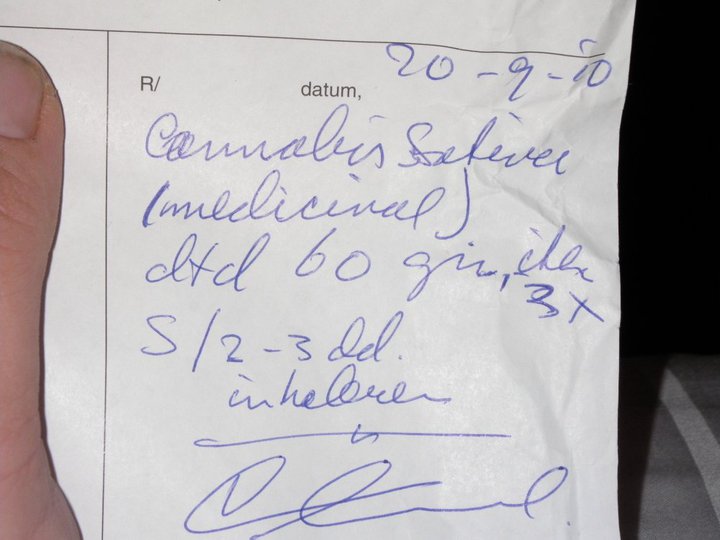
Jim had confirmed to the airport that he had the necessary paperwork to prove it was prescribed medicinal cannabis. His doctor had told him that he was protected under Article 75 of the Schengen Agreement which states “persons may carry the narcotic drugs and psychotropic substances that are necessary for their medical treatment provided that, at any check, they produce a certificate issued or authenticated by a competent authority”
Prescription
Of course, even then, it didn’t stop the journey being a nerve wracking and tense experience. Now, safely at home in Dorchester with his family, Jim understands from the Home Office that he is entitled to bring in the cannabis as prescribed for him by his Dutch doctor. He can bring in up to three month’s supply at a time if he carries it on his person. Otherwise he has to apply for an import licence and have it shipped to a UK pharmacist.
Jim is 36 and is married to Emma, with whom he has two children. Originally from Birmingham, he was a very active man in full time employment until in 1999 he was diagnosed with a degenerative disease of the spine. In 2003 he was involved in a road accident and suffered terrible spinal injuries. His life seemed hopeless. The cocktail of powerful drugs he was prescribed, including morphine, were debilitating in themselves. He couldn’t face a future in which he was turned into a zombie, unable to enjoy any sort of decent life with his wife and children. He admits frankly that he was suicidal.
One day in 2004, Jim was upstairs in bed in so much pain and despair that he could barely move. A friend called round to see him and offered him a joint. Half an hour later Jim made it downstairs for the first time in three weeks. Suddenly he had hope and the possibility of a future with his family.
Life since then has been a constant game of cat and mouse with the police and drug dealers. Apart from risking arrest and even prison, Jim has also been in danger of being robbed or ripped off by dealers. He’s never wanted to break the law. He told his doctor the relief that cannabis provided and as soon as Sativex became available, even before it was officially licensed, his doctor prescribed it for him. Unfortunately, the very next day she rang to say that because of licensing and regulation problems she wouldn’t be able to prescribe it again. In fact, Jim did manage to get another prescription for Sativex but again it was withdrawn, this time because his health authority refused to fund it.
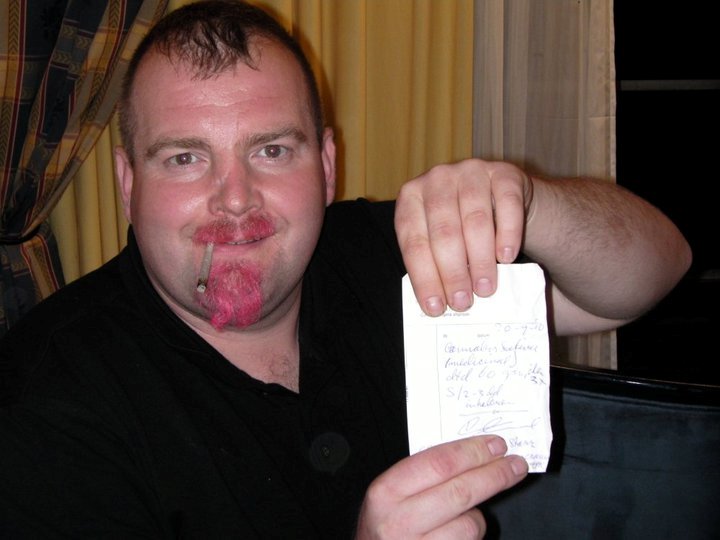
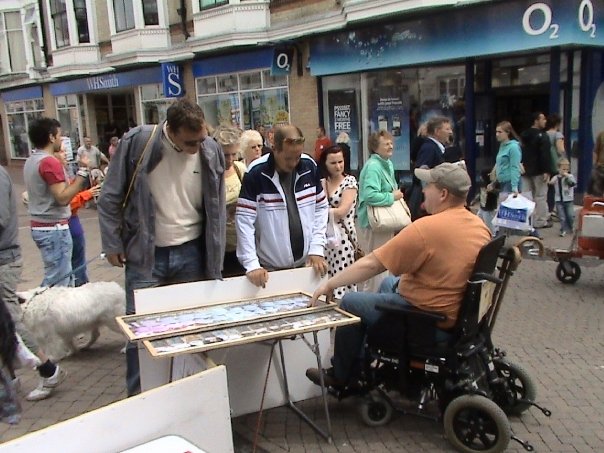
Jim has been an active campaigner for the legalisation of cannabis ever since. He has organised a series of marches, protests and petitions in Dorchester, Weymouth and even Downing Street. Over the last seven years, three MPs, Oliver Letwin, Jim Knight and Richard Drax, have written various letters in support of him. He is a distinctive figure in his wheelchair with his dyed beard which has earned him the nickname “Pinky”. Perhaps he has been a little too high profile for the Dorset police who he accuses of persecuting him. Unable to obtain Sativex or afford the prices and risks of dealers, Jim enlisted the help of a friend to grow his own medicine. Inevitably, in May 2009 the police arrived and Jim was arrested.
Campaigning
In August this year at Dorchester Crown Court Jim was given a two year conditional discharge for growing cannabis. He is now pursuing a complaint against the police alleging brutal treatment during his arrest. Other complications, allegedly at the police’s behest, have led to the DVLA revoking his driving licence although he has never been arrested, charged, convicted or even stopped on suspicion of driving under the influence.
Jim has become an avid recorder of everything. He uses mobile phones, video cameras and audio recorders to retain evidence of every contact with the authorities. He has a video recording of an officer saying to his wife “Look luvvy, whatever he grows up there from now on is up to him. We promise it don’t bother us”. Foolishly, he took the officer at his word. Three weeks after receiving his conditional discharge the police arrived again.
There was no provision for transporting him to the police station in his wheelchair. The officers were warned not to lift him by his arms because of his spinal condition. They wrenched him out of his chair by gripping his shoulders and underpants causing anal bleeding due to an existing condition. He was refused a doctor at the station. There was no provision for disabled people, even for his special toilet needs. He was refused access to any of his prescribed medication or even his specialist anti pressure sore mattresses.
The following day he attended hospital and was diagnosed with torn shoulder muscles. In fact, his spinal column is so delicate that any movement could potentially paralyse him. This is the basis of all his high profile campaigning and must be well known to the police. Jim now faces another charge of cultivating cannabis and a possible prison sentence.

With Mr Nice
The trip to Holland was a last resort, only made possible by the generosity of a friend. The Dutch doctor was horrified at the range of highly toxic prescription medicines given to Jim and prescribed two grammes per day of medicinal herbal cannabis. He told Jim that he shouldn’t be using Sativex as the alcohol in its solution was like pouring petrol on a fire, given his medical conditions.
So at last, Jim seems to have the medicine he needs. He will have to continue to rely on the generosity of friends to pay for it. He is applying for a Home Office licence for the cannabis to be imported to a local pharmacist who can then dispense it to him. He will continue to campaign for the right to grow his own for free. The costs of cultivation at home are minimal compared to the rigmarole of importing from Holland or the massive “Big Pharma” cost of Sativex.
Jim is not the first person to get the medicine they need in this way but he is the first to go public about it. Many tens of thousands may now wish to follow his example. Most European countries and 15 US states already regulate the provision of medicinal cannabis. Surely it is time for the government to consider reform of what looks increasingly like an absurd and cruel law.

 Peter Reynolds