Posts Tagged ‘medicinal cannabis’
CLEAR Evidence For the APPG Medicinal Cannabis Inquiry.
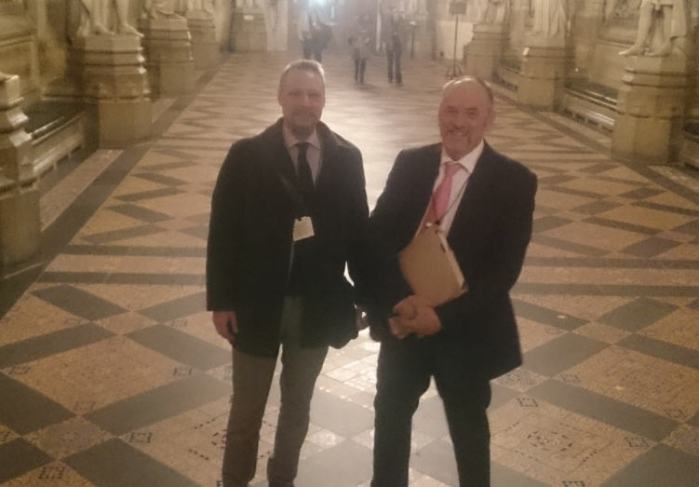
Roland Gyallay-Pap, Peter Reynolds
Yesterday, 2nd March 2016, Roland Gyallay-Pap and Peter Reynolds were called to give evidence at the All Party Parliamentary Group for Drug Policy Reform Inquiry into Regulation of Cannabis for Medicinal Use.
We have already submitted a 15 page written response. Yesterday’s oral hearing was to enable the inquiry to question us in more detail. We cannot publish our written response or go into great detail about yesterday’s hearing until the inquiry has published its own report which is some weeks away yet.
As we arrived at the hearing, Tom Lloyd, ex-chief constable of Cambridgeshire, was waiting to go in so we sat at the back of the committee room and listened to his contribution. Later, after our session, we adjourned to the Westminster Arms for some legal recreational drug use and to swop notes. Tom is a great asset to the campaign and we were able to update each other on the work we are involved in.
The inquiry panel consisted of three MPs and five members of the House of Lords. Roland opened our session with an account of how cannabis oil had helped in the last months of his mother’s life before she died from pancreatic cancer. The whole panel was visibly moved. Baroness Meacher explained that this was not the only such testimony they had heard. Everyone was extremely receptive. A lot of detailed questions were asked about CLEAR’s work and our knowledge of the science, law and best practice involved in medicinal cannabis.
The inquiry’s report will undoubtedly support some reform of the law around medicinal cannabis. Let us hope it will provoke real action from government.
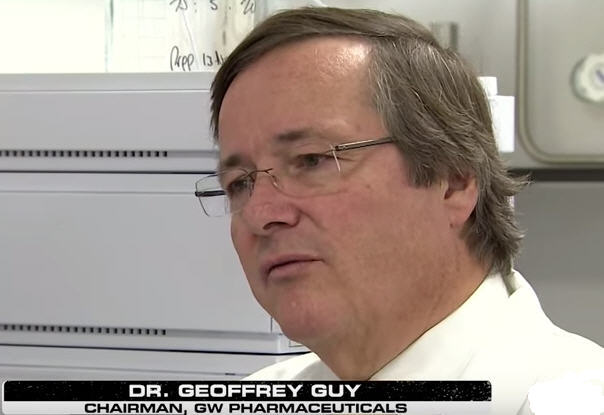
GW Founder And Chairman, Geoffrey Guy, Explains Sativex.
“Most people in our industry said it was impossible to turn cannabis into a prescription medicine. We had to rewrite the rule book. We have the first approval of a plant extract drug in modern history. It has 420 molecules, whereas every other drug has just one.”
Talking Cannabis In Parliament.
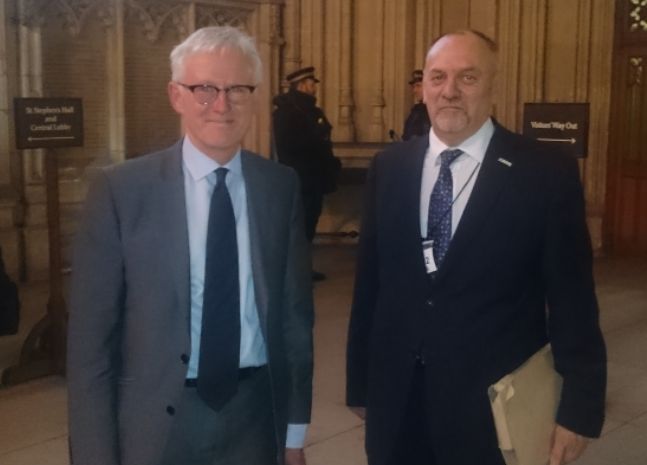
Norman Lamb MP, Peter Reynolds
Today, 8th February 2016, Peter Reynolds, president of CLEAR, met with Norman Lamb MP, Liberal Democrat spokesperson for health, for an update on the cannabis campaign.
Independent Panel of Experts on Cannabis Regulation.
The Liberal Democrats have set up an independent panel of experts to establish how a legalised market for cannabis could work in the United Kingdom. Norman Lamb wants the panel to look at evidence from Colorado, Washington State and Uruguay, where cannabis has been legalised and to make recommendations for the party to consider in the spring.
As a contribution to the panel’s work, CLEAR has provided the independent study it commissioned in 2011, ‘Taxing the UK Cannabis Market’ which establishes the most comprehensive database on the reality of cannabis in the UK. In addition, The CLEAR Plan, ‘How To Regulate Cannabis in Britain’, builds on this data to propose detailed regulations for exactly how the market could work and contribute a £6.7 billion net gain to the UK exchequer.
Imminent Launch of New Medicinal Cannabis Campaign.
Within the next few days, CLEAR, along with other cannabis law reform groups, will co-operate in the launch of probably the largest campaign for access to medicinal cannabis ever seen in the UK. The time has come when people who are suffering must be given the opportunity to stop their pain with a safe, non-toxic, proven alternative to expensive and debilitating pharmaceutical products. The intransigence of successive UK governments must be overcome and this time a strategy is in place which will work.
The CLEAR publication ‘Medicinal Cannabis:The Evidence’ has received international acclaim and is the most comprehensive and up to date review of the scientific evidence supporting the use of cannabis.
Further Development of Liberal Democrat Drugs Policy.
In 1971, when the Misuse of Drugs Act came into force there were approximately 3,000 problematic drug users in the UK. Today, 45 years on, that figure has risen to around 350,000. Norman Lamb describes this as “one of the greatest public policy disasters of all time”. Today, in a speech about the prison service, David Cameron talked of the need to tackle the most difficult social problems facing Britain. Drug crime and drug addiction is probably the single biggest factor in our prison problems and the consequences of 45 years of failed drugs policy pervades our society. As the Liberal Democrats consider this difficult issue, tackling reform of cannabis policy is the first step.
CLEAR, The British Medicinal Cannabis Campaign and UK CBD Combine To Offer Media Briefings.
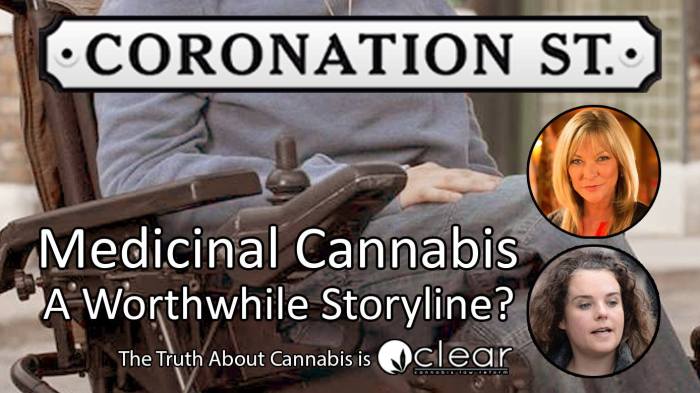
The subject of cannabis as medicine is certain to rise to the top of the UK news agenda in forthcoming weeks as a new Coronation Street storyline unfolds.
The character Izzy Armstrong (Cherylee Houston) who has Ehlers-Danlos Syndrome, will be seen suffering when her prescription medicine fails to alleviate her pain. Erica Holroyd (Claire King) will then suggest that she starts using cannabis as an alternative and ends up supplying Izzy with the drug. The programme will look at all aspects of the debate on medicinal cannabis and examine the legal implications and the far reaching consequences of Izzy’s actions for her family.
Now, three of the UK’s most important organisations in the field are joining forces to provide the media with facts, evidence and personal testimonies about medicinal cannabis.
CLEAR is the largest drugs policy reform group in the UK with nearly 600,000 followers. The British Medicinal Cannabis Campaign (BMCC) is an independent group consisting of 4,500 members, all of whom are UK-based medicinal cannabis users. UK CBD is the leading distributor of legal, cannabinoid nutraceuticals including the world famous Charlotte’s Web and Mary’s brands.
Roland Gyallay-Pap, managing director of CLEAR, commented:
“Not for the first time, but at a crucial time in the worldwide debate, the issue of medicinal cannabis will be addressed in a British soap. We have high hopes that this will stimulate the debate and bring the absurdity of the UK government’s position into sharp focus.”
Throughout Europe, the USA, Canada, Australia, Israel and South America, interest in and the use of medicinal cannabis is growing fast. The UK is now virtually isolated amongst first world countries with the stubborn refusal of government even to consider the evidence. However there is a growing clamour from politicians, scientists and doctors that it must address what is a deeply cruel and evidence-free policy. Hundreds of thousands already use medicinal cannabis and risk a criminal record just for trying to improve their health. In addition they have to deal with a criminal underworld and risk violence, contaminated and low quality product all because government refuses to take responsibility.
There is now an overwhelming body of peer-reviewed, scientific evidence on the safety and efficacy of cannabis as medicine. CLEAR published ‘Medicinal Cannabis: The Evidence’ in April 2015 which has received international acclaim and is now also available in a Spanish language edition. Download here in English or Spanish.
Individual briefings will be available on request to journalists, reporters, media organisations and other interested parties. Briefings will be led by Peter Reynolds, one of the nation’s leading experts on the science, medicine and politics of cannabis, Mark Scott, a representative of BMCC and Nicolas Ellis, founder and managing director of UK CBD.
Please contact CLEAR to arrange a briefing at your premises by appointment. Alternatively, a central London venue can be arranged on request.
Top UK Soap ‘Coronation Street’ To Run Medicinal Cannabis Storyline.
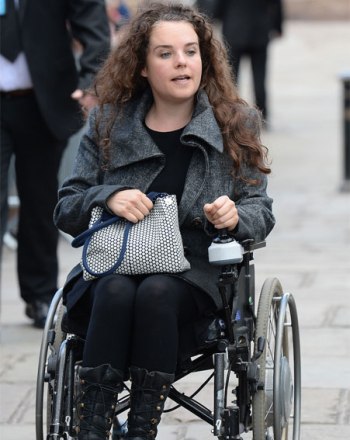
Coronation Street Character, Izzy Armstrong
Could This Be A Breakthrough In The UK Campaign For Medicinal Cannabis?
Cannabis used as medicine has appeared before in UK soaps but the news is that this Coronation Street storyline could be less jokey and trivial and actually deal in science and truth. If so it could be a major breakthrough against an intransigent government that flatly refuses even to consider the evidence.
Coronation Street is the world’s longest running soap opera still in production. Each episode reaches an average of between five and eight million viewers. It is deeply enmeshed in the fabric of British working class culture. If it puts a positive spin on medicinal cannabis it could change public opinion quicker than almost anything else.
Most senior politicians know the truth about medicinal cannabis but refuse to act, leaving millions in unnecessary pain and suffering for fear of a media backlash. But the media is changing too. Aside from a few individual dinosaur journalists and the bigots who edit the Daily Mail and Daily Telegraph, the rest of the media is pretty much onside.
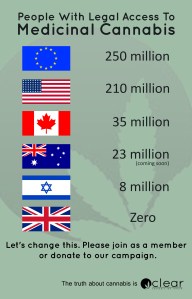 The UK government’s position is nothing short of ridiculous, particularly given developments throughout the rest of the world. Look to Australia for the latest progressive, evidence-based change in policy, where very soon 23 million people will gain legal access to medicinal cannabis.
A positive Coronation Street storyline will give the cowards in the Department of Health and the refuseniks in the Home Office a way out. It is inevitable that reform will come. This could mean it is sooner rather than later.
This Is The Future Of Cannabis. For Medicine, Nutrition And Pleasure.
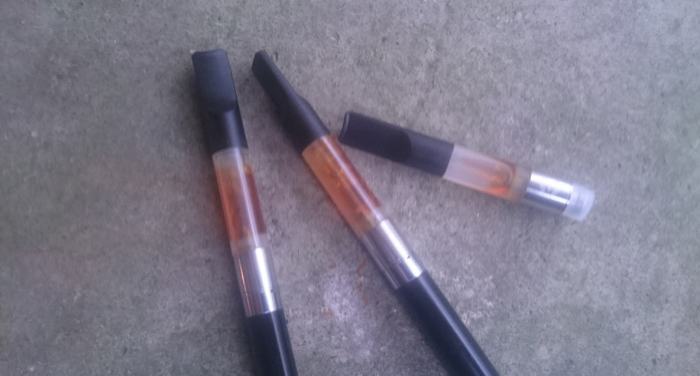
One of these vape pens contains Blue Dream sativa cannabis oil, 91% THC, the other is Hindu Kush indica cannabis oil, 85% THC and the spare cartridge has the dregs of some New York City Diesel sativa, 85% THC. You can’t tell which is which to look at them but each has a distinctive flavour and effect. They’re not completely odour free but almost.
This is the future of cannabis as a consumer product. It is cleaner, neater, handier, healthier and better for you than raw herbal cannabis. Most importantly, for medicinal applications, it homogenises all the compounds into an oil of consistent quality and content meaning that dosage and effect at last becomes predictable and reliable.
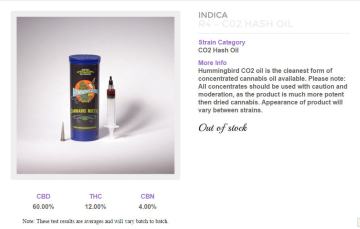
High CBD Oil For Medical Use
I have been investigating this theory for some time but my recent trip to Colorado enabled me to conduct some practical experiments and more thoroughly understand how this idea can work. I am now convinced that this is the way forward for the cannabis industry. Once we achieve legalisation in the UK, which is inevitable, probably in about five years, these pens are how cannabis will become available as a consumer product on the high street. They are also how medicinal cannabis will be dispensed. Your doctor’s prescription will be fulfilled by a cartridge with the appropriate blend of cannabinoids which you screw onto your battery and use immediately. Batteries will also be supplied on prescription, in the same way that syringes or blood glucose meters are for diabetics.
In Colorado dispensaries these pens are already available in a choice of strains and blends. Currently, the popular products contain 250 mg of THC in a blend of cannabis oil and propylene glycol (PG), just as e-cigs contain a nicotine oil and PG.
Alternatively, you can buy the oil of your choice and fill the cartridges yourself. This is undoubtedly the way to do it and a wide choice of oils is available, made by CO2 and solvent extraction processes. The Farm, my favourite dispensary in Boulder, is already supplying cannabinoid blends such as a 60% CBD, 12% THC, 4% CBN product which is clearly for medicinal use. I have no doubt that soon we will see a Charlotte’s Web product and Sativex-like blends with equal ratios of THC:CBD. Other, more sophisticated blends of other cannabinoids and probably terpenes will soon follow.
However, I am certain that some propylene glycol is a good thing. The oil vapes much better when diluted and PG is nothing to worry about, it is in many health, cosmetic and food products. It has many uses. It’s a solvent, humectant (keeps things moist), preservative and it helps absorption of some products. It is non-toxic.
There is further development work to be done. I believe there is a ‘sweet spot’ for the correct amount of PG, probably around 20%. I also think the battery and cartridges can be improved, particularly for medical use. Once this is achieved, a product like this with perhaps a 60:40 THC:CBD ratio should form the basis of an application to the Medicines and Health products Regulatory Agency (MHRA) for a marketing authorisation. It will knock Sativex into a cocked hat. In fact, if GW Pharma aren’t investigating this already then they are failing in their duty to shareholders. I shall certainly be doing all I can to research and facilitate the funding to bring such a product to market.
Yes, this is the future of cannabis. Imagine the packaging, marketing and merchandising opportunities for the recreational market. Understand the overwhelming benefits of this as medicine against the raw, herbal product. Yes, I know some will object and the tired old hippy luddites will say it’s a sell out and many more Big Pharma conspiracy theories will emerge but this is the future. Remember you heard it here first.
Another Pack Of Lies On Cannabis From The UK Government.

Yet another cannabis petition amongst hundreds of similar pleas was filed earlier this autumn. This one though is more tightly focused on removing cannabis from schedule 1, which defines it as having no medicinal value. The petition is also commendably concise but characterises itself as a ‘demand‘ that cannabis be rescheduled, an unfortunate choice of words.
 Nevertheless, congratulations are due in that it has exceeded the threshold of 10,000 signatures which means the government must respond. That response is now in and it is predictably dishonest, dismissive and authoritarian in its tone. The Home Office has responsibility for drugs policy so it has drafted the response but it surely must have consulted with the Department of Health.
In fact, I was told only this week by a senior minister that “… the search into the medicinal use of cannabis is something that falls within the jurisdiction of the Department of Health.” That may be a subtle shift in policy from which we can draw some hope. But I fear that the response to this petition offers no hope at all. It is stubborn, obstinate, inaccurate and in denial of evidence and experience.
To be clear, the Home Office has been systematically lying and misleading the British people about cannabis for at least 50 years. The Department of Health is timid on the issue, leaves the public statements to the Home Office heavies and seems more interested in generating fee income for the Medicines and Healthcare products Regulatory Agency (MHRA), than in actually treating patients effectively.
I analyse the response paragraph by paragraph.
“Herbal cannabis is listed in Schedule 1 as a drug with no recognised medicinal uses outside research. A substantial body of scientific evidence shows it is harmful and can damage human health.”
By far the majority of scientists and doctors now recognise that cannabis has real and significant medicinal uses. Of course it is possible that cannabis can cause harm, as can any substance. However, there is no scientific evidence that shows cannabis as being any more harmful than over-the-counter medicines or many common foods. Professor Les Iversen, chair of the Advisory Council on the Misuse of Drugs, is on the record saying: “cannabis is a safer drug than aspirin and can be used long term without serious side effects”.
“The Government will not encourage the use of a Schedule 1 controlled drug based on anecdotal evidence. It is important that a medicine is very thoroughly trialled to ensure it meets rigorous standards before being licensed and placed on the market so that doctors and patients are sure of its efficacy and safety. “
It is not the government’s role to encourage the use of any drug as medicine, that is the role of a doctor. Only by removing cannabis from schedule 1 can that decision be placed in doctors’ hands. There is a vast quantity of peer-reviewed, published scientific evidence on the medicinal use of cannabis including human clinical trials. It is false to suggest that only anecdotal evidence is available. See ‘Medicinal Cannabis: The Evidence’. Thousands of doctors and millions of patients are sure of the efficacy and safety of cannabis based on existing research, trials and experience. Many commonly prescribed medicines have nowhere near as much evidence behind them as cannabis.
“Cannabis in its raw form (herbal cannabis) is not recognised as having any medicinal purposes in the UK. There is already a clear regime in place to enable medicines (including those containing controlled drugs) to be developed and subsequently prescribed and supplied to patients via healthcare professionals. This regime is administered by the Medicines and Healthcare products Regulatory Agency (MHRA), which issues Marketing Authorisations for drugs that have been tried and tested for their safety and efficacy as medicines in the UK.”
The lack of recognition for the medicinal purposes of cannabis is a grave error with no evidence that supports it. Cannabis is a traditional medicine which recorded history shows has been used safely and effectively for at least 5,000 years. The only thing that stands in the way of cannabis being prescribed by doctors is its schedule 1 status. The MHRA is a diversion and is irrelevant. It exists to trial and regulate new medicines and requires a £100,000 application fee before very costly clinical trials take place. This is an unnecessary obstacle to a traditional medicine which contains more than 400 compounds. The MHRA process is designed for potentially dangerous, single molecule drugs and is not applicable to cannabis.
“It is up to organisations to apply for Marketing Authorisation for products that they believe have potential medicinal purposes so that these can be subject to the same stringent regime and requirements that all medicines in the UK are subjected to.”
Many substances and drugs which have medicinal purposes are regulated either as Traditional Herbal Products or food supplements. It is the schedule 1 status of cannabis which prevents it being regulated and controlled in this way which is far more appropriate given its very low potential for harm and the very wide range of conditions for which it can be useful.
“Since 2010 UK patients can use the cannabis-based medicine ‘Sativex’ for the treatment of spasticity due to multiple sclerosis. ‘Sativex’ can also be prescribed for other conditions at the prescribing doctor’s risk. ‘Sativex’ was rigorously tested for its safety and efficacy before receiving approval, and is distinguished from cannabis in its raw form. It is a spray which is standardised in composition, formulation and dose and developed to provide medicinal benefits without a psychoactive effect. Due to its low psychoactive profile ‘Sativex’ was rescheduled from Schedule 1 and placed in Schedule 4 Part 1 to enable its availability for use in healthcare in the UK.”
Sativex is a massively expensive form of cannabis oil which is not prescribed because of its cost. It is at least 10 times the price of Bedrocan medicinal cannabis as regulated by the Netherlands government which could be immediately made available in the UK. It is a deliberate falsehood to claim that Sativex does not have a psychoactive effect. The statutory document ‘Summary of Product Characteristics’ describes “euphoric mood” as a “common” side effect. The scheduling of Sativex in schedule 4 is a deception requiring 75 words falsely to distinguish it from other forms of cannabis whereas every other drug in every other schedule requires just one word.
“The MHRA is open to considering marketing approval applications for other medicinal cannabis products should a product be developed. As happened in the case of ‘Sativex’, the Home Office will also consider issuing a licence to enable trials of new medicines to take place under the appropriate ethical approvals. “
Cannabis, which contains 400 + compounds is not suitable for MHRA regulation which is designed for single molecule drugs which are potentially dangerous. There is no significant danger from the use of cannabis when prescribed by a doctor. This is already well established in scientific evidence and the referral to the MHRA is a diversion and an excuse for failing simply to put the decision in doctors’ hands.
“In view of the potential harms associated with the use of cannabis in its raw form and the availability of avenues for medicinal development, the Government does not consider it appropriate to make changes to the control status of raw or herbal cannabis. “
The government has offered no evidence of the potential harms to which it gives such weight. No “development” of cannabis is required. It is a traditional medicine consisting of the dried flowers of the cannabis plant.
“The Government’s view is that the Misuse of Drugs Act 1971 and regulations made under the Act continue to facilitate the development of medicines which are made from Schedule 1 controlled drugs. The legislation is aimed at protecting the public from the potential harms of drugs and is not an impediment to research into these drugs or development of medicines.”
The government’s view is intransigent and as demonstrated by this response is ignorant of the available evidence. This response reinforces the government’s clear intention not to consider the evidence and simply to deny it. The evidence shows that the potential harms of cannabis as medicine are trivial and inconsequential. If its schedule 1 status was not an impediment to research, there would already be a great deal more research into cannabis as medicine.
“In 2013 the Home Office undertook a scoping exercise targeted at a cross-section of the scientific community, including the main research bodies, in response to concerns from a limited number of research professionals that Schedule 1 status was generally impeding research into new drugs.
Our analysis of the responses confirmed a high level of interest, both generally and at institution level, in Schedule 1 research. However, the responses did not support the view that Schedule 1 controlled drug status impedes research in this area. While the responses confirmed Home Office licensing costs and requirements form part of a number of issues which influence decisions to undertake research in this area, ethics approval was identified as the key consideration, while the next most important consideration was the availability of funding.”
The Home Office is entirely untrustworthy and dishonest on anything to do with cannabis. Researchers, scientists, doctors and those already using cannabis as medicine simply do not trust anything it says on the subject based on long experience of its calculated dishonesty and misinformation.
The Duplicity And Deceit Of UK Drugs Policy.
Mike Penning MP
On 12th October, after more than 220,000 people had signed a government e-petition, Mike Penning MP, the drugs minister, responded to the debate. He said:
“I have every sympathy for my friends and members of my family who have had MS and the terrible pain and anguish that they go through because of an incurable disease. So I start from the premise of having sympathy. Let us see what we can do in the 21st century to take people out of that environment…we could look carefully… at the research. We need to look at why the research is not taking place and at the effects of certain parts of the legislation…We have cross-party agreement that we will look at research and see how we can help people. I am committed to that…It is crucial that we do not set ourselves in one position but that instead, we ask what research could help take things forward. That is what I have committed to doing and it is very important.”
Source: Hansard
Then, on 26th October, in response to a written question, he said:
“The government’s position on the medicinal value of cannabis remains unchanged and no discussions are planned.”
Source: Hansard
This is dishonest and a subversion of our democratic process. However, in the UK, despite its historical role as the mother of parliamentary democracy, government ministers are now entirely unaccountable. Even in their individual role as MPs they answer to the electorate only once every five years, a level of accountability which is ridiculous in the 21st century. Between elections they only need consider their party whips or the more senior ministers who hold power over their careers.
In any other context, in business or in personal affairs, reneging on a promise as Mike Penning has done would have serious consequences. In some instances it might even bring him before the criminal courts. But Penning doesn’t give a damn, faces no consequences and he continues with impunity as any robber baron might have in the Middle Ages or any cowboy outlaw in the Wild West.
I have written to Mike Penning asking for an explanation and I have also written to my MP asking him to obtain an official explanation from the government. I ask you to do the same.
The Weak And Ineffectual Response Of Most MPs To The Cannabis Debate.
CLEAR has been mobilising its members as never before to lobby their MPs in advance of the cannabis debate on 12th October.
There are honourable exceptions but most responses have been unhelpful, dismissive and have completely failed to deal with the arguments put forward. Most MPs are indoctrinated with the false reporting churned out by the press, scared stiff of the subject and not prepared to look any deeper.
It is a terrible indictment of these people, each of whom costs us about £250,000 per year in salary and expenses. Most simply do not do their job properly, certainly not in the interests of or representing their constituents, mainly they just pursue their own political ambitions and interests. They cannot be bothered to deal with the cannabis issue.
Usually, from both Tory and Labour MPs, the responses parrot the official Home Office line. Most are too lazy to inform themselves about cannabis and the facts and evidence around current policy which costs the UK around £10 billion per annum. This vast sum comprises a futile waste of law enforcement resources and the loss of a huge amount of tax revenue. It provides funding to organised crime, including human trafficking, and does nothing to prevent any health or social harms around cannabis. In fact, if anything it maximises these harms, endangering health, communities and the whole of our society by enforcing a policy which is based not on evidence but on prejudice. Source: http://clear-uk.org/media/uploads/2011/09/TaxUKCan.pdf

Paul Flynn MP
As Paul Flynn MP, said in the House on 14th September:
“There is [a debate] in a fortnight’s time, on a subject that terrifies MPs. We hide our heads under the pillow to avoid talking about it, but the public are very happy to talk about it in great numbers. That subject is the idea of legalising cannabis so that people here can enjoy the benefits enjoyed in many other countries that do not have a neurotic policy that is self-defeating and actually increases cannabis harm.”
Source: http://www.theyworkforyou.com/whall/?id=2015-09-14a.185.0#g194.0
Below I reproduce a reply from one MP. This is the standard MP line on cannabis. The words may vary slightly but essentially this is the response that the Home Office enforces and, irrespective of party, these are the disingenuous statements that MPs hide behind.
“I believe cannabis is a harmful substance and use can lead to a wide range of physical and psychological conditions. I therefore do not support the decriminalisation or legalisation of cannabis at this time.
I welcome that there has been a significant fall in the numbers of young people using cannabis, and the number of drug-related deaths among under-30s has halved in a decade and I would not want to see this progress undermined.”
Stating cannabis is harmful is meaningless and and an evasion of the question. Anything can be harmful. Such an assertion only has any meaning when in comparison to other substances. In fact, cannabis is relatively benign, even when compared to many foods. It is much less harmful than energy drinks, junk food, all over-the-counter and prescription medicines and, of course, tobacco and alcohol. Compared to these two most popular legal drugs, cannabis is hundreds of times less harmful. Source: http://www.ncbi.nlm.nih.gov/pmc/articles/PMC4311234/

If cannabis can lead to a wide range of physical and psychological conditions, what are they and how likely is cannabis to bring them on compared to other substances? In fact, the Royal College of Psychiatrists, whose publications are often presented as evidence of cannabis harms, states unequivocally
“There is no evidence that cannabis causes specific health hazards.”
Source: http://www.rcpsych.ac.uk/healthadvice/problemsdisorders/cannabis.aspx
There is a reported fall in cannabis use from the British Crime Survey. However, the Association of Chief Police Officers reports ever increasing incidents of cannabis cultivation and there has been a massive surge in the use of ‘legal highs’ or novel psychoactive substances. Without exception, these are far more harmful than cannabis and their very existence is the product of government policy. In places such as Holland and the US states that have legalised, there is no problem at all with such substances.
As for “drug-related deaths”, this is classic disinformation. What does it have to do with cannabis? Are our MPs so badly informed that they cannot distinguish between different drugs? Sadly, in many cases the answer is yes. Even so, this is a false claim. The latest figures show an increase in the number of drug poisoning deaths to the highest level since records began in 1993. So much for the claimed “progress”. Source: http://www.ons.gov.uk/ons/dcp171778_414574.pdf
Just recently MPs have started to address the question of medicinal use, almost certainly because of the rising clamour from people in pain, suffering and disability. Also because the UK is now a very long way out of step with the rest of Europe, the USA, Canada, Israel, Australia and most ‘first world’ countries. Source: http://clear-uk.org/static/media/PDFs/medicinal_cannabis_the_evidence2.pdf
“I am aware that one of the issues raised is around enabling the use of cannabis for medicinal purposes. I know that cannabis does not have marketing authorisation for medical use in the UK, and I understand that the Medicines and Healthcare products Regulatory Agency can grant marketing authorisation to drug compositions recognised as having medicinal properties, such as in the case of Sativex.”
A marketing authorisation from the Medicines and Healthcare products Regulatory Agency (MHRA) is a deliberate diversion from the issue. Medicines do not have to have an MHRA marketing authorisation. Doctors can prescribe any medicine, licensed or unlicensed, as they wish. However, since 1971, medical practitioners have been specifically prohibited from prescribing cannabis on the basis of no evidence at all except minsters’ personal opinions. Source: http://www.legislation.gov.uk/uksi/2001/3997/made.
Applying for an MHRA marketing authorisation costs over £100,000 as an initial fee and clinical trials have to be conducted at a cost of at least the same again. Instead, minsters could simply move cannabis from schedule 1 of the Misuse of Drugs Regulations to schedule 2 alongside heroin and or, more logically, to schedule 4, alongside the cannabis oil medicine Sativex. This would place the whole question of the use of cannabis as medicine in the hands of doctors and not in the politically motivated hands of Westminster. Isn’t that where it should be?
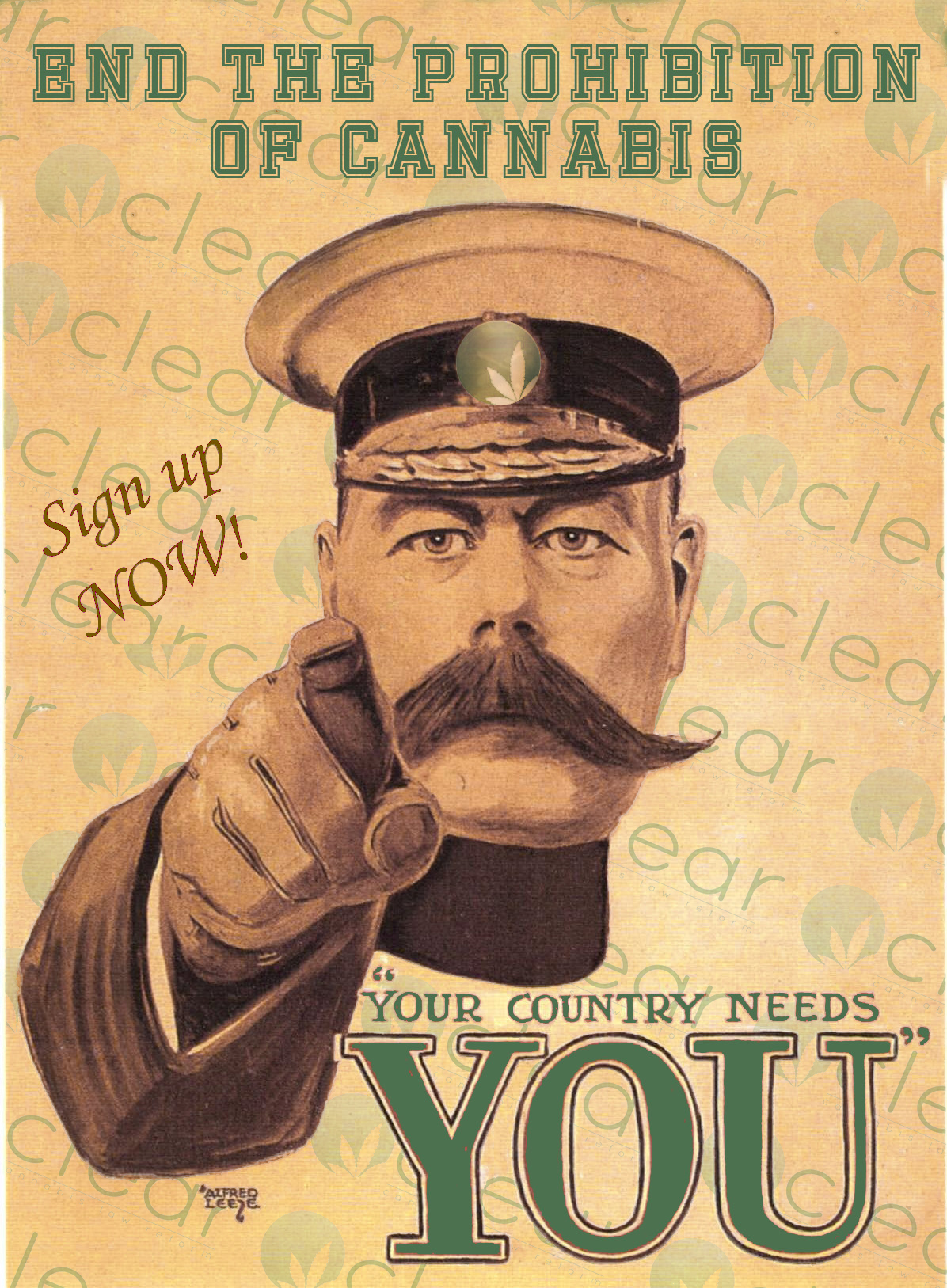 This is the most important short term objective of the cannabis campaign – move cannabis out of schedule 1. Not only would this enable doctors to prescribe Bedrocan medicnal cannabis as regulated by the Dutch government but it would mean research could start in earnest. The restrictions presently in place on cannabis, because it is schedule 1, make research very expensive, complicated and are a real deterrent.
If you haven’t lobbied your MP on the cannabis debate yet, you still have time to. If you can, get along and see them in a constituency surgery. Full guidance is provided here but you must act now: http://clear-uk.org/guidance-on-how-to-lobby-your-mp-for-the-cannabis-debate/
Most MPs run surgeries on Fridays so that means you have just this coming Friday, 2nd October and the following 9th October.
Please at least ensure you write to your MP. This is our moment and we are having an impact. Make sure you do your bit.
Daily Mail Corrects Another Cannabis Article In Response To CLEAR Complaint.
On 24th June 2015, a Daily Mail headline screamed:

“Medicinal cannabis DOESN’T ease pain, nausea, vomiting,
MS muscle contractions, sleep disorders or Tourette’s”
In fact the study reported on, from the University of Bristol, found exactly the opposite. It showed that medicinal cannabis DOES ease pain, nausea, vomiting and the other conditions referred to.
The exact words of the study’s conclusion were:
“There was moderate-quality evidence to support the use of cannabinoids for the treatment of chronic pain and spasticity. There was low-quality evidence suggesting that cannabinoids were associated with improvements in nausea and vomiting due to chemotherapy, weight gain in HIV infection, sleep disorders, and Tourette syndrome.”
Not a terribly positive endorsement of medicinal cannabis but the Daily Mail had published another bare faced lie. CLEAR made a formal complaint to the Independent Press Standards Organisation (IPSO) and, as a result, the headline has been changed. It now reads:
“Weak evidence that medicinal cannabis eases pain, nausea,
vomiting, MS muscle contractions, sleep disorders or Tourette’s”
In other words, a complete climbdown. Of course the damage has already been done and such deliberate dishonesty about evidence on cannabis is an everyday occurrence from the Daily Mail. See the revised article here.
Another small victory, another small chink in the Berlin wall of prohibition. We will bring it tumbling down very soon.
We also complained that all but two of the 79 papers reviewed in the study referred to synthetic cannabinoids and not to cannabis. As a result, the article has been amended to include these words at the end:
“Medical cannabis refers to the use of cannabis or cannabinoids as medical therapy to treat disease or alleviate symptoms. Cannabinoids are any compound, natural or synthetic, that can mimic the actions of plant-derived cannabinoids”

 Peter Reynolds