Posts Tagged ‘Peter Hitchens’
Will a Worthy Opponent Please Step Forward to Debate me on Cannabis Law Reform?

This week I debated Peter Hitchens on cannabis again. It was at Cannabis Europa in the Barbican. The text of my opening speech is below.
After about 14 years of doing this repeatedly. I’ve grown quite fond of the old blowhard but he has nothing new to offer. Just the same evidence-opposed assertions and less than a handful of anecdotes that shed no light on the subject at all.
So please, will someone step forward? I can definitely get such a debate hosted at a university or other respected institution. I can guarantee publishing it on YouTube, possibly even we might get it broadcast on TV.
Is there a politician with the guts to do it? I doubt it. They all runaway like frightened rabbits from any serious discussion about drugs policy. They’re terrified of what the Daily Telegraph and Daily Mail will say, even though most of them know that what we’ve done for 50 years has caused more harm than good.
This is an open invitation. Contact me on Facebook, Twitter/X, LinkedIn or by email at peter@peter-reynolds.co.uk
My Speech at Cannabis Europa, 25th June 2024
Thank you chair, Mr Ellson, and thank you Mr Hitchens for coming to this debate. My respects to you for entering what must seem like the lion’s den.
I am here to explain why the current law against cannabis causes far more harm than it ever has or ever could. We have suffered under bad drugs policy in Britain since the Dangerous Drugs Act of 1928. The prohibition of drugs, including cannabis, has created criminal markets which have caused extraordinary harm to our society. I suggest that it is the worst failure of social policy since the war. Nothing else has impacted communities, divided the people from the police, like prohibition. This may be elevating drugs policy to higher importance than you have heard before but I consider that bad drugs policy, prohibition, is driving the breakdown of our society like nothing else. The problem is not cannabis, nor any drug. It is prohibition.
Now, I offered Mr Hitchens the opportunity to phrase the motion for this debate. I was ready to speak either for or against, however he wished it to be set.
So, ‘This house calls for the repeal of the laws against marijuana’ and I speak for the motion. It is the last time that you will hear me speak the ‘M’ word. I prefer the correct scientific and botanical term, cannabis.
But the ‘M’ word, or rather the use of it, is a very good place to start. It’s an Hispanic nickname for cannabis which was deliberately selected and promoted by the architects of cannabis prohibition in the USA, William Randolph Hearst, the newspaper magnate and Harry Anslinger, head of the Federal Bureau of Narcotics, later to become the DEA.
They chose the ‘M’ word in order to associate cannabis with Mexicans and the perceived threat across America’s borders. How little has changed! They went so far as to even enshrine the word in US legislation. Transforming racially charged slang into statute. An extraordinary exercise in state propaganda..
So it was a racist meme from the beginning. Hearst’s newspapers published stories about Mexicans going insane, committing horrendous violence, sexually ravaging white American women and all of it was put down to cannabis. Again, it’s remarkable how little has changed. In Britain, the Mail newspapers continue this campaign of disinformation today.
I understand, of course, that language changes, develops but the choices we make are important and this history illustrates how the laws that currently exist are based on prejudice, misinformation and have nothing to do with science, health records or evidence of any sort. When that was tested by rigorous scientific method by David Nutt and his team, the Labour government had him sacked for it. That’s how deep this falsehood runs
So, as the motion states, I would repeal the laws against cannabis and I would replace them with laws that seek to control and regulate it.
Some argue that cannabis should be treated like carrots or cabbages. If we could go back to beginning of the 20th Century, I would agree. There are many plants in our gardens far more harmful than cannabis but 100 years of bad drugs policy, of prohibition, have created and supported a gangster-driven criminal market which we cannot walk away from. For the safety of our society, the cannabis market has to be regulated – not to protect us from cannabis but from the violent criminal trade in it.
I do not suggest that cannabis is harmless. No one with any sense claims that it is. But it has many benefits. Not just as medicine but as something that can bring great pleasure, insight and joy. It can enhance life experiences such as music, food, all forms of culture, spirituality and relationships. It is unique in this regard. I like to think of it as a condiment for life. It enhances and develops all the flavours of life and although those of us who consume it understand this, these benefits are largely obscured by the hysteria and falsehood around it.
Clearly, excessive or irresponsible use can cause health harms, as with any substance. The most vulnerable are children and that’s why the principle role of the law must be to protect them. As for adults, they should in my view be able to consume anything they wish without restriction under law – unless of course they cause harm to someone else. And we already have all the laws we need to protect others without banning personal possession or use of any drug.
The main harms to children are around brain health but in mature adults, science shows exactly the opposite, that cannabis is neuroprotective, promotes neurogenesis and is a prophylactic for brain injury either through trauma, stroke or neurodegenerative disease. Professor Gary Wenk of Ohio State University says that regular, moderate use of cannabis in middle age will delay the onset of dementia so effectively that most people will never experience it
So it is with protecting children that the law should be concerned. Yet what we have seen, beyond doubt, is that the effect of the law has been exactly the opposite. The laws against cannabis are the principle cause of its harm to children. Because it is prohibited, it is easier for children to get hold of it than the drugs that we regulate, alcohol and tobacco.
The criminal market in cannabis drives street dealing, sales to children, the exploitation of children as runners and it inveigles them into gang culture and county lines. I suggest that cannabis prohibition is the root cause of most knife crime. It and the prohibition of other more dangerous drugs is the cause of most crime and violence in Britain. There is no dispute about this. Over 70% of people in prison are there for drug-related crime. Police spend most of their time on drug-related matters. We have created this huge edifice of drug crime which now overwhelms everything else. Globally we have created the biggest ever criminal market worth, 10 years ago, in 2014, $652 billion. We have done this deliberately. It is stupidity beyond belief.
It is because of this huge, overwhelming weight of drug-related crime that our police have no time for real wrongdoing, for burglary, rape or fraud. And this is a choice we have made. There is no inherent wrong in cannabis. It’s just a plant. We have obsessed over ‘malum prohibitum’, that is a wrong that we have invented, at the expense of ‘malum per se’, that is something that is inherently wrong, in itself, such as theft or assault.
The demand for cannabis is huge. According to the largest ever study on the subject, we consume more than 2800 kilos of it every single day in Britain. It’s utterly naïve and absurd to think this demand can be turned off or suppressed – and indeed, why should it be for consenting adults? It’s the futile attempt to suppress it that causes so much harm.
And let’s be clear, even though the cannabis laws are barely enforced at a personal level now – thank heavens the police recognise what a waste of their resources it is – prohibition still supports and promotes the criminal market and all the harm it causes and the other crime it finances. As I set out in my book, ‘100 year of Bad Drugs Policy’, to be published next year, the cannabis market is the most reliable source of regular cashflow for criminal gangs. It incorporates human trafficking, modern slavery, child exploitation and
funds the smaller but much more profitable trade in heroin and crack. It provides the working capital for every other type of crime you can imagine. And all because politicians, enjoying their taxpayer-subsidised drug consumption rooms in Parliament, have decided, on the basis of no evidence at all, that you should be stopped from enjoying a joint or a brownie or easing your aches and pains without the bother or expense of a prescription.
So how do we regulate cannabis? I have already published a great deal on this, so has Transform, so have Conservative think tanks, so have Labour think tanks, the Liberal Democrats, the Green Party and others. And now we have the real-world experience of dozens of US states, Canada, the Netherlands, Malta, Luxembourg and Germany. We have a huge quantity of evidence.
Of course, there have been mistakes. California’s greedy politicians tried to impose taxation at a ludicrous rate which only supported the illicit market. They’re now fixing ii but as in all of this it’s unrealistic to expect immediate results. Undoing the harm of 100 years of prohibition takes time. But in Colorado, 12 years since legalisation, teenage use is now down 30%. 30%! In Canada, after just six years, 82% of all purchases are now made through legal channels. These are amazing achievements, which fully vindicate legalisation – and we, in Britain, have the opportunity to do even better!
So we have to repeal these laws against cannabis. They cause so much harm and our fears of dire consequences are illusory and now proven to be so by actual experience.
All we are currently doing is wasting time, our own time, police time, the time of the courts, the probation service and the time of all the people who are being hurt by the consequences of prohibition. And the money we are wasting, the lives we are wrecking, the terrible waste that this ludicrous policy causes every day is a tragedy.
These are my arguments for why we should repeal the laws against cannabis. I have more to add but now it is time for us to hear from Mr Hitchens.
We Should Encourage Peter Hitchens In His Bombastic Ways.
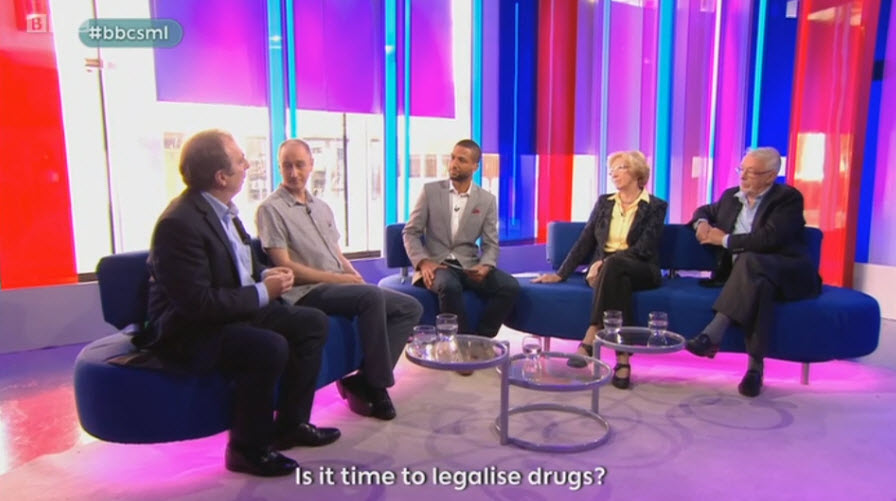
Peter Hitchens clearly doesn’t realise what a turn off his rude, boorish behaviour is to 90% of people who watch him on TV. Of course, to the small minority who agree with him, it’s very effective rabble rousing just like an Islamist fanatic or a hard right hatemonger. That’s exactly how he looks to most people and really we should encourage him to do more of the same.
Peter’s performance on BBC Sunday Morning Live followed a pattern all too-familiar to those who understand his tactics. Through such occasions his tone becomes increasingly strident, he interrupts everyone repeatedly, complains that no one has read his book, throws in a wild and dishonest claim about cannabis and mental health, then goes into full tantrum mode complaining he’s never allowed to finish his point.
He was accompanied today by David Raynes, the retired-in-disgrace, ex-customs officer who is well trained in Hitchens’ techniques. With a career one step up from a security guard, he now holds himself out as some sort of scientific and medical expert and has a ready made reefer madness story to add in while partnering with Hitchens on the interrupting, talking over and hectoring of other guests.
The moderation of the debate by Sean Fletcher was weak, ineffectual and really rather pathetic but I do sympathise. Hitchens is a Machiavellian, calculated subverter of debate and only the very strongest can handle him.
But it’s clear that nowadays he digs himself deeper and deeper the more hysterical he becomes and the angrier he is, the more the weakness of his arguments is exposed. Carry on Peter, you’re doing our job for us now.
VIDEO. ‘This House Would Legalise Cannabis’. Reynolds v Hitchens. University Of Southampton, 29th September 2016.
Recording of a debate on the legalisation of cannabis which took place on Thursday 29th September 2016 at the University of Southampton, hosted by Southampton Debating Union.
‘This House Would Legalise Cannabis’. Reynolds v Hitchens. University Of Southampton, 29th September 2016.
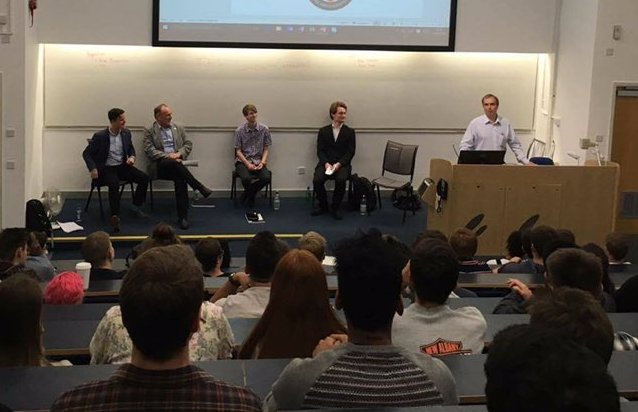
A vote was taken before the debate started: For the proposition: 49 Against the proposition: 18 Abstain/undecided: 17

A Good Attendance
John Pritchard, studying economics. For the proposition.
Jacob Power, studying philosophy. Against the proposition.
Peter Reynolds, CLEAR Cannabis Law Reform. For the proposition.
Peter Hitchens, Mail on Sunday. Against the proposition.
A vote was taken after the debate finished: For the proposition: 57 Against the proposition: 26 Abstain/undecided: 8
My speech
I start with an assertion that I think we can all agree on – the only purpose of any drugs policy is to reduce harm.
I argue that British drugs policy, specifically on cannabis, causes far more harm than it prevents and that the solution is to legalise. But by legalise, I do not mean a free for all. In fact, I mean a system of regulation which minimises harm.
Under the Misuse of Drugs Act, cannabis is called a “controlled drug” but nothing could be further from the truth. What every government since 1971 has done is abandon all control. They have abandoned our communities. they have abandoned our young people and they have abandoned those who need cannabis as medicine. All of them, Conservative, Labour and the coalition, they have abandoned us all to criminals.
The results are street dealing, dangerous hidden cannabis farms that cause fires, theft of electricity, destruction of rental properties, gangs that exploit children, both by selling them cannabis and getting them involved in dealing, human trafficking, modern slavery, most often Vietnamese children, smuggled into Britain and locked up in cannabis farms to look after the plants. And as for the product itself, it is frequently poor quality and often contaminated with toxic residues.
These are the harms that the Misuse of Drugs Act is supposed to prevent but, in fact, it creates them, promotes them and maximises them.
Now, it may surprise you to know that the law is not about protecting people from health harms. The exact words of the Act are that it is about the misuse of drugs “having harmful effects sufficient to constitute a social problem”. It is social harm that the Act seeks to prevent.
Which is just as well because the “harmful effects” of cannabis are very difficult to identify. Most of what you hear is either wild exaggeration or completely false. Even the Institute of Psychiatry, the source of many scare stories, admitted last year that its press office was misrepresenting and exaggerating its own research.
Now t’other Peter will tell you that cannabis is a dangerous drug which can cause serious, irreversible mental illness. In a debate like this it is impossible to compare all the various scientific studies that form the body of evidence on which cannabis policy should be based. I can certainly answer specific questions later on but for now, let’s rely, not on evidence, but on cold, hard facts.
The populist myth is that thousands of young people are afflicted by this terrible condition called ‘cannabis psychosis’. The facts are that in the last five years there has been an average of just 28 finished admission episodes in hospitals each year for people under 18 for cannabis psychosis.
Of course these are 28 tragedies and I don’t overlook that but in public health terms it is an insignificant figure. For instance, there are more than 3,000 finished admission episodes each year for peanut allergy but we don’t spend £500 million each year on a futile attempt to ban peanuts, do we? Yes, that’s how much we spend every year on police, courts, probation and prison services to try and stop people using cannabis.
However, it’s not as simple as that. Apart from hospitals, thousands of people each year receive what’s called ‘treatment’ for cannabis use disorder from community health services. Nearly 16,000 young people for the year 2014/15.
Now the only ‘treatment’ for cannabis is counselling but that’s not what this is really about. It’s actually about trying to force people to stop using cannabis regardless of whether it’s causing any harm. Public Health England, which records these figures, shows that 89% of all those in treatment have been referred from the courts, educational institutions or some other authority. In other words this is coercive treatment. You have no option. If you don’t agree the courts will impose a tougher penalty or you might get expelled from school. Only 11% of those receiving this treatment actually decide they need it themselves.
Don’t get me wrong now, I’m neither suggesting cannabis is harmless nor that it can’t be a real problem for some people. But I ask you this, if it has the potential for harm, is it better that we leave the entire market, now worth £6 billion per year, in the hands of criminals, or would it be better and safer for everyone if it was properly regulated and controlled? Wouldn’t any health harms be reduced, better treated, if we had quality control, age limits, proper labelling of what you’re buying? Isn’t this obvious, common sense?
We will continue to put most of our effort into the medical campaign because that is what morality and compassion demands But actually, there is far more harm caused by the prohibition of recreational use. As well as all the social harms I mentioned earlier, do you know there are one million people in the UK with a conviction for cannabis? People whose careers, ability to travel, even their credit score can be damaged because they got caught smoking a joint.
In all jurisdictions where cannabis is legally available, the benefits are dramatic and very easy to see. In Holland, far fewer children use cannabis than in the UK. Underage use is declining in Colorado, Washington, Oregon, Alaska where cannabis is legal for all adults and in the other 30 US states where medical cannabis is legal. Crime is down, fatal traffic accidents are down, alcohol consumption is down, overdoses and deaths from dangerous opioid painkillers are down.
The prohibition of cannabis is a great force for evil in our society. It promotes crime, it maximises the health harms of cannabis, it ruins lives, it denies people medicine that science proves will help them, it blights communities, endangers children, fritters away precious law enforcement resources.
Indeed, prohibition is a fundamentally immoral policy. It sets the police and the courts against the communities they are supposed to protect. After all, the demand comes from us and it is not going away. We are adults, free human beings who are entitled to act as we wish provided it doesn’t harm others. Our government and our police should serve us. It is an affront to justice, to the rule of law, to morality and to each one of us that this oppressive, ridiculous, evidence-free policy persists.
Legalise cannabis now! Please vote in favour of the motion.
For All The Hysteria About Cannabis And Psychosis, Here Are The Facts.
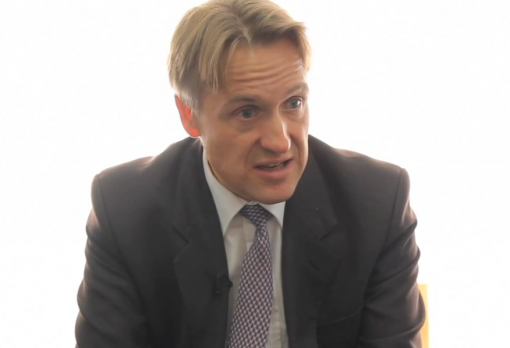
Charles Walker MP. A Scaremonger Without A Cause.
Charles Walker MP, Parliament’s cheerleader for the ‘skunk scaremongerers’ shot himself and his hysterical campaign in the foot yesterday.
He had submitted a parliamentary written question asking:
“…how many people under 18 years of age have been treated in NHS-funded mental health units for cannabis-induced psychosis in each of the last five years?”
The answer from Jane Ellison MP, minister of state at the Department of Health, must have gravely disappointed Mr Walker. She revealed there have been average of just over 28 ‘finished admission episodes’ for each of the past five years. That doesn’t necessarily mean 28 people as it could include the same person being admitted more than once.
Of course, each of these 28 cases is a tragedy for the people involved and nothing must distract from that but it clearly shows that in public health terms, ‘cannabis psychosis’ (which some senior psychiatrists don’t even believe is a genuine diagnosis) is virtually unheard of. So much for the endless newspaper columns, the endlessly repeated ‘studies’ that never reach any conclusion and the endless moralising and deceit from those who make money from this scare story – either from providing ‘therapy’ or by fleecing money from those prepared to fund so-called science that sets out to reach a pre-determined conclusion.
Of course, not only are these cases very, very few in number but they have arisen under the present policy of prohibition when the market is in the hands of criminals. How much could we reduce this number if government took a responsible approach and regulated the market? With proper quality control, age limits, better education and harm reduction surely we could make the cannabis market safer than it is in the hands of the criminal underworld?
Dr Trevor Turner, Consultant Psychiatrist
“I don’t think it causes mental illness. I have never seen a case of so-called cannabis psychosis.”
Dr Trevor Turner, East London and City University Mental Health NHS Trust
So this is very, very bad news for Charles Walker, for his sponsor, Mary Brett of ‘Cannabis Skunk Sense’, for Peter Hitchens, David Raynes, Sarah Graham, Theresa May and hundreds of rehab clinics, therapists and charlatans who talk up the cannabis psychosis scare story. The Daily Mail and the Daily Telegraph, which systematically misrepresent and distort evidence on the subject are exposed for what they are. Even those on the reform side like Transform, who have chosen the dubious path of talking up cannabis as ‘dangerous’ in order to sell their consultancy services, are disgraced. Their credibility is destroyed. Their argument is false and it always has been.
The husband and wife team of Professor Sir Robin Murray and Dr Marta Di Fiori, have built up a family business in skunk scaremongering. Every year they release another ‘study’ which says almost exactly the same as the last one, never shows any causative effect but is relentlessly exaggerated and regurgitated for those who want to demonise cannabis and cannabis users. Their last point is always ‘more research is needed’. I wonder is there anyone stupid enough out there to continue funding this vendetta against the three million people in the UK that enjoy cannabis or use it as medicine? Similarly in Australia, Professor Wayne Hall and his colleagues at the National Cannabis Prevention and Information Centre, have built their careers and made a lot of money pursuing this futile goal of proof that cannabis cause mental illness. The figures prove them all wrong. They are all self-serving propagandists and deceivers, nothing more.
These figures are more than evidence, they are facts and they prove that ‘cannabis psychosis’ is such an infinitesimally small risk, that we really need to stop wasting so much time, energy and money on it. We need to get on, legalise, regulate and start bringing the market under proper control, stop wasting money on futile law enforcement and research and start generating tax revenue and providing therapeutic and financial benefits for the whole community.
‘This House Would Legalise Cannabis’, University Of Exeter, Thursday, 29th November 2012
 LIVE BROADCAST
FOR:
Peter Reynolds, CLEAR
Stephen Davies, Institute of Economic Affairs
AGAINST:
Peter Hitchens, Mail on Sunday
David Raynes, National Drug Prevention Alliance
University of Exeter. Streatham Court A. 7.30pm. Free entry.
A Tale Of Two Conferences
“It was the best of times, it was the worst of times, it was the age of wisdom, it was the age of foolishness, it was the epoch of belief, it was the epoch of incredulity, it was the season of Light, it was the season of Darkness, it was the spring of hope, it was the winter of despair…”
A Tale Of Two Cities, Charles Dickens.
It was at its best as the brave Clark French and Cure Ukay gave their personal testimonies as medicinal cannabis users at the European Student Drug Policy Reform Conference. It was at its worst when Peter Hitchens confronted me and Sir Ian Gilmore at the University of Bedfordshire “A Ceasefire In The War On Drugs?” debate.
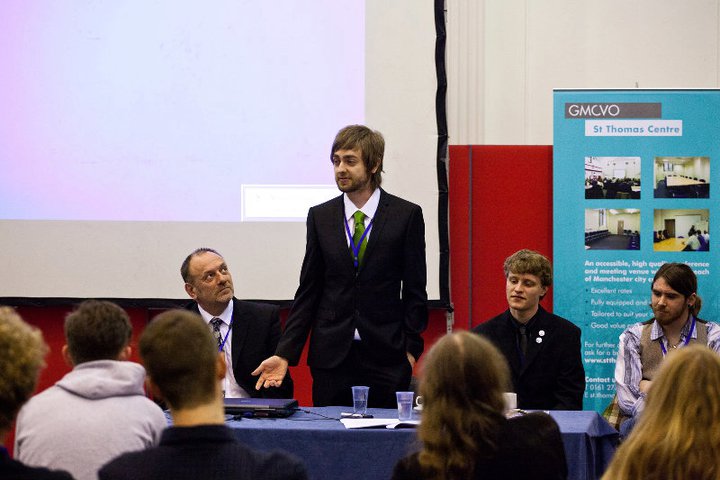
The Cannabis Panel
I am so proud to have been associated with both Clark’s and Cure’s contributions at the Manchester conference last weekend. There were tears in the audience as first Clark, who has MS, then Cure, who has Crohn’s, explained the reality of their daily lives and the relief that cannabis provides. The following day, Clark had a relapse and he hobbled to the front to explain, his legs in spasm. He went outside to take his medicine and literally skipped back into the conference hall. It was like watching Christ telling someone to take up his bed and walk. It was intensely moving. It refreshed my enthusiasm. It reignited my rage. They are both warriors for the cause of great courage and dedication. They are my inspiration.
The conference was a worthy and well-organised event. Lembit Opik gave a barnstorming speech which had them whooping and cheering in the aisles. There were fascinating contributions from Sebastian Saville and Niamh Eastwood of Release, Darryl Bickler of the Drug Equality Alliance, Chris Hallam and Tom Lloyd of the International Drug Policy Consortium. There were very practical workshops on campaigning and an engrossing lecture from Chris Rose of Campaign Strategies. I know I’m biased but I think Clark and Cure were the stars of the show!
And so to London on Wednesday evening for the debate at Kings College University, near Waterloo. As I walked into the lecture theatre, there was Peter Hitchens chatting with Sir Ian Gilmore. I marched straight up and introduced myself, explaining to Hitchens that I am responsible for the four Press Complaints Commission complaints that he is currently facing. I enquired after his brother’s health and he gave me a long and detailed explanation about Christopher’s oseophageal cancer. He was extremely courteous to me. I took my seat directly in front of him.
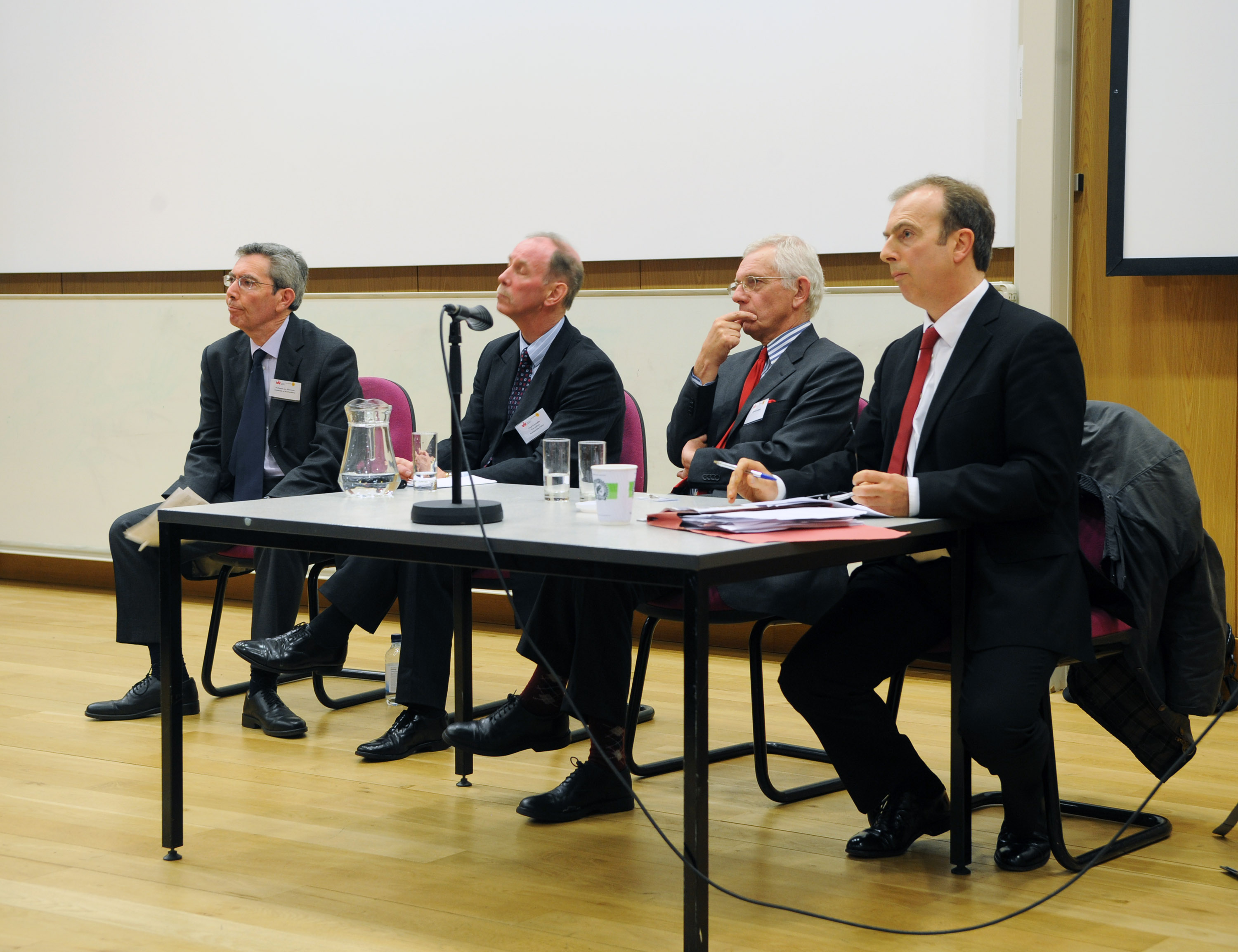
Ceasefire In The War On Drugs?
Hitchens spoke first. He is the arch dissembler, presenting facts in such a way that he draws you towards a false conclusion. To be fair, he is a fine speaker but at the heart of his argument is an intellectual vacuum.
Sir Ian Gilmore, ex-president of the Royal College of Physicians went next. He was quiet and dignified and presented a very scientific approach to harm reduction. Finally, Tim Hollis, Chief Constable of Humberside, stood in for David Blunkett. He was an entertaining speaker. I always rather like intelligent policemen. They have a difficult job to do and I think the good ones are very valuable to society.
So to questions…and I was fidgeting in my seat with impatience! I had my go, talked about the harms of prohibition, about taking the more pragmatic approach with a regulated system and the evil injustice of the denial of medicinal cannabis. Right in front of me Hitchens was visibly seething. When I pointed out that his brother is a passionate advocate of medical marijuana he snapped. He pointed at me, glared and shouted “Leave my brother out of it!”.
Steve Rolles from Transform spoke as did Harry Shapiro from Drugscope. Tom Lloyd, who had also spoken in Manchester contributed and there were many other intelligent observations and comments. Hitchens was clearly unhappy.
We went back to the panel and Hitchens was aggressive in his response, gesturing at me and talking of “idiots” and accusing Sir Ian of talking “drivel”. I heckled him. he promised to “deal with you later” with another Alan Sugar-style stab of the finger. Sir Ian was next and he rather politely suggested that “Peter has his head in the sand” – at which Hitchens exploded!
He grabbed his coat and bag and made as if to leave. It was a very deliberate flounce in high dudgeon. Later it was suggested he did it for dramatic effect but no, it made him look foolish. He was flummoxed by the opposition.
The chairman, ex-BBC presenter John Silverman, skillfully restrained him and persuaded him to stay. In his closing statement Hitchens quoted some statistics from Portugal in an effort to disprove that country’s success with decriminalisation. It would be against the rules for me to accuse him of anything more than dissembling but no one in the room recognised any truth in his figures.
It was an entertaining evening and a good opportunity to raise the profile of CLEAR. I’m back next week for another session entitled “How the World’s View of the Drugs ‘war’ is Changing”.
The LCA Leadership Election
The ballot papers have been mailed to members today. The candidates are Stuart Warwick and myself. Voting closes a week today. The result will be announced shortly afterwards.
Peter Reynolds
 Dear LCA member,
I am seeking election as leader of the Legalise Cannabis Alliance.
I have been campaigning for an end to the prohibition of cannabis for more than 30 years.
If elected, I can promise you radical change in the way that LCA goes about its business. We will launch a new campaign based around the theme: REFORM, REGULATE and REALISE.
That is REFORM the law to end prohibition, REGULATE production and supply based on facts and evidence and REALISE the huge benefits of the plant both as medicine and as a £10 billion net contribution to the economy.
This will be a tightly focused campaign aiming for the urgent availability of cannabis for those who need it as medicine and a properly regulated supply chain for the millions of British citizens who use it recreationally. That means we will take the business out of the hands of criminals, allow commercial growers to produce the plant under properly regulated conditions and permit small scale personal cultivation of up to six plants.
We will advocate sales of cannabis through licensed outlets such as tobacconists and/or coffee shops to adults only. It would remain a criminal offence to supply cannabis to under 18s. We accept that cannabis should be taxed, partly to cover the costs of the regulatory system and a health advisory service but also so that the entire country will benefit from bringing this huge market out of the black economy. Based on research by the Independent Drug Monitoring Unit and the Transform Drug Policy Foundation we estimate that with reductions in law enforcement costs and new tax revenue, there will be a net contribution of approx £10 billion to the UK exchequer.
We will not be diverted by peripheral issues such as the many uses for industrial hemp, although we will be glad to see progress in that area. We will run a campaign focused on achieving practical change, not promoting a philosophy. That means that our main concern will be to educate and influence MPs and get our message across in the media. MPs are the only people who can change the law and it is through the media that we can influence voter opinion so we will deal with them on their terms, in Westminster, in newspapers and television studios. We will bring a new professionalism to this issue and demand the attention and respect that our proposals deserve.
The prohibition of cannabis is unjust, undemocratic and immoral. Most cannabis users are reasonable, responsible and respectable people and I will demand our right to be heard and treated fairly.
I shall stand for parliament in every by-election and in the next general election on this single issue. Being realistic, we do not expect to win a seat but we will put cannabis back on the political agenda and we will be taken seriously. No longer will we allow the Daily Mail or other media to publish lies and propaganda uinchallenged. No longer will we allow prohibitionists like Debra Bell and Peter Hitchens to misinform and promote scare stories without any balance.
I want to transform the LCA into a professional, effective campaign that will achieve results. I believe that I am the right man for this job. Please vote for me. Vote to REFORM, REGULATE and REALISE.
My website at http://www.peter-reynolds.co.uk contains a wealth of information about cannabis and many articles that I have written on the subject. If you want more detailed information about me and what I stand for, that is the place to look.
Thank you for taking the time to read this.
Peter Reynolds
Stuart Warwick
 Dear Member,
As one of the candidates seeking election for leadership of the LCA, I’ve been asked to write a short letter outlining my plans for the direction and actions I’d like to see the LCA take.
As Leader I would not seek to limit our campaign to the medical and recreational issues only (although I believe this should be our focus) but use the plethora of other applications that cannabis has in industry to gain support from as wide a demographic as possible.
I intend to campaign for legalisation, regulation & taxation.
Legalisation, done properly would remove the cannabis market from the hands of criminals and terrorists and open it up to legitimate businesses & entrepreneurs, giving the substantial profit back to society.
Regulation will help prevent dangerous contamination, ensure good quality and be more effective at keeping it out of the hands of children.
Taxation to put some of the profit back into the country – everyone benefits.
I think licensed outlets and growers is what we should be aiming to achieve. Licensing should cover not only the supply of cannabis but should also cover growing set-ups to ensure electrical and fire safety as this is a known hazard with some badly fitted installations. This would allow local growers to provide more variety in outlets, allowing users to clearly identify the strain that suits their needs the best.
Licenses should be available to cover a wide range of grow sizes to encourage both local and national business opportunities.
I think fact-based policy is a must, with genuinely unbiased research. To base policy purely on knee jerk emotional and moral arguments while ignoring scientific research is unjust and unproductive.
We know there are people in power who understand this but are forced to repeat the same prohibition mantra.
We need to let people know that if they decide to make a stand against prohibition we will be there to back them up. They will not want to make a move unless they know that when they do, they are not left hanging, We just have to give them the nod and be ready when they do.
By standing for elections, I hope to challenge not only my local MP’s and the other candidates but also policy on a national level. As leader of the LCA I hope to unite all of the voices in our community to achieve just that.
I have 2 sites that I have used to promote my ideas so far. Feel free to visit them, although there are some very early attempts on there, so quality isn’t always great, sorry.
http://www.youtube.com/user/NovictimNocrime08
http://www.facebook.com/pages/Hunar-for-Prime-Minister/238421977309
Thanks for your time – , this wasn’t as easy to write as I thought it would be!
Regards
Stuart Warwick.
The Politics Of Cannabis

Originally Published In ISMOKE Magazine Issue 1
Cannabis is a political issue. Make no mistake about it. The scientific, moral, medical and health arguments have all been won. What we need to do now is find a way to make change happen.
It’s in the prohibitionists’ interests to keep debating all the ins and outs and going through the evidence because it diverts from the imperative for change. We have to keep repeating the truth. We have to cut through their deception and scaremongering but above all, we have to demand action.
In the US, they’ve gone way, way past the silly and irrelevant arguments about cannabis being dangerous or harmful. We like to think that we’re smarter, a more mature democracy but so many Brits are still suckers for a Daily Mail scare story. The propaganda and bigotry still prevails here. In America they simply accept that if you abuse or misuse something it may cause you harm. They rarely even mention the psychosis theory. Even after Congresswoman Giffords’ shooting and the stories of Jared Loughner’s marijuana use, his friends were quick to step forward and say he’d stopped some time ago and actually seemed worse and more unstable without self-medicating on cannabis. More importantly than that, the US media reported what his friends said rather than hushing it up because it wasn’t sensational enough.
Peter Hitchens, the Mail On Sunday columnist wrote a disgusting rant about the shooting, blaming it all on cannabis and having nothing to do with the truth at all. Now the US media are ridiculing him about Britain’s Reefer Madness. He really is an example of the very worst in journalism. The truth means nothing to him. He is a liar and a mendacious frightener of the vulnerable, the elderly, of children and their parents. You will be interested to know that the Legalise Cannabis Alliance has drawn a line in the sand. We will no longer let such nonsense go unchallenged. A formal complaint is being made in the LCA’s name to the Press Complaints Commission. It will be the first of many. We will no longer allow the British media to distribute lies without calling them to account.
The War On Prohibition Can Be Won!
Prohibition is fundamentally immoral. It is nothing less than the unjustified oppression of a section of society. It is as pernicious and evil as racism, sexism, homophobia or any other form of prejudice. It says that, irrespective of facts, evidence, science or justice, just because we disagree with you, we will make your activity illegal. We will criminalise you, imprison you, ruin your career, endanger your family, smear you with unjustified innuendo and suspicion. We will cause you far more harm than the activity you choose ever will.
It is pretty well accepted now, worldwide, that Nixon’s war on drugs can never be won. It makes Vietnam or Afghanistan look like a little skirmish in some backwater. It has been responsible for far more death, misery and destruction than any war since Nixon first declared it. There are still those who cling to its ambitions, like our favourite preppy, baby face minister James Brokenshire But he is rather like one of those Japanese soldiers, found on some remote Pacific island, thirty years after his Emperor surrendered – still dangerous, still committed to his cause but hopelessly out of touch, in need of re-education, a very, very sad case.
The war on prohibition is now in full flow and this is a campaign that can and must be won. It is a war that has right and justice and common sense on its side. It is time that we marshall our forces, determine our strategy, plan our tactics and hold fast to our courage as we advance on the enemy. I believe that this year or next marijuana will be legalised in at least one state in America. Once the dam is broken, progress will begin to roll out all over the world.
I believe that the Legalise Cannabis Alliance is the standard around which we should rally. We are responsible, respectable, reasonable citizens and we need to unite to fight the war on prohibition.
What is vital is that the LCA communicates its messages effectively to the right people. It seems to me that one of, if not the most important audience is members of parliament. They, after all, are the only people who can actually change the law. We therefore have to play their game by their rules.
In the documentary “In Pot We Trust”, Aaron of the Marijuana Policy Project says that one man in short hair and a suit, lobbying congressmen can achieve more than hundreds marching in the street. I think he’s right.
The LCA must re-launch its campaign. We must overhaul our image, update the logo and the website. We must become conscious of our communications, control and deliver our messages with ruthless effect, use all the spin doctor tricks and techniques, just as any other political party or pressure group.
I will put on a suit and tie for the LCA because that’s what is needed to make progress with politicians, through the media and, most importantly, with the great God of public opinion.
I think we also have to consider our name. Not throw it out for the sake of something new but recognise that “Legalise” is a word that frightens people. They think it means an uncontrolled free for all, whereas what we argue for is fact and evidence based regulation. We also need to consider the word cannabis. People are frightened to have it on their Facebook profile and concerned that it may come up in a Google search when they’re applying for a new job. We have to consider these things. I would argue that instead of saying “Legalise Cannabis”, we might say “End Prohibition”.
So we do need to become much more professional about our communications and image. Anything put out in our name needs to be “on message” in every sense of the phrase – look, feel, content, style, etc. Each target audience needs to be addressed on its terms. We need an analysis and a plan for each individual MP and constituency. We need a rota of pro-active media communications. We need to enlist the help of celebrities who support our cause. This needs to be done consistently and repeatedly. We need a team of people all over the country working together with a plan to succeed.
I also believe that we should re-register as a political party and field candidates in every byelection. In fact, I would propose that we field the same candidate in every byelection and we build.the campaign and awareness over time. I don’t expect us to win a seat in parliament but I do expect us to start being taken seriously. I want to see us on Newsnight and on Question Time. When Debra Bell is asked for a quote or is interviewed about a cannabis story, I want us to be quoted as well and to be on the other side of the TV sofa facing down her mischief and misinformation.
Cannabis is a political issue. If we get our act together and get serious about the war on prohibition, get serious about achieving results, explain the facts, expose the lies, then we can prevail. We can see the truth revealed. We can win!
The Blagger, The Blogger And The Pot Plant.
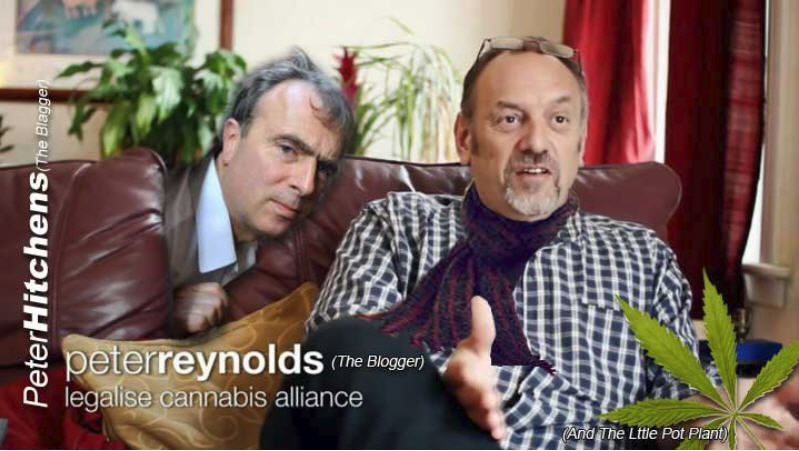
The extraordinary wit and talent of my friend Cannaseur.

 Peter Reynolds