Posts Tagged ‘propaganda’
Legalise Cannabis Alliance Votes To Return To Politics
 Last week the LCA announced the result of its membership ballot – that it would re-register as a political party and elect a leader.

Stuart Warwick
Two candidates are standing for the leadership: Stuart Warwick and myself. Voting will close on 14th February 2011 and the result will be announced a few days later.
At a meeting last Sunday, a new management committee was formed consisting of:
Don Barnard, PR & Political Liaison
Alun Buffry, Treasurer & Coordinator
Mark Palmer, IT & Media Development
Peter Reynolds, Speaker
Janice Wells, Secretary
Two official spokespersons were appointed:
Chris Baldwin
Stuart Warwick
Alun Buffry, co-founder of the LCA, said:
“In 2006, LCA members voted to de-register as a political party in the mistaken belief that the Liberal Democrats and Greens would take up the complex issues surrounding the cannabis plant. Sadly that did not happen. Now, LCA members have voted to re-register as a political party. The LCA will once again offer voters a platform to register their discontent over the unjust prosecution of victimless users of cannabis.”
Don Barnard added:
“I am over the moon that the membership has voted to get politically active again. I look forward to raising concerns about the dubious reasons for complete prohibition of the cannabis plant with government and parliamentarians.”
For myself, I am excited to be involved in the management committee and the leadership election. Whatever the outcome, I will do my utmost to represent the LCA, its members and all cannabis users to the best of my ability. It is time that the discrimination against millions of British citizens who choose to use cannabis was put back on the political agenda. No longer can the misinformation and false propaganda put out by government ministers go unchallenged.
“My Son Played Russian Roulette With Cannabis – And Lost” – More Sensationalist Misinformation From The Mail
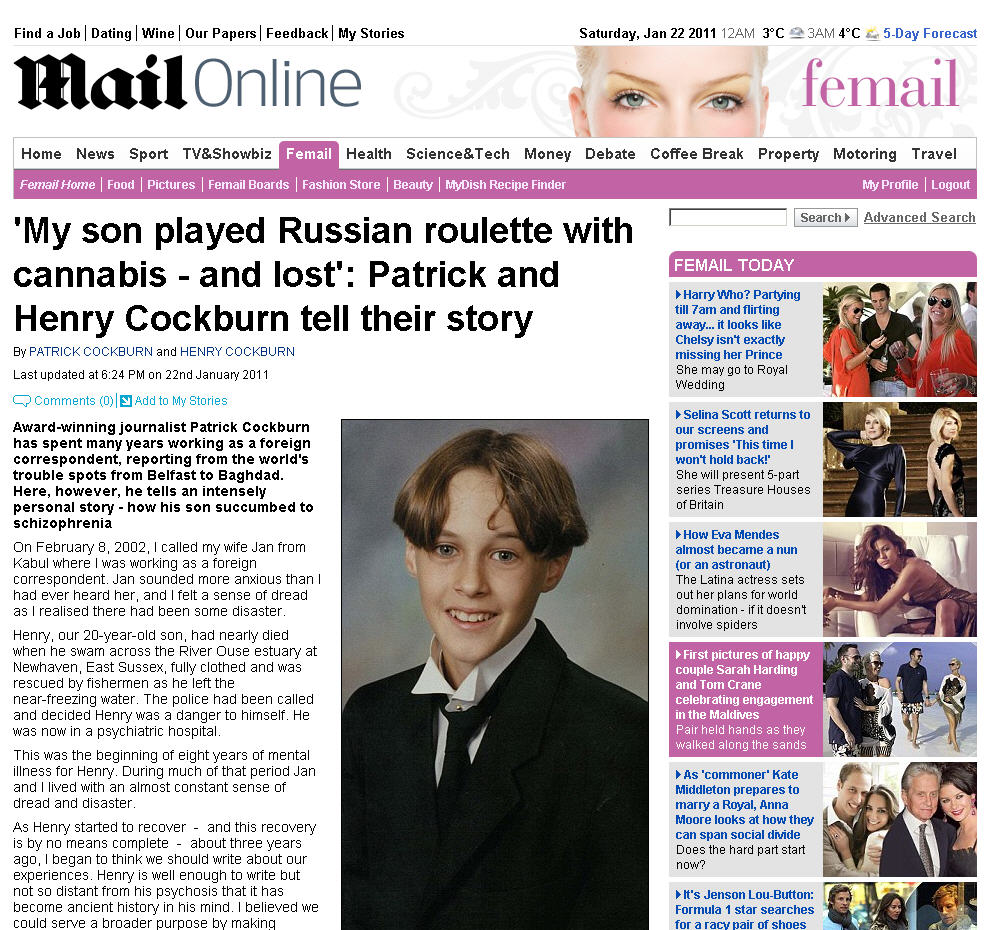 Does Peter Wright, editor of the Mail On Sunday, have any interest in the truth, or is he just trying to squeeze the last drop of sensation, hyperbole and panic from anything to do with cannabis?
Last week, Peter Hitchens penned a disgusting diatribe of untruths which has already been sent to the Press Complaints Commission. This Sunday’s paper will be the subject of a second complaint. It is truly appalling, crass and cheap nonsense. See here for the full story.
This is my response. Whether the Mail publishes it is up to them but I and the millions of other cannabis users in Britain have had enough. From now on, no such instance of lies and propaganda will be allowed to pass without being called to account.
My Response To The Mail On Sunday
This is a tragic story but blaming it on cannabis is not justified, nor is it helpful.
Whatever Henry’s story, the data simply does not support the idea that cannabis can cause schizophrenia. In fact, it more strongly suggests that people who have mental illness may use cannabis to self-medicate. It is instructive to note that Henry’s crisis arose when he had deliberately stopped using cannabis. Indeed, there is existing and continuing scientific research into cannabinoids as an anti-psychotic therapy.
This is similar to the recent story about Jared Loughner who shot Congresswoman Giffords in Arizona. He was said to be a cannabis user but, in fact, his friends said that he had stopped using it to self-medicate and since doing so had become more unstable and strange in his behaviour.
The article mentions “Sir William Paton, professor of pharmacology at Oxford University and one of the world’s greatest experts on cannabis” but I am personally acquainted with Professor Les Iversen, a current professor of pharmacology at Oxford University, the current chairman of the Advisory Council on the Misuse of Drugs and author of many books on the subject of cannabis. Prof Iversen was also the author of an article in The Times entitled “Cannabis. Why It’s Safe” and he delivered a lecture last month entitled “Bringing Cannabis Back Into The Medicine Cabinet”.
The demonisation of cannabis is a grave mistake and a disservice to young people and their parents. It looks almost certain that cannabis will be legalised in at least one state in the USA either this year or next. Progress will then roll out across the world. It’s about time that the British media caught up to fact that, as Professor Iversen says, cannabis is “one of the safer recreational drugs”, much safer than alcohol. It also has tremendous actual and potential benefit as medicine and Britain is way, way behind in the world in recognising this.
The Mail On Sunday’s scare stories about cannabis should be replaced with facts and information about this valuable and relatively harmless substance.
Professor Glyn Lewis of the University of Bristol said in 2009 that even on the most extreme interpretation of the data on cannabis and psychosis (a review of all published evidence) that 96% of people could use cannabis with no risk whatsoever of developing psychosis.
Six million people in Britain use cannabis regularly. We are sick and tired of the lies that are told about us.
Cannabis Embarrassment At The Home Office
 The re-scheduling of Sativex, the cannabis tincture marketed by GW Pharmaceuticals is causing huge embarrassment at the Home Office.
Everybody’s been able to go along with the white lie up to now that Sativex is some sort of highly complex, super scientific, super medicine containing cannabinoids. True enough, GW Pharma has put millions into development and testing in order to jump through the hoops the government has demanded. At the end of the day though, all Sativex consists of is a tincture, an alcohol extract of herbal cannabis. It’s made simply by gently heating a blend of herbal cannabis in ethanol and then adding a little peppermint oil to taste.

An Honourable Man?
The Medicines and Healthcare Products Regulatory Agency (MHRA) has approved Sativex for the treatment of muscle spasticity in MS. I understand that an approval for the treatment of cancer pain is expected shortly. The problem for the Home Office is that Sativex now has to be re-scheduled under the Misuse of Drugs Act 1971. Cannabis is presently in schedule one as having no medicinal value. The Advisory Council on the Misuse of Drugs (ACMD) has recommended this week that Sativex be in schedule four, alongside a variety of minor tranquilisers. However, as the ACMD says, “it will not be appropriate to refer to “Sativex”, which is a proprietary name, in any amendment to the misuse of drugs regulations, and that a suitable description of the relevant component(s) of “Sativex” will have to be scheduled.”
This is going to be tough for James Brokenshire to face up to. GW specifies that Sativex contains approximately equal proportions of THC and CBD but that’s not the whole truth. It also contains as many as 400 other chemical compounds which occur naturally in the plant including at least 85 cannabinoids (nobody is exactly sure how many cannabinoids there are or their effects). You see there’s not really any other accurate way of describing Sativex except to call it cannabis. So how can Mr Brokenshire possibly move it to schedule four? He endlessly repeats the propaganda that “there are no medicinal benefits in cannabis”.
Either Mr Brokenshire has to come clean and accept that his past position was incorrect or he has to promote some further deception.
I trust he will prove to be an honourable man.
The Cannabis Campaign In 2011
 I believe that we can make real progress this year towards ending the prohibition of cannabis.
What we have to do, each and every one of us, individually, is take responsibility.
We have to stop complaining and start campaigning.
However just our cause, however unjust our opposition, no one is going to give us the right to cannabis. We are going to have to take it. Take it back from those who took it away from us.
Many of us can point to years and years of fighting for the cause but it is never enough! We have to keep on. We have to welcome new campaigners and encourage them, not take the view that we’ve seen it all before, done it ourselves and why aren’t we getting the credit? We have to welcome our fellow citizens to the war against prohibition, support them, bolster their confidence, build them up, not knock them down.
If the millions of people in Britain who use cannabis were to join together and be counted, we could make change happen! I don’t know whether there are two million of us or ten million. That’s how widely the estimates vary. The Home Office used to say six millon use cannabis regularly. I don’t know. What I do know is that it is an outrage to democracy and justice that we are denied legal and properly regulated access to cannabis, whether we use it for medicine, relaxation or spiritual fulfilment.
We don’t all have to be campaigners but we do all have to be counted. If we want change, we have to be prepared, at least, to sign petitions, to write the occasional letter, to put our heads above the parapet. It’s so easy nowadays. It can all be done online in the blink of an eye but more of us need to do it and keep doing it until politicians understand that they can bully us into silence no longer.
One of the problems of the online world, of Facebook, the forums and blogs, is that we’re just preaching to the converted all the time. We may feel that we’re getting our message across but it’s to the same people over and over again. When you see the disgusting response that Bob Ainsworth had to his brave initiative just before Christmas, when you see James Brokenshire smugly trotting out his prohibitionist agenda, when you see Cameron and his poodle backtracking on all their enlightened and liberal ideas, then you realise that the forces of darkness are set against us. The war on drugs, which Brokenshire fights so enthusiastically, is another Vietnam. It can never be won because it is, in fact, a war on democracy but there will be many casualties along the way. Brokenshire counts the high level of adulteration of drugs on the street as a measure of success. This is the sort of thinking that we are up against. It is perverted. It is evil. It denies truth and science and justice.
It denies people in constant pain and suffering access to the medicine that they need. Even if a doctor has prescribed cannabis, ignorant, professional political oiks who have never done a day’s real work in in their lives, think they know best. Instead they force people towards expensive pharmaceutical products with horrendous side effects but huge profits for their co-conspirators in the corrupt world of Big Pharma and its self-important regulators. As was seen so clearly in America in the last century, prohibition is fundamentally immoral and self-defeating yet our cowardly politicians hide behind it, preferring inaction, oppression and lies to the truth.
So I have asked myself, what can we do to break this stranglehold that politicians have on the truth? How can we counter the crass and appalling propaganda that the Daily Mail puts out? Why does the media love the story of Debra Bell, the mother who blames cannabis for her delinquent and dishonest son? Why is the truth about cannabis so rarely told? Where is the voice of the millions who know the truth?
I return to the divisions there are within our cause. Just as in California, where the growers sabotaged Proposition 19, so we have our own subversive and destructive elements. We have a breakaway group here, an independent campaigner there. We have medicinal users who are eloquent and persuasive on their own account but will not work with others. We have hugely courageous individuals who have campaigned and put their freedom on the line but will not reconcile themselves to co-operation. We have to cut through this. We have to unite, to generate a momentum that means we cannot be ignored.
That is why, just before Christmas, I decided to join the Legalise Cannabis Alliance. I was a member of the original Legalise Cannabis Campaign and I saw how the LCA made strenuous efforts, particularly around the 2005 general election. I believe it was right and effective to put forward our views on the political stage. This is what we must do again.
The LCA is to re-register as a political party and, in due course, I hope to stand as a parliamentary candidate. Realistically, I don’t expect to be elected but I do expect to make our voice heard. I expect our opinions and our views to be respected and given proper consideration. When the Daily Mail or the BBC turns to Debra Bell for comment, I expect them to turn to us as well. When Mrs Bell is on the TV sofa, I want to be alongside her. I want the opportunity to speak the truth in the face of propaganda. If they want to put up eminent professors and doctors as well then I encourage it. Science and independent reason is on our side. The intellectual and scientific debate has been won many times over. Now we must win the political battle and the truth is our strongest weapon. All we have to do is shine the light on it so that the scare stories, the hysteria and the propaganda shrink back into the shadows.
We will be a single issue party with a commitment to de-register once we have achieved our aims. I urge you all to join the LCA. I’m going to do everything I can to make it easier to join. Possibly we need to make it cheaper. Certainly we need to do everything we can to encourage as many people as possible to stand up and be counted. We need to be able to accept card payments, operate direct debits. We need as many as possible to join whether or not they use cannabis. We need to reform the law, regulate supply and distribution and realise the huge benefits as a medicine, as a gentle pleasure and as a new source of billions in tax revenue. That’s the way forward. Reform, regulate and realise.
One of the most repulsive images I saw last year was the fat, conceited Simon Heffer chortling into his glass of wine and saying that we need to “get nasty” in the war on drugs. Well I’ve got news for the pompous, hypocritical boozer and for James Brokenshire and his cronies, nobody’s going to be getting nasty from this side. We’re just going to tell the truth. And we’re going to keep on telling the truth until it drowns out their lies. We’re going to tell the truth again and again and again until we get the right to our drug of choice, to the plant that creates peace not violence, to the plant that heals that doesn’t kill, to the plant that we have a right to use and enjoy as we please.
The British Medicinal Cannabis Register And Your Security
 Apart from the misinformation and propaganda of government, there are two reasons why cannabis law reformers have met with little success in Britain.
The first is a lack of factual information about who uses cannabis, how and for what reasons. The second is a terrible record of disunity, squabbling and petty power games amongst campaigners.
My fervent hope is that the creation of the British Medicinal Cannabis Register (BMCR) will help to solve the first, at least for medicinal users. The second though may prove more difficult.
The BMCR has attracted the endorsement of a number of eminent individuals. Council members include people whose reputation is beyond reproach as well as medicinal users who, by definition, are described as criminals. There have already been scurrilous attacks on the integrity of some council members and cowardly abuse, anonymous or in disguise, from those who have a different agenda.
Regrettably, a well known campaigner with an honourable and courageous record in assisting medicinal users, has resigned from the council over concerns about data security. While he is a man of great integrity, the web site with which he is associated has hosted a series of paranoid and scaremongering attacks on the BMCR. The site is well known as a forum for cannabis growers who clearly have good reason to be concerned about their security.
The BMCR issued the following guidance:
Your Security
The purpose of the BMCR is to build a database of factual information. For that data to have any value it must be validated. Cannabis remains illegal in Britain so there will always be some danger in contributing to any website or source of information, even if you do so anonymously or under a pseudonym.
After careful consideration the BMCR has concluded that the minimum requirement for data to be validated is a name, a part post code and a verifiable email address. The name and postcode cannot be verified so there is nothing to stop you using an alias.
Clearly, the information about post code, condition(s) and method(s) of use is only of any value if it is truthful. All data will be stored on encrypted servers and/or storage devices and will not be released to anyone voluntarily. However, you must decide for yourself the balance between providing information and your own security.
Ultimately, medicinal users must decide for themselves whether they want to stand up and be counted or not. Personally, I put my name loud and proud alongside the BMCR and I will defend and keep confidential any information entrusted to me to the ultimate. I know the same goes for all those involved.
The BMCR website is at www.bmcr.org.uk.
Politics.Co.Uk, Comment: The War On Drugs Is Already Lost
 An excellent article by Ian Dunt here that argues that the prohibitionists are already defeated.
My comment:
There is a deep, deep inertia about drugs policy amongst all politicians. Well that’s the polite way to put it, the political way. The truth is they’re all a bunch of self-serving, hypoctical cowards who don’t give a damn about the misery, suffering and death which their policies cause.
Of course the intellectual argument is won. It was won 20 years ago. Every single life lost, ruined, corrupted and wasted since then is the responsibility of those who have waged the “war on drugs” because it was never a war on drugs, it was a war on people. It pretended to be in those people’s interests but it was exactly the opposite. It was based on lies and propaganda.
It is not over yet. David Cameron and Nick Clegg both have a long record of claiming liberal and enlightened views on drug policy. Now they have their ministerial cars everything has changed. In the front line they have placed the snide and obnoxious James “Broken Britain” Brokenshire. He is playing the repressive, Ronald Regan, hang ’em and flog ’em role with glee. Of course he will be dumped as useless cannon fodder if Proposition 19 passes and sets off a wave of reform but I am not optimistic, even though I want to be.
We have a serious fight on our hands still. Until we can expose and overturn the lies and deceit of people like Brokenshire the people have not yet won.
The Truth About Sativex
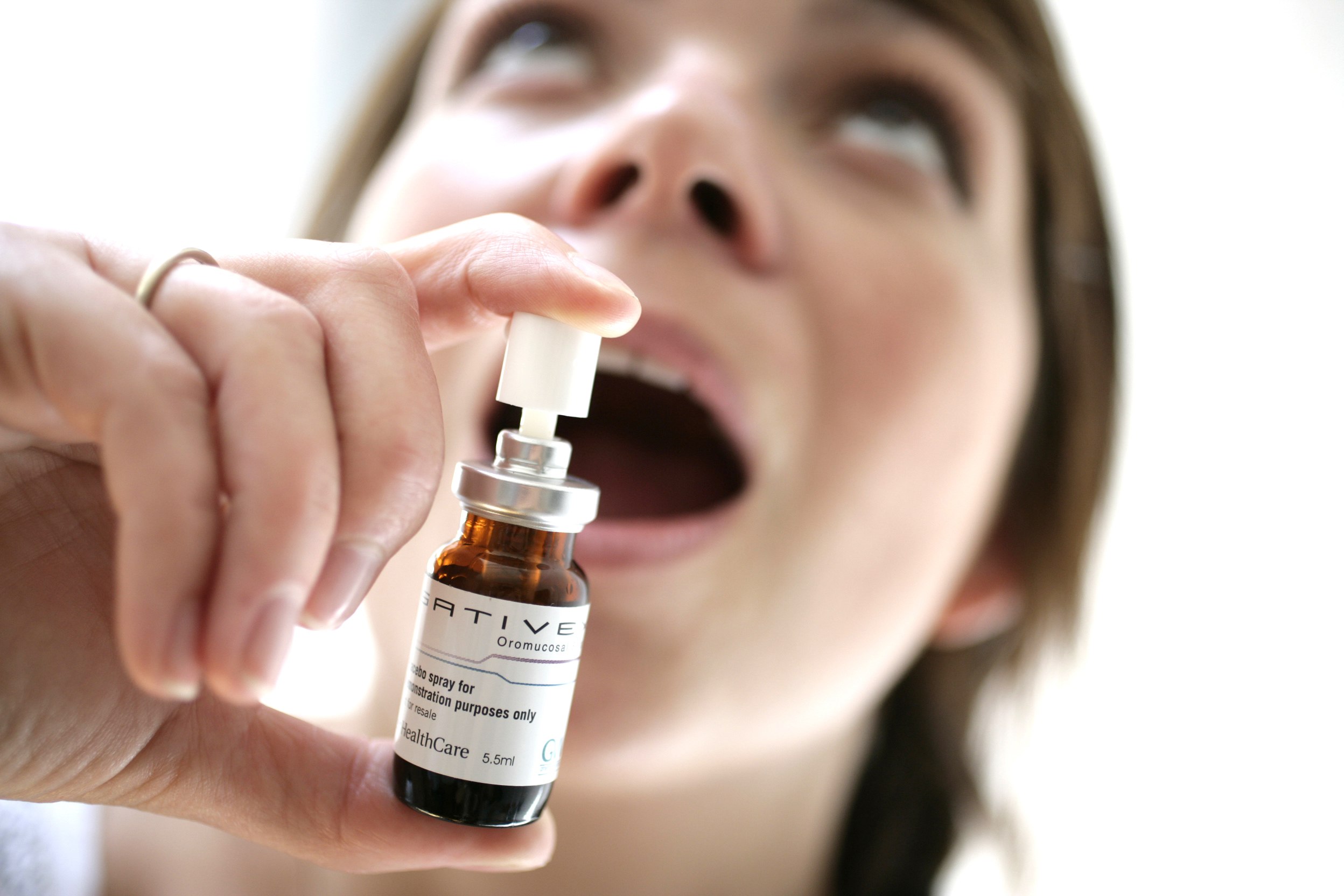
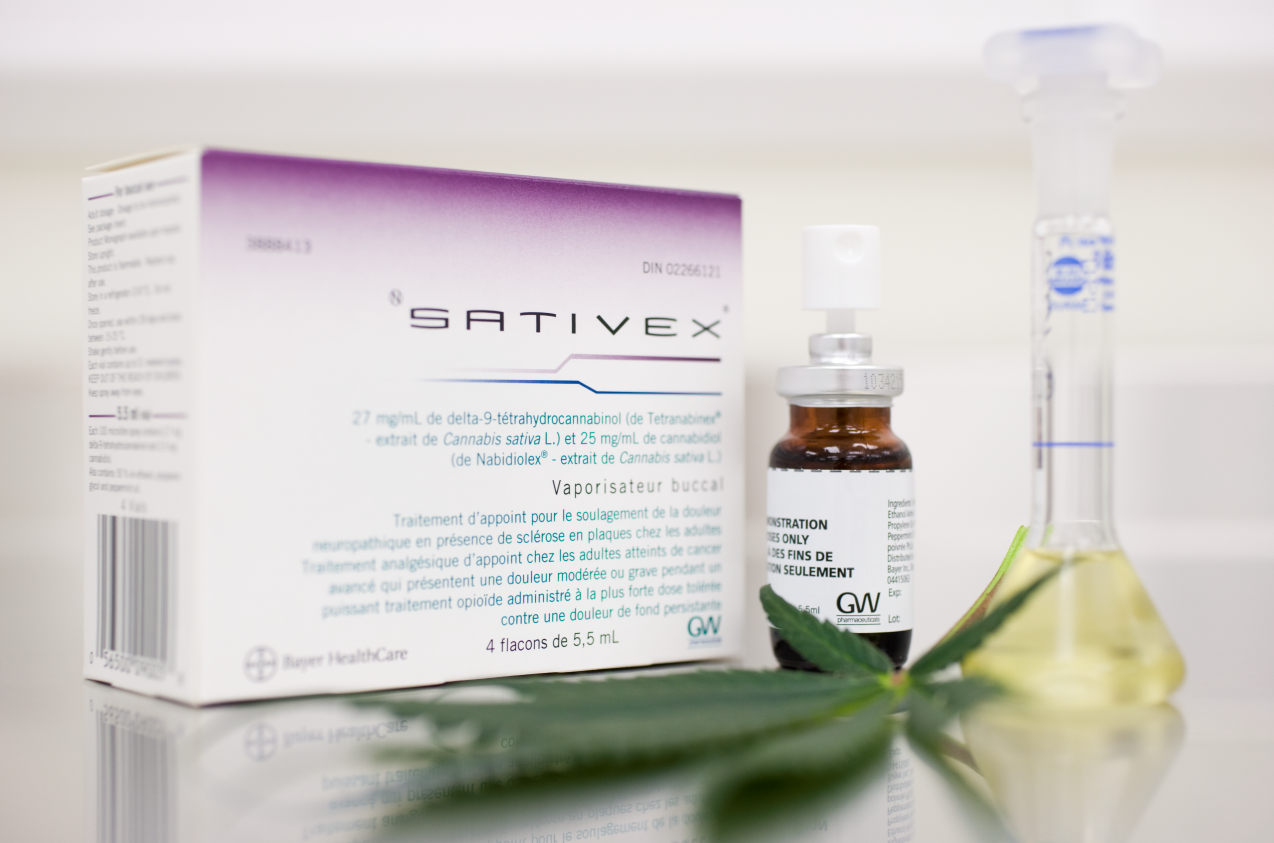 Sativex is super strong, concentrated cannabis. Nothing more, nothing less.
GW Pharmaceuticals would have you believe that it’s a “pharmaceutical” product because according to its research that’s what patients prefer. As the GW spokesman puts it, “It’s a pharmaceutical solution, formulated with the ability to deliver a precise dose and with stringent standards of quality, safety and efficacy”.
 In fact, what GW does is grow high quality cannabis under pretty much the same conditions as most illegal growers. It uses clonal propagation to ensure consistent levels of cannabinoids. Lighting and hydroponic nutrition is computer controlled with automatic ventilation. It really is no different from the most sophisticated and efficent illegal cannabis farms. It’s a recognised and proven technology now also used by Bedrocan in Holland, the Dutch government’s exclusive medicinal cannabis grower and Gropech in California which is building a new 60,000 sq ft facility in Oakland for a crop worth $50 million per year.
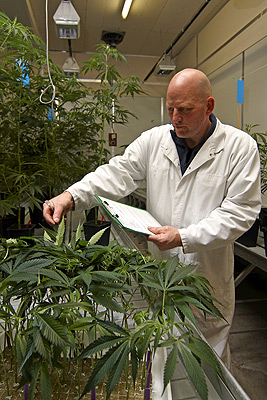
Bedrocan Grow
The difference between these crops from legal and illegal growers is insignificant. It’s similar to buying your tomatoes from the supermarket or the farm shop.
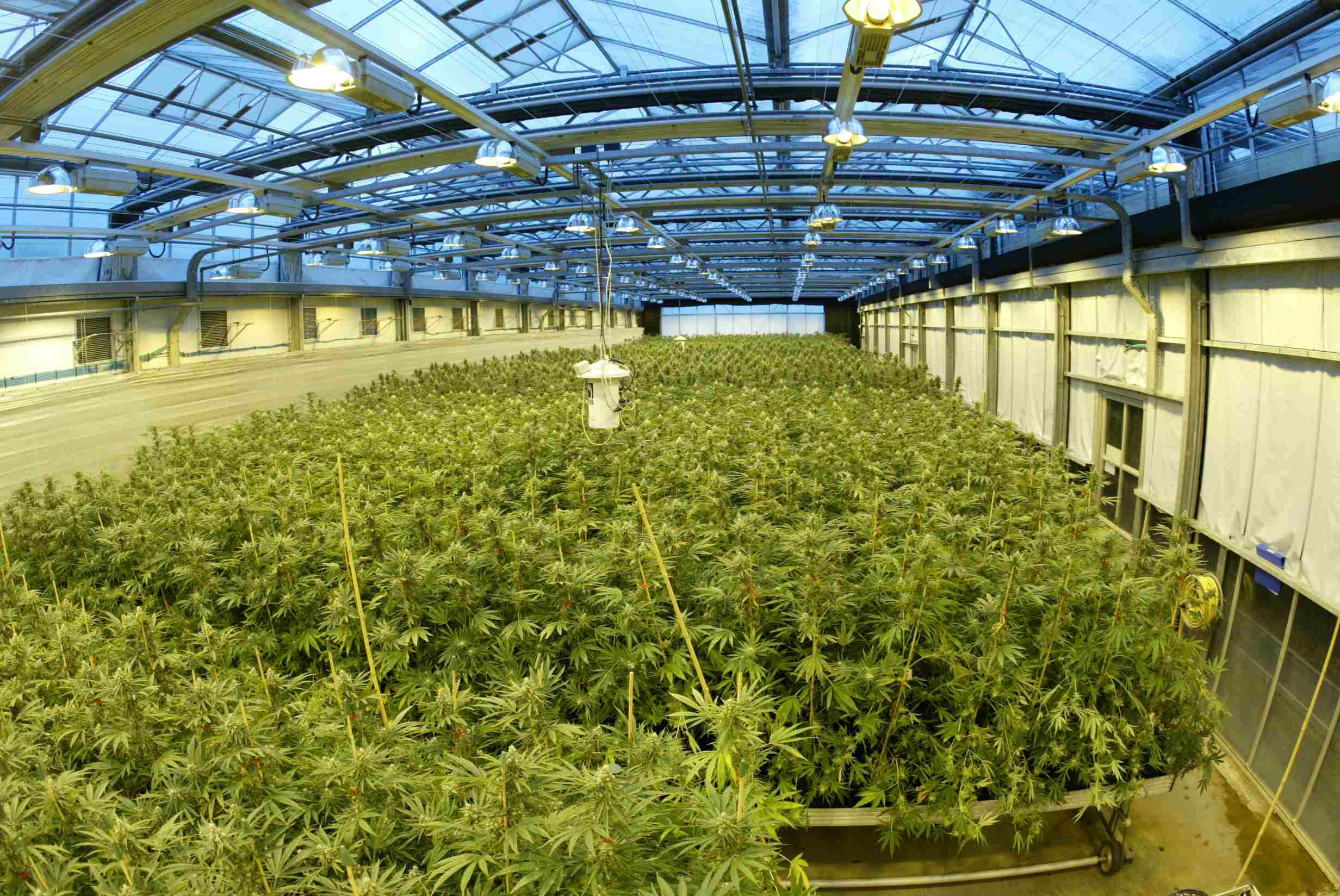
GW Grow
GW takes its high quality cannabis, chops it up and makes a tincture by heating it under pressure with CO2 and then adding ethanol to precipitate an oil. Then, with the addition of a little peppermint oil to mask the taste and some preservative, the filtered liquid is packaged into tiny little aerosol bottles. Each spray delivers 2.7mg of THC and 2.5mg of CBD. What GW doesn’t tell you that it also contains all the other 100+ cannabinoids found in the plant, each of which has its own mechanism of action and effect. It also contains flavonoids, terpines and other compounds. Everything that is found in the plant.
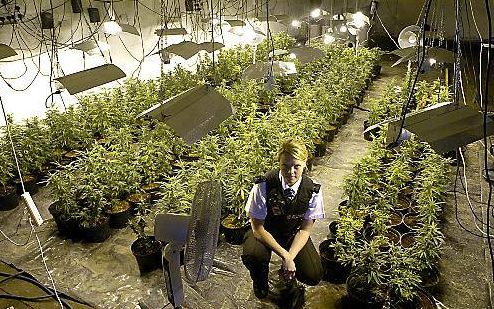
Illegal Grow
I applaud GW Pharmaceuticals for bringing the enormous benefits of cannabinoid therapy into the 21st century. It’s nothing new though. The medicinal value of the plant has been known and widely used for thousands of years. Only in the last century has it been demonised by lies and propaganda. It would be a mistake though to think that Sativex is anything different from the plant itself. It’s just been wrapped up in a marketing and physical package which has enabled stupid and cowardly politicians to accept it.
In fact, Sativex remains just as illegal in Britain as herbal cannabis. Even though it has received MHRA approval for use in the treatment of MS spasticity and may be prescribed by a doctor, it remains a schedule 1 drug under the Misuse Of Drugs Act. The Home Office has indicated that it intends to amend the law but has not yet done so. This means that any pharmacist who dispenses Sativex at present is guilty of exactly the same criminal offence as any street dealer in weed or hash.
The Home Office will, of course, turn a blind eye to this but not to medicinal herbal cannabis even though, in every sense, it is identical to Sativex (except that Sativex also contains alcohol and peppermint oil). The stark idiocy of British law is revealed.
Never before has there been a better example of the how the law is an ass and so are the spineless politicians who support it.
The Real Prison Drugs Scandal
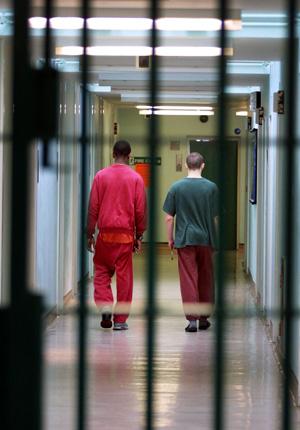
Banged Up
The real scandal about drugs in prison is that they’re even there in the first place. How do they get in? It’s prison staff of course.
That’s the uncomfortable truth which Ken Clarke and the government won’t talk about. Compared to the extraordinary security and penalties that prison visitors face, the screws have it easy. There’s an organised network at each prison, run by screws, for screws, supplying drugs to prisoners. Of course there is!
The even bigger scandal is that what used to be a cannabis culture, with prisoners alleviating their boredom with a relatively harmless joint, has become a health nightmare, with prison regulations forcing them into heroin.
You see Ken Clarke’s bright new ideas of drug free wings, testing and incentive regimes have been going on for more than 10 years already. I support Ken’s new ideas. I think he’s a breath of fresh air but this is just unhelpful propaganda. You see, prisoners stopped smoking cannabis when they started getting tested regularly. Evidence of cannabis remains in urine for up to 28 days, whereas heroin or cocaine washes through in 48 hours. Once the testing started and the prison officer-run cartels cottoned on, heroin began to flood our jails. A nightmare but true.
Of course, the fact that the drugs problem exists at all in prison is because it’s just a microcosm of society. If proper treatment was provided to those entering prison with a habit then it’s the perfect opportunity for them to clean up. If prohibition wasn’t creating a fantastically profitable black market then the drugs problem would gradually recede just as it would in society in general if we introduced fact and evidence-based regulation.
Prohibition doesn’t work. It just makes the problem worse.
Young Jimmy’s Jolly In Peru
There’s all sorts of perks to being a government minister you know. If you’re young Jimmy Brokenshire then as part of your courageous “war on drugs” you get an all-expenses paid trip to Peru to have a good laff at the poor sods who’ve got themselves jailed chasing the white lady.

Jimmy's Holiday Snaps
Apparently, most cocaine in Britain now comes from Peru rather than Columbia so, of course, it was vital for young Jimmy to get on a plane and do some fact finding. What I’d like to know is did he find anything of decent quality or is it all crap like it is on the mean streets of Britain? Did he rub it on his gums, sniff a few lines and get partying or was it bubbling in a spoon and blazed on a big glass pipe to get him rampant and raving and even more dangerous than he is at home?
The terrible story of Nick Jones from West London can be seen here. He was caught trying to bring back two kilos of Peruvian Flake. Sure, I feel sorry for him but it’s an extremely high stakes game. He knew full well what he was doing and chose to take the risk. Jimmy went along to gloat and use the opportunity for some easy propaganda. I think he must have still been cracked out though because he told the BBC, “The liability that you will be caught is very, very high”. Now that’s some malapropism. Maybe he’s got some other “liability” or likelihood on his mind or maybe he really was “very, very high”.
It makes me sick that this vile, baby faced punk is frittering our money away on his unjustified jollies. The Minister for Crime Prevention is a disgrace, a prohibitionist, a propagandist and a dissembler. Probably the most dangerous man in British politics, I’d rather see Nick Griffin at the Home Office than young Jimmy. He couldn’t be worse. He couldn’t be more poorly informed. He couldn’t be more regressive or oppressive or smug and self-satisfied.
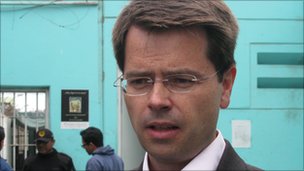
Jimmy Visits A Peruvian Prison
In my wildest fantasies, maybe someone will slip a couple of wraps in Jimmy’s pocket and he’ll get busted at Heathrow. A few weeks in Brixton would do him the world of good before his chums pull strings to get him off. He’d be a better person for it. He might have to face up to some realities rather than the deluded, fantasy world in which he lives.
Alternatively, maybe he could do the decent thing and swop places with Nick Jones? Now that would be truly useful. I’d be the first to recommend him for a medal. Then, in a few years time we could send someone out to gloat over him!
Well I can dream!

 Peter Reynolds