Posts Tagged ‘Sativex’
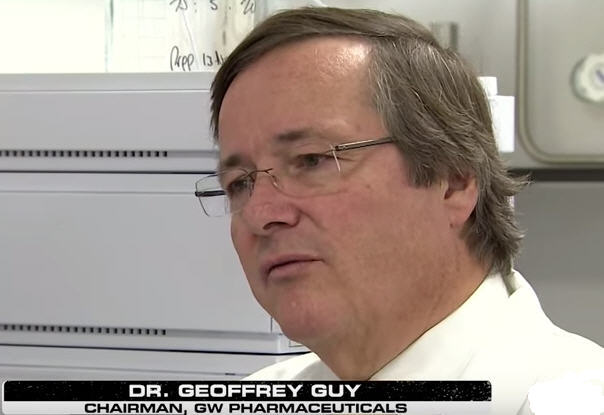
GW Founder And Chairman, Geoffrey Guy, Explains Sativex.
“Most people in our industry said it was impossible to turn cannabis into a prescription medicine. We had to rewrite the rule book. We have the first approval of a plant extract drug in modern history. It has 420 molecules, whereas every other drug has just one.”
This Is The Future Of Cannabis. For Medicine, Nutrition And Pleasure.
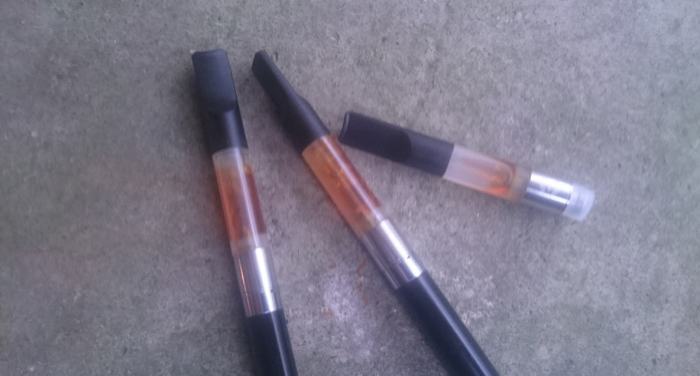
One of these vape pens contains Blue Dream sativa cannabis oil, 91% THC, the other is Hindu Kush indica cannabis oil, 85% THC and the spare cartridge has the dregs of some New York City Diesel sativa, 85% THC. You can’t tell which is which to look at them but each has a distinctive flavour and effect. They’re not completely odour free but almost.
This is the future of cannabis as a consumer product. It is cleaner, neater, handier, healthier and better for you than raw herbal cannabis. Most importantly, for medicinal applications, it homogenises all the compounds into an oil of consistent quality and content meaning that dosage and effect at last becomes predictable and reliable.
High CBD Oil For Medical Use
I have been investigating this theory for some time but my recent trip to Colorado enabled me to conduct some practical experiments and more thoroughly understand how this idea can work. I am now convinced that this is the way forward for the cannabis industry. Once we achieve legalisation in the UK, which is inevitable, probably in about five years, these pens are how cannabis will become available as a consumer product on the high street. They are also how medicinal cannabis will be dispensed. Your doctor’s prescription will be fulfilled by a cartridge with the appropriate blend of cannabinoids which you screw onto your battery and use immediately. Batteries will also be supplied on prescription, in the same way that syringes or blood glucose meters are for diabetics.
In Colorado dispensaries these pens are already available in a choice of strains and blends. Currently, the popular products contain 250 mg of THC in a blend of cannabis oil and propylene glycol (PG), just as e-cigs contain a nicotine oil and PG.
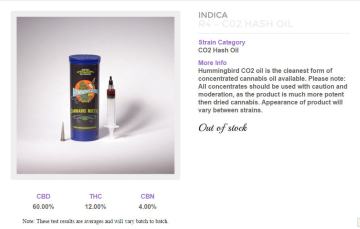
Alternatively, you can buy the oil of your choice and fill the cartridges yourself. This is undoubtedly the way to do it and a wide choice of oils is available, made by CO2 and solvent extraction processes. The Farm, my favourite dispensary in Boulder, is already supplying cannabinoid blends such as a 60% CBD, 12% THC, 4% CBN product which is clearly for medicinal use. I have no doubt that soon we will see a Charlotte’s Web product and Sativex-like blends with equal ratios of THC:CBD. Other, more sophisticated blends of other cannabinoids and probably terpenes will soon follow.
However, I am certain that some propylene glycol is a good thing. The oil vapes much better when diluted and PG is nothing to worry about, it is in many health, cosmetic and food products. It has many uses. It’s a solvent, humectant (keeps things moist), preservative and it helps absorption of some products. It is non-toxic.
There is further development work to be done. I believe there is a ‘sweet spot’ for the correct amount of PG, probably around 20%. I also think the battery and cartridges can be improved, particularly for medical use. Once this is achieved, a product like this with perhaps a 60:40 THC:CBD ratio should form the basis of an application to the Medicines and Health products Regulatory Agency (MHRA) for a marketing authorisation. It will knock Sativex into a cocked hat. In fact, if GW Pharma aren’t investigating this already then they are failing in their duty to shareholders. I shall certainly be doing all I can to research and facilitate the funding to bring such a product to market.
Yes, this is the future of cannabis. Imagine the packaging, marketing and merchandising opportunities for the recreational market. Understand the overwhelming benefits of this as medicine against the raw, herbal product. Yes, I know some will object and the tired old hippy luddites will say it’s a sell out and many more Big Pharma conspiracy theories will emerge but this is the future. Remember you heard it here first.
Another Pack Of Lies On Cannabis From The UK Government.

Yet another cannabis petition amongst hundreds of similar pleas was filed earlier this autumn. This one though is more tightly focused on removing cannabis from schedule 1, which defines it as having no medicinal value. The petition is also commendably concise but characterises itself as a ‘demand‘ that cannabis be rescheduled, an unfortunate choice of words.
 Nevertheless, congratulations are due in that it has exceeded the threshold of 10,000 signatures which means the government must respond. That response is now in and it is predictably dishonest, dismissive and authoritarian in its tone. The Home Office has responsibility for drugs policy so it has drafted the response but it surely must have consulted with the Department of Health.
In fact, I was told only this week by a senior minister that “… the search into the medicinal use of cannabis is something that falls within the jurisdiction of the Department of Health.” That may be a subtle shift in policy from which we can draw some hope. But I fear that the response to this petition offers no hope at all. It is stubborn, obstinate, inaccurate and in denial of evidence and experience.
To be clear, the Home Office has been systematically lying and misleading the British people about cannabis for at least 50 years. The Department of Health is timid on the issue, leaves the public statements to the Home Office heavies and seems more interested in generating fee income for the Medicines and Healthcare products Regulatory Agency (MHRA), than in actually treating patients effectively.
I analyse the response paragraph by paragraph.
“Herbal cannabis is listed in Schedule 1 as a drug with no recognised medicinal uses outside research. A substantial body of scientific evidence shows it is harmful and can damage human health.”
By far the majority of scientists and doctors now recognise that cannabis has real and significant medicinal uses. Of course it is possible that cannabis can cause harm, as can any substance. However, there is no scientific evidence that shows cannabis as being any more harmful than over-the-counter medicines or many common foods. Professor Les Iversen, chair of the Advisory Council on the Misuse of Drugs, is on the record saying: “cannabis is a safer drug than aspirin and can be used long term without serious side effects”.
“The Government will not encourage the use of a Schedule 1 controlled drug based on anecdotal evidence. It is important that a medicine is very thoroughly trialled to ensure it meets rigorous standards before being licensed and placed on the market so that doctors and patients are sure of its efficacy and safety. “
It is not the government’s role to encourage the use of any drug as medicine, that is the role of a doctor. Only by removing cannabis from schedule 1 can that decision be placed in doctors’ hands. There is a vast quantity of peer-reviewed, published scientific evidence on the medicinal use of cannabis including human clinical trials. It is false to suggest that only anecdotal evidence is available. See ‘Medicinal Cannabis: The Evidence’. Thousands of doctors and millions of patients are sure of the efficacy and safety of cannabis based on existing research, trials and experience. Many commonly prescribed medicines have nowhere near as much evidence behind them as cannabis.
“Cannabis in its raw form (herbal cannabis) is not recognised as having any medicinal purposes in the UK. There is already a clear regime in place to enable medicines (including those containing controlled drugs) to be developed and subsequently prescribed and supplied to patients via healthcare professionals. This regime is administered by the Medicines and Healthcare products Regulatory Agency (MHRA), which issues Marketing Authorisations for drugs that have been tried and tested for their safety and efficacy as medicines in the UK.”
The lack of recognition for the medicinal purposes of cannabis is a grave error with no evidence that supports it. Cannabis is a traditional medicine which recorded history shows has been used safely and effectively for at least 5,000 years. The only thing that stands in the way of cannabis being prescribed by doctors is its schedule 1 status. The MHRA is a diversion and is irrelevant. It exists to trial and regulate new medicines and requires a £100,000 application fee before very costly clinical trials take place. This is an unnecessary obstacle to a traditional medicine which contains more than 400 compounds. The MHRA process is designed for potentially dangerous, single molecule drugs and is not applicable to cannabis.
“It is up to organisations to apply for Marketing Authorisation for products that they believe have potential medicinal purposes so that these can be subject to the same stringent regime and requirements that all medicines in the UK are subjected to.”
Many substances and drugs which have medicinal purposes are regulated either as Traditional Herbal Products or food supplements. It is the schedule 1 status of cannabis which prevents it being regulated and controlled in this way which is far more appropriate given its very low potential for harm and the very wide range of conditions for which it can be useful.
“Since 2010 UK patients can use the cannabis-based medicine ‘Sativex’ for the treatment of spasticity due to multiple sclerosis. ‘Sativex’ can also be prescribed for other conditions at the prescribing doctor’s risk. ‘Sativex’ was rigorously tested for its safety and efficacy before receiving approval, and is distinguished from cannabis in its raw form. It is a spray which is standardised in composition, formulation and dose and developed to provide medicinal benefits without a psychoactive effect. Due to its low psychoactive profile ‘Sativex’ was rescheduled from Schedule 1 and placed in Schedule 4 Part 1 to enable its availability for use in healthcare in the UK.”
Sativex is a massively expensive form of cannabis oil which is not prescribed because of its cost. It is at least 10 times the price of Bedrocan medicinal cannabis as regulated by the Netherlands government which could be immediately made available in the UK. It is a deliberate falsehood to claim that Sativex does not have a psychoactive effect. The statutory document ‘Summary of Product Characteristics’ describes “euphoric mood” as a “common” side effect. The scheduling of Sativex in schedule 4 is a deception requiring 75 words falsely to distinguish it from other forms of cannabis whereas every other drug in every other schedule requires just one word.
“The MHRA is open to considering marketing approval applications for other medicinal cannabis products should a product be developed. As happened in the case of ‘Sativex’, the Home Office will also consider issuing a licence to enable trials of new medicines to take place under the appropriate ethical approvals. “
Cannabis, which contains 400 + compounds is not suitable for MHRA regulation which is designed for single molecule drugs which are potentially dangerous. There is no significant danger from the use of cannabis when prescribed by a doctor. This is already well established in scientific evidence and the referral to the MHRA is a diversion and an excuse for failing simply to put the decision in doctors’ hands.
“In view of the potential harms associated with the use of cannabis in its raw form and the availability of avenues for medicinal development, the Government does not consider it appropriate to make changes to the control status of raw or herbal cannabis. “
The government has offered no evidence of the potential harms to which it gives such weight. No “development” of cannabis is required. It is a traditional medicine consisting of the dried flowers of the cannabis plant.
“The Government’s view is that the Misuse of Drugs Act 1971 and regulations made under the Act continue to facilitate the development of medicines which are made from Schedule 1 controlled drugs. The legislation is aimed at protecting the public from the potential harms of drugs and is not an impediment to research into these drugs or development of medicines.”
The government’s view is intransigent and as demonstrated by this response is ignorant of the available evidence. This response reinforces the government’s clear intention not to consider the evidence and simply to deny it. The evidence shows that the potential harms of cannabis as medicine are trivial and inconsequential. If its schedule 1 status was not an impediment to research, there would already be a great deal more research into cannabis as medicine.
“In 2013 the Home Office undertook a scoping exercise targeted at a cross-section of the scientific community, including the main research bodies, in response to concerns from a limited number of research professionals that Schedule 1 status was generally impeding research into new drugs.
Our analysis of the responses confirmed a high level of interest, both generally and at institution level, in Schedule 1 research. However, the responses did not support the view that Schedule 1 controlled drug status impedes research in this area. While the responses confirmed Home Office licensing costs and requirements form part of a number of issues which influence decisions to undertake research in this area, ethics approval was identified as the key consideration, while the next most important consideration was the availability of funding.”
The Home Office is entirely untrustworthy and dishonest on anything to do with cannabis. Researchers, scientists, doctors and those already using cannabis as medicine simply do not trust anything it says on the subject based on long experience of its calculated dishonesty and misinformation.
The Weak And Ineffectual Response Of Most MPs To The Cannabis Debate.
CLEAR has been mobilising its members as never before to lobby their MPs in advance of the cannabis debate on 12th October.
There are honourable exceptions but most responses have been unhelpful, dismissive and have completely failed to deal with the arguments put forward. Most MPs are indoctrinated with the false reporting churned out by the press, scared stiff of the subject and not prepared to look any deeper.
It is a terrible indictment of these people, each of whom costs us about £250,000 per year in salary and expenses. Most simply do not do their job properly, certainly not in the interests of or representing their constituents, mainly they just pursue their own political ambitions and interests. They cannot be bothered to deal with the cannabis issue.
Usually, from both Tory and Labour MPs, the responses parrot the official Home Office line. Most are too lazy to inform themselves about cannabis and the facts and evidence around current policy which costs the UK around £10 billion per annum. This vast sum comprises a futile waste of law enforcement resources and the loss of a huge amount of tax revenue. It provides funding to organised crime, including human trafficking, and does nothing to prevent any health or social harms around cannabis. In fact, if anything it maximises these harms, endangering health, communities and the whole of our society by enforcing a policy which is based not on evidence but on prejudice. Source: http://clear-uk.org/media/uploads/2011/09/TaxUKCan.pdf

Paul Flynn MP
As Paul Flynn MP, said in the House on 14th September:
“There is [a debate] in a fortnight’s time, on a subject that terrifies MPs. We hide our heads under the pillow to avoid talking about it, but the public are very happy to talk about it in great numbers. That subject is the idea of legalising cannabis so that people here can enjoy the benefits enjoyed in many other countries that do not have a neurotic policy that is self-defeating and actually increases cannabis harm.”
Source: http://www.theyworkforyou.com/whall/?id=2015-09-14a.185.0#g194.0
Below I reproduce a reply from one MP. This is the standard MP line on cannabis. The words may vary slightly but essentially this is the response that the Home Office enforces and, irrespective of party, these are the disingenuous statements that MPs hide behind.
“I believe cannabis is a harmful substance and use can lead to a wide range of physical and psychological conditions. I therefore do not support the decriminalisation or legalisation of cannabis at this time.
I welcome that there has been a significant fall in the numbers of young people using cannabis, and the number of drug-related deaths among under-30s has halved in a decade and I would not want to see this progress undermined.”
Stating cannabis is harmful is meaningless and and an evasion of the question. Anything can be harmful. Such an assertion only has any meaning when in comparison to other substances. In fact, cannabis is relatively benign, even when compared to many foods. It is much less harmful than energy drinks, junk food, all over-the-counter and prescription medicines and, of course, tobacco and alcohol. Compared to these two most popular legal drugs, cannabis is hundreds of times less harmful. Source: http://www.ncbi.nlm.nih.gov/pmc/articles/PMC4311234/

If cannabis can lead to a wide range of physical and psychological conditions, what are they and how likely is cannabis to bring them on compared to other substances? In fact, the Royal College of Psychiatrists, whose publications are often presented as evidence of cannabis harms, states unequivocally
“There is no evidence that cannabis causes specific health hazards.”
Source: http://www.rcpsych.ac.uk/healthadvice/problemsdisorders/cannabis.aspx
There is a reported fall in cannabis use from the British Crime Survey. However, the Association of Chief Police Officers reports ever increasing incidents of cannabis cultivation and there has been a massive surge in the use of ‘legal highs’ or novel psychoactive substances. Without exception, these are far more harmful than cannabis and their very existence is the product of government policy. In places such as Holland and the US states that have legalised, there is no problem at all with such substances.
As for “drug-related deaths”, this is classic disinformation. What does it have to do with cannabis? Are our MPs so badly informed that they cannot distinguish between different drugs? Sadly, in many cases the answer is yes. Even so, this is a false claim. The latest figures show an increase in the number of drug poisoning deaths to the highest level since records began in 1993. So much for the claimed “progress”. Source: http://www.ons.gov.uk/ons/dcp171778_414574.pdf
Just recently MPs have started to address the question of medicinal use, almost certainly because of the rising clamour from people in pain, suffering and disability. Also because the UK is now a very long way out of step with the rest of Europe, the USA, Canada, Israel, Australia and most ‘first world’ countries. Source: http://clear-uk.org/static/media/PDFs/medicinal_cannabis_the_evidence2.pdf
“I am aware that one of the issues raised is around enabling the use of cannabis for medicinal purposes. I know that cannabis does not have marketing authorisation for medical use in the UK, and I understand that the Medicines and Healthcare products Regulatory Agency can grant marketing authorisation to drug compositions recognised as having medicinal properties, such as in the case of Sativex.”
A marketing authorisation from the Medicines and Healthcare products Regulatory Agency (MHRA) is a deliberate diversion from the issue. Medicines do not have to have an MHRA marketing authorisation. Doctors can prescribe any medicine, licensed or unlicensed, as they wish. However, since 1971, medical practitioners have been specifically prohibited from prescribing cannabis on the basis of no evidence at all except minsters’ personal opinions. Source: http://www.legislation.gov.uk/uksi/2001/3997/made.
Applying for an MHRA marketing authorisation costs over £100,000 as an initial fee and clinical trials have to be conducted at a cost of at least the same again. Instead, minsters could simply move cannabis from schedule 1 of the Misuse of Drugs Regulations to schedule 2 alongside heroin and or, more logically, to schedule 4, alongside the cannabis oil medicine Sativex. This would place the whole question of the use of cannabis as medicine in the hands of doctors and not in the politically motivated hands of Westminster. Isn’t that where it should be?
 This is the most important short term objective of the cannabis campaign – move cannabis out of schedule 1. Not only would this enable doctors to prescribe Bedrocan medicnal cannabis as regulated by the Dutch government but it would mean research could start in earnest. The restrictions presently in place on cannabis, because it is schedule 1, make research very expensive, complicated and are a real deterrent.
If you haven’t lobbied your MP on the cannabis debate yet, you still have time to. If you can, get along and see them in a constituency surgery. Full guidance is provided here but you must act now: http://clear-uk.org/guidance-on-how-to-lobby-your-mp-for-the-cannabis-debate/
Most MPs run surgeries on Fridays so that means you have just this coming Friday, 2nd October and the following 9th October.
Please at least ensure you write to your MP. This is our moment and we are having an impact. Make sure you do your bit.
The Man Who Smashed UK Cannabis Prohibition – And Looks Set To Do The Same In America.
Dr Geoffrey Guy
Across social media, it’s ‘on message’ to despise Big Pharma and to promote the idea that government and pharmaceutical companies are engaged in the business of making people ill and feeding them with drugs in the pursuit of profit.
In the cannabis campaign, it’s virtually compulsory to abuse, defame and promote conspiracy theories about GW Pharmaceuticals, the world’s leading developer of cannabis-based medicines.
Now GW Pharma is hardly ‘Big Pharma’. It’s annual revenues for 2014 were £30 million. By contrast, Pfizer’s 2014 revenue was $50 billion. But such trifling facts are of no concern to the keyboard warriors and trolls that plague the cannabis campaign and bring it into disrepute every day.
In any case, I’m not sure whose message this is and why anyone buys into this hate-filled invective and unjust condemnation of an industry that has saved so many lives. Antibiotics, vaccines and, yes, chemotherapy products have saved or extended millions of lives. The most profitable pharmaceutical product of all time, Zantac (ranitidine), cures or prevents stomach ulcers and has prevented millions from having to undergo major surgery. Certainly, as in any industry, there have been mistakes, things have gone wrong and much could be improved but overall, the pharmaceutical industry is a huge force for good in our world.
Those engaged in these bitter, vindictive, online campaigns are largely sheep, ignorant of the facts and simply jumping on another hysterical bandwagon that they understand nothing about. They complain about the pursuit of profit and that money is being made from medicines and healthcare. It’s a strangely socialist and anti-business attitude, particularly as so much of it comes from America, supposedly the home of free enterprise where the maverick and outsider who triumphs against all the odds is usually revered.
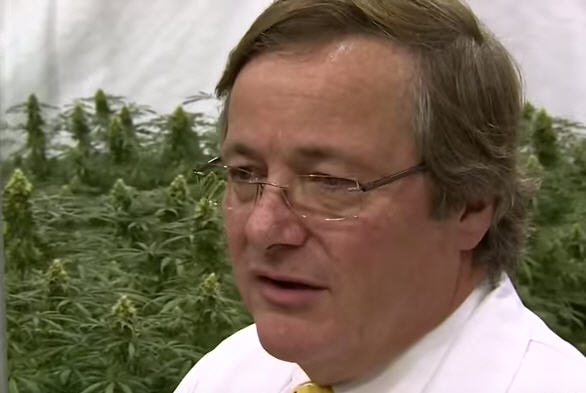
Dr Geoffrey Guy, who founded GW Pharmaceuticals in 1998, is such a man. He has broken the UK government’s prohibition of cannabis by outwitting a regulatory process run by the Home Office and the Medicines and Healthcare Products Regulatory Agency (MHRA) that is corrupt, dishonest and denies scientific evidence. In my view, he deserves great admiration and should be seen as a hero by cannabis campaigners, not as the villain that he is often portrayed.
Now, both GW’s lead products, Sativex and Epidiolex, look set to gain FDA approval in the US. This will be a fantastic achievement for Dr Guy and all his colleagues. It’s also something that we Britons should be immensely proud about. Even though America is a very long way ahead of us in understanding and using cannabis as medicine, it is British science and expertise that is breaking down US federal prohibition. Soon most Americans will have state sanctioned access to medical marijuana but also the option for doctor-prescribed cannabinoid medicine of unparalleled quality and consistency.
Of course, for now GW Pharma stands against the use of raw herbal cannabis and at present that’s a rational business decision but I won’t be at all surprised if in future it moves into that market too. There are already unconfirmed rumours that GW is considering entering the CBD market.
This is a story of enormous courage, innovation and triumph against all the odds. It is in the finest tradition of British ingenuity and business skill. Since the Middle Ages we have led the world in engineering, science and technology. Geoffrey Guy is another world leader from Britain, this small island that has given birth to so many. Surely, at least a knighthood, possibly a Nobel prize must be coming his way soon. Even if the curmudgeonly, loud mouthed critics of today attack him, in future years he will be seen as a great pioneer of medicine and he will deserve his place in history.
Peter Reynolds of CLEAR, Nick Rijke of MS Society. BBC Radio Kent, 8th April 2015
Julia George interviews Peter Reynolds of CLEAR, following publication of the report ‘Medicinal Cannabis:The Evidence’. Nick Rijke, of the MS Society, comments on using cannabis to treat multiple sclerosis and how Sativex, the only licensed cannabis medicine, is very difficult to obtain on prescription.
CLEAR Medicinal Users Panel. Fifth Delegation To Parliament.
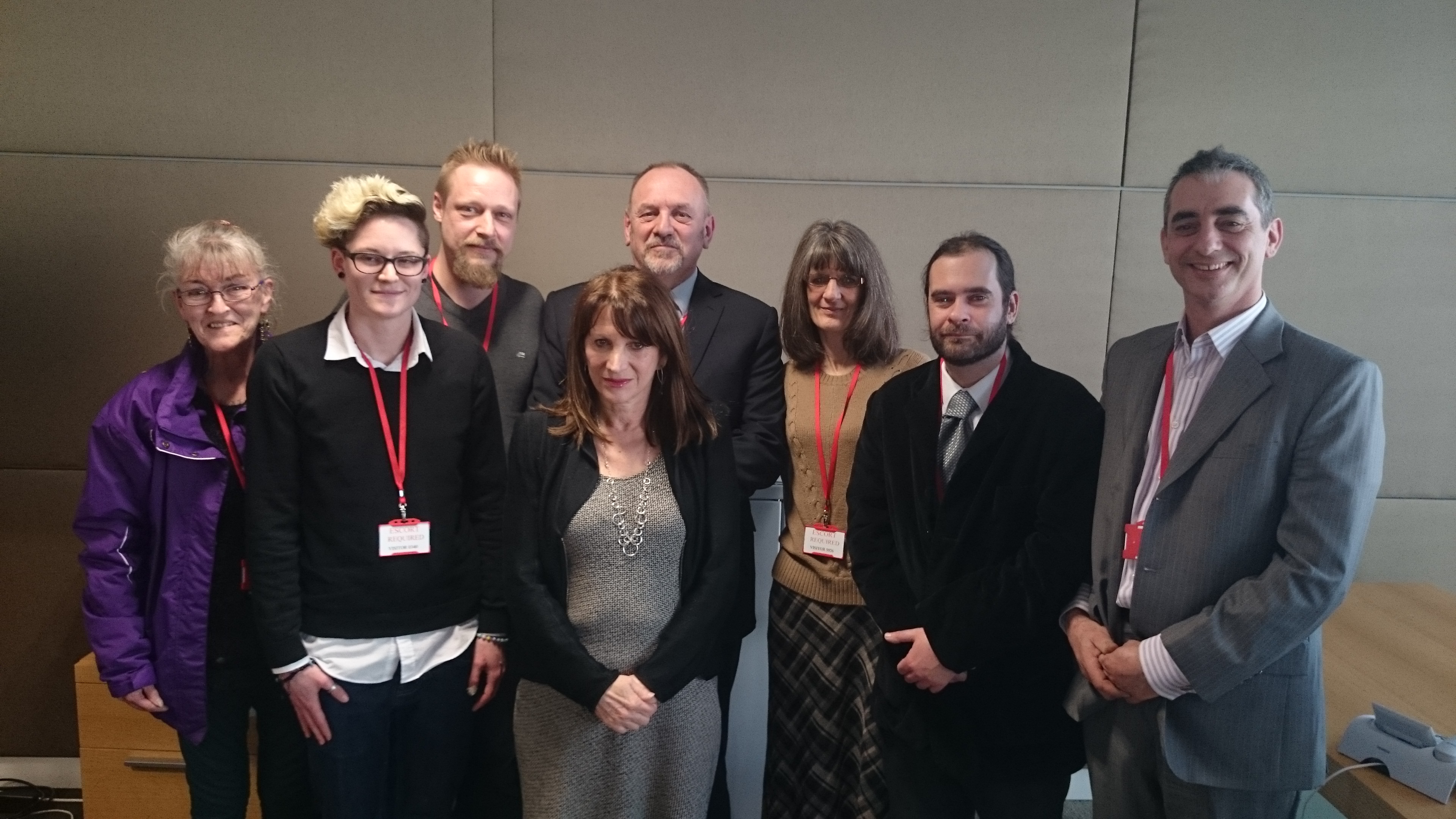
Vicky Hodgson, Kate Stenberg, Roland Gyallay-Pap, Lynne Featherstone MP, Peter Reynolds, Penny Fitzlyon, Richard Tong, Jonathan Liebling
Today a further delegation from CLEAR met with Lynne Featherstone, the new Home Office minister with responsibility for drugs policy. She is the Liberal Democrat MP for Hornsey and Wood Green and was appointed to replace Norman Baker after he resigned in November 2014.
We invited Jonathan Liebling, Political Director of the United Patients Alliance (UPA) to accompany us and he gave eloquent testimony about his own use of medicinal cannabis. UPA has been doing excellent work in running a series of meetings up and down the country bringing medicinal users together. We hope there will be further co-operation between UPA and CLEAR.
Jonathan spoke about using cannabis to help with anxiety and depression, as did Kate Stenberg who has also used cannabis to deal with a chronic pain condition. Vicky Hodgson spoke about treating her scoliosis, COPD and cluster headaches. Roland Gyallay-Pap, related how he produced cannabis oil when his mother was diagnosed with pancreatic cancer and the great help it gave her with sleeping and eating in the final months of her life. Penny Fitzlyon talked about treating her MS with cannabis and how she has now been refused Sativex. It was obvious this had a big impact on the minister.
She listened to each of us very attentively and we all felt that she had taken genuine interest and understood our arguments, particularly about enabling UK patients to import Bedrocan medicinal cannabis.
We also presented Ms Featherstone with a pre-publication copy of the paper ‘Medicinal Cannabis: The Evidence’, which we have produced at the request of George Freeman MP, the Life Sciences minister. This is a literature review of the existing evidence on medicinal cannabis. It makes a powerful argument for the transfer of cannabis from schedule I to schedule II so that it may be prescribed by a doctor. Currently the paper is being peer-reviewed and we hope that it may itself be published in a scientific/medical journal shortly.
CLEAR has also recently delivered a briefing on medicinal cannabis to Nick Clegg, the Deputy Prime Minister and leader of the Liberal Democrats. We shared this with Ms Featherstone as well.
With the General Election fast approaching, all MPs, including minsters, are about to go into campaign mode. Nick Clegg is to cover drugs policy in a speech a Chatham House later this week. There may yet be further developments, specifically on medicinal cannabis as the election campaign unfolds. What is certain is that the new Parliament will represent a real opportunity for change and we have high hopes of real progress.
Medicinal Cannabis AdVan Campaign in London.
Artist’s Impression
Join The Campaign For Medicinal Cannabis On A Doctor’s Prescription.
Despite overwhelming evidence, the UK government insists that cannabis has “no medicinal value”. Present policy is deeply cruel and means that at least one million people in Britain are forced to become criminals in order to deal with their pain, suffering or disability.
We must change this dreadful and unjust policy. It’s time to help rather than persecute people who genuinely need cannabis to improve their health. DONATE HERE.
The AdVan Campaign.
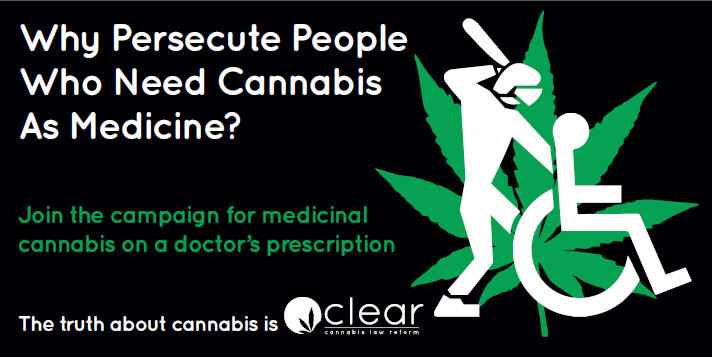
CLEAR is the UK’s leading drugs policy reform group with more than 270,000 followers. We will run an AdVan for one week in central London during the busy pre-Christmas period. This will deliver the simple, direct message that you see above and it will be backed by a supporting PR campaign, lobbying of government ministers and MPs as well as further information on the CLEAR website.
Please donate whatever you can. Every pound makes a difference. We need to raise £3500 to run the AdVan for one week. If we raise more we will run it for longer. DONATE HERE.
Please Donate Now!
Our Simple And Reasonable Request To UK Government.
In 1998, GW Pharmaceuticals was granted a licence to grow cannabis and its cannabis oil medicine, Sativex, is now approved but doctors are prevented from prescribing it because it is so fantastically expensive.
The Dutch government approves a cannabis medicine called Bedrocan which provides exactly the same as Sativex at a tiny fraction of the price. Sativex costs between £375 – £560 per month. Bedrocan costs £35 – £95 per month.
All we ask is that if a doctor prescribes Bedrocan, the Home Office should issue an import licence. This is a narrow, tightly defined reform that will not encourage illicit use but will provide enormous help to some very poorly people. DONATE HERE.
Further Background.
Every year, thousands of medicinal cannabis users are prosecuted for possessing or growing cannabis. Often it is the only medicine that helps them with chronic pain, fibromyalgia, MS, Crohn’s disease, epilepsy, depression or many of the conditions related to aging. It is also used to mitigate the side effects of chemotherapy and HIV/Aids treatments.
In November 2014, the Liberal Democrat MP Norman Baker resigned as a government minister because of the Conservatives’ refusal even to consider drugs policy reform. In July 2014 he met with members of CLEAR and publicly called for cannabis to be legalised for medicinal use. Other ministers are more concerned with stopping people getting high (which they are going to do anyway) than in helping those with severe medical conditions. DONATE HERE.
Other Ways You Can Help
Join CLEAR at http://clearmembers-uk.org
Visit and ‘like’ our Facebook page http://www.facebook.com/ClearUK
Follow us on Twitter @CLEARUK
UK’s ‘Cruel and Corrupt’ Medicinal Cannabis Policy Exposed By CNN’s Dr Sanjay Gupta.
This clip is from ‘Sanjay Gupta MD’, CNN’s regular medical affairs programme. It was broadcast on Saturday, 16th November 2013.
An hour-long documentary is to follow, probably in March 2014, when Dr Gupta will expose the terrible cruelty, hypocrisy, dishonesty and corruption which is UK policy on medicinal cannabis. The programme will investigate GW Pharmaceuticals and its cannabis medicines Sativex and Epidiolex. It will also feature Bedrocan and its grow facility in Holland and look in detail at the process CLEAR has developed which has so far enabled five members successfully to import medicinal cannabis to the UK.
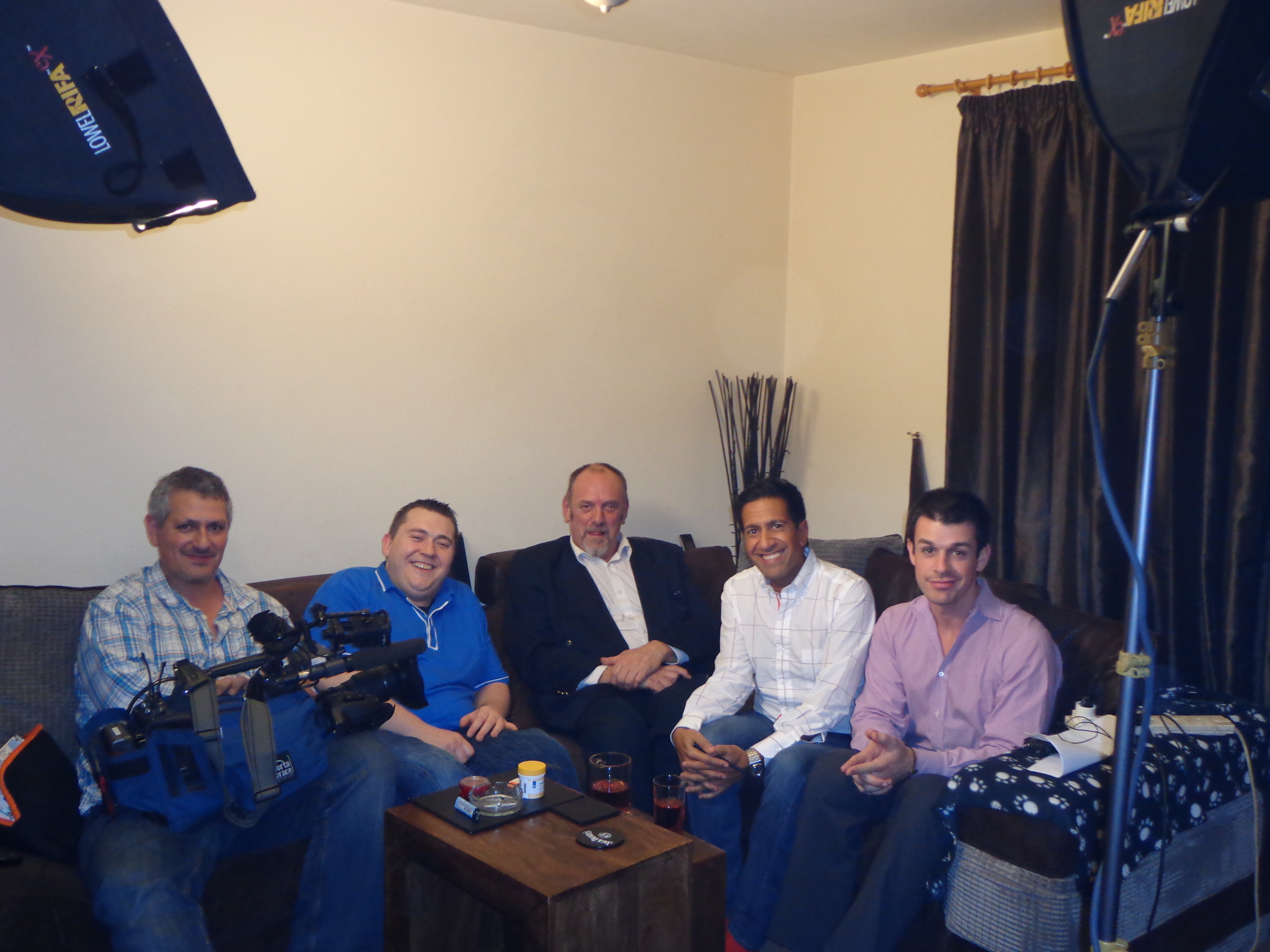
CNN Camera Crew, Jamie Watling (aka ‘Clarence Clear’), Peter Reynolds and Dr Sanjay Gupta
Although the UK government claims that cannabis has“no medicinal value”, it has licensed GW Pharmaceuticals to grow massive quantities of the plant which it then processes into its hugely expensive medicines. The license, which was issued for research purposes only, was operated unlawfully between 2003, when Sativex became a commercial product, until March 2013 when the Home Secretary retrospectively legalised it.
Most CCGs refuse to provide Sativex because it is so expensive. A month’s prescription of Sativex costs the NHS £560.00. The equivalent from Bedrocan costs between £35.00 and £105.00 depending on which product is prescribed.
Successive governments have failed to act in the interests of British citizens. Ministers have refused even to consider a change in policy and have ignored or rejected all the efforts of CLEAR and other groups to present evidence and make a case on behalf of those who need cannabis as medicine.
Even though medicinal cannabis was the subject most often mentioned in the written evidence to the recent Home Affairs select committee drugs inquiry, it was ignored. No evidence was heard on the subject and no questions were asked.
Peter Reynolds, president and elected leader of CLEAR, commented:
“UK policy on medicinal cannabis is cruel and corrupt. While ministers refuse even to consider reform despite overwhelming scientific evidence, hundreds of thousands of British people persist in pain, suffering and disability which could be relieved by cannabis. The police are used as armed enforcers of GW Pharmaceuticals’ unlawful monopoly, arresting and even imprisoning sick people who are merely trying to improve their health. I want to thank Dr Gupta for his work. While he has travelled thousands of miles to tell this story, UK government ministers hide in their offices with their fingers in their ears.”
Medicinal Cannabis Users – Parliamentary Delegation
 CLEAR has arranged for a delegation of 12 medicinal cannabis users to visit parliament to meet with senior figures in the field of health and home affairs.
In order to protect patient confidentiality and against the sort of sabotage which is so often seen in the cannabis campaign, we are not releasing details of who we are meeting or when. Suffice to say that this breakthrough has been achieved by many months of behind the scenes work, meetings with MPs, doctors and the courageous efforts of several CLEAR members.
The focus is to permit medicinal users access to the products of Bedrocan, the Dutch government’s official producer of medicinal cannabis. We now have written confirmation from both the Department of Health and the Home Office that doctors are fully entitled to write prescriptions for Bedrocan products, just as they are for any other unlicensed medicine.
The next stage is to obtain an import licence from the Home Office, either a personal import licence for each individual or a licence for a pharmacist to import and dispense. The recent re-scheduling of Sativex makes our case for obtaining these licences much stronger.
We are not there yet but we are now closer than we have ever been to enabling legal access to medicinal cannabis. The delegation will be meeting face to face with people who can make this happen.
We also have a BBC documentary producer with whom we have been working for a few months concerning a programme to be broadcast in the autumn. This visit to parliament could form an important part of the programme.
If you are interested in being considered as a member of the delegation, please email me with a concise description of yourself, your condition and your history of medicinal cannabis use: peterreynolds@clear-uk.org

 Peter Reynolds