Posts Tagged ‘UK’


PM MP

Originally Published In Homegrown Outlaw's Blog
By Jason Reed
To all that support change in current policy, I invite you to take part in: PM MP.
What is PM MP? Well, I am hosting a letter that I am encouraging as many people as possible to post one copy to the Prime Minister, and one copy to your MP. It is through weight and numbers that points are grasped and policy changed.
It is also worth sending to the Home Secretary – Theresa May, and James Brokenshire – Minister for Crime Prevention at the Home Office.
If you would like to add your name and address so as to receive a reply, all the better. If you wish to remain anonymous, then that’s also fine, but please do take the time to send just two letters to the Prime Minister and your MP at this address:
Prime Minister,
10 Downing Street,
London, SW1A 2AA
Your MP can be found here:
And your MP’s address will be:
MP’s NAME, or James Brokenshire, or The Home Secretary Theresa May
House of Commons,
London SW1A OAA
Below you can find the template letter that has been created to address the current law & policy that surrounds cannabis in Britain. It is with a great deal of thanks to the Drug Equality Alliance for directing the wording to address this issue correctly.
Please do support this; please send the letters. Fellow bloggers, please also host the letter and send forth.
Either copy & paste the below text into a letter, or I have provided downloadable links at the end of this blog post. Thank you all. Jason.
Dear
I am writing to state my view that continuing prohibition of all private interests in cannabis is not in the best interest of society or the individual. Current policy is in many regards counter-productive and a drain on the country’s resources. The administration of Misuse of Drugs Act 1971 is mandated to be under constant review & evidence based; it’s concern is solely to reduce social harm caused by drug misuse. I submit that there can be no justification in law for the blanket ban on accessing a substance that many persons use responsibly, and many use to experience the amelioration of symptoms caused by various medical disorders.
The Misuse of Drugs Act 1971 seeks to regulate human action re any harmful drug, it does not provide a mandate for prohibition, indeed when one examines the obligations of the ACMD one can see that the law seeks to make arrangements for the supply of controlled drugs. The legislative aim is to control responsible human action and property interests through the regulation of the production, distribution and possession of any harmful drug; this being proportionate and targeted to address the mischief of social harm occasioned by misuse. I note that the law does not prohibit the use of cannabis at all, and this often ignored fact was Parliament’s way of opening the door to facilitate a suitable and rational regulatory structure. I place it on record that I wish the Misuse of Drugs Act 1971 to be used properly, and neutrally; specifically; (under Section 1) – “(2) (a) for restricting the availability of such drugs or supervising the arrangements for their supply.”
The prohibition of all private interests in cannabis & the denial of the possibility of responsible use has failed:
- The estimated expenditure of £19 billion on the judicial ‘controls’ over UK drug policy is a large sum that cannot be justified in the current fiscal climate. I do not believe it can be proven to be a valid policy even if the nation could easily afford it; it has a high price on liberty, and a paradoxical effect upon the health of all drug users – it has proved futile in almost every way, save for the government’s blind adherence to the international treaties it chooses to fetter it’s discretion to.
- There is an estimated street value of £5 billion profit going directly to gangs and cartels, and this in turn funds organised crime, human trafficking, and all manner of hard-line criminality.
- Children have easy & ready access to cannabis. Children are dealing cannabis and using cannabis with relative ease.
- There is an estimated 165 million responsible and non-problematic cannabis users worldwide. There is anything from 2 – 10 million adult users in the UK. There is no societal benefit to criminalising such a large portion of society, these are generally law-abiding persons who wish to use a substance that is comparatively safer than many drugs that government choose to exclude users of from the operation of the MoDA 1971 (despite the Act being neutral as to what drug misusers are controlled, the most harmful drugs such as alcohol and tobacco are excluded by policy, but this is not reflected in the Act itself).
- Under prohibition, as in 1920’s America, quality control has suffered giving way to hastily harvested cannabis which acts as the modern day equivalent of the infamous Moonshine & Hooch. The UK media terms this bad product simply as “Skunk”. Cannabis is now being cut with harmful drugs, glass, metal fillings, and chemicals to give false potency, and to add weight for profit motivations.
- To criminalise personal actions that do not harm others within the confines of privately owned property is at best draconian, and at worst futile & irresponsible.
I wish to encourage the adoption of a regulatory system that provides:
- An age-check system to prevent the young and vulnerable from obtaining cannabis with the ease they currently have.
- The partial saving from the £19 billion drug enforcement budget, alongside the estimated street worth of £5 billion potentially collected from cannabis. This would be a considerable sum in aiding the country in fiscal crisis.
- Quality control that can be accorded to cannabis production and sale, thus ensuring that there are no dangerous impurities and that the correct balance of cannabinoids are present (according to the needs of the user) to minimise potential harms.
- Potency & harm reduction information can be provided to adults, ensuring education is the forefront of the regulatory model.
- A restriction on marketing and the creation of designated discreet outlets. As seen in many countries, given a place of legitimacy, the cache of cannabis is lessened in favour of responsibility.
- The freedoms and rights for non-problematic users to be respected.
I do hope that you will give this matter the urgent attention it warrants.
Yours
ISMOKE Magazine Issue 1
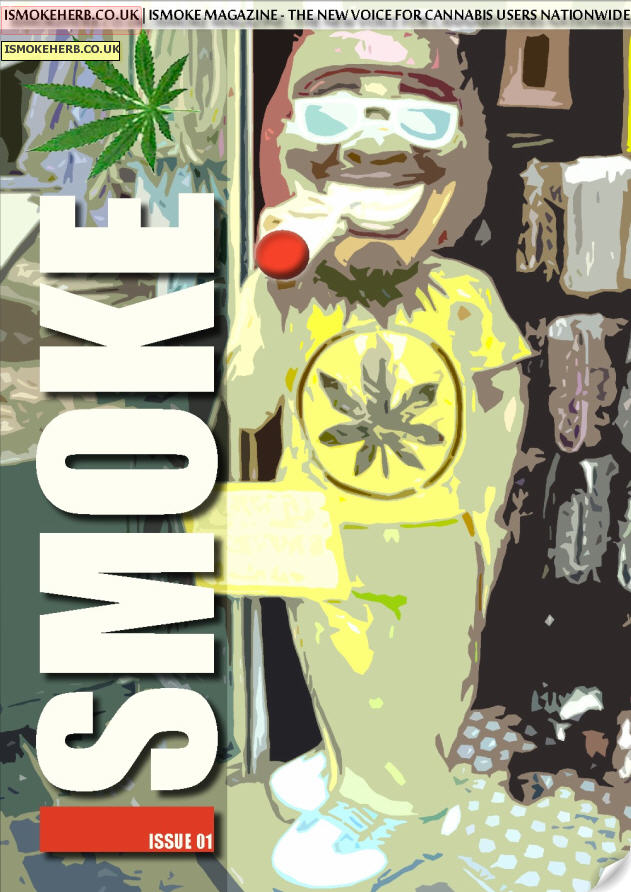 My warmest congratulations to my good friend Nuff Said on the first edition of his new magazine, ISMOKE.
Go to the online version here where it is also possible to download and print a hard copy.
The contents of issue 1 are:
- Lead Editorial – Nuff Said
- Cannabis In The News: The Good, The Bad & The Ugly
- Proposition 19 & The Wild West – Jason Reed
- An Interview With Peter Reynolds – Nuff Said
- Cannabis In Cartoons – Nuff Said
- The Politics Of Cannabis – Peter Reynolds
- A Word From The LCA – Alun Buffry
- ISMOKE Would Like To Hear From You
- Stateside: Why Are We Behind Our American Cousins? – Nuff Said
- What Are You Smoking With?
- UK Drug Policy Is A Contradictory Mess, Stuck In The 1970s – David Morris
- Will Somebody Think Of The Children? The Problems Caused By Prohibition – Cure Ukay
-
My Story: How I Was Treated As A Self-Medicating Cannabis User – Tina Silva


Paradise Valley

 Dorset is experiencing its worst winter for 30 years but in Paradise Valley it just makes the views more beautiful and the adventures more exciting.
See here for the latest instalment.
Breakthrough In The Drugs Debate!

Bob Ainsworth
Tomorrow, Bob Ainsworth MP, former Home Office drugs minister and Secretary of State for Defence, will call for the legalisation and regulation of drugs. He is to lead a Parliamentary debate in Westminster Hall, at 2.30pm on Thursday 16th December 2010.
Great credit for this must go to the inestimable Transform Drug Policy Foundation, which has led the fight against prohibition. This is an extraordinary breakthrough. The news literally brought tears to my eyes. We have fought so long for such progress.
Mr Ainsworth said;
“I have just been reading the Coalition Government’s new Drugs Strategy. It is described by the Home Secretary as fundamentally different to what has gone before; it is not. To the extent that it is different, it is potentially harmful because it retreats from the principle of harm reduction, which has been one of the main reasons for the reduction in acquisitive crime in recent years.
However, prohibition has failed to protect us. Leaving the drugs market in the hands of criminals causes huge and unnecessary harms to individuals, communities and entire countries, with the poor the hardest hit. We spend billions of pounds without preventing the wide availability of drugs. It is time to replace our failed war on drugs with a strict system of legal regulation, to make the world a safer, healthier place, especially for our children. We must take the trade away from organised criminals and hand it to the control of doctors and pharmacists.
 As drugs minister in the Home Office I saw how prohibition fails to reduce the harm that drugs cause in the UK, fuelling burglaries, gifting the trade to gangsters and increasing HIV infections. My experience as Defence Secretary, with specific responsibilities in Afghanistan, showed to me that the war on drugs creates the very conditions that perpetuate the illegal trade, while undermining international development and security.
My departure from the front benches gives me the freedom to express my long held view that, whilst it was put in place with the best of intentions, the war on drugs has been nothing short of a disaster.
Politicians and the media need to engage in a genuine and grown up debate about alternatives to prohibition, so that we can build a consensus based on delivering the best outcomes for our children and communities. I call on those on all sides of the debate to support an independent, evidence-based review, exploring all policy options, including: further resourcing the war on drugs, decriminalising the possession of drugs, and legally regulating their production and supply.
One way to do this would be an Impact Assessment of the Misuse of Drugs Act in line with the 2002 Home Affairs Select Committee finding – which included David Cameron – for the government to explore alternatives to prohibition, including legal regulation.
The re-legalisation of alcohol in the US after thirteen years of Prohibition was not surrender. It was a pragmatic move based on the government’s need to retake control of the illegal trade from violent gangsters. After 50 years of global drug prohibition it is time for governments throughout the world to repeat this shift with currently illegal drugs.”
Peter Lilley MP, former Conservative Party Deputy Leader said;
“The current approach to drugs has been an expensive failure, and for the sake of everyone, and the young in particular, it is time for all politicians to stop using the issue as a political football. I have long advocated breaking the link between soft and hard drugs – by legalising cannabis while continuing to prohibit hard drugs. But I support Bob Ainsworth’s sensible call for a proper, evidence based review, comparing the pros and cons of the current prohibitionist approach with all the alternatives, including wider decriminalisation, and legal regulation.”
Tom Brake MP, Co-Chair, Liberal Democrat Backbench Committee on Home Affairs, Justice and Equalities said;
“Liberal Democrats have long called for a science-based approach to our drugs problem. So it is without hesitation that I support Bob Ainsworth’s appeal to end party political point-scoring, and explore sensitively all the options, through an Impact Assessment of the Misuse of Drugs Act.”
Labour’s Paul Flynn MP, Founder Council Member of the British Medicinal Cannabis Register said;
“This could be a turning point in the failing UK ‘war on drugs.’ Bob Ainsworth is the persuasive, respected voice of the many whose views have been silenced by the demands of ministerial office. Every open rational debate concludes that the UK’s harsh drugs prohibition has delivered the worst outcomes in Europe – deaths, drug crime and billions of pounds wasted.”

Home Office Plays A Cruel Game Of Media Spin
There is no logic nor common sense nor science nor rationale in UK government drug policy. Everyone knows that. Nearly every commentator, scientist, doctor, even most politicians in private, acknowledge that there is no reasonable basis for our current drug laws. They do more harm than good and in the process they waste billions of pounds in law enforcement costs and create massive harm to society and to public health. The report issued today by Professor Nutt and his colleagues reveals the appalling incompetence of our drug policy. See here.
Monster
Unlike every other country in Europe, the UK places drug policy in the hands of the Home Office rather than the Department of Health. Nothing reveals the idiocy of this more than the current debacle over medicinal cannabis. See BBC Inside Out London tonight at 7.30pm or here on the iPlayer tomorrow.
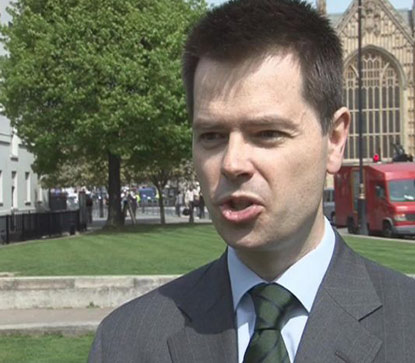
What is truly disgraceful about the Home Office is the way it plays the media game with complete disrespect for and by ignoring citizens to whom it owes a duty of care. While it issues conflicting messages to the media, it fails to respond at all to dozens of individuals suffering from debilitating diseases who have sought its advice on obtaining their medicine. Hundreds of individuals have written repeatedly to the Home Office but have received no reply. The conduct of the minister responsible for this scandalous episode, James Brokenshire, can only be described as cruel, negligent and irresponsible. While the rest of us may debate the political issues around drug laws, thousands continue in pain and suffering while this monster continues his game of media spin.
There is no justice or truth in government drug policy but in this instance there is blatant evil and disregard for human suffering in James Brokenshire. The man is a disgrace and not fit to hold public office.
BBC Blanks Proposition 19
According to the Home Office there are six million regular users of cannabis in the UK. I have seen just one report on the BBC news about the Proposition 19 vote in California on 2nd November which promises legalisation.
Compare this with the recent wall to wall coverage of the Pope’s visit. How many regular supporters of the Catholic Church are there in Britain? Just 887,000.
This is an appalling failure by the BBC and a dereliction of its duty to provide fair and balanced coverage. Please make a complaint. It will take you less than five minutes and it will make a difference if enough of you take the time.
Here is a direct link to the BBC complaints website. Please do it now!
The Guardian Dances To The Home Office Tune
An astonishing article in The Guardian today on the Home Office’s attempts to prevent UK patients gaining access to medicinal cannabis. See here.
The Home Office’s position is no surprise. What is astonishing is The Guardian’s inaccurate and poodle-like treatment of the story. The article is little more than an obedient reproduction of a Home Office press release. It takes no account of the gross injustice and cruelty perpetrated by Home Office ministers. Neither does it challenge a position that is cleary unsustainable under EU law.
No one can have expected the Home Office to give in on this issue without a fight. I think we would all have expected far more courage and support from The Guardian.
The Guardian’s editor is Alan Rusbridger. His email address is: alan.rusbridger@guardian.co.uk. I would urge everyone to write to him now to protest at this weak and rather pathetic coverage of an important story.
This is my email. Feel free to copy, edit or use it as you will.


 Peter Reynolds