Archive for the ‘Biography’ Category
Achievement Against All Odds.

I am the most fortunate of fathers. I could never have dreamed that my children would scale such heights. A fortnight ago my youngest son, Evan, qualified as a chartered surveyor. Today my eldest, Richard, capped his extraordinary achievement in becoming a barrister by gaining tenancy at 9, Bedford Row, possibly the top international criminal and human rights set in London.
In the 21st century, the route to success as a barrister is almost impossible to negotiate but Richard has done so despite many disadvantages and challenges.
Born five weeks premature, he spent his first days of life in the special care baby unit. Twice-butchered, traumatised before the age of three in what should have been a minor operation at the Royal Surrey Hospital, he was at last properly served by a skilled surgeon at Great Ormond Street. Then, at the age of four, he was diagnosed with type one diabetes. His response, even as a small child, was to become an expert. Before he was a teenager he could have taken on any doctor, any diabetician, any endocrinologist and taught them a thing or two. His whole life is characterised by determination and an ability to gain knowledge through intense study and the application of his most remarkable intelligence.
As a child, he was known in our wider family as ‘the next prime minster but six’. I still have no doubt that he could achieve that if he put his mind to it – and he still may. He was individual national champion in the ‘Debating Matters’ competition and then, despite dyslexia, diabetes and far from the finest secondary education, he made his way to the University of East Anglia to study politics, philosophy and economics, that degree most favoured by our leaders and the elite. In truth, he neglected his studies for student politics, editing ‘Concrete’, the university newspaper and then launching a rival, Norwich-wide student magazine. Despite this he gained the requisite 2:1 and was by that time set on a career in the law.
Unlike many of his contemporaries at the bar, there was no silver spoon for Richard. His mother’s hard work, the support of his grandparents and his own diligence at some depressing jobs enabled his second degree in the law and successful completion of the bar course. To see him called at Middle Temple in October 2014 was then the proudest moment of my life, particularly as it was the very last such occasion for my father, himself a retired lawyer, before he died on the last day of that year. I believe Richard knows what supreme joy he brought to his grandfather in those last weeks of his life.
The next stage in a barrister’s career is to gain pupillage, the essential apprenticeship that leads to a practising certificate. Fewer than one in ten who are called to the bar achieve this and often they are aided by family contacts, networks, their Oxbridge or public school connections. Richard had none of this, only his ability, courage and a focus which makes determination an inadequate word to describe him.
I am very grateful that 9, Bedford Row granted Richard pupillage and has now given him the opportunity to reach the very top in his chosen profession. In the year before he began pupillage he showed how much the open market already values him and was appointed General Counsel on a fat salary at TES Global, the world’s leading educational publisher.
I am in awe of my son. He humbles me with his achievements. I have no doubt that he will take silk, become a judge, or triumph at whatever challenges he chooses. I am the proudest father.
CLEAR Statement Concerning Cannabis Legalisation Measures In US Election.
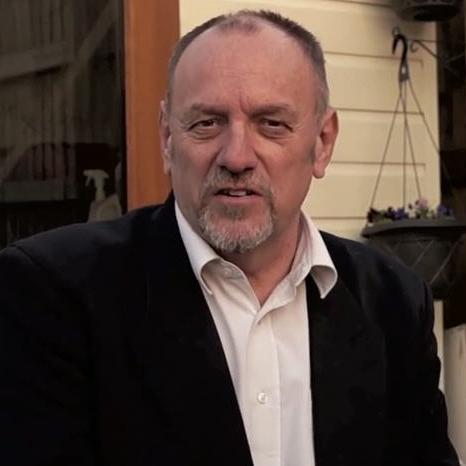
“This is marvellous news for liberty, health and human rights. The USA, unlike Britain, has a functioning democracy where the will of the people prevails rather than the bigotry and self-interest of politicians. It is wonderful to see that truth, justice and evidence is winning out over the lies and misinformation we have been fed about cannabis for almost 100 years.
In 1971, the British government abdicated all responsibility on cannabis and abandoned our communities and our children to criminal gangs. Since then all the harms have multiplied exponentially. The laws against cannabis fund organised crime, promote dangerous hidden farms which are fire risks, the destruction of rental property, selling to children, contaminated ‘moonshine’ cannabis, gang violence, lives ruined by criminal records and the cruel denial of safe, effective medicine that can relieve pain, suffering and disability.
Donald Trump has supported access to medicinal cannabis all along. Many British politicians who consider him to be an unreasonable person should now look to themselves and ask whether they are being reasonable by supporting prohibition, even for medical use.
It is time for Theresa May, Amber Rudd and the UK government to take responsibility for the £6 billion pa cannabis market. The tide of legalisation is now unstoppable and it would be deeply irresponsible for them to fail to act. They must grasp this nettle now!”
Peter Reynolds, president of CLEAR Cannabis Law Reform
CLEAR Cannabis Law Reform Accounts 2015.
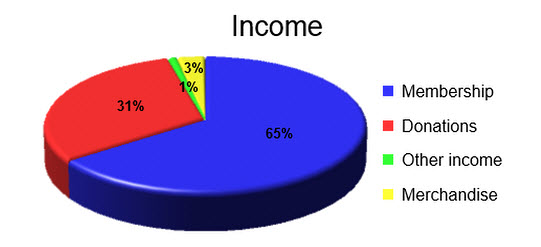
Income
Compared to the previous year, CLEAR’s regular income in 2015 was up 79% to £17,074. The majority of income continues to come from memberships, with the remainder coming from donations, merchandise and Google advertising.
Regular income: £17,074
Expenditure
CLEAR spent a total of £12,023, a decrease of 11% on the previous year.
Total expenditure: £12,023
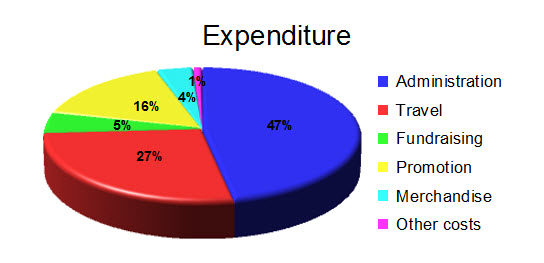
Administration: membership administration, stationery, postage, telephone & internet, meeting expenses, etc. Administration costs have increased as an overall proportion of expenditure as there were no dedicated campaigns during the year.
Travel: expenses incurred meeting government ministers, MPs, agency representatives, media engagements, boards meetings, also re-imbursement of travel costs for Medicinal Use Panel members
Fundraising costs: PayPal fees and other fundraising costs
Promotion: Facebook advertising, printing of leaflets, design work, etc.
Breakfast Of Champions 2.
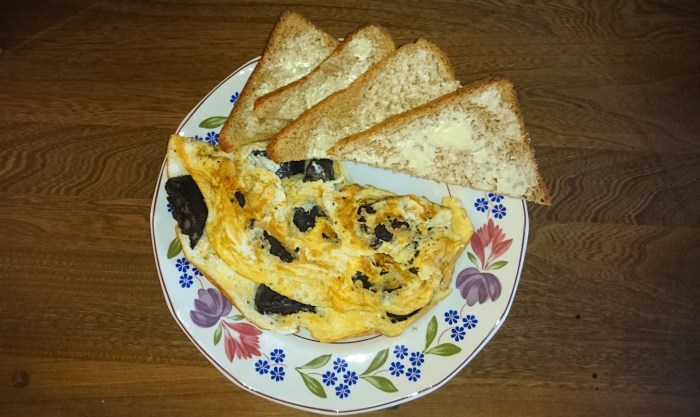
A recent invention of mine.
Bake the black pudding at about 150 C for about 10 minutes. Chop roughly and fry in butter for a few moments in the omelette pan to give crispy edges. Add as many well-seasoned, beaten eggs as you wish and cook for a couple of minutes. You can fold it or serve it flat and cut into sections.
Remember to give the dogs a little taste, it’s only fair.
Tip. Please keep the inside of the omelette as runny as you can, it makes all the difference. After decades of experience as a black pudding connoisseur, I buy mine from Framptons of Bridport. It’s described as ‘local’ but it isn’t that local because it’s made in Poole – but it is the business!
Breakfast Of Champions.

I decided I deserved a treat this morning.
Kippers pan-fried in butter and a touch of olive oil, two very soft poached eggs, served with hot, buttered, granary toast and strong tea. The dogs get a mouthful each and then are allowed to clean the plate and the pan.
Bliss.
Tip. Choose your kippers wisely, buy them from a proper fishmonger and season generously with black pepper.
UK Cannabis Trade Association Meeting With MHRA This Week.
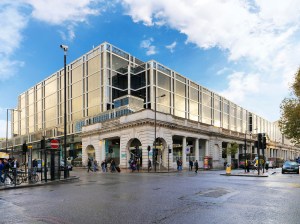
MHRA Headquarters
After all the speculation, many misleading and false reports and a plethora of attempts to interpret the MHRA’s actions concerning cannabidiol (CBD), this week the chips are down.
On Thursday 3rd November, at MHRA headquarters in Victoria, six representatives of the UK Cannabis Trade Association (UKCTA) will sit down with those responsible for the agency’s statements on CBD. We will be armed with counsel’s opinion on the legality of the MHRA’s action but most importantly we hope to secure clarification for those who rely on CBD as a food supplement. We will publish details of the outcome of the meeting as soon as we can.
Those attending as UKCTA representatives are:
Anthony Cohen, Elixinol UK
Mike Harlington, GroGlo Horticultural Research & Development
Peter Reynolds, CLEAR Cannabis Law Reform
Tom Rowland, CBD Oils UK
Karl Spratt, Hempire
Tom Whettem, Canabidol
Pride Beyond Compare.

Evan had a tough time at school. He was a slow starter. Even at sport he struggled to begin with. I remember watching him play rugby at about the age of 12; loads of enthusiasm but he couldn’t run!
Then he began to blossom. Kick boxing gave him his first taste of success as he became champion of his region. He started to enjoy great success with the ladies, far more than I or his older brother Richard ever have. Soon he was excelling at all sport and making steady progress at school.
Then at age 17 his life changed. He lost his left hand in a road accident that nearly claimed his life.
The challenge was enormous, on the cusp of adulthood his plan of an army career was scuppered, his whole word was turned upside down with pain, rehabilitation and enormous psychological adjustment.
But it was the making of him. He dealt with that disaster and became a man. It brought him an enormous sum in compensation with its own challenges and temptations that it would have been so easy to succumb to. He had his fun but he rose above it. He went to university, passed his degree, fell in love a few times until he met a girl of great beauty inside and out, Zoe, with whom he has found great happiness.
Today he learned that he passed his final exam and is now a chartered surveyor. He is Evan Reynolds. He is my son and my heart bursts with pride.
VIDEO. ‘This House Would Legalise Cannabis’. Reynolds v Hitchens. University Of Southampton, 29th September 2016.
Recording of a debate on the legalisation of cannabis which took place on Thursday 29th September 2016 at the University of Southampton, hosted by Southampton Debating Union.
The British Medical Journal (BMJ) Features The CLEAR Medicinal Cannabis Campaign.

By Nigel Hawkes
“Muddled thinking” over cannabis leaves patients in limbo, warn campaigners
BMJ 2016; 355 doi: http://dx.doi.org/10.1136/bmj.i5556 (Published 14 October 2016) Cite this as: BMJ 2016;355:i5556
Companies selling cannabis based products have been told to remove them from the market within 28 days, after a review by the Medicines and Healthcare Products Regulatory Agency (MHRA) determined that they were medicinal products.
Campaigners for cannabis law reform welcomed the recognition that cannabidiol (CBD) had medicinal properties but warned that the MHRA’s action would deprive thousands of users of a product they relied on. They said that it was impossible to obtain marketing authorisation in the timescale given and may never be possible given the high costs of clinical trials and lack of patent protection for a product that contained many components.
“In the long term, it’s a good thing,” said Peter Reynolds of the pressure group CLEAR Cannabis Law Reform. “But my immediate concern is for the tens of thousands of people who use CBD and have become reliant on it. We urgently need interim measures so that supplies can continue.”
The MHRA sent letters on 3 October to 18 companies that sold CBD, saying that it had concluded that CBD met the definition of a medicinal product as defined in the Human Medicines Regulations as “any substance or combination of substances which may be used or administered to human beings either with a view to restoring, correcting, or modifying physiological functions by exerting a pharmacological, immunological, or metabolic action or to making a medical diagnosis.”
This meant, the letter said, that CBD products required a marketing authorisation before they could be sold. Marketing authorisation for drugs requires lengthy clinical trials, only justifiable if the product has patent protection. An alternative route is under the traditional herbal medicines regulations, but that requires evidence that the product has 30 years of use and applies only to minor conditions, where medical supervision is not required. Reynolds said that he thought it unlikely that CBD could qualify by this route.
Mike Barnes, a neurologist and former NHS consultant and chief executive, is clinical adviser to CLEAR. He said, “The decision by the MRHA to treat CBD products as medicines has also been done without thought to the consequences for many thousands of people in the UK who currently benefit from the products. It will have very significant, and in many cases terminal, impact on the many legitimate businesses that provide high quality products.
“The government must now act to sort out their muddled thinking and try to help those people with long term and often painful conditions who benefit from the ready and hitherto legal availability of natural cannabis products. It is ironic that in acknowledging the therapeutic benefits of CBD, the MRHA is effectively suspending access to a product that has enhanced the lives of thousands for many years.”
Crispin Blunt, an MP and CLEAR supporter, has written to the MHRA saying that the decision to designate CBD as a medicine is directly contradicted by the Home Office’s position that cannabis has no medicinal value.
“It is vital that we do not let this anomaly in government policy cause harm to people’s health,” his letter said. He asked for details of how the decision was reached, the consultations undertaken, which specific regulatory regime MHRA proposed for these products, and whether the continued supply of these products, regulated as food supplements, could be ensured until such time that medicinal marketing authorisations could be obtained.
The MHRA has not yet posted details on its website about the decision. In a statement it said that people who used CBD should speak to their GP or other healthcare professional. “We can provide regulatory guidance to any company who may wish to apply for a licence,” the statement added.
‘This House Would Legalise Cannabis’. Reynolds v Hitchens. University Of Southampton, 29th September 2016.
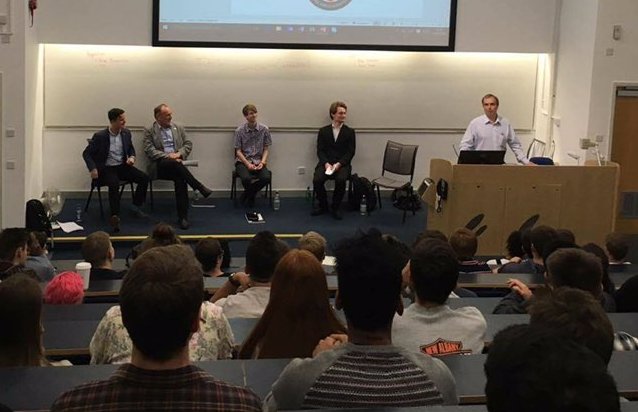
A vote was taken before the debate started: For the proposition: 49 Against the proposition: 18 Abstain/undecided: 17
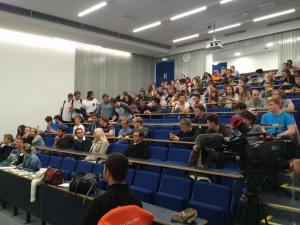
A Good Attendance
John Pritchard, studying economics. For the proposition.
Jacob Power, studying philosophy. Against the proposition.
Peter Reynolds, CLEAR Cannabis Law Reform. For the proposition.
Peter Hitchens, Mail on Sunday. Against the proposition.
A vote was taken after the debate finished: For the proposition: 57 Against the proposition: 26 Abstain/undecided: 8
My speech
I start with an assertion that I think we can all agree on – the only purpose of any drugs policy is to reduce harm.
I argue that British drugs policy, specifically on cannabis, causes far more harm than it prevents and that the solution is to legalise. But by legalise, I do not mean a free for all. In fact, I mean a system of regulation which minimises harm.
Under the Misuse of Drugs Act, cannabis is called a “controlled drug” but nothing could be further from the truth. What every government since 1971 has done is abandon all control. They have abandoned our communities. they have abandoned our young people and they have abandoned those who need cannabis as medicine. All of them, Conservative, Labour and the coalition, they have abandoned us all to criminals.
The results are street dealing, dangerous hidden cannabis farms that cause fires, theft of electricity, destruction of rental properties, gangs that exploit children, both by selling them cannabis and getting them involved in dealing, human trafficking, modern slavery, most often Vietnamese children, smuggled into Britain and locked up in cannabis farms to look after the plants. And as for the product itself, it is frequently poor quality and often contaminated with toxic residues.
These are the harms that the Misuse of Drugs Act is supposed to prevent but, in fact, it creates them, promotes them and maximises them.
Now, it may surprise you to know that the law is not about protecting people from health harms. The exact words of the Act are that it is about the misuse of drugs “having harmful effects sufficient to constitute a social problem”. It is social harm that the Act seeks to prevent.
Which is just as well because the “harmful effects” of cannabis are very difficult to identify. Most of what you hear is either wild exaggeration or completely false. Even the Institute of Psychiatry, the source of many scare stories, admitted last year that its press office was misrepresenting and exaggerating its own research.
Now t’other Peter will tell you that cannabis is a dangerous drug which can cause serious, irreversible mental illness. In a debate like this it is impossible to compare all the various scientific studies that form the body of evidence on which cannabis policy should be based. I can certainly answer specific questions later on but for now, let’s rely, not on evidence, but on cold, hard facts.
The populist myth is that thousands of young people are afflicted by this terrible condition called ‘cannabis psychosis’. The facts are that in the last five years there has been an average of just 28 finished admission episodes in hospitals each year for people under 18 for cannabis psychosis.
Of course these are 28 tragedies and I don’t overlook that but in public health terms it is an insignificant figure. For instance, there are more than 3,000 finished admission episodes each year for peanut allergy but we don’t spend £500 million each year on a futile attempt to ban peanuts, do we? Yes, that’s how much we spend every year on police, courts, probation and prison services to try and stop people using cannabis.
However, it’s not as simple as that. Apart from hospitals, thousands of people each year receive what’s called ‘treatment’ for cannabis use disorder from community health services. Nearly 16,000 young people for the year 2014/15.
Now the only ‘treatment’ for cannabis is counselling but that’s not what this is really about. It’s actually about trying to force people to stop using cannabis regardless of whether it’s causing any harm. Public Health England, which records these figures, shows that 89% of all those in treatment have been referred from the courts, educational institutions or some other authority. In other words this is coercive treatment. You have no option. If you don’t agree the courts will impose a tougher penalty or you might get expelled from school. Only 11% of those receiving this treatment actually decide they need it themselves.
Don’t get me wrong now, I’m neither suggesting cannabis is harmless nor that it can’t be a real problem for some people. But I ask you this, if it has the potential for harm, is it better that we leave the entire market, now worth £6 billion per year, in the hands of criminals, or would it be better and safer for everyone if it was properly regulated and controlled? Wouldn’t any health harms be reduced, better treated, if we had quality control, age limits, proper labelling of what you’re buying? Isn’t this obvious, common sense?
We will continue to put most of our effort into the medical campaign because that is what morality and compassion demands But actually, there is far more harm caused by the prohibition of recreational use. As well as all the social harms I mentioned earlier, do you know there are one million people in the UK with a conviction for cannabis? People whose careers, ability to travel, even their credit score can be damaged because they got caught smoking a joint.
In all jurisdictions where cannabis is legally available, the benefits are dramatic and very easy to see. In Holland, far fewer children use cannabis than in the UK. Underage use is declining in Colorado, Washington, Oregon, Alaska where cannabis is legal for all adults and in the other 30 US states where medical cannabis is legal. Crime is down, fatal traffic accidents are down, alcohol consumption is down, overdoses and deaths from dangerous opioid painkillers are down.
The prohibition of cannabis is a great force for evil in our society. It promotes crime, it maximises the health harms of cannabis, it ruins lives, it denies people medicine that science proves will help them, it blights communities, endangers children, fritters away precious law enforcement resources.
Indeed, prohibition is a fundamentally immoral policy. It sets the police and the courts against the communities they are supposed to protect. After all, the demand comes from us and it is not going away. We are adults, free human beings who are entitled to act as we wish provided it doesn’t harm others. Our government and our police should serve us. It is an affront to justice, to the rule of law, to morality and to each one of us that this oppressive, ridiculous, evidence-free policy persists.
Legalise cannabis now! Please vote in favour of the motion.

 Peter Reynolds