Archive for the ‘Uncategorized’ Category
WANTED. DEAD OR ALIVE.
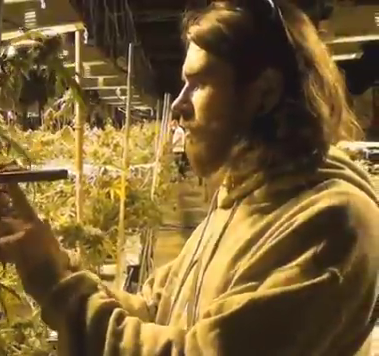
For gross violation of all the ethics of friendship.
For deserting his friends and mates and running off to the US of A.
For flagrantly, negligently and with smug aforethought, glorifying in his experience of Colorado’s finest farms, dispensaries and marijuana with no thought whatsoever for the misery and dereliction of his chums…
Left behind…
In Blighty.
THIS MAN MUST BE CAUGHT!
The Politics Of Cannabis

Originally Published In ISMOKE Magazine Issue 1
Cannabis is a political issue. Make no mistake about it. The scientific, moral, medical and health arguments have all been won. What we need to do now is find a way to make change happen.
It’s in the prohibitionists’ interests to keep debating all the ins and outs and going through the evidence because it diverts from the imperative for change. We have to keep repeating the truth. We have to cut through their deception and scaremongering but above all, we have to demand action.
In the US, they’ve gone way, way past the silly and irrelevant arguments about cannabis being dangerous or harmful. We like to think that we’re smarter, a more mature democracy but so many Brits are still suckers for a Daily Mail scare story. The propaganda and bigotry still prevails here. In America they simply accept that if you abuse or misuse something it may cause you harm. They rarely even mention the psychosis theory. Even after Congresswoman Giffords’ shooting and the stories of Jared Loughner’s marijuana use, his friends were quick to step forward and say he’d stopped some time ago and actually seemed worse and more unstable without self-medicating on cannabis. More importantly than that, the US media reported what his friends said rather than hushing it up because it wasn’t sensational enough.
Peter Hitchens, the Mail On Sunday columnist wrote a disgusting rant about the shooting, blaming it all on cannabis and having nothing to do with the truth at all. Now the US media are ridiculing him about Britain’s Reefer Madness. He really is an example of the very worst in journalism. The truth means nothing to him. He is a liar and a mendacious frightener of the vulnerable, the elderly, of children and their parents. You will be interested to know that the Legalise Cannabis Alliance has drawn a line in the sand. We will no longer let such nonsense go unchallenged. A formal complaint is being made in the LCA’s name to the Press Complaints Commission. It will be the first of many. We will no longer allow the British media to distribute lies without calling them to account.
The War On Prohibition Can Be Won!
Prohibition is fundamentally immoral. It is nothing less than the unjustified oppression of a section of society. It is as pernicious and evil as racism, sexism, homophobia or any other form of prejudice. It says that, irrespective of facts, evidence, science or justice, just because we disagree with you, we will make your activity illegal. We will criminalise you, imprison you, ruin your career, endanger your family, smear you with unjustified innuendo and suspicion. We will cause you far more harm than the activity you choose ever will.
It is pretty well accepted now, worldwide, that Nixon’s war on drugs can never be won. It makes Vietnam or Afghanistan look like a little skirmish in some backwater. It has been responsible for far more death, misery and destruction than any war since Nixon first declared it. There are still those who cling to its ambitions, like our favourite preppy, baby face minister James Brokenshire But he is rather like one of those Japanese soldiers, found on some remote Pacific island, thirty years after his Emperor surrendered – still dangerous, still committed to his cause but hopelessly out of touch, in need of re-education, a very, very sad case.
The war on prohibition is now in full flow and this is a campaign that can and must be won. It is a war that has right and justice and common sense on its side. It is time that we marshall our forces, determine our strategy, plan our tactics and hold fast to our courage as we advance on the enemy. I believe that this year or next marijuana will be legalised in at least one state in America. Once the dam is broken, progress will begin to roll out all over the world.
I believe that the Legalise Cannabis Alliance is the standard around which we should rally. We are responsible, respectable, reasonable citizens and we need to unite to fight the war on prohibition.
What is vital is that the LCA communicates its messages effectively to the right people. It seems to me that one of, if not the most important audience is members of parliament. They, after all, are the only people who can actually change the law. We therefore have to play their game by their rules.
In the documentary “In Pot We Trust”, Aaron of the Marijuana Policy Project says that one man in short hair and a suit, lobbying congressmen can achieve more than hundreds marching in the street. I think he’s right.
The LCA must re-launch its campaign. We must overhaul our image, update the logo and the website. We must become conscious of our communications, control and deliver our messages with ruthless effect, use all the spin doctor tricks and techniques, just as any other political party or pressure group.
I will put on a suit and tie for the LCA because that’s what is needed to make progress with politicians, through the media and, most importantly, with the great God of public opinion.
I think we also have to consider our name. Not throw it out for the sake of something new but recognise that “Legalise” is a word that frightens people. They think it means an uncontrolled free for all, whereas what we argue for is fact and evidence based regulation. We also need to consider the word cannabis. People are frightened to have it on their Facebook profile and concerned that it may come up in a Google search when they’re applying for a new job. We have to consider these things. I would argue that instead of saying “Legalise Cannabis”, we might say “End Prohibition”.
So we do need to become much more professional about our communications and image. Anything put out in our name needs to be “on message” in every sense of the phrase – look, feel, content, style, etc. Each target audience needs to be addressed on its terms. We need an analysis and a plan for each individual MP and constituency. We need a rota of pro-active media communications. We need to enlist the help of celebrities who support our cause. This needs to be done consistently and repeatedly. We need a team of people all over the country working together with a plan to succeed.
I also believe that we should re-register as a political party and field candidates in every byelection. In fact, I would propose that we field the same candidate in every byelection and we build.the campaign and awareness over time. I don’t expect us to win a seat in parliament but I do expect us to start being taken seriously. I want to see us on Newsnight and on Question Time. When Debra Bell is asked for a quote or is interviewed about a cannabis story, I want us to be quoted as well and to be on the other side of the TV sofa facing down her mischief and misinformation.
Cannabis is a political issue. If we get our act together and get serious about the war on prohibition, get serious about achieving results, explain the facts, expose the lies, then we can prevail. We can see the truth revealed. We can win!
USA to Host World Press Freedom Day (via The Mad Hatters)
An extraordinary story brought to you by another champion of media freedom, Duncan Robertson, sitting at the head of the table at the Mad Hatters tea party.

via The Mad Hatters
Anti-Social Police Behaviour

Out Of Control
The British police are out of control. Far from becoming a politically correct “service”, they’re moving more and more towards the “force” ethos, promoting their own self-interest and resisting all attempts to be subject to democratic control. The sooner we get elected police commissioners the better. Those presently in charge of the police increasingly place themselves above the law and regard the public as the opposition, not the people they are paid to protect and serve.
They’re even trying to frighten us over the spending cuts, suggesting that any reduction in police budgets will lead to increased crime and disorder. What other public service with its budget under threat uses direct fear of violence as its response? I call that scaremongering. I call it precious close to a protection racket, to blackmail and extortion.
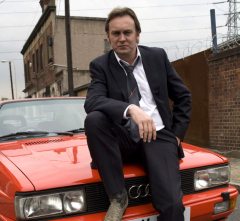
The police are very, very good at road accidents. There are brave and clever men and women in anti-terrorism and serious crime. But we lost the British bobby sometime ago now. I’d say it was in the 1990s. Dixon Of Dock Green had retired to the other side of the world. Jack Regan was supposed to have gone but he returned disguised as Gene Hunt. The TSG continued its long tradition of brutality providing a career path for violent thugs. The term “institutionalised racism” was coined. The cars got faster. The uniforms got sexier in a Nazi stormtrooper sort of way. Meanwhile, in parallel, the gay rights, politically correct, sociology graduates and new Labour bureaucrats gained influence and these two factions, fundamentally incompatible, consumed huge quantities of police time and procedure, and eventually created a perfect storm of bureaucracy, corruption and laziness. The police lost touch with the people completely.
The police don’t want to be accountable to anybody. Even when they assault members of the public, even when innocent bystanders die at the hands of police officers in disguise, they close ranks, obstruct justice, lie, cheat and dissemble to avoid the consequences. Now, Sir Paul Stephenson, not content with the way his officers pervert the criminal justice system, wants some sort of immunity from the civil courts. His secret letter to Theresa May, seeking protection against officers being sued for brutality or wrongful arrest is a disgrace. See here. It reveals his true intentions only too clearly. He even wants to charge for requests under the Freedom Of Information Act, further tightening the police culture of secrecy and concealment. It is truly terrifying that Britain’s most senior police officer should even contemplate such ideas. It is the very opposite of responsibility and conclusive proof that he is not a fit and proper person to be any sort of policeman, let alone commissioner of the Metropolitan police. Theresa May should dismiss him immediately. He is a power hungry, manipulative, enemy of justice. No sort of protector or champion or servant of the public at all.
When it comes to the brutal assault by Sergeant Delroy Smellie on Nicola Fisher or the death of Ian Tomlinson, clearly caused by PC Simon Harwood, most of us would be prepared to accept the “bad apple” argument. Yet somehow, in the Nicola Fisher case, District Judge Daphne Wickham was persuaded to refuse to hear Ms Fisher’s statement in court. Somehow, over a year and a half after Ian Tomlinson was killed, PC Harwood has still not been called to account for his actions and is still suspended on full pay. Neither have his colleagues who blatantly lied and tried to cover up what had happened. The truth is these men are not bad apples. They are the deliberate product of the Met’s Territorial Support Group (TSG). In hiding their identification and using brutal, disproportionate violence, they are entirely consistent with the culture and training that their senior officers have designed.
Hero
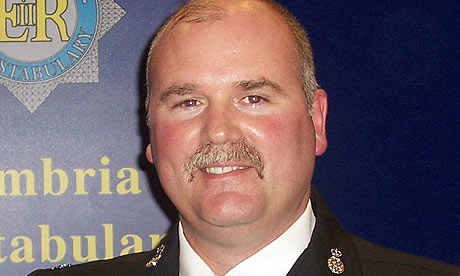
Of course, there are still good cops, selfless, conscientious heroes like PC Bill Barker who genuinely seek to serve the public. He gave his life while protecting people during the Cumbrian floods. See here. He deserves every honour that we can bestow on him. He shames all those corrupt, cowardly bullies that infect our country, that hide in their offices and cars, that display their vile and despicable attitudes on the Inspector Gadget website. Officers like PC Barker are now in the minority, in full scale retreat, ridiculed and excluded by a wannabe Gene Hunt culture that has attracted more and more borderline psychopaths to the paramilitary uniform and fast car culture.
Role Model
Now they don’t even think that anti-social behaviour is police work. It’s not exciting or glamorous enough. In the early noughties in North Kensington, I saw how the police completely lost control of the Avenues, the terraced houses between the Harrow Road and Queens Park. The police from Kilburn and Paddington Green stations were in full scale retreat, absolutely impotent and useless in the face of gangs of kids aged 10 – 16, on the streets at all hours, abusing people, keying cars, throwing eggs and laughing at any authority or discipline. Those hooligans and yobs are now breeding and the police are reaping what they’ve sown. I expect their solution will be violence and “fit-ups”. They’re no different from the lowlife, layabouts themselves. They’re just two sides of the same coin.
Illegal Weapon
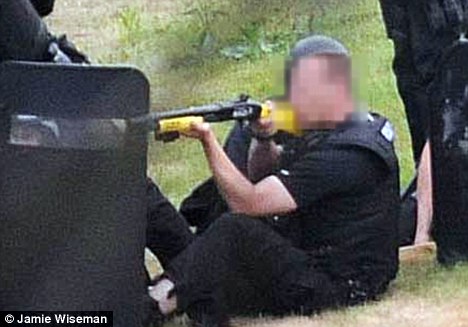
The Raoul Moat affair revealed how the police have lost the plot. While some officers proved their courage and worth, others indulged in an orgy of technology, expense, hiding behind their procedures and precautions. Others used banned super-Tasers, illegally obtained from their cronies in the arms industry and undoubtedly caused the death of the mad nutter. Not a bad result but achieved in a dreadful way. It was a dismal and demeaning epsiode for all concerned. See here.
Corruption is endemic in the police. It starts at the beginning of every shift and continues off duty. At its worst, it’s the disgusting spectacle of PC Stephen Mitchell in Newcastle, who inflicted his sexual desires and drug appetite on those he arrested. See here. At the everyday, commonplace level, it’s the copper who confiscates a bag of weed and takes it home to smoke himself, or who brutalises a wheelchair bound medicinal cannabis user. It’s the thugs who think it’s acceptable to terrorise and batter an old man over a motoring offence. See here.
Elected police commissioners are our only hope. I applaud the coalition government for bringing forward this proposal and acting on it. I see no other way of rolling back the Stasi-like culture that the Labour party has allowed to flourish. Beware though, those that put themselves forward for election as a commissioners are in the front line. They risk the attention of the police establishment in ways that we cannot yet know. I wonder how many candidates will have their personal lives investigated and possibly fabricated? Any prospective commissioner who wants to disrupt the comfortable life of the police may find himself in the firing line. All sorts of inconveniences, stops and searches, investigations and embarrassments may be just around the corner.
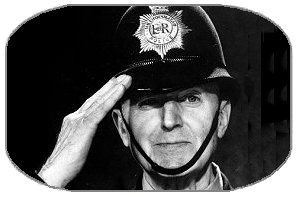 The police want us to believe that if they are squeezed in the spending review we will face danger, disorder and violence in the streets. Instead, what we must do is paralyse the police bureaucracy, starve it of the resources it needs to promote its self-fulfilling prophecies and force officers back onto the streets. We will pay for shoe leather but not for air conditioned limousines. We will support bobbies on the beat but not poseurs in flashy SUVs. We will not tolerate any sort of discrimination or favouritism. No officer may be a freemason or belong to any secret organsation. We must fight for the soul and integrity of our police service against the corrupt thugs that have infiltrated it.
The British people deserve police officers they can be proud of.
The Third Milliband Brother?
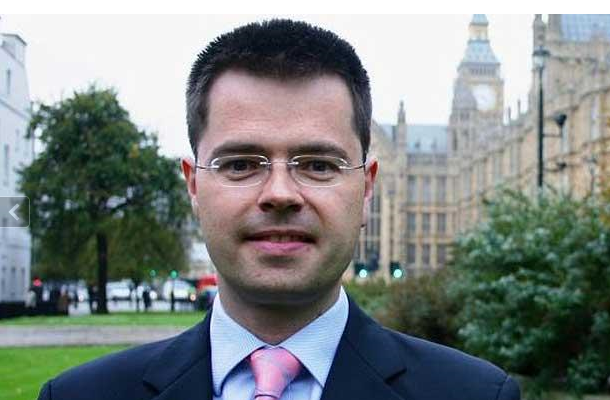
James Brokenshire
I have very mixed feelings about young James Brokenshire. He’s a Tory and so am I, so I don’t really want to be too derogatory about him. It’s very difficult though, just keeping a straight face, let alone seeing anything positive. Most difficult of all to ignore is the Milliband in him. I mean, come on, tell me I’m wrong!
One of my more erudite commenters mentioned the phenomenon of Nominative Determinism. According to Wikipedia:
Nominative determinism refers to the theory that a person’s name is given an influential role in reflecting key attributes of his job, profession, or general life. It was a commonly held philosophy in the ancient world.
It’s not just that he looks like a Milliband. It goes much deeper than that. Alright, so George Osborne is right in there as well and I just know I’ve seen at least a dozen other clones. I just can’t quite remember their names or distinguish them. They’re the generation that’s heir to Cameron and Clegg. They’ve gone from graduate to researcher, never had a real job, eternally trapped within the political bubble. You know the type. And yes, our politics and our society are broken, broken because of the sort of policies, attitudes and behaviour that James exhibits.
Of course, I’m on the libertarian side of the party and James is way, way opposite. He comes across as not just a hanger and flogger but a hanger, drawer and quarterer – and that’s just for parking tickets. The trouble is, I fear he’s making such an twit of himself that he’s doing my party a grave disservice. For such a young and youngish man he is a very old, very old reactionary Tory.
James is the new Minister of State for Crime Prevention. Congratulations to him on his appointment at such an early stage in his career. What an important job! He does rather bring to mind all those old jokes about policemen looking like they should still be in short trousers. Does anyone take him seriously?
He’s the government’s front man for the drugs issue. That’s right, it’s not a minister from the Department of Health who deals with drugs. It’s the Home Office! Anyway, even before the current furore, I’d seen James in action in reply to a question about drugs policy. He’s authoritarian, repressive, intransigent and far, far too sure of himself even when he doesn’t know what he’s talking about. This is not someone who believes in “small” government. Like the Millibands and other illiberal socialists he wants close control of our lives. I’m sorry but the boy looks silly and he behaves like an idiot. He’s being taken to pieces all over the internet – ridiculed, abused and condemned. David Cameron, please get rid of him now!
The trouble is that James is trying to come over all tough and spunky but he doesn’t realise that even men of my sons’ ages have seen it all before. Eager young politicians who think they know best when they know nothing have been making similar fools of themselves since time began. To coin a counterfeit phrase, I’d smoked more joints than he’s had hot dinners before there was even a twinkle in his daddy’s eye! So many of us had thought through and argued out the drugs issue a hundred times before James even left nursery school.
I can’t really expect a replacement who agrees with me 100% on drugs policy. What I do expect is someone who is credible, sensible, well informed and committed to evidence-based policy and truth. James is none of these. He is making a fool of the government.
What’s really serious is that the man is misguided. He’s flying in the face of the facts and all the experts. Drugs policy has huge impact on our society and we need to move away from our present disastrous and oppressive course. James Brokenshire is the wrong man for the job.
British Justice On Trial
Thugs, Slimeballs And Grunts
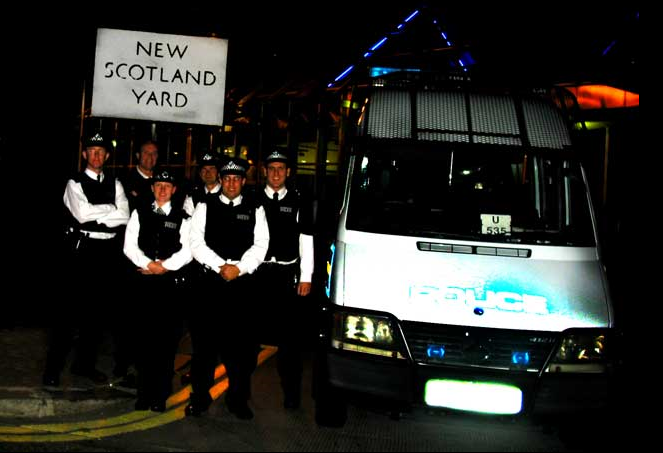
At last, four of the Metropolitan Police’s Territorial Support Group are to stand in the dock charged with assault causing actual bodily harm and a jury is to decide their fate. They are PC Nigel Cowley, PC Mark Jones, PC Roderick James-Bowen and DC John Donohue.
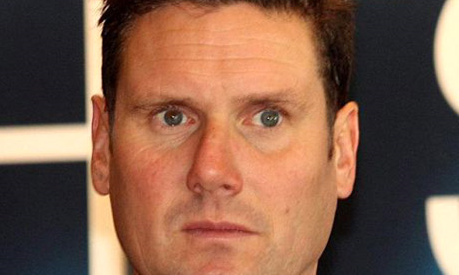
He's Got To Go
Perhaps Keir Starmer, Director Of Public Prosecutions, thinks he will win back some credibility through this after his catastrophically bad judgement in the Ian Tomlinson case. Not a bit of it. In fact, the decision to prosecute now after a successful civil claim against these thugs, proves how negligent the original decision was. The CPS is charged to uphold the public interest by statute. It should not have to be harried to the Court reluctantly by civil action. Yet again, Keir Starmer should hang his head in shame. In fact, he should resign
These officers have already been proven on the balance of probabilities to have illegally assaulted Babar Ahmad in 2003. Last year the High Court heard that he was subject to “serious, gratuitous, prolonged, unjustified violence” and “religious abuse”. Now the criminal courts will seek to extend that proof to beyond a reasonable doubt. Meanwhile, the Met, which decided against any disciplinary action, chooses not even to suspend these proven thugs and bullies. Sir Paul Stephenson should join them in the dock. His disrespect for due process is astounding. How can he have such men under his command? The IPCC also failed in this case – yet again. In 2007, it decided to take no action against any of the officers.
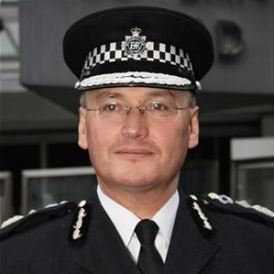
Keeping Mum
Almost every day now, new horror stories of illegal, brutal or simply dumb police behaviour are revealed. This is the reward we have reaped from the massive investment and huge increase in salaries we gave to the police in the 80s. According to my contact with inside knowledge it is due to a “collapse in supervision…and an arrogance due to few cops having much other work experience”. The police service is no such thing for the average British citizen. It is a self-serving bureaucracy with an aggressive sub-culture, acting as a revenue generating workforce for the state. It is institutionalised racism, brutality, prejudice, bullying, corruption, cowardice, freemasonry, all dressed up in a jack-the-lad, paramilitary uniform. It isn’t even any good at what it does. Aside from dealing with road accidents and high-level anti-terrorism, I know of little good work done by the British police. It has become an out of control monster that avoids doing what the public wants and picks and chooses what to devote its resources to.
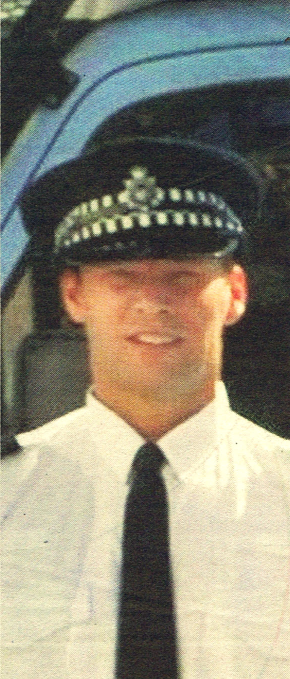
PC Simon Harwood
If Keir Starmer can reverse his decsion on these thugs who beat up a suspected terrorist, he can also reverse his decison on the fatal assault on Ian Tomlinson, an entirely innocent bystander. Meanwhile we await impatiently the coroner’s inquest on his death and the disciplinary hearing against PC Simon Harwood, which must be held in public in accordance with the statutory provisions.
Every time that a police officer breaks the law or exceeds his powers he breaches our trust. It is the same as a bank employee stealing from his bank. It must be punished particularly severely. This must be the standard that British police adhere to. We must never relent from calling the corrupt and incompetent to account.
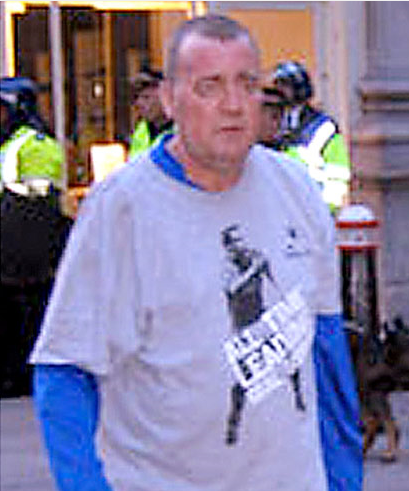
We Wait For Justice
Whether a conviction is possible in this latest case, seven years after the events took place, I don’t know. On the basis of its own rules the CPS must believe a conviction is more likely than not or it wouldn’t be proceeding . Justice delayed though, is justice denied for Babar Ahmad and the policemen. This repeated and continuing incompetence by the prosecution and regulatory authorities is every bid as dangerous as the deterioration in the police. Suspicions of corruption, collusion and conspiracy are inevitable and must be answered. These are serious threats to British justice.
Thank God For The Prince Of Wales
Otherwise our country would be littered with vainglorious, egotistical self-monuments to architects – individuals like Richard Rogers who persist in the delusion that they know best.
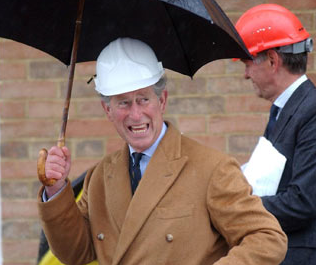
Site Foreman
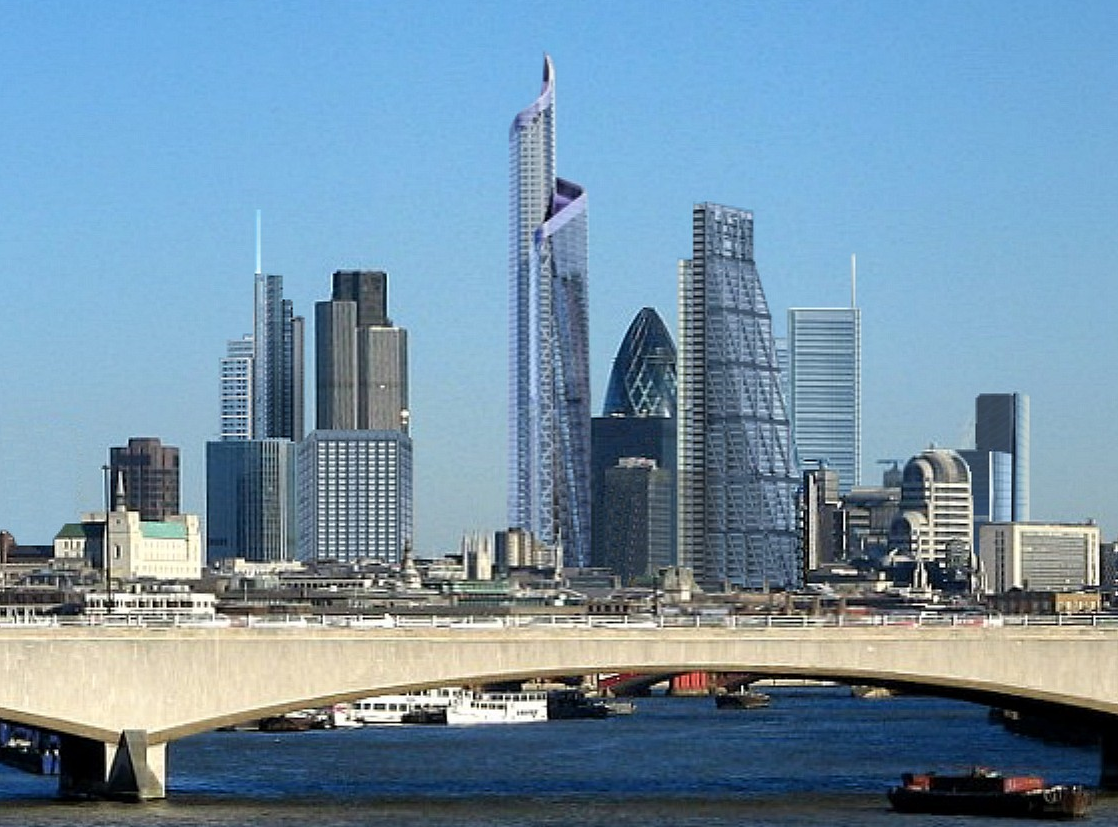
A Cluster Of Carbuncles
Prince Charles speaks with wisdom, discretion and for the conscience of the Nation. Those who understand the unique place that the monarchy holds in British society know that he speaks for a Britishness that transcends politics, fashion and the vicissitudes of architecture. To use their own, pretentious expression, architects create our “built environment”, the very space in which we live our lives. What other profession charged with such a grave responsibility has failed so miserably over the last century? Where is the great architecture of the 50s, 60s, 70s, 80s and up to date? I can think of none but I can make you lists of the eyesores, slums and ludicrous mistakes that scar our towns and cities.
Thank God for the Prince of Wales! To the architects, the planners, those lawyers and judges who know no respect, I say take them to the Tower! Let them languish there until their own mistakes have crumbled into dust. Then we might give them another go. Until then let’s stick with the proven classics of design. Innovation and experiment may be valid in modern art but in architecture there can be no equivalent of Damian Hirst or Tracy Emin. They may thrive in private view but not in public. No thank you!
Wales Leads British Olympic Effort
So Nicole Cooke, carrying the Welsh Dragon high, cycles to a gold medal and sets the standard for the British Olympic team.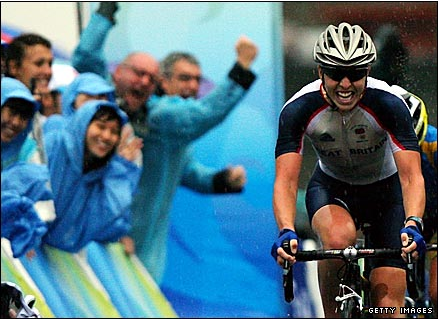
Meanwhile, at home, far too many people are adopting a cynical, world weary attitude. Shame on you!
Barbara Ellen, sexy new columnist at The Observer says “Call off 2012, Beijing Is Boring”. Well, she may be appreciable eye candy (useful for all those soirees columnists just have to attend) but she is resorting to the oldest trick in the journo’s book – if you can’t say something sensible then slag it off.
More disturbing is the pub talk, the man on the Clapham omnibus who also claims to be bored.
Listen killjoys, cynics, non-Welsh Brits, in a fortnight’s time there will be a tear welling up in your eye. You’ll want to and, undeservingly, will, feel part of it. Your patriotic spirit will be reborn and you’ll be screaming as the next British runner, cyclist or egg and spooner takes gold.
The Olympics are a wonderful, inspiring celebration of mankind. I remember them throughout my childhood and I am cheering for our boys and girls from the very beginning. The rest of you are welcome to the party however late you arrive.

 Peter Reynolds