Peter Reynolds

The life and times of Peter Reynolds

Posts Tagged ‘democracy

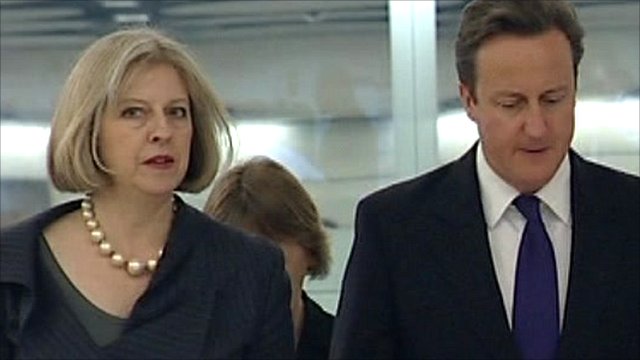
Extremist Attack On Freedom Renders Cameron And May Unfit To Be Ministers Of The Crown.
with 5 comments

may cameron

Even before Theresa May delivers another speech of hatred, prejudice and bile at the Tory Party conference, the dreadful news is out.  Cameron himself has trailed it and blatantly, unashamedly, these two oppressors of British democracy plan to restrict our freedom of speech and thought in a way never before contemplated.

Cameron explicitly states that it is not just about committing or inciting violence, it is about holding “extremist views”.  All that the Home Secretary has to have is “reasonable suspicion” that people hold views she does not agree with or dislikes and she may lock them up.

This must be stopped. It is the greatest ever betrayal of the British people and Cameron and May have demonstrated conclusively that they are not fit to be in government.  They are hoist on their own petard for their ideas are as extremist as any other and if such legislation is introduced, they should be the first to be arrested and charged

Written by Peter Reynolds

September 30, 2014 at 10:16 am

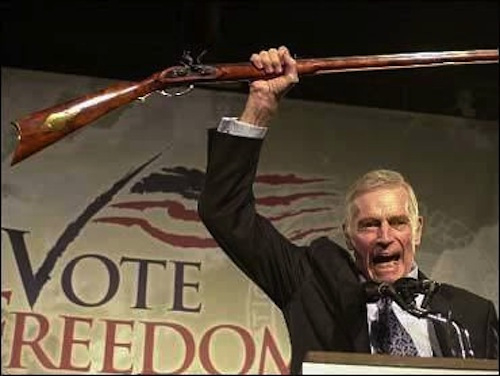
Snooper’s Charter. This Is Why Americans Keep Their Guns.
with 2 comments

 “You can have my guns when you take them from my cold, dead hands.”

“You can have my guns when you take them from my cold, dead hands.”

Nick Clegg has caved in again.  Norman Baker sat next to the most monstrous woman in British politics as she sneaked her snide subversion of our freedom through parliament. These people are ‘Liberal Democrats’?

It is all decided.  There is nothing we can do.  Parliament adjourns in less than a fortnight.  There’s little your MP could do for you anyway, even if he or she had the balls to stand up against this railroading of fundamental changes to our rights.  The leadership of the main parties have conspired to pervert our democracy to their own ends. In America they would be put on trial for treason.  This is why Americans keep their guns. It is some protection against an overbearing state.

Meanwhile, in London, Boris Johnson’s water cannons have arrived. Julian Assange is still holed up in the Ecuador embassy. Edward Snowden, the great American hero is running for his life in Russia.

Bring the Guillotines To Parliament Square!

Bring the Guillotines To Parliament Square!

At least America has a constitution. British democracy is a sick joke. We have no control over our government.  Elections are meaningless.  Politicians are a self-serving, incestuous elite, part of the tripartite oligarchy with the Fleet Street Mafia and the bankers.  We are the servants of the state.  We can’t even determine the issues that the media and parliament consider.  Their agenda and priorities are imposed on us.  We can’t enact local medicinal cannabis laws as 23 states have in the US, where the people have instructed the government what to do.  We can’t define the debate on education, the health service or foreign policy.  We must just do what we’re told.

We let these people take our guns away from us – and we were foolish to do so.  After the water cannons, what comes next?

The Cannabis Campaign In 2011
with 85 comments

I believe that we can make real progress this year towards ending the prohibition of cannabis.

What we have to do, each and every one of us, individually, is take responsibility.

We have to stop complaining and start campaigning.

However just our cause, however unjust our opposition, no one is going to give us the right to cannabis.  We are going to have to take it.  Take it back from those who took it away from us.

Many of us can point to years and years of fighting for the cause but it is never enough!  We have to keep on. We have to welcome new campaigners and encourage them, not take the view that we’ve seen it all before, done it ourselves and why aren’t we getting the credit?   We have to welcome our fellow citizens to the war against prohibition, support them, bolster their confidence, build them up, not knock them down.

If the millions of people in Britain who use cannabis were to join together and be counted, we could make change happen!  I don’t know whether there are two million of us or ten million.  That’s how widely the estimates vary.  The Home Office used to say six millon use cannabis regularly.  I don’t know.  What I do know is that it is an outrage to democracy and justice that we are denied legal and properly regulated access to cannabis, whether we use it for medicine, relaxation or spiritual fulfilment.

We don’t all have to be campaigners but we do all have to be counted.  If we want change, we have to be prepared, at least, to sign petitions, to write the occasional letter, to put our heads above the parapet.  It’s so easy nowadays.  It can all be done online in the blink of an eye but more of us need to do it and keep doing it until politicians understand that they can bully us into silence no longer.

One of the problems of the online world, of Facebook, the forums and blogs, is that we’re just preaching to the converted all the time.  We may feel that we’re getting our message across but it’s to the same people over and over again.  When you see the disgusting response that Bob Ainsworth had to his brave initiative just before Christmas, when you see James Brokenshire smugly trotting out his prohibitionist agenda, when you see Cameron and his poodle backtracking on all their enlightened and liberal ideas, then you realise that the forces of darkness are set against us.   The war on drugs, which Brokenshire fights so enthusiastically,  is another Vietnam. It can never be won because it is, in fact, a war on democracy but there will be many casualties along the way.  Brokenshire counts the high level of adulteration of drugs on the street as a measure of success.  This is the sort of thinking that we are up against.  It is perverted.  It is evil.  It denies truth and science and justice.

It denies people in constant pain and suffering access to the medicine that they need.  Even if a doctor has prescribed cannabis, ignorant, professional political oiks who have never done a day’s real work in in their lives, think they know best.  Instead they force people towards expensive pharmaceutical products with horrendous side effects but huge profits for their co-conspirators in the corrupt world of Big Pharma and its self-important regulators.   As was seen so clearly in America in the last century, prohibition is fundamentally immoral and self-defeating yet our cowardly politicians hide behind it, preferring inaction, oppression and lies to the truth.

So I have asked myself, what can we do to break this stranglehold that politicians have on the truth?  How can we counter the crass and appalling propaganda that the Daily Mail puts out?  Why does the media love the story of Debra Bell, the mother who blames cannabis for her delinquent and dishonest son?  Why is the truth about cannabis so rarely told?  Where is the voice of the millions who know the truth?

I return to the divisions there are within our cause.  Just as in California, where the growers sabotaged Proposition 19, so we have our own subversive and destructive elements. We have a breakaway group here, an independent campaigner there.  We have medicinal users who are eloquent and persuasive on their own account but will not work with others.  We have hugely courageous individuals who have campaigned and put their freedom on the line but will not reconcile themselves to co-operation.  We have to cut through this.  We have to unite, to generate a momentum that means we cannot be ignored.

That is why, just before Christmas, I decided to join the Legalise Cannabis Alliance.  I was a member of the original Legalise Cannabis Campaign and I saw how the LCA made strenuous efforts, particularly around the 2005 general election. I believe it was right and effective to put forward our views on the political stage.  This is what we must do again.

The LCA is to re-register as a political party and, in due course, I hope to stand as a parliamentary candidate.  Realistically, I don’t expect to be elected but I do expect to make our voice heard. I expect our opinions and our views to be respected and given proper consideration.  When the Daily Mail or the BBC turns to Debra Bell for comment, I expect them to turn to us as well.  When Mrs Bell is on the TV sofa, I want to be alongside her.  I want the opportunity to speak the truth in the face of propaganda.  If they want to put up eminent professors and doctors as well then I encourage it.  Science and independent reason is on our side.  The intellectual and scientific debate has been won many times over.  Now we must win the political battle and the truth is our strongest weapon.  All we have to do is shine the light on it so that the scare stories, the hysteria and the propaganda shrink back into the shadows.

We will be a single issue party with a commitment to de-register once we have achieved our aims.  I urge you all to join the LCA.  I’m going to do everything I can to make it easier to join. Possibly we need to make it cheaper.  Certainly we need to do everything we can to encourage as many people as possible to stand up and be counted.  We need to be able to accept card payments, operate direct debits.  We need as many as possible to join whether or not they use cannabis. We need to reform the law, regulate supply and distribution and realise the huge benefits as a medicine, as a gentle pleasure and as a new source of billions in tax revenue.  That’s the way forward.  Reform, regulate and realise.

One of the most repulsive images I saw last year was the fat, conceited Simon Heffer chortling into his glass of wine and saying that we need to “get nasty” in the war on drugs.  Well I’ve got news for the pompous, hypocritical boozer and for James Brokenshire and his cronies, nobody’s going to be getting nasty from this side.  We’re just going to tell the truth.  And we’re going to keep on telling the truth until it drowns out their lies.  We’re going to tell the truth again and again and again until we get the right to our drug of choice, to the plant that creates peace not violence, to the plant that heals that doesn’t kill, to the plant that we have a right to use and enjoy as we please.

Vile Police Website Reveals Violent Conspiracy
with 81 comments

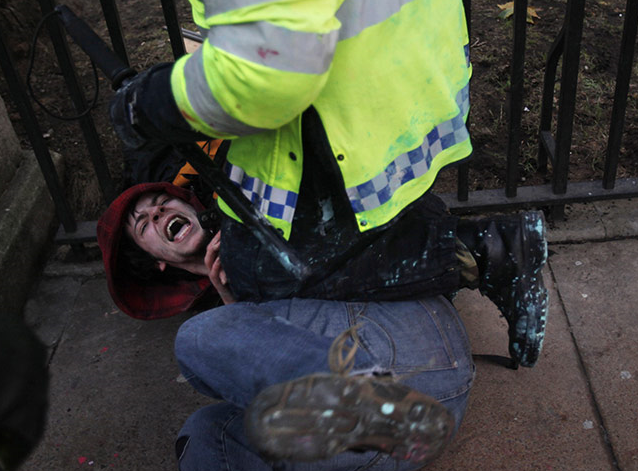
The disgusting Inspector Gadget website is at it again.  Go take a look if you want your eyes opened to the corrupt, barely literate, violence-obsessed, rabid scum that masquerades as our police force. They are salivating in delight at their frenzy of brutality on Thursday and eagerly anticipating more opportunities to beat up our children next week.

I support the real police.  There are evil, subversive forces hiding behind and amongst the students.  Those who are violent and only trying to ferment anarchy need to be stopped but they are on both sides.  There are far too many of them wearing a police uniform and they deserve the most severe punishment of all.

It is outrageous that they are allowed to commune,  plot and scheme with each other like this.   They are paid not to have opinions like these and to stay calm and neutral.  They are incapable of doing the job.  Inspector Gadget should be closed down.  Any officer who participates in it is not fit to hold the Queen’s warrant.

These are a selection of comments made by those who we pay to protect our children:

“I don’t think you can hurt a student by hitting them on the head.” Posted by “Fee”

“Good point, get chainsaws and cut their legs off then. That will slow them down a bit.” Posted by Taff Taff

“Shields advance… Fix bayonets.  Charge…..Good luck troops.” Posted by BeePee

“Good cavalry charge at that protest, the only thing missing were the pig sticklers used in days of Yore.” Posted by Bodrules

“Time to get hard and nasty!” Posted by Ranter

“A few well placed live rounds and the ‘protest’ would stop in an instant.” Posted by ExTrafficBiker

See more of this disgusting behaviour here.

And this, the Taser equivalent of a claymore mine, is the sort of weapon that the Inspector and his cronies want for next time:

“absofuckinglutely ideal for this situation” Posted by Taff Taff

“I WANT THESE. SWEEEEET.” Posted by Goinwibblebobby

Wake up Britain! This is the mindset of the overpaid, mindless thugs and sadists that are supposed to be protecting our children.

This is the consequence of a government that hides in its ivory towers, refuses to engage with the people, conspires with the media to silence dissent and is a betrayal of everything that democracy stands for. And I speak as a Tory!

Home Office Drugs Strategy Consultation – My Response

with 14 comments

The Home Office has called for responses to its Drugs Strategy Consultation document.  See here on the Home Office website.

It is almost universally accepted that “consultation” is a euphemism for “your opinion will be ignored but we want it to look like we listened to you”.  This is a classic example of that sort of thinking.  Judge for yourself  by reading the introduction.  It is clear that ministers and civil servants have already made their mind up on many issues just by the way that the questions are phrased.

Nevertheless, this is what passes for democracy in Britain and it is vital that as many people as possible respond.  You can do so by post, email or online form. It is all set out on the website.  I offer my response here as raw material.  Please feel free to copy and use all or part of it as you wish.  Just make sure that you do make a submission.

I have answered all the questions where I feel I have something useful to say.  It dosn’t matter if you only answer one or two.  Please don’t let the Home Office get away with a whitewash.  With sufficient responses and future Feedom Of Information requests we will be able to advance the cause of rational and progressive drugs policy.

Question A1: Are there other key aspects of reducing drug use that you feel should be addressed?

* Yes

Please outline any suggestions below

The entire basis of this question is flawed. Prohibition of drug use is a failed strategy as now acknowledged by experts and leaders all over the world. So much of the subject is mired in semantics and prejudice rather than being addressed in a logical and responsible manner with fact and evidence-based policies.

Drug use can never be eliminated.  In fact, use of alcohol and tobacco, two of the most dangerous drugs, is legally promoted.  Drug misuse is, by definition, to be deplored but unless there is an acceptance of responsible drug use, then corresponding guidance or regulation to prevent misuse cannot work.

The key question, as established by parliament with the Misuse Of Drugs Act 1971 (MODA), is to how to reduce the harms of drug use.  This is the basis of the Act and of the drug classification system which is supposd to indicate the relative harms of drugs based on the advice of the Advisory Council on the Misuse Of Drugs (ACMD).

Regrettably the classification system is now entirely discredited for two principle reasons:

1. Failure to include the two most widely used drugs, alcohol and tobacco

2. Failure to classify drugs on a scientific basis, instead allowing political considerations and opinion to intrude where only facts and evidence should apply

The result is that government messages on drugs are widely regarded as incredible and as propaganda rather than good sense.  Young people in particular see the evidence of their  own eyes and experience as more useful and credible than government messages, especially in the case of drugs such as cannabis and ecstasy where their relative harmlessness is self-evident.  Government campaigns such as Frank are widely ridiculed and both counterproductive and a complete waste of money.

Question A2: Which areas would you like to see prioritised?

Please select as many as apply

* Greater ambition for individual recovery whilst ensuring the crime reduction impact of treatment.
* Actions to tackle drugs should be part of building the “Big Society”.
* A more holistic approach, with drugs issues being assessed and tackled alongside other issues such as alcohol abuse, child protection, mental health, employment and housing.
* Budgets and responsibility devolved wherever possible, with commissioning of services at a local level.
* Budgets and funding streams simplified and outcome based.
* The financial costs of drug misuse reduced.
* None of them.

This is an astonishingly meaningless question, a little like asking “do you approve of motherhood and apple pie?”

It would be foolish to disagree with any of these ideas.

The main area I would like to see prioritised is that drugs strategy, policy, information and education should be fact and evidence based.  The National Audit Office and the Public Accounts Committee have both criticised government for failing to implement an evidence-based drugs policy and instead giving more weight to opinion.  This is a dreadful indictment of how successive governments have, in fact, contributed to and increased drug harms.  It is now a well established and proven truism that drug laws cause more harm than drugs themselves.

I would propose a five point drugs strategy aimed at reducing harms as follows:

1. An end to oppression of drug users (at least six million citizens)
2. Removal from the criminal law of any offence for possession and/or social supply
3. Fact and evidence-based policy, information and regulation
4. Re-direction of law enforcement resources against real criminals
5. Treat problematic drug use as a health issue

I would also propose that the overwhelming response on drug laws to the Your Freedom website should be included in this consultation. Top priority should be given to the massive outcry from the public for the removal of drugs from the criminal law and the more rational, fact and evidence-based regulation.

The question of cannabis needs urgent attention.  All experts agree that the harms from its illegality are greater than from the drug itself. According to Home Office figures, there are six million regular users in the UK. Recent research shows that more than 70% of the public want to see some form of legalisation.  The laws against cannabis no longer have public support, particularly in the case of medicinal use, yet the cost of unsuccessfully attempting to enforce them amounts to many billions in wasted public expenditure.  This is a national scandal of monstrous proportions which must be ended.

Question A3: What do you think has worked well in previous approaches to tackling drug misuse?

There is almost nothing that the government has done that has worked well in tackling drug misuse.  On the contrary, almost all government policy has increased the harms caused.

There have been some pilot projects in providing clean, safe environments where opiate addicts have access to a regulated supply and clean needles that have reduced harms.

Question A4: What do you think has NOT worked so well in previous approaches to tackling drug misuse?

Government drugs policy has been a disaster in almost every way, consuming more and more resources to less and less good effect.  It has been almost entirely counterproductive and has led to complete distrust of government information, alienation of users from society in general  and brought the law into disrepute.

Prohibition has not worked.

Misinformation and propaganda that distributes lies and untruths about the relative harms of drugs has not worked.  In fact, it has led to more harms and more deaths.

Criminalising huge numbers of citizens has not worked and has created disaffection and seriously damaged democracy.

Question B1: What are the most effective ways of preventing drug or alcohol misuse?

The only effective way of preventing drug or alcohol misuse is education.  This should be accompanied by a system of regulation and controls which is fact and evidence based and has widespread public support.

Question B2: Who (which agencies, organisations and individuals) are best able to prevent drug or alcohol misuse?

The government is entirely discredited when it comes to offering any sort of advice on these subjects because it has a long history of mistakes, misinformation and propaganda.  Everyone knows that you can’t trust what the government says about such matters because it almost always places political expediency above the truth.

Schools, teachers, ex-addicts and parents are best able to prevent drug and alcohol misuse.  They need fact and evidence-based support and information.  The last thing they need is government direction or interference as this is widely seen as unbelieveable and incredible.

Question B3: Which groups (in terms of age, location or vulnerability) should prevention programmes particularly focus on?

There should be no such thing as a “prevention programme”.  The most vulnerable group is clearly young people.  Tell them not to do something and you immediately increase its appeal.  This question demonstrates how utterly out of touch, insensitive and hamstrung is current Home Office thinking.

Education programmes should focus particularly on young people.

Question B4: Which drugs (including alcohol) should prevention programmes focus on?

* Those that cause the most harm
* Those that are most widely used
* All drugs

Please explain your view below

There should be no such thing as a “prevention programme”.  Education programmes should cover all drugs but focus on those that cause most harm.

Question B5: How can parents best be supported to prevent young people from misusing drugs or alcohol?

The best way of supporting parents is by creating an environment in which drugs policy is accepted as being rational, sensible and based on facts and evidence rather than propaganda.  It is vital that fact and evidence-based information is widely available.

Question B6: How can communities play a more effective role in preventing drug or alcohol misuse?

Communities will naturally come together to prevent drug misuse if we create an environment in which drugs policy is accepted as being rational, sensible and based on facts and evidence rather than propaganda.  At present, drug laws and policies create an “us and them” culture where injustice and hypocrisy brings the law into disrepute and alienates people who do not comply.

Question B7: Are there any particular examples of prevention activity that you would like to see used more widely?

There is nothing being done in terms of”prevention activity” that should be continued.  Education, based on fact and evidence-based information is the key.

Question B8: What barriers are there to improving drug and alcohol prevention?

The biggest barrier to improving prevention of drug misuse is government policy which is widely understood not to be based on facts and evidence but on political expediency and propaganda.  The lack of fact and evidence-based information and education is also a major barrier.

Question C1: When does drug use become problematic?

Drug use becomes problematic when it interferes with people conducting their everyday lives and reaching their full potential or the ability of others to do the same.

Question C2: Do you think the Criminal Justice System should do anything differently when dealing with drug-misusing offenders

The Criminal Justice System should not be involved in dealing with drug misuse at all.  This should be a matter for healthcare. Drug misuse in itself should not be a criminal offence.

Where offences are committed while under the influence of drugs, or in order to feed a drug addiction, providing appropriate healthcare has been offered, then drug use should not be a mitigating factor. In such instances, the offender should always be referred for healthcare alongside any sentence.

Question C3: Do you have a view on what factors the Government should take into consideration when deciding to invoke a temporary ban on a new substance?

* Yes

Please explain your views below

The most important factors would be those of scientific fact and evidence to be determined by a strengthened, properly funded and independent Advisory Council On the Misuse Of Drugs or equivalent.

It is most important to consider the “glamourising effect” of banning a substance.

I congratulate the Home Office on its statement that  “Possession of a temporarily banned substance for personal use would not be a criminal offence to prevent the unnecessary criminalisation of young people”.  This demonstrates a new depth of thinking and intelligence that is very encouraging.

Question C4: What forms of community based accommodation do you think should be considered to rehabilitate drug offenders?

Drug use should not be an offence in itself.  Clearly as part of healthcare, community-based accommodation should be available for those suffering from problematic drug use.

Question C5: Where do you think we most need to target enforcement efforts to reduce the supply of drugs?

Enforcement efforts to reduce the supply of drugs are futile unless a legitimate, regulated source of supply is available.

Once a regulated source of supply is available, illicit sources will become less of a problem.  Enforcement efforts could then be targeted in a similar way to current policies against illicit supply of alcohol, tobacco and prescription only medicines.

Question C6: What else do you think we can do to keep one step ahead of the changing drugs markets?

The most important thing do do is to end the failed and demonstrably ludicrous policy of prohibition.  The solution is a system of fact and evidence-based regulation including a a strengthened, properly funded and independent Advisory Council On the Misuse Of Drugs or equivalent.

Question C7: Which partners – in the public, voluntary and community sectors – would you like to see work together to reduce drug related reoffending in your local area?

What does “drug related reoffending” mean?

Drug use in itself should not be an offence.

Offences related to drugs should be dealt with by healthcare intervention as well as the criminal justice system.  If appropriate healthcare has been offered then drugs should not be a mitigating factor in sentencing.

Question C8: What results should be paid for or funded?

No comment

Question C9: What measures do you think should be taken to reduce drug supply in prison?

Those prisoners with a drug addiction should have access to healthcare and regulated supply just as any other citizen.   Just as in society in general a regulated supply would greatly reduce if not eliminate the problem of illicit supply.

Recreational use of drugs in prison should be strictly controlled.  Tobacco is presently allowed but not alcohol.

As an observation, it is tragic to note how existing policies have promoted the use of heroin in prison.  Under the drug testing regimes, cannabis can be detected in urine for up to 28 days and so its use has been largely eliminated.  However, heroin flushes through the system in less than 48 hours so its use has increased.  This is a vivid demonstration of the idiocy of present policies which have led to replacement of a relatively harmless substance with one that has potential to cause great harm.

Question C10 (if applicable): What impact would the measures suggested have on:

* a) offenders?
* b) your local community?

No comment

Question D1: Thinking about the current treatment system, what works well and should be retained?

No comment

Question D2: Thinking about the current treatment system, what is in need of improvement and how might it need to change to promote recovery?

I have no specific expertise in this area but I understand that treatment for problematic cocaine use is extremely limited and in desperate need of investment.  While not physically addictive, cocaine and particularly crack cocaine is overwhelmingly compulsive and can lead to violent behaviour.  Comparatively, treatment for opiate addicton is well established and understood.  More resources need to be put into developing treatments for problematic cocaine use.

Question D3: Are there situations in which drug and alcohol services might be more usefully brought together or are there situations where it is more useful for them to be operated separately?

Services need to be client-centered. Lumping together alcohol, opiate and cocaine services for the convenience of the providers is counterproductive. Someone who drinks too much wine in the evening at home may be deterred from attending a centre where opiate addicts are injecting. Similarly, a high-earning cocaine user may not want to associate with street drinkers.

Question D4: Should there be a greater focus on treating people who use substances other than heroin or crack cocaine, such as powder cocaine and so called legal highs?

* Yes
* No

Please explain your response below

The only rational response to any problematic drug use is to treat it as a health issue, therefore treatment should be available for all substances.  The question betrays a worrying naivety as cocaine use can be problematic as powder, crack or both.  “Legal highs” is a completely meaningless term which may range from something as harmful as heroin to something as benign as cannabis.

Question D5: Should treating addiction to legal substances, such as prescribed and over-the-counter medicines, be a higher priority?

* Yes
* No
* Don’t know

Please explain your response below

No.  The drugs strategy should be about minimising harms not making some moral judgment on people based on one point of view.  This is a dreadful suggestion.

Question D6: What role should the Public Health Service have in preventing people using drugs in the first place and how can this link in to other preventative work?

Fact and evidence-based information and education.

Question D7: We want to ensure that we continue to build the skills of the drug treatment and rehabilitation sector to ensure that they are able to meet the needs of those seeking treatment. What more can we do to support this?

Stop wasting money on futile attempts at enforcement of out of date, counterproductive laws. Prohibition is an entirely failed policy and, according to Baroness Meacher in the House Of Lords on 15th June 2010 is costing Britain £19 billion per annum.

Problematic drug use should be dealt with as a health problem.  With billions saved from wasted law enforcement costs and additional tax revenue from a regulated supply system, there will be a bonanza of funds available for drug treatment and rehabilitation services.

Question D8: Treatment is only one aspect contributing to abstinence and recovery. What actions can be taken to better link treatment services in to wider support such as housing, employment and supporting offenders?

Stop criminalising drug users, imprisoning them and treating them as offenders.  They are not.  They are people who choose to use a drug that has arbitrarily been deemed illegal usually for unscientific reasons.

Question D9: How do you believe that commissioners should be held to account for ensuring that outcomes of community-based treatments, for the promotion of reintegration and recovery, as well as reduced health harms, are delivered?

No comment.

Question E1: What interventions can be provided to better support the recovery and reintegration of drug and alcohol dependent offenders returning to communities from prison?

No comment.

Question E2: What interventions could be provided to address any issues commonly facing people dependent on drugs or alcohol in relation to housing?

No comment.

Question E3: How might drug, alcohol and mental health services be more effective in working together to meet the needs of drug or alcohol dependent service users with mental health conditions?

No comment.

Question E4: Do appropriate opportunities exist for the acquisition of skills and training for this group?

No comment

Question E5 Should we be making more of the potential to use the benefit system to offer claimants a choice between:

a) some form of financial benefit sanction, if they do not take action to address their drug or alcohol dependency; or

b) additional support to take such steps, by tailoring the requirements placed upon them as a condition of benefit receipt to assist their recovery (for example temporarily removing the need to seek employment whilst undergoing treatment).

There needs to be a combination of carrot and stick adjusted to individual requirements based on healthcare needs.  Those with problematic drug use must not be allowed to fall outside society as that leads to even greater harms.  This is why it is crucial that drug use be removed from the criminal law.

Question E6: What if anything could Jobcentre Plus do differently in engaging with this client group to better support recovery?

No comment

Question E7: In your experience, what interventions are most effective in helping this group find employment?

No comment.

Question E8: What particular barriers do this group face when working or looking for employment, and what could be done to address these?

No comment.

Question E9: Based on your experience, how effective are whole family interventions as a way of tackling the harms of substance misuse?

No comment

Question E10: Is enough done to harness the recovery capital of families, partners and friends of people addicted to drugs or alcohol?

Probably not. Once prohibition is ended, with billions saved from wasted law enforcement costs and additional tax revenue from a regulated supply system, there will be a bonanza of funds available for drug treatment and rehabilitation services.

Question E11: Do drug and alcohol services adequately take into account the needs of those clients who have children?

No comment

Question E12: What problems do agencies working with drug or alcohol dependent parents face in trying to protect their children from harm, and what might be done to address any such issues?

No comment

Gender: Male
Age: 45-54
Region: South West
Occupation: Writer

Was Tony Blair A Force For Good?

with 11 comments

My Non-Appearance On Sunday Morning Live

Since Wednesday the BBC had been in touch every day.  This morning they started calling me and testing my webcam and sound from 8.30am.  They had me sitting at my desk from 9.45am, 15 minutes before the programme started.   I was warned I could be in shot at anytime.  I drank too much coffee.  I did get a little nervous and jittery.  I was desperate for a cigarette even though I gave up six months ago!

Who was that suave, debonair, good looking chap in the crisp white shirt on the background screens?  Yours truly of course, waiting patiently for my big moment, trying not to sneer or laugh too raucously at the ridiculous first discussion on animals.

I had my notes blu-tacked to the window frame right behind my webcam, adjusted so that viewers would never lose deep, seductive eye contact with me.

“We’re coming to you now Peter”

“Stand by”

I fancy I can see Susanna Reid flushing slightly in anticipation of introducing me…

“Uh, sorry Peter, we’re not going to be able to come to you.  Out of time I’m afraid.”

Such are the trials and tribulations of my life!  Suddenly the programme was over.

You'll Get Your Chance, Gorgeous

Turning to far more important things, the dogs and I set off for the hills.  My mobile rang and it was Anna from the BBC, apologising and promising me dinner and a hot night with Susanna all at the corporation’s expense.  “No, sorry, I can’t be bought off.  Call me tomorrow. I’m too busy now.”

On the panel in the studio had been Mary Whitehouse’s successor, frumpy Anne Atkins and the utter jerk, Francis Beckett.   What a prat?  Why would anyone want to listen to his obnoxious, ill considered views, delivered with all the grace of a blind, three legged rhino?

Was Tony Blair a force for good?  This was the question I was supposed to be answering.  The BBC had come to me as a result of this article.  I had, of course, considered my response and this is what I intended to say.

Was Tony Blair A Force For Good?

I do not count myself as a Tony Blair supporter.  I never voted for him.  In fact, at all those elections I deliberately spoiled my ballot papers writing “no suitable candidate” across them.  I am an admirer though.

I think you have to give him credit for a number of things.  He rescued Labour from its madness and turned it into a credible and electable political party.  That was good for democracy.  He finished off the good work that Margaret Thatcher had done on the unions.  He was her true successor.  Now the only nutters that we have left are Tweedledum and Twitterdee from Unite and the mad and bad Bob Crowe from the railways.

You have to give him huge credit for Northern Ireland, for Kosovo and Sierra Leone.  I think he was also responsible for a fundamental change in British politics in that he reconciled caring with competition.  For the first time it was accepted that you could have a social conscience but still believe in business and the free market.

On Iraq, clearly it is a good thing that we got rid of Saddam Hussein although, personally, I think we should have assassinated him.  If there was a moral justification for war,  for shock and awe, then there was for assassination.  Even if we had lost thousands of special forces that would have been better than hundreds of thousands of innocents.  I do think that Blair became carried away with George Bush and that was a mistake.  Bush will be forgotten long before Blair.  He was not of the same calibre.  All he had to offer was the might and power of America.

Fundamentally, what you have to ask is did Tony Blair act in good faith?  I believe he did.  I believe he is an honourable man.  Look backwards from Blair to Thatcher and there’s noone else until Churchill and then Lloyd George.  That is the company in which Tony Blair will be remembered.  He is a great man.
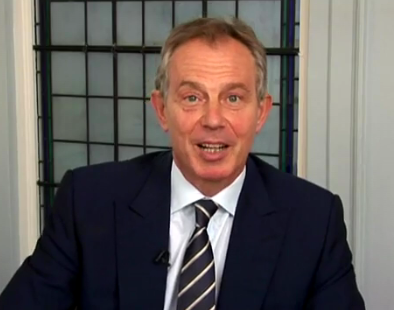
I Was There For You Tone!

The one thing I really don’t understand in this man of vision and intelligence is his conversion to Catholicism.  I can just about accept his Christianity although why a man with his intellect needs organised religion I don’t know.  I really can’t understand why he wants to be allied to the institution that has been responsible for more evil over the last 2000 years than any other.  I think it demeans him.  He has far, far more to offer the world than that stupid old bigot the Pope, for instance.  It seems to me the Catholic Church will benefit far more from him than he will from it.   That’s his business though.

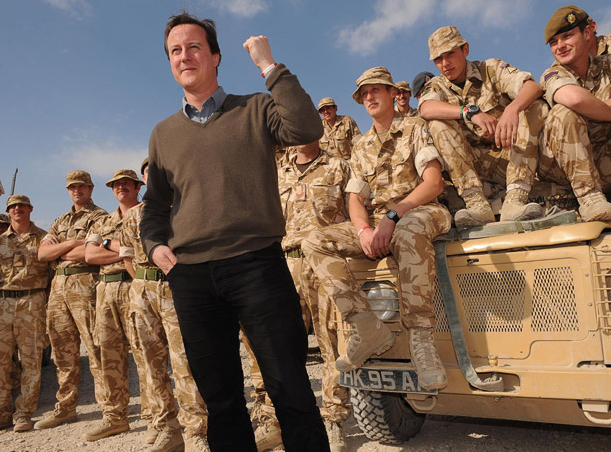
Cameron Calls For An End To Prison Camp Gaza
with 6 comments

A Worthy Leader

I am proud to see our Prime Minister speaking out unequivocally against the Israeli blockade and oppression of Gaza.  See here.

As for Turkey, I agree that they should be welcomed as EU members.  Perhaps the resistance from other parts of Europe is because they see the EU as a social union whereas even the europhiles in the UK still see it primarily as a trading partnership.  There are social benefits to be gained though.  Bringing an Islamic nation, just about the only Islamic democracy, into the EU could do wonders for mutual understanding and peace.

Turkey has been a staunch ally in Iraq and Afghanistan, something that must have been very difficult at times for its people to accept.  It also looks likely to enjoy explosive economic growth in the next few years.  We should welcome Turkey with open arms although there must be appropriate controls on immigration.  Any good would be undone if we were to be inundated with Turkish immigrants.

Abandon Afghanistan Now!

with one comment

Our so called leaders don’t listen to us.  They’ve abandoned any pretence of democracy by imposing a new European regime and president on us.  They don’t even listen to their expert advisors.  Instead they prolong an idiotic and discredited drugs strategy that brings violent crime to the streets of every town in the country and funds international terrorism.

Perhaps they will hear the crunch of Gulbeddin’s bullets as they smash into British flesh and bone?

Please listen!  Too many heroes have died or been cruelly maimed.  This foreign land is not worth it and the idea that this strategy is protecting us at home is nonsense.

Now is the time to abandon Afghanistan.  Leave behind the disgusting and corrupt Karzai for, sure enough, whatever we do, he is doomed to suffer a grisly and horrific fate.  Leave behind the Taliban for they are medieval evil but with no interest outside their own borders.  Leave behind the Afghan people because much as we may deplore their treatment of women and of each other that is their problem, not ours.  Bring our boys home!

As for Al Qaeda and the threat of a renegade nuclear Pakistan, let us install a small but powerful contingent of our most heavily armed troops, garrisoned in impregnable fortresses.  In conjunction with our allies they should be equipped with the very best that we have.  Mostly they can observe and use pilotless drones to interdict where necessary.  All movements should be done by helicopter because we have no real interest in “hearts and minds”.  When necessary, overwhelming, unrelenting and merciless force must be used against our enemies and yes, let our men have battlefield nuclear weapons too.  We need to blast these evil Islamists off the face of the earth.  There is no more time for patience or consideration or concern.