Posts Tagged ‘drug’
The Disaster That Is UK Drugs Policy.
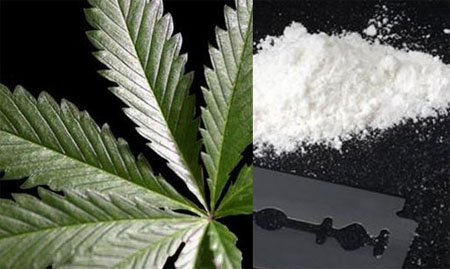
The more harmful, dangerous and addictive a drug is the more important that its availability should be legally regulated, otherwise, inevitably, a criminal market is created with massive consequential health and social harms.
In the UK, before the Misuse of Drugs Act was introduced in 1971, we had around 3,000 problematic drug users. We now have 350,000. Yet successive governments carry on in the same direction.
The vested interests of Big Booze have been supported and encouraged by weak politicians, leading to lighter and lighter regulation of the most dangerous drug of all. Meanwhile, relatively harmless and beneficial substances like cannabis have been abandoned to street dealers and organised crime, blighting communities and involving children in both dealing and use – just as happened with alcohol prohibition in the US.
All the evidence is before us and the most effective policies for reducing harm from drugs are very clear. What we need to do is sweep aside outdated, out of touch organisations like the Home Office and dinosaurs like the present Home Secretary, Theresa May. Yet since 1971, there have been a few intelligent and progressive ministers in the Home Office. Surely it is the irresponsible and obstinate influence of senior civil servants that has prevented governments from moving forward with reform?
Drugs policy must be based on evidence, not pressure from tabloid newspapers, the alcohol industry, scared and ignorant politicians and self-serving civil servants and quangos.
Parliament is now obligated to debate Caroline Lucas’ e-petition formally to evaluate the effectiveness of current policy. We must move rapidly and radically thereafter towards a solution that will work and put aside the idiocy of the last 43 years.
Only One Direction For A Wise Choice Of Recreational Drug.

It’s an excellent example to set to their fans.
Don’t choose the highly toxic poison, alcohol, proven to cause cancer, liver disease, psychosis, cardiovascular disease, kidney disease and violence.
Choose cannabis, the safe, non-toxic, neuroprotective, antioxidant, life-enhancing and health giving alternative.
But the oh so sweet boys would do well to warn off anyone consuming any psychoactive substance until they’re past 21.
When Will They Ever Learn?

Steve Jobs
The man, the genius, the inspiration that the whole world is feting and eulogising; it turns out he’s just another one of those dirty, disgusting, scumbag drug users.
The estate of Albert Hoffman, inventor of LSD, with exquisite timing, has released correspondence with Steve Jobs, a keen advocate for and user of psychedelic drugs.
David Cameron and Theresa May would have him sent to jail like Casey Hardison for 20 years.
Barack Obama would have him renditioned to wherever he wanted him and subjected to special interrogation techniques.
The Daily Mail and these days, to its eternal shame, even The Independent would have him ostracised, demonised, castigated and excluded.
I know who I think is smart and I know who I know is stupid.
A great man and a great example. The contrast between his intelligence and the ruling oligarchy is startling.
Who Is Secretly Working To Keep Pot Illegal – Big Pharma?

This is an extract from an article by Steven Kotler, a science writer who lives in New Mexico. The full article can be read here.
In 2009, the global pharmaceutical market was worth $837 billion—and it’s on track to top $1 trillion by 2014. This is a lot of money to spread around, so when it comes to lobbying efforts, very few have this group’s clout. Mostly, Big Pharma gets what Big Pharma wants. And one thing it wants is for marijuana to remain illegal.
It’s not hard to figure out why. You can’t patent a plant—and that’s a big problem for pharmaceutical companies when it comes to medical marijuana.
Why?
Imagine a wonder drug able to provide much-needed relief from dozens and dozens of conditions. Imagine it’s cheap, easy to grow, easy to dispense, easy to ingest and, over millennia of “product testing,” has produced no fatalities and few side effects—except for the fact that it “reportedly” makes you feel really, really good. That would be quite a drug. Knowing all this, it’s easy to see why the pharmaceutical industry worries about competition from marijuana.
And besides its palliative prowess, researchers consistently find that patients prefer smoking marijuana to taking prescription drugs. In another study run by Reiman, 66 percent of her patients used cannabis as a substitute for prescription drugs; 68 percent used it instead of prescription drugs to treat a chronic condition and 85 percent reported that cannabis had fewer side effects than other medicines.
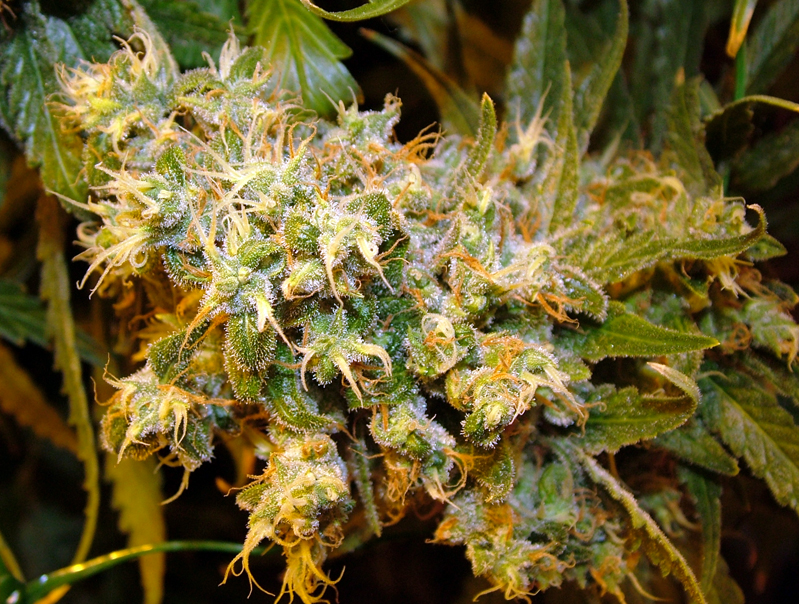
Miracle Medicine
Early on, the pharmaceutical industry fought back by spending money on anti-pot efforts, but the same NORML investigation that fingered the alcohol and tobacco industries as heavy backers of the Partnership for a Drug-Free America found that Big Pharma was doing so as well. “They were so embarrassed by that revelation” says MAPS founder Rick Doblin, “that they mostly stopped spending money on anti-marijuana lobbying efforts.”
Since then, the pharmaceutical industry has shifted its focus to developing alternatives to medical cannabis, often taking the traditional reductionist approach. Specifically, these days, if a pharmaceutical company wants to turn a plant into a medicine they isolate the most active ingredient and make what’s known as a “single-compound drug.” Morphine, for example, is really just the chemical core of the poppy plant. This too has been tried with marijuana. Out of the 400 chemicals in marijuana, 80 of them belong to a class called “cannabinoids.” Out of those 80 cannabinoids, a number of pharmaceutical companies have tried reducing marijuana to only one: THC. But the results have been unsatisfactory.
“There are certain cases,” says Doblin, “where the single-compound formula works wonders. But it’s just not true in every case. The pharmaceutical industry keeps claiming they’re not worried about medical marijuana because they make a better product, but when you reduce cannabis to just THC, you lose efficacy and gain side effects.”
This Man Isn’t A Scientist. He’s A Prohibition Propagandist.

Sitting alongside him at his press conference “Cannabis Can Hasten Psychosis”, who did Dr Large have to lend him support?

Cannabis Preventer
Jan Copeland, the director of the Australian National Cannabis Prevention and Information Centre.
What does that tell you?
This isn’t anything to do with science. It’s about advancing the prohibitionist agenda – and, of course, is closely connected to Dr Large’s future funding and career path. See here for the unedited rushes from this little conspiracy.
His big pitch was “The results of this study confirm the need for a renewed public health warning about the potential for cannabis use to bring on psychotic illness.”
Absolute rot. The study confirmed nothing of the sort. All it consisted of was a recalculation of data from 83 previous studies. It’s all correlation and association. There’s no evidence of causation whatsoever. There was absolutely nothing new in it at all and to claim there is, is simply a lie. Of course, the mindless, desperate and eager comics like the Daily Mail have almost wet themselves with excitement over it.
This is a very typical example of the misinformation, propaganda and distortion of science put out by the prohibitionists. It is important to understand the way they work. They have been doing this now for nearly 100 years, using the latest propaganda techniques every time.
In this “meta-analysis”, as Dr Large pretentiously calls it, what he doesn’t tell you is that all the subjects already had a predisposition towards psychosis (usually by genetics) and included tobacco and “other psychoactive substance users”. That means any of the approximately 600 ingredients found in cigarettes such as ammonia, various ethyls, and any of dozens of acids and carcinogens could have distorted the findings. Similarly, and not addressed by the study’s authors, is the fact that the cannabis users, in many cases, were also cocaine, heroine, amphetamine or other drug users.
The study claims that “…schizophrenia caused by cannabis starts earlier than schizophrenia with other causes.” but it fails to consider how many of the subjects were in fact, self-medicating. The authors don’t even consider whether cannabis causes mental illness or if people with mental illness have a higher rate of using cannabis. Other evidence shows that self-medicating with cannabis is widespread and that over 90% of diagnosed schizophrenics smoke cigarettes – but nobody is claiming tobacco causes schizophrenia.
It’s hogwash.
Bringing Cannabis Back Into The Medicine Cabinet

Professor Les Iversen delivers the Inaugural President’s Public Lecture during the BPS Winter Meeting, London 2010.
Prof. Iversen is the current chairman of the Advisory Council on the Misuse of Drugs and a founder council member of the British Medicinal Cannabis Register. He is also the author of many publications and books on cannabis. He is famous for his article in The Times headlined “Cannabis. Why It’s Safe” and for saying that cannabis is “one of the safer recreational drugs”.
He walks a courageous and tricky tightrope between science and his ACMD role. He is the government’s chief drug adviser so at least we know they are getting good advice even if they don’t act on it.
You can watch the lecture here.
Professor Iversen has also provided me with a copy of his Powerpoint presentation from the lecture which you can download here.
PM MP

Originally Published In Homegrown Outlaw's Blog
By Jason Reed
To all that support change in current policy, I invite you to take part in: PM MP.
What is PM MP? Well, I am hosting a letter that I am encouraging as many people as possible to post one copy to the Prime Minister, and one copy to your MP. It is through weight and numbers that points are grasped and policy changed.
It is also worth sending to the Home Secretary – Theresa May, and James Brokenshire – Minister for Crime Prevention at the Home Office.
If you would like to add your name and address so as to receive a reply, all the better. If you wish to remain anonymous, then that’s also fine, but please do take the time to send just two letters to the Prime Minister and your MP at this address:
Prime Minister,
10 Downing Street,
London, SW1A 2AA
Your MP can be found here:
And your MP’s address will be:
MP’s NAME, or James Brokenshire, or The Home Secretary Theresa May
House of Commons,
London SW1A OAA
Below you can find the template letter that has been created to address the current law & policy that surrounds cannabis in Britain. It is with a great deal of thanks to the Drug Equality Alliance for directing the wording to address this issue correctly.
Please do support this; please send the letters. Fellow bloggers, please also host the letter and send forth.
Either copy & paste the below text into a letter, or I have provided downloadable links at the end of this blog post. Thank you all. Jason.
Dear
I am writing to state my view that continuing prohibition of all private interests in cannabis is not in the best interest of society or the individual. Current policy is in many regards counter-productive and a drain on the country’s resources. The administration of Misuse of Drugs Act 1971 is mandated to be under constant review & evidence based; it’s concern is solely to reduce social harm caused by drug misuse. I submit that there can be no justification in law for the blanket ban on accessing a substance that many persons use responsibly, and many use to experience the amelioration of symptoms caused by various medical disorders.
The Misuse of Drugs Act 1971 seeks to regulate human action re any harmful drug, it does not provide a mandate for prohibition, indeed when one examines the obligations of the ACMD one can see that the law seeks to make arrangements for the supply of controlled drugs. The legislative aim is to control responsible human action and property interests through the regulation of the production, distribution and possession of any harmful drug; this being proportionate and targeted to address the mischief of social harm occasioned by misuse. I note that the law does not prohibit the use of cannabis at all, and this often ignored fact was Parliament’s way of opening the door to facilitate a suitable and rational regulatory structure. I place it on record that I wish the Misuse of Drugs Act 1971 to be used properly, and neutrally; specifically; (under Section 1) – “(2) (a) for restricting the availability of such drugs or supervising the arrangements for their supply.”
The prohibition of all private interests in cannabis & the denial of the possibility of responsible use has failed:
- The estimated expenditure of £19 billion on the judicial ‘controls’ over UK drug policy is a large sum that cannot be justified in the current fiscal climate. I do not believe it can be proven to be a valid policy even if the nation could easily afford it; it has a high price on liberty, and a paradoxical effect upon the health of all drug users – it has proved futile in almost every way, save for the government’s blind adherence to the international treaties it chooses to fetter it’s discretion to.
- There is an estimated street value of £5 billion profit going directly to gangs and cartels, and this in turn funds organised crime, human trafficking, and all manner of hard-line criminality.
- Children have easy & ready access to cannabis. Children are dealing cannabis and using cannabis with relative ease.
- There is an estimated 165 million responsible and non-problematic cannabis users worldwide. There is anything from 2 – 10 million adult users in the UK. There is no societal benefit to criminalising such a large portion of society, these are generally law-abiding persons who wish to use a substance that is comparatively safer than many drugs that government choose to exclude users of from the operation of the MoDA 1971 (despite the Act being neutral as to what drug misusers are controlled, the most harmful drugs such as alcohol and tobacco are excluded by policy, but this is not reflected in the Act itself).
- Under prohibition, as in 1920’s America, quality control has suffered giving way to hastily harvested cannabis which acts as the modern day equivalent of the infamous Moonshine & Hooch. The UK media terms this bad product simply as “Skunk”. Cannabis is now being cut with harmful drugs, glass, metal fillings, and chemicals to give false potency, and to add weight for profit motivations.
- To criminalise personal actions that do not harm others within the confines of privately owned property is at best draconian, and at worst futile & irresponsible.
I wish to encourage the adoption of a regulatory system that provides:
- An age-check system to prevent the young and vulnerable from obtaining cannabis with the ease they currently have.
- The partial saving from the £19 billion drug enforcement budget, alongside the estimated street worth of £5 billion potentially collected from cannabis. This would be a considerable sum in aiding the country in fiscal crisis.
- Quality control that can be accorded to cannabis production and sale, thus ensuring that there are no dangerous impurities and that the correct balance of cannabinoids are present (according to the needs of the user) to minimise potential harms.
- Potency & harm reduction information can be provided to adults, ensuring education is the forefront of the regulatory model.
- A restriction on marketing and the creation of designated discreet outlets. As seen in many countries, given a place of legitimacy, the cache of cannabis is lessened in favour of responsibility.
- The freedoms and rights for non-problematic users to be respected.
I do hope that you will give this matter the urgent attention it warrants.
Yours
My MP, Richard Drax, To Write To David Cameron On Drugs Policy
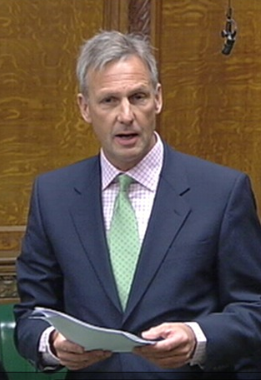
The Honourable Member For Dorset South
Today I met with my MP, Richard Drax. He was just as sickeningly handsome and charming as I expected him to be! So I showed him no mercy and bombarded him with my opinions for a good half an hour.
I realised afterwards that my favourite maxim “less is more” would have been a better strategy. Nevertheless, he did offer to write to David Cameron on my behalf on drugs policy and seemed genuinely sympathetic to some of the points I made.
I have just sent him a lengthy email in confirmation which I reproduce below. If anyone wishes to use this as a template for a letter or email to their own MP, please feel free to do so.
******
Dear Richard,
Thank you so much for your time today. I very much enjoyed meeting you. As I said, I came with opinions not problems. I am grateful to you for listening to me.
I realise that I made the classic mistake of bombarding you with far too much information and not giving you time to absorb any. I hope I may correct that error by summarising here what we talked about.
1. Gary McKinnon. Thank heavens that progress seems to have been made on this. The idea of an “extradition” treaty that provides for someone to be sent to the USA for trial on an alleged crime committed here is iniquitous. It’s particularly unfair in McKinnon’s case as he suffers from Asperger’s syndrome. You pointed out to me that similar dangers exist with the new European arrest warrant.
I would urge you to do everything possible to ensure that if Gary McKinnon is to be tried, it should take place in the UK.
2. Ian Tomlinson. In my view the failure to prosecute the policeman who assaulted him is an outrage and Keir Starmer’s reasons entirely inadequate. Now that the credibility of the pathologist in the case has been destroyed by a GMC panel, Starmer should at least reconsider and hopefully reverse his decision.
References here:
http://pjroldblog.wordpress.com/2010/08/31/killer-cop-harwood-must-be-charged/
http://pjroldblog.wordpress.com/2010/07/24/keir-starmer-the-next-lord-widgery/
I would urge you to press for a re-consideration of the decision not to bring charges. If no criminal charges are brought, at the very least the disciplinary hearing should be held in public as the rules allow. The Tomlinson family are entitled to justice.
3. Drugs policy. You very kindly agreed to write to David Cameron on my behalf. I am very concerned at the conduct of the Home Office at present and particularly James Brokenshire, the Minister for Crime Prevention who is causing great damage to both the coalition governemnt and the Tory party by promoting ideas and policies that contradict virtually all expert opinion, including the government’s own scientific advisers. He also seems to be completely at odds with the calls for drug law reform which both David Cameron and Nick Clegg have made consistently over the last 10 years.
This is not a peripheral or secondary issue. According to Baroness Meacher in the House of Lords on 15th June 2010, “There is no more obvious waste than the £19 billion annual cost of the UK’s war on drugs”.
There is a huge amount of reference material on this subject on my blog:
http://pjroldblog.wordpress.com/?s=drugs
I would also refer you to the Transform Drug Policy Foundation which has highly detailed and almost universally acclaimed proposals for drug regulation:
Virtually all experts agree that the “war on drugs” has failed. In exactly the same way as alcohol prohibition in the US led to a massive increase in crime and violence, so drug prohibition has created an illegal market said to be worth £350 billion per year. It has also financed civil war in Latin America for 25 years and is the principal source of finance for Al Qaeda and the Taliban in Afghanistan. Our soldiers are dying every day because of the illegal trade in opiates. Why don’t we just buy up the whole crop for the next 10 years? It would be much cheaper in both cash and lives than the Afghan war.
Virtually all experts agree that regulation would be a better solution. I have distilled the following five point plan from everything that I have read and learned over more than 30 years:
1. An end to oppression of drug users (at least 10 million UK citizens)
2. Removal from the criminal law of any offence for possession and/or social supply
3. Fact and evidence-based policy, information and regulation
4. Re-direction of law enforcement resources against real criminals
5. Treat problematic drug use as a health issue
Five years ago, while campaigning for the Tory party leadership, David Cameron called for “fresh thinking and a new approach” towards drugs policy and said that it would be “disappointing if radical options on the law on cannabis were not looked at”. Nick Clegg has promised to repeal “illiberal, intrusive and unnecessary” laws and to stop “making ordinary people criminals”. There can be no better example of this than the laws against personal use and cultivation of cannabis, particularly for medicinal reasons. The coalition government’s new Your Freedom website has been inundated with proposals to legalise cannabis and to end the futile war on drugs. In July a poll carried out for the LibDems showed 70% of people in favour of legalising cannabis.
The Home Office and James Brokenshire are completely out of touch with expert and public opinion as well as the declared views of both the Prime Minister and the Deputy Prime Minister.
In my view, regulation means tighter control on the most dangerous drugs such as heroin, cocaine and alcohol and lighter regulation on relatively harmless substances like cannabis and ecstasy.
There is also the very important question of medicinal cannabis. The discovery of the endocannabinoid system in 1998 has led to an ever-escalating volume of evidence of the medicinal value of cannabis. In June the MHRA approved Sativex as an MS medicine in the UK. It is a whole plant extract yet presently, the Home Office refuses to consider a regulated system of the plant itself for medicinal purposes. This is completely irrational and absurd. The House Of Lords scientific committee recommended such a system should be introduced 12 years ago. Medicinal cannabis is available and regulated throughout almost all of Europe, Israel and 14 states in the USA (with 12 more in the planning stage). The UK stands almost alone in its obstinate refusal even to consider such a system.
Already this is leading to quite obscene injustices where patients have been prescribed Sativex by their doctor but their health authority has refused to fund it and patients are then facing criminal prosecution for cultivating their own plants. There is a case of exactly this going on in the Dorchester Crown Court at present and the CPS insists it is in the public interest to prosecute!
Thank you once again for listening to me Richard. I hope these notes are useful in composing your letter to David Cameron and I look forward to hearing from you in due course.
Kind regards,
Peter Reynolds
Cannabis
God's Herb
I have smoked cannabis since I was 14. There have been a few breaks, some of a few months, some of a year or two but those apart, I have smoked cannabis every day of my life for nearly 40 years.
I have come to regard weed or hash, in all seriousness, as the Rastafarians do, as “God’s herb”. It is a sacrament, a truly positive, honourable and precious thing in my life. Something that I thank God, I did not miss.
I grew up with smokin’ dope. It was a fundamental part of my adolescent culture with the Rolling Stones, the Grateful Dead, with a heady summer living the love and peace dream in Amsterdam. LSD blew my mind in those days but a joint was always a sustaining experience. Something I held onto.
As I grew up and got interested in business, I relished the delicious and maverick escape that I enjoyed. I took it seriously and wrote a 40 page report for the Home Affairs Committee entitled “An Unaffordable Prejudice”.
The prejudice, misinformation and sheer nonsense has continued throughout my life. The idiocy of downgrading cannabis to a Class C drug and then, just two years later, back up to Class B is only outdone by the crass stupidity of failing to decriminalise it completely. Prohibition has proved time after time to be an ineffective solution. Worse than that, the law makes a complete ass of itself by sustaining the criminal supply and distribution of a product that is never going to go away.
Regulation is the only viable solution and would provide the framework to care for those very few who may suffer from cannabis use.
What are the dangers? Clearly any intoxicant offers more potential for harm when used by the young, when the brain is still developing. Despite my own experience, cannabis use should be for adults only. In adults it has been proved to be one of the least harmful substances known to man time and time again – despite the fact that most have actually set out to prove the opposite.
Recently the popular argument has been against skunk, a strain of cannabis that can be up to 20 times stronger than that previously known.
To claim this is a recent development is simply wrong. For at least 20 years it has been difficult to buy anything but skunk and other F1/F2 hybrids of the plant. There are many others: Northern Lights, Haze, Blueberry, etc. In my teens it was difficult to buy anything but Lebanese or Moroccan hashish. In Holland where the market is partly regulated there has always been a wide choice of grass or hash from all parts of the world grown and/or processed in many different ways.
The latest suggestion is that skunk is causing psychoses in adolescents – yet the incidence of psychoses in adolescents has remained constant since records began. This is just the lastest scaremongering. 60 years ago it was said that cannabis caused young women to be promiscuous with black men. The standard of the argument has not improved.
It really is time that this hopeless policy against a benign, natural herbal product was stopped. Hemp is one of the most ecologically friendly, sustainable crops in the world. As regulated cannabis it would pull the rug from underneath a great swathe of criminality and produce billions in additional tax income. As biofuel, building materials, fabrics and cattle feed it could help to revitalise agriculture and many other businesses.

 Peter Reynolds