Archive for the ‘Consumerism’ Category
A BBC Preservation Order


TAKE NOTICE
This noble institution should be preserved.
It is not perfect but it is better than any alternative.
It contributes enormously to the culture of the nation.
It is our BBC
This notice should be nailed to the door of Broadcasting House and all BBC premises. Damaging or cutting off parts or branches of the institution is not allowed. Adequate space must be given to the institution’s roots which must not be interfered with. Severe penalties will be applied to anyone who knowingly or recklessly damages the institution in any way.
Then David Cameron, Nick Clegg and a heavyweight team need to take Mark Thompson aside and give him a good talking to. We want to preserve the BBC and its unique qualities but we need a hard pruning of dead wood and unproductive growth. Preserving the roots and fundamental strength are the most important objectives. Cutbacks in the right places will stimulate stronger new growth elsewhere.
I agree that Sky should contribute towards those commercial channels that it broadcasts free-to-air. It ties viewers into its subscription packages because they are comprehensive. This is gives it an unfair advantage throughout the market, as does its coverage and bandwidth.
Sky is a parasite on traditional TV companies. Its unfair advantages have enabled it to develop the best user interface and experience in the market. Even so, it is expensive and has a reputation for appalling customer service. Its relationship with Newscorp means it is part of a monstrous media empire which requires much more regulation in the interests of consumers and the community at large. It should be required to invest more in original programming and production. If necessary, a new media tax should be introduced to enforce appropriate investment and safeguards.
The BBC’s biggest mistake is the level of executive pay. There is no justification at all for anyone in the BBC to earn more than the Prime Minister. It is public money. Anyone unhappy with this should resign today. No one is indispensable. The BBC has always been the best in its business at bringing on new talent.
The Licence Fee should remain unchanged. It is fantastic value for money and shows just how expensive Sky is. The BBC Trust should be strengthened in its primary role as regulator and it should enforce cost savings, efficiencies and executive pay. It should also ensure that the BBC becomes more responsive and closer to its audience. Its complaints and feedback system is fundamental to this. It needs to be brought back in house and given real priority. See here.
Britain adores its BBC. Let’s ensure we preserve it and allow it to flourish.
Home Office Drug Strategy Consultation
All over the BBC this morning is the story that addicts may have their benefits withdrawn if they refuse treatment. This, apparently, is a proposal included in the Home Office’s new Drug Strategy consultation document.
Where is this document? It’s not on the Home Office website. That’s a bit strange for something that purports to be about consulting with the public isn’t it?
I had to phone the Home Office press office to get a copy. I shouldn’t have to be doing this for the government but you can download it here:
 Home Office Drug Strategy Consultation Document
Theresa May and James Brokenshire, the ministers responsible for this, should remember that they are not in office to preserve the status quo or cook up policies between themselves based on the misinformation that the Home Office currently promotes. Their first responsiblity after their duty to the Queen is to the public. Consultation is not something they should pay lip service to, nor is it something they can pick or choose. It should determine their actions.
As part of this consultation, the Home Office should take into account the tens of thousands of people who have used the Your Freedom website to call for relaxation in the drug laws and particularly the legalisation of cannabis.
I urge everybody with any interest in the drugs issue to download, complete and return the consultation document. It’s presented as a Q&A form. I also suggest that you keep a copy and send a copy to your MP. Regrettably the Home Office doesn’t have a good record on keeping track of what the public says to it. It loses a lot of things.
On the face of it, I support the idea that if you’re a heroin, cocaine, alcohol or prescription drug addict and you’re offered treatment but refuse it then you shouldn’t be able to live on benefits. That seems entirely just. The danger is that just as current drug laws drive addicts to crime and prostitution so will this. This is progress though. There has to be personal responsibility but also some flexibility to ensure this doesn’t become another self-defeating policy. Most important of all, possession of drugs for personal use and/or social supply must be taken out of the criminal law.
The other headline grabbing proposal is that the government should be able to impose a temporary 12 month ban on “new substances”. This is designed to tackle the danger of “legal highs” – a danger mainly of the government’s own making because of its policy of prohibition. There is a real glimmer of hope and intelligence here though because “Possession of a temporarily banned substance for personal use would not be a criminal offence to prevent the unnecessary criminalisation of young people”. I applaud this. It shows that it is possible to get common sense from the Home Office. There is hope yet!
***UPDATE***
As I go to press (oh, alright, as my finger hovers over the “publish” button), the consultation document has become available on the Home Office website. A little tardy but better late than never.
You can respond to this consultation until 30th September 2010. Make sure you do.
A Levels

We All Came First
I am hardly a pace setter when it comes to formal qualifications. I’m still studying for my third doctorate at the University of Life. I just can’t get the practicals right.
Nevertheless, in this year’s A level results 27% of candidates were awarded an A or A-star. Absurd. That’s like nearly a third of the drivers in a Grand Prix race ending up on the podium.
What use is that to employers trying to seperate Jensen Button in his 800 bhp Maclaren from Delboy in his 40 bhp Reliant Robin?

The Drugs Debate
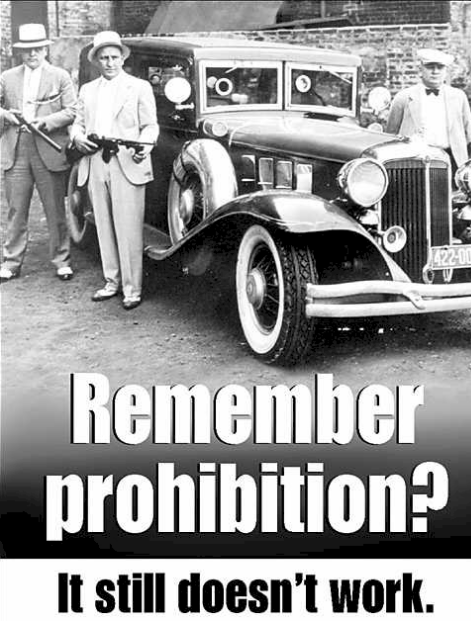 It won’t go away will it? It seems like at least once a month now some new high profile figure comes out against prohibition. The latest, Sir Ian Gilmore, outgoing president of the Royal College of Physicians, is hot on the heels of Nicholas Green QC, chairman of the Bar Council in July and three eminent co-authors in The Lancet in May. The National Audit Office and the Public Accounts Committee have also criticised government for failing to implement an evidence-based drugs policy and instead giving more weight to opinion.
Meanwhile the Humpty Dumpties at the Home Office keep on building their big walls, refusing to listen, refusing to think, refusing to care. Their response is no, no, no, out of the question, no and no again. In fact, I don’t think the ministers even think about it at all. They just replay the same old no, no and no again as written by some civil servant, probably in the days of the golf ball typewriter. Remember those?
It won’t go away though. I first submitted a report to the Home Affairs Committee on the cannabis laws in 1978. It was called “An Unaffordable Prejudice”. I’ve been giving them the facts and the evidence ever since and so have hundreds of other individuals and organisations. I’m in direct correspondence with the Home Office at the moment. I’ve received one three page response and replied with four. That’s how long it takes to get a dialogue going with our “responsive” government. I started in May, immediately after my new MP was elected, and it takes a good three months to get anywhere – or perhaps I mean nowhere. Still, I expect it was worse in the USSR.
It won’t go away. Aside from the Home Office the only people in favour of our current drugs policy are the drug dealers and the Taliban. They certainly don’t want things to change.
The Home Office can’t even get its story straight. Today its latest pearls are: “Drugs such as heroin, cocaine and cannabis are extremely harmful and can cause misery to communities across the country.” This is nothing short of crass stupidity and irresponsible misinformation. Lumping in cannabis with heroin and cocaine is simply ridiculous. Describing cannabis as “extremely harmful” is in direct contradiction to every one of the Home Office’s own scientific experts. These are the people who are supposed to be protecting our children, the vulnerable and the uneducated. They should be ashamed of themselves.
When Proposition 19 passes on 2nd November (see here), the world will sit up and take notice. Even Humpty Dumpty will have to engage his brain then because when 37 million Californians get the right to enjoy God’s herb without interference, well it ain’t gonna stop there. If for no other reason than that our avaricious politicians will soon put aside their “principles” when they realise the oodles of cash and brownie points they’re missing out on. California reckons it will create up to 110,000 new jobs, £1.4 billion in new tax revenue and a saving of $200 million in law enforcement costs. When Humpty Dumpty takes off his blindfold of prejudice, ignorance and propaganda he’ll soon be gagging for the cash.
There are a million quotes from world leaders, politicians, doctors, scientists and “experts” of all sorts stating how ridiculous and self-defeating current drugs policy is. It never seems to make any difference though. David Cameron and Nick Clegg have both called for change many times but once they get into power what happens? However, just to get right up the nose of Humpty Dumpty (that’s right, snort it up there), here’s what one very, very senior civil servant said just two years ago:
“I think what was truly depressing about my time in UKADCU was that the overwhelming majority of professionals I met, including those from the police, the health service, the government and voluntary sectors held the same view: the illegality of drugs causes far more problems for society and the individual than it solves. Yet publicly, all those intelligent, knowledgeable people were forced to repeat the nonsensical mantra that the government would be ‘tough on drugs’, even though they all knew the government’s policy was actually causing harm.”
Julian Critchley, Director, Cabinet Office UK Anti-Drug Coordination Unit. 13-08-08
It won’t go away. Just Say No has become Just Say Now and the slimy dissembling oiks who insist on running our lives (and ruining many) will soon be in retreat. It won’t go away.
The Times. Will Charging For Online News Work?

Unpleasant
I don’t know whether it will work or not but I think I have to support the effort, much as it sticks in my throat to do anything in support of Rupert Murdoch or his unpleasant offspring and cronies.
As a writer, I have to believe in the idea that online content can be “monetised” or what is my own future?
In passing, can I at least blame that revolting new word on Murdoch? It would be some small consolation for paying him £2.00 per week for my online access.
I think The Times is still the finest newspaper in the land and I cannot let its ownership stand in the way of my appreciation of its content. Even though I am now a subscriber, I shall still buy the Saturday edition in print. I have avoided The Sunday Times for years since it size began to offend me and its content became almost indistinguishable from the Daily Mail.

Still Thundering
There is one aspect of The Times though, that is gone for ever. Even my paid subscription cannot bring it back. I used regularly to link to The Times’ stories from this blog but now that is useless unless all my readers are subscribers too. So my only solution is cut and paste. In celebration of this heinous, copyright infringing intent, I reproduce below the stand out article from this Saturday’s edition, an intelligent and incisive article about Israel and Palestine from Margaret Atwood. Please enjoy it with the compliments of this subscriber.
In one respect though, I still stand absolute against the Murdoch empire. Though Sky is undoubtedly the finest digital TV system available, particularly with its PVR and HD capabilities, I will not support its outrageous charges or dreadful customer service. Freesat, Freeview and BitTorrent for the programmes I miss is a much happier solution.
******
From The Times, 14th August 2010 by Margaret Atwood
Seven futures are possible. Which will it be?
Wiped out by nuclear bombs? Constant war? But the crystal ball also shows the path to peace for Israel and Palestine
Picture a minor prophet. Perhaps he’d be working as an astrologer. He’s looking towards Israel and Palestine, consulting his charts and stars, getting a handle on the future. But the future is never single — there are too many variables — so what he sees is a number of futures.
In the first one, there’s no Israel: it’s been destroyed in war and all the Israelis have been killed. (Unlikely, but not impossible.) In the second, there’s no Palestine: it’s been merged with Israel, and the Palestinians either slaughtered or driven beyond its borders. Israel has become completely isolated; international opinion has been outraged, boycotts have been successful, financial aid from the US — both public and private — has evaporated, and the US Government has cooled towards Israel, and swung towards entente with the Muslim world. Israel has become like North Korea — an embattled military state — and civilian rights have suffered. Moderate Israelis have emigrated and live as exiles in a state of bitterness over wasted opportunities and blighted dreams.
In the third future there’s one state, but a civil war has resulted, since the enlarged population couldn’t agree on a common flag, common laws or a common set of commemoration days — “victory” for some being “catastrophe” for others.
In the fourth, the one-state solution has had better results: it’s a true one-person, one-vote democracy with equal rights for all. (Again, unlikely in the immediate future, but not impossible in the long run.) In the fifth future, neither Israel nor Palestine exists: nuclear bombs have cleared the land of human beings. In the sixth, climate change has turned the area into a waterless desert.
But there’s another future: the seventh future. In this there are two states, “Israel” and “Palestine”. Both are flourishing, and both are members of a regional council that deals with matters affecting the whole area. Trade flows harmoniously between the two, joint development enterprises have been established, know-how is shared, and, as in Northern Ireland, peace is paying dividends.
That, surely, is a desirable outcome, thinks the stargazer, but how was it achieved? Since he has the gift of virtual time-travel, he leaps into the seventh future and looks back at the steps taken to get there.
The impetus came from within Israel. Its leaders saw that the wind had shifted; it was now blowing against the policy of crushing force and the appropriation of occupied lands. What had caused this change? Was it the international reaction to the destructive Operation Cast Lead invasion of Gaza? The killing of flotilla activists? The gathering boycott activities in the US and Europe? The lobbying of organisations such as J Street? The 2010 World Zionist Congress vote to support a settlement freeze and endorse a two-state solution?
For whatever reasons, Israel had lost control of its own story. It was no longer Jack confronting a big bad giant; the narrative of the small country struggling bravely against overwhelming odds had moved to the Palestinians. The mantra “plant a tree in Israel” was no longer respectable because it evoked images of bulldozers knocking down Palestinian olive groves. Israel could not continue along its current path without altering its own self-image beyond recognition. The leadership decided to act before a peaceful resolution slipped forever beyond reach. Leaders are supposed to guide their people towards a better future, they thought, not over the edge of a cliff.
First, the Golan Heights was returned to Syria under a pact that created a demilitarised zone with international supervision. The few Israeli inhabitants were allowed to remain if they wished, though they then paid taxes to Syria.
Then, with the help of a now-friendly Syria, Hamas was invited to the peace negotiations. The enlightened leaders realised that they couldn’t set as a precondition something that remained to be negotiated, so they didn’t demand the pre-recognition of Israel as a Jewish state. Hamas, to the surprise of many, accepted the invitation, as it had nothing to lose by doing so. Peace was made between Fatah and Hamas, and the Palestinians were thus able to present a single negotiating team.
The negotiations were complex, but people worked hard not to lose their tempers. Remembering South Africa, they knew that yelling and denouncing would not accomplish anything. The agreement took less time than expected, as happens when people are serious. Then the occupation — disastrous for those in both countries, physically and morally — was over, and Palestinian independence was declared. A mutual defence pact was signed, along with a trade and development pact. As Israel had realised that it could not rest its foundation on international law while violating that law, the borders reverted to those of 1967, with a few land swaps along the edges. Jerusalem was declared an international city, with both an Israeli parliament building and a Palestinian one, and access to the various holy sites for believers.
Gaza was joined to the West Bank by corridors, as in the East/West Germany of old; ports were opened and fishing boats could sail once more. Development money poured in, creating full employment. Fair-access- to-water agreements were signed, pollution cleaned up, and more fresh water created through a new cheap solar-driven desalination process.
What about the difficult matter of the settlements? Settlers could stay in Palestine if they wished, under lease agreements. The leases and taxes paid by the settlers were a source of income to the Palestinian state, and as their products were no longer boycotted, the settlements did better. On the whole, peace reigned. There was even a shared Memorial Day, in which all those fallen in past wars were honoured.
The seventh future is within reach — the stars favour it — but the stargazer knows that many prefer the status quo; there can be advantage as well as profit in conflict. However, change often comes abruptly, as with the fall of the Berlin Wall, the storming of the Bastille, or the end of apartheid. The amount of blood shed in such transitions — from none to a great deal — depends on the wisdom of the leadership.
How to promote such wisdom? It’s a prophet’s traditional duty to lay out the alternatives: the good futures and also the bad ones. Prophets — unlike yes men — tell the powerful not what they want to hear, but what they need to hear. “How can I put this?” thinks the stargazer. “Something beginning with the handwriting on the wall . . ?”
© O.W. Toad Ltd. 2010
Proposition 19. Just Say Now!
It looks as if, on 2nd November 2010, a small but very significant part of the world will at last come to its senses and legalise cannabis.
On that date, California voters look likely to approve Proposition 19 on the state-wide ballot that legalizes various marijuana-related activities, allows local governments to regulate these activities, permits local governments to impose and collect marijuana-related fees and taxes, and authorizes various criminal and civil penalties. Currently the polls show that about two-thirds of voters are in favour.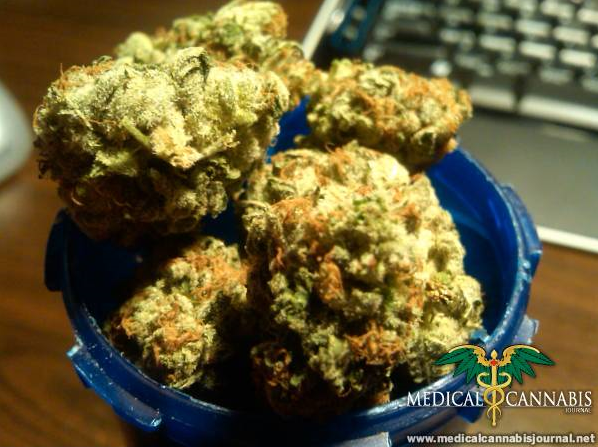
Over the age of 21 it will be legal to possess up to an ounce of marijuana and to cultivate an area of up to 25 sq ft on private property. The state estimates it will collect about £1.4 billion pa in new tax revenue. save $200 million pa in law enforcement costs and generate an additional $12 – $18 billion pa for California’s economy, with 60,000 to 110,000 new jobs. As the Americans say, with one of their most unpleasant expressions, “It’s a no brainer”.
In America they finally seem to have got past listening to the stupid scare stories and propaganda about the cannabis plant. The misinformation has ranged from the idea that marijuana makes white women promiscuous with black men to the suggestion that it causes psychosis in adolescents. Both of these ideas are as impossible to prove as each other. America also recognises the huge medicinal benefits of cannabis with medical marijuana legal in 14 states and planned in 15 more. As a recreational drug, cannabis use is almost never associated with the sort of anti-social behaviour that alcohol causes. It produces an essentially peaceful, happy and soporific effect.
 Instead of insulting and ignoring their scientific experts as we do in the UK, Americans are now more interested in the facts and a pragmatic approach to drugs policy. The “war on drugs” is now universally recognised as having been an abject failure. We should, of course, have learned from the experience of alcohol prohibition in the early 20th century. That created the whole idea of gangsters and organised crime. We managed to repeat the same mistakes all over again with drugs.
In ironic appreciation of Nancy Reagan’s “Just Say Nc” campaign, those in favour of Proposition 19 have adopted the slogan “Just Say Now”. In addition to the direct financial benefits, the state expects to be able to focus police priorities on violent crime, cut off funding to violent drug cartels and better protect children, road users, workers and patients from illegal, unregulated use.
The UK will eventually follow down this inevitable path. The only questions are how many lives will we ruin and how much time and money will we waste before we finally get there?
See here for the latest updates and news on Proposition 19.

 Peter Reynolds
A Fundamental Problem At The BBC
with 3 comments
I am very close to being the BBC’s biggest fan. It is a remarkable and entirely unique institution. Somehow it occupies a place between the state and the people which I can find no comparison for. It would be easy to define it as some sort of socialist idea but it is genuinely independent from the state. I do, however, have some concerns about its accountability. I am very concerned about the way it handles complaints.
No Complaints Accepted Here
I have grown up with the BBC and I trust it. In fact, I think that it’s done a better job of maintaining Britishness and values of integrity, tolerance, fairness and justice than any UK government of any political complexion. That’s why the curmudgeons in all political parties turn against it. I think Jeremy Hunt’s recent attacks and comments were particularly poorly judged. He hasn’t a had a good start in government at all has he?
I made a complaint to the BBC recently and I am very, very unhappy about the way it has been handled. The subject is not relevant here. I shall write about it in future but for now it would distract from my point. I am horrified to discover that the BBC does not handle complaints itself. They are outsourced to Capita in Belfast which describes itself as “the UK’s leading outsourcing company…at the leading edge of redefining and transforming services to the public.” For me that needs a huge pinch of salt, a mountain in fact and even then I’m choking on it.
Handling complaints should be at the very heart of an organisation. It is the essence of your brand. There is no more important management function. Contracting them out is an abdication of responsibility. More than that, it is a complete failure of integrity, a massive mistake. If an organisation is truly committed to meeting its customers’ needs it must be as close to them as possible. This irresponsibility strikes at the very heart of everything I value about the BBC. I am deeply disillusioned.
If this disastrous decision had resulted in a well administered service then that might be some consolation but not a bit of it. It is dreadful. Every bit as bad as any horror story you’ve heard about British Gas, BT or yes, even a bank. This is the British consumer experience at its very worst.
Not What It Used To Be
In sharp contrast to the rest of the BBC’s websites, try making a complaint online. It’s like something from the very early days of the internet with clumsy, badly aligned fields and an archaic feel. I almost expect to hear a modem whistling away in the background. From a complainant’s point of view it’s quite useless. You don’t get any option to save a copy of your complaint or email it to yourself. You don’t even get an acknowledgement once you’ve completed it so you’re left with a completely unsatisfactory feeling of uncertainty. Did they get it or not? Will I get a reply? When?
It gets worse. Complaints are lost. They don’t get answered at all. They certainly don’t get answered within the 10 working days promised. One answer I received was just laughable in its anodyne, crass simplicity. It was nothing more than an patronising acknowledgement of what I was “unhappy about”.
Useless
I could go on even further but I won’t. It does get even worse and it becomes embarrassingly so when Capita start to trot out the oldest excuse of all about “system problems”. It is an excruciatingly bad, defining example of appalling customer service. I’d say it takes the biscuit.
All this is the inevitable result of outsourcing your complaints procedure. That aspect of business that should be one of your most important tools. What’s worse is that Capita are absolutely useless at doing the job.
It is no exaggeration to say that, for me, this rocks the very foundations of everything I believed about the BBC to the very core. It is not the organisation I thought it was. I feel betrayed. I am “disgusted of Tunbridge Wells”. In fact, I am very, very, very disgusted of Weymouth, Dorset.
Written by Peter Reynolds
August 12, 2010 at 2:37 pm
Posted in Business, Consumerism, Politics, technology, television, The Media
Tagged with abdication, accountability, acknowledgement, anodyne, appalling, archaic, attack, bad, bank, BBC, Belfast, believed, betrayed, brand, British, British Gas, Britishness, BT, Business, Capita, choking, clumsy, comment, complainant, complaint, consolation, consumer, contrast, crass, curmudgeon, customer, customer service, decision, defining, disastrous, disgusted of Tunbridge Wells, disillusioned, Dorset, dreadful, email, embarrassing, essence, exaggeration, example, excruciating, excuse, experience, failure, fairness, fan, feeling, foundations, government, horrified, horror story, Independent, institution, integrity, internet, irresponsibility, Jeremy Hunt, justice, laughable, lost, management, mistake, modem, online, outsourced, patronising, pinch of salt, political, political party, poorly judged, remarkable, reply, responsibility, rocks, simplicity, socialist, system problem, the people, the state, tolerance, trust, UK, uncertainty, unhappy, unique, unsatisfactory, useless, values, Weymouth, worse, worst