Posts Tagged ‘cannabinoid’
PM MP

Originally Published In Homegrown Outlaw's Blog
By Jason Reed
To all that support change in current policy, I invite you to take part in: PM MP.
What is PM MP? Well, I am hosting a letter that I am encouraging as many people as possible to post one copy to the Prime Minister, and one copy to your MP. It is through weight and numbers that points are grasped and policy changed.
It is also worth sending to the Home Secretary – Theresa May, and James Brokenshire – Minister for Crime Prevention at the Home Office.
If you would like to add your name and address so as to receive a reply, all the better. If you wish to remain anonymous, then that’s also fine, but please do take the time to send just two letters to the Prime Minister and your MP at this address:
Prime Minister,
10 Downing Street,
London, SW1A 2AA
Your MP can be found here:
And your MP’s address will be:
MP’s NAME, or James Brokenshire, or The Home Secretary Theresa May
House of Commons,
London SW1A OAA
Below you can find the template letter that has been created to address the current law & policy that surrounds cannabis in Britain. It is with a great deal of thanks to the Drug Equality Alliance for directing the wording to address this issue correctly.
Please do support this; please send the letters. Fellow bloggers, please also host the letter and send forth.
Either copy & paste the below text into a letter, or I have provided downloadable links at the end of this blog post. Thank you all. Jason.
Dear
I am writing to state my view that continuing prohibition of all private interests in cannabis is not in the best interest of society or the individual. Current policy is in many regards counter-productive and a drain on the country’s resources. The administration of Misuse of Drugs Act 1971 is mandated to be under constant review & evidence based; it’s concern is solely to reduce social harm caused by drug misuse. I submit that there can be no justification in law for the blanket ban on accessing a substance that many persons use responsibly, and many use to experience the amelioration of symptoms caused by various medical disorders.
The Misuse of Drugs Act 1971 seeks to regulate human action re any harmful drug, it does not provide a mandate for prohibition, indeed when one examines the obligations of the ACMD one can see that the law seeks to make arrangements for the supply of controlled drugs. The legislative aim is to control responsible human action and property interests through the regulation of the production, distribution and possession of any harmful drug; this being proportionate and targeted to address the mischief of social harm occasioned by misuse. I note that the law does not prohibit the use of cannabis at all, and this often ignored fact was Parliament’s way of opening the door to facilitate a suitable and rational regulatory structure. I place it on record that I wish the Misuse of Drugs Act 1971 to be used properly, and neutrally; specifically; (under Section 1) – “(2) (a) for restricting the availability of such drugs or supervising the arrangements for their supply.”
The prohibition of all private interests in cannabis & the denial of the possibility of responsible use has failed:
- The estimated expenditure of £19 billion on the judicial ‘controls’ over UK drug policy is a large sum that cannot be justified in the current fiscal climate. I do not believe it can be proven to be a valid policy even if the nation could easily afford it; it has a high price on liberty, and a paradoxical effect upon the health of all drug users – it has proved futile in almost every way, save for the government’s blind adherence to the international treaties it chooses to fetter it’s discretion to.
- There is an estimated street value of £5 billion profit going directly to gangs and cartels, and this in turn funds organised crime, human trafficking, and all manner of hard-line criminality.
- Children have easy & ready access to cannabis. Children are dealing cannabis and using cannabis with relative ease.
- There is an estimated 165 million responsible and non-problematic cannabis users worldwide. There is anything from 2 – 10 million adult users in the UK. There is no societal benefit to criminalising such a large portion of society, these are generally law-abiding persons who wish to use a substance that is comparatively safer than many drugs that government choose to exclude users of from the operation of the MoDA 1971 (despite the Act being neutral as to what drug misusers are controlled, the most harmful drugs such as alcohol and tobacco are excluded by policy, but this is not reflected in the Act itself).
- Under prohibition, as in 1920’s America, quality control has suffered giving way to hastily harvested cannabis which acts as the modern day equivalent of the infamous Moonshine & Hooch. The UK media terms this bad product simply as “Skunk”. Cannabis is now being cut with harmful drugs, glass, metal fillings, and chemicals to give false potency, and to add weight for profit motivations.
- To criminalise personal actions that do not harm others within the confines of privately owned property is at best draconian, and at worst futile & irresponsible.
I wish to encourage the adoption of a regulatory system that provides:
- An age-check system to prevent the young and vulnerable from obtaining cannabis with the ease they currently have.
- The partial saving from the £19 billion drug enforcement budget, alongside the estimated street worth of £5 billion potentially collected from cannabis. This would be a considerable sum in aiding the country in fiscal crisis.
- Quality control that can be accorded to cannabis production and sale, thus ensuring that there are no dangerous impurities and that the correct balance of cannabinoids are present (according to the needs of the user) to minimise potential harms.
- Potency & harm reduction information can be provided to adults, ensuring education is the forefront of the regulatory model.
- A restriction on marketing and the creation of designated discreet outlets. As seen in many countries, given a place of legitimacy, the cache of cannabis is lessened in favour of responsibility.
- The freedoms and rights for non-problematic users to be respected.
I do hope that you will give this matter the urgent attention it warrants.
Yours
“My Son Played Russian Roulette With Cannabis – And Lost” – More Sensationalist Misinformation From The Mail
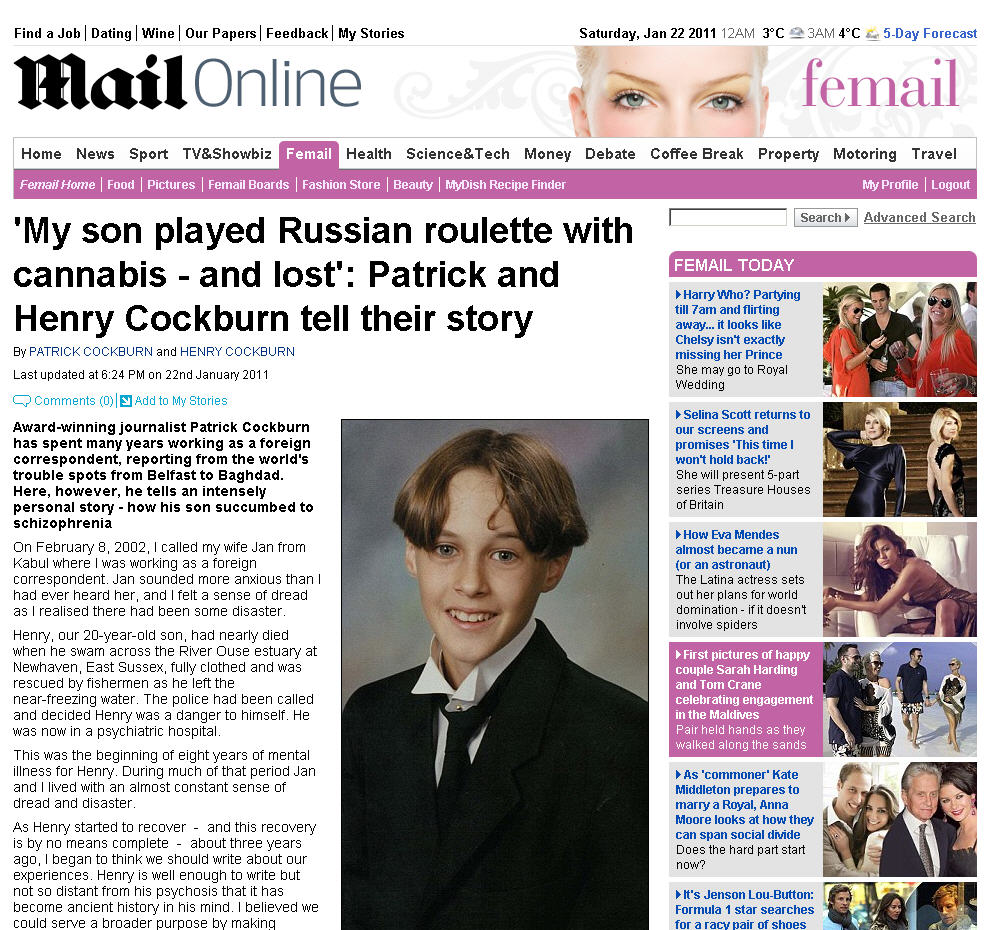 Does Peter Wright, editor of the Mail On Sunday, have any interest in the truth, or is he just trying to squeeze the last drop of sensation, hyperbole and panic from anything to do with cannabis?
Last week, Peter Hitchens penned a disgusting diatribe of untruths which has already been sent to the Press Complaints Commission. This Sunday’s paper will be the subject of a second complaint. It is truly appalling, crass and cheap nonsense. See here for the full story.
This is my response. Whether the Mail publishes it is up to them but I and the millions of other cannabis users in Britain have had enough. From now on, no such instance of lies and propaganda will be allowed to pass without being called to account.
My Response To The Mail On Sunday
This is a tragic story but blaming it on cannabis is not justified, nor is it helpful.
Whatever Henry’s story, the data simply does not support the idea that cannabis can cause schizophrenia. In fact, it more strongly suggests that people who have mental illness may use cannabis to self-medicate. It is instructive to note that Henry’s crisis arose when he had deliberately stopped using cannabis. Indeed, there is existing and continuing scientific research into cannabinoids as an anti-psychotic therapy.
This is similar to the recent story about Jared Loughner who shot Congresswoman Giffords in Arizona. He was said to be a cannabis user but, in fact, his friends said that he had stopped using it to self-medicate and since doing so had become more unstable and strange in his behaviour.
The article mentions “Sir William Paton, professor of pharmacology at Oxford University and one of the world’s greatest experts on cannabis” but I am personally acquainted with Professor Les Iversen, a current professor of pharmacology at Oxford University, the current chairman of the Advisory Council on the Misuse of Drugs and author of many books on the subject of cannabis. Prof Iversen was also the author of an article in The Times entitled “Cannabis. Why It’s Safe” and he delivered a lecture last month entitled “Bringing Cannabis Back Into The Medicine Cabinet”.
The demonisation of cannabis is a grave mistake and a disservice to young people and their parents. It looks almost certain that cannabis will be legalised in at least one state in the USA either this year or next. Progress will then roll out across the world. It’s about time that the British media caught up to fact that, as Professor Iversen says, cannabis is “one of the safer recreational drugs”, much safer than alcohol. It also has tremendous actual and potential benefit as medicine and Britain is way, way behind in the world in recognising this.
The Mail On Sunday’s scare stories about cannabis should be replaced with facts and information about this valuable and relatively harmless substance.
Professor Glyn Lewis of the University of Bristol said in 2009 that even on the most extreme interpretation of the data on cannabis and psychosis (a review of all published evidence) that 96% of people could use cannabis with no risk whatsoever of developing psychosis.
Six million people in Britain use cannabis regularly. We are sick and tired of the lies that are told about us.
Cannabis Embarrassment At The Home Office
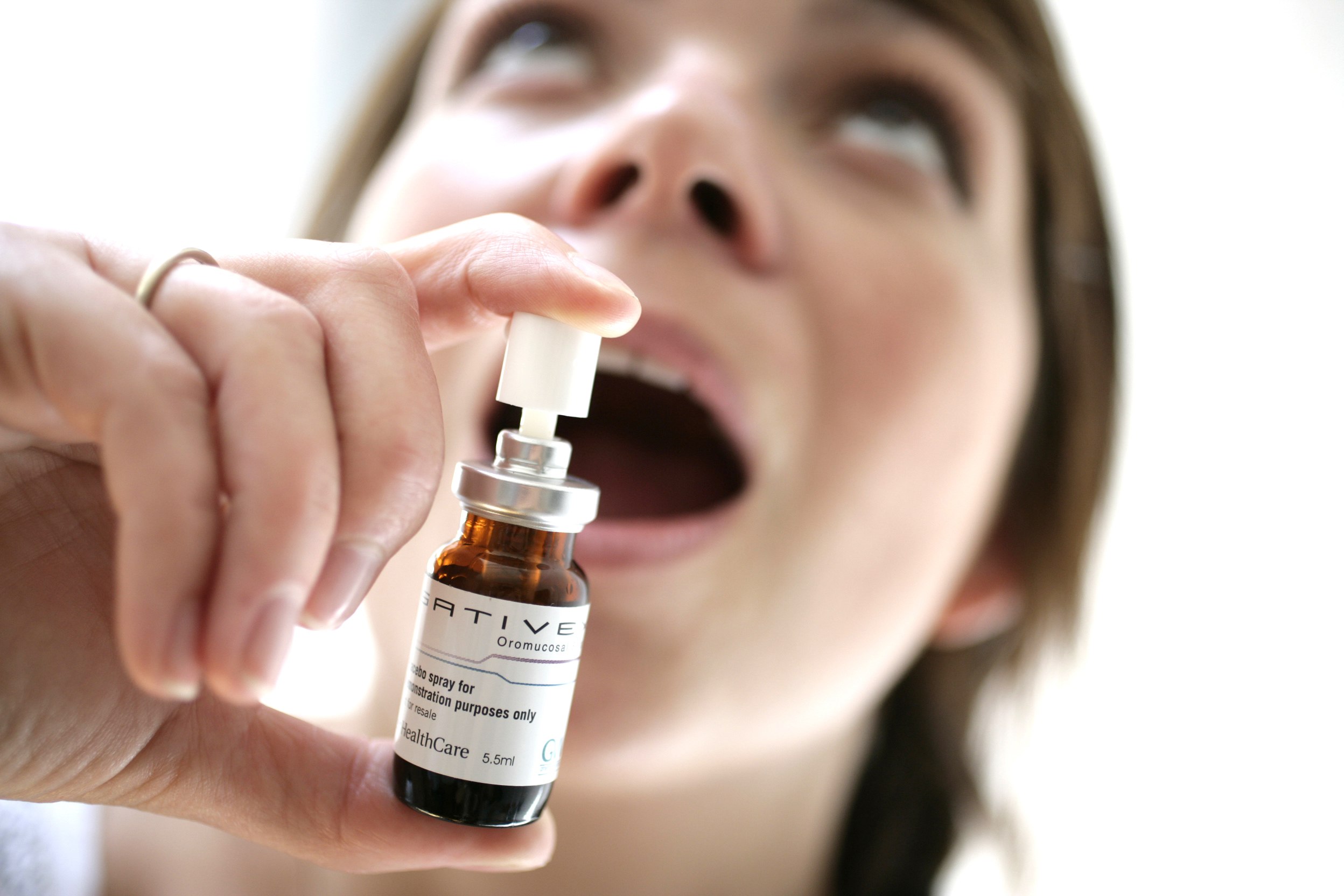
 The re-scheduling of Sativex, the cannabis tincture marketed by GW Pharmaceuticals is causing huge embarrassment at the Home Office.
Everybody’s been able to go along with the white lie up to now that Sativex is some sort of highly complex, super scientific, super medicine containing cannabinoids. True enough, GW Pharma has put millions into development and testing in order to jump through the hoops the government has demanded. At the end of the day though, all Sativex consists of is a tincture, an alcohol extract of herbal cannabis. It’s made simply by gently heating a blend of herbal cannabis in ethanol and then adding a little peppermint oil to taste.

An Honourable Man?
The Medicines and Healthcare Products Regulatory Agency (MHRA) has approved Sativex for the treatment of muscle spasticity in MS. I understand that an approval for the treatment of cancer pain is expected shortly. The problem for the Home Office is that Sativex now has to be re-scheduled under the Misuse of Drugs Act 1971. Cannabis is presently in schedule one as having no medicinal value. The Advisory Council on the Misuse of Drugs (ACMD) has recommended this week that Sativex be in schedule four, alongside a variety of minor tranquilisers. However, as the ACMD says, “it will not be appropriate to refer to “Sativex”, which is a proprietary name, in any amendment to the misuse of drugs regulations, and that a suitable description of the relevant component(s) of “Sativex” will have to be scheduled.”
This is going to be tough for James Brokenshire to face up to. GW specifies that Sativex contains approximately equal proportions of THC and CBD but that’s not the whole truth. It also contains as many as 400 other chemical compounds which occur naturally in the plant including at least 85 cannabinoids (nobody is exactly sure how many cannabinoids there are or their effects). You see there’s not really any other accurate way of describing Sativex except to call it cannabis. So how can Mr Brokenshire possibly move it to schedule four? He endlessly repeats the propaganda that “there are no medicinal benefits in cannabis”.
Either Mr Brokenshire has to come clean and accept that his past position was incorrect or he has to promote some further deception.
I trust he will prove to be an honourable man.
Cannabis And Cannabinoids: Pharmacology, Medicalization And Recreational Use
By Professor Roger Pertwee
Discovery of Δ9-tetrahydrocannabinol
Cannabis has been used as a medicine, for religious ceremonies and recreationally for over 5000 years. Indeed, an alcohol-containing tincture of cannabis (Figure 1) was a licensed medicine in the UK until its withdrawal in the early 1970’s.
In contrast, the discovery that cannabis contains (–)-trans-Δ9-tetrahydrocannabinol (Δ9-THC) and that many of the effects experienced when cannabis is taken recreationally are caused by this ‘phytocannabinoid’ was made less than 100 years ago (Pertwee, 2006). These effects include altered mood (usually euphoria); altered perception such that colours seem brighter, music more pleasant and ‘felt time’ appears to pass more slowly than ‘clock time’; an increased desire for sweet food (the ‘munchies’); changes in thought processes; impaired memory…and eventual drowsiness. They can also include increased heart rate, a lowering of blood pressure resulting in dizziness and, at high doses, hallucinations and feelings of paranoia. There is good evidence too that Δ9-THC targets the reward centres of the brain in a manner that can lead to psychological dependence, and that abrupt termination of repeated use of cannabis or Δ9-THC can trigger a transient physical withdrawal syndrome that in abstaining recreational cannabis users most commonly includes disturbed sleep, reduced appetite, restlessness, irritability, sweating, chills, a feverish feeling and nausea.
Some Cannabinoid Pharmacology
The discovery of Δ9-THC was followed by the development of synthetic compounds capable of inducing Δ9-THC-like effects. Results obtained from pharmacological research with some of these compounds culminated in the discovery that they produce many of their central effects by activating specific sites on nerve terminals called cannabinoid CB1 receptors in a manner that influences the normal functioning of the brain (Pertwee, 2006). This finding prompted a search for molecules within our own bodies that can activate these receptors and, in 1992, led to a second major discovery – that we do indeed produce and release such molecules. The first of these ‘endocannabinoids’ to be identified was an ethanolamide of the omega-6 unsaturated fatty acid, arachidonic acid. It was named
‘anandamide’, ananda being the Sanskrit word for internal bliss. It has subsequently emerged that there is at least one other cannabinoid receptor (CB2), that there are other endocannabinoids, and that this ‘endocannabinoid system’ of receptors and endogenous receptor activators plays major roles in the control of our health and in ameliorating unwanted symptoms such as pain.
The search is now on for additional cannabinoid receptors and endocannabinoids. Indeed, we have obtained evidence that ethanolamides, which are converted in our bodies from omega-3 polyunsaturated fatty acids that are found, for example, in fish oil, can both activate cannabinoid receptors and attack cancer cells (Brown et al., 2010).
The Medicalization Of Cannabinoids
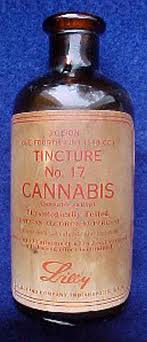
Fig. 1. Tincture Of Cannabis
Individual cannabinoids first entered the clinic in the 1980’s (Crowther et al., 2010). The first of these was Nabilone (Cesamet), a synthetic Δ9-THC-like compound that is used to suppress nausea and vomiting produced by cancer chemotherapy. Synthetic Δ9-THC (Marinol) was licensed soon after Nabilone for the same purpose, and subsequently as an appetite stimulant, particularly for AIDS patients. Nabilone
and Marinol were recently joined in the clinic by Sativex: in Canada (2005) for the relief of multiple sclerosis and cancer pain and in the UK (2010) to treat spasticity due to multiple sclerosis. Sativex has also received regulatory authorisation in Spain. Its main constituents are two phytocannabinoids, Δ9-THC and cannabidiol, both extracted from cannabis.
Importantly, whereas exogenously administered cannabis and individual cannabinoids such as Δ9-THC and Nabilone target all cannabinoid receptors in the body and so ‘flood’ the whole endocannabinoid system, endocannabinoids released endogenously are somewhat more selective since they seem to be released in a manner that only targets subpopulations of their receptors. Although such release is often ‘autoprotective’ it can sometimes be ‘autoimpairing’, leading for example to CB1 receptor-mediated obesity. There is, however, currently little interest in developing medicines from compounds that block CB1 receptors, as such a blockade could well also suppress CB1 receptor-mediated autoprotection. Indeed, the CB1 receptor blocking drug, Rimonabant, was recently withdrawn from the clinic because of an increased incidence of depression and suicidality in patients taking it as an anti-obesity agent.
The fact that Cesamet, Marinol and Sativex are all in the clinic is of course an indication that, as prescribed, these medicines do significantly more good than harm. Even so, there is considerable interest in developing a second generation of cannabinoid medicines that display even greater ‘benefit-torisk ratios’ (Pertwee, 2009). Possibilities include compounds that avoid the production of unwanted cannabinoid CB1 receptor-mediated effects by:
(1) Only activating cannabinoid receptors that are located outside the brain and spinal cord.
(2) Only activating cannabinoid receptors in particular tissues such as skin or spinal cord by being administered directly into these tissues.
(3) Activating cannabinoid CB2 but not cannabinoid CB1 receptors.
(4) Being administered at low doses that produce a cannabinoid receptor-mediated enhancement of the sought after effects of non-cannabinoid medicines but are insufficient to produce significant cannabinoid receptor-mediated unwanted side effects.
(5) Boosting the levels of endocannabinoids when these are being released in an ‘autoprotective’ manner, for example to relieve pain.
(6) Targeting ‘allosteric’ sites that we have discovered to be present on cannabinoid CB1 receptors in a manner that will boost the ability of autoprotectively released endocannabinoids to activate these receptors.
Cannabis: A Complex Scenario
Δ9-THC is synthesized in the cannabis plant from a nonpsychoactive precursor, Δ9-THC acid. This process can be greatly accelerated by heat which is why cannabis is usually smoked, often with tobacco, consumed in preheated food or inhaled from ‘volcano’ vaporizers that create fumes by heating cannabis without burning it or producing smoke. Other pharmacologically active phytocannabinoids can also be
formed from their acids by heating cannabis. These include the non-psychoactive yet pharmacologically active compounds, cannabidiol (CBD), Δ9-tetrahydrocannabivarin (Δ9-THCV) and cannabigerol (CBG), each of which has actual (CBD) or potential medical applications. Some of these phytocannabinoids are really ‘fighto’ cannabinoids, their presence in cannabis making it a pharmacological ‘battlefield’. Thus
we have discovered that although CB1 receptors are activated by Δ9-THC, they can be blocked by Δ9-THCV. It has also been found that CBD can oppose certain effects produced by cannabis or Δ9-THC. Indeed, whilst there is evidence that the presence of Δ9-THC in cannabis increases the risk of developing schizophrenia for certain individuals, there is also strong evidence that cannabidiol is a potential medicine for the treatment of schizophrenia. A further complication is that the relative concentrations of different phytocannabinoids are not the same in all strains of cannabis, in all parts of the same cannabis plant or in male and femalecannabis plants, the female flowering heads of sinsemilla (‘without seeds’) being particularly rich in Δ9-THC. This may have important consequences for those who take cannabis either recreationally or for the quite different purpose of self-medication, as high CBD:THC or THCV:THC ratios may lessen the risk from cannabis of developing schizophrenia or cannabis dependence…although probably also alter the perceived nature of a cannabis-induced ‘high’.
Spice
One notable recent event has been the arrival in the recreational cannabis world of herbal mixtures laced with synthetic cannabinoids (‘designer drugs’) such as JWH-018 (e.g. Spice or K2, named after the second highest mountain on earth). These little-investigated synthetic cannabinoids share the ability of Δ9-THC to activate cannabinoid CB1 receptors and hence to produce a ‘high’. Moreover, any of them that
activate these receptors more strongly than Δ9-THC will most likely produce a more intense ‘high’ and perhaps also more serious unwanted effects than usually experienced by recreational cannabis users. They probably also differ from THC in other ways. Thus, although Δ9-THC shares its ability to target cannabinoid receptors with many synthetic compounds, the additional pharmacological actions it possesses provide it with a unique ‘pharmacological fingerprint’ that distinguishes it from many of these other compounds.
Harm Minimization For Recreational Cannabis
One important challenge for the International Narcotics Control Board that monitors and implements United Nations drug control conventions is to select an optimal but workable strategy for minimizing the harm that is now being caused both to themselves and to Society by some of the many millions of people world-wide who currently take cannabis (or Spice) recreationally and also, indeed, by some of those who self-medicate with ‘street’ cannabis. For the UK, options include leaving the present law unchanged and increasing or
decreasing current penalties for the supply and/or possession of ‘street’ cannabis. It would also be advisable to develop strategies directed (i) at discouraging cannabis from being taken by adolescents or other individuals who are thought to be at particular risk from cannabis-induced harm and (ii) at providing advice (a) about combinations and levels of cannabinoids in cannabis that are thought to be the least
harmful and (b) about how to take cannabis as an inhaled unburnt vapour or in other ways that avoid the lung damage caused by smoked cannabis. It will be important that policy makers have discussions with cannabinoid pharmacologists whilst considering these and any other potential strategies for minimizing the harm caused by recreational cannabis.
Brown I, Cascio MG, Wahle KWJ, Smoum R, Mechoulam R, Ross RA, Pertwee RG and Heys SD. Cannabinoid receptor dependent and independent anti-proliferative effects of omega-3 ethanolamides in androgen receptor positive and negative prostate cancer cell lines.
Carcinogenesis 2010; 31: 1584-1591.
Crowther, SM, Reynolds, LA and Tansey, EM (eds). The Medicalization of Cannabis. Witness Seminar Transcript. Volume 40. The Wellcome Trust Centre for the History of Medicine, at UCL. 2010; http://www.ucl.ac.uk/histmed/downloads/c20th_group Pertwee RG. Cannabinoid pharmacology: the first 66 years. Br J Pharmacol 2006; 147: S163-S171. Pertwee RG. Emerging strategies for exploiting cannabinoid receptor agonists as medicines. Br J Pharmacol 2009; 156: 397-411. Professor Roger Pertwee has three degrees from the University of Oxford: MA (in biochemistry), D.Phil. (in pharmacology) and D.Sc. (in physiological sciences). He is Professor of Neuropharmacology at the University of Aberdeen, Director of Pharmacology for GW Pharmaceuticals, co-chairman of the International Union of Pharmacology (IUPHAR) Subcommittee on Cannabinoid Receptors, a co-ordinator of the British Pharmacological Society’s Special Interest Group on Cannabinoids and visiting Professor at the University of Hertfordshire. He has also served as chairman of the International Association for Cannabis as Medicine (IACM; 2005-2007) and as President of the International Cannabinoid Research Society (ICRS; 2007-2008; 1997-1998) and is currently ICRS International Secretary and a member of the IACM board of directors. He was the recipient of the 2002 Mechoulam Award “for his outstanding contributions to cannabinoid research” and in 2005 was recognized to be an “ISI Highly Cited Researcher” and hence among “the world’s most cited and influential researchers” (see Pertwee at http://isihighlycited.com/). His research has focused mainly on the pharmacology of cannabinoids. This he began in 1968 at Oxford University and continued when he moved to Aberdeen in 1974. His research has played major roles in:
• the discovery of endocannabinoids and the endocannabinoid system;
• the recent discovery that ethanolamides formed from omega-3 polyunsaturated fatty acids seem to be endocannabinoids;
• the gathering of evidence supporting cannabinoids for the management of multiple sclerosis;
• the discovery that tetrahydrocannabivarin (THCV) is a phytocannabinoid;
• the pharmacological characterization of certain phytocannabinoids and of novel synthetic cannabinoids, e.g. the phytocannabinoids THCV, cannabidiol and cannabigerol, the first water-soluble cannabinoid (O-1057), the first CB1 receptorselective agonists (e.g. methanandamide), and a widely-used CB2 receptor antagonist (AM630);
• the discovery of a cannabinoid CB1 receptor allosteric site;
• the development of cannabinoid bioassays, some widely used (e.g. the “ring test”).
See also www.abdn.ac.uk/ims/staff/details.php?id=rgp
European Parliament – Public Hearing On Cannabis Regulation
 The European Coalition for Just and Effective Drug Policies (ENCOD) has organised a public hearing on cannabis regulation at the European Parliament on 8th December 2010. See here for full details.
In March 2009, the European Commission published the “Report on Global Illicit Drug Markets 1998 – 2007” . This concludes that current policies of prohibition are failing in their main objective to reduce the demand and supply of illicit drugs. Current policies may also be a crucial factor in generating and increasing harm to individual drug users, their direct surroundings and society at large.
According to the European Monitoring Centre for Drugs and Drug Addiction (EMCDDA) in its 2010 annual report, Europe faces new challenges posed by changes in drug supply and use. The report also highlights the increased usage of cocaine, heroin and of a record number of new synthetic drugs.
ENCOD says that prohibitionist policies have failed to tackle the issues of drugs and drug use effectively and it is time to investigate alternative approaches. European authorities must produce a thorough impact assessment of the costs of the current policy of prohibition and the economic benefits of decriminalisation and, as a start, the regulation of the cannabis market.

Victor Hamilton
It has been calculated that cannabis regulation would save billions in law enforcement costs, foster harm reduction, weaken the illegal cartels, and provide the opportunity to generate considerable income from taxes. The examples of California, Spain, The Netherlands and Portugal lead the way.
Victor Hamilton, the well known cannabis campaigner and former Legalise Cannabis Alliance (LCA) parliamentary candidate, liaises as a UK representative with ENCOD. He has submitted the following letter to ENCOD in advance of the public hearing on the current state of cannabis in Britain.
Dear Joep,
Thank you for the invitation to attend the hearing on 8th December 2010. I am afraid that both my health and the expense involved prevent me from attending.However, as you know, ending the prohibition of cannabis and encouraging more and better use of the plant in all its forms is my main concern. Cannabis offers many benefits medicinally, recreationally, spiritually and, as hemp, in ecologically sound fuel, construction materials, paper and plastics alternatives. Prohibition of cannabis is a far greater crime than any perpetrated by those who use it. It is a scandal and a sad litany of wasted opportunity and resources.
In the UK, based on research I have done and confirmed by the Independent Drug Monitoring Unit (IDMU), a legalise, regulate and tax regime could produce between £4 – 6 billion pa in new tax revenue.
For the benefit of the hearing, please allow me to update you on the present situation in Britain.
Calls For Decriminalisation
There have been calls for a relaxation of cannabis laws from a number of sources: The Bar Council, the British Medical Association, the Royal College of Physicians, The Lancet, Professor Roger Pertwee, Professor David Nutt and the Association of Chief Police Officers. The new coalition government’s “Your Freedom” website was swamped with calls for legalisation.
Reaction To Propositon 19
The cannabis community was eager with anticipation for the Proposition 19 vote in California, despite a dearth of media attention. Even the BBC, obliged under its charter to provide balanced coverage, found very little time for an issue that affects at least six million Britons. Strangely, the best of the lot was The Daily Telegraph, formerly known as the most conservative paper, it told us more about what was happening than any of the others.
The result was a disappointment and reminded us how our own campaigning has suffered from internal divisions and a lack of focus. Nevertheless. legalisation seems inevitable in the US, even if only at state level, within the next few years.
Formation of British Medicinal Cannabis Register
This exciting initiative to create a database of medicinal users in Britain was announced only in November. I was honoured to be invited to sit on the BMCR council as a medicinal user representative. Other members of the council include very eminent individuals such as Baroness Meacher, the MP Paul Flynn, Matthew Atha of IDMU and Dr Malcolm Vandenburg, the pre-eminent expert witness on drugs.
The real coup though was the announcement of Professor Leslie Iversen as a council member. Professor Iversen is the government’s chief scientific advisor on drugs. Yes that’s the British government which continues to state that cannabis has “no medicinal benefits”.
Subversion of Schengen Agreement
Several British medicinal users travelled to Holland for prescriptions from a doctor believing that their medicine was then protected by the Schengen Agreement. At first the Home Office agreed but then changed its position to say that British residents are not covered. The ridiculous situation now is that any non-UK resident can bring prescribed medicinal cannabis into Britain and use it without restriction. A UK resident cannot.
Increasing Evidence Of Medicinal Benefits
There is a never ending flow of information from all around the world on the extraordinary power of cannabis as a medicine. Facebook groups, blogs and organisations such as the LCA and UKCIA keep spreading the news. Particularly strong evidence has been revealed for cannabinoids as a treatment for Alzheimer’s, head, neck, breast and prostate cancer, fibromyalgia, ADHD and migraine. The mainstream media seem only interested in scandal and scare stories. They publish news about vastly expensive new pharmaceutical products but not about cannabis cures.
Confusion At The Home Office
Understandably, the British government’s position looks increasingly absurd. The Home Office veers between describing cannabis as very harmful, harmful, dangerous, extremely dangerous and changes its story every time it is challenged.
Approval of Sativex
Sativex won welcome approval from the medicines regulator as a treatment for spasticity in MS. Despite the fact that Sativex is nothing more than a tincture of herbal cannabis, the government now maintains that “cannabis has no medicinal benefits in herbal form”. Sativex is approximately eight times the cost of herbal medicinal cannabis and many health authorities are refusing to fund it.
New UK Drug Strategy
The government is to announce a new drugs strategy in December. There is expected to be a shift in emphasis towards healthcare interventions rather than criminal sanctions but no move away from prohibition. The more liberal views expressed by both David Cameron and Nick Clegg over the last 10 years seem to have changed now they have come to power.
Joep, I hope this is helpful and informative for the hearing and for you and your colleagues.
Victor Hamilton
The Truth About Sativex
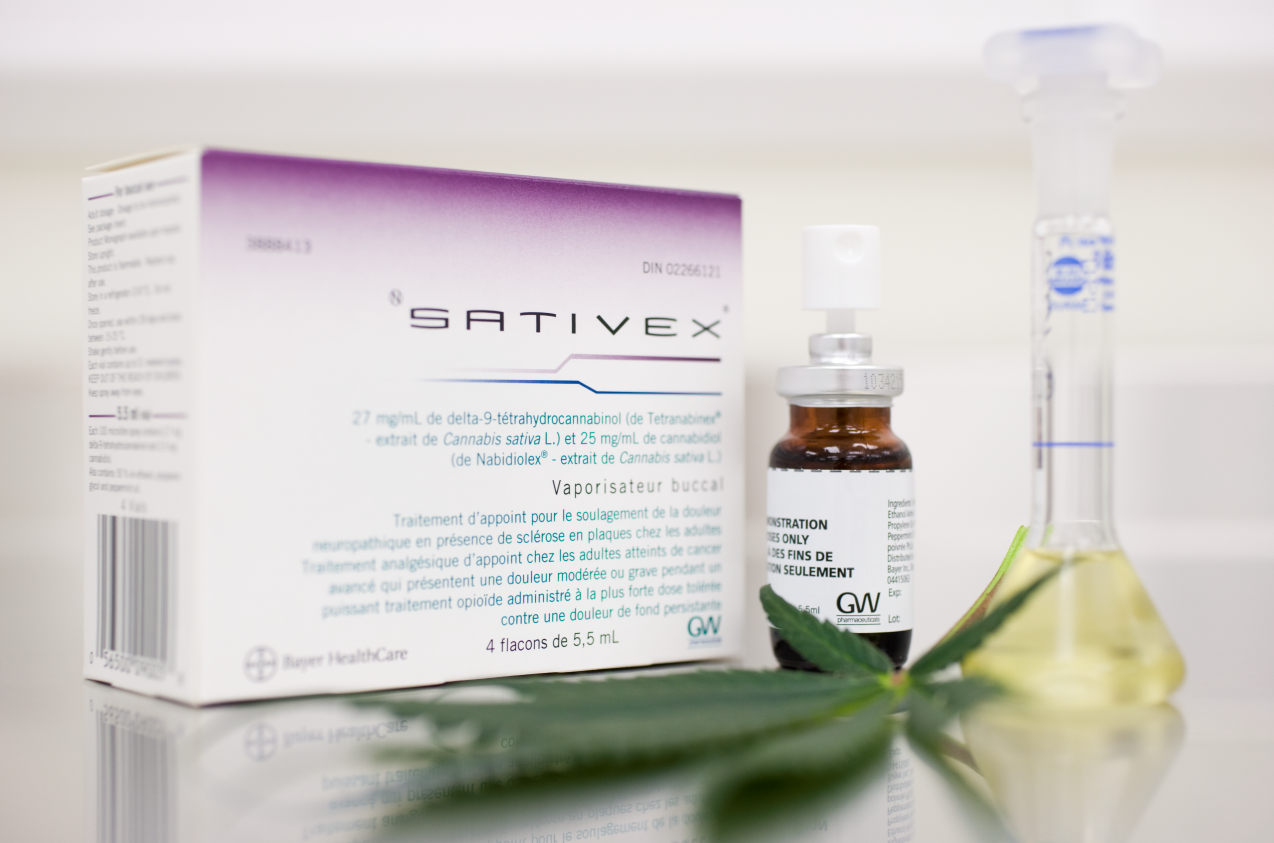 Sativex is super strong, concentrated cannabis. Nothing more, nothing less.
GW Pharmaceuticals would have you believe that it’s a “pharmaceutical” product because according to its research that’s what patients prefer. As the GW spokesman puts it, “It’s a pharmaceutical solution, formulated with the ability to deliver a precise dose and with stringent standards of quality, safety and efficacy”.
 In fact, what GW does is grow high quality cannabis under pretty much the same conditions as most illegal growers. It uses clonal propagation to ensure consistent levels of cannabinoids. Lighting and hydroponic nutrition is computer controlled with automatic ventilation. It really is no different from the most sophisticated and efficent illegal cannabis farms. It’s a recognised and proven technology now also used by Bedrocan in Holland, the Dutch government’s exclusive medicinal cannabis grower and Gropech in California which is building a new 60,000 sq ft facility in Oakland for a crop worth $50 million per year.
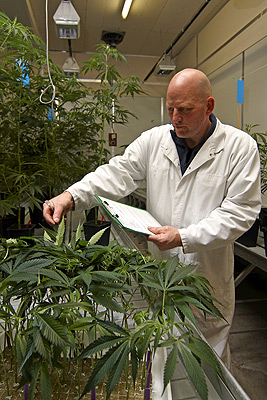
Bedrocan Grow
The difference between these crops from legal and illegal growers is insignificant. It’s similar to buying your tomatoes from the supermarket or the farm shop.
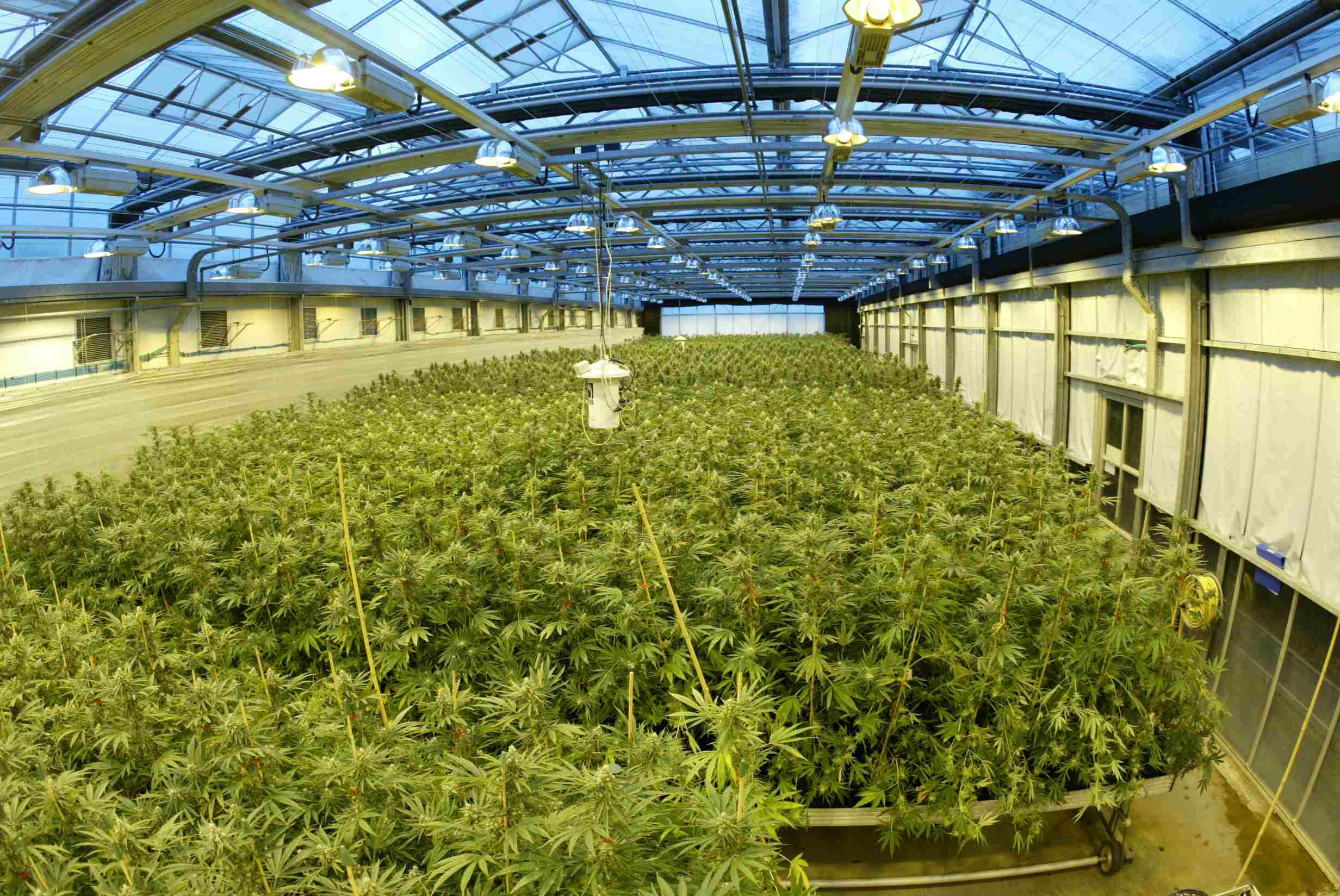
GW Grow
GW takes its high quality cannabis, chops it up and makes a tincture by heating it under pressure with CO2 and then adding ethanol to precipitate an oil. Then, with the addition of a little peppermint oil to mask the taste and some preservative, the filtered liquid is packaged into tiny little aerosol bottles. Each spray delivers 2.7mg of THC and 2.5mg of CBD. What GW doesn’t tell you that it also contains all the other 100+ cannabinoids found in the plant, each of which has its own mechanism of action and effect. It also contains flavonoids, terpines and other compounds. Everything that is found in the plant.
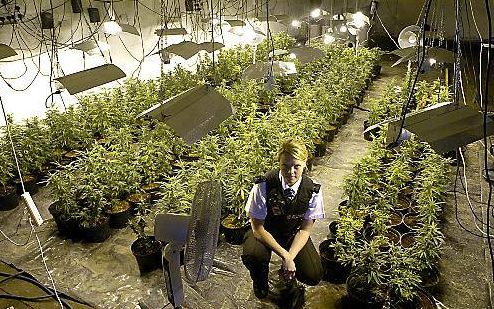
Illegal Grow
I applaud GW Pharmaceuticals for bringing the enormous benefits of cannabinoid therapy into the 21st century. It’s nothing new though. The medicinal value of the plant has been known and widely used for thousands of years. Only in the last century has it been demonised by lies and propaganda. It would be a mistake though to think that Sativex is anything different from the plant itself. It’s just been wrapped up in a marketing and physical package which has enabled stupid and cowardly politicians to accept it.
In fact, Sativex remains just as illegal in Britain as herbal cannabis. Even though it has received MHRA approval for use in the treatment of MS spasticity and may be prescribed by a doctor, it remains a schedule 1 drug under the Misuse Of Drugs Act. The Home Office has indicated that it intends to amend the law but has not yet done so. This means that any pharmacist who dispenses Sativex at present is guilty of exactly the same criminal offence as any street dealer in weed or hash.
The Home Office will, of course, turn a blind eye to this but not to medicinal herbal cannabis even though, in every sense, it is identical to Sativex (except that Sativex also contains alcohol and peppermint oil). The stark idiocy of British law is revealed.
Never before has there been a better example of the how the law is an ass and so are the spineless politicians who support it.
Cannabis Is A Wonderful Thing
 Two days ago, I found this marvellous image of Hunter S. Thompson which reminded me of something I’ve been meaning to write about for ages.
Cannabis is a wonderful thing. We spend so much time having to engage in intellectual, scientific, medical, moral and human rights arguments that we forget to tell the truth. We forget to say what’s good. We forget to advance the wonderful, beneficial, delightful, life-enhancing qualities of this amazing plant. Cannabis is good. It does you good. It’s done so much good for me in my life and for so many people that I know. It opens hearts and minds and understanding. It reveals truth and beauty and music and conversation and the joy of existence on our beautiful planet.
Now, I can even substantiate this with science. Cannabis has been treated with reverence and as a religious sacrement by some yet demonised and reviled by the forces of darkness and evil. The positive benefits of God’s herb, known to mankind for thousands of years but shrouded in mystery and superstition, are now revealed by science as an integral part of the universe. The Endocannabinoid System (ECS), only discovered in 1988 but now known to be fundamental to life, is the reason that the natural supplement of the plant is a good, good thing. A nutrient that can benefit us all. See here.
The ECS, present in mammals, fish, reptiles and birds, is now known to be vital in pain relief, sensation, appetite, taste, weight control, mood, memory, motor skills and fertility. Contrary to the idea that each pull on that joint kills millions of brain cells, in fact the ECS facilitates neurogenesis, the birth of neurons. In 2003, the US government registered US patent no. 6630507 for cannabinoids as antioxidants and neuroprotectants for limiting neurological damage following stroke or physical trauma, or in the treatment of neurodegenerative diseases, such as Alzheimer’s, Parkinson’s and dementia.
Cannabinoids have been shown to have analgesic, anti-spasmodic, anti-convulsant, anti-tremor, anti-psychotic, anti-inflammatory, anti-cancer, anti-oxidant, anti-emetic and appetite-stimulant or appetite-suppressant properties.
Is it any wonder that cannabis has been used as a medicine for thousands of years? Is it any wonder that millions of us have known instinctively for so long that cannabis is a wonderful, beneficial, health-giving plant?
Cannabis really is the wonder drug that the hippies rediscovered in the 1960s. It really does offer so many benefits to mankind. However much the prohibitionists lie and dissemble and spread fear, uncertainty and doubt, the truth is out. Science now knows what we knew all along. Cannabis is a wonderful thing!


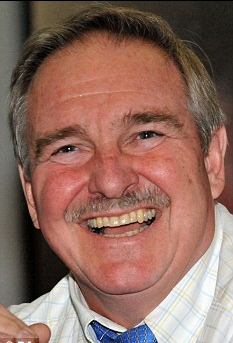


 Peter Reynolds