Posts Tagged ‘cannabis’
Professor Mike Barnes Speaks Out On the CBD Ban.
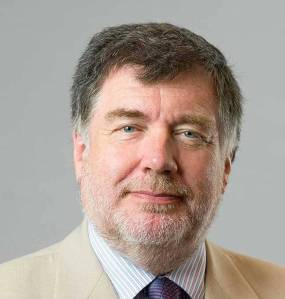
Professor Mike Barnes, Scientific and Medical Advisor to CLEAR
Professor Mike Barnes, neurologist, scientific and medical advisor to CLEAR Cannabis Law Reform, has issued the following statement.
“It is encouraging that the MRHA is recognising that CBD has medicinal value but it is concerning that many people benefitting from CBD now will suffer in the short term as good quality manufacturers have to stop production pending MRHA approval”
A redacted copy of the letter now being sent to all CBD suppliers can be seen here.
For some weeks, rumours and half stories have been swirling around about the MHRA taking action on CBD.
Initially a number of suppliers were warned about making medicinal claims, even testimonials from satisfied customers were ruled as unlawful. Anything which suggested that CBD was a medicine or provided therapeutic effects was ruled out under UK medicines legislation.
Responsible CBD suppliers have known this for some time and were scrupulous in ensuring no such claims were made, even including disclaimers explicitly stating that their products were not for medical use. But as CLEAR has reported many times before, the CBD market is full of cowboys, get-rich-quick scam artists that tell bare faced lies about their products as well as making outlandish claims for the medicinal benefits. The crackdown from the MHRA was inevitable when these fools put their short term gain ahead of developing a responsible and self-regulating market in which CBD could continue to be sold as a food supplement.
We have seen every sort of bad practice it is possible to imagine. Some suppliers have attacked all of their competitors, stating that they are the only ‘ethical’ supplier and everyone else is telling lies. MediPen put all its resources and efforts into marketing and PR without providing proper information to customers about what its product contained. It achieved great coverage in tabloids like the Metro and the Mirror and even managed to spin a wholly misleading story that the NHS was “trialling” its product (In fact it was at last using an NHS accredited laboratory to test its product contents, that is all). Another supplier called Sacred Kana was rebranding cheap and nasty Romanian hemp extract and selling a bottle for just over £50, claiming it contained 10,000 mg of CBD. Testing showed that it actually contained less than 200 mg. Wrapped up in a warm, cuddly hippy-style marketing campaign, they were trying to pass themselves off as the Rick Simpson of CBD when all they are is conmen.
Responsible suppliers did include CBD information on their websites and often linked to scientific studies and research. Clearly, even this has become too much for the MHRA and now the market is being closed down. You can thank the greedy idiots, the conmen and the barrow boy salesmen trying to pretend they were scientists.
Of course the truth is that CBD is medicine, so the MHRA isn’t wrong. Most CBD products are, in fact, low-THC, whole plant extracts, so they were, effectively, a legal form of cannabis. The therapeutic benefits they offered were not just from CBD but from the ‘entourage effect’, recognised by science as the synergy between all the different components of cannabis. Unfortunately, we even had some companies promoting the fact that their so-called ‘CBD oil’ actually contained significant proportions of THC and CBN, both ‘controlled drugs’ under the Misuse of Drugs Act 1971.
The crackdown was inevitable but it may leave tens of thousands of people with real health problems as they are no longer able to obtain what they were legitimately using as a food supplement.
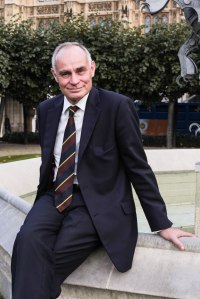
Crispin Blunt MP, Political Advisor to CLEAR
Of course, designating CBD as a medicine is inconsistent with the UK government’s position that cannabis has “no medicinal value” but it’s been common knowledge that this is untrue for many years. The only good news coming out of this debacle is that this could be the beginning of proper, honest regulation of cannabis as medicine. But if we’re looking at clinical trials before CBD can be marketed again, it could be many years away and that’s after someone or some company decides to invest the £250,000 or more that could cost.
CBD products will still be available offshore and you probably will be able to order online and have them delivered by post. The price is bound to go up and you will be committing a criminal offence by importing an unlicensed medicine but no doubt may will choose to take this risk.
CLEAR is working with the UK Cannabis Trade Association and our Advisory Board members Professor Mike Barnes and Crispin Blunt MP, to try and persuade the MHRA to enter a consultation process and allow CBD to remain available as a food supplement in the short term.
In the longer term, as we know far too well, the only solution is for a proper system of regulation for cannabis. including its use as medicine.
Fast Developing News On CBD And Medicinal Cannabis.
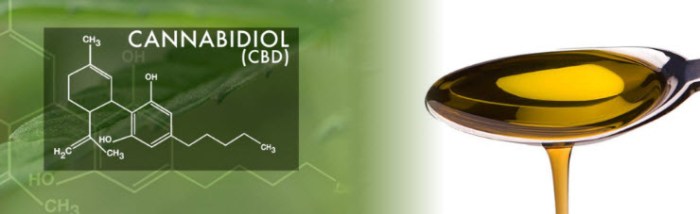
We learned today that the Medicines and Healthcare products Regulatory Agency (MHRA) has started issuing letters to CBD suppliers advising them that CBD is being designated as a medicine and that sale of CBD products must stop within 28 days.
This will be alarming news to many people. However, it is a complex situation which has some positive aspects to it. In the short term, if you are already using CBD products, you would be well advised to stock up as much as you can afford.
CLEAR has been aware of this possibility for several weeks and consequently we have been working with leading CBD suppliers and licensed producers of both low and high THC cannabis on establishing the UK Cannabis Trade Association (UKCTA). We are already in correspondence with the MHRA seeking to represent all stakeholders, to establish a consultation process on regulating CBD products and to protect the interests of producers, suppliers and consumers.
 What these MHRA letters mean is that for CBD to be sold in future, suppliers will have to obtain either a ‘marketing authorisation’ or a ‘traditional herbal registration’ from the MHRA.
A marketing authorisation can be fantastically expensive, requiring an initial application fee of £103,000 and full scale clinical trials demonstrating safety and efficacy.
A traditional herbal registration is not as expensive, around £6,000 but relies on the product having been “traditionally used to treat the stated condition for a minimum of 30 years, 15 years of which must have been in the European Union (EU).” It also requires “scientific evidence relating to the safety, quality and traditional use of the herbal product”. It is far from certain that CBD will qualify for this scheme and in any event registration is only granted if the medicine is used for minor health conditions where medical supervision is not required.
CBD is not a ‘controlled drug’ and is not prohibited but most CBD products are in fact low-THC, whole plant extracts derived from industrial hemp, legally grown under licence. So yes, they are a legal form of cannabis and, of course, according to the Misuse of Drugs Act 1971, cannabis has ‘no medicinal value’. So, you may well ask, how can the MHRA classify it as a medicine?

MHRA Headquarters
This is just the first of many complications for the MHRA, the Home Office and the government. Potentially, it could be very positive as it could make the government acknowledge the medicinal value of cannabis and, in effect, force the beginning of cannabis regulation.
It has been certain for some time that many of the CBD products presently on the market are unlawful because they contain levels of THC and CBN which exceed the limits stated in the Misuse of Drugs Regulations 2001. Some CBD suppliers have taken a head in the sand attitude to this, even in some cases foolishly promoting the THC levels in their products. This led to CLEAR removing its endorsement of one supplier earlier this year and recommending CBD Oils UK instead.
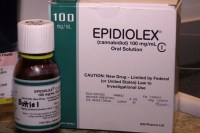 The path ahead is uncertain. The UKCTA is pressing for an urgent meeting with the MHRA. Apart from the advice to consumers to stock up, these will be very worrying times for CBD suppliers and their employees. Another factor is that GW Pharmaceuticals is very close to applying for FDA approval in the USA and an MHRA marketing authorisation for its CBD epilepsy medicine, Epidiolex.
CLEAR, the UKCTA and leading CBD companies are working together to clarify and progress this situation. We will keep you closely informed of developments.
It Sticks In My Throat But Theresa Is Magnificent.
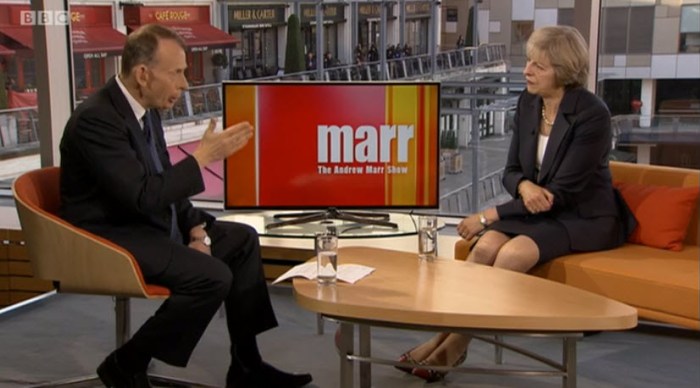
The Andrew Marr Show. 2nd October 2016
Ms May’s performance on the Andrew Marr Show today was a triumph.
She delivered common sense, wit, an inclusive vision and very broad appeal. In a “country that works for everyone” she is undermining the incoherent left. She is showing true leadership in excellent style.
Now all we have to do is get her properly informed about cannabis and drugs policy. I cannot believe that someone who is so rational and considered can fail to understand. I think the truth is that prejudice and years of propaganda is so entrenched, even in sophisticated, intelligent people, that some politicians, including Theresa, have not had the evidence properly presented to them.
We must do better to get our message across and somehow we have to get Theresa May properly to consider our arguments.
‘This House Would Legalise Cannabis’. Reynolds v Hitchens. University Of Southampton, 29th September 2016.
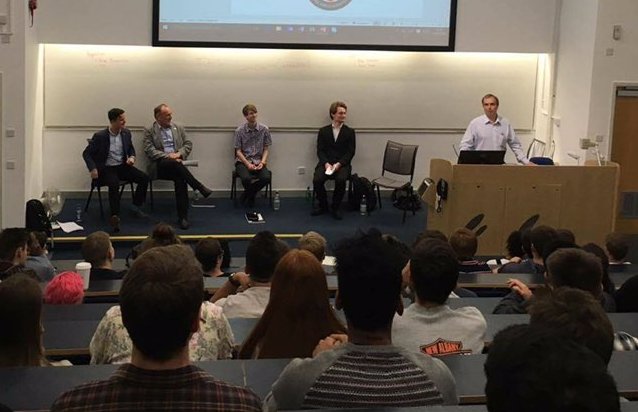
A vote was taken before the debate started: For the proposition: 49 Against the proposition: 18 Abstain/undecided: 17

A Good Attendance
John Pritchard, studying economics. For the proposition.
Jacob Power, studying philosophy. Against the proposition.
Peter Reynolds, CLEAR Cannabis Law Reform. For the proposition.
Peter Hitchens, Mail on Sunday. Against the proposition.
A vote was taken after the debate finished: For the proposition: 57 Against the proposition: 26 Abstain/undecided: 8
My speech
I start with an assertion that I think we can all agree on – the only purpose of any drugs policy is to reduce harm.
I argue that British drugs policy, specifically on cannabis, causes far more harm than it prevents and that the solution is to legalise. But by legalise, I do not mean a free for all. In fact, I mean a system of regulation which minimises harm.
Under the Misuse of Drugs Act, cannabis is called a “controlled drug” but nothing could be further from the truth. What every government since 1971 has done is abandon all control. They have abandoned our communities. they have abandoned our young people and they have abandoned those who need cannabis as medicine. All of them, Conservative, Labour and the coalition, they have abandoned us all to criminals.
The results are street dealing, dangerous hidden cannabis farms that cause fires, theft of electricity, destruction of rental properties, gangs that exploit children, both by selling them cannabis and getting them involved in dealing, human trafficking, modern slavery, most often Vietnamese children, smuggled into Britain and locked up in cannabis farms to look after the plants. And as for the product itself, it is frequently poor quality and often contaminated with toxic residues.
These are the harms that the Misuse of Drugs Act is supposed to prevent but, in fact, it creates them, promotes them and maximises them.
Now, it may surprise you to know that the law is not about protecting people from health harms. The exact words of the Act are that it is about the misuse of drugs “having harmful effects sufficient to constitute a social problem”. It is social harm that the Act seeks to prevent.
Which is just as well because the “harmful effects” of cannabis are very difficult to identify. Most of what you hear is either wild exaggeration or completely false. Even the Institute of Psychiatry, the source of many scare stories, admitted last year that its press office was misrepresenting and exaggerating its own research.
Now t’other Peter will tell you that cannabis is a dangerous drug which can cause serious, irreversible mental illness. In a debate like this it is impossible to compare all the various scientific studies that form the body of evidence on which cannabis policy should be based. I can certainly answer specific questions later on but for now, let’s rely, not on evidence, but on cold, hard facts.
The populist myth is that thousands of young people are afflicted by this terrible condition called ‘cannabis psychosis’. The facts are that in the last five years there has been an average of just 28 finished admission episodes in hospitals each year for people under 18 for cannabis psychosis.
Of course these are 28 tragedies and I don’t overlook that but in public health terms it is an insignificant figure. For instance, there are more than 3,000 finished admission episodes each year for peanut allergy but we don’t spend £500 million each year on a futile attempt to ban peanuts, do we? Yes, that’s how much we spend every year on police, courts, probation and prison services to try and stop people using cannabis.
However, it’s not as simple as that. Apart from hospitals, thousands of people each year receive what’s called ‘treatment’ for cannabis use disorder from community health services. Nearly 16,000 young people for the year 2014/15.
Now the only ‘treatment’ for cannabis is counselling but that’s not what this is really about. It’s actually about trying to force people to stop using cannabis regardless of whether it’s causing any harm. Public Health England, which records these figures, shows that 89% of all those in treatment have been referred from the courts, educational institutions or some other authority. In other words this is coercive treatment. You have no option. If you don’t agree the courts will impose a tougher penalty or you might get expelled from school. Only 11% of those receiving this treatment actually decide they need it themselves.
Don’t get me wrong now, I’m neither suggesting cannabis is harmless nor that it can’t be a real problem for some people. But I ask you this, if it has the potential for harm, is it better that we leave the entire market, now worth £6 billion per year, in the hands of criminals, or would it be better and safer for everyone if it was properly regulated and controlled? Wouldn’t any health harms be reduced, better treated, if we had quality control, age limits, proper labelling of what you’re buying? Isn’t this obvious, common sense?
We will continue to put most of our effort into the medical campaign because that is what morality and compassion demands But actually, there is far more harm caused by the prohibition of recreational use. As well as all the social harms I mentioned earlier, do you know there are one million people in the UK with a conviction for cannabis? People whose careers, ability to travel, even their credit score can be damaged because they got caught smoking a joint.
In all jurisdictions where cannabis is legally available, the benefits are dramatic and very easy to see. In Holland, far fewer children use cannabis than in the UK. Underage use is declining in Colorado, Washington, Oregon, Alaska where cannabis is legal for all adults and in the other 30 US states where medical cannabis is legal. Crime is down, fatal traffic accidents are down, alcohol consumption is down, overdoses and deaths from dangerous opioid painkillers are down.
The prohibition of cannabis is a great force for evil in our society. It promotes crime, it maximises the health harms of cannabis, it ruins lives, it denies people medicine that science proves will help them, it blights communities, endangers children, fritters away precious law enforcement resources.
Indeed, prohibition is a fundamentally immoral policy. It sets the police and the courts against the communities they are supposed to protect. After all, the demand comes from us and it is not going away. We are adults, free human beings who are entitled to act as we wish provided it doesn’t harm others. Our government and our police should serve us. It is an affront to justice, to the rule of law, to morality and to each one of us that this oppressive, ridiculous, evidence-free policy persists.
Legalise cannabis now! Please vote in favour of the motion.
Facebook Says Calling A Black Man A Baboon “Doesn’t Violate Our Community Standards”.

On the other hand Facebook says that recommending a responsible, reputable supplier of verified, lab-tested, legal CBD food supplements does violate its standards.
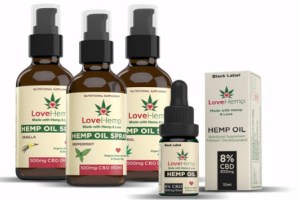
LoveHemp 40% CBD Oil
At a guess (because you can’t get a straight answer from Facebook about anything), the issue is “We prohibit any attempts by unauthorised dealers to purchase, sell or trade prescription drugs, marijuana, firearms or ammunition.”
Now CBD food supplements are fully legal products. They are not prescription drugs. True, CBD is present in cannabis but it is also found in many other plants. So it’s difficult to understand what the problem is – but not as difficult as getting a coherent answer from Mr Zuckerberg and his disciples.
For the ‘offence’ of recommending a CBD supplier your page gets a seriously heavy warning to all page admins, a threat of permanent deletion and I, as the author of the post sharing a link to CBD Oils UK, was banned from Facebook for 30 days. Such is the reality of living under the diktat of the unaccountable, overbearing, bureaucratic monolith that Facebook has become.
However, when some vile American Trumpoid leaves a comment on the CLEAR page calling a black man a baboon, that’s just fine and dandy.
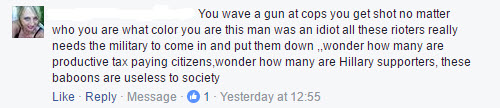
It is time that Facebook was placed under serious regulation for its unfair and oppressive trading practices. It has become so ubiquitous that it now has a responsibility that goes beyond any independent business. It is virtually impossible for individuals and small businesses to operate without a Facebook account. It should be subject to strict standards and forced to comply with fair practices.
I’m all for free enterprise but it’s time to slam Facebook hard for its tax dodging, its failure to take responsibility for publishing abuse and its unfair treatment of users and advertisers.
‘This House Would Get High’. Debate, Trinity College, Dublin. 21st September 2016.

Trinity College Dublin
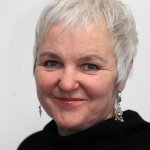
Brid ‘Bridie’ Smith TD
I was honoured to be invited to speak at Trinity College this week in a debate chaired by the Irish TD Brid Smith. In July, Ms Smith introduced legislation in the Dáil to allow the use of cannabis and cannabis-related products for medicinal purposes. However, the debate itself was much broader than medicinal cannabis. As I said in my own speech, it was a pleasure to get away from the earnest discussion of science and evidence for a while.
This was my speech.
I get high every day.
This morning, as is my daily routine, I walked to the top of the hill behind my house. Looking south-east, about 15 miles away, I can see the Isle of Portland. Then Chesil Beach sweeps towards me into Lyme Bay. As it curves round in front of me I’m about two miles back from the Jurassic Coast and then it runs off to the west past Bridport, Lyme Regis and, on a clear day you can see right over towards Torquay.
So you can tell I’m pretty high, just because of the amazing view I have. And the view itself makes me high. It inspires me, however many times I see it.
But I’m also pretty high because it’s a steep hill, I’m out of breath by the time I get to the top and my body is pumping out endorphins, endocannabinoids and there’s a surge in dopamine, serotonin and other neurotransmitters, hormones, all of which give me a buzz. They make me high!
Being high is a natural state of mind. It’s something we all aspire to and achieve, every day. So my argument to you is certainly that this house would get high but also that it does get high and must get high, regularly, for good health.
I got even higher this afternoon when I drove to Bristol Airport and then Aer Lingus flew me to Dublin at 16,000 feet. I’m also planning on getting a little high after this debate is finished, as I’m reliably informed there will be a “lavish, themed reception” in the Conversation Room, presumably including a drink or two.
So now we come to the nub of the issue. We all get high, through many routes. Even young children, as soon as they can crawl, start to experiment with altering their consciousness. Soon they are hanging upside down off swings, deliberately making themselves dizzy on roundabouts. As they grow up they graduate to their first sips of alcohol. I hope, as I did, they miss out the dreadful experiment with sniffing glue – and so we arrive at the joint, the dried flowers of the cannabis plant, smoked with the single-minded intention of getting high.
What are these arbitrary distinctions our society makes between acceptable forms of getting high and others that are so condemned that we are threatened with incarceration, in some countries, even worse?
Are these moral issues, so that in 1920s America, alcohol was socially unacceptable but in 2016 it’s OK? Or are they issues of ethics, more fundamental principles that transcend fashion and time?
What difference does it make how we get high, if being high is a natural state of mind?
We can smoke a little weed, drop an ‘E’, sniff a few lines of coke, down a few large Jamiesons. Or we can just listen to some amazing music, walk to the top of my hill, go to the gym – or, any combination of these paths to getting high.
Our governments seek to determine how we may get high. Their pretext is that they are protecting us, either from individual health harms or from wider, social harms, such as those caused by street dealing, criminality caused by addiction.
But even a cursory examination of this shows that it is false, it is mythology. Our means of getting high are controlled not by any concern for harm but by the imposition of someone else’s moral standards. This is usually a government minister and his or her personal opinion, often heavily influenced, either by the media, where editors also seek to impose their moral standards or, more sinister, by a vested interest, ‘Big Booze’, that wishes to preserve its one way street, no stopping, no U- turns on its path to getting high.
There’s also the legitimisation of sugary drinks, snacks, sweets, cakes and goodies. I wanted nothing more as a child than to get high off sugar. “And a cake please Grandad?” was my childhood refrain that I am still teased with today. But sugar causes tremendous harm and apart from pious, preachy health warnings, it’s all OK because our government says so.
It’s also OK to get high as a medical therapy. When it’s an SSRI anti-depressant, it’s objective is to make you feel better, to alter your brain chemistry to get you high, in fact by flooding your synapses with serotonin.
More of these happy pills are prescribed than any other form of medication. In fact, we don’t really understand how they work, how in some people they have the opposite effect and make them suicidal. But it’s all OK because this is government-sanctioned happiness – or unhappiness – but it’s OK because some privileged middle aged person, who couldn’t tell a synapse from a hockey stick says so , and she or he knows best.
But any suggestion that cannabis might be medicine has to be forcefully caveated with denials that it’s about getting high. Did you know, Sativex, the one legal form of medicinal cannabis, both here and in the UK, gets you high?
No? Yes I know all the doctors say it doesn’t and the nanny-state do-gooders tell you the bit that gets you high has been taken out. But take a look at the statutory documentation and what does it say? Oh! Something called “euphoric mood” is described as a “common” side effect
It’s actually a real pleasure to talk about getting high. I spend all my time engaged in earnest discussions about science, evidence, therapeutic and side effects. I forget that a lot of it is about getting high, however you choose to do it.
So, this house would get high. Indeed this house is high and I predict most of you will be a little higher in the next half hour or so.
Getting high is nothing to be ashamed of. Go for a run, climb a hill, eat a space cake ( but mind the sugar).
Getting high is a human right, a necessity and a great way to live. Get high and stay high.
After an entertaining and fascinating debate with contributions from other guest speakers and students, Bridie summed up by reading an extract from Tom Paxton’s song ‘Talking Vietnam Pot Luck Blues”. I’d never heard it before but it carries a wonderful message about how getting high brings people together.
The moment came as it comes to all,
When I had to answer nature’s call.
I was stumbling around in a beautiful haze
When I met a little cat in black P.J.’s,
Rifle, ammo-belt, B.F. Goodrich sandals.
He looked up at me and said,
“Whatsa’ matta wit-choo, baby?”
He said, “We’re campin’ down the pass
And smelled you people blowin’ grass,
And since by the smell you’re smokin’ trash
I brought you a taste of a special stash
Straight from Uncle Ho’s victory garden.
We call it Hanoi gold.”
So his squad and my squad settled down
And passed some lovely stuff around.
All too soon it was time to go.
The captain got on the radio. . .
“Hello, headquarters. We have met the enemy
And they have been smashed!”
CLEAR’s Submission To The Parliamentary Inquiry Into Medicinal Cannabis
This was the response that CLEAR submitted to the APPG in February 2016. In March 2016, Roland Gyallay-Pap, then managing director of CLEAR and Peter Reynolds, president, were called to give oral evidence to the Inquiry.
A PDF copy of this document may be downloaded here.
Introduction
In June 2015 the All-Party Parliamentary Group for Drug Policy Reform (APPG) published a short report arguing for a rescheduling of cannabis to make it more widely available for medical use. Following the publication of that report there are a number of key questions remaining that it would like to address by means of a Short Inquiry.
CLEAR Cannabis Law Reform has been asked to submit evidence to the Inquiry in answer to these specific questions:
- Whether switching the medical status of cannabis from schedule 1 to a less restrictive schedule would be beneficial?
- What do you understand to be the range and extent of unofficial use of cannabis for medical purposes?
- What has been the impact of the current schedule 1 status on research into the medicinal uses of cannabis?
- Is there useful evidence emerging from the regulation of cannabis in over 20 US states and elsewhere and what does it tell us about the case for cannabis to be included in the UK pharmacopeia?
- What would be the implications of licencing cannabis for medicinal use following a change in Schedule?
- What role could EU regulations play in developing the potential for the medicinal use of cannabis?
We have also added a further response with additional information.
- Access to prescribed Bedrocan medicinal cannabis is already possible based on careful use of loopholes and errors in existing English law.
Whether switching the medical status of cannabis from schedule 1 to a less restrictive schedule would be beneficial?
Yes, we consider that switching cannabis from schedule 1 to a less restrictive schedule would be beneficial, both so that it could be prescribed by doctors as medicine and so that it could more easily be used in research into its use and effects.
Cannabis has been in schedule 1 of the Misuse of Drugs Regulations1 (MoDR) since the Misuse of Drugs Act 19712 (MoDA) came into force. Drugs in schedule 1 are specified as having no medicinal value. However, an inquiry by the House of Lords Science and Technology Committee published in 19983 recommended that doctors should be permitted to prescribe cannabis and that it should be moved to schedule 2. Strangely the government’s response to this recommendation was further to tighten restrictions by the Misuse of Drugs (Designation) Order 20014, which designates cannabis under section 7(4) of MoDA so that it is unlawful “for a doctor, dentist, veterinary practitioner or veterinary surgeon, acting in his capacity as such, to prescribe, administer, manufacture, compound or supply” it.
In fact, cannabis has already been re-scheduled into schedule 4 under the international non-proprietary name of nabiximols (Sativex)5. Although this is specified as being an extract of THC and CBD, it is clear from statements by the manufacturing company, GW Pharmaceuticals, that nabiximols is whole plant cannabis. Dr Geoffrey Guy, founder and chairman of GW, is on the record:
“Most people in our industry said it was impossible to turn cannabis into a prescription medicine. We had to rewrite the rule book. We have the first approval of a plant extract drug in modern history. It has 420 molecules, whereas every other drug has just one.”6
GW pharmaceuticals has confirmed that this quotation is accurate.7
The MHRA has chosen to issue a marketing authorisation8 for nabiximols (Sativex) by regarding it as only a two molecule medicine. The marketing authorisation is therefore at best inaccurate, at worst dishonest.
What do you understand to be the range and extent of unofficial use of cannabis for medical purposes?
In 2011, CLEAR commissioned independent, expert research from the Independent Drug Monitoring Unit (IDMU). The report, ‘Taxing the UK Cannabis Market’9, reveals there are three million people using cannabis in the UK regularly (at least once per month). Since then CLEAR has regularly polled its members and followers and consistently one in three of respondents claim at least some part of their use is for medicinal reasons. It is reasonable to estimate therefore that there are up to one million people using cannabis for medicinal purposes in the UK. It is certain that there are hundreds of thousands of medicinal users and previous estimates in the region of 30,000 are far too low.
The most common indications for medicinal use declared by our respondents are chronic pain, fibromyalgia, Crohn’s disease, multiple sclerosis and cancer.
Our interpretation of the responses we have received is that generally cannabis is used as a palliative agent. Some people find it so effective that they consider it to be a ‘cure’ as long as they keep using it. Others find it extremely helpful in reducing the amount of toxic and/or dangerous pharmaceutical medicines they are prescribed. Often the side effects of pharmaceutical medicines are severe and debilitating and cannabis offers a way of minimising these.
CLEAR maintains a Medicinal Users Panel10 which members join in order to gain support in lobbying their MPs and/or attempting to obtain prescribed Bedrocan medicinal cannabis. The active membership of the panel varies between 20 to 80 people. Panel members have also been involved in delegations to meet government ministers and other parliamentarians
What has been the impact of the current schedule 1 status on research into the medicinal uses of cannabis?
In the UK there is very little research into the medicinal uses of cannabis, except that undertaken by GW Pharmaceuticals11. There has been some research carried out into single cannabinoids but the evidence is that the therapeutic effects of cannabis depend on the whole plant ‘entourage effect’.
The allopathic, reductionist approach to medicine, which is reflected in the way that the MHRA regulates medicines, is the fundamental, establishment doctrine that impedes research into cannabis.
Sadly, one of the biggest trials of MS patients, the CUPID study at the University of Plymouth12, intended to look at the many anecdotal reports of benefit, used synthetic THC and consequently the results were disappointing and irrelevant to the claims it sought to test.
It is far easier to obtain funding for research into the harms of cannabis which is undertaken with an almost absurd degree of repetition, most notably by the Institute of Psychiatry at King’s College London (IOPPN).13 It is also worth noting that IOPPN regularly and consistently overstates the results of its research, encouraging the media to report causal effects between cannabis use and mental illness which its research does not support.14
There is a huge stigma around cannabis, largely due to inaccurate, misleading and hysterical press coverage. For instance, neither of the pre-eminent MS patient groups, the MS Society and the MS Trust, will take a stand in support of patients, despite the fact that many use cannabis. Similarly, despite extraordinary human clinical trial results on Crohn’s disease, none of the Crohn’s patient groups will engage with the campaign. Mention cannabis and calls are not returned, people are scared by the stigma. The immediate reaction from all such patient groups is to overlook evidence of benefit and refer to risks to mental health which, in fact, are very low compared to pharmaceutical products. The press, unchallenged by politicians in its disproportionate attention to these risks, bears a heavy responsibility for this stigma and the lack of research.
Unlike many within the reform movement, CLEAR recognises and values the expertise and achievements of GW Pharmaceuticals. However, any doctor or scientist that expresses any interest in medicinal cannabis in the UK is immediately retained or contracted by GW. We receive hundreds of reports of doctors, GPs and consultants, who tacitly and sometimes explicitly support their patients’ use of cannabis but it is impossible to find any doctor who is prepared to speak out publicly. In the few instances where doctors have spoken out on behalf of patients, they have been contacted by Home Office officials and warned. One GP reported that he felt “intimidated”. By contrast, there are tens of thousands of doctors across Europe, Israel and North America who advocate for the use of medicinal cannabis and further research into its applications.
The security and record-keeping requirements for cannabis as a schedule 1 drug15 are wildly disproportionate to the real potential for harm, requiring a high security safe for storage and an audit trail fit for Fort Knox.
In addition the fee for a high THC licence is currently £4700.00 per annum and applications can take more than a year to process. These requirements, delays and corresponding costs severely impede research into medicinal cannabis.
Recently, in response to two government e-petitions, the Home Office issued the following statement:
“In 2013 the Home Office undertook a scoping exercise targeted at a cross-section of the scientific community, including the main research bodies, in response to concerns from a limited number of research professionals that Schedule 1 status was generally impeding research into new drugs.
Our analysis of the responses confirmed a high level of interest, both generally and at institution level, in Schedule 1 research. However, the responses did not support the view that Schedule 1 controlled drug status impedes research in this area. While the responses confirmed Home Office licensing costs and requirements form part of a number of issues which influence decisions to undertake research in this area, ethics approval was identified as the key consideration, while the next most important consideration was the availability of funding.”
We consider this response to be disingenuous and misleading. Cannabis is a special case. It is a combination of hundreds of molecules, unlike other schedule 1 drugs, most of which are single molecules. Also, as is well established in written and archaeological evidence, cannabis has been used effectively for at least 5,000 years as medicine without any evidence of harm.
Furthermore. ethical approval and funding are difficult largely due to the evidence-free scaremongering about cannabis and the consequential stigma, in which the Home Office plays a leading role. Ethical approval and funding do not seem to be a problem in researching potential harms of cannabis. Indeed, as noted above, there is a massive amount of such research even though much of it is repetitive and inconclusive.
Until it is recognised that for many years, under successive governments, the Home Office has been systematically misleading and scaremongering about cannabis, it is difficult to see how an evidence-based decision can be reached. The Home Office regularly makes assertions about cannabis that are completely without evidential support. There is an established prejudice and determination to misinform and this must be tackled at root as it amounts to misconduct and corruption.
Is there useful evidence emerging from the regulation of cannabis in over 20 US states and elsewhere and what does it tell us about the case for cannabis to be included in the UK pharmacopeia?
There is a vast amount of peer-reviewed, published evidence of the safety and efficacy of cannabis as medicine. Much of this arises from research carried out in the USA, the Netherlands and Israel, where medicinal cannabis regulation has been in place for many years.
It is a populist myth, promoted by the Home Office, the press, the BBC and the prohibitionist lobby, that there is no evidence supporting the use of cannabis as medicine.
In February 2015, a delegation of medicinal cannabis users from CLEAR met with George Freeman MP, the life sciences minister, at the Department of Health who is largely responsible for medicines regulation. At the conclusion of the meeting, Mr Freeman requested CLEAR to produce a summary of the available evidence.
The result is the paper ‘Medicinal Cannabis:The Evidence’16 (MCTE) which has received international acclaim, so much so that in association with Centro de Investigaciones del Cannabis (CIC), a Colombian non profit association, a Spanish language version has been published.
MCTE was submitted to George Freeman MP in April 2015. Since then he has repeatedly refused to meet CLEAR again or respond to us directly, even after multiple requests from individual MPs representing CLEAR members. His only responses, received through third parties, fail to address the evidence at all. He simply refers to the legal status of cannabis, the theoretical availability of Sativex and the MHRA process for issuing marketing authorisations in respect of medicines.
This refusal to engage, acknowledge or properly consider the very large amount of evidence that is available is indicative of an inexplicable prejudice within government. Although conspiracy theories abound, it is difficult to understand why ministers adopt this position.
Cannabis was one of the most used medicines in the British pharmacopeia until only about 100 years ago. It could be restored immediately by a stroke of the Home Secretary’s pen to remove it from schedule 1. This would immediately make it possible for doctors to prescribe medicinal cannabis from Bedrocan17, the Netherlands government’s exclusive contractor.
Bedrocan cannabis is carefully regulated by the Netherlands government’s Office of Medicinal Cannabis. It is available in five different THC:CBD ratios. It is already exported to many countries in Europe and the company has established itself in Canada as well. It is less than a tenth the cost of Sativex for equivalent cannabinoid content and can be consumed either by a medical vapouriser or as an infusion.
No minister in this or any previous government has ever presented a coherent reason for the refusal to allow cannabis to be used as a medicine. Their only response is to fall back on largely spurious or exaggerated claims about the harms of recreational use.
What would be the implications of licencing cannabis for medicinal use following a change in Schedule?
Cannabis would not need to be ‘licenced’ for medicinal use following a change in schedule. As soon as it removed from schedule 1, doctors would be able to prescribe it and businesses interested to grow, process and develop cannabis medicines would be able to obtain cultivation/possession licences from the Home Office.
Medicines are no longer ‘licenced’ in the UK. The MHRA grants marketing authorisations. The initial fee, simply for filling in the application form is £103,000.00, thus prohibiting any but the very largest, established businesses from even considering such a venture. The very term ‘marketing authorisation’ reveals the mindset of medicines regulators which is now more about commercial interests than the evaluation of the safety and efficacy of medicines.
The MHRA does have a regulatory scheme for ‘Traditional Herbal Registration’ (THR) but it only applies “if the medicine is used for minor health conditions where medical supervision is not required.”. An application for a THR for cannabis could not be made while it remains in schedule 1 but, if granted, would not permit its use for many conditions where there is excellent evidence of its efficacy.
The MHRA is locked in an inflexible, unscientific and restrictive process which can only evaluate medicines which are either one or two molecules. Its process is designed for synthetic, potentially very dangerous molecules and is entirely unsuitable for a plant based medicine such as cannabis. This is why, as explained above, Sativex has been improperly regulated as containing only two molecules: THC and CBD.
When the Sativex (nabiximols) patent expires, independent analysis of the medicine would certainly demonstrate that it is whole plant cannabis oil. Presumably alternative and/or generic versions could then be produced. However, by any standards, for all parties, the regulation and scheduling of Sativex is inaccurate, if not dishonest, and needs revision.
If cannabis is removed from schedule 1, most appropriately to schedule 4 alongside Sativex, in our judgement there will be a large number of businesses applying for cultivation/possession licences for research which will eventually result in applications for marketing authorisations. In the meantime, it can only be described as cruel and evidence-free not to permit doctors to prescribe Bedrocan, a safe, effective medicine already regulated by another European government.
It is likely that enabling the prescription of Bedrocan would result in substantial savings to the NHS medicines budget. However, any idea that this could be quantified based on existing evidence is fanciful. Certainly, compared to existing prescription medicines and Sativex, Bedrocan is very inexpensive, probably less than 10 euros per patient per day. However, the complexity of calculating which medicines it could replace by individual, partly or wholly and for how long makes the exercise so hypothetical as to be meaningless.
It must be true that once local, UK-based cultivation of medicinal cannabis was permitted, prices would reduce even further.
What role could EU regulations play in developing the potential for the medicinal use of cannabis?
Aside from France and Ireland (which is moving rapidly towards drugs policy reform), every other EU country has a more intelligent, compassionate and evidence-based policy towards medicinal cannabis. Based on existing policy and its record, the UK government would simply refuse to comply with any EU regulation of medicinal cannabis.
Under the Schengen Acquis (of which UK is a signatory, though not to the full Schengen Agreement), if a medicine is prescribed to a resident of a member state, that resident may travel to other member states with up to three month’s supply under the protection of a Schengen certificate. The effect of this is that a resident of the Netherlands, Belgium, Finland, Germany, Italy, etc. can bring prescribed cannabis, likely Bedrocan, into the UK and use it without restriction.
The crucial test here is residency, so it is not possible for a UK resident to travel to another country, obtain a prescription and then return to the UK legally with cannabis. Presently, a Schengen certificate for a UK resident has to be issued by the Home Office. Strangely and in contravention of this explicit provision, Norway (Non EU but a signatory to Schengen) does permit its residents to obtain prescriptions, usually in the Netherlands, and return home with cannabis.
It is also likely that given the hostility towards EU regulation, adding cannabis into that debate would be counterproductive. It would be used as another stick with which to beat the EU.
Access to prescribed Bedrocan medicinal cannabis is already possible based on careful use of loopholes and errors in existing English law.
As some members of the APPG are aware, CLEAR has been involved in trying to obtain legal access to prescribed Bedrocan since 2012. We now have approximately a dozen members who regularly receive private prescriptions from their doctors (both consultants and GPs) and travel to the Netherlands to have them dispensed.
In all instances, these individuals have either declared their medicine at customs and/or have made prior arrangements with the Border Force, producing supporting documentation.
This is possible because of errors and inconsistencies in the MoDA and the MoDR. All English drugs legislation, including the recent Psychoactive Substances Act 2016, is badly drafted, contradictory and scientifically illiterate.
The principle active ingredients of cannabis are delta-9-THC and cannabidiol (CBD). Bedrocan products are specified with different ratios of these substances. While cannabis is classified in schedule 1, so is delta-9-THC but it is also in schedule 2 described as dronabinol, which is the international non-proprietary name (INN) for delta-9-THC. CBD is not a controlled drug.
Therefore, if a doctor is prepared to write a prescription e.g. dronabinol (Bedrocan 22%) or dronabinol (Bediol 7.5%), three month’s supply of the medicine may be legitimately imported as a schedule 2 drug.
In the past four years only one CLEAR member has been frustrated in this. He had his medicine seized but he was not prosecuted. An appeal against the seizure failed.
Clearly, the vital factor in this scheme is a doctor who understands the law and the science and is prepared to write the prescription.
References
1. Misuse of Drugs Regulations 2001 http://www.legislation.gov.uk/uksi/2001/3998/contents/made
2. Misuse of Drugs Act 1971 http://www.legislation.gov.uk/ukpga/1971/38/contents
3. House of Lords Science and Technology Committee report 1998 http://www.parliament.the-stationery-office.co.uk/pa/ld199798/ldselect/ldsctech/151/15101.htm
4. Misuse of Drugs (Designation) Order 2001 http://www.legislation.gov.uk/uksi/2001/3997/made
5. Nabiximols (Sativex) https://en.wikipedia.org/wiki/Nabiximols
6. Cambridge News, 24th Jan 2012 http://www.cambridge-news.co.uk/Cannabis-company-enjoys-major-growth/story-22509041-detail/story.html
7. Email corres with Marc Rogerson, GW Pharma, 160312. Attached.
8. Sativex (nabiximols) marketing authorisation, MHRA , 2010 http://www.mhra.gov.uk/home/groups/par/documents/websiteresources/con084961.pdf
9. Taxing the UK Cannabis Market, IDMU, 2011 http://clear-uk.org/media/uploads/2011/09/TaxUKCan.pdf
10. CLEAR Medicinal Users Panel http://clear-uk.org/pages/medicinal-panel/
11. GW Pharmaceuticals website http://www.gwpharm.com/
12. CUPID study, University of Plymouth, 2015 http://www.ncbi.nlm.nih.gov/pubmed/25676540
13. Institute of Psychiatry at King’s College London website http://www.kcl.ac.uk/ioppn/index.aspx
14. King’s College Confirms Institute of Psychiatry Misled Media On Cannabis Brain Study. CLEAR, 2015 http://clear-uk.org/kings-college-confirms-institute-of-psychiatry-misled-media-on-cannabis-brain-study/
15. Controlled Drugs (Supervision of management and use) Regulations 2013, Dept of Health https://www.gov.uk/government/uploads/system/uploads/attachment_data/file/214915/15-02-2013-controlled-drugs-regulation-information.pdf
16. Medicinal Cannabis: the Evidence, CLEAR, 2015 http://clear-uk.org/static/media/PDFs/medicinal_cannabis_the_evidence.pdf Attached
17. Bedrocan BV website http://www.bedrocan.nl/
Chip Somers, Drug Therapist Charlatan. Ignorant? A Liar? Or Both?
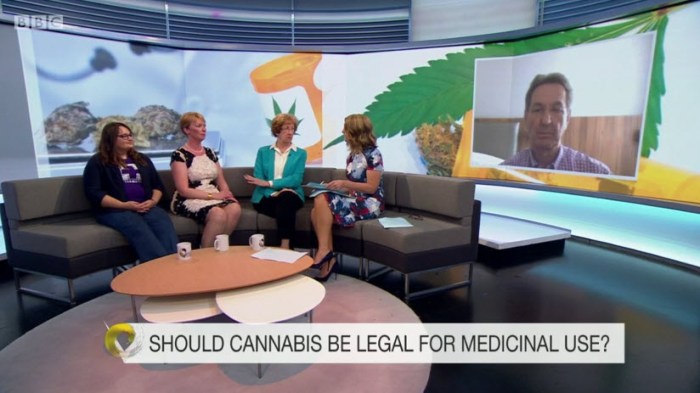
It takes a lot to get me angry these days about attitudes towards cannabis. Many people are simply misinformed and are themselves victims of a relentless propaganda campaign by governments and the gutter press. Today though I watched the Victoria Derbyshire show on catch up from last Tuesday, the day that Parliament published published its report on medicinal cannabis. In the studio were CLEAR member Lara Smith, UPA member Faye Adams and Chip Somers, described as a ‘government advisor’, was on Skype from his home in Hampstead.
You can watch the programme on BBC iPlayer here. The segment runs from 1:22:09 to 1:33.58.
Now this is the BBC, which is always pro status quo and has a dreadful record on inaccurate reporting about cannabis. It’s also the Victoria Derbyshire show, which is a long way from serious news and is more like a cross between Jeremy Kyle and Woman’s Hour – but give them credit for covering the issue
You can’t blame people who have been misinformed and whose prejudice is deeply ingrained from years of brainwashing. This applies to many MPs, journalists, even doctors and scientists. Remember, the endocannabinoid system. one of the most important physiological systems, isn’t even taught in UK medical schools, so ignorance is widespread, even amongst those you would expect to be well informed.
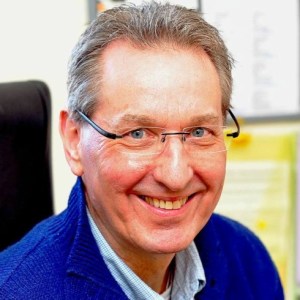
Chip Somers
There can be no excuse for this mendacious and wicked man, Chip Somers, though. He is, you will remember, the addiction therapist who grandstanded over his work with Russell Brand a couple of years ago. He advocates the total abstinence route to recovery which has been so eagerly embraced by the judgmental puritans at the Home Office and has led directly to the highest ever rate of drug overdose deaths, only released last week. Is the man simply a complete fool or is he deliberately dishonest? I think it has to be both. No one with the experience he claims could be so stupid. For some reason: misplaced morality, corrupt influence of money, government pressure, self-promotion of his therapy business – he is engaged in deception.
I’m not going to analyse every one of his miserable words. Watch him for yourself but prepare to be appalled. Suffice to say that his only tactic was to argue against medicinal use with ‘dangers’ that apply only to recreational use by children – a transparent disinformation strategy. He was also nothing less than abusive to Faye’s and Lara’s testimony and his dismissal of Professor Mike Barnes’ evidence review, which analyses 20,000 scientific papers, was just laughable.
Chip Somers is a liar, a charlatan, a confidence trickster and a deceiver. If only some such donkey of a faux therapist would seek recourse in the courts for such descriptions of him. Then we would have the opportunity to prove that he is a man of bad character and evil motivation.
Senior Conservative MP, Crispin Blunt, Joins CLEAR Cannabis Law Reform.
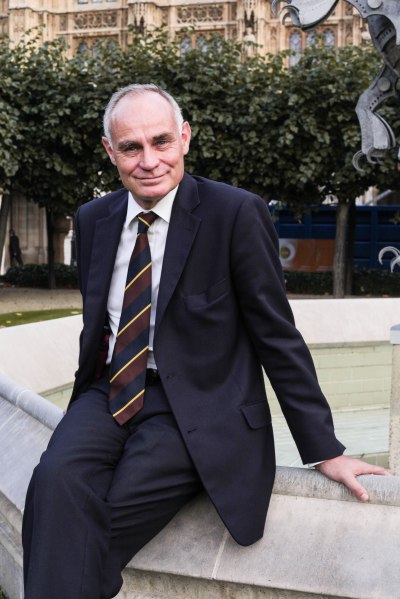 Crispin Blunt, Conservative MP for Reigate, has joined the advisory board of CLEAR Cannabis Law Reform as political advisor.
CLEAR is the largest drug policy reform group in the UK with more than 685,000 registered supporters. It was formed in 1999 and its main aim is to “To promote as a matter of urgency and compassion the prescription of medicinal cannabis by doctors.”.
Crispin Blunt is a graduate in politics from the University of Durham and an ex-Army officer. He has represented the constituency of Reigate, Surrey as a Conservative MP since 1997. He is presently chair of the foreign affairs select committee.
He commented on his appointment:
“I am pleased to join the board of CLEAR. It is wrong that people with a range of conditions are missing out from medicinal benefits of cannabis because of the UK’s out-of-date drug laws. We need a new approach and a sensible regulatory system to support patients and their healthcare professionals in accessing safe and effective medicinal cannabis products.”
Mr Blunt’s appointment comes a few days in advance of the publication of a Parliamentary report on medicinal cannabis. It is to be announced in the House of Lords, committee room 2 at 11.00am on Tuesday 13th September 2016. Alongside the report, Professor Mike Barnes, the world-renowned neurologist, who is also a member of the CLEAR advisory board, will be publishing a comprehensive review of the evidence of the medicinal applications of cannabis.
Peter Reynolds, president of CLEAR, said:
“This is what we need, a forward-thinking, Conservative MP, Crispin Blunt, alongside an eminent scientist and clinician, Professor Mike Barnes. Very shortly, we will also be appointing a human rights barrister to our advisory board. We aim to shake up the cruel, anti-evidence policy that denies British people access to cannabis as medicine. The UK is in the dark ages on this compared to most of Europe, the USA, Canada, Israel and Australia.”
CLEAR Member Lara Smith To Be ‘Star Patient’ In Parliamentary Report On Medicinal Cannabis.
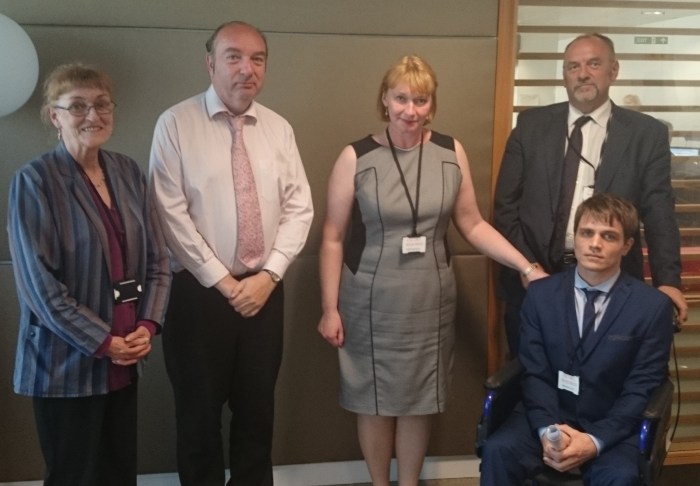
Vicky Hodgson, Norman Baker, Lara Smith, Peter Reynolds, Nick Ellis. CLEAR meeting at Home Office, July 2014.
The launch of the APPG report on its inquiry into medicinal cannabis is a public event which anyone can attend. It takes place at the House of Lords committee room 2 on 13th September 2016 at 11.00am.
Baroness Molly Meacher and Caroline Lucas MP, are co-chairs of the APPG. The guest speakers will be:
Frank Field MP
Ron Hogg, Police and Crime Commissioner for County Durham
Professor Mike Barnes, Neurologist, CLEAR Scientific and Medical Advisor
Lara Smith, Medicinal Cannabis Patient, Life Fellow of CLEAR

Lara Smith
Lara was awarded a Life Fellowship of CLEAR in August 2014 in recognition of her enormous contribution to our campaign. She suffers from a terrible chronic pain condition which is only relieved by cannabis. Her consultant is one of those few courageous doctors in the UK who have supported their patient by prescribing access to Bedrocan medicinal cannabis products. Using the protocol which CLEAR pioneered, which exploits loopholes in the Misuse of Drugs Act 1971, Lara now gains legal access to Bedrocan products on a regular basis. She has to travel to the Netherlands in person to collect her medicine every three months and it has to be paid for on a private basis. The important thing is she gets the medicine she needs and she is within the law.


