Peter Reynolds

The life and times of Peter Reynolds

Posts Tagged ‘cannabis

Legal Medicinal Cannabis In Britain

with 92 comments

In The Pink

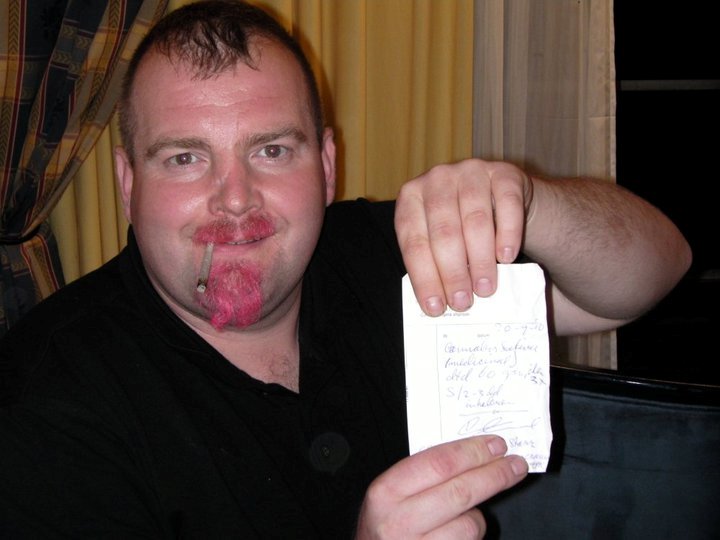
Last week Jim Starr flew into Bristol Airport from Amsterdam carrying 80 grammes of herbal cannabis as prescribed for him by a Dutch doctor.  That’s just under three ounces of dried flower heads.  He was carrying it in a parcel about the size of a telephone directory.

There was no one at customs, even though Jim went through the red channel and had telephoned ahead to advise the airport that he was bringing the cannabis in.  He waited, even looked around for someone, anyone, but there was no one to be seen at all.  He wanted to declare what he had with him.  He’s never wanted to break the law.  He knew that he was risking confiscation of the cannabis, possibly even arrest but the coast wasn’t just clear, it was deserted.  The authorities had evidently decided that in their “war on drugs”, this time, discretion was definitely the better part of valour.  They were in full scale retreat.

Jim had confirmed to the airport that he had the necessary paperwork to prove it was prescribed medicinal cannabis.  His doctor had told him that he was protected under Article 75 of the Schengen Agreement which states “persons may carry the narcotic drugs and psychotropic substances that are necessary for their medical treatment provided that, at any check, they produce a certificate issued or authenticated by a competent authority”
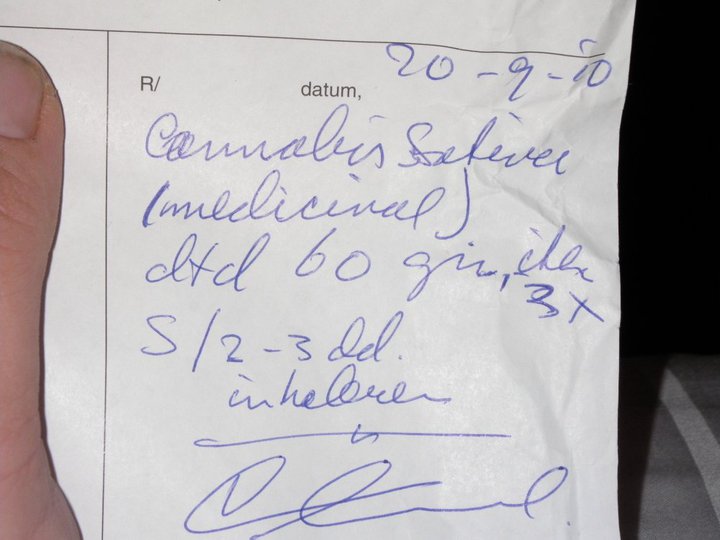
Prescription

Of course, even then, it didn’t stop the journey being a nerve wracking and tense experience.  Now, safely at home in Dorchester with his family, Jim understands from the Home Office that he is entitled to bring in the cannabis as prescribed for him by his Dutch doctor.  He can bring in up to three month’s supply at a time if he carries it on his person. Otherwise he has to apply for an import licence and have it shipped to a UK pharmacist.

Jim is 36 and is married to Emma, with whom he has two children.  Originally from Birmingham, he was a very active man in full time employment until in 1999 he was diagnosed with a degenerative disease of the spine.  In 2003 he was involved in a road accident and suffered terrible spinal injuries. His life seemed hopeless. The cocktail of powerful drugs he was prescribed, including morphine, were debilitating in themselves.  He couldn’t face a future in which he was turned into a zombie, unable to enjoy any sort of decent life with his wife and children. He admits frankly that he was suicidal.

One day in 2004, Jim was upstairs in bed in so much pain and despair that he could barely move.  A friend called round to see him and offered him a joint. Half an hour later Jim made it downstairs for the first time in three weeks.  Suddenly he had hope and the possibility of a future with his family.

Life since then has been a constant game of cat and mouse with the police and drug dealers.  Apart from risking arrest and even prison, Jim has also been in danger of being robbed or ripped off by dealers. He’s never wanted to break the law. He told his doctor the relief that cannabis provided and as soon as Sativex became available, even before it was officially licensed, his doctor prescribed it for him. Unfortunately, the very next day she rang to say that because of licensing and regulation problems she wouldn’t be able to prescribe it again.  In fact, Jim did manage to get another prescription for Sativex but again it was withdrawn, this time because his health authority refused to fund it.

Jim has been an active campaigner for the legalisation of cannabis ever since.  He has organised a series of marches, protests and petitions in Dorchester, Weymouth and even Downing Street. Over the last seven years, three MPs, Oliver Letwin, Jim Knight and Richard Drax, have written various letters in support of him.  He is a distinctive figure in his wheelchair with his dyed beard which has earned him the nickname “Pinky”.  Perhaps he has been a little too high profile for the Dorset police who he accuses of persecuting him.  Unable to obtain Sativex or afford the prices and risks of dealers, Jim enlisted the help of a friend to grow his own medicine. Inevitably, in May 2009 the police arrived and Jim was arrested.
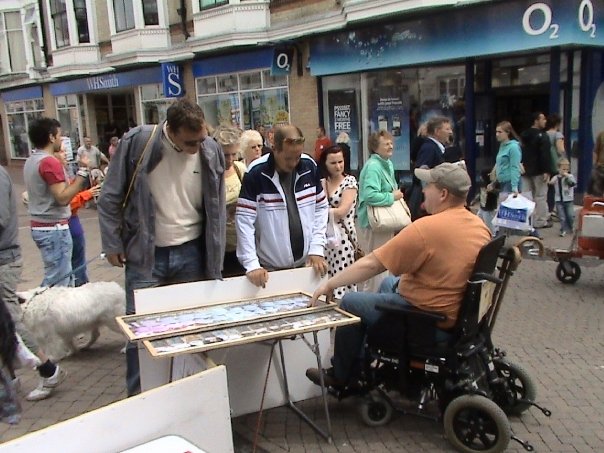
Campaigning

In August this year at Dorchester Crown Court Jim was given a two year conditional discharge for growing cannabis. He is now pursuing a complaint against the police alleging brutal treatment during his arrest.  Other complications, allegedly at the police’s behest, have led to the DVLA revoking his driving licence although he has never been arrested, charged, convicted or even stopped on suspicion of driving under the influence.

Jim has become an avid recorder of everything.  He uses mobile phones, video cameras and audio recorders to retain evidence of every contact with the authorities.  He has a video recording of an officer saying to his wife “Look luvvy, whatever he grows up there from now on is up to him.  We promise it don’t bother us”.  Foolishly, he took the officer at his word.  Three weeks after receiving his conditional discharge the police arrived again.

There was no provision for transporting him to the police station in his wheelchair.  The officers were warned not to lift him by his arms because of his spinal condition.  They wrenched him out of his chair by gripping his shoulders and underpants causing anal bleeding due to an existing condition. He was refused a doctor at the station. There was no provision for disabled people, even for his special toilet needs.  He was refused access to any of his prescribed medication or even his specialist anti pressure sore mattresses.

The following day he attended hospital and was diagnosed with torn shoulder muscles.  In fact, his spinal column is so delicate that any movement could potentially paralyse him. This is the basis of all his high profile campaigning and must be well known to the police.  Jim now faces another charge of cultivating cannabis and a possible prison sentence.

With Mr Nice

The trip to Holland was a last resort, only made possible by the generosity of a friend.  The Dutch doctor was horrified at the range of highly toxic prescription medicines given to Jim and prescribed two grammes per day of medicinal herbal cannabis.  He told Jim that he shouldn’t be using Sativex as the alcohol in its solution was like pouring petrol on a fire, given his medical conditions.

So at last, Jim seems to have the medicine he needs.  He will have to continue to rely on the generosity of friends to pay for it.  He is applying for a Home Office licence for the cannabis to be imported to a local pharmacist who can then dispense it to him.  He will continue to campaign for the right to grow his own for free.  The costs of cultivation at home are minimal compared to the rigmarole of importing from Holland or the massive “Big Pharma” cost of Sativex.

Jim is not the first person to get the medicine they need in this way but he is the first to go public about it.  Many tens of thousands may now wish to follow his example.  Most European countries and 15 US states already regulate the provision of medicinal cannabis. Surely it is time for the government to consider reform of what looks increasingly like an absurd and cruel law.

Alcohol And Cannabis. Putting Drugs In Perspective.

with 2 comments

I am not a fan of embedding YouTube clips unless they’re about films or music.  I’ll make an exception for these two though.  They make a very important point very powerfully.

The first is a very short US TV commercial with an anti-drugs messsage.   The second is a witty, incisive stand-up routine that knocks the pomposity, arrogance and stupidity of our drug laws for six.

Written by Peter Reynolds

September 17, 2010 at 11:29 am

Spectacular Spectator Drivel On Cannabis

with 13 comments

Melanie Phillips

A Zionist, Labour supporting, Daily Mail journalist – it’s hardly a good start is it? I should have known better than even to start reading her article in The Spectator.

This woman is a dangerous liar and propagandist.  Astonishingly, with breathtaking hypocrisy in promoting the most dangerous of drugs, The Spectator describes itself as “Champagne for the brain”.

Here is her article, reproduced without kind permission of The Spectator and my letter to the editor in response.

Yesterday morning, BBC Radio Four’s Today programme broadcast an interview with a professor of neuropharmacology, Roger Pertwee. Prof Pertwee was making an eyebrow-raising suggestion – that cannabis use should be licensed. His argument was as incoherent as it was irresponsible. He maintained, repeatedly, that all he wanted to do was to reduce the harm done by cannabis – from dangers which he appeared to define merely as smoking an adulterated form of the drug, or getting lung cancer from smoking it. So he wanted to restrict it to people whom it ‘wouldn’t harm’. They would use it in other ways than smoking it, so they wouldn’t get cancer. They would go along to their GP who would pronounce them fit enough to use it.

Hello?!?

What about the harm that we know is done by cannabis itself to the brain — to cognition, to memory, to motivation, to personality? What about the tremendous increase in psychosis caused by cannabis use? What about the harm it does to other people in the user’s ambit?

Yes, said Prof Pertwee, indeed, his scheme wouldn’t reduce the harm done by cannabis itself.

What about all those millions more young people who would start using the drug and become addicted and do themselves and other people all that harm?

Yes, stammered Prof Pertwee, that would indeed be an enormous problem with his scheme. But all he wanted to do was, er, to reduce the harm. And when he’d chased his own tail round that pointless circle a few times, he fell back on ‘all I want to do is stimulate discussion’.

In short, it was a stupid and dangerous idea which even in its own terms made no sense whatever. Why on earth was this professor of neuropharmacology spouting such self-evident drivel on the BBC that even he himself had to keep demurring at his own argument?

What the BBC didn’t tell us was that Prof Pertwee was not some dispassionate expert who just happened to breeze into the studio with a cockeyed idea about turning GPs into cannabis pushers.

Prof Pertwee is Director of Pharmacology of GW Pharmaceuticals – which has a special Home Office licence to market a cannabinoid medicine called Sativex which is used to treat certain medical conditions.

His embargoed press release even said of his proposal:

‘I think this might be the way forward, but it might not work…  It depends on a private company being willing to produce a branded product’.

But it’s his own company which is best placed to do just that! In other words, the Today programme – as a result of its own lazy and frivolous bias in favour of drug legalisation,  which presumably meant it didn’t do due diligence in researching its interviewee because he had the Correct Opinion on drug policy – was played for a sucker by Big Pharma. It was used to give prime air-time to a piece of commercial advocacy which was passed off as a neutral policy discussion. Except that the product being promoted here wasn’t soap powder, but a drug that enslaves.

Who needs cannabis when the Beeb is so dopey already?

—– Original Message —–
From: Peter Reynolds
To: letters@spectator.co.uk
Sent: Thursday, September 16, 2010 11:20 AM
Subject: Melanie Phillips, The Dopey Beeb, 15th September 2010

Dear Sir,

The disgraceful display of ignorance and propaganda about cannabis by Melanie Phillips cannot be allowed to stand unchallenged.

Her biogtry plumbs new depths of scandalous nonsense.

In the 1930s they used to say that cannabis makes white women promiscuous with black men. Ms Phillips continues on this shameful path of crass misinformation. She needs to do some research before inflicting her ignorance on readers any further.

I agree that Professor Pertwee was incoherent but he is an academic, not a professional communicator.  At least he was dispensing facts. Ms Phillips’ diatribe was, to say the very least, economical with the truth.

Cannabis does not harm the brain or damage cognition, memory, motivation or personality – at least no more than breathing oxygen does and a whole lot less than any other recreational drug.  The phrase “tremendous increase in psychosis” is just a bare-faced lie and that it harms “other people in the user’s ambit” is the very worst sort of journalistic hogwash.

By all means, Ms Phillips, wallow in your own deluded opinion but don’t use your position to spead such wicked, dangerous nonsense.  You should be ashamed of yourself!

Authoritarian scaremongers, political cowards and cheap scandal-seeking journalists have been urging scientists to prove that cannabis is harmful for well over 100 years.  They haven’t succeeded yet.  On the contrary, all the latest research proves that cannabis is a remarkably benign substance yet with some extraordinary medicinal properties. The endocannabinoid system, which was only discovered in 1998 is now known to be fundamental to life and good health.  The only source of cannabinoids outside the body is the cannabis plant.

I used to have time for Melanie Phillips and some degree of respect for her opinion.  I see now that she is just the same as any tabloid hack who cares not one jot for the truth, merely for cheap sensation and worthless rhetoric.

Yours sincerely,

Peter Reynolds

Home Office Drugs Strategy Consultation – My Response

with 14 comments

The Home Office has called for responses to its Drugs Strategy Consultation document.  See here on the Home Office website.

It is almost universally accepted that “consultation” is a euphemism for “your opinion will be ignored but we want it to look like we listened to you”.  This is a classic example of that sort of thinking.  Judge for yourself  by reading the introduction.  It is clear that ministers and civil servants have already made their mind up on many issues just by the way that the questions are phrased.

Nevertheless, this is what passes for democracy in Britain and it is vital that as many people as possible respond.  You can do so by post, email or online form. It is all set out on the website.  I offer my response here as raw material.  Please feel free to copy and use all or part of it as you wish.  Just make sure that you do make a submission.

I have answered all the questions where I feel I have something useful to say.  It dosn’t matter if you only answer one or two.  Please don’t let the Home Office get away with a whitewash.  With sufficient responses and future Feedom Of Information requests we will be able to advance the cause of rational and progressive drugs policy.

Question A1: Are there other key aspects of reducing drug use that you feel should be addressed?

* Yes

Please outline any suggestions below

The entire basis of this question is flawed. Prohibition of drug use is a failed strategy as now acknowledged by experts and leaders all over the world. So much of the subject is mired in semantics and prejudice rather than being addressed in a logical and responsible manner with fact and evidence-based policies.

Drug use can never be eliminated.  In fact, use of alcohol and tobacco, two of the most dangerous drugs, is legally promoted.  Drug misuse is, by definition, to be deplored but unless there is an acceptance of responsible drug use, then corresponding guidance or regulation to prevent misuse cannot work.

The key question, as established by parliament with the Misuse Of Drugs Act 1971 (MODA), is to how to reduce the harms of drug use.  This is the basis of the Act and of the drug classification system which is supposd to indicate the relative harms of drugs based on the advice of the Advisory Council on the Misuse Of Drugs (ACMD).

Regrettably the classification system is now entirely discredited for two principle reasons:

1. Failure to include the two most widely used drugs, alcohol and tobacco

2. Failure to classify drugs on a scientific basis, instead allowing political considerations and opinion to intrude where only facts and evidence should apply

The result is that government messages on drugs are widely regarded as incredible and as propaganda rather than good sense.  Young people in particular see the evidence of their  own eyes and experience as more useful and credible than government messages, especially in the case of drugs such as cannabis and ecstasy where their relative harmlessness is self-evident.  Government campaigns such as Frank are widely ridiculed and both counterproductive and a complete waste of money.

Question A2: Which areas would you like to see prioritised?

Please select as many as apply

* Greater ambition for individual recovery whilst ensuring the crime reduction impact of treatment.
* Actions to tackle drugs should be part of building the “Big Society”.
* A more holistic approach, with drugs issues being assessed and tackled alongside other issues such as alcohol abuse, child protection, mental health, employment and housing.
* Budgets and responsibility devolved wherever possible, with commissioning of services at a local level.
* Budgets and funding streams simplified and outcome based.
* The financial costs of drug misuse reduced.
* None of them.

This is an astonishingly meaningless question, a little like asking “do you approve of motherhood and apple pie?”

It would be foolish to disagree with any of these ideas.

The main area I would like to see prioritised is that drugs strategy, policy, information and education should be fact and evidence based.  The National Audit Office and the Public Accounts Committee have both criticised government for failing to implement an evidence-based drugs policy and instead giving more weight to opinion.  This is a dreadful indictment of how successive governments have, in fact, contributed to and increased drug harms.  It is now a well established and proven truism that drug laws cause more harm than drugs themselves.

I would propose a five point drugs strategy aimed at reducing harms as follows:

1. An end to oppression of drug users (at least six million citizens)
2. Removal from the criminal law of any offence for possession and/or social supply
3. Fact and evidence-based policy, information and regulation
4. Re-direction of law enforcement resources against real criminals
5. Treat problematic drug use as a health issue

I would also propose that the overwhelming response on drug laws to the Your Freedom website should be included in this consultation. Top priority should be given to the massive outcry from the public for the removal of drugs from the criminal law and the more rational, fact and evidence-based regulation.

The question of cannabis needs urgent attention.  All experts agree that the harms from its illegality are greater than from the drug itself. According to Home Office figures, there are six million regular users in the UK. Recent research shows that more than 70% of the public want to see some form of legalisation.  The laws against cannabis no longer have public support, particularly in the case of medicinal use, yet the cost of unsuccessfully attempting to enforce them amounts to many billions in wasted public expenditure.  This is a national scandal of monstrous proportions which must be ended.

Question A3: What do you think has worked well in previous approaches to tackling drug misuse?

There is almost nothing that the government has done that has worked well in tackling drug misuse.  On the contrary, almost all government policy has increased the harms caused.

There have been some pilot projects in providing clean, safe environments where opiate addicts have access to a regulated supply and clean needles that have reduced harms.

Question A4: What do you think has NOT worked so well in previous approaches to tackling drug misuse?

Government drugs policy has been a disaster in almost every way, consuming more and more resources to less and less good effect.  It has been almost entirely counterproductive and has led to complete distrust of government information, alienation of users from society in general  and brought the law into disrepute.

Prohibition has not worked.

Misinformation and propaganda that distributes lies and untruths about the relative harms of drugs has not worked.  In fact, it has led to more harms and more deaths.

Criminalising huge numbers of citizens has not worked and has created disaffection and seriously damaged democracy.

Question B1: What are the most effective ways of preventing drug or alcohol misuse?

The only effective way of preventing drug or alcohol misuse is education.  This should be accompanied by a system of regulation and controls which is fact and evidence based and has widespread public support.

Question B2: Who (which agencies, organisations and individuals) are best able to prevent drug or alcohol misuse?

The government is entirely discredited when it comes to offering any sort of advice on these subjects because it has a long history of mistakes, misinformation and propaganda.  Everyone knows that you can’t trust what the government says about such matters because it almost always places political expediency above the truth.

Schools, teachers, ex-addicts and parents are best able to prevent drug and alcohol misuse.  They need fact and evidence-based support and information.  The last thing they need is government direction or interference as this is widely seen as unbelieveable and incredible.

Question B3: Which groups (in terms of age, location or vulnerability) should prevention programmes particularly focus on?

There should be no such thing as a “prevention programme”.  The most vulnerable group is clearly young people.  Tell them not to do something and you immediately increase its appeal.  This question demonstrates how utterly out of touch, insensitive and hamstrung is current Home Office thinking.

Education programmes should focus particularly on young people.

Question B4: Which drugs (including alcohol) should prevention programmes focus on?

* Those that cause the most harm
* Those that are most widely used
* All drugs

Please explain your view below

There should be no such thing as a “prevention programme”.  Education programmes should cover all drugs but focus on those that cause most harm.

Question B5: How can parents best be supported to prevent young people from misusing drugs or alcohol?

The best way of supporting parents is by creating an environment in which drugs policy is accepted as being rational, sensible and based on facts and evidence rather than propaganda.  It is vital that fact and evidence-based information is widely available.

Question B6: How can communities play a more effective role in preventing drug or alcohol misuse?

Communities will naturally come together to prevent drug misuse if we create an environment in which drugs policy is accepted as being rational, sensible and based on facts and evidence rather than propaganda.  At present, drug laws and policies create an “us and them” culture where injustice and hypocrisy brings the law into disrepute and alienates people who do not comply.

Question B7: Are there any particular examples of prevention activity that you would like to see used more widely?

There is nothing being done in terms of”prevention activity” that should be continued.  Education, based on fact and evidence-based information is the key.

Question B8: What barriers are there to improving drug and alcohol prevention?

The biggest barrier to improving prevention of drug misuse is government policy which is widely understood not to be based on facts and evidence but on political expediency and propaganda.  The lack of fact and evidence-based information and education is also a major barrier.

Question C1: When does drug use become problematic?

Drug use becomes problematic when it interferes with people conducting their everyday lives and reaching their full potential or the ability of others to do the same.

Question C2: Do you think the Criminal Justice System should do anything differently when dealing with drug-misusing offenders

The Criminal Justice System should not be involved in dealing with drug misuse at all.  This should be a matter for healthcare. Drug misuse in itself should not be a criminal offence.

Where offences are committed while under the influence of drugs, or in order to feed a drug addiction, providing appropriate healthcare has been offered, then drug use should not be a mitigating factor. In such instances, the offender should always be referred for healthcare alongside any sentence.

Question C3: Do you have a view on what factors the Government should take into consideration when deciding to invoke a temporary ban on a new substance?

* Yes

Please explain your views below

The most important factors would be those of scientific fact and evidence to be determined by a strengthened, properly funded and independent Advisory Council On the Misuse Of Drugs or equivalent.

It is most important to consider the “glamourising effect” of banning a substance.

I congratulate the Home Office on its statement that  “Possession of a temporarily banned substance for personal use would not be a criminal offence to prevent the unnecessary criminalisation of young people”.  This demonstrates a new depth of thinking and intelligence that is very encouraging.

Question C4: What forms of community based accommodation do you think should be considered to rehabilitate drug offenders?

Drug use should not be an offence in itself.  Clearly as part of healthcare, community-based accommodation should be available for those suffering from problematic drug use.

Question C5: Where do you think we most need to target enforcement efforts to reduce the supply of drugs?

Enforcement efforts to reduce the supply of drugs are futile unless a legitimate, regulated source of supply is available.

Once a regulated source of supply is available, illicit sources will become less of a problem.  Enforcement efforts could then be targeted in a similar way to current policies against illicit supply of alcohol, tobacco and prescription only medicines.

Question C6: What else do you think we can do to keep one step ahead of the changing drugs markets?

The most important thing do do is to end the failed and demonstrably ludicrous policy of prohibition.  The solution is a system of fact and evidence-based regulation including a a strengthened, properly funded and independent Advisory Council On the Misuse Of Drugs or equivalent.

Question C7: Which partners – in the public, voluntary and community sectors – would you like to see work together to reduce drug related reoffending in your local area?

What does “drug related reoffending” mean?

Drug use in itself should not be an offence.

Offences related to drugs should be dealt with by healthcare intervention as well as the criminal justice system.  If appropriate healthcare has been offered then drugs should not be a mitigating factor in sentencing.

Question C8: What results should be paid for or funded?

No comment

Question C9: What measures do you think should be taken to reduce drug supply in prison?

Those prisoners with a drug addiction should have access to healthcare and regulated supply just as any other citizen.   Just as in society in general a regulated supply would greatly reduce if not eliminate the problem of illicit supply.

Recreational use of drugs in prison should be strictly controlled.  Tobacco is presently allowed but not alcohol.

As an observation, it is tragic to note how existing policies have promoted the use of heroin in prison.  Under the drug testing regimes, cannabis can be detected in urine for up to 28 days and so its use has been largely eliminated.  However, heroin flushes through the system in less than 48 hours so its use has increased.  This is a vivid demonstration of the idiocy of present policies which have led to replacement of a relatively harmless substance with one that has potential to cause great harm.

Question C10 (if applicable): What impact would the measures suggested have on:

* a) offenders?
* b) your local community?

No comment

Question D1: Thinking about the current treatment system, what works well and should be retained?

No comment

Question D2: Thinking about the current treatment system, what is in need of improvement and how might it need to change to promote recovery?

I have no specific expertise in this area but I understand that treatment for problematic cocaine use is extremely limited and in desperate need of investment.  While not physically addictive, cocaine and particularly crack cocaine is overwhelmingly compulsive and can lead to violent behaviour.  Comparatively, treatment for opiate addicton is well established and understood.  More resources need to be put into developing treatments for problematic cocaine use.

Question D3: Are there situations in which drug and alcohol services might be more usefully brought together or are there situations where it is more useful for them to be operated separately?

Services need to be client-centered. Lumping together alcohol, opiate and cocaine services for the convenience of the providers is counterproductive. Someone who drinks too much wine in the evening at home may be deterred from attending a centre where opiate addicts are injecting. Similarly, a high-earning cocaine user may not want to associate with street drinkers.

Question D4: Should there be a greater focus on treating people who use substances other than heroin or crack cocaine, such as powder cocaine and so called legal highs?

* Yes
* No

Please explain your response below

The only rational response to any problematic drug use is to treat it as a health issue, therefore treatment should be available for all substances.  The question betrays a worrying naivety as cocaine use can be problematic as powder, crack or both.  “Legal highs” is a completely meaningless term which may range from something as harmful as heroin to something as benign as cannabis.

Question D5: Should treating addiction to legal substances, such as prescribed and over-the-counter medicines, be a higher priority?

* Yes
* No
* Don’t know

Please explain your response below

No.  The drugs strategy should be about minimising harms not making some moral judgment on people based on one point of view.  This is a dreadful suggestion.

Question D6: What role should the Public Health Service have in preventing people using drugs in the first place and how can this link in to other preventative work?

Fact and evidence-based information and education.

Question D7: We want to ensure that we continue to build the skills of the drug treatment and rehabilitation sector to ensure that they are able to meet the needs of those seeking treatment. What more can we do to support this?

Stop wasting money on futile attempts at enforcement of out of date, counterproductive laws. Prohibition is an entirely failed policy and, according to Baroness Meacher in the House Of Lords on 15th June 2010 is costing Britain £19 billion per annum.

Problematic drug use should be dealt with as a health problem.  With billions saved from wasted law enforcement costs and additional tax revenue from a regulated supply system, there will be a bonanza of funds available for drug treatment and rehabilitation services.

Question D8: Treatment is only one aspect contributing to abstinence and recovery. What actions can be taken to better link treatment services in to wider support such as housing, employment and supporting offenders?

Stop criminalising drug users, imprisoning them and treating them as offenders.  They are not.  They are people who choose to use a drug that has arbitrarily been deemed illegal usually for unscientific reasons.

Question D9: How do you believe that commissioners should be held to account for ensuring that outcomes of community-based treatments, for the promotion of reintegration and recovery, as well as reduced health harms, are delivered?

No comment.

Question E1: What interventions can be provided to better support the recovery and reintegration of drug and alcohol dependent offenders returning to communities from prison?

No comment.

Question E2: What interventions could be provided to address any issues commonly facing people dependent on drugs or alcohol in relation to housing?

No comment.

Question E3: How might drug, alcohol and mental health services be more effective in working together to meet the needs of drug or alcohol dependent service users with mental health conditions?

No comment.

Question E4: Do appropriate opportunities exist for the acquisition of skills and training for this group?

No comment

Question E5 Should we be making more of the potential to use the benefit system to offer claimants a choice between:

a) some form of financial benefit sanction, if they do not take action to address their drug or alcohol dependency; or

b) additional support to take such steps, by tailoring the requirements placed upon them as a condition of benefit receipt to assist their recovery (for example temporarily removing the need to seek employment whilst undergoing treatment).

There needs to be a combination of carrot and stick adjusted to individual requirements based on healthcare needs.  Those with problematic drug use must not be allowed to fall outside society as that leads to even greater harms.  This is why it is crucial that drug use be removed from the criminal law.

Question E6: What if anything could Jobcentre Plus do differently in engaging with this client group to better support recovery?

No comment

Question E7: In your experience, what interventions are most effective in helping this group find employment?

No comment.

Question E8: What particular barriers do this group face when working or looking for employment, and what could be done to address these?

No comment.

Question E9: Based on your experience, how effective are whole family interventions as a way of tackling the harms of substance misuse?

No comment

Question E10: Is enough done to harness the recovery capital of families, partners and friends of people addicted to drugs or alcohol?

Probably not. Once prohibition is ended, with billions saved from wasted law enforcement costs and additional tax revenue from a regulated supply system, there will be a bonanza of funds available for drug treatment and rehabilitation services.

Question E11: Do drug and alcohol services adequately take into account the needs of those clients who have children?

No comment

Question E12: What problems do agencies working with drug or alcohol dependent parents face in trying to protect their children from harm, and what might be done to address any such issues?

No comment

Gender: Male
Age: 45-54
Region: South West
Occupation: Writer

Is Prof Pertwee A Home Office Plant?

with 13 comments

Is He A Plant?

As they say, with friends like these, who needs enemies?

Is It A Professor?

Seriously, or not so seriously, who is this bumbling old duffer wheeled out by the BBC for some terribly weak story that cannabis sales should be licensed?  See here.  If the BBC wants to cover this story there are at least a dozen far more expert, more eloquent, more telegenic, better informed, more sensible commentators.

Frankly, I’d rather have someone who can put a coherent argument against instead of this pathetic performance by Prof Pertwee.  Seldom have I seen any argument for any idea advanced so weakly.  I mean, who starts off talking about their proposal by saying “I don’t think it would work”!

It does raise the suspicion that the only people that want the cannabis argument put so badly is the Home Office.  There is, quite literally, no other organisation, connected with a democratic government anywhere in the civilised world that is so backwards, regressive and out of touch with the facts than the UK Home Office.  A cannabis plant would have been a more exciting interviewee than Prof Pertwee.  He must surely be a plant for what Prof. Les Iversen, the government’s most senior official drugs adviser calls “the anti-cannabis brigade”.

Maybe this is a sign that common sense has got the Home Office on the run. Its tired, inaccurate, unscientific, prejudiced  and short sighted attitude is on its very last legs.  This is either an embarrassingly bad effort by Prof Pertwee (thanks for trying) or a desperate attempt to discredit the truth.

The fact is that the argument has already been won.  I’d like to know what the “harms” are that the Professor was talking about in his interview.   There’s the tired old chitchat about mental health problems.   It’s just propaganda.  In Israel, cannabis is now recommended by doctors to help veterans deal with PTSD.  This is fact, reality, what’s actually happening, not what James Brokenshire and his cronies dream up in some bunker in Marsham Street.

I see that the story is also running in the Daily Mail.  It’s remarkable how even it, the home of hysteria, has changed its attitude on cannabis in the last year or so.  This is perhaps a better barometer of  public opinion than anything else.  When the Daily Mail starts talking common sense it must be very obvious indeed!

Even the FT is running the story.  Who knows maybe it will develop into something a bit more sensible.  The BBC just did a particularly bad job of covering it!

I do like Prof Pertwee’s recommendation of the Volcano vapouriser though.  I concur with the Professor on this.  I can tell you that after extensive personal testing I have concluded that it works very well indeed!

Home Office Backtracks On Cannabis – Part 2

with 12 comments

See the original article here.

The Home Office has been denying to me all week that it had changed its story.  It claimed that it had said “Drugs such as heroin, cocaine and cannabis are extremely harmful and can cause misery to communities across the country.”  It claimed that cannabis was never included in this statement.

Today it finally owned up.  It issued this statement at 5.18pm this evening:

A Home Office spokesperson said:

“There is clear evidence that drugs such as heroin and cocaine are extremely harmful substances.

“There is also clear evidence that cannabis is a harmful drug which can cause both physical and psychological problems. Even the occasional use of cannabis can be dangerous for people with diseases of the circulatory system, and it can contribute to heart disease and lung cancer.

“In this instance there was a drafting error with the original version of this statement, which was subsequently rectified.”

Does It Look Dangerous To You?

Now, I understand and respect the professional efforts of the Home Office PRs to damp down this story.  It just doesn’t wash though does it?

Why did it take nearly two weeks to correct this error?

Why did they try to cover up the error in the first place?

All this from a government department that emphasises how important are its “health and education messages” and that it must not send “the wrong message – to young people in particular.”

Of course, the truth is that the Home Office sends inaccurate and misleading messages about drugs all the time.  Everyone, except the Home Office ministers and mandarins, agrees that the present drug classification system is nonsense, that it amounts to nothing less than misinformation.  In fact, the Home Office is currently less than seven days away from a judicial review of its political manipulation of the Misuse of Drugs Act 1971.  The Drug Equality Alliance co-founder, Casey Hardison, has taken it upon himself to challenge the Home Secretary and the Advisory Council on the Misuse of Drugs (ACMD) in the Administrative Court for its irrational, unfair, and possibly illegal exclusion of alcohol and tobacco from control under the Act.

Even David Cameron agrees that ecstasy should not be a class A drug – see here.  The debacle and embarrassing nonsense about the ever-changing classification of cannabis destroyed Alan Johnson’s integrity for good.  Young people have been watching the government’s “messages” for years, comparing them to their own experiences and realising  that the government talks rot when it comes to drugs.  The Home Office is inconsistent, unreliable, contradictory and nothing short of dangerous when it comes to messages about drugs – as they’ve just proved, yet again.

As for the revised statement, there is evidence to show that smoking cannabis can cause the same damage to the cardiovascular system as smoking tobacco, but no one smokes anywhere near the same amount of cannabis as they do tobacco – they’d be asleep!  In fact, the very latest research shows that cannabis has an extraordinary protective effect for tobacco smokers and may actually reduce the likelihood of lung cancer.   Other recent research has also shown cannabinoids to have remarkable effects in shrinking brain, head, neck and breast cancers.

The Home Office is so far out of date it’s difficult to believe.   It still talks sensationally about the dangers of “new stronger strains of cannabis known as skunk”.   The truth is that skunk has been the predominant type of cannabis available in the UK for more than 20 years.  That’s how up to date the Home Office is.   Finally, the “psychological problems” story.  Sure, any psychoactive substance has the potential for harm but increasingly there’s evidence to show cannabinoids actually have an anti-psychotic effect.  One of the most useful applications of medicinal cannabis is in the treatment of Post-Traumatic Stress Disorder.

To those who don’t already know the facts, I say simply google your questions.  Even the Home Office, much as it might try, has not yet found a way of silencing the truth.

Cannabis Is Medicine

with one comment

It seems to be coming of age.   This is the first ever TV commercial for medicinal cannabis.  This ad first ran on FOX 40 in Sacramento, California in August.  Times are changing.   The truth will out!

Written by Peter Reynolds

September 3, 2010 at 5:11 pm

My MP, Richard Drax, To Write To David Cameron On Drugs Policy
with 21 comments

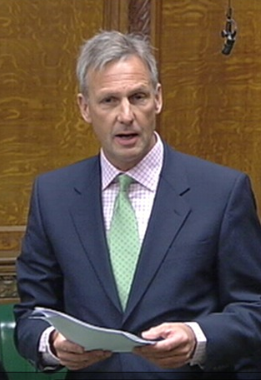
The Honourable Member For Dorset South

Today I met with my MP, Richard Drax.  He was just as sickeningly handsome and charming as I expected him to be!   So I showed him no mercy and bombarded him with my opinions for a good half an hour.

I realised afterwards that my favourite maxim “less is more” would have been a better strategy.  Nevertheless,  he did offer to write to David Cameron on my behalf on drugs policy and seemed genuinely sympathetic to some of the points I made.

I have just sent him a lengthy email in confirmation which I reproduce below.  If anyone wishes to use this as a template for a letter or email to their own MP, please feel free to do so.

******

Dear Richard,

Thank you so much for your time today.  I very much enjoyed meeting you.  As I said, I came with opinions not problems.  I am grateful to you for listening to me.

I realise that I made the classic mistake of bombarding you with far too much information and not giving you time to absorb any.  I hope I may correct that error by summarising here what we talked about.

1. Gary McKinnon. Thank heavens that progress seems to have been made on this. The idea of an “extradition” treaty that provides for someone to be sent to the USA for trial on an alleged crime committed here is iniquitous.  It’s particularly unfair in McKinnon’s case as he suffers from Asperger’s syndrome.  You pointed out to me that similar dangers exist with the new European arrest warrant.

I would urge you to do everything possible to ensure that if Gary McKinnon is to be tried, it should take place in the UK.

2. Ian Tomlinson. In my view the failure to prosecute the policeman who assaulted him is an outrage and Keir Starmer’s reasons entirely inadequate.  Now that the credibility of the pathologist in the case has been destroyed by a GMC panel, Starmer should at least reconsider and hopefully reverse his decision.

References here:


http://pjroldblog.wordpress.com/2010/08/31/killer-cop-harwood-must-be-charged/

http://pjroldblog.wordpress.com/2010/07/24/keir-starmer-the-next-lord-widgery/

I would urge you to press for a re-consideration of the decision not to bring charges.  If no criminal charges are brought, at the very least the disciplinary hearing should be held in public as the rules allow.  The Tomlinson family are entitled to justice.

3. Drugs policy. You very kindly agreed to write to David Cameron on my behalf.  I am very concerned at the conduct of the Home Office at present and particularly James Brokenshire, the Minister for Crime Prevention who is causing great damage to both the coalition governemnt and the Tory party by promoting ideas and policies that contradict virtually all expert opinion, including the government’s own scientific advisers.  He also seems to be completely at odds with the calls for drug law reform which both David Cameron and Nick Clegg have made consistently over the last 10 years.

This is not a peripheral or secondary issue.  According to Baroness Meacher in the House of Lords on 15th June 2010, “There is no more obvious waste than the £19 billion annual cost of the UK’s war on drugs”.

There is a huge amount of reference material on this subject on my blog:

http://pjroldblog.wordpress.com/?s=drugs

I would also refer you to the Transform Drug Policy Foundation which has highly detailed and almost universally acclaimed proposals for drug regulation:

http://www.tdpf.org.uk

Virtually all experts agree that the “war on drugs” has failed. In exactly the same way as alcohol prohibition in the US led to a massive increase in crime and violence, so drug prohibition has created an illegal market said to be worth £350 billion per year. It has also financed civil war in Latin America for 25 years and is the principal source of finance for Al Qaeda and the Taliban in Afghanistan. Our soldiers are dying every day because of the illegal trade in opiates.  Why don’t we just buy up the whole crop for the next 10 years?  It would be much cheaper in both cash and lives than the Afghan war.

Virtually all experts agree that regulation would be a better solution.  I have distilled the following five point plan from everything that I have read and learned over more than 30 years:

1. An end to oppression of drug users (at least 10 million UK citizens)
2. Removal from the criminal law of any offence for possession and/or social supply
3. Fact and evidence-based policy, information and regulation
4. Re-direction of law enforcement resources against real criminals
5. Treat problematic drug use as a health issue

Five years ago, while campaigning for the Tory party leadership, David Cameron called for “fresh thinking and a new approach” towards drugs policy and said that it would be “disappointing if radical options on the law on cannabis were not looked at”. Nick Clegg has promised to repeal “illiberal, intrusive and unnecessary” laws and to stop “making ordinary people criminals”. There can be no better example of this than the laws against personal use and cultivation of cannabis, particularly for medicinal reasons. The coalition government’s new Your Freedom website has been inundated with proposals to legalise cannabis and to end the futile war on drugs.   In July a poll carried out for the LibDems showed 70% of people in favour of legalising cannabis.

The Home Office and James Brokenshire are completely out of touch with expert and public opinion as well as the declared views of both the Prime Minister and the Deputy Prime Minister.

In my view, regulation means tighter control on the most dangerous drugs such as heroin, cocaine and alcohol and lighter regulation on relatively harmless substances like cannabis and ecstasy.

There is also the very important question of medicinal cannabis.  The discovery of the endocannabinoid system in 1998 has led to an ever-escalating volume of evidence of the medicinal value of cannabis.  In June the MHRA approved Sativex as an MS medicine in the UK.  It is a whole plant extract yet presently, the Home Office refuses to consider a regulated system of the plant itself for medicinal purposes.  This is completely irrational and absurd.  The House Of Lords scientific committee recommended such a system should be introduced 12 years ago.  Medicinal cannabis is available and regulated throughout almost all of Europe, Israel and 14 states in the USA (with 12 more in the planning stage).  The UK stands almost alone in its obstinate refusal even to consider such a system.

Already this is leading to quite obscene injustices where patients have been prescribed Sativex by their doctor but their health authority has refused to fund it and patients are then facing criminal prosecution for cultivating their own plants.  There is a case of exactly this going on in the Dorchester Crown Court at present and the CPS insists it is in the public interest to prosecute!

Thank you once again for listening to me Richard. I hope these notes are useful in composing your letter to David Cameron and I look forward to hearing from you in due course.

Kind regards,

Peter Reynolds

Home Office Backtracks On Cannabis

with 26 comments

A fortnight ago Sir Ian Gilmore, the outgoing president of the Royal College of Physicians, famously denounced drugs prohibition as a failed policy.   He said “”Everyone who has looked at this in a serious and sustained way concludes that the present policy of prohibition is not a success.”  He then went on to advocate decriminalisation and regulation.

The Home Office immediately issued a statement saying “‘Drugs such as heroin, cocaine and cannabis are extremely harmful and can cause misery to communities across the country.”   This statement was reproduced on the Home Office website and has sat there for the last two weeks in direct contradiction to the governments own scientific advisers.  Anyone who has even the smallest knowledge of the subject knows that the idea that cannabis is “extremely harmful” is absurd and a lie.

Within the last day or two the Home Office website has been quietly edited to remove the word cannabis from the statement.  See here.

Charades, Fibs And Porkies

This correction is very welcome.   However it calls into question the honesty, competence and intelligence of the Home Office and the government’s drugs policy.  James Brokenshire, the Minister for Crime Prevention has been looking increasingly ridiculous in the last few weeks, contradicting his advisers, spouting pre-Reagan “war on drugs” propaganda and conflicting terribly with the wise words of both David Cameron and Nick Clegg, both of whom have called for drug policy reform consistently over the last 10 years.   Young James has made himself very unpopular with the country’s six million regular cannabis users and embarrassed the government and the Tory party with his antics.

Whoever was responsible for this smart and very discreet editing, let’s hope they get to have a look at James’ Drugs Strategy consultation document too.  It needs some intelligent correction and adjustment as well.  See here for more information on what’s really a very silly game of charades, fibs and porkies.

“Outrageous Scaremongering” Over Cannabis

with 15 comments

Last October,  36-year old Julie Ryan was found dead in bed by her three children, now aged 14, 13 and 8.  At a coroner’s inquest in Oldham last week, pathologist Dr Sami Titi said “The direct cause of her death was cardiac arrest because of a history of smoking cannabis”.

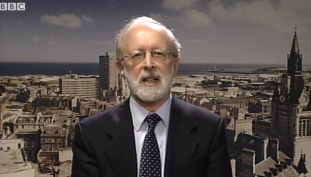
Dr Sami Titi

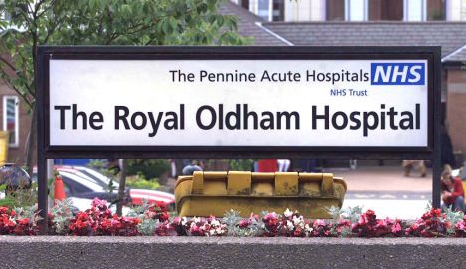
Julie’s family claims that this is not true, that Julie’s cannabis use has been blamed because the Royal Oldham hospital failed to treat her properly. In Britain, there has only been one previous occasion when a death has been attributed to cannabis. In 2004, Lee Maisey, 36 of Pembrokeshire, who smoked half a dozen “joints” a day, was found dead on his living room floor after complaining of a headache.

At the inquest in Oldham, the coroner, Simon Nelson, was said to be surprised at the pathologist’s story and questioned him closely. Dr Titi insisted that “smoking of cannabis is well known to have a negative impact on the heart and can cause heart attacks in young people”. The coroner said that in 15 years he had never heard a pathologist so confident that cannabis could be fatal. He recorded a narrative verdict of “death from cardiovascular complications induced by cannabis smoking”.

Coroner Simon Nelson

Julie’s brother, Kevin Ryan, says that the pathologist’s remarks are “outrageous scaremongering”. Her mother, Linda, is bewildered by events. As planned, Julie’s children had stayed with her while the inquest was taking place. Now they have returned home to the furore of this extraordinary verdict and are extremely distressed.

Julie had visited the Royal Oldham hospital several times complaining of chest pains but been sent away with a diagnosis of heartburn. The post mortem examination revealed she had a severely enlarged heart and had suffered a previous heart attack which had not been diagnosed. Family sources said “It’s a cover up. Cannabis doesn’t kill. They made a big mistake.” Mary Burrows, Julie’s cousin, who was very close to her, said she preferred to smoke cannabis rather than have a drink and that “she was a wonderful mother and her kids miss her so much”.

Dr Mark Eckersley, a local Manchester doctor, said “More and more pressure is being piled on medical professionals to propagate this type of untruth by the powers that be.” He said doctors need to maintain credibility with the community and that “this type of nonsense makes my blood boil”.

A spokesman for the Royal Oldham hospital said “Miss Ryan died from a heart attack and cardiovascular problems. Our thoughts and sympathy go to her family.”

On 2nd November in California, Proposition 19 is expected to permit the personal use of cannabis for the state’s 28 million adults. As a result, new tax revenues of $1.4 billion are anticipated, up to 110,000 new jobs and a boost of up to $18 billion to the state’s economy from spin-offs such as coffee shops and tourism.

In America, any health concerns about the plant are far outweighed by health benefits. Medical cannabis is already regulated in 14 states with another 12 in the planning stage. In Britain, Sativex, a whole plant extract of cannabis, was recently authorised as a treatment for MS. It costs about eight times what medical cannabis costs in America, Holland, Spain, Israel and very shortly Germany, where there is a fully regulated supply chain. In Britain, despite a House Of Lords Scientific Committee recommendation, the government refuses to consider such a move. Many patients whose doctors have prescribed Sativex have been denied funding from their health authority. In some of these cases, criminal prosecutions have been brought against them for cultivating their own plants.

A spokesman for GW Pharmaceuticals, developers of Sativex, said “The therapeutic ratio for cannabis is so high that it is virtually impossible to ingest a fatal dose”.

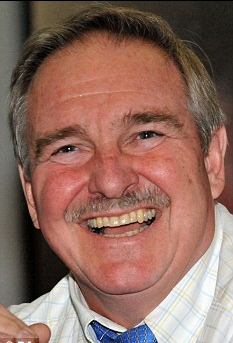
Prof. David Nutt

Professor David Nutt was sacked as chairman of the Home Office’s Advisory Council on the Misuse of Drugs last year after claiming that cannabis was less harmful than alcohol and tobacco. His successor, Professor Les Iversen, also maintains that cannabis has been “incorrectly” called dangerous and says it is one of the “safer recreational drugs”.

On Friday, Professor Nutt said cannabis “seems to cause much less harm than alcohol and that banning the plant is “unjust and therefore undemocratic”. He added: “The previous government’s policy to deter cannabis use by forceful policing increased convictions for cannabis possession from 88,000 in 2004 to 160,000 in 2008. As well as ruining many lives through getting a criminal record, this added massive costs to taxpayers in extra policing and prison costs.”

Prof. Les Iversen

Dr Sami Titi, the pathologist, was unavailable for comment and did not respond to emails. It has not been possible to identify any scientific support for his conclusions.

Julie Ryan’s family is left bemused and uncertain by this verdict. Three children are without a mother and confused about contradictory messages. The 13 year old has been posting on websites about her concerns. Meanwhile, the Public Accounts Committee and the National Audit Office have criticised the government for basing drugs policy on opinion rather than evidence. James Brokenshire, the Home Office Minister, in direct contradiction to his own advisers, continues with the story that cannabis is “extremely harmful”.

James Brokenshire

Both David Cameron and Nick Clegg are on record over the last 10 years as consistently calling for reform in drug policy. The Your Freedom website has been overwhelmed with requests for evidence based regulation of drugs and the legalisation of cannabis but the government is riding roughshod over this public outcry. A consultation document on a new drugs strategy was issued just over a week ago but it seems meaningless and dishonest as all the big decisions have already been taken. Cannabis campaigners, working on behalf of six million regular users in the UK, are outraged at what they see as hypocrisy, misinformation and regressive government action.

Dr Mark Eckersley, exasperated and concerned at the pathologist’s evidence said “This is simply not true. Hearing this story is more likely to cause a heart attack than the ingestion of any cannabinoid”.

Written by Peter Reynolds

August 31, 2010 at 2:17 pm

Posted in Health, Politics

Tagged with , , , , , , , , , , , , , , , , , , , , , , , , , , , , , , , , , , , , , , , , , , , , , , , , , , , , , , , , , , , , , , , , , , , , , , , , , , , , , , , , , , , , , , , , , , , , , , , , , , , , , , , , , , , , , , , , , , , , , , , , , , , , , , , , , , , , , , , , , , ,