Peter Reynolds

The life and times of Peter Reynolds

Posts Tagged ‘minister

Legalise Cannabis Alliance Votes To Return To Politics

with 7 comments

Last week the LCA announced the result of its membership ballot – that it would re-register as a political party and elect a leader.

Stuart Warwick

Two candidates are standing for the leadership:  Stuart Warwick and myself.  Voting will close on 14th February 2011 and the result will be announced a few days later.

At a meeting last Sunday, a new management committee was formed consisting of:

Don Barnard, PR & Political Liaison
Alun Buffry, Treasurer & Coordinator
Mark Palmer, IT & Media Development
Peter Reynolds, Speaker
Janice Wells, Secretary

Two official spokespersons were appointed:

Chris Baldwin
Stuart Warwick

Alun Buffry, co-founder of the LCA,  said:

“In 2006, LCA members voted to de-register as a political party in the mistaken belief that the Liberal Democrats and Greens would take up the complex issues surrounding the cannabis plant.  Sadly that did not happen.  Now, LCA members have voted to re-register as a political party.  The LCA will once again offer voters a platform to register their discontent over the unjust prosecution of victimless users of cannabis.”

Don Barnard added:

“I am over the moon that the membership has voted to get politically active again. I look forward to raising concerns about the dubious reasons for complete prohibition of the cannabis plant with government and parliamentarians.”


For myself, I am excited to be involved in the management committee and the leadership election.  Whatever the outcome, I will do my utmost to represent the LCA, its members and all cannabis users to the best of my ability.  It is time that the discrimination against millions of British citizens who choose to use cannabis was put back on the political agenda.  No longer can the misinformation and false propaganda put out by government ministers go unchallenged.

Cannabis Causes Tennis Elbow Which Could Lead To Cancer
with 25 comments

It Was In The Daily Mail. It Must Be True!

After all the brave and courageous work that the Daily Mail has done in demonising drugs, particularly in explaining how very, very dangerous cannabis is, tonight its editors and journalists gathered in an atmosphere of self-righteous gloom and sanctimonious misery.  The BBC has ruined it all.

The headline reads: “BBC Slammed For “How Drugs Work” Show Which Glamorises Illegal Substances”.  (Snappy, eh?) See here for the Mail’s valiant and noble defence against this wicked tide of reason and common sense.

Surely something can be done to shut the BBC up?

Can’t James “Broken Britain” Brokenshire come up with some ministerial order or something to stop them telling the truth?

Let’s get the punters back on the booze. That’s where the tax revenue come from.  More importantly, that’s where so much of ministers’ jollies, perks and, you know, fun and excitement comes from.  I mean there’s Ascot, Glyndebourne, Henley, Twickers, Eton old boys day, Wembley.  I mean, all these events are founded on a good old piss up – and the brown envelopes from the big booze companies, well they do come in very handy you know!

That’s what we want to get the hoi polloi back to.  That’ll keep em happy and docile. (Don’t tell ’em about Charlie and his snifters.  Let’s keep that between ourselves, eh?)

I know the truth has been allowed to leak out.  More and more are realising how dangerous alcohol is.  You really mustn’t mention it, even alongside heroin and cocaine.  We can’t afford the scientific comparison. It doesn’t support our case.  We must not allow them to realise how bad it is.  All we need to do is come up with some good scare story.  The schizophrenia thing doesn’t seem to have worked.  What about…what about…what about?  Tennis elbow?  Yes, tennis elbow!

What do you think?  You know, all that picking the spliff up, putting it down.  Yes!  That’s it!  Cannabis causes tennis elbow.   Get it out now!

Cannabis causes tennis elbow – which could lead to cancer.  Call the press conference now!

LibDem Conmen Should Be Expelled From Parliament

with 10 comments

Liars, Conmen And Cheats

I support the tuition fee proposals.  They seem very fair to me and I can’t see that any prospective student can have any complaint about the terms offered.

However, if you’re an MP and before the election you signed a pledge to vote against any increase in tuition fees then you have no choice.  It doesn’t matter if you’re a minister or if the economic situation is worse than you thought it was.  This is black and white.  It’s clear cut.  There can be no argument.  If you break your signed commitment then you have to go.

If you seek to evade your commitment or fudge the issue then you compound your crime.  And I see no reason why it should not be a crime.  In civil law it is a clear breach of contract but it is much more serious than that.  It is obtaining a seat in parliament on false pretences.  It wasn’t a vague promise made in the heat of the election campaign.  It was a written agreement.

Nick Clegg, Vince Cable and all their cronies who have broken their word should be frogmarched out of parliament and charged with criminal deception.  They should all go to jail.  Not for a long time.  Six months will do but each and every one of them is a proven liar, conman and cheat.  They have no honour.

Unless parliament takes this action to preserve its integrity, then its reputation will sink even lower.  It sets the most appalling example to the country and any MP who allows this scandal to persist without action is an accessory after the fact.

Shame on you, you weak and pathetic cowards.  You disgrace yourselves and our country.

Broken Promises. Broken Britain. Brokenshire.

with 18 comments

Mad? Bad? Or both?

The most important principle espoused by David Cameron and Nick Clegg in the election campaign was fairness.  They promised us that their government would be fair and by extension that the policies it pursued would be based on facts and evidence, not on prejudice, misinformation or distortion by vested interests.

This promise is broken and in the most crass, blatant and disgraceful fashion by the attempt to remove scientists from the Advisory Council on the Misuse of Drugs (ACMD).  Never has a more corrupt intent been revealed by a British government.  Never has a minister, James Brokenshire, demonstrated his intent to misinform, deceive and lie more clearly.  Dr Evan Harris, the former LibDem shadow science and health minister, explains the intricacies of this attempt to subvert the law here.

The Misuse Of Drugs Act 1971 was progressive legislation in that it created the ACMD and required government to seek its expert scientific advice before criminalising the use of drugs.  Because, increasingly, the government does not like the ACMD’s advice, it is now seeking to remove the Act’s requirement that there must be scientists on the council.  Is it possible to conceive of a more ridiculous or corrupt idea?

In fact, the government takes no notice of the ACMD anyway.  When ministers wanted to ban mephedrone earlier in the year they ordered the council to provide the advice that they wanted and banned it despite there being almost no evidence at all.  More members of the  ACMD then resigned and the Home Office is now trying to recruit replacements.   That may be the truth of what is happening here.  The government simply can’t find scientists prepared to sit on the council.  I wonder why?

James Brokenshire says: “Scientific advice is absolutely critical to the government’s approach to drugs and any suggestion that we are moving away from it is absolutely not true.

This is simply a bald faced lie and self-evidently so.  If scientific advice is critical, why does he wish to remove the obligation to have it available?

James Brokenshire regularly speaks untruths or dissembles on behalf of the government.  The facts prove that beyond doubt and his reputation is well established.  For instance,  the Home Office claims that there are no medicinal benefits in herbal cannabis and that this is based on advice from the ACMD.  No such advice has ever been given.   Furthermore, Professor Les Iversen, present chair of the ACMD is also a founder council member of the British Medicinal Cannabis Register (BMCR) and next week lectures on the subject “Bringing Cannabis Back into the Medicine Cabinet”

James Brokenshire is in the vanguard of this contemptible and corrupt behaviour.   He may be put forward as cannon fodder by more senior ministers because the nonsense he speaks and the positions he takes are so manifestly ridiculous.  When the truth is out and his shame is revealed he will easily be dismissed by Theresa May.  If, as Minister for Crime Prevention, he had any real interest in preventing crime he would be resisiting this attempt to subvert the law.

The Bean Counter And The Ponce. A Pair Of Hypocrites.

with 23 comments

There is no more integrity.

This government is even more corrupt than the last.  Not just widespread financial corruption amongst MPs, now ministers have abandoned all pretence at listening or consulting.   Britain has become an oligarchy and both politicians and the media are complicit.

I and many other Tories were prepared to accept and defend the financial squeeze but I can no longer support this government.  I could not vote Tory again given the level of betrayal and arrogance from David Cameron.  As for the LibDems,  they have sacrificed their integrity completely.  I see nothing unfair with the present proposals for tuition fees but deplore and condemn the LibDem’s broken promises.  They are ruined.  Clegg is beyond, in fact, beneath redemption.

Ministers in this government have become more remote than ever before.  They sit in their feather-bedded ivory towers and just ignore correspondence.  This is now par for the course in the respect and courtesy that our government pays us.  One can write again and again, send email reminders and never get even an acknowledgement.  This is disregard so serious that it is corruption.

Clegg’s “Your Freedom” website was canned as quickly as it started.  No, no, no, that gave the people far too loud a voice.

And the press are involved too.  They protect and serve only their own comfort in the politics bubble.  The editors of the national newspapers follow their own agenda with no regard for their readers.  Normal rules of supply and demand do not apply.  They have so much power that most only know what they are given.   They distort the truth as it suits them.  Only what serves them gets published.

We have some recourse with the BBC.  It is obliged to provide balance but the complaints system is worse than useless and the director-general receives a ludicrous bribe of £838,000 per annum.

Over just the last 12 months there have been massive demonstrations in London where tens of thousands of people have taken to the streets but we do not hear of  them.  It is entirely true that were it not for the violence we would never have heard of the 52,000 students that marched on Millbank earlier this month.  The blood spilled and the damage caused is on the hands of the media.  They are a corrupt and pernicious influence on our society.  Much as I believe in smaller government, the media now have too much power.  Effective regulation is needed.

The Tory promise never to allow more power to slip to Brussels has also been broken and Cameron is exposed as nothing more than a procedural clerk.  All his bold, inspirational philosophy of freedom and fairness is gone.  I have never seen such hostility from those who were previously firm Tory supporters.

This corrupt and self-serving government is going down the pan.

Home Office Plays A Cruel Game Of Media Spin

with 14 comments

There is no logic nor common sense nor science nor rationale in UK government drug policy.  Everyone knows that.  Nearly every commentator, scientist, doctor, even most politicians in private, acknowledge that there is no reasonable basis for our current drug laws.   They do more harm than good and in the process they waste billions of pounds in law enforcement costs and create massive harm to society and to public health.   The report issued today by Professor Nutt and his colleagues reveals the appalling incompetence of our drug policy.  See here.

Monster

Unlike every other country in Europe, the UK places drug policy in the hands of the Home Office rather than the Department of Health.  Nothing reveals the idiocy of this more than the current debacle over medicinal cannabis.  See BBC Inside Out London tonight at 7.30pm or here on the iPlayer tomorrow.

What is truly disgraceful about the Home Office is the way it plays the media game with complete disrespect for and by ignoring citizens to whom it owes a duty of care.  While it issues conflicting messages to the media, it fails to respond at all to dozens of individuals suffering from debilitating diseases who have sought its advice on obtaining their medicine.  Hundreds of individuals have written repeatedly to the Home Office but have received no reply. The conduct of the minister responsible for this scandalous episode, James Brokenshire, can only be described as cruel, negligent and irresponsible. While the rest of us may debate the political issues around drug laws, thousands continue in pain and suffering while this monster continues his game of media spin.

There is no justice or truth in government drug policy but in this instance there is blatant evil and disregard for human suffering in James Brokenshire.  The man is a disgrace and not fit to hold public office.

The Guardian Dances To The Home Office Tune

with 16 comments

An astonishing article in The Guardian today on the Home Office’s attempts to prevent UK patients gaining access to medicinal cannabis.  See here.

The Home Office’s position is no surprise.  What is astonishing is The Guardian’s inaccurate and poodle-like treatment of the story.  The article is little more than an obedient reproduction of a Home Office press release.  It takes no account of the gross injustice and cruelty perpetrated by Home Office ministers.  Neither does it challenge a position that is cleary unsustainable under EU law.

No one can have expected the Home Office to give in on this issue without a fight.  I think we would all have expected far more courage and support from The Guardian.

The Guardian’s editor is Alan Rusbridger.  His email address is: alan.rusbridger@guardian.co.uk.  I would urge everyone to write to him now to protest at this weak and rather pathetic coverage of an important story.

This is my email.  Feel free to copy, edit or use it as you will.


Written by Peter Reynolds

October 29, 2010 at 12:39 pm

Alan Johnson – An Absence Of Integrity

with 9 comments

Shadow

I used to be an admirer.  Even as a rabid Tory, in fact, very much as a Tory, I thought the story of postman to Minister of the Crown was Boy’s Own stuff.

He has a sharp intellect and an easy charm with nothing of the snide trade union whinger that he might have been.   Then came Professor Nutt and, almost as never before, a politician’s true colours were revealed.  Not the gentle pink blush of embarrassment but a black deception and dishonour.  It was an astonishing position to take.  As David Nutt recalls, “Alan Johnson famously said in the House that he was “big enough, strong enough, bold enough” to sack me for saying cannabis was less harmful than alcohol.”  And he did.  See here.

Even worse, as a replacement he appointed Professor Les Iversen, author of  “Cannabis, Why It Is Safe” and  countless other publications extolling the innocuous nature of the plant.  He is on the record as saying that “cannabis should be legalised, not just decriminalized”.  The complete absurdity of Alan Johnson’s actions were astonishing.  He was stating boldly and without apology that whatever the science said he wouldn’t listen to it.  Even more than that, he would try to silence the truth.

This is a politician without a shred of integrity.  A man of great achievement and intelligence who has shamed himself and destroyed his own career.  He is not fit to be in the shadow cabinet.  That he has been appointed shadow chancellor is a hollow and sickening joke.

Young Jimmy’s Jolly In Peru

with 2 comments

There’s all sorts of perks to being a government minister you know.  If you’re young Jimmy Brokenshire then as part of your courageous “war on drugs” you get an all-expenses paid trip to Peru to have a good laff at the poor sods who’ve got themselves jailed chasing the white lady.

Jimmy's Holiday Snaps

Apparently, most cocaine in Britain now comes from Peru rather than Columbia so, of course,  it was vital for young Jimmy to get on a plane and do some fact finding.   What I’d like to know is did he find anything of decent quality or is it all crap like it is on the mean streets of Britain?  Did he rub it on his gums, sniff a few lines and get partying or was it bubbling in a spoon and blazed on a big glass pipe to get him rampant and raving and even more dangerous than he is at home?

The terrible story of Nick Jones from West London can be seen here.  He was caught trying to bring back two kilos of Peruvian Flake.  Sure, I feel sorry for him but it’s an extremely high stakes game.  He knew full well what he was doing and chose to take the risk.   Jimmy went along to gloat and use the opportunity for some easy propaganda.  I think he must have still been cracked out though because he told the BBC,  “The liability that you will be caught is very, very high”.  Now that’s some malapropism.  Maybe he’s got some other “liability” or likelihood on his mind or maybe he really was “very, very high”.

It makes me sick that this vile, baby faced punk is frittering our money away on his unjustified jollies.  The Minister for Crime Prevention is a disgrace, a prohibitionist,  a propagandist and a dissembler.  Probably the most dangerous man in British politics, I’d rather see Nick Griffin at the Home Office than young Jimmy.   He couldn’t be worse.  He couldn’t be more poorly informed.  He couldn’t be more regressive or oppressive or smug and self-satisfied.
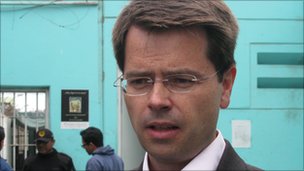
Jimmy Visits A Peruvian Prison

In my wildest fantasies, maybe someone will slip a couple of wraps in Jimmy’s pocket and he’ll get busted at Heathrow.  A few weeks in Brixton would do him the world of good before his chums pull strings to get him off.  He’d be a better person for it.  He might have to face up to some realities rather than the deluded, fantasy world in which he lives.

Alternatively, maybe he could do the decent thing and swop places with Nick Jones?  Now that would be truly useful.  I’d be the first to recommend him for a medal.  Then, in a few years time we could send someone out to gloat over him!

Well I can dream!

Home Office Drugs Strategy Consultation – My Response

with 14 comments

The Home Office has called for responses to its Drugs Strategy Consultation document.  See here on the Home Office website.

It is almost universally accepted that “consultation” is a euphemism for “your opinion will be ignored but we want it to look like we listened to you”.  This is a classic example of that sort of thinking.  Judge for yourself  by reading the introduction.  It is clear that ministers and civil servants have already made their mind up on many issues just by the way that the questions are phrased.

Nevertheless, this is what passes for democracy in Britain and it is vital that as many people as possible respond.  You can do so by post, email or online form. It is all set out on the website.  I offer my response here as raw material.  Please feel free to copy and use all or part of it as you wish.  Just make sure that you do make a submission.

I have answered all the questions where I feel I have something useful to say.  It dosn’t matter if you only answer one or two.  Please don’t let the Home Office get away with a whitewash.  With sufficient responses and future Feedom Of Information requests we will be able to advance the cause of rational and progressive drugs policy.

Question A1: Are there other key aspects of reducing drug use that you feel should be addressed?

* Yes

Please outline any suggestions below

The entire basis of this question is flawed. Prohibition of drug use is a failed strategy as now acknowledged by experts and leaders all over the world. So much of the subject is mired in semantics and prejudice rather than being addressed in a logical and responsible manner with fact and evidence-based policies.

Drug use can never be eliminated.  In fact, use of alcohol and tobacco, two of the most dangerous drugs, is legally promoted.  Drug misuse is, by definition, to be deplored but unless there is an acceptance of responsible drug use, then corresponding guidance or regulation to prevent misuse cannot work.

The key question, as established by parliament with the Misuse Of Drugs Act 1971 (MODA), is to how to reduce the harms of drug use.  This is the basis of the Act and of the drug classification system which is supposd to indicate the relative harms of drugs based on the advice of the Advisory Council on the Misuse Of Drugs (ACMD).

Regrettably the classification system is now entirely discredited for two principle reasons:

1. Failure to include the two most widely used drugs, alcohol and tobacco

2. Failure to classify drugs on a scientific basis, instead allowing political considerations and opinion to intrude where only facts and evidence should apply

The result is that government messages on drugs are widely regarded as incredible and as propaganda rather than good sense.  Young people in particular see the evidence of their  own eyes and experience as more useful and credible than government messages, especially in the case of drugs such as cannabis and ecstasy where their relative harmlessness is self-evident.  Government campaigns such as Frank are widely ridiculed and both counterproductive and a complete waste of money.

Question A2: Which areas would you like to see prioritised?

Please select as many as apply

* Greater ambition for individual recovery whilst ensuring the crime reduction impact of treatment.
* Actions to tackle drugs should be part of building the “Big Society”.
* A more holistic approach, with drugs issues being assessed and tackled alongside other issues such as alcohol abuse, child protection, mental health, employment and housing.
* Budgets and responsibility devolved wherever possible, with commissioning of services at a local level.
* Budgets and funding streams simplified and outcome based.
* The financial costs of drug misuse reduced.
* None of them.

This is an astonishingly meaningless question, a little like asking “do you approve of motherhood and apple pie?”

It would be foolish to disagree with any of these ideas.

The main area I would like to see prioritised is that drugs strategy, policy, information and education should be fact and evidence based.  The National Audit Office and the Public Accounts Committee have both criticised government for failing to implement an evidence-based drugs policy and instead giving more weight to opinion.  This is a dreadful indictment of how successive governments have, in fact, contributed to and increased drug harms.  It is now a well established and proven truism that drug laws cause more harm than drugs themselves.

I would propose a five point drugs strategy aimed at reducing harms as follows:

1. An end to oppression of drug users (at least six million citizens)
2. Removal from the criminal law of any offence for possession and/or social supply
3. Fact and evidence-based policy, information and regulation
4. Re-direction of law enforcement resources against real criminals
5. Treat problematic drug use as a health issue

I would also propose that the overwhelming response on drug laws to the Your Freedom website should be included in this consultation. Top priority should be given to the massive outcry from the public for the removal of drugs from the criminal law and the more rational, fact and evidence-based regulation.

The question of cannabis needs urgent attention.  All experts agree that the harms from its illegality are greater than from the drug itself. According to Home Office figures, there are six million regular users in the UK. Recent research shows that more than 70% of the public want to see some form of legalisation.  The laws against cannabis no longer have public support, particularly in the case of medicinal use, yet the cost of unsuccessfully attempting to enforce them amounts to many billions in wasted public expenditure.  This is a national scandal of monstrous proportions which must be ended.

Question A3: What do you think has worked well in previous approaches to tackling drug misuse?

There is almost nothing that the government has done that has worked well in tackling drug misuse.  On the contrary, almost all government policy has increased the harms caused.

There have been some pilot projects in providing clean, safe environments where opiate addicts have access to a regulated supply and clean needles that have reduced harms.

Question A4: What do you think has NOT worked so well in previous approaches to tackling drug misuse?

Government drugs policy has been a disaster in almost every way, consuming more and more resources to less and less good effect.  It has been almost entirely counterproductive and has led to complete distrust of government information, alienation of users from society in general  and brought the law into disrepute.

Prohibition has not worked.

Misinformation and propaganda that distributes lies and untruths about the relative harms of drugs has not worked.  In fact, it has led to more harms and more deaths.

Criminalising huge numbers of citizens has not worked and has created disaffection and seriously damaged democracy.

Question B1: What are the most effective ways of preventing drug or alcohol misuse?

The only effective way of preventing drug or alcohol misuse is education.  This should be accompanied by a system of regulation and controls which is fact and evidence based and has widespread public support.

Question B2: Who (which agencies, organisations and individuals) are best able to prevent drug or alcohol misuse?

The government is entirely discredited when it comes to offering any sort of advice on these subjects because it has a long history of mistakes, misinformation and propaganda.  Everyone knows that you can’t trust what the government says about such matters because it almost always places political expediency above the truth.

Schools, teachers, ex-addicts and parents are best able to prevent drug and alcohol misuse.  They need fact and evidence-based support and information.  The last thing they need is government direction or interference as this is widely seen as unbelieveable and incredible.

Question B3: Which groups (in terms of age, location or vulnerability) should prevention programmes particularly focus on?

There should be no such thing as a “prevention programme”.  The most vulnerable group is clearly young people.  Tell them not to do something and you immediately increase its appeal.  This question demonstrates how utterly out of touch, insensitive and hamstrung is current Home Office thinking.

Education programmes should focus particularly on young people.

Question B4: Which drugs (including alcohol) should prevention programmes focus on?

* Those that cause the most harm
* Those that are most widely used
* All drugs

Please explain your view below

There should be no such thing as a “prevention programme”.  Education programmes should cover all drugs but focus on those that cause most harm.

Question B5: How can parents best be supported to prevent young people from misusing drugs or alcohol?

The best way of supporting parents is by creating an environment in which drugs policy is accepted as being rational, sensible and based on facts and evidence rather than propaganda.  It is vital that fact and evidence-based information is widely available.

Question B6: How can communities play a more effective role in preventing drug or alcohol misuse?

Communities will naturally come together to prevent drug misuse if we create an environment in which drugs policy is accepted as being rational, sensible and based on facts and evidence rather than propaganda.  At present, drug laws and policies create an “us and them” culture where injustice and hypocrisy brings the law into disrepute and alienates people who do not comply.

Question B7: Are there any particular examples of prevention activity that you would like to see used more widely?

There is nothing being done in terms of”prevention activity” that should be continued.  Education, based on fact and evidence-based information is the key.

Question B8: What barriers are there to improving drug and alcohol prevention?

The biggest barrier to improving prevention of drug misuse is government policy which is widely understood not to be based on facts and evidence but on political expediency and propaganda.  The lack of fact and evidence-based information and education is also a major barrier.

Question C1: When does drug use become problematic?

Drug use becomes problematic when it interferes with people conducting their everyday lives and reaching their full potential or the ability of others to do the same.

Question C2: Do you think the Criminal Justice System should do anything differently when dealing with drug-misusing offenders

The Criminal Justice System should not be involved in dealing with drug misuse at all.  This should be a matter for healthcare. Drug misuse in itself should not be a criminal offence.

Where offences are committed while under the influence of drugs, or in order to feed a drug addiction, providing appropriate healthcare has been offered, then drug use should not be a mitigating factor. In such instances, the offender should always be referred for healthcare alongside any sentence.

Question C3: Do you have a view on what factors the Government should take into consideration when deciding to invoke a temporary ban on a new substance?

* Yes

Please explain your views below

The most important factors would be those of scientific fact and evidence to be determined by a strengthened, properly funded and independent Advisory Council On the Misuse Of Drugs or equivalent.

It is most important to consider the “glamourising effect” of banning a substance.

I congratulate the Home Office on its statement that  “Possession of a temporarily banned substance for personal use would not be a criminal offence to prevent the unnecessary criminalisation of young people”.  This demonstrates a new depth of thinking and intelligence that is very encouraging.

Question C4: What forms of community based accommodation do you think should be considered to rehabilitate drug offenders?

Drug use should not be an offence in itself.  Clearly as part of healthcare, community-based accommodation should be available for those suffering from problematic drug use.

Question C5: Where do you think we most need to target enforcement efforts to reduce the supply of drugs?

Enforcement efforts to reduce the supply of drugs are futile unless a legitimate, regulated source of supply is available.

Once a regulated source of supply is available, illicit sources will become less of a problem.  Enforcement efforts could then be targeted in a similar way to current policies against illicit supply of alcohol, tobacco and prescription only medicines.

Question C6: What else do you think we can do to keep one step ahead of the changing drugs markets?

The most important thing do do is to end the failed and demonstrably ludicrous policy of prohibition.  The solution is a system of fact and evidence-based regulation including a a strengthened, properly funded and independent Advisory Council On the Misuse Of Drugs or equivalent.

Question C7: Which partners – in the public, voluntary and community sectors – would you like to see work together to reduce drug related reoffending in your local area?

What does “drug related reoffending” mean?

Drug use in itself should not be an offence.

Offences related to drugs should be dealt with by healthcare intervention as well as the criminal justice system.  If appropriate healthcare has been offered then drugs should not be a mitigating factor in sentencing.

Question C8: What results should be paid for or funded?

No comment

Question C9: What measures do you think should be taken to reduce drug supply in prison?

Those prisoners with a drug addiction should have access to healthcare and regulated supply just as any other citizen.   Just as in society in general a regulated supply would greatly reduce if not eliminate the problem of illicit supply.

Recreational use of drugs in prison should be strictly controlled.  Tobacco is presently allowed but not alcohol.

As an observation, it is tragic to note how existing policies have promoted the use of heroin in prison.  Under the drug testing regimes, cannabis can be detected in urine for up to 28 days and so its use has been largely eliminated.  However, heroin flushes through the system in less than 48 hours so its use has increased.  This is a vivid demonstration of the idiocy of present policies which have led to replacement of a relatively harmless substance with one that has potential to cause great harm.

Question C10 (if applicable): What impact would the measures suggested have on:

* a) offenders?
* b) your local community?

No comment

Question D1: Thinking about the current treatment system, what works well and should be retained?

No comment

Question D2: Thinking about the current treatment system, what is in need of improvement and how might it need to change to promote recovery?

I have no specific expertise in this area but I understand that treatment for problematic cocaine use is extremely limited and in desperate need of investment.  While not physically addictive, cocaine and particularly crack cocaine is overwhelmingly compulsive and can lead to violent behaviour.  Comparatively, treatment for opiate addicton is well established and understood.  More resources need to be put into developing treatments for problematic cocaine use.

Question D3: Are there situations in which drug and alcohol services might be more usefully brought together or are there situations where it is more useful for them to be operated separately?

Services need to be client-centered. Lumping together alcohol, opiate and cocaine services for the convenience of the providers is counterproductive. Someone who drinks too much wine in the evening at home may be deterred from attending a centre where opiate addicts are injecting. Similarly, a high-earning cocaine user may not want to associate with street drinkers.

Question D4: Should there be a greater focus on treating people who use substances other than heroin or crack cocaine, such as powder cocaine and so called legal highs?

* Yes
* No

Please explain your response below

The only rational response to any problematic drug use is to treat it as a health issue, therefore treatment should be available for all substances.  The question betrays a worrying naivety as cocaine use can be problematic as powder, crack or both.  “Legal highs” is a completely meaningless term which may range from something as harmful as heroin to something as benign as cannabis.

Question D5: Should treating addiction to legal substances, such as prescribed and over-the-counter medicines, be a higher priority?

* Yes
* No
* Don’t know

Please explain your response below

No.  The drugs strategy should be about minimising harms not making some moral judgment on people based on one point of view.  This is a dreadful suggestion.

Question D6: What role should the Public Health Service have in preventing people using drugs in the first place and how can this link in to other preventative work?

Fact and evidence-based information and education.

Question D7: We want to ensure that we continue to build the skills of the drug treatment and rehabilitation sector to ensure that they are able to meet the needs of those seeking treatment. What more can we do to support this?

Stop wasting money on futile attempts at enforcement of out of date, counterproductive laws. Prohibition is an entirely failed policy and, according to Baroness Meacher in the House Of Lords on 15th June 2010 is costing Britain £19 billion per annum.

Problematic drug use should be dealt with as a health problem.  With billions saved from wasted law enforcement costs and additional tax revenue from a regulated supply system, there will be a bonanza of funds available for drug treatment and rehabilitation services.

Question D8: Treatment is only one aspect contributing to abstinence and recovery. What actions can be taken to better link treatment services in to wider support such as housing, employment and supporting offenders?

Stop criminalising drug users, imprisoning them and treating them as offenders.  They are not.  They are people who choose to use a drug that has arbitrarily been deemed illegal usually for unscientific reasons.

Question D9: How do you believe that commissioners should be held to account for ensuring that outcomes of community-based treatments, for the promotion of reintegration and recovery, as well as reduced health harms, are delivered?

No comment.

Question E1: What interventions can be provided to better support the recovery and reintegration of drug and alcohol dependent offenders returning to communities from prison?

No comment.

Question E2: What interventions could be provided to address any issues commonly facing people dependent on drugs or alcohol in relation to housing?

No comment.

Question E3: How might drug, alcohol and mental health services be more effective in working together to meet the needs of drug or alcohol dependent service users with mental health conditions?

No comment.

Question E4: Do appropriate opportunities exist for the acquisition of skills and training for this group?

No comment

Question E5 Should we be making more of the potential to use the benefit system to offer claimants a choice between:

a) some form of financial benefit sanction, if they do not take action to address their drug or alcohol dependency; or

b) additional support to take such steps, by tailoring the requirements placed upon them as a condition of benefit receipt to assist their recovery (for example temporarily removing the need to seek employment whilst undergoing treatment).

There needs to be a combination of carrot and stick adjusted to individual requirements based on healthcare needs.  Those with problematic drug use must not be allowed to fall outside society as that leads to even greater harms.  This is why it is crucial that drug use be removed from the criminal law.

Question E6: What if anything could Jobcentre Plus do differently in engaging with this client group to better support recovery?

No comment

Question E7: In your experience, what interventions are most effective in helping this group find employment?

No comment.

Question E8: What particular barriers do this group face when working or looking for employment, and what could be done to address these?

No comment.

Question E9: Based on your experience, how effective are whole family interventions as a way of tackling the harms of substance misuse?

No comment

Question E10: Is enough done to harness the recovery capital of families, partners and friends of people addicted to drugs or alcohol?

Probably not. Once prohibition is ended, with billions saved from wasted law enforcement costs and additional tax revenue from a regulated supply system, there will be a bonanza of funds available for drug treatment and rehabilitation services.

Question E11: Do drug and alcohol services adequately take into account the needs of those clients who have children?

No comment

Question E12: What problems do agencies working with drug or alcohol dependent parents face in trying to protect their children from harm, and what might be done to address any such issues?

No comment

Gender: Male
Age: 45-54
Region: South West
Occupation: Writer