Posts Tagged ‘prohibition’
“Cannabis Should Be Sold In Shops Alongside Beer And Cigarettes, Doctors’ Journal Says” – The Daily Telegraph, 11th October 2010
Yes, this is The Daily Telegraph here. Yes, this concerns an article published in the BMJ here.
There are distinct signs of sanity on the horizon. Is it money driving this new reality because we waste £19 billion per annum on the “war on drugs”? Or is it that Proposition 19 in California and the clash between UK and European law over medicinal cannabis is revealing the absurdity of prohibition?
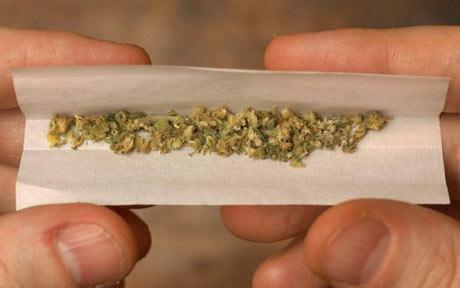
Cannabis should be sold in shops alongside beer and cigarettes, doctors’ journal says
An editorial in the British Medical Journal suggested that the sale of cannabis should be licensed like alcohol because banning it had not worked.
Banning cannabis had increased drug-related violence because enforcement made “the illicit market a richer prize for criminal groups to fight over”.
An 18-fold increase in the anti-drugs budget in the US to $18billion between 1981 and 2002 had failed to stem the market for the drug.
In fact cannabis related drugs arrests in the US increased from 350,000 in 1990 to more than 800,000 a year by 2006, with seizures quintupling to 1.1million kilogrammes.
The editorial, written by Professor Robin Room of Melbourne University, said: “In some places, state controlled instruments – such as licensing regimes, inspectors, and sales outlets run by the Government – are still in place for alcohol and these could be extended to cover cannabis.”
Prof Room suggested that state-run off licences from Canada and some Nordic countries could provide “workable and well controlled retail outlets for cannabis”.
Prof Room suggested the current ban on cannabis could come to alcohol prohibition, which was adopted by 11 countries between 1914 and 1920.
Eventually it was replaced with “restrictive regulatory regimes, which restrained alcohol consumption and problems related to alcohol until these constraints were eroded by the neo-liberal free market ideologies of recent decades”.
The editorial concluded: “The challenge for researchers and policy analysts now is to flesh out the details of effective regulatory regimes, as was done at the brink of repeal of US alcohol prohibition.”
Campaigners criticised the editorial. Mary Brett, a retired biology teacher, said: “The whole truth about the damaging effects of cannabis, especially to our children with their still-developing brains, has never been properly publicised.
“The message received by children were it to be legalised would be, ‘It can’t be too bad or the Government wouldn’t have done this’.
“I know – I taught biology to teenage boys for 30 years. So usage will inevitably go up – it always does when laws are relaxed.
“Why add to the misery caused by our existing two legal drugs, alcohol and tobacco?”
Earlier this year, Fiona Godlee, an editor of the Journal, which is run by the British Medical Association, endorsed an article by Steve Rolles, head of research at Transform, the drugs foundation, which called for an end to the war on drugs and its replacement by a legal system of regulation.
Dr Godlee said: “Rolles calls on us to envisage an alternative to the hopelessly failed war on drugs. He says, and I agree, that we must regulate drug use, not criminalise it.”
The Real Prison Drugs Scandal
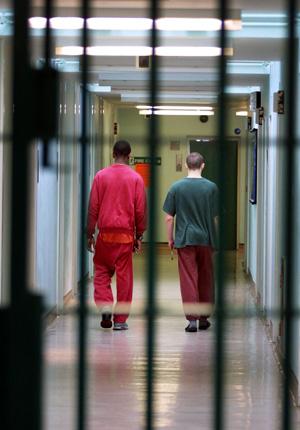
Banged Up
The real scandal about drugs in prison is that they’re even there in the first place. How do they get in? It’s prison staff of course.
That’s the uncomfortable truth which Ken Clarke and the government won’t talk about. Compared to the extraordinary security and penalties that prison visitors face, the screws have it easy. There’s an organised network at each prison, run by screws, for screws, supplying drugs to prisoners. Of course there is!
The even bigger scandal is that what used to be a cannabis culture, with prisoners alleviating their boredom with a relatively harmless joint, has become a health nightmare, with prison regulations forcing them into heroin.
You see Ken Clarke’s bright new ideas of drug free wings, testing and incentive regimes have been going on for more than 10 years already. I support Ken’s new ideas. I think he’s a breath of fresh air but this is just unhelpful propaganda. You see, prisoners stopped smoking cannabis when they started getting tested regularly. Evidence of cannabis remains in urine for up to 28 days, whereas heroin or cocaine washes through in 48 hours. Once the testing started and the prison officer-run cartels cottoned on, heroin began to flood our jails. A nightmare but true.
Of course, the fact that the drugs problem exists at all in prison is because it’s just a microcosm of society. If proper treatment was provided to those entering prison with a habit then it’s the perfect opportunity for them to clean up. If prohibition wasn’t creating a fantastically profitable black market then the drugs problem would gradually recede just as it would in society in general if we introduced fact and evidence-based regulation.
Prohibition doesn’t work. It just makes the problem worse.
The Catholic Church – Fount Of Greatest Evil For 2000 Years

Evil Personified
The Crusades.
The Inquisition.
Witch hunts over hundreds of years.
The oppression of the poor.
Oppression of the Jews.
Abuse of children by bishops, priests, nuns, monks and Church officials over hundreds of years.
The theft of land and property.
The mass deception of humanity for financial gain.
The cover-up of guilt and responsibility for all these things.
The prohibition of contraception to those who know no better and so are consigned to poverty, starvation and death in their millions.
The prohibition of abortion, even to women whose own lives are endangered.
It’s an appalling total of evil, misery and death. Frankly, I doubt that Islam even comes close.
Yet we entertain, revere and pander to Pope Benedict, this embodiment of the greatest source of evil for 2000 years filled with agony, suffering and death! Our leaders fawn over him as if there is some significance other than his depths of wickedness.
Even under the terms of his own doctrine he is a blasphemy, a craven idol, a personification of God. I thought these were sins!
I’d be prepared to overlook his membership of the Hitler Youth, even his dilatory attention to the child abuse scandals and his complicity in the cover-up. As an old man, I’d be prepared to forgive all of his personal failings but he holds himself up as the Church itself. He is utterly condemned.
It is nothing less than an outrage that he pollutes our shores, invades our nation, sullies our national consciousness with his presence. His kisses on our babies are filth. His deception of our people is an abomination.
Get him out of my country NOW!
My MP, Richard Drax, To Write To David Cameron On Drugs Policy
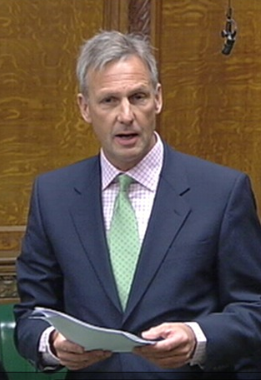
The Honourable Member For Dorset South
Today I met with my MP, Richard Drax. He was just as sickeningly handsome and charming as I expected him to be! So I showed him no mercy and bombarded him with my opinions for a good half an hour.
I realised afterwards that my favourite maxim “less is more” would have been a better strategy. Nevertheless, he did offer to write to David Cameron on my behalf on drugs policy and seemed genuinely sympathetic to some of the points I made.
I have just sent him a lengthy email in confirmation which I reproduce below. If anyone wishes to use this as a template for a letter or email to their own MP, please feel free to do so.
******
Dear Richard,
Thank you so much for your time today. I very much enjoyed meeting you. As I said, I came with opinions not problems. I am grateful to you for listening to me.
I realise that I made the classic mistake of bombarding you with far too much information and not giving you time to absorb any. I hope I may correct that error by summarising here what we talked about.
1. Gary McKinnon. Thank heavens that progress seems to have been made on this. The idea of an “extradition” treaty that provides for someone to be sent to the USA for trial on an alleged crime committed here is iniquitous. It’s particularly unfair in McKinnon’s case as he suffers from Asperger’s syndrome. You pointed out to me that similar dangers exist with the new European arrest warrant.
I would urge you to do everything possible to ensure that if Gary McKinnon is to be tried, it should take place in the UK.
2. Ian Tomlinson. In my view the failure to prosecute the policeman who assaulted him is an outrage and Keir Starmer’s reasons entirely inadequate. Now that the credibility of the pathologist in the case has been destroyed by a GMC panel, Starmer should at least reconsider and hopefully reverse his decision.
References here:
http://pjroldblog.wordpress.com/2010/08/31/killer-cop-harwood-must-be-charged/
http://pjroldblog.wordpress.com/2010/07/24/keir-starmer-the-next-lord-widgery/
I would urge you to press for a re-consideration of the decision not to bring charges. If no criminal charges are brought, at the very least the disciplinary hearing should be held in public as the rules allow. The Tomlinson family are entitled to justice.
3. Drugs policy. You very kindly agreed to write to David Cameron on my behalf. I am very concerned at the conduct of the Home Office at present and particularly James Brokenshire, the Minister for Crime Prevention who is causing great damage to both the coalition governemnt and the Tory party by promoting ideas and policies that contradict virtually all expert opinion, including the government’s own scientific advisers. He also seems to be completely at odds with the calls for drug law reform which both David Cameron and Nick Clegg have made consistently over the last 10 years.
This is not a peripheral or secondary issue. According to Baroness Meacher in the House of Lords on 15th June 2010, “There is no more obvious waste than the £19 billion annual cost of the UK’s war on drugs”.
There is a huge amount of reference material on this subject on my blog:
http://pjroldblog.wordpress.com/?s=drugs
I would also refer you to the Transform Drug Policy Foundation which has highly detailed and almost universally acclaimed proposals for drug regulation:
Virtually all experts agree that the “war on drugs” has failed. In exactly the same way as alcohol prohibition in the US led to a massive increase in crime and violence, so drug prohibition has created an illegal market said to be worth £350 billion per year. It has also financed civil war in Latin America for 25 years and is the principal source of finance for Al Qaeda and the Taliban in Afghanistan. Our soldiers are dying every day because of the illegal trade in opiates. Why don’t we just buy up the whole crop for the next 10 years? It would be much cheaper in both cash and lives than the Afghan war.
Virtually all experts agree that regulation would be a better solution. I have distilled the following five point plan from everything that I have read and learned over more than 30 years:
1. An end to oppression of drug users (at least 10 million UK citizens)
2. Removal from the criminal law of any offence for possession and/or social supply
3. Fact and evidence-based policy, information and regulation
4. Re-direction of law enforcement resources against real criminals
5. Treat problematic drug use as a health issue
Five years ago, while campaigning for the Tory party leadership, David Cameron called for “fresh thinking and a new approach” towards drugs policy and said that it would be “disappointing if radical options on the law on cannabis were not looked at”. Nick Clegg has promised to repeal “illiberal, intrusive and unnecessary” laws and to stop “making ordinary people criminals”. There can be no better example of this than the laws against personal use and cultivation of cannabis, particularly for medicinal reasons. The coalition government’s new Your Freedom website has been inundated with proposals to legalise cannabis and to end the futile war on drugs. In July a poll carried out for the LibDems showed 70% of people in favour of legalising cannabis.
The Home Office and James Brokenshire are completely out of touch with expert and public opinion as well as the declared views of both the Prime Minister and the Deputy Prime Minister.
In my view, regulation means tighter control on the most dangerous drugs such as heroin, cocaine and alcohol and lighter regulation on relatively harmless substances like cannabis and ecstasy.
There is also the very important question of medicinal cannabis. The discovery of the endocannabinoid system in 1998 has led to an ever-escalating volume of evidence of the medicinal value of cannabis. In June the MHRA approved Sativex as an MS medicine in the UK. It is a whole plant extract yet presently, the Home Office refuses to consider a regulated system of the plant itself for medicinal purposes. This is completely irrational and absurd. The House Of Lords scientific committee recommended such a system should be introduced 12 years ago. Medicinal cannabis is available and regulated throughout almost all of Europe, Israel and 14 states in the USA (with 12 more in the planning stage). The UK stands almost alone in its obstinate refusal even to consider such a system.
Already this is leading to quite obscene injustices where patients have been prescribed Sativex by their doctor but their health authority has refused to fund it and patients are then facing criminal prosecution for cultivating their own plants. There is a case of exactly this going on in the Dorchester Crown Court at present and the CPS insists it is in the public interest to prosecute!
Thank you once again for listening to me Richard. I hope these notes are useful in composing your letter to David Cameron and I look forward to hearing from you in due course.
Kind regards,
Peter Reynolds
Home Office Backtracks On Cannabis
A fortnight ago Sir Ian Gilmore, the outgoing president of the Royal College of Physicians, famously denounced drugs prohibition as a failed policy. He said “”Everyone who has looked at this in a serious and sustained way concludes that the present policy of prohibition is not a success.” He then went on to advocate decriminalisation and regulation.
The Home Office immediately issued a statement saying “‘Drugs such as heroin, cocaine and cannabis are extremely harmful and can cause misery to communities across the country.” This statement was reproduced on the Home Office website and has sat there for the last two weeks in direct contradiction to the governments own scientific advisers. Anyone who has even the smallest knowledge of the subject knows that the idea that cannabis is “extremely harmful” is absurd and a lie.
Within the last day or two the Home Office website has been quietly edited to remove the word cannabis from the statement. See here.

Charades, Fibs And Porkies
This correction is very welcome. However it calls into question the honesty, competence and intelligence of the Home Office and the government’s drugs policy. James Brokenshire, the Minister for Crime Prevention has been looking increasingly ridiculous in the last few weeks, contradicting his advisers, spouting pre-Reagan “war on drugs” propaganda and conflicting terribly with the wise words of both David Cameron and Nick Clegg, both of whom have called for drug policy reform consistently over the last 10 years. Young James has made himself very unpopular with the country’s six million regular cannabis users and embarrassed the government and the Tory party with his antics.
Whoever was responsible for this smart and very discreet editing, let’s hope they get to have a look at James’ Drugs Strategy consultation document too. It needs some intelligent correction and adjustment as well. See here for more information on what’s really a very silly game of charades, fibs and porkies.
“The Only Thing Drug Gangs Fear Is Legalisation”. The Independent 26th August 2010
 Superb piece in The Independent today
Superbly argued! Thank you to Johann Hari. Thank you to The Independent for giving the space for this to be heard.
Violence Breeds Violence. The Only Thing Drug Gangs Fear Is Legalisation.
28,000 deaths in Mexico in four years because of drug laws!
It could be the same in the UK. Our new drug strategy is in preparation but the only people applauding the disgraceful sham that is our drug strategy consultation are drug dealers and criminals. James Brokenshire of the Home Office, the man intent on breaking British society, is so backward in his thinking that he makes Alan Johnson look progressive. He is blind to the evidence and the facts, to what is happening in Mexico and elsewhere
There is blood on the hands of cowardly politicians in the UK too. They have shirked this issue, avoided grasping this nettle for too long. Brokenshire can only have been offered as a lamb for sacrifice here – surely? His arguments are too ridiculous, his distortion of science too crass. He is bound to fail if he persists but he will cause death, misery and degradation for thousands. He personally will be responsible for a massive increase in street crime – inevitable if he tightens prohibition. He will not have committed the crimes himself but he will have negligently and recklessly ignored proven current best practice. His attitudes fly in the face of all logic, research and science.
The government is riding roughshod over the massive outcry for drug law reform on the Your Freedom website. Surely, even if public opinion, morality, logic, science, history or common sense won’t convince them, Baroness Meacher’s claim of £19 billion per annum of waste will stir them to action!
Surely, if nothing else, the cash will make the government see sense!
Home Office Drug Strategy Consultation
All over the BBC this morning is the story that addicts may have their benefits withdrawn if they refuse treatment. This, apparently, is a proposal included in the Home Office’s new Drug Strategy consultation document.
Where is this document? It’s not on the Home Office website. That’s a bit strange for something that purports to be about consulting with the public isn’t it?
I had to phone the Home Office press office to get a copy. I shouldn’t have to be doing this for the government but you can download it here:
 Home Office Drug Strategy Consultation Document
Theresa May and James Brokenshire, the ministers responsible for this, should remember that they are not in office to preserve the status quo or cook up policies between themselves based on the misinformation that the Home Office currently promotes. Their first responsiblity after their duty to the Queen is to the public. Consultation is not something they should pay lip service to, nor is it something they can pick or choose. It should determine their actions.
As part of this consultation, the Home Office should take into account the tens of thousands of people who have used the Your Freedom website to call for relaxation in the drug laws and particularly the legalisation of cannabis.
I urge everybody with any interest in the drugs issue to download, complete and return the consultation document. It’s presented as a Q&A form. I also suggest that you keep a copy and send a copy to your MP. Regrettably the Home Office doesn’t have a good record on keeping track of what the public says to it. It loses a lot of things.
On the face of it, I support the idea that if you’re a heroin, cocaine, alcohol or prescription drug addict and you’re offered treatment but refuse it then you shouldn’t be able to live on benefits. That seems entirely just. The danger is that just as current drug laws drive addicts to crime and prostitution so will this. This is progress though. There has to be personal responsibility but also some flexibility to ensure this doesn’t become another self-defeating policy. Most important of all, possession of drugs for personal use and/or social supply must be taken out of the criminal law.
The other headline grabbing proposal is that the government should be able to impose a temporary 12 month ban on “new substances”. This is designed to tackle the danger of “legal highs” – a danger mainly of the government’s own making because of its policy of prohibition. There is a real glimmer of hope and intelligence here though because “Possession of a temporarily banned substance for personal use would not be a criminal offence to prevent the unnecessary criminalisation of young people”. I applaud this. It shows that it is possible to get common sense from the Home Office. There is hope yet!
***UPDATE***
As I go to press (oh, alright, as my finger hovers over the “publish” button), the consultation document has become available on the Home Office website. A little tardy but better late than never.
You can respond to this consultation until 30th September 2010. Make sure you do.
The Drugs Debate
 It won’t go away will it? It seems like at least once a month now some new high profile figure comes out against prohibition. The latest, Sir Ian Gilmore, outgoing president of the Royal College of Physicians, is hot on the heels of Nicholas Green QC, chairman of the Bar Council in July and three eminent co-authors in The Lancet in May. The National Audit Office and the Public Accounts Committee have also criticised government for failing to implement an evidence-based drugs policy and instead giving more weight to opinion.
Meanwhile the Humpty Dumpties at the Home Office keep on building their big walls, refusing to listen, refusing to think, refusing to care. Their response is no, no, no, out of the question, no and no again. In fact, I don’t think the ministers even think about it at all. They just replay the same old no, no and no again as written by some civil servant, probably in the days of the golf ball typewriter. Remember those?
It won’t go away though. I first submitted a report to the Home Affairs Committee on the cannabis laws in 1978. It was called “An Unaffordable Prejudice”. I’ve been giving them the facts and the evidence ever since and so have hundreds of other individuals and organisations. I’m in direct correspondence with the Home Office at the moment. I’ve received one three page response and replied with four. That’s how long it takes to get a dialogue going with our “responsive” government. I started in May, immediately after my new MP was elected, and it takes a good three months to get anywhere – or perhaps I mean nowhere. Still, I expect it was worse in the USSR.
It won’t go away. Aside from the Home Office the only people in favour of our current drugs policy are the drug dealers and the Taliban. They certainly don’t want things to change.
The Home Office can’t even get its story straight. Today its latest pearls are: “Drugs such as heroin, cocaine and cannabis are extremely harmful and can cause misery to communities across the country.” This is nothing short of crass stupidity and irresponsible misinformation. Lumping in cannabis with heroin and cocaine is simply ridiculous. Describing cannabis as “extremely harmful” is in direct contradiction to every one of the Home Office’s own scientific experts. These are the people who are supposed to be protecting our children, the vulnerable and the uneducated. They should be ashamed of themselves.
When Proposition 19 passes on 2nd November (see here), the world will sit up and take notice. Even Humpty Dumpty will have to engage his brain then because when 37 million Californians get the right to enjoy God’s herb without interference, well it ain’t gonna stop there. If for no other reason than that our avaricious politicians will soon put aside their “principles” when they realise the oodles of cash and brownie points they’re missing out on. California reckons it will create up to 110,000 new jobs, £1.4 billion in new tax revenue and a saving of $200 million in law enforcement costs. When Humpty Dumpty takes off his blindfold of prejudice, ignorance and propaganda he’ll soon be gagging for the cash.
There are a million quotes from world leaders, politicians, doctors, scientists and “experts” of all sorts stating how ridiculous and self-defeating current drugs policy is. It never seems to make any difference though. David Cameron and Nick Clegg have both called for change many times but once they get into power what happens? However, just to get right up the nose of Humpty Dumpty (that’s right, snort it up there), here’s what one very, very senior civil servant said just two years ago:
“I think what was truly depressing about my time in UKADCU was that the overwhelming majority of professionals I met, including those from the police, the health service, the government and voluntary sectors held the same view: the illegality of drugs causes far more problems for society and the individual than it solves. Yet publicly, all those intelligent, knowledgeable people were forced to repeat the nonsensical mantra that the government would be ‘tough on drugs’, even though they all knew the government’s policy was actually causing harm.”
Julian Critchley, Director, Cabinet Office UK Anti-Drug Coordination Unit. 13-08-08
It won’t go away. Just Say No has become Just Say Now and the slimy dissembling oiks who insist on running our lives (and ruining many) will soon be in retreat. It won’t go away.
Proposition 19. Just Say Now!
It looks as if, on 2nd November 2010, a small but very significant part of the world will at last come to its senses and legalise cannabis.
On that date, California voters look likely to approve Proposition 19 on the state-wide ballot that legalizes various marijuana-related activities, allows local governments to regulate these activities, permits local governments to impose and collect marijuana-related fees and taxes, and authorizes various criminal and civil penalties. Currently the polls show that about two-thirds of voters are in favour.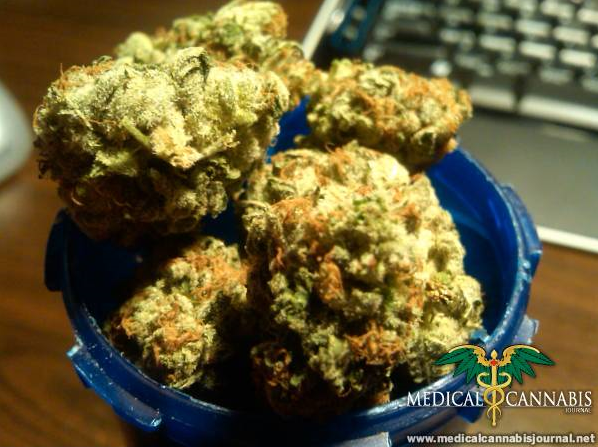
Over the age of 21 it will be legal to possess up to an ounce of marijuana and to cultivate an area of up to 25 sq ft on private property. The state estimates it will collect about £1.4 billion pa in new tax revenue. save $200 million pa in law enforcement costs and generate an additional $12 – $18 billion pa for California’s economy, with 60,000 to 110,000 new jobs. As the Americans say, with one of their most unpleasant expressions, “It’s a no brainer”.
In America they finally seem to have got past listening to the stupid scare stories and propaganda about the cannabis plant. The misinformation has ranged from the idea that marijuana makes white women promiscuous with black men to the suggestion that it causes psychosis in adolescents. Both of these ideas are as impossible to prove as each other. America also recognises the huge medicinal benefits of cannabis with medical marijuana legal in 14 states and planned in 15 more. As a recreational drug, cannabis use is almost never associated with the sort of anti-social behaviour that alcohol causes. It produces an essentially peaceful, happy and soporific effect.
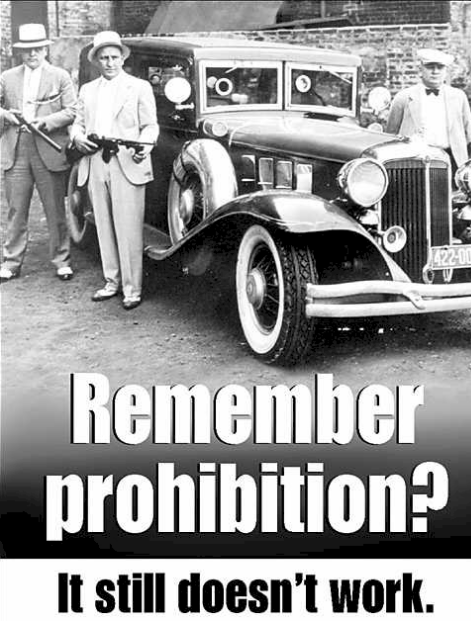
 Instead of insulting and ignoring their scientific experts as we do in the UK, Americans are now more interested in the facts and a pragmatic approach to drugs policy. The “war on drugs” is now universally recognised as having been an abject failure. We should, of course, have learned from the experience of alcohol prohibition in the early 20th century. That created the whole idea of gangsters and organised crime. We managed to repeat the same mistakes all over again with drugs.
In ironic appreciation of Nancy Reagan’s “Just Say Nc” campaign, those in favour of Proposition 19 have adopted the slogan “Just Say Now”. In addition to the direct financial benefits, the state expects to be able to focus police priorities on violent crime, cut off funding to violent drug cartels and better protect children, road users, workers and patients from illegal, unregulated use.
The UK will eventually follow down this inevitable path. The only questions are how many lives will we ruin and how much time and money will we waste before we finally get there?
See here for the latest updates and news on Proposition 19.

 Peter Reynolds