Author Archive
Paedophile Priests : It’s Our Fault (via The Mad Hatters)
I confess defeat. I cannot find the words to express the contempt and disgust in which I hold the Pope and his vile church. I do not understand how any decent person (Tony Blair for one!) can possibly continue to support this wicked and evil cult.
 In his annual Christmas address to Bishops and Cardinals, Pope Benedict had a few words to say about the sexual abuse of children by priests that gained wide public attention during 2010. The ‘humiliation’ the RC church had suffered worldwide as a consequence of the actions of a minority of priests, he said, should be a spur for the church to re-examine it’s teachings that had allowed such abuse to go on for so long.
via The Mad Hatters
Cannabis And Cannabinoids: Pharmacology, Medicalization And Recreational Use
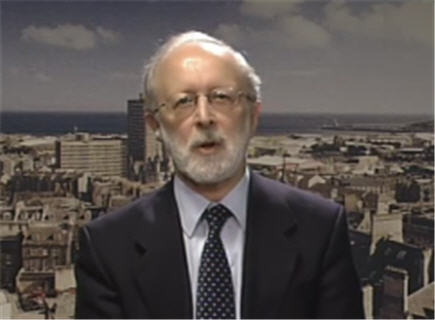
By Professor Roger Pertwee
Discovery of Δ9-tetrahydrocannabinol
Cannabis has been used as a medicine, for religious ceremonies and recreationally for over 5000 years. Indeed, an alcohol-containing tincture of cannabis (Figure 1) was a licensed medicine in the UK until its withdrawal in the early 1970’s.
In contrast, the discovery that cannabis contains (–)-trans-Δ9-tetrahydrocannabinol (Δ9-THC) and that many of the effects experienced when cannabis is taken recreationally are caused by this ‘phytocannabinoid’ was made less than 100 years ago (Pertwee, 2006). These effects include altered mood (usually euphoria); altered perception such that colours seem brighter, music more pleasant and ‘felt time’ appears to pass more slowly than ‘clock time’; an increased desire for sweet food (the ‘munchies’); changes in thought processes; impaired memory…and eventual drowsiness. They can also include increased heart rate, a lowering of blood pressure resulting in dizziness and, at high doses, hallucinations and feelings of paranoia. There is good evidence too that Δ9-THC targets the reward centres of the brain in a manner that can lead to psychological dependence, and that abrupt termination of repeated use of cannabis or Δ9-THC can trigger a transient physical withdrawal syndrome that in abstaining recreational cannabis users most commonly includes disturbed sleep, reduced appetite, restlessness, irritability, sweating, chills, a feverish feeling and nausea.
Some Cannabinoid Pharmacology
The discovery of Δ9-THC was followed by the development of synthetic compounds capable of inducing Δ9-THC-like effects. Results obtained from pharmacological research with some of these compounds culminated in the discovery that they produce many of their central effects by activating specific sites on nerve terminals called cannabinoid CB1 receptors in a manner that influences the normal functioning of the brain (Pertwee, 2006). This finding prompted a search for molecules within our own bodies that can activate these receptors and, in 1992, led to a second major discovery – that we do indeed produce and release such molecules. The first of these ‘endocannabinoids’ to be identified was an ethanolamide of the omega-6 unsaturated fatty acid, arachidonic acid. It was named
‘anandamide’, ananda being the Sanskrit word for internal bliss. It has subsequently emerged that there is at least one other cannabinoid receptor (CB2), that there are other endocannabinoids, and that this ‘endocannabinoid system’ of receptors and endogenous receptor activators plays major roles in the control of our health and in ameliorating unwanted symptoms such as pain.
The search is now on for additional cannabinoid receptors and endocannabinoids. Indeed, we have obtained evidence that ethanolamides, which are converted in our bodies from omega-3 polyunsaturated fatty acids that are found, for example, in fish oil, can both activate cannabinoid receptors and attack cancer cells (Brown et al., 2010).
The Medicalization Of Cannabinoids
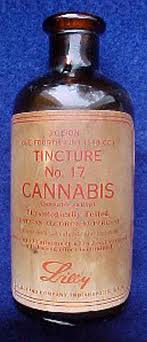
Fig. 1. Tincture Of Cannabis
Individual cannabinoids first entered the clinic in the 1980’s (Crowther et al., 2010). The first of these was Nabilone (Cesamet), a synthetic Δ9-THC-like compound that is used to suppress nausea and vomiting produced by cancer chemotherapy. Synthetic Δ9-THC (Marinol) was licensed soon after Nabilone for the same purpose, and subsequently as an appetite stimulant, particularly for AIDS patients. Nabilone
and Marinol were recently joined in the clinic by Sativex: in Canada (2005) for the relief of multiple sclerosis and cancer pain and in the UK (2010) to treat spasticity due to multiple sclerosis. Sativex has also received regulatory authorisation in Spain. Its main constituents are two phytocannabinoids, Δ9-THC and cannabidiol, both extracted from cannabis.
Importantly, whereas exogenously administered cannabis and individual cannabinoids such as Δ9-THC and Nabilone target all cannabinoid receptors in the body and so ‘flood’ the whole endocannabinoid system, endocannabinoids released endogenously are somewhat more selective since they seem to be released in a manner that only targets subpopulations of their receptors. Although such release is often ‘autoprotective’ it can sometimes be ‘autoimpairing’, leading for example to CB1 receptor-mediated obesity. There is, however, currently little interest in developing medicines from compounds that block CB1 receptors, as such a blockade could well also suppress CB1 receptor-mediated autoprotection. Indeed, the CB1 receptor blocking drug, Rimonabant, was recently withdrawn from the clinic because of an increased incidence of depression and suicidality in patients taking it as an anti-obesity agent.
The fact that Cesamet, Marinol and Sativex are all in the clinic is of course an indication that, as prescribed, these medicines do significantly more good than harm. Even so, there is considerable interest in developing a second generation of cannabinoid medicines that display even greater ‘benefit-torisk ratios’ (Pertwee, 2009). Possibilities include compounds that avoid the production of unwanted cannabinoid CB1 receptor-mediated effects by:
(1) Only activating cannabinoid receptors that are located outside the brain and spinal cord.
(2) Only activating cannabinoid receptors in particular tissues such as skin or spinal cord by being administered directly into these tissues.
(3) Activating cannabinoid CB2 but not cannabinoid CB1 receptors.
(4) Being administered at low doses that produce a cannabinoid receptor-mediated enhancement of the sought after effects of non-cannabinoid medicines but are insufficient to produce significant cannabinoid receptor-mediated unwanted side effects.
(5) Boosting the levels of endocannabinoids when these are being released in an ‘autoprotective’ manner, for example to relieve pain.
(6) Targeting ‘allosteric’ sites that we have discovered to be present on cannabinoid CB1 receptors in a manner that will boost the ability of autoprotectively released endocannabinoids to activate these receptors.
Cannabis: A Complex Scenario
Δ9-THC is synthesized in the cannabis plant from a nonpsychoactive precursor, Δ9-THC acid. This process can be greatly accelerated by heat which is why cannabis is usually smoked, often with tobacco, consumed in preheated food or inhaled from ‘volcano’ vaporizers that create fumes by heating cannabis without burning it or producing smoke. Other pharmacologically active phytocannabinoids can also be
formed from their acids by heating cannabis. These include the non-psychoactive yet pharmacologically active compounds, cannabidiol (CBD), Δ9-tetrahydrocannabivarin (Δ9-THCV) and cannabigerol (CBG), each of which has actual (CBD) or potential medical applications. Some of these phytocannabinoids are really ‘fighto’ cannabinoids, their presence in cannabis making it a pharmacological ‘battlefield’. Thus
we have discovered that although CB1 receptors are activated by Δ9-THC, they can be blocked by Δ9-THCV. It has also been found that CBD can oppose certain effects produced by cannabis or Δ9-THC. Indeed, whilst there is evidence that the presence of Δ9-THC in cannabis increases the risk of developing schizophrenia for certain individuals, there is also strong evidence that cannabidiol is a potential medicine for the treatment of schizophrenia. A further complication is that the relative concentrations of different phytocannabinoids are not the same in all strains of cannabis, in all parts of the same cannabis plant or in male and femalecannabis plants, the female flowering heads of sinsemilla (‘without seeds’) being particularly rich in Δ9-THC. This may have important consequences for those who take cannabis either recreationally or for the quite different purpose of self-medication, as high CBD:THC or THCV:THC ratios may lessen the risk from cannabis of developing schizophrenia or cannabis dependence…although probably also alter the perceived nature of a cannabis-induced ‘high’.
Spice
One notable recent event has been the arrival in the recreational cannabis world of herbal mixtures laced with synthetic cannabinoids (‘designer drugs’) such as JWH-018 (e.g. Spice or K2, named after the second highest mountain on earth). These little-investigated synthetic cannabinoids share the ability of Δ9-THC to activate cannabinoid CB1 receptors and hence to produce a ‘high’. Moreover, any of them that
activate these receptors more strongly than Δ9-THC will most likely produce a more intense ‘high’ and perhaps also more serious unwanted effects than usually experienced by recreational cannabis users. They probably also differ from THC in other ways. Thus, although Δ9-THC shares its ability to target cannabinoid receptors with many synthetic compounds, the additional pharmacological actions it possesses provide it with a unique ‘pharmacological fingerprint’ that distinguishes it from many of these other compounds.
Harm Minimization For Recreational Cannabis
One important challenge for the International Narcotics Control Board that monitors and implements United Nations drug control conventions is to select an optimal but workable strategy for minimizing the harm that is now being caused both to themselves and to Society by some of the many millions of people world-wide who currently take cannabis (or Spice) recreationally and also, indeed, by some of those who self-medicate with ‘street’ cannabis. For the UK, options include leaving the present law unchanged and increasing or
decreasing current penalties for the supply and/or possession of ‘street’ cannabis. It would also be advisable to develop strategies directed (i) at discouraging cannabis from being taken by adolescents or other individuals who are thought to be at particular risk from cannabis-induced harm and (ii) at providing advice (a) about combinations and levels of cannabinoids in cannabis that are thought to be the least
harmful and (b) about how to take cannabis as an inhaled unburnt vapour or in other ways that avoid the lung damage caused by smoked cannabis. It will be important that policy makers have discussions with cannabinoid pharmacologists whilst considering these and any other potential strategies for minimizing the harm caused by recreational cannabis.
Brown I, Cascio MG, Wahle KWJ, Smoum R, Mechoulam R, Ross RA, Pertwee RG and Heys SD. Cannabinoid receptor dependent and independent anti-proliferative effects of omega-3 ethanolamides in androgen receptor positive and negative prostate cancer cell lines.
Carcinogenesis 2010; 31: 1584-1591.
Crowther, SM, Reynolds, LA and Tansey, EM (eds). The Medicalization of Cannabis. Witness Seminar Transcript. Volume 40. The Wellcome Trust Centre for the History of Medicine, at UCL. 2010; http://www.ucl.ac.uk/histmed/downloads/c20th_group Pertwee RG. Cannabinoid pharmacology: the first 66 years. Br J Pharmacol 2006; 147: S163-S171. Pertwee RG. Emerging strategies for exploiting cannabinoid receptor agonists as medicines. Br J Pharmacol 2009; 156: 397-411. Professor Roger Pertwee has three degrees from the University of Oxford: MA (in biochemistry), D.Phil. (in pharmacology) and D.Sc. (in physiological sciences). He is Professor of Neuropharmacology at the University of Aberdeen, Director of Pharmacology for GW Pharmaceuticals, co-chairman of the International Union of Pharmacology (IUPHAR) Subcommittee on Cannabinoid Receptors, a co-ordinator of the British Pharmacological Society’s Special Interest Group on Cannabinoids and visiting Professor at the University of Hertfordshire. He has also served as chairman of the International Association for Cannabis as Medicine (IACM; 2005-2007) and as President of the International Cannabinoid Research Society (ICRS; 2007-2008; 1997-1998) and is currently ICRS International Secretary and a member of the IACM board of directors. He was the recipient of the 2002 Mechoulam Award “for his outstanding contributions to cannabinoid research” and in 2005 was recognized to be an “ISI Highly Cited Researcher” and hence among “the world’s most cited and influential researchers” (see Pertwee at http://isihighlycited.com/). His research has focused mainly on the pharmacology of cannabinoids. This he began in 1968 at Oxford University and continued when he moved to Aberdeen in 1974. His research has played major roles in:
• the discovery of endocannabinoids and the endocannabinoid system;
• the recent discovery that ethanolamides formed from omega-3 polyunsaturated fatty acids seem to be endocannabinoids;
• the gathering of evidence supporting cannabinoids for the management of multiple sclerosis;
• the discovery that tetrahydrocannabivarin (THCV) is a phytocannabinoid;
• the pharmacological characterization of certain phytocannabinoids and of novel synthetic cannabinoids, e.g. the phytocannabinoids THCV, cannabidiol and cannabigerol, the first water-soluble cannabinoid (O-1057), the first CB1 receptorselective agonists (e.g. methanandamide), and a widely-used CB2 receptor antagonist (AM630);
• the discovery of a cannabinoid CB1 receptor allosteric site;
• the development of cannabinoid bioassays, some widely used (e.g. the “ring test”).
See also www.abdn.ac.uk/ims/staff/details.php?id=rgp
The Most Dangerous Man In Britain

James “Broken Britain” Brokenshire
The vile, evil, utterly disgusting policies that this man pursues are succeeding, according to him. He claimed in the drugs debate on Friday that it is a measure of the “success” of his policies that drugs on the streets of Britain now contain more adulterants than ever before.
He said:
“The quality of cocaine on the streets is, in some cases, as low as 10% in purity at the moment. That shows some of the very effective work that is taking place.”
This is a disgraceful and despicable attitude. It is more than irresponsible. It reveals the deliberate pursuit of harm to drug users. Brokenshire has now ducked well beneath any standard of decent behaviour. He must be removed from office.
Some of these adulterants are far more dangerous than cocaine itself. They also mask the strength of the cocaine and so make overdoses more likely. This is what Brokenshire regards as success.
According to the Serious Organised Crime Agency, the following adulterants are found in cocaine in Britain:
Benzocaine, Boric acid, Caffeine, Creatine, Dilitiazem, Dimethylterephthalate, Hydroxyzine, Lignocaine, Mannitol, Paracetamol, Phenacetin, Procaine, Sugars and Tetramisole hydrochloride
James “Broken Britain” Brokenshire is the most dangerous man in Britain. He must be sacked as a minister in order to protect the safety of young and vulnerable people.
Paradise Valley

 Dorset is experiencing its worst winter for 30 years but in Paradise Valley it just makes the views more beautiful and the adventures more exciting.
See here for the latest instalment.
Simon Heffer’s Disgusting Prohibitionist Rant
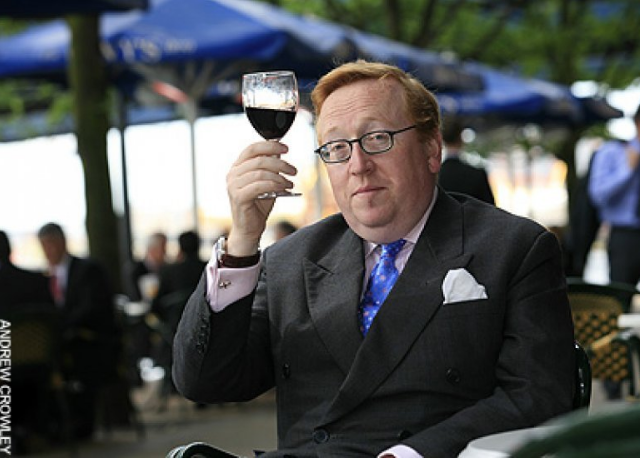
Fat Cat And His Drug Of Choice
Journalists in the old media and politicans are panicking. They are trying to crack down hard on us and our rights to opinions and self-expression. In the age of WikiLeaks and the internet, their self-serving oligarchy is undermined by real freedom.
Cameron’s and Miliband’s arrogant and dismissive rejection of Bob Ainsworth’s proposals for an end to prohibition, shows they have no proper response to his arguments. Today, another member of the ruling elite penned a truly ignorant and repressive opinion in The Daily Telegraph. See here for the full article.
As well as trying it on with the discredited idea that cannabis causes psychosis, Heffer says, with astounding spitefulness and stupidity:
“We have a serious problem with drugs in this country because we do not punish drugs crime severely enough. Legalisation is not the answer, but getting nasty might just be.”
It is an utterly disgraceful article. Heffer should be ashamed of himself for spreading lies and misinformation, I suspect deliberately.
The facts are that the harms caused by prohibition are well documented and proven.
The facts are that the allegation cannabis causes psychosis is just the latest scare story. In the 1930s the prohibitionists used to say that cannabis makes white women promiscuous with black men. This is just the latest smear of equivalent value.
Public opinion is hugely in favour of an end to prohibition. You only have to look at the polls and the huge volume of comment and opinion on the web.
The oligarchy of politicians and the media is on the point of collapse. Those who value truth and freedom can console themselves that the darkest hour is just before dawn. Journalists like Heffer and Andrew Marr, for example, are desperate to hang on to their corrupt position where they control the news agenda and contrive media coverage in cahoots with their friends in parliament.
A peaceful revolution is coming where fat cat journalists with no more talent than the lowliest blogger will be turfed out of their comfortable sinecures as the irrelevant dinosaurs that they are.
Heffer and his chums on both sides of the House have had their nasty little stitch-up going on for too long. Dawn is approaching and his sort has no future
Politicians’ Negligent Response To The Drugs Debate
Shamefully Slandered
The Independent in its leader today, says “It is depressing how stale and weary have been the responses” to Bob Ainsworth’s initiative on drug policy reform. See here. As with all the media it has failed dismally to point out that he was supported by Peter Lilley, former deputy leader of the Tory party, Tom Brake from the LibDems and Paul Flynn from Labour.
The BBC, with appalling inaccuracy, stated that “all three main parties at Westminster remain opposed to legalisation”. See here. In fact the LibDems’ published policy is “In the longer term, seeking to put the supply of cannabis on a legal, regulated basis”. It matters little though because almost never has any political party been more irrelevant. The LibDems now command less respect than the Monster Raving Loonies.
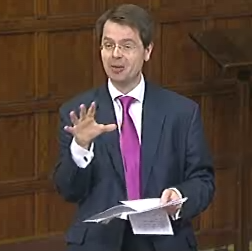
The Most Dangerous Man In Britain
The responses of our political leaders are not just depressing, they are grossly irresponsible and negligent. James “Broken Britain” Brokenshire is the most dangerous man in Britain and will be responsible for far more death, misery and degradation in our country than any terrorist. As The Independent says, “such is the hysteria about drugs in Britain that there is no political space for a reasoned debate by those in authority.” The evidence that the war on drugs is an expensive failure is overwhelming but politicians prefer to waste money and lives rather than grasp this nettle.
The cowardly hypocrites, Cameron and his poodle, sit back while they allow Brokenshire, a preppy-faced apologist for gangsters to oppress, pillage and brutalise our fellow citizens.
Brokenshire is doing all he can to break Britain and British society.
He is a criminal of the first order.
Assange Freed!
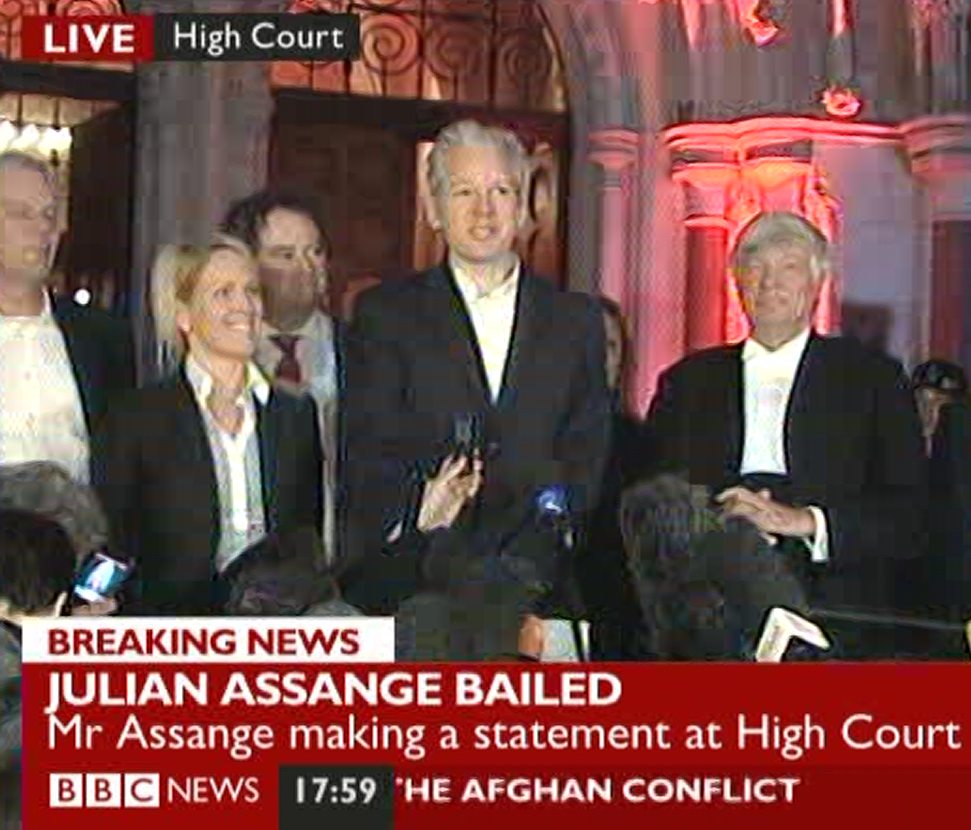
“Well it’s great to smell the fresh air of London again!”
British justice is not dead!
Breakthrough In The Drugs Debate!

Bob Ainsworth
Tomorrow, Bob Ainsworth MP, former Home Office drugs minister and Secretary of State for Defence, will call for the legalisation and regulation of drugs. He is to lead a Parliamentary debate in Westminster Hall, at 2.30pm on Thursday 16th December 2010.
Great credit for this must go to the inestimable Transform Drug Policy Foundation, which has led the fight against prohibition. This is an extraordinary breakthrough. The news literally brought tears to my eyes. We have fought so long for such progress.
Mr Ainsworth said;
“I have just been reading the Coalition Government’s new Drugs Strategy. It is described by the Home Secretary as fundamentally different to what has gone before; it is not. To the extent that it is different, it is potentially harmful because it retreats from the principle of harm reduction, which has been one of the main reasons for the reduction in acquisitive crime in recent years.
However, prohibition has failed to protect us. Leaving the drugs market in the hands of criminals causes huge and unnecessary harms to individuals, communities and entire countries, with the poor the hardest hit. We spend billions of pounds without preventing the wide availability of drugs. It is time to replace our failed war on drugs with a strict system of legal regulation, to make the world a safer, healthier place, especially for our children. We must take the trade away from organised criminals and hand it to the control of doctors and pharmacists.
 As drugs minister in the Home Office I saw how prohibition fails to reduce the harm that drugs cause in the UK, fuelling burglaries, gifting the trade to gangsters and increasing HIV infections. My experience as Defence Secretary, with specific responsibilities in Afghanistan, showed to me that the war on drugs creates the very conditions that perpetuate the illegal trade, while undermining international development and security.
My departure from the front benches gives me the freedom to express my long held view that, whilst it was put in place with the best of intentions, the war on drugs has been nothing short of a disaster.
Politicians and the media need to engage in a genuine and grown up debate about alternatives to prohibition, so that we can build a consensus based on delivering the best outcomes for our children and communities. I call on those on all sides of the debate to support an independent, evidence-based review, exploring all policy options, including: further resourcing the war on drugs, decriminalising the possession of drugs, and legally regulating their production and supply.
One way to do this would be an Impact Assessment of the Misuse of Drugs Act in line with the 2002 Home Affairs Select Committee finding – which included David Cameron – for the government to explore alternatives to prohibition, including legal regulation.
The re-legalisation of alcohol in the US after thirteen years of Prohibition was not surrender. It was a pragmatic move based on the government’s need to retake control of the illegal trade from violent gangsters. After 50 years of global drug prohibition it is time for governments throughout the world to repeat this shift with currently illegal drugs.”
Peter Lilley MP, former Conservative Party Deputy Leader said;
“The current approach to drugs has been an expensive failure, and for the sake of everyone, and the young in particular, it is time for all politicians to stop using the issue as a political football. I have long advocated breaking the link between soft and hard drugs – by legalising cannabis while continuing to prohibit hard drugs. But I support Bob Ainsworth’s sensible call for a proper, evidence based review, comparing the pros and cons of the current prohibitionist approach with all the alternatives, including wider decriminalisation, and legal regulation.”
Tom Brake MP, Co-Chair, Liberal Democrat Backbench Committee on Home Affairs, Justice and Equalities said;
“Liberal Democrats have long called for a science-based approach to our drugs problem. So it is without hesitation that I support Bob Ainsworth’s appeal to end party political point-scoring, and explore sensitively all the options, through an Impact Assessment of the Misuse of Drugs Act.”
Labour’s Paul Flynn MP, Founder Council Member of the British Medicinal Cannabis Register said;
“This could be a turning point in the failing UK ‘war on drugs.’ Bob Ainsworth is the persuasive, respected voice of the many whose views have been silenced by the demands of ministerial office. Every open rational debate concludes that the UK’s harsh drugs prohibition has delivered the worst outcomes in Europe – deaths, drug crime and billions of pounds wasted.”
Rebecca – I Told You So! – WRONG—WRONG!
I had this all ready to go!
I think the result is very strange. Rebecca should have won.
She is the one who will go on to achieve great success.

It’s wonderful to be able to say I told you so nearly ten weeks ago!
She is the one with the X Factor.
She deserves it.

Vile Police Website Reveals Violent Conspiracy
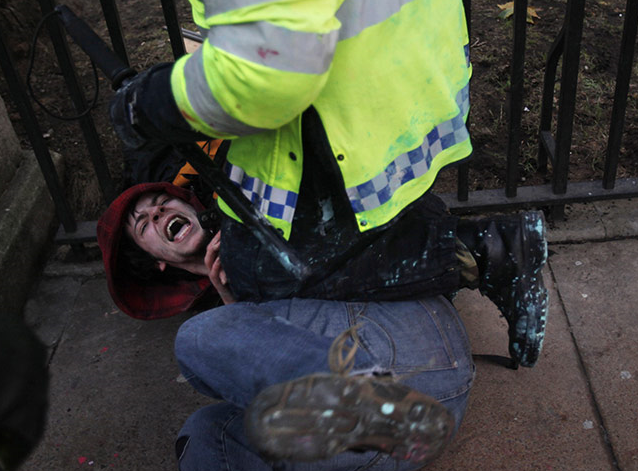 The disgusting Inspector Gadget website is at it again. Go take a look if you want your eyes opened to the corrupt, barely literate, violence-obsessed, rabid scum that masquerades as our police force. They are salivating in delight at their frenzy of brutality on Thursday and eagerly anticipating more opportunities to beat up our children next week.
I support the real police. There are evil, subversive forces hiding behind and amongst the students. Those who are violent and only trying to ferment anarchy need to be stopped but they are on both sides. There are far too many of them wearing a police uniform and they deserve the most severe punishment of all.
It is outrageous that they are allowed to commune, plot and scheme with each other like this. They are paid not to have opinions like these and to stay calm and neutral. They are incapable of doing the job. Inspector Gadget should be closed down. Any officer who participates in it is not fit to hold the Queen’s warrant.
These are a selection of comments made by those who we pay to protect our children:
“I don’t think you can hurt a student by hitting them on the head.” Posted by “Fee”
“Good point, get chainsaws and cut their legs off then. That will slow them down a bit.” Posted by Taff Taff
“Shields advance… Fix bayonets. Charge…..Good luck troops.” Posted by BeePee
“Good cavalry charge at that protest, the only thing missing were the pig sticklers used in days of Yore.” Posted by Bodrules
“Time to get hard and nasty!” Posted by Ranter
“A few well placed live rounds and the ‘protest’ would stop in an instant.” Posted by ExTrafficBiker
See more of this disgusting behaviour here.
And this, the Taser equivalent of a claymore mine, is the sort of weapon that the Inspector and his cronies want for next time:

“absofuckinglutely ideal for this situation” Posted by Taff Taff
“I WANT THESE. SWEEEEET.” Posted by Goinwibblebobby
Wake up Britain! This is the mindset of the overpaid, mindless thugs and sadists that are supposed to be protecting our children.
This is the consequence of a government that hides in its ivory towers, refuses to engage with the people, conspires with the media to silence dissent and is a betrayal of everything that democracy stands for. And I speak as a Tory!

 Peter Reynolds