Posts Tagged ‘crime’
Breakthrough In The Drugs Debate!

Bob Ainsworth
Tomorrow, Bob Ainsworth MP, former Home Office drugs minister and Secretary of State for Defence, will call for the legalisation and regulation of drugs. He is to lead a Parliamentary debate in Westminster Hall, at 2.30pm on Thursday 16th December 2010.
Great credit for this must go to the inestimable Transform Drug Policy Foundation, which has led the fight against prohibition. This is an extraordinary breakthrough. The news literally brought tears to my eyes. We have fought so long for such progress.
Mr Ainsworth said;
“I have just been reading the Coalition Government’s new Drugs Strategy. It is described by the Home Secretary as fundamentally different to what has gone before; it is not. To the extent that it is different, it is potentially harmful because it retreats from the principle of harm reduction, which has been one of the main reasons for the reduction in acquisitive crime in recent years.
However, prohibition has failed to protect us. Leaving the drugs market in the hands of criminals causes huge and unnecessary harms to individuals, communities and entire countries, with the poor the hardest hit. We spend billions of pounds without preventing the wide availability of drugs. It is time to replace our failed war on drugs with a strict system of legal regulation, to make the world a safer, healthier place, especially for our children. We must take the trade away from organised criminals and hand it to the control of doctors and pharmacists.
 As drugs minister in the Home Office I saw how prohibition fails to reduce the harm that drugs cause in the UK, fuelling burglaries, gifting the trade to gangsters and increasing HIV infections. My experience as Defence Secretary, with specific responsibilities in Afghanistan, showed to me that the war on drugs creates the very conditions that perpetuate the illegal trade, while undermining international development and security.
My departure from the front benches gives me the freedom to express my long held view that, whilst it was put in place with the best of intentions, the war on drugs has been nothing short of a disaster.
Politicians and the media need to engage in a genuine and grown up debate about alternatives to prohibition, so that we can build a consensus based on delivering the best outcomes for our children and communities. I call on those on all sides of the debate to support an independent, evidence-based review, exploring all policy options, including: further resourcing the war on drugs, decriminalising the possession of drugs, and legally regulating their production and supply.
One way to do this would be an Impact Assessment of the Misuse of Drugs Act in line with the 2002 Home Affairs Select Committee finding – which included David Cameron – for the government to explore alternatives to prohibition, including legal regulation.
The re-legalisation of alcohol in the US after thirteen years of Prohibition was not surrender. It was a pragmatic move based on the government’s need to retake control of the illegal trade from violent gangsters. After 50 years of global drug prohibition it is time for governments throughout the world to repeat this shift with currently illegal drugs.”
Peter Lilley MP, former Conservative Party Deputy Leader said;
“The current approach to drugs has been an expensive failure, and for the sake of everyone, and the young in particular, it is time for all politicians to stop using the issue as a political football. I have long advocated breaking the link between soft and hard drugs – by legalising cannabis while continuing to prohibit hard drugs. But I support Bob Ainsworth’s sensible call for a proper, evidence based review, comparing the pros and cons of the current prohibitionist approach with all the alternatives, including wider decriminalisation, and legal regulation.”
Tom Brake MP, Co-Chair, Liberal Democrat Backbench Committee on Home Affairs, Justice and Equalities said;
“Liberal Democrats have long called for a science-based approach to our drugs problem. So it is without hesitation that I support Bob Ainsworth’s appeal to end party political point-scoring, and explore sensitively all the options, through an Impact Assessment of the Misuse of Drugs Act.”
Labour’s Paul Flynn MP, Founder Council Member of the British Medicinal Cannabis Register said;
“This could be a turning point in the failing UK ‘war on drugs.’ Bob Ainsworth is the persuasive, respected voice of the many whose views have been silenced by the demands of ministerial office. Every open rational debate concludes that the UK’s harsh drugs prohibition has delivered the worst outcomes in Europe – deaths, drug crime and billions of pounds wasted.”
LibDem Conmen Should Be Expelled From Parliament

Liars, Conmen And Cheats
I support the tuition fee proposals. They seem very fair to me and I can’t see that any prospective student can have any complaint about the terms offered.
However, if you’re an MP and before the election you signed a pledge to vote against any increase in tuition fees then you have no choice. It doesn’t matter if you’re a minister or if the economic situation is worse than you thought it was. This is black and white. It’s clear cut. There can be no argument. If you break your signed commitment then you have to go.
If you seek to evade your commitment or fudge the issue then you compound your crime. And I see no reason why it should not be a crime. In civil law it is a clear breach of contract but it is much more serious than that. It is obtaining a seat in parliament on false pretences. It wasn’t a vague promise made in the heat of the election campaign. It was a written agreement.
Nick Clegg, Vince Cable and all their cronies who have broken their word should be frogmarched out of parliament and charged with criminal deception. They should all go to jail. Not for a long time. Six months will do but each and every one of them is a proven liar, conman and cheat. They have no honour.
Unless parliament takes this action to preserve its integrity, then its reputation will sink even lower. It sets the most appalling example to the country and any MP who allows this scandal to persist without action is an accessory after the fact.
Shame on you, you weak and pathetic cowards. You disgrace yourselves and our country.
London Games – The Novel
Now On Sale Here.
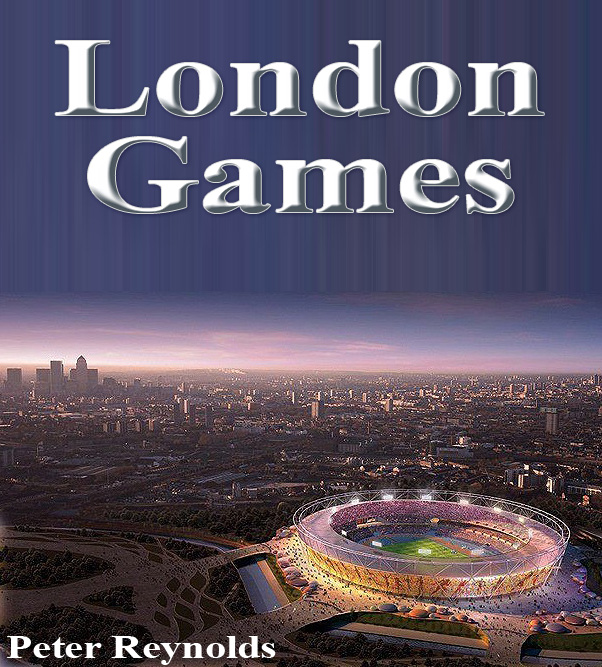 It is 2012. Britain is slowly emerging from the longest and deepest recession for 100 years. It has been a dark and difficult time. The London Olympics are now just a few months away. The whole country is hoping that the games will provide the inspiration and renewal that it needs.
London Games follows five characters through the spring and summer of 2012, culminating as the games open at the Olympic stadium. It is a gripping tale of relationships and dramatic personal experience. It concerns an Afghanistan veteran suffering from combat stress, a disgraced ex-banker sent to jail amidst scandal and public outrage, a cocaine dealer with customers at the very top and the very bottom of society, a property developer on the cusp of making his fortune and a restauranteur starting to make his name as a celebrity chef. At times it plumbs the depths of London’s sordid underworld yet it also catches an uplifting mood and celebrates the city’s unique history and environment. It examines crime and punishment as well as food and drugs, love and ambition. Ultimately it reveals a bond between the most unlikely of friends, thrown together in an extraordinary and thrilling climax with a redemptive message of hope and optimism.
Sir Damian Fremantle experiences the shock of his first night in Brixton prison while Susan is confused between shoplifting in Sainsbury’s and bomb disposal in Helmand province. Clive Dumonde is still mourning the death of his parents as he struggles to understand what’s involved in developing a multi-million pound property in Notting Hill. His business angel Mark is also an investor in the uber-hip and trendy Vermont restaurant just around the corner. Meanwhile, Mo, or Big M as his customers call him, is living the hectic, stressed-out life of a cocaine dealer, supplying crack to streetwalkers one minute and top grade powder to city bankers the next.
John George is on the brink of becoming London’s top chef. It is a constant struggle to devise new dishes while coping with the relentless pressure for perfection. As the guests become ever more famous, so the financial pressures increase, the staff becomes more difficult and the vanilla vodka bottle in his desk becomes his best friend. Then, without warning, the scales fall from his eyes and the sous chef who he has barely noticed for months is transformed into the love of his life.
The pressure on Mo never lets up. His customers call all day and all night. He is always looking over his shoulder, expecting to see a blue light in his mirror or hear a knock on the door. Then, for no good reason, his principal supplier accuses him of passing counterfeit money and Mo is in a race for his life with both the police and violent gangsters.
Susan finds herself locked up and heavily sedated. She thought she was doing her duty but she has committed a dreadful crime that will have consequences for the rest of her life. What future or hope can there be for someone who has been a hero, trained as a killing machine but now behaves like a homicidal maniac?
Five characters, products of their time, all on an inevitable path as their stories intertwine and we glimpse a post-2012 Britain, rejuvenated, reinvigorated, ever more complicated, challenging and exciting – a Great Britain.
Anti-Social Police Behaviour

Out Of Control
The British police are out of control. Far from becoming a politically correct “service”, they’re moving more and more towards the “force” ethos, promoting their own self-interest and resisting all attempts to be subject to democratic control. The sooner we get elected police commissioners the better. Those presently in charge of the police increasingly place themselves above the law and regard the public as the opposition, not the people they are paid to protect and serve.
They’re even trying to frighten us over the spending cuts, suggesting that any reduction in police budgets will lead to increased crime and disorder. What other public service with its budget under threat uses direct fear of violence as its response? I call that scaremongering. I call it precious close to a protection racket, to blackmail and extortion.
The police are very, very good at road accidents. There are brave and clever men and women in anti-terrorism and serious crime. But we lost the British bobby sometime ago now. I’d say it was in the 1990s. Dixon Of Dock Green had retired to the other side of the world. Jack Regan was supposed to have gone but he returned disguised as Gene Hunt. The TSG continued its long tradition of brutality providing a career path for violent thugs. The term “institutionalised racism” was coined. The cars got faster. The uniforms got sexier in a Nazi stormtrooper sort of way. Meanwhile, in parallel, the gay rights, politically correct, sociology graduates and new Labour bureaucrats gained influence and these two factions, fundamentally incompatible, consumed huge quantities of police time and procedure, and eventually created a perfect storm of bureaucracy, corruption and laziness. The police lost touch with the people completely.
The police don’t want to be accountable to anybody. Even when they assault members of the public, even when innocent bystanders die at the hands of police officers in disguise, they close ranks, obstruct justice, lie, cheat and dissemble to avoid the consequences. Now, Sir Paul Stephenson, not content with the way his officers pervert the criminal justice system, wants some sort of immunity from the civil courts. His secret letter to Theresa May, seeking protection against officers being sued for brutality or wrongful arrest is a disgrace. See here. It reveals his true intentions only too clearly. He even wants to charge for requests under the Freedom Of Information Act, further tightening the police culture of secrecy and concealment. It is truly terrifying that Britain’s most senior police officer should even contemplate such ideas. It is the very opposite of responsibility and conclusive proof that he is not a fit and proper person to be any sort of policeman, let alone commissioner of the Metropolitan police. Theresa May should dismiss him immediately. He is a power hungry, manipulative, enemy of justice. No sort of protector or champion or servant of the public at all.
When it comes to the brutal assault by Sergeant Delroy Smellie on Nicola Fisher or the death of Ian Tomlinson, clearly caused by PC Simon Harwood, most of us would be prepared to accept the “bad apple” argument. Yet somehow, in the Nicola Fisher case, District Judge Daphne Wickham was persuaded to refuse to hear Ms Fisher’s statement in court. Somehow, over a year and a half after Ian Tomlinson was killed, PC Harwood has still not been called to account for his actions and is still suspended on full pay. Neither have his colleagues who blatantly lied and tried to cover up what had happened. The truth is these men are not bad apples. They are the deliberate product of the Met’s Territorial Support Group (TSG). In hiding their identification and using brutal, disproportionate violence, they are entirely consistent with the culture and training that their senior officers have designed.
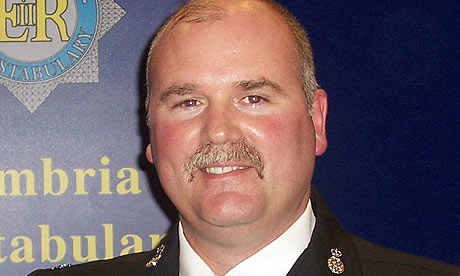
Hero
Of course, there are still good cops, selfless, conscientious heroes like PC Bill Barker who genuinely seek to serve the public. He gave his life while protecting people during the Cumbrian floods. See here. He deserves every honour that we can bestow on him. He shames all those corrupt, cowardly bullies that infect our country, that hide in their offices and cars, that display their vile and despicable attitudes on the Inspector Gadget website. Officers like PC Barker are now in the minority, in full scale retreat, ridiculed and excluded by a wannabe Gene Hunt culture that has attracted more and more borderline psychopaths to the paramilitary uniform and fast car culture.
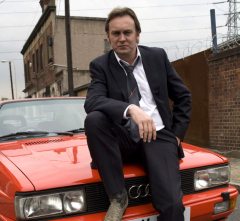
Role Model
Now they don’t even think that anti-social behaviour is police work. It’s not exciting or glamorous enough. In the early noughties in North Kensington, I saw how the police completely lost control of the Avenues, the terraced houses between the Harrow Road and Queens Park. The police from Kilburn and Paddington Green stations were in full scale retreat, absolutely impotent and useless in the face of gangs of kids aged 10 – 16, on the streets at all hours, abusing people, keying cars, throwing eggs and laughing at any authority or discipline. Those hooligans and yobs are now breeding and the police are reaping what they’ve sown. I expect their solution will be violence and “fit-ups”. They’re no different from the lowlife, layabouts themselves. They’re just two sides of the same coin.
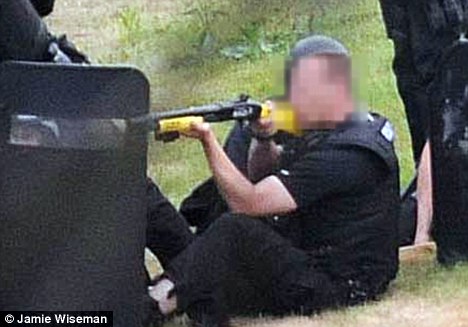
Illegal Weapon
The Raoul Moat affair revealed how the police have lost the plot. While some officers proved their courage and worth, others indulged in an orgy of technology, expense, hiding behind their procedures and precautions. Others used banned super-Tasers, illegally obtained from their cronies in the arms industry and undoubtedly caused the death of the mad nutter. Not a bad result but achieved in a dreadful way. It was a dismal and demeaning epsiode for all concerned. See here.
Corruption is endemic in the police. It starts at the beginning of every shift and continues off duty. At its worst, it’s the disgusting spectacle of PC Stephen Mitchell in Newcastle, who inflicted his sexual desires and drug appetite on those he arrested. See here. At the everyday, commonplace level, it’s the copper who confiscates a bag of weed and takes it home to smoke himself, or who brutalises a wheelchair bound medicinal cannabis user. It’s the thugs who think it’s acceptable to terrorise and batter an old man over a motoring offence. See here.
Elected police commissioners are our only hope. I applaud the coalition government for bringing forward this proposal and acting on it. I see no other way of rolling back the Stasi-like culture that the Labour party has allowed to flourish. Beware though, those that put themselves forward for election as a commissioners are in the front line. They risk the attention of the police establishment in ways that we cannot yet know. I wonder how many candidates will have their personal lives investigated and possibly fabricated? Any prospective commissioner who wants to disrupt the comfortable life of the police may find himself in the firing line. All sorts of inconveniences, stops and searches, investigations and embarrassments may be just around the corner.
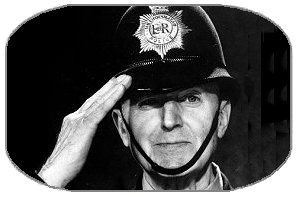 The police want us to believe that if they are squeezed in the spending review we will face danger, disorder and violence in the streets. Instead, what we must do is paralyse the police bureaucracy, starve it of the resources it needs to promote its self-fulfilling prophecies and force officers back onto the streets. We will pay for shoe leather but not for air conditioned limousines. We will support bobbies on the beat but not poseurs in flashy SUVs. We will not tolerate any sort of discrimination or favouritism. No officer may be a freemason or belong to any secret organsation. We must fight for the soul and integrity of our police service against the corrupt thugs that have infiltrated it.
The British people deserve police officers they can be proud of.
For A Bad Cop, Prison Is Just The Start
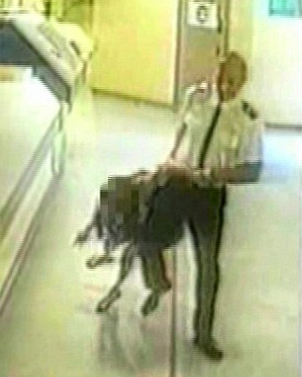
Doing His Duty
I hope that ex-Police Sergeant Mark Andrews had a really bad night on Tuesday. It was his first night in jail after being sentenced to six months for assaulting Pamela Somerville, an innocent member of the public, someone he was paid and trusted to protect. See here for the full story.
I hope he had a really bad day yesterday too. I hope he’s scared. I hope he’s ashamed and racked with guilt. I hope he has a really bad day tomorrow and the day after and the day after that. I hope every single minute of his jail time is frightening, distressing, humiliating and painful. I hope he misses his wife and two children and is beside himself with grief and shame at the way he has let them down. The man is pond life scum. He should be extremely grateful that he got off so lightly because if I was the judge I would have considered six years to be a more appropriate sentence than six months. In fact, I really hope that the CPS appeals the sentence. There’s no way that it is sufficient. He’ll be out in just 13 weeks and free to go back to his family. He should be made to suffer.
When a police officer commits a crime, particularly an assault while on duty, it is far, far more serious than when it is an ordinary member of the public. It is a breach of trust. It is like a bank manager stealing from his own bank. It can never be forgiven. It has to be marked as the most heinous of crimes.
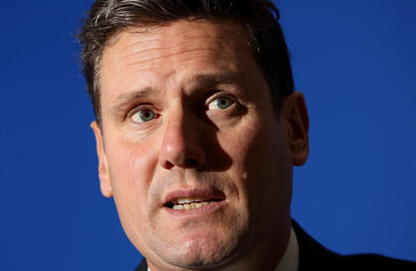
Sleazy Starmer
I suppose we have to be thankful that the CPS even brought charges in the first place. It and its thoroughly sleazy boss, Keir Starmer, seem to do everything they can to avoid bringing police officers to justice. Keir Starmer has the brazen cheek to pontificate about changing the system of murder charges when he is complicit in enabling police officers to avoid justice! See here. We’re really not interested in his thoughts about the future of justice in Britain. He is too deeply ensconsed in the corruption and failures of the past. We want him out of his job and on the scrapheap with Andrews. In fact, I’d have him in the cell next door to Andrews and I’d put them both back on slopping out but they could do each other’s rather than their own.
I congratulate Wiltshire Constabulary on bringing Andrews to justice and particularly the police officer who turned him in. That man deserves a medal.
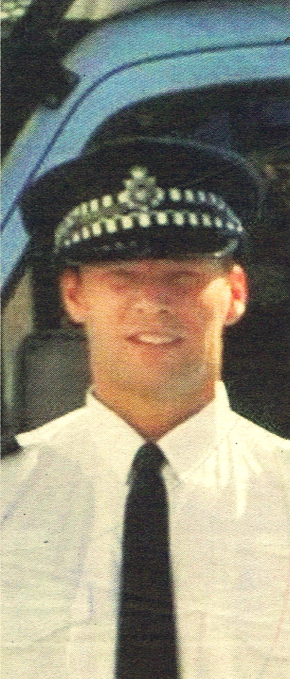
Killer
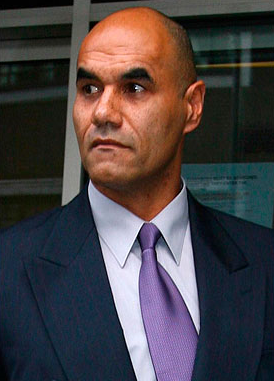
Thug
This should send a signal to thugs like Delroy Smellie, Simon Harwood and every other bent cop that you will never, ever get away with your behaviour. Even if you manage to wriggle free like Smellie with the assistance of slimeball judges or evade the full force of the law like Harwood with the help of his crony Starmer, we, the British public, will never let you off. It won’t ever be over for you, whether or not you do time in prison. You and your kind are on a life sentence. You will be despised, reviled, hated and subject to ridicule and abuse until the end of your days. You deserve nothing less.
My MP, Richard Drax, To Write To David Cameron On Drugs Policy
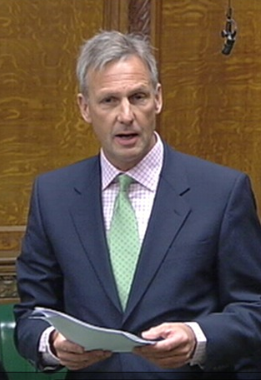
The Honourable Member For Dorset South
Today I met with my MP, Richard Drax. He was just as sickeningly handsome and charming as I expected him to be! So I showed him no mercy and bombarded him with my opinions for a good half an hour.
I realised afterwards that my favourite maxim “less is more” would have been a better strategy. Nevertheless, he did offer to write to David Cameron on my behalf on drugs policy and seemed genuinely sympathetic to some of the points I made.
I have just sent him a lengthy email in confirmation which I reproduce below. If anyone wishes to use this as a template for a letter or email to their own MP, please feel free to do so.
******
Dear Richard,
Thank you so much for your time today. I very much enjoyed meeting you. As I said, I came with opinions not problems. I am grateful to you for listening to me.
I realise that I made the classic mistake of bombarding you with far too much information and not giving you time to absorb any. I hope I may correct that error by summarising here what we talked about.
1. Gary McKinnon. Thank heavens that progress seems to have been made on this. The idea of an “extradition” treaty that provides for someone to be sent to the USA for trial on an alleged crime committed here is iniquitous. It’s particularly unfair in McKinnon’s case as he suffers from Asperger’s syndrome. You pointed out to me that similar dangers exist with the new European arrest warrant.
I would urge you to do everything possible to ensure that if Gary McKinnon is to be tried, it should take place in the UK.
2. Ian Tomlinson. In my view the failure to prosecute the policeman who assaulted him is an outrage and Keir Starmer’s reasons entirely inadequate. Now that the credibility of the pathologist in the case has been destroyed by a GMC panel, Starmer should at least reconsider and hopefully reverse his decision.
References here:
http://pjroldblog.wordpress.com/2010/08/31/killer-cop-harwood-must-be-charged/
http://pjroldblog.wordpress.com/2010/07/24/keir-starmer-the-next-lord-widgery/
I would urge you to press for a re-consideration of the decision not to bring charges. If no criminal charges are brought, at the very least the disciplinary hearing should be held in public as the rules allow. The Tomlinson family are entitled to justice.
3. Drugs policy. You very kindly agreed to write to David Cameron on my behalf. I am very concerned at the conduct of the Home Office at present and particularly James Brokenshire, the Minister for Crime Prevention who is causing great damage to both the coalition governemnt and the Tory party by promoting ideas and policies that contradict virtually all expert opinion, including the government’s own scientific advisers. He also seems to be completely at odds with the calls for drug law reform which both David Cameron and Nick Clegg have made consistently over the last 10 years.
This is not a peripheral or secondary issue. According to Baroness Meacher in the House of Lords on 15th June 2010, “There is no more obvious waste than the £19 billion annual cost of the UK’s war on drugs”.
There is a huge amount of reference material on this subject on my blog:
http://pjroldblog.wordpress.com/?s=drugs
I would also refer you to the Transform Drug Policy Foundation which has highly detailed and almost universally acclaimed proposals for drug regulation:
Virtually all experts agree that the “war on drugs” has failed. In exactly the same way as alcohol prohibition in the US led to a massive increase in crime and violence, so drug prohibition has created an illegal market said to be worth £350 billion per year. It has also financed civil war in Latin America for 25 years and is the principal source of finance for Al Qaeda and the Taliban in Afghanistan. Our soldiers are dying every day because of the illegal trade in opiates. Why don’t we just buy up the whole crop for the next 10 years? It would be much cheaper in both cash and lives than the Afghan war.
Virtually all experts agree that regulation would be a better solution. I have distilled the following five point plan from everything that I have read and learned over more than 30 years:
1. An end to oppression of drug users (at least 10 million UK citizens)
2. Removal from the criminal law of any offence for possession and/or social supply
3. Fact and evidence-based policy, information and regulation
4. Re-direction of law enforcement resources against real criminals
5. Treat problematic drug use as a health issue
Five years ago, while campaigning for the Tory party leadership, David Cameron called for “fresh thinking and a new approach” towards drugs policy and said that it would be “disappointing if radical options on the law on cannabis were not looked at”. Nick Clegg has promised to repeal “illiberal, intrusive and unnecessary” laws and to stop “making ordinary people criminals”. There can be no better example of this than the laws against personal use and cultivation of cannabis, particularly for medicinal reasons. The coalition government’s new Your Freedom website has been inundated with proposals to legalise cannabis and to end the futile war on drugs. In July a poll carried out for the LibDems showed 70% of people in favour of legalising cannabis.
The Home Office and James Brokenshire are completely out of touch with expert and public opinion as well as the declared views of both the Prime Minister and the Deputy Prime Minister.
In my view, regulation means tighter control on the most dangerous drugs such as heroin, cocaine and alcohol and lighter regulation on relatively harmless substances like cannabis and ecstasy.
There is also the very important question of medicinal cannabis. The discovery of the endocannabinoid system in 1998 has led to an ever-escalating volume of evidence of the medicinal value of cannabis. In June the MHRA approved Sativex as an MS medicine in the UK. It is a whole plant extract yet presently, the Home Office refuses to consider a regulated system of the plant itself for medicinal purposes. This is completely irrational and absurd. The House Of Lords scientific committee recommended such a system should be introduced 12 years ago. Medicinal cannabis is available and regulated throughout almost all of Europe, Israel and 14 states in the USA (with 12 more in the planning stage). The UK stands almost alone in its obstinate refusal even to consider such a system.
Already this is leading to quite obscene injustices where patients have been prescribed Sativex by their doctor but their health authority has refused to fund it and patients are then facing criminal prosecution for cultivating their own plants. There is a case of exactly this going on in the Dorchester Crown Court at present and the CPS insists it is in the public interest to prosecute!
Thank you once again for listening to me Richard. I hope these notes are useful in composing your letter to David Cameron and I look forward to hearing from you in due course.
Kind regards,
Peter Reynolds
Broken Society. Broken Britain. Brokenshire.

A Gift To The Opposition
Given his increasingly authoritarian, “big government” stance, his misrepresentation of science and the deeply flawed, dishonest Home Office Drugs Strategy consultation, James Brokenshire is proving himself to be a very dangerous young man.
If any coalition minister is pursuing policies that will lead to a broken society and a broken Britain, it is Brokenshire. He is so far out of step with the progressive, liberal and intelligent direction of the government that one wonders has he been put out for sacrifice? His attitude and ideas are those of a previous generation which had not yet made all the mistakes or suffered all the consequences that we already have. He needs to study some history.
From Propostion 19 to the changing views of Latin America’s leaders, Brokenshire is way, way behind. He is also in direct contradiction to the progressive policies which both Cameron and Clegg have supported in the past.
It is vital for the future of millions of British citizens, their health, liberty, freedom from crime and oppression that Brokenshire is stopped. As a Tory I am also dismayed at the huge damage he is doing to the party. He is making the coalition government look short sighted, regressive and stupid. He has got to go.
See here for the story on Nominative Determinism. What does a man’s name mean?
Child Abuse, Bombing – All In A Day’s Work For Catholic Priests

Devil Incarnate
Are we seriously going to welcome the Pope to our shores next month, the personification of an institution that has been responsible for appalling evil throughout the last 2000 years?
The monstrous scandal of child abuse by priests and nuns continues and so does the Church’s shameful attempts to cover it up. Today we learn that Father James Chesney was an active IRA bomber. See here. There should be no more allowances made. The cult of Catholicism is evil and beneath contempt.
Terrorist In A Dog Collar
The Catholic Church is an out of date, irredeemable hotbed of wickedness, sin and shame. It is all to do with the greed and venality of man, disguised in a power mad, money making machine that has no integrity or worth at all. It has nothing to do with God whatsoever. It looks more like the devil to me.
We should deny the Pope entry to Britain and proscribe his church from any privileges accorded to charities or religious bodies. It has proved itself time and time again to be guilty of the worst possible crimes. Enough is enough.
“Too many have died in the name of Christ for anyone to heed the call”
These are the immortal words of Crosby Stills & Nash. Substitute “Christ” with any deity you care to mention.
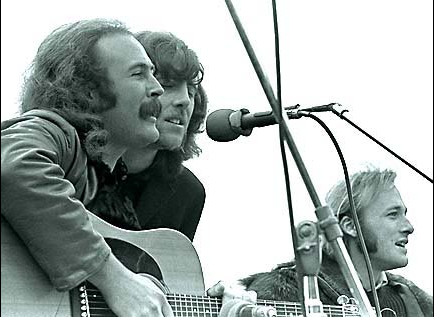
Teach Your Children

 Peter Reynolds