Peter Reynolds

The life and times of Peter Reynolds

Home Office Drugs Strategy Consultation – My Response

with 14 comments

The Home Office has called for responses to its Drugs Strategy Consultation document.  See here on the Home Office website.

It is almost universally accepted that “consultation” is a euphemism for “your opinion will be ignored but we want it to look like we listened to you”.  This is a classic example of that sort of thinking.  Judge for yourself  by reading the introduction.  It is clear that ministers and civil servants have already made their mind up on many issues just by the way that the questions are phrased.

Nevertheless, this is what passes for democracy in Britain and it is vital that as many people as possible respond.  You can do so by post, email or online form. It is all set out on the website.  I offer my response here as raw material.  Please feel free to copy and use all or part of it as you wish.  Just make sure that you do make a submission.

I have answered all the questions where I feel I have something useful to say.  It dosn’t matter if you only answer one or two.  Please don’t let the Home Office get away with a whitewash.  With sufficient responses and future Feedom Of Information requests we will be able to advance the cause of rational and progressive drugs policy.

Question A1: Are there other key aspects of reducing drug use that you feel should be addressed?

* Yes

Please outline any suggestions below

The entire basis of this question is flawed. Prohibition of drug use is a failed strategy as now acknowledged by experts and leaders all over the world. So much of the subject is mired in semantics and prejudice rather than being addressed in a logical and responsible manner with fact and evidence-based policies.

Drug use can never be eliminated.  In fact, use of alcohol and tobacco, two of the most dangerous drugs, is legally promoted.  Drug misuse is, by definition, to be deplored but unless there is an acceptance of responsible drug use, then corresponding guidance or regulation to prevent misuse cannot work.

The key question, as established by parliament with the Misuse Of Drugs Act 1971 (MODA), is to how to reduce the harms of drug use.  This is the basis of the Act and of the drug classification system which is supposd to indicate the relative harms of drugs based on the advice of the Advisory Council on the Misuse Of Drugs (ACMD).

Regrettably the classification system is now entirely discredited for two principle reasons:

1. Failure to include the two most widely used drugs, alcohol and tobacco

2. Failure to classify drugs on a scientific basis, instead allowing political considerations and opinion to intrude where only facts and evidence should apply

The result is that government messages on drugs are widely regarded as incredible and as propaganda rather than good sense.  Young people in particular see the evidence of their  own eyes and experience as more useful and credible than government messages, especially in the case of drugs such as cannabis and ecstasy where their relative harmlessness is self-evident.  Government campaigns such as Frank are widely ridiculed and both counterproductive and a complete waste of money.

Question A2: Which areas would you like to see prioritised?

Please select as many as apply

* Greater ambition for individual recovery whilst ensuring the crime reduction impact of treatment.
* Actions to tackle drugs should be part of building the “Big Society”.
* A more holistic approach, with drugs issues being assessed and tackled alongside other issues such as alcohol abuse, child protection, mental health, employment and housing.
* Budgets and responsibility devolved wherever possible, with commissioning of services at a local level.
* Budgets and funding streams simplified and outcome based.
* The financial costs of drug misuse reduced.
* None of them.

This is an astonishingly meaningless question, a little like asking “do you approve of motherhood and apple pie?”

It would be foolish to disagree with any of these ideas.

The main area I would like to see prioritised is that drugs strategy, policy, information and education should be fact and evidence based.  The National Audit Office and the Public Accounts Committee have both criticised government for failing to implement an evidence-based drugs policy and instead giving more weight to opinion.  This is a dreadful indictment of how successive governments have, in fact, contributed to and increased drug harms.  It is now a well established and proven truism that drug laws cause more harm than drugs themselves.

I would propose a five point drugs strategy aimed at reducing harms as follows:

1. An end to oppression of drug users (at least six million citizens)
2. Removal from the criminal law of any offence for possession and/or social supply
3. Fact and evidence-based policy, information and regulation
4. Re-direction of law enforcement resources against real criminals
5. Treat problematic drug use as a health issue

I would also propose that the overwhelming response on drug laws to the Your Freedom website should be included in this consultation. Top priority should be given to the massive outcry from the public for the removal of drugs from the criminal law and the more rational, fact and evidence-based regulation.

The question of cannabis needs urgent attention.  All experts agree that the harms from its illegality are greater than from the drug itself. According to Home Office figures, there are six million regular users in the UK. Recent research shows that more than 70% of the public want to see some form of legalisation.  The laws against cannabis no longer have public support, particularly in the case of medicinal use, yet the cost of unsuccessfully attempting to enforce them amounts to many billions in wasted public expenditure.  This is a national scandal of monstrous proportions which must be ended.

Question A3: What do you think has worked well in previous approaches to tackling drug misuse?

There is almost nothing that the government has done that has worked well in tackling drug misuse.  On the contrary, almost all government policy has increased the harms caused.

There have been some pilot projects in providing clean, safe environments where opiate addicts have access to a regulated supply and clean needles that have reduced harms.

Question A4: What do you think has NOT worked so well in previous approaches to tackling drug misuse?

Government drugs policy has been a disaster in almost every way, consuming more and more resources to less and less good effect.  It has been almost entirely counterproductive and has led to complete distrust of government information, alienation of users from society in general  and brought the law into disrepute.

Prohibition has not worked.

Misinformation and propaganda that distributes lies and untruths about the relative harms of drugs has not worked.  In fact, it has led to more harms and more deaths.

Criminalising huge numbers of citizens has not worked and has created disaffection and seriously damaged democracy.

Question B1: What are the most effective ways of preventing drug or alcohol misuse?

The only effective way of preventing drug or alcohol misuse is education.  This should be accompanied by a system of regulation and controls which is fact and evidence based and has widespread public support.

Question B2: Who (which agencies, organisations and individuals) are best able to prevent drug or alcohol misuse?

The government is entirely discredited when it comes to offering any sort of advice on these subjects because it has a long history of mistakes, misinformation and propaganda.  Everyone knows that you can’t trust what the government says about such matters because it almost always places political expediency above the truth.

Schools, teachers, ex-addicts and parents are best able to prevent drug and alcohol misuse.  They need fact and evidence-based support and information.  The last thing they need is government direction or interference as this is widely seen as unbelieveable and incredible.

Question B3: Which groups (in terms of age, location or vulnerability) should prevention programmes particularly focus on?

There should be no such thing as a “prevention programme”.  The most vulnerable group is clearly young people.  Tell them not to do something and you immediately increase its appeal.  This question demonstrates how utterly out of touch, insensitive and hamstrung is current Home Office thinking.

Education programmes should focus particularly on young people.

Question B4: Which drugs (including alcohol) should prevention programmes focus on?

* Those that cause the most harm
* Those that are most widely used
* All drugs

Please explain your view below

There should be no such thing as a “prevention programme”.  Education programmes should cover all drugs but focus on those that cause most harm.

Question B5: How can parents best be supported to prevent young people from misusing drugs or alcohol?

The best way of supporting parents is by creating an environment in which drugs policy is accepted as being rational, sensible and based on facts and evidence rather than propaganda.  It is vital that fact and evidence-based information is widely available.

Question B6: How can communities play a more effective role in preventing drug or alcohol misuse?

Communities will naturally come together to prevent drug misuse if we create an environment in which drugs policy is accepted as being rational, sensible and based on facts and evidence rather than propaganda.  At present, drug laws and policies create an “us and them” culture where injustice and hypocrisy brings the law into disrepute and alienates people who do not comply.

Question B7: Are there any particular examples of prevention activity that you would like to see used more widely?

There is nothing being done in terms of”prevention activity” that should be continued.  Education, based on fact and evidence-based information is the key.

Question B8: What barriers are there to improving drug and alcohol prevention?

The biggest barrier to improving prevention of drug misuse is government policy which is widely understood not to be based on facts and evidence but on political expediency and propaganda.  The lack of fact and evidence-based information and education is also a major barrier.

Question C1: When does drug use become problematic?

Drug use becomes problematic when it interferes with people conducting their everyday lives and reaching their full potential or the ability of others to do the same.

Question C2: Do you think the Criminal Justice System should do anything differently when dealing with drug-misusing offenders

The Criminal Justice System should not be involved in dealing with drug misuse at all.  This should be a matter for healthcare. Drug misuse in itself should not be a criminal offence.

Where offences are committed while under the influence of drugs, or in order to feed a drug addiction, providing appropriate healthcare has been offered, then drug use should not be a mitigating factor. In such instances, the offender should always be referred for healthcare alongside any sentence.

Question C3: Do you have a view on what factors the Government should take into consideration when deciding to invoke a temporary ban on a new substance?

* Yes

Please explain your views below

The most important factors would be those of scientific fact and evidence to be determined by a strengthened, properly funded and independent Advisory Council On the Misuse Of Drugs or equivalent.

It is most important to consider the “glamourising effect” of banning a substance.

I congratulate the Home Office on its statement that  “Possession of a temporarily banned substance for personal use would not be a criminal offence to prevent the unnecessary criminalisation of young people”.  This demonstrates a new depth of thinking and intelligence that is very encouraging.

Question C4: What forms of community based accommodation do you think should be considered to rehabilitate drug offenders?

Drug use should not be an offence in itself.  Clearly as part of healthcare, community-based accommodation should be available for those suffering from problematic drug use.

Question C5: Where do you think we most need to target enforcement efforts to reduce the supply of drugs?

Enforcement efforts to reduce the supply of drugs are futile unless a legitimate, regulated source of supply is available.

Once a regulated source of supply is available, illicit sources will become less of a problem.  Enforcement efforts could then be targeted in a similar way to current policies against illicit supply of alcohol, tobacco and prescription only medicines.

Question C6: What else do you think we can do to keep one step ahead of the changing drugs markets?

The most important thing do do is to end the failed and demonstrably ludicrous policy of prohibition.  The solution is a system of fact and evidence-based regulation including a a strengthened, properly funded and independent Advisory Council On the Misuse Of Drugs or equivalent.

Question C7: Which partners – in the public, voluntary and community sectors – would you like to see work together to reduce drug related reoffending in your local area?

What does “drug related reoffending” mean?

Drug use in itself should not be an offence.

Offences related to drugs should be dealt with by healthcare intervention as well as the criminal justice system.  If appropriate healthcare has been offered then drugs should not be a mitigating factor in sentencing.

Question C8: What results should be paid for or funded?

No comment

Question C9: What measures do you think should be taken to reduce drug supply in prison?

Those prisoners with a drug addiction should have access to healthcare and regulated supply just as any other citizen.   Just as in society in general a regulated supply would greatly reduce if not eliminate the problem of illicit supply.

Recreational use of drugs in prison should be strictly controlled.  Tobacco is presently allowed but not alcohol.

As an observation, it is tragic to note how existing policies have promoted the use of heroin in prison.  Under the drug testing regimes, cannabis can be detected in urine for up to 28 days and so its use has been largely eliminated.  However, heroin flushes through the system in less than 48 hours so its use has increased.  This is a vivid demonstration of the idiocy of present policies which have led to replacement of a relatively harmless substance with one that has potential to cause great harm.

Question C10 (if applicable): What impact would the measures suggested have on:

* a) offenders?
* b) your local community?

No comment

Question D1: Thinking about the current treatment system, what works well and should be retained?

No comment

Question D2: Thinking about the current treatment system, what is in need of improvement and how might it need to change to promote recovery?

I have no specific expertise in this area but I understand that treatment for problematic cocaine use is extremely limited and in desperate need of investment.  While not physically addictive, cocaine and particularly crack cocaine is overwhelmingly compulsive and can lead to violent behaviour.  Comparatively, treatment for opiate addicton is well established and understood.  More resources need to be put into developing treatments for problematic cocaine use.

Question D3: Are there situations in which drug and alcohol services might be more usefully brought together or are there situations where it is more useful for them to be operated separately?

Services need to be client-centered. Lumping together alcohol, opiate and cocaine services for the convenience of the providers is counterproductive. Someone who drinks too much wine in the evening at home may be deterred from attending a centre where opiate addicts are injecting. Similarly, a high-earning cocaine user may not want to associate with street drinkers.

Question D4: Should there be a greater focus on treating people who use substances other than heroin or crack cocaine, such as powder cocaine and so called legal highs?

* Yes
* No

Please explain your response below

The only rational response to any problematic drug use is to treat it as a health issue, therefore treatment should be available for all substances.  The question betrays a worrying naivety as cocaine use can be problematic as powder, crack or both.  “Legal highs” is a completely meaningless term which may range from something as harmful as heroin to something as benign as cannabis.

Question D5: Should treating addiction to legal substances, such as prescribed and over-the-counter medicines, be a higher priority?

* Yes
* No
* Don’t know

Please explain your response below

No.  The drugs strategy should be about minimising harms not making some moral judgment on people based on one point of view.  This is a dreadful suggestion.

Question D6: What role should the Public Health Service have in preventing people using drugs in the first place and how can this link in to other preventative work?

Fact and evidence-based information and education.

Question D7: We want to ensure that we continue to build the skills of the drug treatment and rehabilitation sector to ensure that they are able to meet the needs of those seeking treatment. What more can we do to support this?

Stop wasting money on futile attempts at enforcement of out of date, counterproductive laws. Prohibition is an entirely failed policy and, according to Baroness Meacher in the House Of Lords on 15th June 2010 is costing Britain £19 billion per annum.

Problematic drug use should be dealt with as a health problem.  With billions saved from wasted law enforcement costs and additional tax revenue from a regulated supply system, there will be a bonanza of funds available for drug treatment and rehabilitation services.

Question D8: Treatment is only one aspect contributing to abstinence and recovery. What actions can be taken to better link treatment services in to wider support such as housing, employment and supporting offenders?

Stop criminalising drug users, imprisoning them and treating them as offenders.  They are not.  They are people who choose to use a drug that has arbitrarily been deemed illegal usually for unscientific reasons.

Question D9: How do you believe that commissioners should be held to account for ensuring that outcomes of community-based treatments, for the promotion of reintegration and recovery, as well as reduced health harms, are delivered?

No comment.

Question E1: What interventions can be provided to better support the recovery and reintegration of drug and alcohol dependent offenders returning to communities from prison?

No comment.

Question E2: What interventions could be provided to address any issues commonly facing people dependent on drugs or alcohol in relation to housing?

No comment.

Question E3: How might drug, alcohol and mental health services be more effective in working together to meet the needs of drug or alcohol dependent service users with mental health conditions?

No comment.

Question E4: Do appropriate opportunities exist for the acquisition of skills and training for this group?

No comment

Question E5 Should we be making more of the potential to use the benefit system to offer claimants a choice between:

a) some form of financial benefit sanction, if they do not take action to address their drug or alcohol dependency; or

b) additional support to take such steps, by tailoring the requirements placed upon them as a condition of benefit receipt to assist their recovery (for example temporarily removing the need to seek employment whilst undergoing treatment).

There needs to be a combination of carrot and stick adjusted to individual requirements based on healthcare needs.  Those with problematic drug use must not be allowed to fall outside society as that leads to even greater harms.  This is why it is crucial that drug use be removed from the criminal law.

Question E6: What if anything could Jobcentre Plus do differently in engaging with this client group to better support recovery?

No comment

Question E7: In your experience, what interventions are most effective in helping this group find employment?

No comment.

Question E8: What particular barriers do this group face when working or looking for employment, and what could be done to address these?

No comment.

Question E9: Based on your experience, how effective are whole family interventions as a way of tackling the harms of substance misuse?

No comment

Question E10: Is enough done to harness the recovery capital of families, partners and friends of people addicted to drugs or alcohol?

Probably not. Once prohibition is ended, with billions saved from wasted law enforcement costs and additional tax revenue from a regulated supply system, there will be a bonanza of funds available for drug treatment and rehabilitation services.

Question E11: Do drug and alcohol services adequately take into account the needs of those clients who have children?

No comment

Question E12: What problems do agencies working with drug or alcohol dependent parents face in trying to protect their children from harm, and what might be done to address any such issues?

No comment

Gender: Male
Age: 45-54
Region: South West
Occupation: Writer

‘Av’ A Larf At The Flat Caps

with 2 comments

The Big Fight

Comrades!

On the third composite of the fourteenth motion, congress declares its unilateral support for workers rights against the capitalist oppression of the management and director classes who we will fight unconditionally without recourse to logic or proper negotiation whatsoever, allegedly, as aforesaid, which will not be unreasonably witheld in any circumstances notwithstanding the wishes of the members themselfs.

Are you wiv me bruvvers?
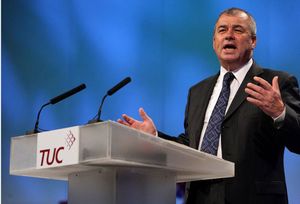
Short Back And Sides Guv?

Yes, it’s the annual stand-up comedy fest and flat cap style convention known as the Trades Union Congress.  After fish, chips, mushy peas and a bottle of warm stout down at the workingman’s club the delegates will be off for a wild night in Manchester.  There’ll be cribbage for the boys, bingo for the girls and chlamidya with an E for the youngsters.

Dark, Brutish, More Frightening

If Doris has a snowball or two, Alf might get lucky tonight.  If Tracey has more than a dozen vodka and redbulls, Wayne will be breaching his ASBO again.  That’ll set them all up for more vigorous and important debates in the morning on the issues that really matter.

Later in the year we can look forward to a “national campaign of industrial action against spending cuts” and a bit of civil disobedience by bruiser Bob Crowe.  This must be what TUC chief Brendan Barber meant when he talked of Britain as a  “dark, brutish and more frightening place”.

Don’t miss a minute of it!

‘Scuse Me While I Kiss the Sky!

with 5 comments

In tribute to the finest guitarist and one of the greatest musicians the world has ever seen – who died 40 years ago this week.
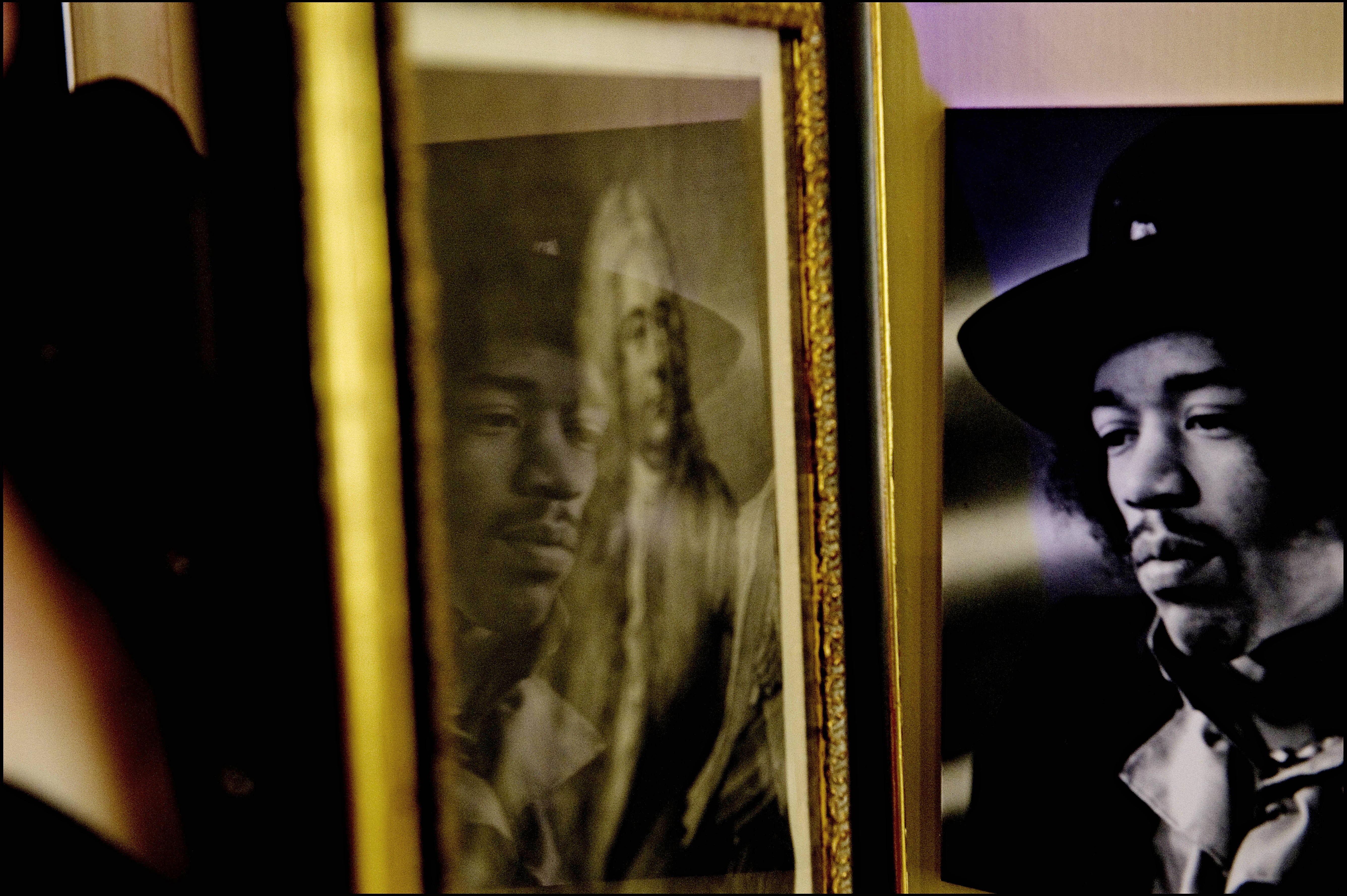
This remarkable photograph was taken inside the house at 25, Brook Street, Mayfair where the composer Handel lived until his death in 1759.  He was a German whose career took off when he came to London.  He was well known for flamboyant displays of virtuoso baroque music.

200 years later in 1968, Jimi Hendrix moved into the same building.  He was an American whose career took off when he came to London.  He was well known for flamboyant displays of virtuoso blues and rock music.

Their spirit lives on forever.

Written by Peter Reynolds

September 14, 2010 at 5:20 pm

Is Prof Pertwee A Home Office Plant?

with 13 comments

Is He A Plant?

As they say, with friends like these, who needs enemies?

Is It A Professor?

Seriously, or not so seriously, who is this bumbling old duffer wheeled out by the BBC for some terribly weak story that cannabis sales should be licensed?  See here.  If the BBC wants to cover this story there are at least a dozen far more expert, more eloquent, more telegenic, better informed, more sensible commentators.

Frankly, I’d rather have someone who can put a coherent argument against instead of this pathetic performance by Prof Pertwee.  Seldom have I seen any argument for any idea advanced so weakly.  I mean, who starts off talking about their proposal by saying “I don’t think it would work”!

It does raise the suspicion that the only people that want the cannabis argument put so badly is the Home Office.  There is, quite literally, no other organisation, connected with a democratic government anywhere in the civilised world that is so backwards, regressive and out of touch with the facts than the UK Home Office.  A cannabis plant would have been a more exciting interviewee than Prof Pertwee.  He must surely be a plant for what Prof. Les Iversen, the government’s most senior official drugs adviser calls “the anti-cannabis brigade”.

Maybe this is a sign that common sense has got the Home Office on the run. Its tired, inaccurate, unscientific, prejudiced  and short sighted attitude is on its very last legs.  This is either an embarrassingly bad effort by Prof Pertwee (thanks for trying) or a desperate attempt to discredit the truth.

The fact is that the argument has already been won.  I’d like to know what the “harms” are that the Professor was talking about in his interview.   There’s the tired old chitchat about mental health problems.   It’s just propaganda.  In Israel, cannabis is now recommended by doctors to help veterans deal with PTSD.  This is fact, reality, what’s actually happening, not what James Brokenshire and his cronies dream up in some bunker in Marsham Street.

I see that the story is also running in the Daily Mail.  It’s remarkable how even it, the home of hysteria, has changed its attitude on cannabis in the last year or so.  This is perhaps a better barometer of  public opinion than anything else.  When the Daily Mail starts talking common sense it must be very obvious indeed!

Even the FT is running the story.  Who knows maybe it will develop into something a bit more sensible.  The BBC just did a particularly bad job of covering it!

I do like Prof Pertwee’s recommendation of the Volcano vapouriser though.  I concur with the Professor on this.  I can tell you that after extensive personal testing I have concluded that it works very well indeed!

Let’s Put Dave The Taxman On The Dole

with 7 comments

Collect Your P45 On The Way Out

Who is this pompous, conceited, arrogant, Boris Johnson lookalike?

He’s Dave Hartnett, Permanent Secretary at Her Majesty’s Revenue and Customs. He’s refusing to apologise for getting tax deductions wrong for six million British taxpayers.

Just who the hell does he think he is?   We’re back to Sir Humphrey and lazy, fatcat incompetence and corruption again.  You’d think the civil service would have managed to drag itself entirely out of the 19th century by now wouldn’t you?  Not this prize plonker.  Maybe because his overgrown schoolboy, pudding basin haircut is just as messy as Boris’ he thinks he’ll endear himself to the British public?  Hogwash.  He’s the very opposite of Boris.  He represents everything that’s bad about Britain – self-satisfied, smug, deluded, living in the past.

I say let’s get him sacked.  Let’s create the biggest outcry against a useless civil sevant that the country has ever seen.  Let’s lose Mr Hartnett his job.  Let’s put him in his place – in the queue at the Jobcentre.  Then we’ll see who’s a cocky, scruffy, little git won’t we?

Barclays’ Biggest Banker Robber Plans Smash ‘n’ Grab On Britain

with 4 comments

The Unacceptable Face Of Banking

We don’t want Bob Diamond in Britain. He’s to be the next chief executive at Barclays Bank.  See here.  He’s not the “right sort of chap” for us or, if you prefer, he doesn’t have “the right stuff” for Britain.  He’s a wide boy and a high stakes gambler.  We don’t want him anywhere near our banks, our savings or our overdrafts.  Why can’t he just go back to the land of the free and the home of the brave and chowdown with all the other cowboys?  He’s the wrong man for Britain.

It’s people like Bob Diamond who were directly responsible for the banking crisis and for bringing the world’s economy virtually to its knees.   He won all his bets so he’s alright.  Let’s be clear though, it’s his behaviour and those like him that is to blame for the massive cuts that we’re all facing.  He has robbed our parents of their pensions, hamstringed our business world, destroyed our children’s jobs and sabotaged their children’s education.  He is laughing all over his flabby, smug face at our expense.

He’s won a £100 million fortune on exactly the sort of gambling which has destroyed our economy.

Vince Cable should stop posturing.  He was great in opposition but it seems, even in government, all he can do is snipe from the sidelines.

I say, deny Bob Diamond entry into Britain on the grounds that he would be a danger to the country.  Barclays may claim that it has accepted no help from the taxpayer but its exploitative business model depends on blackmailing us with its size and importance to the economy, just like all the banks.

What we needed to do was clamp down hard on their excess, split them into smaller pieces, separate casino investment from banking services, force them into accountable lending policies, severly limit earnings levels and make it clear that they work for us, not vice versa.

We may already be too late.  Britain’s banks continue to be out of control.

For A Bad Cop, Prison Is Just The Start
leave a comment »

Doing His Duty

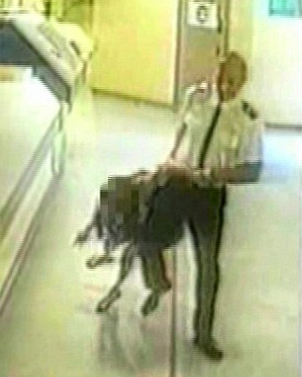
I hope that  ex-Police Sergeant Mark Andrews had a really bad night on Tuesday.   It was his first night in jail after being sentenced to six months for assaulting Pamela Somerville, an innocent member of the public, someone he was paid and trusted to protect.  See here for the full story.

I hope he had a really bad day yesterday too.  I hope he’s scared.  I hope he’s ashamed and racked with guilt.  I hope he has a really bad day tomorrow and the day after and the day after that.  I hope every single minute of his jail time is frightening, distressing, humiliating and painful.  I hope he misses his wife and two children and is beside himself with grief and shame at the way he has let them down.  The man is pond life scum.  He should be extremely grateful that he got off so lightly because if I was the judge I would have considered six years to be a more appropriate sentence than six months.   In fact,  I really hope that the CPS appeals the sentence.  There’s no way that it is sufficient.  He’ll  be out in just 13 weeks and free to go back to his family.   He should be made to suffer.

When a police officer commits a crime, particularly an assault while on duty, it is far, far more serious than when it is an ordinary member of the public.  It is a breach of trust.   It is like a bank manager stealing from his own bank.  It can never be forgiven.  It has to be marked as the most heinous of crimes.
Sleazy Starmer

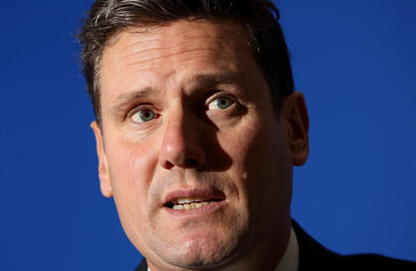
I suppose we have to be thankful that the CPS even brought charges in the first place.  It and its thoroughly sleazy boss, Keir Starmer, seem to do everything they can to avoid bringing police officers to justice.   Keir Starmer has the brazen cheek to pontificate about changing the system of murder charges when he is complicit in enabling police officers to avoid justice!  See here.   We’re really not interested in his thoughts about the future of justice in Britain.  He is too deeply ensconsed in the corruption and failures of the past.  We want him out of his job and on the scrapheap with Andrews.    In fact,  I’d have him in the cell next door to Andrews and I’d put them both back on slopping out but they could do each other’s rather than their own.

I congratulate Wiltshire Constabulary on bringing Andrews to justice and particularly the police officer who turned him in.  That man deserves a medal.
Killer
Thug

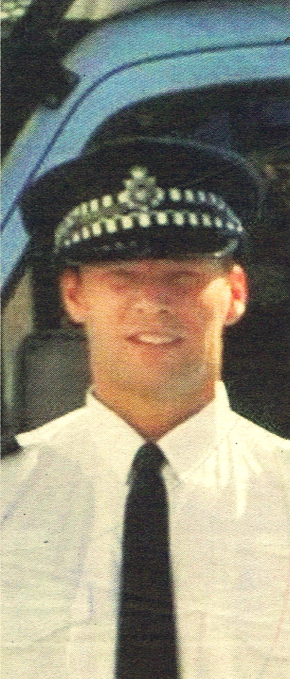
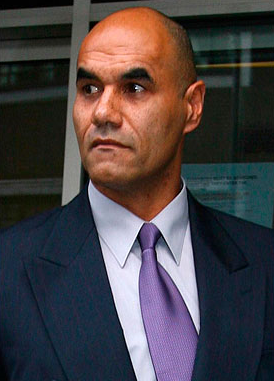
This should send a signal to thugs like Delroy Smellie, Simon Harwood and every other bent cop that you will never, ever get away with your behaviour.  Even if you manage to wriggle free like Smellie with the assistance of slimeball judges or evade the full force of the law like Harwood with the help of his crony Starmer, we, the British public, will never let you off.   It won’t ever be over for you, whether or not you do time in prison.  You and your kind are on a life sentence.  You will be despised, reviled, hated and subject to ridicule and abuse until the end of your days.  You deserve nothing less.

What Else Could £12 Million Buy?

with 5 comments

Irrelevant

Apparently, excluding policing costs (!), it’s going to cost Britain £12 million for the Pope to come here.  Now what else could we spend that on to better effect?

There must be at least twelve million answers to that question.  It is an absurdity, an anachronism, a throwback to an earlier, superstitious age when the masses were controlled by their fear of some nonsensical, supernatural power.

Pope Katzinger, ex-Hitler youth member and embodiment of the ultimate hypocritical idolatry and perversion of God, is not worthy of admittance to our country, let alone such expense.

I’m not sure that the Vatican state is part of the EU so do we have to let him in?  I suppose he will produce a German or Italian passport if necessary.  I would want to see it and ensure it is up to date.  Surely we could arrange a unilateral European arrest warrant or USA extradition request to get rid of him?  Now that would be a useful purpose for unjust and unfair legislation.

Pope Katzinger is not welcome.  That is a fact.  If we must adhere for a little longer to the idea of a church then we have our own.  The Pope’s has already been banned by royal decree and I hold much closer to the United Kingdom than to any kingdom of supernatural power, particularly one of such evil reputation.

If the head of the Catholic Church wishes to visit this country and meet with his congregation then, as a liberal and open society I suppose we must allow him to do so. We should not have to spare one penny from the care of our elderly, our sick or our needy for the pretensions of this old fool and his entourage.  Let them indulge their fairy tales, games and petty diversions at their own expense.

Home Office Backtracks On Cannabis – Part 2

with 12 comments

See the original article here.

The Home Office has been denying to me all week that it had changed its story.  It claimed that it had said “Drugs such as heroin, cocaine and cannabis are extremely harmful and can cause misery to communities across the country.”  It claimed that cannabis was never included in this statement.

Today it finally owned up.  It issued this statement at 5.18pm this evening:

A Home Office spokesperson said:

“There is clear evidence that drugs such as heroin and cocaine are extremely harmful substances.

“There is also clear evidence that cannabis is a harmful drug which can cause both physical and psychological problems. Even the occasional use of cannabis can be dangerous for people with diseases of the circulatory system, and it can contribute to heart disease and lung cancer.

“In this instance there was a drafting error with the original version of this statement, which was subsequently rectified.”

Does It Look Dangerous To You?

Now, I understand and respect the professional efforts of the Home Office PRs to damp down this story.  It just doesn’t wash though does it?

Why did it take nearly two weeks to correct this error?

Why did they try to cover up the error in the first place?

All this from a government department that emphasises how important are its “health and education messages” and that it must not send “the wrong message – to young people in particular.”

Of course, the truth is that the Home Office sends inaccurate and misleading messages about drugs all the time.  Everyone, except the Home Office ministers and mandarins, agrees that the present drug classification system is nonsense, that it amounts to nothing less than misinformation.  In fact, the Home Office is currently less than seven days away from a judicial review of its political manipulation of the Misuse of Drugs Act 1971.  The Drug Equality Alliance co-founder, Casey Hardison, has taken it upon himself to challenge the Home Secretary and the Advisory Council on the Misuse of Drugs (ACMD) in the Administrative Court for its irrational, unfair, and possibly illegal exclusion of alcohol and tobacco from control under the Act.

Even David Cameron agrees that ecstasy should not be a class A drug – see here.  The debacle and embarrassing nonsense about the ever-changing classification of cannabis destroyed Alan Johnson’s integrity for good.  Young people have been watching the government’s “messages” for years, comparing them to their own experiences and realising  that the government talks rot when it comes to drugs.  The Home Office is inconsistent, unreliable, contradictory and nothing short of dangerous when it comes to messages about drugs – as they’ve just proved, yet again.

As for the revised statement, there is evidence to show that smoking cannabis can cause the same damage to the cardiovascular system as smoking tobacco, but no one smokes anywhere near the same amount of cannabis as they do tobacco – they’d be asleep!  In fact, the very latest research shows that cannabis has an extraordinary protective effect for tobacco smokers and may actually reduce the likelihood of lung cancer.   Other recent research has also shown cannabinoids to have remarkable effects in shrinking brain, head, neck and breast cancers.

The Home Office is so far out of date it’s difficult to believe.   It still talks sensationally about the dangers of “new stronger strains of cannabis known as skunk”.   The truth is that skunk has been the predominant type of cannabis available in the UK for more than 20 years.  That’s how up to date the Home Office is.   Finally, the “psychological problems” story.  Sure, any psychoactive substance has the potential for harm but increasingly there’s evidence to show cannabinoids actually have an anti-psychotic effect.  One of the most useful applications of medicinal cannabis is in the treatment of Post-Traumatic Stress Disorder.

To those who don’t already know the facts, I say simply google your questions.  Even the Home Office, much as it might try, has not yet found a way of silencing the truth.