Peter Reynolds

The life and times of Peter Reynolds

Posts Tagged ‘Parliament

The LCA Leadership Election

with 15 comments

The ballot papers have been mailed to members today.  The candidates are Stuart Warwick and myself.  Voting closes a week today.  The result will be announced shortly afterwards.

Peter Reynolds

Dear LCA member,

I am seeking election as leader of the Legalise Cannabis Alliance.

I have been campaigning for an end to the prohibition of cannabis for more than 30 years.

If elected, I can promise you radical change in the way that LCA goes about its business. We will launch a new campaign based around the theme: REFORM, REGULATE and REALISE.

That is REFORM the law to end prohibition, REGULATE production and supply based on facts and evidence and REALISE the huge benefits of the plant both as medicine and as a £10 billion net contribution to the economy.

This will be a tightly focused campaign aiming for the urgent availability of cannabis for those who need it as medicine and a properly regulated supply chain for the millions of British citizens who use it recreationally. That means we will take the business out of the hands of criminals, allow commercial growers to produce the plant under properly regulated conditions and permit small scale personal cultivation of up to six plants.

We will advocate sales of cannabis through licensed outlets such as tobacconists and/or coffee shops to adults only. It would remain a criminal offence to supply cannabis to under 18s. We accept that cannabis should be taxed, partly to cover the costs of the regulatory system and a health advisory service but also so that the entire country will benefit from bringing this huge market out of the black economy. Based on research by the Independent Drug Monitoring Unit and the Transform Drug Policy Foundation we estimate that with reductions in law enforcement costs and new tax revenue, there will be a net contribution of approx £10 billion to the UK exchequer.

We will not be diverted by peripheral issues such as the many uses for industrial hemp, although we will be glad to see progress in that area. We will run a campaign focused on achieving practical change, not promoting a philosophy. That means that our main concern will be to educate and influence MPs and get our message across in the media. MPs are the only people who can change the law and it is through the media that we can influence voter opinion so we will deal with them on their terms, in Westminster, in newspapers and television studios. We will bring a new professionalism to this issue and demand the attention and respect that our proposals deserve.

The prohibition of cannabis is unjust, undemocratic and immoral. Most cannabis users are reasonable, responsible and respectable people and I will demand our right to be heard and treated fairly.

I shall stand for parliament in every by-election and in the next general election on this single issue. Being realistic, we do not expect to win a seat but we will put cannabis back on the political agenda and we will be taken seriously. No longer will we allow the Daily Mail or other media to publish lies and propaganda uinchallenged. No longer will we allow prohibitionists like Debra Bell and Peter Hitchens to misinform and promote scare stories without any balance.

I want to transform the LCA into a professional, effective campaign that will achieve results. I believe that I am the right man for this job. Please vote for me. Vote to REFORM, REGULATE and REALISE.

My website at http://www.peter-reynolds.co.uk contains a wealth of information about cannabis and many articles that I have written on the subject. If you want more detailed information about me and what I stand for, that is the place to look.

Thank you for taking the time to read this.

Peter Reynolds

Stuart Warwick
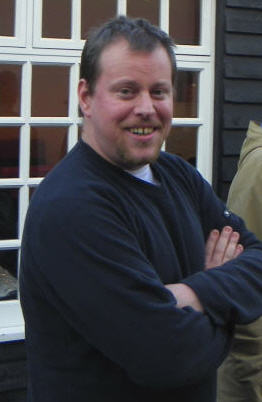
Dear Member,

As one of the candidates seeking election for leadership of the LCA, I’ve been asked to write a short letter outlining my plans for the direction and actions I’d like to see the LCA take.

As Leader I would not seek to limit our campaign to the medical and recreational issues only (although I believe this should be our focus) but use the plethora of other applications that cannabis has in industry to gain support from as wide a demographic as possible.

I intend to campaign for legalisation, regulation & taxation.

Legalisation, done properly would remove the cannabis market from the hands of criminals and terrorists and open it up to legitimate businesses & entrepreneurs, giving the substantial profit back to society.

Regulation will help prevent dangerous contamination, ensure good quality and be more effective at keeping it out of the hands of children.

Taxation to put some of the profit back into the country – everyone benefits.

I think licensed outlets and growers is what we should be aiming to achieve. Licensing should cover not only the supply of cannabis but should also cover growing set-ups to ensure electrical and fire safety as this is a known hazard with some badly fitted installations. This would allow local growers to provide more variety in outlets, allowing users to clearly identify the strain that suits their needs the best.

Licenses should be available to cover a wide range of grow sizes to encourage both local and national business opportunities.

I think fact-based policy is a must, with genuinely unbiased research. To base policy purely on knee jerk emotional and moral arguments while ignoring scientific research is unjust and unproductive.

We know there are people in power who understand this but are forced to repeat the same prohibition mantra.

We need to let people know that if they decide to make a stand against prohibition we will be there to back them up. They will not want to make a move unless they know that when they do, they are not left hanging, We just have to give them the nod and be ready when they do.

By standing for elections, I hope to challenge not only my local MP’s and the other candidates but also policy on a national level. As leader of the LCA I hope to unite all of the voices in our community to achieve just that.

I have 2 sites that I have used to promote my ideas so far. Feel free to visit them, although there are some very early attempts on there, so quality isn’t always great, sorry.

http://www.youtube.com/user/NovictimNocrime08

http://www.facebook.com/pages/Hunar-for-Prime-Minister/238421977309

Thanks for your time – , this wasn’t as easy to write as I thought it would be!

Regards

Stuart Warwick.

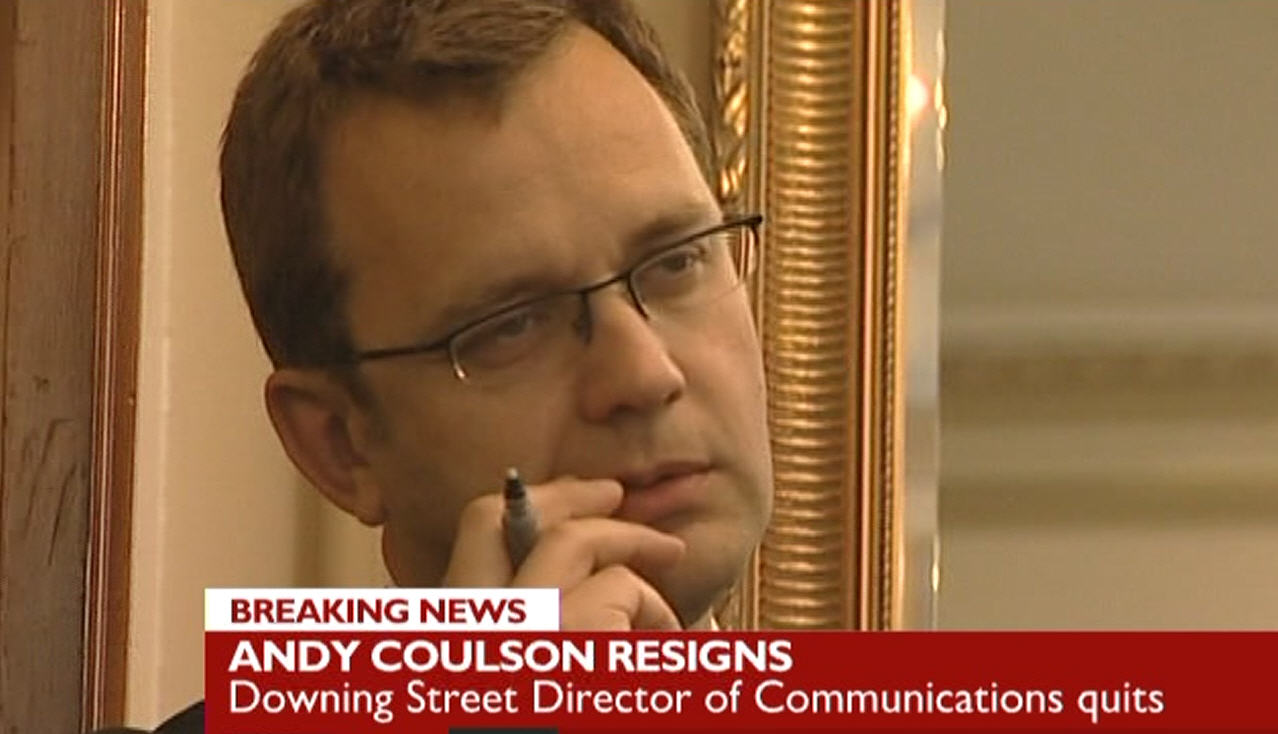
Good Riddance To The Tabloid Muck Raker
with 22 comments

You live by the sword.  You die by the sword.

Never was disgrace or the end to a career more richly deserved.  When you play the disgusting game of distortion, propaganda and misinformation that newspaper editors do, then you can expect your karma to get you in the end.

Newspaper editors and media owners sustain the oligarchy with their chums in parliament that oppresses the people of Britain, controls the news agenda and promotes its own self-interest.

He won’t be missed by anyone.


Written by Peter Reynolds

January 21, 2011 at 11:47 am

LibDem Conmen Should Be Expelled From Parliament

with 10 comments

Liars, Conmen And Cheats

I support the tuition fee proposals.  They seem very fair to me and I can’t see that any prospective student can have any complaint about the terms offered.

However, if you’re an MP and before the election you signed a pledge to vote against any increase in tuition fees then you have no choice.  It doesn’t matter if you’re a minister or if the economic situation is worse than you thought it was.  This is black and white.  It’s clear cut.  There can be no argument.  If you break your signed commitment then you have to go.

If you seek to evade your commitment or fudge the issue then you compound your crime.  And I see no reason why it should not be a crime.  In civil law it is a clear breach of contract but it is much more serious than that.  It is obtaining a seat in parliament on false pretences.  It wasn’t a vague promise made in the heat of the election campaign.  It was a written agreement.

Nick Clegg, Vince Cable and all their cronies who have broken their word should be frogmarched out of parliament and charged with criminal deception.  They should all go to jail.  Not for a long time.  Six months will do but each and every one of them is a proven liar, conman and cheat.  They have no honour.

Unless parliament takes this action to preserve its integrity, then its reputation will sink even lower.  It sets the most appalling example to the country and any MP who allows this scandal to persist without action is an accessory after the fact.

Shame on you, you weak and pathetic cowards.  You disgrace yourselves and our country.

Vive Brittania, Rule La France. The End Of The United Kingdom.

with 10 comments

Non!  C’est impossible.  This treaty is treason.

Ratty & Mr Toad

I don’t want the French having anything to do with the defence of my country.  I’m happy to have them as allies but at arm’s length, please.  They have shown all too often how ready they are to turn and run, to pursue their own obscure and strange ideas and to fail to support us.  We don’t need the French and we don’t want them.   David Cameron has betrayed us.

It is ridiculous.  It is a shabby politician’s compromise.  With a searing bolt of shining light I realise the danger of the coalition.  This is a disastrous fudge by two Euro-politicians intent on a grubby deal to reinforce each other.  I thought David Cameron was so much more his own man yet the longer the coalition continues I see that it promises little more than mediocrity and mutual back scratching.  Nick Clegg has become a poodle.  David Cameron is just a committee chairman and all politicans are now even more focused on their own personal advantage and gain than they were in the days of the expenses free for all.  There is no integrity left in parliament at all.

This shameful abdication of our sovereignty is the worst of all worlds. It is politicians doing all they can to lock themselves into power with no regard or concern for the people, for our honour or our independence. It is all about politicians and nothing to do with the people.

This devious scheme has been cooked up behind closed doors without any recourse or consultation.  It is undemocratic, un-British and a disgrace.  I can no longer support the coalition.  I cannot vote for Mr Toad.  He is a liar, a cheat and a conman.

Written by Peter Reynolds

November 3, 2010 at 12:09 pm

Well Done Jedward, I Mean Edward

with 4 comments


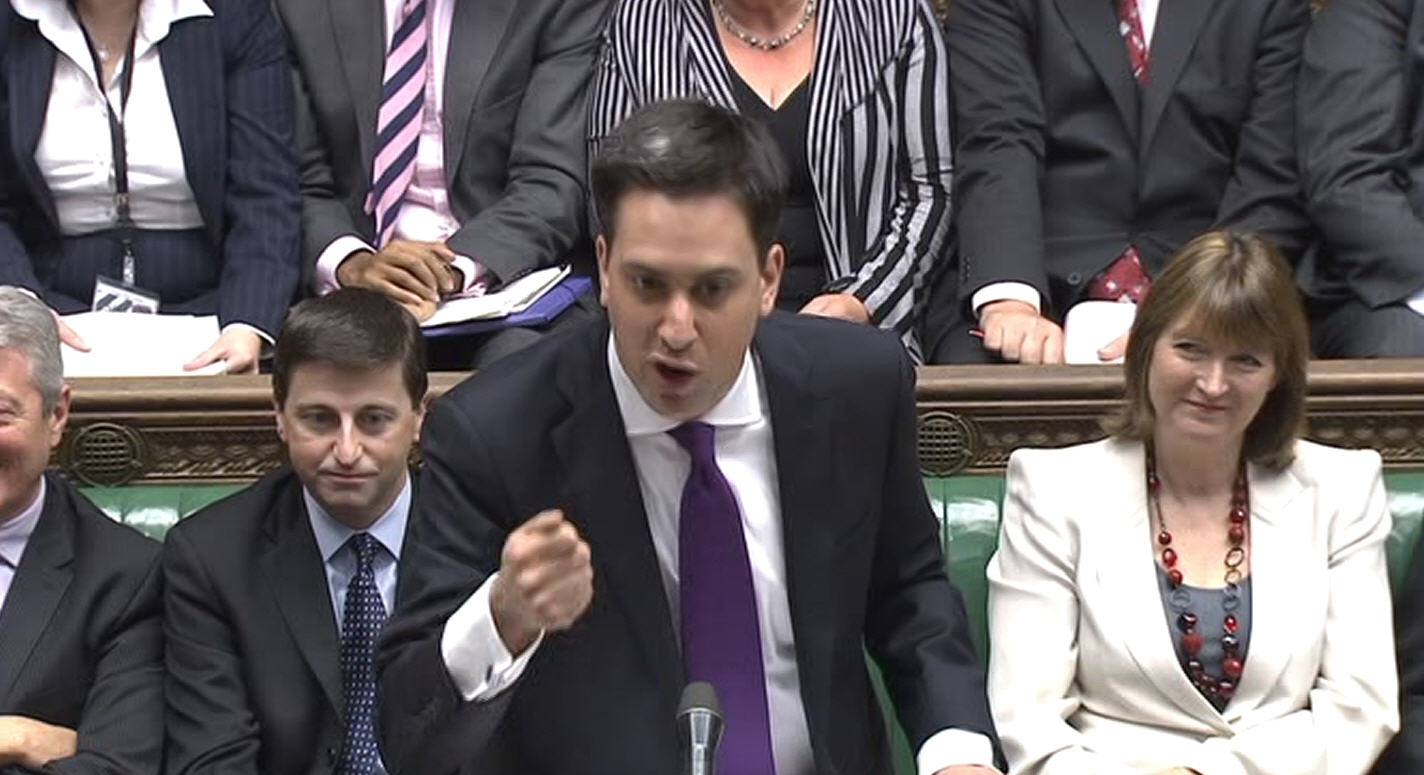
Harriet's Impressed!


It was a good start for a young man.  Solid.  Dignified.  Then, suddenly,  a scimitar sharp riposte.  Cameron almost fell backwards!

I think Ed has been underestimated and will prove to be a dangerous and very clever adversary.  For a while the coalition will get away with patronising him like the new boy at school but his time will come.

I think that’s a very, very helpful thing for parliament and for Britain.  The most dangerous thing for British politics at the moment is that the LibDems simply dissolve away.   A strong Labour party will bolster the LibDem’s position.

Please though, the sooner those two old farts, Harriet Harman and Alan Johnson are gone, the better.   Isn’t there a deep hole in the ground somewhere we can drop ’em down?

Written by Peter Reynolds

October 13, 2010 at 10:28 pm

Home Office Drugs Strategy Consultation – My Response

with 14 comments

The Home Office has called for responses to its Drugs Strategy Consultation document.  See here on the Home Office website.

It is almost universally accepted that “consultation” is a euphemism for “your opinion will be ignored but we want it to look like we listened to you”.  This is a classic example of that sort of thinking.  Judge for yourself  by reading the introduction.  It is clear that ministers and civil servants have already made their mind up on many issues just by the way that the questions are phrased.

Nevertheless, this is what passes for democracy in Britain and it is vital that as many people as possible respond.  You can do so by post, email or online form. It is all set out on the website.  I offer my response here as raw material.  Please feel free to copy and use all or part of it as you wish.  Just make sure that you do make a submission.

I have answered all the questions where I feel I have something useful to say.  It dosn’t matter if you only answer one or two.  Please don’t let the Home Office get away with a whitewash.  With sufficient responses and future Feedom Of Information requests we will be able to advance the cause of rational and progressive drugs policy.

Question A1: Are there other key aspects of reducing drug use that you feel should be addressed?

* Yes

Please outline any suggestions below

The entire basis of this question is flawed. Prohibition of drug use is a failed strategy as now acknowledged by experts and leaders all over the world. So much of the subject is mired in semantics and prejudice rather than being addressed in a logical and responsible manner with fact and evidence-based policies.

Drug use can never be eliminated.  In fact, use of alcohol and tobacco, two of the most dangerous drugs, is legally promoted.  Drug misuse is, by definition, to be deplored but unless there is an acceptance of responsible drug use, then corresponding guidance or regulation to prevent misuse cannot work.

The key question, as established by parliament with the Misuse Of Drugs Act 1971 (MODA), is to how to reduce the harms of drug use.  This is the basis of the Act and of the drug classification system which is supposd to indicate the relative harms of drugs based on the advice of the Advisory Council on the Misuse Of Drugs (ACMD).

Regrettably the classification system is now entirely discredited for two principle reasons:

1. Failure to include the two most widely used drugs, alcohol and tobacco

2. Failure to classify drugs on a scientific basis, instead allowing political considerations and opinion to intrude where only facts and evidence should apply

The result is that government messages on drugs are widely regarded as incredible and as propaganda rather than good sense.  Young people in particular see the evidence of their  own eyes and experience as more useful and credible than government messages, especially in the case of drugs such as cannabis and ecstasy where their relative harmlessness is self-evident.  Government campaigns such as Frank are widely ridiculed and both counterproductive and a complete waste of money.

Question A2: Which areas would you like to see prioritised?

Please select as many as apply

* Greater ambition for individual recovery whilst ensuring the crime reduction impact of treatment.
* Actions to tackle drugs should be part of building the “Big Society”.
* A more holistic approach, with drugs issues being assessed and tackled alongside other issues such as alcohol abuse, child protection, mental health, employment and housing.
* Budgets and responsibility devolved wherever possible, with commissioning of services at a local level.
* Budgets and funding streams simplified and outcome based.
* The financial costs of drug misuse reduced.
* None of them.

This is an astonishingly meaningless question, a little like asking “do you approve of motherhood and apple pie?”

It would be foolish to disagree with any of these ideas.

The main area I would like to see prioritised is that drugs strategy, policy, information and education should be fact and evidence based.  The National Audit Office and the Public Accounts Committee have both criticised government for failing to implement an evidence-based drugs policy and instead giving more weight to opinion.  This is a dreadful indictment of how successive governments have, in fact, contributed to and increased drug harms.  It is now a well established and proven truism that drug laws cause more harm than drugs themselves.

I would propose a five point drugs strategy aimed at reducing harms as follows:

1. An end to oppression of drug users (at least six million citizens)
2. Removal from the criminal law of any offence for possession and/or social supply
3. Fact and evidence-based policy, information and regulation
4. Re-direction of law enforcement resources against real criminals
5. Treat problematic drug use as a health issue

I would also propose that the overwhelming response on drug laws to the Your Freedom website should be included in this consultation. Top priority should be given to the massive outcry from the public for the removal of drugs from the criminal law and the more rational, fact and evidence-based regulation.

The question of cannabis needs urgent attention.  All experts agree that the harms from its illegality are greater than from the drug itself. According to Home Office figures, there are six million regular users in the UK. Recent research shows that more than 70% of the public want to see some form of legalisation.  The laws against cannabis no longer have public support, particularly in the case of medicinal use, yet the cost of unsuccessfully attempting to enforce them amounts to many billions in wasted public expenditure.  This is a national scandal of monstrous proportions which must be ended.

Question A3: What do you think has worked well in previous approaches to tackling drug misuse?

There is almost nothing that the government has done that has worked well in tackling drug misuse.  On the contrary, almost all government policy has increased the harms caused.

There have been some pilot projects in providing clean, safe environments where opiate addicts have access to a regulated supply and clean needles that have reduced harms.

Question A4: What do you think has NOT worked so well in previous approaches to tackling drug misuse?

Government drugs policy has been a disaster in almost every way, consuming more and more resources to less and less good effect.  It has been almost entirely counterproductive and has led to complete distrust of government information, alienation of users from society in general  and brought the law into disrepute.

Prohibition has not worked.

Misinformation and propaganda that distributes lies and untruths about the relative harms of drugs has not worked.  In fact, it has led to more harms and more deaths.

Criminalising huge numbers of citizens has not worked and has created disaffection and seriously damaged democracy.

Question B1: What are the most effective ways of preventing drug or alcohol misuse?

The only effective way of preventing drug or alcohol misuse is education.  This should be accompanied by a system of regulation and controls which is fact and evidence based and has widespread public support.

Question B2: Who (which agencies, organisations and individuals) are best able to prevent drug or alcohol misuse?

The government is entirely discredited when it comes to offering any sort of advice on these subjects because it has a long history of mistakes, misinformation and propaganda.  Everyone knows that you can’t trust what the government says about such matters because it almost always places political expediency above the truth.

Schools, teachers, ex-addicts and parents are best able to prevent drug and alcohol misuse.  They need fact and evidence-based support and information.  The last thing they need is government direction or interference as this is widely seen as unbelieveable and incredible.

Question B3: Which groups (in terms of age, location or vulnerability) should prevention programmes particularly focus on?

There should be no such thing as a “prevention programme”.  The most vulnerable group is clearly young people.  Tell them not to do something and you immediately increase its appeal.  This question demonstrates how utterly out of touch, insensitive and hamstrung is current Home Office thinking.

Education programmes should focus particularly on young people.

Question B4: Which drugs (including alcohol) should prevention programmes focus on?

* Those that cause the most harm
* Those that are most widely used
* All drugs

Please explain your view below

There should be no such thing as a “prevention programme”.  Education programmes should cover all drugs but focus on those that cause most harm.

Question B5: How can parents best be supported to prevent young people from misusing drugs or alcohol?

The best way of supporting parents is by creating an environment in which drugs policy is accepted as being rational, sensible and based on facts and evidence rather than propaganda.  It is vital that fact and evidence-based information is widely available.

Question B6: How can communities play a more effective role in preventing drug or alcohol misuse?

Communities will naturally come together to prevent drug misuse if we create an environment in which drugs policy is accepted as being rational, sensible and based on facts and evidence rather than propaganda.  At present, drug laws and policies create an “us and them” culture where injustice and hypocrisy brings the law into disrepute and alienates people who do not comply.

Question B7: Are there any particular examples of prevention activity that you would like to see used more widely?

There is nothing being done in terms of”prevention activity” that should be continued.  Education, based on fact and evidence-based information is the key.

Question B8: What barriers are there to improving drug and alcohol prevention?

The biggest barrier to improving prevention of drug misuse is government policy which is widely understood not to be based on facts and evidence but on political expediency and propaganda.  The lack of fact and evidence-based information and education is also a major barrier.

Question C1: When does drug use become problematic?

Drug use becomes problematic when it interferes with people conducting their everyday lives and reaching their full potential or the ability of others to do the same.

Question C2: Do you think the Criminal Justice System should do anything differently when dealing with drug-misusing offenders

The Criminal Justice System should not be involved in dealing with drug misuse at all.  This should be a matter for healthcare. Drug misuse in itself should not be a criminal offence.

Where offences are committed while under the influence of drugs, or in order to feed a drug addiction, providing appropriate healthcare has been offered, then drug use should not be a mitigating factor. In such instances, the offender should always be referred for healthcare alongside any sentence.

Question C3: Do you have a view on what factors the Government should take into consideration when deciding to invoke a temporary ban on a new substance?

* Yes

Please explain your views below

The most important factors would be those of scientific fact and evidence to be determined by a strengthened, properly funded and independent Advisory Council On the Misuse Of Drugs or equivalent.

It is most important to consider the “glamourising effect” of banning a substance.

I congratulate the Home Office on its statement that  “Possession of a temporarily banned substance for personal use would not be a criminal offence to prevent the unnecessary criminalisation of young people”.  This demonstrates a new depth of thinking and intelligence that is very encouraging.

Question C4: What forms of community based accommodation do you think should be considered to rehabilitate drug offenders?

Drug use should not be an offence in itself.  Clearly as part of healthcare, community-based accommodation should be available for those suffering from problematic drug use.

Question C5: Where do you think we most need to target enforcement efforts to reduce the supply of drugs?

Enforcement efforts to reduce the supply of drugs are futile unless a legitimate, regulated source of supply is available.

Once a regulated source of supply is available, illicit sources will become less of a problem.  Enforcement efforts could then be targeted in a similar way to current policies against illicit supply of alcohol, tobacco and prescription only medicines.

Question C6: What else do you think we can do to keep one step ahead of the changing drugs markets?

The most important thing do do is to end the failed and demonstrably ludicrous policy of prohibition.  The solution is a system of fact and evidence-based regulation including a a strengthened, properly funded and independent Advisory Council On the Misuse Of Drugs or equivalent.

Question C7: Which partners – in the public, voluntary and community sectors – would you like to see work together to reduce drug related reoffending in your local area?

What does “drug related reoffending” mean?

Drug use in itself should not be an offence.

Offences related to drugs should be dealt with by healthcare intervention as well as the criminal justice system.  If appropriate healthcare has been offered then drugs should not be a mitigating factor in sentencing.

Question C8: What results should be paid for or funded?

No comment

Question C9: What measures do you think should be taken to reduce drug supply in prison?

Those prisoners with a drug addiction should have access to healthcare and regulated supply just as any other citizen.   Just as in society in general a regulated supply would greatly reduce if not eliminate the problem of illicit supply.

Recreational use of drugs in prison should be strictly controlled.  Tobacco is presently allowed but not alcohol.

As an observation, it is tragic to note how existing policies have promoted the use of heroin in prison.  Under the drug testing regimes, cannabis can be detected in urine for up to 28 days and so its use has been largely eliminated.  However, heroin flushes through the system in less than 48 hours so its use has increased.  This is a vivid demonstration of the idiocy of present policies which have led to replacement of a relatively harmless substance with one that has potential to cause great harm.

Question C10 (if applicable): What impact would the measures suggested have on:

* a) offenders?
* b) your local community?

No comment

Question D1: Thinking about the current treatment system, what works well and should be retained?

No comment

Question D2: Thinking about the current treatment system, what is in need of improvement and how might it need to change to promote recovery?

I have no specific expertise in this area but I understand that treatment for problematic cocaine use is extremely limited and in desperate need of investment.  While not physically addictive, cocaine and particularly crack cocaine is overwhelmingly compulsive and can lead to violent behaviour.  Comparatively, treatment for opiate addicton is well established and understood.  More resources need to be put into developing treatments for problematic cocaine use.

Question D3: Are there situations in which drug and alcohol services might be more usefully brought together or are there situations where it is more useful for them to be operated separately?

Services need to be client-centered. Lumping together alcohol, opiate and cocaine services for the convenience of the providers is counterproductive. Someone who drinks too much wine in the evening at home may be deterred from attending a centre where opiate addicts are injecting. Similarly, a high-earning cocaine user may not want to associate with street drinkers.

Question D4: Should there be a greater focus on treating people who use substances other than heroin or crack cocaine, such as powder cocaine and so called legal highs?

* Yes
* No

Please explain your response below

The only rational response to any problematic drug use is to treat it as a health issue, therefore treatment should be available for all substances.  The question betrays a worrying naivety as cocaine use can be problematic as powder, crack or both.  “Legal highs” is a completely meaningless term which may range from something as harmful as heroin to something as benign as cannabis.

Question D5: Should treating addiction to legal substances, such as prescribed and over-the-counter medicines, be a higher priority?

* Yes
* No
* Don’t know

Please explain your response below

No.  The drugs strategy should be about minimising harms not making some moral judgment on people based on one point of view.  This is a dreadful suggestion.

Question D6: What role should the Public Health Service have in preventing people using drugs in the first place and how can this link in to other preventative work?

Fact and evidence-based information and education.

Question D7: We want to ensure that we continue to build the skills of the drug treatment and rehabilitation sector to ensure that they are able to meet the needs of those seeking treatment. What more can we do to support this?

Stop wasting money on futile attempts at enforcement of out of date, counterproductive laws. Prohibition is an entirely failed policy and, according to Baroness Meacher in the House Of Lords on 15th June 2010 is costing Britain £19 billion per annum.

Problematic drug use should be dealt with as a health problem.  With billions saved from wasted law enforcement costs and additional tax revenue from a regulated supply system, there will be a bonanza of funds available for drug treatment and rehabilitation services.

Question D8: Treatment is only one aspect contributing to abstinence and recovery. What actions can be taken to better link treatment services in to wider support such as housing, employment and supporting offenders?

Stop criminalising drug users, imprisoning them and treating them as offenders.  They are not.  They are people who choose to use a drug that has arbitrarily been deemed illegal usually for unscientific reasons.

Question D9: How do you believe that commissioners should be held to account for ensuring that outcomes of community-based treatments, for the promotion of reintegration and recovery, as well as reduced health harms, are delivered?

No comment.

Question E1: What interventions can be provided to better support the recovery and reintegration of drug and alcohol dependent offenders returning to communities from prison?

No comment.

Question E2: What interventions could be provided to address any issues commonly facing people dependent on drugs or alcohol in relation to housing?

No comment.

Question E3: How might drug, alcohol and mental health services be more effective in working together to meet the needs of drug or alcohol dependent service users with mental health conditions?

No comment.

Question E4: Do appropriate opportunities exist for the acquisition of skills and training for this group?

No comment

Question E5 Should we be making more of the potential to use the benefit system to offer claimants a choice between:

a) some form of financial benefit sanction, if they do not take action to address their drug or alcohol dependency; or

b) additional support to take such steps, by tailoring the requirements placed upon them as a condition of benefit receipt to assist their recovery (for example temporarily removing the need to seek employment whilst undergoing treatment).

There needs to be a combination of carrot and stick adjusted to individual requirements based on healthcare needs.  Those with problematic drug use must not be allowed to fall outside society as that leads to even greater harms.  This is why it is crucial that drug use be removed from the criminal law.

Question E6: What if anything could Jobcentre Plus do differently in engaging with this client group to better support recovery?

No comment

Question E7: In your experience, what interventions are most effective in helping this group find employment?

No comment.

Question E8: What particular barriers do this group face when working or looking for employment, and what could be done to address these?

No comment.

Question E9: Based on your experience, how effective are whole family interventions as a way of tackling the harms of substance misuse?

No comment

Question E10: Is enough done to harness the recovery capital of families, partners and friends of people addicted to drugs or alcohol?

Probably not. Once prohibition is ended, with billions saved from wasted law enforcement costs and additional tax revenue from a regulated supply system, there will be a bonanza of funds available for drug treatment and rehabilitation services.

Question E11: Do drug and alcohol services adequately take into account the needs of those clients who have children?

No comment

Question E12: What problems do agencies working with drug or alcohol dependent parents face in trying to protect their children from harm, and what might be done to address any such issues?

No comment

Gender: Male
Age: 45-54
Region: South West
Occupation: Writer

What Is A Supreme Court For?

with one comment

Justice?

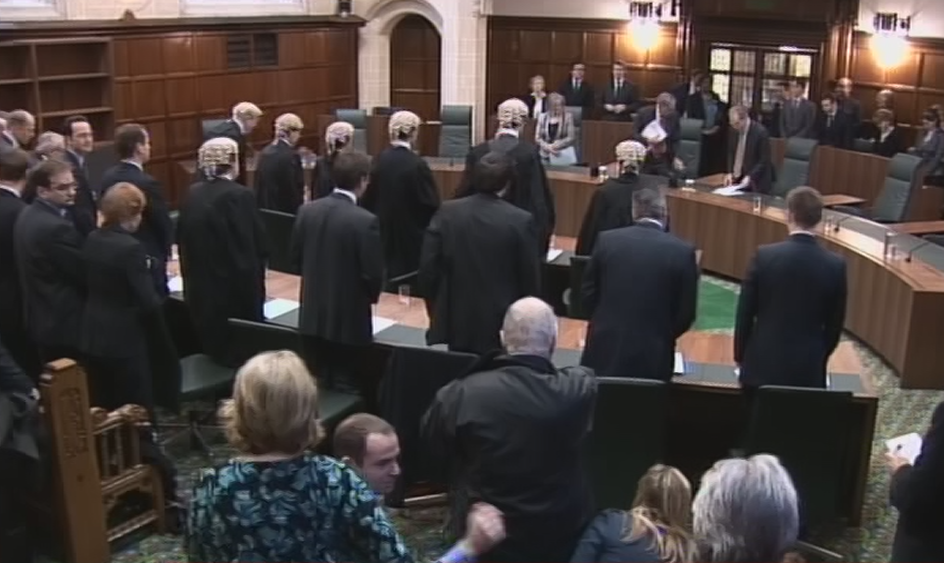
Is it to overlook Parliament’s clear intent and to focus on the minutiae of poorly drafted legislation?  Is it to preserve and strengthen the law or is it to be focused on justice?  Is it to consider cases only on the basis of pleadings presented by barristers or should it look to the wider issue?  Is it to bolster the use of disproportionate power with which big institutions bully their customers or should it be to enforce fairness?  Is it for “distinguished” lawyers to live out their latter years in fine, new ermine robes in luxurious surroundings or is it  to promote justice?

I don’t know.  Do you?

Written by Peter Reynolds

November 26, 2009 at 5:48 pm

Posted in Consumerism, Politics

Tagged with , , ,

Banker Robbers Supreme At The Court Of Contempt

with 4 comments

In an outrageous and disgraceful judgment the supreme court (no more capital “S” or “C” from me) has protected our corrupt banking institutions from the Office Of Fair Trading.  See the full story here.

Stupid Old Fools

The supreme court had the opportunity in one of its first judgments to set itself on the side of the people and justice.  Instead it has shown itself to be on the side of the establishment, the banker robbers and the executive.  If only this would herald the arrival of the tumbrils and guillotine into the streets of London.  Then the bankers and the judges would understand the meaning of injustice as their headless bodies lie in the street and others twitch and dangle from the gallows.

The OFT has been shown to be as toothless and useless as the Data Protection Act and the Information Commissioner.  These institutions are established merely as a sop to public opinion.  The establishment, the banker robbers and the executive have  no interest in justice for the people, only in lining their own pockets and protecting their own interests.  They can lend each other £60 billion or more in secret, deceive the public interest, yet they will not overturn the gross injustice and blatant thievery that are bank charges.

The bankers and the judges molested and buggered each other at Eton and Harrow.  They molested and buggered each other at Oxbridge.  Now incapable, except for a little self-molestation, they are buggering us.  Watch them get away with it as they duck, dive, lie, cheat and bribe their way out of trouble.  It may be difficult to prove the brown envelopes changing hands but what is happening in these judges’ offshore accounts?  We hold you all in the deepest contempt!

Next will come the supreme court overturning Sir Christopher Kelly’s proposal for the reform of MPs’ expenses.  Coming up on the inside is the Iraq Inquiry which will almost certainly see Tony Blair off the hook for lying to Parliament and the people.

It may be difficult to contemplate revolution in the modern age but in 1789 Paris and 1917 Moscow that was their modern age.  The establishment needs to understand that its conduct is unacceptable, that with the gift of the internet and communications technology, the people have far more power. You are walking a tightrope towards your own destruction.

Is “Unacceptable” Acceptable From Cabinet Ministers?

with one comment

I could almost feel sorry for Gordon on this one because as much as he wriggles, he isn’t going to get away.  He has said that Hazel Blears’ conduct in flipping her second home to save £13,000 CGT was unacceptable.  She has to go.

She Has To Go

She Has To Go

Talking about the “rules” isn’t good enough when they are clearly inadequate.  The guidelines say that expenses may only be charged when incurred “wholly, exclusively and necessarily in the course of parliamentary duties”.   That standard should now be applied as the rule.  So, Gordon, your Sky subscription including sports channels, fails that test.  A reasonable claim would be for half of the cost.

In your own interests, as well as that of Parliament and the country, there are cabinet ministers and senior Labour MPs who have to go.

Written by Peter Reynolds

May 19, 2009 at 5:08 pm

They Still Don’t Get It Do They?

with one comment

How the Speaker has the nerve to get up in the House this afternoon and fail to apologise for his own and his colleagues shenanigans is beyond belief.
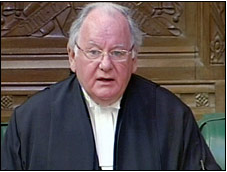
Michael Martin

Michael Martin

He is, quite clearly, more interested in a police investigation into why details of MPs’ expenses were leaked than he is in the substantive issue itself.

Mr Martin’s reputation is already in tatters.  He failed to protect the confidentiality of Parliament in the Damian Green affair.   Now as the worst blunderer amongst a herd of buffoons, he misses the chance to take the lead where he should be in the very vanguard of restoring the integrity of Parliament.

Why?  Can we have any doubt?  He is more interested in protecting his own vested interests and so he piles disgrace upon disgrace and insult onto injury.

What hope is there when even he fails to understand what needs to be done?